Posts Tagged ‘Lenny Bruce’
“Metaphors and similes (puns, too, I might add) extend the dimensions and expand the possibilities of the world”*…
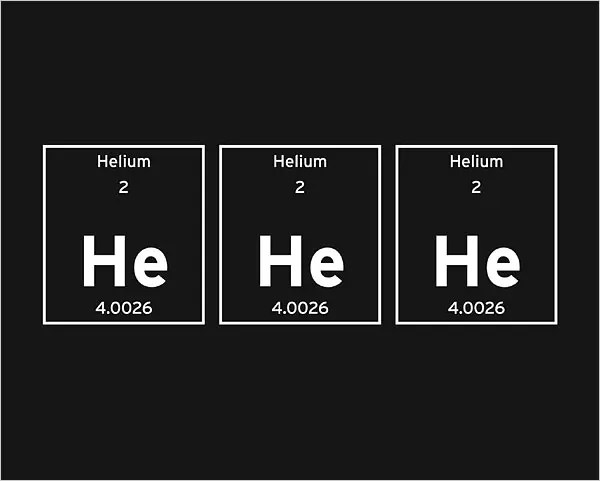
A. J. Jacobs, in defense of “the lowest form of humor“…
… I used to hate puns. Here’s an anti-pun passage from my first book, The Know-It-All – it occurs when I’m describing my trip to a Mensa convention (that’s the high IQ society).
Mensans love puns. I heard about how the eating of frogs’ legs makes the frogs hopping mad. A person who is interested in architecture has an edifice complex. When I met one Mensan who worked in a photo shop, he told me “It gives me a very negative outlook on life.”
“I shudder to think,” I responded, which simultaneously earned his respect and made me hate myself a lot.
Two reactions on re-reading this passage:
First, a photo shop? Things have certainly changed in twenty-plus years.
Second, maybe I shouldn’t have had so much self-loathing (and maybe I should have gone with the sentence “Things have certainly developed in twenty-plus years).
The point is, since writing my first book, I’ve made a U-turn on puns, or at least non-obvious twisty puns. I don’t consider myself a great punster. I’m no Myq Kaplan. But in recent years, I’ve improved a bit (or gotten worse, depending on your view of puns).
One reason for my newfound respect for puns is that I host a podcast all about word puzzles, which wouldn’t really exist without puns. Another is that my wife Julie is president of Watson Adventures Scavenger Hunts, a company that puts on events where teams work together to solve punny riddles (and have a delightful time doing it!)
But I like to tell myself that another reason I’m now pro-pun is that I had an epiphany: Puns serve a greater purpose. They make us more aware of something important about language: That it is often arbitrary, slippery, and ambiguous.
I believe my interest in puns has helped me become more linguistically aware, a more flexible thinker. Whenever I read the news nowadays, I’m hyper-conscious of the different meanings of words, which makes me more skeptical of people who try to manipulate language to make their point.
Consider the word “free” as an example. “Free” has multiple definitions. Mostly, it’s got a positive aura to it. So when you say “free market,” for instance, you’re immediately disposed to like a free market. But if a market is totally “free” in this sense—zero government regulations whatsoever—it may cause the opposite of freedom in other ways: monopolies thrive, customers lack freedom of choice, and workers lack freedom to negotiate.
Do I have proof that puns make us better thinkers? Sadly, there’s no decades-long study in which a pun-loving population and a pun-hating population create two societies from scratch, allowing us to study which is more susceptible to propaganda and authoritarianism.
But if you conduct a Google Scholar search, you can find some hints that back up my idea. Such as…
—A study in the journal Personality and Individual Differences argues that pun-based humor “not only facilitates insight problem-solving directly, but may also exert an indirect positive influence on insight problem-solving through cognitive flexibility.”
—A neuroscience paper arguing that puns ignite the same areas of the brain as frame-shifting, which is key for problem-solving.
—A paper linking awareness of ambiguous words with critical thinking.
So…maybe?
Puns, of course, have their downsides. First, I’ve been in conversations with people who are so focused on making puns that they can’t engage in meaningful dialogue.
Some argue, as Samuel Johnson allegedly did, that puns are a “lower form of wit.” (It’s not clear he said this, but he did once write that Shakespeare’s weakness for following puns “engulfed him in the mire.” Johnson later — allegedly, again — confessed to his own pun use, saying: “If I were to be punishèd for every pun I shed, there would be no puny shed of my punnish head.”)
Also in puns’ disfavor: people often refer to puns as “groaners.” But I’d argue not all puns are groaners. Only the easy ones. If someone on a tennis court complains about losing his balls and his friend replies with a comment about testicles, I don’t think the friend should automatically be awarded the Mark Twain Prize for American Humor.
On the other side of the spectrum, there are the puns so complex and intricate that they require mental gymnastics of a Simone Biles-ian level.
Perhaps the most elaborate pun I’ve run across is by Thomas Pynchon. In his novel Gravity’s Rainbow, Pynchon relates a story about the classic film director Cecille B. DeMille, a fleet of rowboats, and a bunch of criminals in the fur trade. Does this story advance the novel’s plot? Not at all, but it allowed Pynchon to write the following sentence at the end of the section:
“For DeMille, young fur henchman cannot be rowing.”
Get it? I didn’t. But when I looked it up, it turns out to be an elaborate pun on the phrase “40 million Frenchmen can’t be wrong,” which was a 1920s phrase arguing that France’s pro-alcohol, sex-positive attitudes were superior to America’s puritanism.
Perhaps you could accuse Pynchon of making too great a leap — that it’s no fun if there’s so little chance of figuring the pun out. But I still appreciate the effort.
I also appreciate when puns are pushed to their limit in another direction – namely, a relentless barrage of puns. In fact, I’ll end with my friend (and new dad!) Joe Sabia’s award-winning pun routine in the O. Henry Museum Pun-Off World Championships a few years back…
“Can Puns Save Democracy? Probably not. But maybe a little?“
See also: “Pun for the Ages” (gift article, and source of te image above)
And for contrast(?), enjoy: “A Collection of Terrible Puns.”
* “Metaphors and similes (puns, too, I might add) extend the dimensions and expand the possibilities of the world. When both innovative and relevant, they can wake up a reader, make him or her aware, through elasticity of verbiage, that reality—in our daily lives as well as in our stories—is less prescribed than tradition has led us to believe.” Tom Robbins, Wild Ducks Flying Backwards
###
As we double down on doble entendre, we might send painfully-observant birthday greetings to a man in whose repertoire puns sometimes figured, Lenny Bruce; he was born on this date in 1925. A comedian, social critic, and satirist, he was ranked (in a 2017 Roling Stone poll) the third best stand-up comic of all time– behind Richard Pryor and George Carlin, both of whom credit Bruce as an influence.
“The American Constitution was not written to protect criminals; it was written to protect the government from becoming criminals.”- Lenny Bruce

“We live, in fact, in a world starved for solitude, silence, and private: and therefore starved for meditation and true friendship”*…

… if then, even more so now. Ben Tarnoff takes off from Lowry Pressly‘s new book to ponder why privacy matters and why we have such trouble even thinking about how to protect it…
… Today, it is harder to keep one’s mind in place. Our thoughts leak through the sieve of our smartphones, where they join the great river of everyone else’s. The consequences, for both our personal and collective lives, are much discussed: How can we safeguard our privacy against state and corporate surveillance? Is Instagram making teen-agers depressed? Is our attention span shrinking?
There is no doubt that an omnipresent Internet connection, and the attendant computerization of everything, is inducing profound changes. Yet the conversation that has sprung up around these changes can sometimes feel a little predictable. The same themes and phrases tend to reappear. As the Internet and the companies that control it have become an object of permanent public concern, the concerns themselves have calcified into clichés. There is an algorithmic quality to our grievances with algorithmic life.
Lowry Pressly’s new book, “The Right to Oblivion: Privacy and the Good Life,” defies this pattern. It is a radiantly original contribution to a conversation gravely in need of new thinking. Pressly, who teaches political science at Stanford, takes up familiar fixations of tech discourse—privacy, mental health, civic strife—but puts them into such a new and surprising arrangement that they are nearly unrecognizable. The effect is like walking through your home town after a tornado: you recognize the buildings, but after some vigorous jumbling they have acquired a very different shape.
Pressly trained as a philosopher, and he has a philosopher’s fondness for sniffing out unspoken assumptions. He finds one that he considers fundamental to our networked era: “the idea that information has a natural existence in human affairs, and that there are no aspects of human life which cannot be translated somehow into data.” This belief, which he calls the “ideology of information,” has an obvious instrumental value to companies whose business models depend on the mass production of data, and to government agencies whose machinery of monitoring and repression rely on the same.
But Pressly also sees the ideology of information lurking in a less likely place—among privacy advocates trying to defend us from digital intrusions. This is because the standard view of privacy assumes there is “some information that already exists,” and what matters is keeping it out of the wrong hands. Such an assumption, for Pressly, is fatal. It “misses privacy’s true value and unwittingly aids the forces it takes itself to be resisting,” he writes. To be clear, Pressly is not opposed to reforms that would give us more power over our data—but it is a mistake “to think that this is what privacy is for.” “Privacy is valuable not because it empowers us to exercise control over our information,” he argues, “but because it protects against the creation of such information in the first place.”
If this idea sounds intriguing but exotic, you may be surprised to learn how common it once was. “A sense that privacy is fundamentally opposed to information has animated public moral discourse on the subject since the very beginning,” Pressly writes…
[Tarnoff recaps Pressly’s a brief history of the technologies that changed our relationship to information, from Kodak through CCTV, to AI…]
… The reason that Pressly feels so strongly about imposing limits on datafication is not only because of the many ways that data can be used to damage us. It is also because, in his view, we lose something precious when we become information, regardless of how it is used. In the very moment when data are made, Pressly believes, a line is crossed. “Oblivion” is his word for what lies on the other side.
Oblivion is a realm of ambiguity and potential. It is fluid, formless, and opaque. A secret is an unknown that can become known. Oblivion, by contrast, is unknowable: it holds those varieties of human experience which are “essentially resistant to articulation and discovery.” It is also a place beyond “deliberate, rational control,” where we lose ourselves or, as Pressly puts it, “come apart.” Sex and sleep are two of the examples he provides. Both bring us into the “unaccountable regions of the self,” those depths at which our ego dissolves and about which it is difficult to speak in definite terms. Physical intimacy is hard to render in words—“The experience is deflated by description,” Pressly observes—and the same is notoriously true of the dreams we have while sleeping, which we struggle to narrate, or even to remember, on waking.
Oblivion is fragile, however. When it comes into contact with information, it disappears. This is why we need privacy: it is the protective barrier that keeps oblivion safe from information. Such protection insures that “one can actually enter into oblivion from time to time, and that it will form a reliably available part of the structure of one’s society.”
But why do we need to enter into oblivion from time to time, and what good does it do us? Pressly gives a long list of answers, drawn not only from the Victorians but also from the work of Michel Foucault, Roland Barthes, Gay Talese, Jorge Luis Borges, and Hannah Arendt. One is that oblivion is restorative: we come apart in order to come back together. (Sleep is a case in point; without a nightly suspension of our rational faculties, we go nuts.) Another is the notion that oblivion is integral to the possibility of personal evolution. “The main interest in life and work is to become someone else that you were not in the beginning,” Foucault writes. To do so, however, you must believe that the future can be different from the past—a belief that becomes harder to sustain when one is besieged by information, as the obsessive documentation of life makes it “more fixed, more factual, with less ambiguity and life-giving potentiality.” Oblivion, by setting aside a space for forgetting, offers a refuge from this “excess of memory,” and thus a standpoint from which to imagine alternative futures.
Oblivion is also essential for human dignity. Because we cannot be fully known, we cannot be fully instrumentalized. Immanuel Kant urged us to treat others as ends in themselves, not merely as means. For Pressly, our obscurities are precisely what endow us with a sense of value that exceeds our usefulness. This, in turn, helps assure us that life is worth living, and that our fellow human beings are worthy of our trust. “There can be no trust of any sort without some limits to knowledge,” Pressly writes…
… Psychoanalysis first emerged in the late nineteenth century, in parallel with the idea of privacy. This was a period when the boundary between public and private was being redrawn, not only with the onslaught of handheld cameras but also, more broadly, because of the dislocating forces of what historians call the Second Industrial Revolution. Urbanization pulled workers from the countryside and packed them into cities, while mass production meant they could buy (rather than make) most of what they needed. These developments weakened the institution of the family, which lost its primacy as people fled rural kin networks and the production of life’s necessities moved from the household to the factory.
In response, a new freedom appeared. For the first time, the historian Eli Zaretsky observes, “personal identity became a problem and a project for individuals.” If you didn’t have your family to tell you who you were, you had to figure it out yourself. Psychoanalysis helped the moderns to make sense of this question, and to try to arrive at an answer.
More than a century later, the situation looks different. If an earlier stage of capitalism laid the material foundations for a new experience of individuality, the present stage seems to be producing the opposite. In their taverns, theatres, and dance halls, the city dwellers of the Second Industrial Revolution created a culture of social and sexual experimentation. Today’s young people are lonely and sexless. At least part of the reason is the permanent connectivity that, as Pressly argues, conveys the feeling that “one’s time and attention—that is to say, one’s life—are not entirely one’s own.”
The modernist city promised anonymity, reinvention. The Internet is devoid of such pleasures. It is more like a village: a place where your identity is fixed. Online, we are the sum of what we have searched, clicked, liked, and bought. But there are futures beyond those predicted through statistical extrapolations from the present. In fact, the past is filled with the arrival of such futures: those blind corners when no amount of information could tell you what was coming. History has a habit of humbling its participants. Somewhere in its strange rhythms sits the lifelong work of making a life of one’s own…
We often want to keep some information to ourselves. But information itself may be the problem: “What Is Privacy For?” from @bentarnoff in @NewYorker. (Possible paywall; archived link here.)
Pair with the two (marvelous, provocative) documentary series from Adam Curtis and the BBC: The Century of Self and Hypernormalization, both of which are available on You Tube.)
* C. S. Lewis
###
As we make room, we might send painfully-observant birthday greetings to Lenny Bruce; he was born on this date in 1925. A comedian, social critic, and satirist, he was ranked (in a 2017 Roling Stone poll) the third best stand-up comic of all time– behind Richard Pryor and George Carlin, both of whom credit Bruce as an influence.
“The circus comes as close to being the world in microcosm as anything I know; in a way, it puts all the rest of show business in the shade.”*…

Come one, come all!…
While circus acts go back to the midst of time, the circus as commercial entertainment dates to the opening decades of the nineteenth century. In Victorian England, the circus appealed across an otherwise class-divided society, its audiences ranging from poor peddlers to prestigious public figures. The acts that attracted such audiences included reenacted battle scenes, which reinforced patriotic identity; exotic animal displays that demonstrated the reach of Britain’s growing empire; female acrobatics, which disclosed anxieties about women’s changing role in the public sphere; and clowning, which spoke to popular understandings of these poor players’ melancholy lives on the margins of society.
The proprietor and showman George Sanger (from whose collection the following photographs come) was a prime example of how the circus was to evolve from a small fairground-type enterprise to a large-scale exhibition. Sanger’s circuses began in the 1840s and ’50s, but by the 1880s, they had grown to such a scale that they were able to hold their own against the behemoth of P.T. Barnum’s three-ring circus, which arrived in London for the first time in that decade.
Like many circuses in the nineteenth century, Sanger’s was indebted to the technology of modern visual culture to promote his business. Local newspapers displayed photographs alongside advertisements to announce the imminent arrival of a circus troupe. Garish posters, plastered around towns, also featured photographs of their star attractions. And individual artists used photographic portraits, too (in the form of the carte-de-visite or calling card), to draw attention to their attributes and to seek employment. One striking image in this collection [the image above] poses six performing acrobats amid the other acts—a lion tamer, an elephant trainer, a wire walker, and a clown—in one of Sanger’s circuses, all in front of the quintessential big-top tent. Maybe the projection of the collective solidarity of the circus in this image belies personal rivalries and animosities that might have characterized life on the road. Moreover, at the extreme edge of the image, on the right-hand side behind the dog trainer, there appears to be the almost ghostly presence of a Black male figure. By dint of their peripatetic existence, all those employed in the circus were often viewed as marginal and exotic. However, this image is a reminder of how racial and ethnic minorities were a presence within circus culture, even if, as here, they appear to have been banished to the margins of the photograph.


That most democratic of Victorian popular entertainments: photos from the Sanger Circus Collection.
* E. B. White
###
As we head for the big top, we might recall that today is International Yada Yada Yada Day. Lenny Bruce is often credited with the first use of “yadda yadda” on the closing track on his 1961 album “Lenny Bruce – American,” though earlier uses are documented in vaudeville. Employed by comedians and TV shows to convey that something unimportant or irrelevant was being elided, it gained vernacular currency when Jerry Seinfeld’s show featured a variation on this phrase as an inside joke between characters Elaine Benes (played by Julia Louis-Dreyfus) and George Costanza (Jason Alexander).
The Yada Yada,” the series’ 153rd episode, focused on just how badly using the phrase can backfire when the details being omitted are actually extremely important– the fact that George’s new girlfriend is actually a kleptomaniac who steals to kill time, or that Jerry’s new girlfriend is both racist and antisemitic. (That episode also introduced the term”anti-dentite.”) Hilarity ensues when both these unwitting men find out what kind of people they have been dating, and must break off the relationships.
In 2009, the Paley Center for Media named “Yada, Yada, Yada” the No. 1 funniest phrase on “TV’s 50 Funniest Phrases.”

Lending you his ear…

From the Van Gogh Museum in Amsterdam, all 902 letters written to and from Vincent Van Gogh. They’re beautifully reproduced, annotated, transcribed, and translated– a rare and precious look at a rare and precious artist.
As we form Impressionistic impressions, we might wonder that two very different public figures were born on this date in 1925.
British Prime Minister Margaret Thatcher, the Iron Lady…
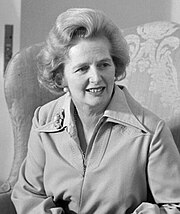 “No-one would remember the Good Samaritan if he’d only had good intentions; he had money as well. “
and terrifyingly insightful comedian Lenny Bruce…

You must be logged in to post a comment.