Posts Tagged ‘Tom Robbins’
“Metaphors and similes (puns, too, I might add) extend the dimensions and expand the possibilities of the world”*…
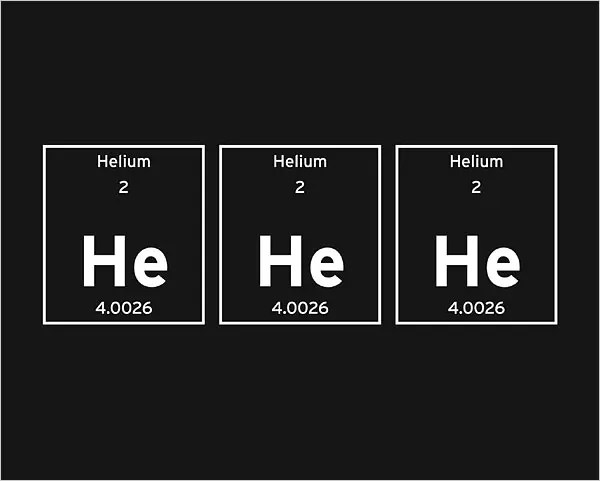
A. J. Jacobs, in defense of “the lowest form of humor“…
… I used to hate puns. Here’s an anti-pun passage from my first book, The Know-It-All – it occurs when I’m describing my trip to a Mensa convention (that’s the high IQ society).
Mensans love puns. I heard about how the eating of frogs’ legs makes the frogs hopping mad. A person who is interested in architecture has an edifice complex. When I met one Mensan who worked in a photo shop, he told me “It gives me a very negative outlook on life.”
“I shudder to think,” I responded, which simultaneously earned his respect and made me hate myself a lot.
Two reactions on re-reading this passage:
First, a photo shop? Things have certainly changed in twenty-plus years.
Second, maybe I shouldn’t have had so much self-loathing (and maybe I should have gone with the sentence “Things have certainly developed in twenty-plus years).
The point is, since writing my first book, I’ve made a U-turn on puns, or at least non-obvious twisty puns. I don’t consider myself a great punster. I’m no Myq Kaplan. But in recent years, I’ve improved a bit (or gotten worse, depending on your view of puns).
One reason for my newfound respect for puns is that I host a podcast all about word puzzles, which wouldn’t really exist without puns. Another is that my wife Julie is president of Watson Adventures Scavenger Hunts, a company that puts on events where teams work together to solve punny riddles (and have a delightful time doing it!)
But I like to tell myself that another reason I’m now pro-pun is that I had an epiphany: Puns serve a greater purpose. They make us more aware of something important about language: That it is often arbitrary, slippery, and ambiguous.
I believe my interest in puns has helped me become more linguistically aware, a more flexible thinker. Whenever I read the news nowadays, I’m hyper-conscious of the different meanings of words, which makes me more skeptical of people who try to manipulate language to make their point.
Consider the word “free” as an example. “Free” has multiple definitions. Mostly, it’s got a positive aura to it. So when you say “free market,” for instance, you’re immediately disposed to like a free market. But if a market is totally “free” in this sense—zero government regulations whatsoever—it may cause the opposite of freedom in other ways: monopolies thrive, customers lack freedom of choice, and workers lack freedom to negotiate.
Do I have proof that puns make us better thinkers? Sadly, there’s no decades-long study in which a pun-loving population and a pun-hating population create two societies from scratch, allowing us to study which is more susceptible to propaganda and authoritarianism.
But if you conduct a Google Scholar search, you can find some hints that back up my idea. Such as…
—A study in the journal Personality and Individual Differences argues that pun-based humor “not only facilitates insight problem-solving directly, but may also exert an indirect positive influence on insight problem-solving through cognitive flexibility.”
—A neuroscience paper arguing that puns ignite the same areas of the brain as frame-shifting, which is key for problem-solving.
—A paper linking awareness of ambiguous words with critical thinking.
So…maybe?
Puns, of course, have their downsides. First, I’ve been in conversations with people who are so focused on making puns that they can’t engage in meaningful dialogue.
Some argue, as Samuel Johnson allegedly did, that puns are a “lower form of wit.” (It’s not clear he said this, but he did once write that Shakespeare’s weakness for following puns “engulfed him in the mire.” Johnson later — allegedly, again — confessed to his own pun use, saying: “If I were to be punishèd for every pun I shed, there would be no puny shed of my punnish head.”)
Also in puns’ disfavor: people often refer to puns as “groaners.” But I’d argue not all puns are groaners. Only the easy ones. If someone on a tennis court complains about losing his balls and his friend replies with a comment about testicles, I don’t think the friend should automatically be awarded the Mark Twain Prize for American Humor.
On the other side of the spectrum, there are the puns so complex and intricate that they require mental gymnastics of a Simone Biles-ian level.
Perhaps the most elaborate pun I’ve run across is by Thomas Pynchon. In his novel Gravity’s Rainbow, Pynchon relates a story about the classic film director Cecille B. DeMille, a fleet of rowboats, and a bunch of criminals in the fur trade. Does this story advance the novel’s plot? Not at all, but it allowed Pynchon to write the following sentence at the end of the section:
“For DeMille, young fur henchman cannot be rowing.”
Get it? I didn’t. But when I looked it up, it turns out to be an elaborate pun on the phrase “40 million Frenchmen can’t be wrong,” which was a 1920s phrase arguing that France’s pro-alcohol, sex-positive attitudes were superior to America’s puritanism.
Perhaps you could accuse Pynchon of making too great a leap — that it’s no fun if there’s so little chance of figuring the pun out. But I still appreciate the effort.
I also appreciate when puns are pushed to their limit in another direction – namely, a relentless barrage of puns. In fact, I’ll end with my friend (and new dad!) Joe Sabia’s award-winning pun routine in the O. Henry Museum Pun-Off World Championships a few years back…
“Can Puns Save Democracy? Probably not. But maybe a little?“
See also: “Pun for the Ages” (gift article, and source of te image above)
And for contrast(?), enjoy: “A Collection of Terrible Puns.”
* “Metaphors and similes (puns, too, I might add) extend the dimensions and expand the possibilities of the world. When both innovative and relevant, they can wake up a reader, make him or her aware, through elasticity of verbiage, that reality—in our daily lives as well as in our stories—is less prescribed than tradition has led us to believe.” Tom Robbins, Wild Ducks Flying Backwards
###
As we double down on doble entendre, we might send painfully-observant birthday greetings to a man in whose repertoire puns sometimes figured, Lenny Bruce; he was born on this date in 1925. A comedian, social critic, and satirist, he was ranked (in a 2017 Roling Stone poll) the third best stand-up comic of all time– behind Richard Pryor and George Carlin, both of whom credit Bruce as an influence.
“The American Constitution was not written to protect criminals; it was written to protect the government from becoming criminals.”- Lenny Bruce

“There’s no drama like wrestling!”*…

Local lore has it that it all began when a gentleman named O’Rourke and a partner developed a business in the late 1940s of fishing for octopuses with O’Rourke serving as live bait, and his partner hauling him out of the water after an octopus was sufficiently wrapped around him.**
In any case, you can read all about it on the ReelChase site, but in a nut shell, by the 60s octopus wrestling had become a lively “sport,” especially in the Seattle area. Annual “World Octopus Wrestling Championships” were held in Puget Sound; they attracted up to 5,000 spectators and were televised. Trophies were awarded to the individual divers and teams who caught the largest animals. Afterwards, the octopuses were either eaten, given to the local aquarium, or returned to the sea. For example, in April, 1963, 111 divers took part in the competition; they wrestled– caught by hand, then dragged to shore– a total of 25 giant Pacific octopuses (Enteroctopus dofleini) weighing up to 57 pounds.
The sport began to die down in the late 60s, and the Championships ceased. Octopus wrestling is now illegal in Washington State.
* Andy Kaufman
** This, according to reporter and humorist H. Allen Smith in an article for True magazine in 1964; Smith’s source was West Coast raconteur Idwal Jones, so readers are left to dial up their own credulity.
###
As we pull on our wet suits, we might recall that it was on this date in 1967– just as the Octopus Wrestling Championship was fading– that elsewhere in Seattle another freaky voice was born: on March 23, 1967, the first issue of Seattle’s alternative newspaper, The Helix, was published. Inspired by San Francisco’s Berkeley Barb and Oracle, and New York City’s East Village Other, Helix‘s prime instigators included Paul Dorpat, then a wayward University of Washington grad student, and Paul Sawyer, a Unitarian minister. This circle quickly grew to include later-to-be famous novelist Tom Robbins, Seattle Post-Intelligencer cartoonist Ray Collins, and Jon Gallant, co-founder of Seattle’s legendary underground radio station KRAB-FM. It also launched the media career of Walt Crowley, revered local writer, historian, and rabble-rouser, who joined the paper’s staff, first as an illustrator and later as an editor, in May, 1967. (Crowley and Dorpat later went on to be two of the three founders of HistoryLink, along with Crowley’s wife Marie McCaffrey.)

Volume 1, Number 1
You must be logged in to post a comment.