Posts Tagged ‘Pun’
“Metaphors and similes (puns, too, I might add) extend the dimensions and expand the possibilities of the world”*…
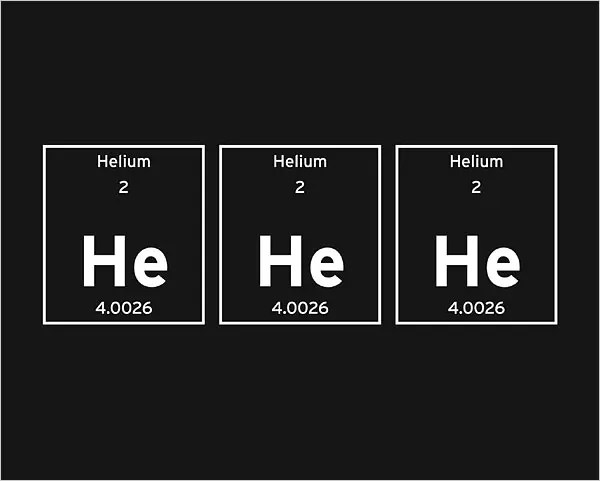
A. J. Jacobs, in defense of “the lowest form of humor“…
… I used to hate puns. Here’s an anti-pun passage from my first book, The Know-It-All – it occurs when I’m describing my trip to a Mensa convention (that’s the high IQ society).
Mensans love puns. I heard about how the eating of frogs’ legs makes the frogs hopping mad. A person who is interested in architecture has an edifice complex. When I met one Mensan who worked in a photo shop, he told me “It gives me a very negative outlook on life.”
“I shudder to think,” I responded, which simultaneously earned his respect and made me hate myself a lot.
Two reactions on re-reading this passage:
First, a photo shop? Things have certainly changed in twenty-plus years.
Second, maybe I shouldn’t have had so much self-loathing (and maybe I should have gone with the sentence “Things have certainly developed in twenty-plus years).
The point is, since writing my first book, I’ve made a U-turn on puns, or at least non-obvious twisty puns. I don’t consider myself a great punster. I’m no Myq Kaplan. But in recent years, I’ve improved a bit (or gotten worse, depending on your view of puns).
One reason for my newfound respect for puns is that I host a podcast all about word puzzles, which wouldn’t really exist without puns. Another is that my wife Julie is president of Watson Adventures Scavenger Hunts, a company that puts on events where teams work together to solve punny riddles (and have a delightful time doing it!)
But I like to tell myself that another reason I’m now pro-pun is that I had an epiphany: Puns serve a greater purpose. They make us more aware of something important about language: That it is often arbitrary, slippery, and ambiguous.
I believe my interest in puns has helped me become more linguistically aware, a more flexible thinker. Whenever I read the news nowadays, I’m hyper-conscious of the different meanings of words, which makes me more skeptical of people who try to manipulate language to make their point.
Consider the word “free” as an example. “Free” has multiple definitions. Mostly, it’s got a positive aura to it. So when you say “free market,” for instance, you’re immediately disposed to like a free market. But if a market is totally “free” in this sense—zero government regulations whatsoever—it may cause the opposite of freedom in other ways: monopolies thrive, customers lack freedom of choice, and workers lack freedom to negotiate.
Do I have proof that puns make us better thinkers? Sadly, there’s no decades-long study in which a pun-loving population and a pun-hating population create two societies from scratch, allowing us to study which is more susceptible to propaganda and authoritarianism.
But if you conduct a Google Scholar search, you can find some hints that back up my idea. Such as…
—A study in the journal Personality and Individual Differences argues that pun-based humor “not only facilitates insight problem-solving directly, but may also exert an indirect positive influence on insight problem-solving through cognitive flexibility.”
—A neuroscience paper arguing that puns ignite the same areas of the brain as frame-shifting, which is key for problem-solving.
—A paper linking awareness of ambiguous words with critical thinking.
So…maybe?
Puns, of course, have their downsides. First, I’ve been in conversations with people who are so focused on making puns that they can’t engage in meaningful dialogue.
Some argue, as Samuel Johnson allegedly did, that puns are a “lower form of wit.” (It’s not clear he said this, but he did once write that Shakespeare’s weakness for following puns “engulfed him in the mire.” Johnson later — allegedly, again — confessed to his own pun use, saying: “If I were to be punishèd for every pun I shed, there would be no puny shed of my punnish head.”)
Also in puns’ disfavor: people often refer to puns as “groaners.” But I’d argue not all puns are groaners. Only the easy ones. If someone on a tennis court complains about losing his balls and his friend replies with a comment about testicles, I don’t think the friend should automatically be awarded the Mark Twain Prize for American Humor.
On the other side of the spectrum, there are the puns so complex and intricate that they require mental gymnastics of a Simone Biles-ian level.
Perhaps the most elaborate pun I’ve run across is by Thomas Pynchon. In his novel Gravity’s Rainbow, Pynchon relates a story about the classic film director Cecille B. DeMille, a fleet of rowboats, and a bunch of criminals in the fur trade. Does this story advance the novel’s plot? Not at all, but it allowed Pynchon to write the following sentence at the end of the section:
“For DeMille, young fur henchman cannot be rowing.”
Get it? I didn’t. But when I looked it up, it turns out to be an elaborate pun on the phrase “40 million Frenchmen can’t be wrong,” which was a 1920s phrase arguing that France’s pro-alcohol, sex-positive attitudes were superior to America’s puritanism.
Perhaps you could accuse Pynchon of making too great a leap — that it’s no fun if there’s so little chance of figuring the pun out. But I still appreciate the effort.
I also appreciate when puns are pushed to their limit in another direction – namely, a relentless barrage of puns. In fact, I’ll end with my friend (and new dad!) Joe Sabia’s award-winning pun routine in the O. Henry Museum Pun-Off World Championships a few years back…
“Can Puns Save Democracy? Probably not. But maybe a little?“
See also: “Pun for the Ages” (gift article, and source of te image above)
And for contrast(?), enjoy: “A Collection of Terrible Puns.”
* “Metaphors and similes (puns, too, I might add) extend the dimensions and expand the possibilities of the world. When both innovative and relevant, they can wake up a reader, make him or her aware, through elasticity of verbiage, that reality—in our daily lives as well as in our stories—is less prescribed than tradition has led us to believe.” Tom Robbins, Wild Ducks Flying Backwards
###
As we double down on doble entendre, we might send painfully-observant birthday greetings to a man in whose repertoire puns sometimes figured, Lenny Bruce; he was born on this date in 1925. A comedian, social critic, and satirist, he was ranked (in a 2017 Roling Stone poll) the third best stand-up comic of all time– behind Richard Pryor and George Carlin, both of whom credit Bruce as an influence.
“The American Constitution was not written to protect criminals; it was written to protect the government from becoming criminals.”- Lenny Bruce

“Puns are the highest form of literature”*…
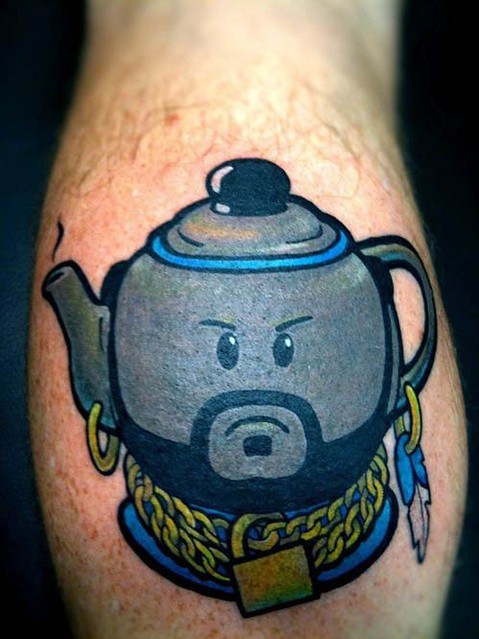
From tough guys to tramps…
… it’s all about the ink… and a sense of humor…
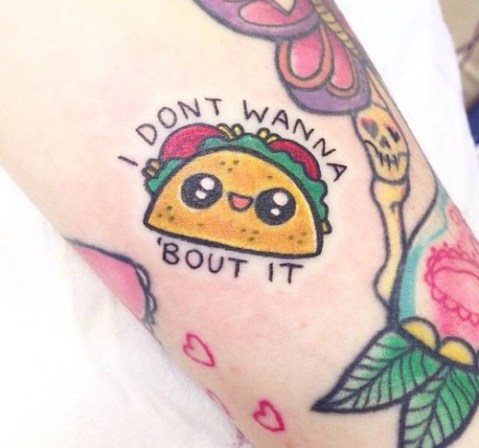
You can find the most hilarious puns ever as well as some cute pun tattoos all over the Internet.
* Alfred Hitchcock
###
As we noodle on the needle, we might send smiley birthday greetings to Joe E. Brown; he was born on this date in 1891. One of the most popular American stage and screen actors and comedians of the 1930s and 40s, he is perhaps best remembered for his role as Osgood Fielding III in Billy Wilder’s exquisite Some Like It Hot, in which Brown uttered the film’s immortal closing line, “well, nobody’s perfect.”

“A pun is the lowest form of humor—when you don’t think of it first”*…

Pun, noun. Origin unknown “The use of a word in such a way as to suggest two or more meanings or different associations, or of two or more words of the same or nearly the same sound with different meanings, so as to produce a humorous effect; a play on words.” – Oxford English Dictionary
Pity the poor pun. For the last few decades, puns have been the province of clever headline writers, anxious shopkeepers, and embarrassing uncles; otherwise, they tend to be deployed sparingly, and with a dose of irony. Indeed, the late William Safire, the New York Times‘s long-time language writer, wrote in 2005 that a pun “is to wordplay what dominatrix sex is to foreplay – a stinging whip that elicits groans of guilty pleasure.” But puns have a long and storied history– they featured in the parables of Jesus and in the plays of Shakespeare— and they play an important role in the present, allowing Chinese social media users to address “forbidden” topics.
Are puns making a comeback? Sally Davies explores the question in BBC Magazine‘s “The Pun Conundrum” (from whence, the photo above).

* Oscar Levant
###
As we punder paronomasia, we might recall that it was on this date in 1784 that Benjamin Franklin wrote, in a letter to his daughter Sarah Bache, of his displeasure with the eagle as the symbol of America; he preferred the turkey.

You must be logged in to post a comment.