Posts Tagged ‘business’
“The real danger is assuming that because you haven’t had a problem yet, you won’t have one soon”*…

Joan Didion once observed that “survivors look back and see omens, messages they missed.” That’s certainly true in investment arena… where stock indices have been hovering near all time highs while everyone awaits the falling of the shoe(s) from Trump’s tariffs and assorted other blows to the economy. Will we look back in the not-too-distant future to signs that it couldn’t, thus wouldn’t, continue?
Omens registered in advance are “early warning signs.” A classic on the economic front is the “cardboard box index“; the output of cardboard boxes is believed to be an indicator of future production of consumer goods, since cardboard containers are so common for packaging and shipping these goods. It’s down.
Mike Schuler, the managing editor of gCaptain weighs in with another…
The U.S. container shipping industry is heading toward what could be one of the most significant volume declines in its six-decade history, according to the latest analysis from shipping expert John McCown.
August data revealed only a slight 0.1% year-over-year increase in inbound container volume at the ten largest U.S. ports, following a temporary reprieve in July when volumes rose 3.2%. Meanwhile, outbound volume in August dropped 2.6%, continuing an erratic pattern that saw a 2.0% increase in July and a 1.7% decrease in June.
The marginal growth in August inbound volumes can be attributed to an exception for goods in transit after the August 7 implementation of revised reciprocal tariffs. “The new tariffs did not apply to containers that were loaded on vessels at their last foreign port of call before August 7 provided they entered the U.S. before October 5,” McCown explains.
This exemption artificially supported August figures, as “the large majority of boxes coming into the U.S. in August being exempt from the tariffs going into effect on August 7.” McCown adds that this mechanism may have even incentivized strategic deployment adjustments where “ships were loaded by August 7 and slow-steamed to the U.S.”
A stark contrast is emerging between U.S. container volumes and global shipping trends. “When U.S. container volume data is compared to global data and data in other major areas, there is a noticeable and widening gap as the downtrends in U.S. lanes are being significantly mitigated by increased volume in other areas,” notes McCown.
Evidence of this divergence can be seen in Far East export figures, which “set a new record and were 6.3% ahead of the same month last year” in July. McCown observes that “world container supply chains have already begun to adapt and reconfigure trading patterns. The U.S. is a less relevant player in world trade today than it was prior to these various tariff initiatives and will become more so as announced plans are implemented.”
The National Retail Federation has revised its projection for 2025, now expecting total inbound volume to decrease by 3.4%. When considering that year-to-date volume through August shows a 3.1% increase, this projection translates to “the remaining four months of 2025 being down 15.7% compared to the same four months in 2024.”
September will likely mark the beginning of more pronounced declines. In a September 17 presentation, the Port of Los Angeles director stated they expected inbound volume to drop 10% compared to the same month last year. Container bookings data supports this outlook, with bookings from China to the U.S. down 26% in the first week of September compared to the same period last year.
The situation could worsen if currently paused reciprocal tariffs on Chinese imports are implemented in mid-November. “If and when those tariffs are implemented, it is highly likely that they would lead to broader declines related to inbound containers to the U.S. from China,” McCown warns.
Adding another layer of complexity is the upcoming USTR ship fee plan targeting ships built in China or operated by Chinese carriers, set to take effect in mid-October. McCown describes this as “moving container volume related to trade lanes involving the U.S. into unchartered waters.” As these lanes account for more than a quarter of global container miles, “there will be a ripple effect that will be felt globally.”
The projected decline represents an unprecedented shift for an industry that has historically grown at rates exceeding U.S. GDP. “For a tangible metric that has consistently for decades grown above U.S GDP, most often at two, three or even more multiples of GDP, the unusual nature of an actual decline in inbound container volume into the U.S. cannot be overemphasized,” McCown states.
While the immediate volume impact is becoming clearer, the inflationary effects of the tariffs will take longer to manifest fully in economic data. McCown notes that “it will not be until at least when the inflation data is released in during the fourth quarter that the inflationary impact of the tariffs can begin to be accurately assessed.”
McCown concludes that the U.S. faces a difficult trade-off: “The more inbound container volume to the U.S. declines, the more commerce and growth will be impacted but the less inflation we will get. The less inbound container volume to the U.S. declines, the more inflation we will get but the less commerce and growth will be impacted. Unfortunately, there is simply no good place to be on that spectrum.”…
For what it’s worth, your correspondent does not share McCown’s confidence that a drop in container volume– in imported goods– will not raise prices. While the goods that don’t arrive won’t be passed along with tariffs baked into their prices, their substitutes, which will, per force, be scare for some time, seem likely to have their prices “bid” up…
“U.S. Container Imports Face Historic Decline as Tariff Effects Take Hold.”
All this said, prediction on the basis of indicators (and omens and signs and early warning signals and the like) is a tricky business. See, for example: “List of dates predicted for apocalyptic events.”
* G. Scott Graham, Early Warning Signals
###
As we batten down, we might recall that it was on this date in 2008 that U.S. stock markets, already on edge after the near failure of Wachovia Bank the day before, fell over the edge after the House rejected a bailout plan touted to help ease the ongoing financial crisis. Markets began their decline as soon as it became apparent the bill would fail. The Dow had its worst single day point decline in history, falling 777.68 points… the day that “The Crash of 2008” became real.

“A man must always live by his work, and his wages must at least be sufficient to maintain him”*…

Nathan Yau is back with a(nother) arresting graphic analysis– this time, of the median salaries of different occupations in the U.S. (based on 2024– so, pre-purge— data from the Bureau of Labor Statistics). The median salary for full-time workers in the United States was $49,500; but salaries vary by occupation. The interactive infographic featured in the screengrab above shows– and allows you to explore– the spread…
Healthcare practitioners, such as surgeons and emergency medicine physicians, sit at the top. Airline pilot is the only occupation with a median salary above $220,000 that is not in the healthcare category. Then there are the CEOs and managers, followed by computer and math jobs. After that, most jobs sit below the $100,000-mark by median…
… The internet tends to skew our perception of how much people make. We see the things that people buy, but that is not always a good indicator for the wages people earn. These distributions are more bottom heavy than you might expect if you based your estimates on social media.
That said, all these jobs have a range of salaries, too. It’s not just variation within job categories, but variation for each job. The above charts, along with median salary, show 25th and 75th percentiles.
For example, construction supervisors make a median salary of $78,690, but 25% made $62,400 or less (25th percentile) and 75% made $100,200 or less (75th percentile).
There are also geographic differences, made more interesting by cost of living, but we’ll save that for another time…
Explore the comparative data: “Salary and Occupation” from @flowingdata.com.
It is, of course, important to remember (in a time like this, when so much attention is paid to the very rich) that this data excludes “unearned income,” the revenue that accrues to wealth (stocks, bonds, real estate, et al.) and the benefits of “contingent” stock/option bonuses. Along with inherited wealth, they explain most of the wealth gap (and economic angst) that plagues the U.S. today.
* Adam Smith, An Inquiry into the Nature and Causes of the Wealth of Nations
###
As we investigate inequity, we might recall that on this date in 1859, Norton I distributed letters to the newspapers of San Francisco proclaiming himself Emperor of North America…
At the peremptory request and desire of a large majority of the citizens of these United States, I, Joshua Norton, formerly of Algoa Bay, Cape of Good Hope, and now for the last 9 years and 10 months past of S. F., Cal., declare and proclaim myself Emperor of these U. S.; and in virtue of the authority thereby in me vested, do hereby order and direct the representatives of the different States of the Union to assemble in Musical Hall, of this city, on the 1st day of Feb. next, then and there to make such alterations in the existing laws of the Union as may ameliorate the evils under which the country is laboring, and thereby cause confidence to exist, both at home and abroad, in our stability and integrity.
– NORTON I, Emperor of the United States.

“You all got only three friends in this world: The Lord God Almighty, the Sears Roebuck catalog, and Eugene Talmadge”*…
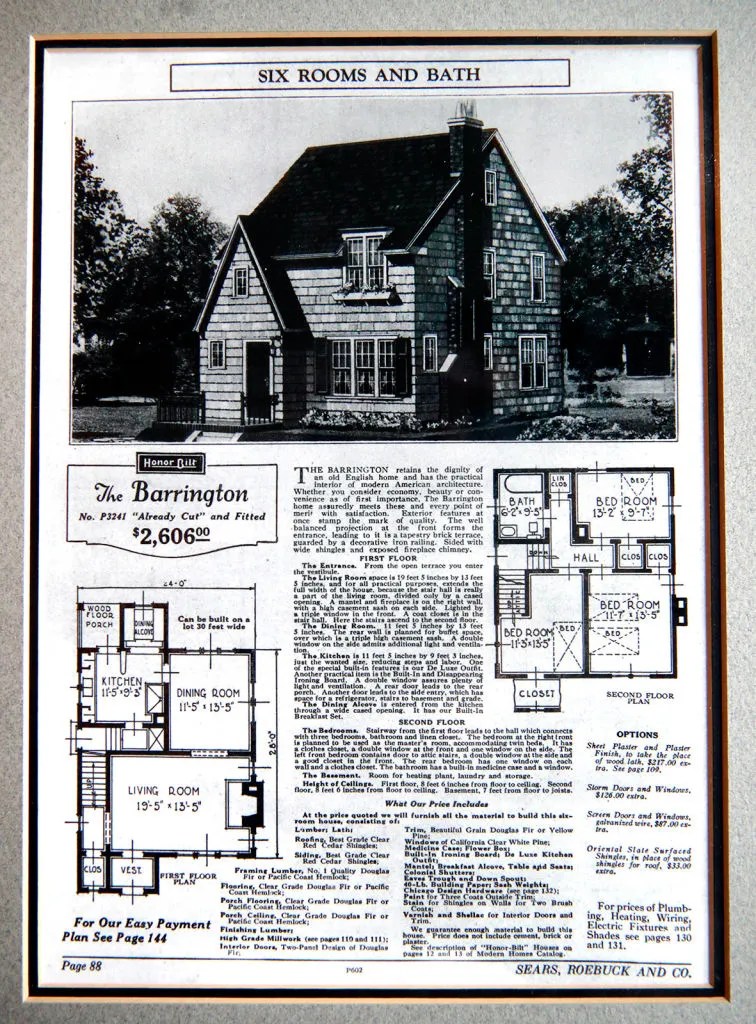
Our consumer era, born in the mid-19th century, had many parents (e.g., John Wanamaker, who pioneered the department store and helped define the “consumer” and the advertising aimed at him/her). The impetus of the department store– to offer “everything”– has found its modern instantiation in brick and mortar operations like WalMart and Target Superstores, and of course, in the on-line behemoth Amazon, which makes an extraordinary range of goods available to shoppers regardless of their proximity to a physical store.
Leo DeLuca reminds us that, over a century before Amazon, the Sears Catalog played that same role. It reigned supreme for over a century… and offered some odd products…
From heroin to houses, Sears had it all. But before the Chicago business became America’s largest retailer—and affixed its name to the world’s tallest building—Sears started by selling time.
In 1886, a 22-year-old station agent on the Minneapolis and St. Louis Railway purchased a shipment of unwanted gold watches from a local jeweler. Wristwatches had just hit the market, and since station agents needed to track train schedules, the young man thought he might hawk the watches to his fellow railway workers. The plan worked. Richard W. Sears turned a handsome profit, then moved to Minneapolis to establish the R.W. Sears Watch Company.
The following year, Sears moved to Chicago and partnered with Alvah C. Roebuck, a self-taught Hammond, Indiana, watchmaker he found through a Chicago Daily News classified ad. Roebuck soon asked Sears to buy him out, but not before lending his name to the company marquee: “Sears, Roebuck and Co.”
In 1888, Sears issued his first catalog, a thin mailer that featured only watches and jewelry. According to his apocryphal ad copy, which he always wrote himself, Sears claimed “THE LOWEST PRICES ON EARTH.” A consummate huckster, he soon started selling sundry items: buggies, bicycles, firearms, baby carriages and more.
Sears’s mail-order catalog, or “Big Book” as it was later known, became the Amazon of the Victorian era (and beyond). Like Amazon, Sears was a crucial cog in the American wheel, a giant of its time. Over its century-plus span, the Big Book grew to well over 1,000 pages and sold more than 100,000 items, including tools, hardware, apparel, appliances, furniture, sporting goods, auto supplies, farm equipment and entertainment centers. After opening its first brick-and-mortar store in 1925, Sears rose as the nation’s largest retail chain, introducing in-house brands like DieHard, Kenmore and Craftsman. In 1973, the company’s headquarters, the Sears Tower, became the tallest building in the world.
But as the 20th century faded, so did Sears—its brick-and-mortar businesses were replaced, ironically, by companies like Amazon, a convenient mail-order enterprise. On January 25, 1993, Sears ceased production of its famous Big Book catalog. In 2009, its famous Chicago skyscraper was renamed the Willis Tower. And in 2018, the company declared bankruptcy.
Over its 105-year run, the catalog was a fixture in Americans’ homes…
Read on for heroin, homes, virility aids, brain pills, “blood builder,” arsenic complexion wafers, tombstones, guns… “Before Folding 30 Years Ago, the Sears Catalog Sold Some Surprising Products,” from @smithsonianmag.bsky.social.
See also: “The Rise and Fall of Sears.”
* Georgia politician Eugene Talmadge, elected Governor four times in the 1930s and 40s
###
As we reflect on retailing, we might recall that it was on this date in 1958 that The world’s first publicly marketed instant noodles, Chikin Ramen, are introduced by Taiwanese-Japanese businessman Momofuku Ando.

“Palantir is still not a data company”*…

Palantir, founded in 2003 by Peter Thiel, Stephen Cohen, Joe Lonsdale, and Alex Karp, has grown into a company with revenues approaching $3 Billion. It works for a number of giant corporations; but its power alley has, from the start, been insinuating itself into the U.S. government ever more intimately, becoming one of the few winners in the Trump administration’s cost-cutting push (and emerging as the chosen agent to compile data on all Americans).
Palantir has become a darling of the stock market, the top-performing stock in the S&P 500 for two years running. Its stock has risen nearly 150% this year and an incredible 2,000% since its 2020 debut.
But what’s fueling all of this? Is the company’s extraordinary valuation justified? Sustainable? But more fundamentally, what is it that Palantir actually does? Palantir is often called a data broker, a data miner, or a giant database of personal information. In reality, it’s none of these—but even former employees struggle to explain it. Caroline Haskins reports…
Palantir is arguably one of the most notorious corporations in contemporary America. Cofounded by libertarian tech billionaire Peter Thiel, the software firm’s work with Immigration and Customs Enforcement, the US Department of Defense, and the Israeli military has sparked numerous protests in multiple countries. Palantir has been so infamous for so long that, for some people, its name has become a cultural shorthand for dystopian surveillance.
But a number of former Palantir employees tell WIRED they believe the public still largely misunderstands what the company actually does and how its software works. Some people think it’s a data broker that buys information from private companies and resells it to the government. Others think it’s a data miner, constantly scanning the internet for unique insights it can collect and market to customers. Still others think it maintains a giant, centralized database of information collected from all of its clients. In reality, Palantir does none of these things, but the misconceptions continue to persist.
Palantir has tried to correct the record itself in a series of blog posts with titles like “Palantir Is Not a Data Company” and “Palantir Is Still Not a Data Company.” In the latter, Palantir explains that “misconceptions can arise because our products are complicated,” but nonetheless, “it is absolutely possible” to accurately describe them to “people who are curious.”
The problem, however, is that even ex-employees struggle to provide a clear description of the company. “It’s really hard to explain what Palantir works on or what it does,” says Linda Xia, who was an engineer at Palantir from 2022 to 2024. “Even as someone who worked there, it’s hard to figure out, how do you give a cohesive explanation?”
Xia was one of 13 former Palantir staffers who signed an open letter published in May arguing that the company risks being complicit in authoritarianism by continuing to cooperate with the Trump administration. She and other former Palantir staffers who spoke to WIRED for this story argue that, in order to grapple with Palantir and its role in the world, let alone hold the company accountable, you need to first understand what it really is.
It’s not that former employees literally don’t know what Palantir is selling. In interviews with WIRED, they spoke fluidly about how its software can connect and transform different kinds of data collected by government agencies and corporations. But when asked to, say, name its direct business competitors, two former Palantir employees who requested anonymity to speak freely about their experiences, struggled to come up with anything. “I still don’t know how to answer that question, to be honest,” says one.
Juan Sebastián Pinto, who worked as a content strategist at Palantir and also signed the open letter, says it sells software to other businesses, a category commonly referred to in Silicon Valley as B2B SaaS. Another former staffer says Palantir provides “really extravagant plumbing with data.”
Xia calls Foundry, one of Palantir’s flagship software platforms, “a collection of different applications” that customers use to “operationalize data.” A fourth ex-employee dubbed Foundry a “super-charged filing cabinet.” While all of these descriptions are technically accurate, they could also apply to products from hundreds of other tech companies. So what sets Palantir apart?
Part of the answer may lie in Palantir’s marketing strategy. Pinto says he believes that the company, which recently began using the tagline “software that dominates,” has cultivated its mysterious public image on purpose. Unlike consumer-facing startups that need to clearly explain their products to everyday users, Palantir’s main audience is sprawling government agencies and Fortune 500 companies.
What it’s ultimately selling them is not just software, but the idea of a seamless, almost magical solution to complex problems. To do that, Palantir often uses the language and aesthetics of warfare, painting itself as a powerful, quasi-military intelligence partner. “Palantir is here to disrupt and make the institutions we partner with the very best in the world,” Palantir CEO Alexander Karp says in a February 2025 earnings call, “And when it’s necessary, to scare enemies, and on occasion, kill them.”…
… Underneath the jargon and marketing, Palantir sells tools that its customers—corporations, nonprofits, government agencies—use to sort through data. What makes Palantir different from other tech companies is the scale and scope of its products. Its pitch to potential customers is that they can buy one system and use it to replace perhaps a dozen other dashboards and programs, according to a 2022 analysis of Palantir’s offerings published by blogger and data engineer Ben Rogojan.
Crucially, Palantir doesn’t reorganize a company’s bins and pipes, so to speak, meaning it doesn’t change how data is collected or how it moves through the guts of an organization. Instead, its software sits on top of a customer’s messy systems and allows them to integrate and analyze data without needing to fix the underlying architecture. In some ways, it’s a technical band-aid. In theory, this makes Palantir particularly well suited for government agencies that may use state-of-the-art software cobbled together with programming languages dating back to the 1960s.
Palantir began gaining steam in the 2010s, a decade when corporate business discourse was dominated by the rise of “Big Data.” Hundreds of tech startups popped up promising to disrupt the market by leveraging information that was now readily available thanks to smartphones and internet-connected sensors, including everything from global shipping patterns to the social media habits of college students. The hype around Big Data put pressure on companies, especially legacy brands without sophisticated technical know-how, to upgrade their software, or else risk looking like dinosaurs to their customers and investors.
But it’s not exactly easy or cheap to upgrade computer systems that may date back years, or even decades. Rather than tearing everything down and building anew, companies may want a solution designed to be slapped on top of what they already have. That’s where Palantir comes in.
Palantir’s software is designed with nontechnical users in mind. Rather than relying on specialized technical teams to parse and analyze data, Palantir allows people across an organization to get insights, sometimes without writing a single line of code. All they need to do is log into one of Palantir’s two primary platforms: Foundry, for commercial users, or Gotham, for law enforcement and government users…
… Since leaving Palantir, Pinto says he’s spent a lot of time reflecting on the company’s ability to parse and connect vast amounts of data. He’s now deeply worried that an authoritarian state could use this power to “tell any narrative they want” about, say, immigrants or dissidents it may be seeking to arrest or deport. He says that software like Palantir’s doesn’t eliminate human bias.
People are the ones that choose how to work with data, what questions to ask about it, and what conclusions to draw. Their choices could have positive outcomes, like ensuring enough Covid-19 vaccines are delivered to vulnerable areas. They could also have devastating ones, like launching a deadly airstrike, or deporting someone.
In some ways, Palantir can be seen as an amplifier of people’s intentions and biases. It helps them make evermore precise and intentional decisions, for better or for worse. But this may not always be obvious to Palantir’s users. They may only experience a sophisticated platform, sold to them using the vocabulary of warfare and hegemony. It may feel as if objective conclusions are flowing naturally from the data. When Gotham users connect disparate pieces of information about a person, it could seem like they are reading their whole life story, rather than just a slice of it.
“It’s a really powerful tool,” says one former Palantir employee. “And when it’s in the wrong hands, it can be really dangerous. And I think people should be really scared about it.”
“What Does Palantir Actually Do?” from @carolinehaskins.bsky.social in @wired.com.
See also: “Decoding Palantir, the Most Mysterious Company in Silicon Valley.”
And by way of context: “TESCREAL“
* Palantir blog post (linked above)
###
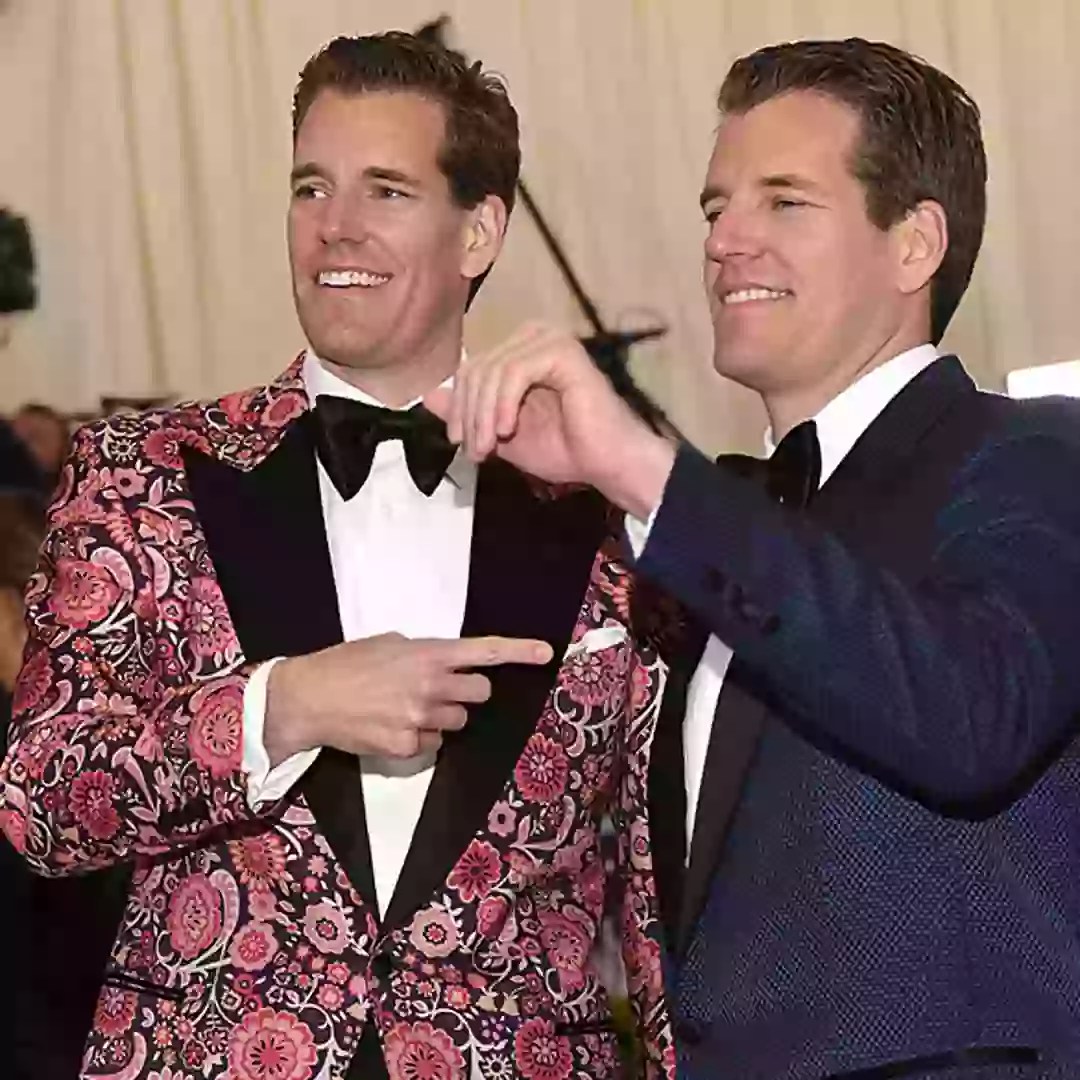
As we bow to Big Brother, we might note that it was on this date in 1981 that the Winklevoss twins, Cameron and Tyler, were born. As famously dramatized in The Social Network, the twins enlisted Harvard College classmate Mark Zuckerberg to help them with a social network project, but Zuckerberg peeled away, with the project that became Facebook. The Winklevosses agreed to a settlement (of $20 million cash and more than a million Facebook shares ), but then sued, claiming that Zuckerberg had misled them about the value of the shares (and that they were entitled to four times as many). After years of litigation, the agreement stood.
But the twins were not solely engaged in litigation. Starting with the cash stake in the original settlement, they went long on cryptocurrency, starting Winklevoss Capital Management (which invests across several asset classes, but heavily in Bitcoin and other cryptocurrencies) and Gemini (a cryptocurrency exchange). They have become major supporters of pro-cryto Republicans in general, and of Donald Trump in particular… which, one notes seems to be earning a return.
“My heart & soul care for worms”*…

Last summer we visited the family in the Florida panhandle that has been harvesting worms to sell as bait for generations. Today, Inori Roy takes us to southern Ontario, where worming is an industry. Nearly all bait worms sold in North America are hand-plucked from farmland in this part of Canada. But are we witnessing the final wiggles of a once thriving business?…
To successfully catch a Canadian nightcrawler, you have to approach it a little like you’re a cat. The worm—fat, pink, undomesticable, and anywhere between five and 10 inches long—has made its way two-thirds out of its burrow, taking in moisture from the cool night air and exploring the surface of the soil for food. If it senses your approach, it will hurtle back into its hole with startling, uncharacteristic speed. So, crouched in the dirt, you must reach for it with a quiet, swift confidence. With the pads of your thumb and forefinger, you grasp the worm’s body right above where it disappears into the burrow hole. Gently, firmly, careful not to squish or tear it, you pull.
It’s just past 10 p.m. on a cool, overcast night in early July, and I’m standing in the middle of a field in the heart of southern Ontario farm country—West Perth, population 9,000. Dozens of workers quietly emerge from the three vans that have driven onto the field. In the dim light spilling out of the vehicle interiors, they layer raincoats over hoodies, bracing for the damp and the chill. Then, they accessorize: LED headlamps strapped to their foreheads, two bags of finely ground sawdust at their hips to keep their gloves or hands dry, and large, empty tin cans hooked at their waists. If it’s a good night, they will each harvest thousands, perhaps even 10,000, worms by dawn.
If you’re in the market for fishing bait anywhere in North America, and now even in parts of western Europe, odds are you’re buying a Canadian nightcrawler plucked from this stretch of land between Toronto and Windsor. These wild Canadian worms, who live so far beneath the surface of the soil that breeding or farming them is impractical, are hand-picked by a small army of workers, almost all immigrants from Southeast Asia, including generations of Vietnamese refugees and, more recently, temporary foreign workers from Thailand and Laos. It’s a niche sector of the western economy that’s exclusively sourced from this small corner of the province, and run primarily by family businesses passed from one generation to the next. In a given year, the more than $200 million industry sells between 500 and 700 million worms. But with changing demand, immigration labour policies, and the climate crisis, it’s also at an existential crossroads…
Fascinating: “The Worm Hunters of Southern Ontario,” from @royinori.bsky.social in @thelocal.to.
* Charles Darwin, in an 1880 letter See also here and the earlier (R)D linked above.
###
As we wriggle, we might recall that it was at about 2:30 p.m. on this date in 2004, in the village of Knighton in Shropshire (in the West Midlands of the UK), that worms were temporarily unnecessary: it rained fish.
See also: “Ten Times It Rained Animals (Yes, Animals)” (and here).

You must be logged in to post a comment.