Posts Tagged ‘products’
“You all got only three friends in this world: The Lord God Almighty, the Sears Roebuck catalog, and Eugene Talmadge”*…
Our consumer era, born in the mid-19th century, had many parents (e.g., John Wanamaker, who pioneered the department store and helped define the “consumer” and the advertising aimed at him/her). The impetus of the department store– to offer “everything”– has found its modern instantiation in brick and mortar operations like WalMart and Target Superstores, and of course, in the on-line behemoth Amazon, which makes an extraordinary range of goods available to shoppers regardless of their proximity to a physical store.
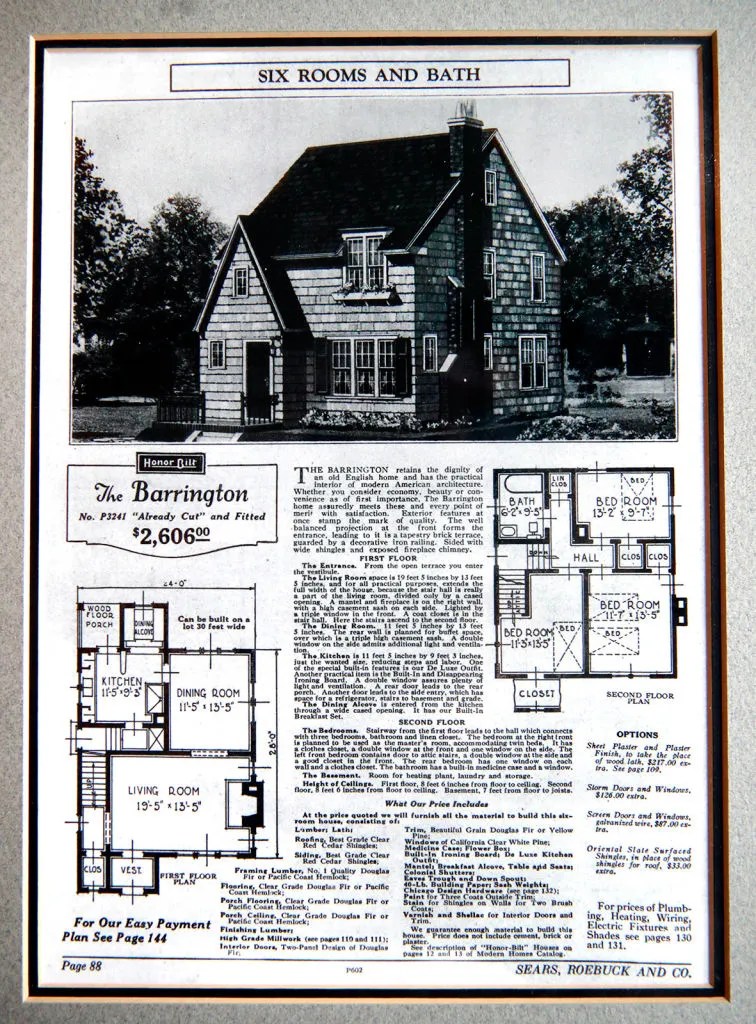
Leo DeLuca reminds us that, over a century before Amazon, the Sears Catalog played that same role. It reigned supreme for over a century… and offered some odd products…
From heroin to houses, Sears had it all. But before the Chicago business became America’s largest retailer—and affixed its name to the world’s tallest building—Sears started by selling time.
In 1886, a 22-year-old station agent on the Minneapolis and St. Louis Railway purchased a shipment of unwanted gold watches from a local jeweler. Wristwatches had just hit the market, and since station agents needed to track train schedules, the young man thought he might hawk the watches to his fellow railway workers. The plan worked. Richard W. Sears turned a handsome profit, then moved to Minneapolis to establish the R.W. Sears Watch Company.
The following year, Sears moved to Chicago and partnered with Alvah C. Roebuck, a self-taught Hammond, Indiana, watchmaker he found through a Chicago Daily News classified ad. Roebuck soon asked Sears to buy him out, but not before lending his name to the company marquee: “Sears, Roebuck and Co.”
In 1888, Sears issued his first catalog, a thin mailer that featured only watches and jewelry. According to his apocryphal ad copy, which he always wrote himself, Sears claimed “THE LOWEST PRICES ON EARTH.” A consummate huckster, he soon started selling sundry items: buggies, bicycles, firearms, baby carriages and more.
Sears’s mail-order catalog, or “Big Book” as it was later known, became the Amazon of the Victorian era (and beyond). Like Amazon, Sears was a crucial cog in the American wheel, a giant of its time. Over its century-plus span, the Big Book grew to well over 1,000 pages and sold more than 100,000 items, including tools, hardware, apparel, appliances, furniture, sporting goods, auto supplies, farm equipment and entertainment centers. After opening its first brick-and-mortar store in 1925, Sears rose as the nation’s largest retail chain, introducing in-house brands like DieHard, Kenmore and Craftsman. In 1973, the company’s headquarters, the Sears Tower, became the tallest building in the world.
But as the 20th century faded, so did Sears—its brick-and-mortar businesses were replaced, ironically, by companies like Amazon, a convenient mail-order enterprise. On January 25, 1993, Sears ceased production of its famous Big Book catalog. In 2009, its famous Chicago skyscraper was renamed the Willis Tower. And in 2018, the company declared bankruptcy.
Over its 105-year run, the catalog was a fixture in Americans’ homes…
Read on for heroin, homes, virility aids, brain pills, “blood builder,” arsenic complexion wafers, tombstones, guns… “Before Folding 30 Years Ago, the Sears Catalog Sold Some Surprising Products,” from @smithsonianmag.bsky.social.
See also: “The Rise and Fall of Sears.”
* Georgia politician Eugene Talmadge, elected Governor four times in the 1930s and 40s
###
As we reflect on retailing, we might recall that it was on this date in 1958 that The world’s first publicly marketed instant noodles, Chikin Ramen, are introduced by Taiwanese-Japanese businessman Momofuku Ando.

“I have not failed. I’ve just found 10,000 ways that won’t work.”*…

Liam Grace-Flood on the near universal comedy of technological failure…
… I’ve always been more interested in the failed inventions that aren’t just paving stones on the road to success. The kind of attempts that are so bad that you have to wonder “are they serious?” – like a nose stylus (pictured above) for using your phone in the bath when your hands get wet.
There are many variations on the idea of ‘failed invention.’ Rube Goldberg machines are overly-complicated contraptions, designed to accomplish simple tasks. Kludges and jugaads are hacky devices assembled from what’s available – usually creating something much weirder than if you started from scratch. There’s a whole genre of life hack TikToks where creators, in the quest to create as much content as possible, don’t stop to ask if what they’re creating makes any sense at all. But I’d say the genre of bad invention with the most nuanced and interesting relationship to failure is Chindogu.
Chindogu is a Japanese word meaning “weird tool.” These (almost) useless inventions might address a challenge, but they also create bigger problems. Iconic Chindogu inventions include chopsticks with a fan attached for cooling hot food and a onesie with mop-like fringe, harnessing the untapped crawling power of your baby to clean the floor. While inventions like these are usually not practical for their intended purpose, they can still be charming, evocative, and funny, and give us something that successful inventions can’t. They offer a moment’s deviation from some prescribed path to success, a pause in the slog of value creation, to allow a moment’s worth of weird joy…
A warm and wonderful appraisal of the innovative spirit (that doubles as a last-minute Holiday gift list): “On Chindogu,” in @the_prepared.
(Image above: source)
* Thomas Edison
###
As we celebrate snafus, we might send well-designed birthday greetings to someone who successfully connected products with users, Walter Dorwin Teague; he was born on this date in 1883. An industrial designer, architect, illustrator, graphic designer, writer, and entrepreneur, he is often called the “Dean of Industrial Design,” a field that he pioneered as a profession in the US, along with Norman Bel Geddes, Raymond Loewy, and Henry Dreyfuss. He is widely known for his exhibition designs during the 1939-40 New York World’s Fair (including the Ford Building), and for his iconic product and package designs, from Eastman Kodak’s Bantam Special to the steel-legged Steinway piano.

“Deciding what not to do is as important as deciding what to do”*…

Wirecutter is best known for recommending things that are the best of the best. But on occasion, we discover the worst of the worst.
Sometimes this happens during testing (like when we had to force down countless cups of bad Keurig coffee), or when an entire category fails to deliver (like great-smelling but useless essential oil bug repellents), or just because a thing has no business even existing (we’re looking at you, air fryers)…
A list of products to which we should just say no: “Wirecutter’s Worst Things for Most People.”
* Steve Jobs
###
As we resist the urge, we might recall that it was on this date in 1995 that (to the commercial accompaniment of The Rolling Stones’ “Start Me Up”) Microsoft released Windows 95 to retail.

You must be logged in to post a comment.