Posts Tagged ‘catalog’
“You all got only three friends in this world: The Lord God Almighty, the Sears Roebuck catalog, and Eugene Talmadge”*…
Our consumer era, born in the mid-19th century, had many parents (e.g., John Wanamaker, who pioneered the department store and helped define the “consumer” and the advertising aimed at him/her). The impetus of the department store– to offer “everything”– has found its modern instantiation in brick and mortar operations like WalMart and Target Superstores, and of course, in the on-line behemoth Amazon, which makes an extraordinary range of goods available to shoppers regardless of their proximity to a physical store.
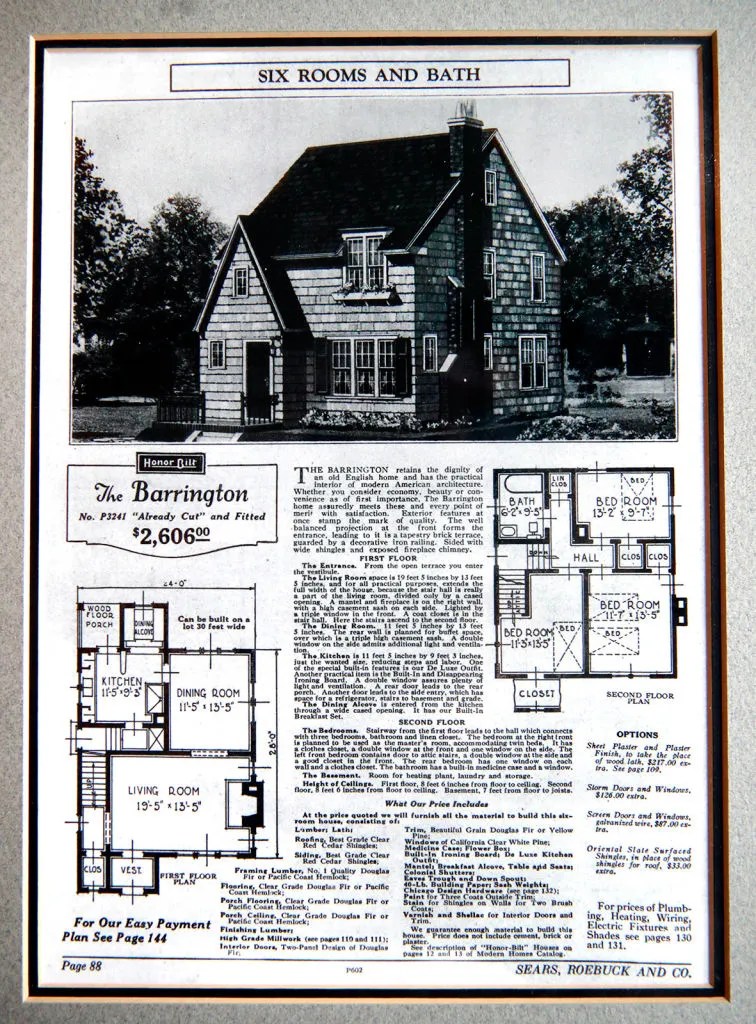
Leo DeLuca reminds us that, over a century before Amazon, the Sears Catalog played that same role. It reigned supreme for over a century… and offered some odd products…
From heroin to houses, Sears had it all. But before the Chicago business became America’s largest retailer—and affixed its name to the world’s tallest building—Sears started by selling time.
In 1886, a 22-year-old station agent on the Minneapolis and St. Louis Railway purchased a shipment of unwanted gold watches from a local jeweler. Wristwatches had just hit the market, and since station agents needed to track train schedules, the young man thought he might hawk the watches to his fellow railway workers. The plan worked. Richard W. Sears turned a handsome profit, then moved to Minneapolis to establish the R.W. Sears Watch Company.
The following year, Sears moved to Chicago and partnered with Alvah C. Roebuck, a self-taught Hammond, Indiana, watchmaker he found through a Chicago Daily News classified ad. Roebuck soon asked Sears to buy him out, but not before lending his name to the company marquee: “Sears, Roebuck and Co.”
In 1888, Sears issued his first catalog, a thin mailer that featured only watches and jewelry. According to his apocryphal ad copy, which he always wrote himself, Sears claimed “THE LOWEST PRICES ON EARTH.” A consummate huckster, he soon started selling sundry items: buggies, bicycles, firearms, baby carriages and more.
Sears’s mail-order catalog, or “Big Book” as it was later known, became the Amazon of the Victorian era (and beyond). Like Amazon, Sears was a crucial cog in the American wheel, a giant of its time. Over its century-plus span, the Big Book grew to well over 1,000 pages and sold more than 100,000 items, including tools, hardware, apparel, appliances, furniture, sporting goods, auto supplies, farm equipment and entertainment centers. After opening its first brick-and-mortar store in 1925, Sears rose as the nation’s largest retail chain, introducing in-house brands like DieHard, Kenmore and Craftsman. In 1973, the company’s headquarters, the Sears Tower, became the tallest building in the world.
But as the 20th century faded, so did Sears—its brick-and-mortar businesses were replaced, ironically, by companies like Amazon, a convenient mail-order enterprise. On January 25, 1993, Sears ceased production of its famous Big Book catalog. In 2009, its famous Chicago skyscraper was renamed the Willis Tower. And in 2018, the company declared bankruptcy.
Over its 105-year run, the catalog was a fixture in Americans’ homes…
Read on for heroin, homes, virility aids, brain pills, “blood builder,” arsenic complexion wafers, tombstones, guns… “Before Folding 30 Years Ago, the Sears Catalog Sold Some Surprising Products,” from @smithsonianmag.bsky.social.
See also: “The Rise and Fall of Sears.”
* Georgia politician Eugene Talmadge, elected Governor four times in the 1930s and 40s
###
As we reflect on retailing, we might recall that it was on this date in 1958 that The world’s first publicly marketed instant noodles, Chikin Ramen, are introduced by Taiwanese-Japanese businessman Momofuku Ando.

“You’ve got questions, we’ve got answers”*…

The once ubiquitous Radio Shack had, at its height, around 5,000 stores in the U.S., a number that has shrunk to 524, as the company has changed hands several times in its struggle to recover after missing the shift to ecommerce at that turn of the century.
One of the casualties of the chain’s downfall was their annual catalog, with had debuted in 1921. A wish book and a reference for a certain sort of person [of which your correspondent was one], it was finally discontinued in 2011. Cumulatively, they are a pictorial history of the development of electronics.
And now, they’re available to browse online…
In the virtual corridors of RadioShackCatalogs.com, a digital archive unfolds like a time capsule, preserving the history of RadioShack from its inception in 1921. As a venerable retailer, RadioShack had been a cornerstone of innovation for over 100 years, providing an array of cutting-edge technology products and services that spanned personal, mobile, and home technology.
The heart of this online archive lay in its collection of catalogs, spanning the years 1939 to 2011. For 72 years, RadioShack had meticulously crafted these catalogs, showcasing a diverse range of products that mirrored the evolving landscape of technology. From hi-fidelity stereos to communication equipment, from computers to electronic components, these catalogs are a visual journey through the history of RadioShack.
Brands like Tandy, Realistic, TRS-80, Micronta, Archer, Optimus, Clarinette, Nova, Patrolman, Enercell, and Science Fair adorned the pages, each representing a chapter in the RadioShack story. Professionals, tech-savvy consumers, and hobbyists alike eagerly perused these catalogs, seeking the latest gadgets, tools, and electronic wonders that would shape their world.
What sets RadioShackCatalogs.com apart is its innovative approach to showcasing this historical material. The pages of these catalogs come alive in a page-flipping format, allowing users to traverse the years, page by page. Whether researching RadioShack products, immersing in historical material, tracking the progression of electronics and computer technology, or simply indulging in a nostalgic trip down memory lane, this site offers a unique and captivating journey through time experience.
In a world where technology continues to advance, this digital repository ensures that the memories, products, and innovations of RadioShack will forever be accessible to those who wish to reminisce and appreciate the enduring impact of this iconic retailer.
Every annual catalog, computer catalogs, sale catalogs, corporate histories, and more: Radio Shack Catalogs.
* Radio Shack slogan
###
As we browse, we might spare a thought for Masaru Ibuka; he died on this date in 1997. In 1946, he co-founded (with Akio Morita) a small post-war radio-repair company that grew into the giant Sony Corporation.

You must be logged in to post a comment.