Posts Tagged ‘astronomy’
“It is impossible to contemplate the spectacle of the starry universe without wondering how it was formed”*…

Paul Constance on how Chile, a country riven by inequality and political conflict, has become a global sanctuary for the long science that drives astronomical discovery, and on the questions that raises…
… The next era of astronomy will depend on instruments so complicated and costly that no single nation can build them. A list of contributors to the James Webb Space Telescope, for example, includes 35 universities and 280 public agencies and private companies in 14 countries. This aggregation of design, engineering, construction and software talent from around the planet is a hallmark of “big science” projects. But large telescopes are also emblematic of the outsized timescales of “long science.” They depend on a fragile amalgam of trust, loyalty, institutional prestige and sheer endurance that must sustain a project for two or three decades before “first light,” or the moment when a telescope actually begins to gather data.
“It takes a generation to build a telescope,” Charles Alcock, director of the Harvard-Smithsonian Center for Astrophysics and a member of Giant Magellan Telescope (GMT) board, said some years ago. Consider the logistics involved in a single segment of the GMT’s construction: the process of fabricating its seven primary mirrors, each measuring 27 feet in diameter and using 17 metric tons of specialized Japanese glass. The only facility capable of casting mirrors this large (by melting the glass inside a clam-shaped oven at 2,100 degrees Fahrenheit) is situated deep beneath University of Arizona football stadium. It takes three months for the molten glass to cool. Over the next four years, the mirror will be mounted, ground and slowly polished to a precision of around one millionth of an inch. The GMT’s first mirror was cast in 02005; its seventh will be finished sometime in 02027. Building the 1,800-ton steel structure that will hold these mirrors, shipping the enormous parts by sea, assembling the telescope atop Cerro Las Campanas, and then testing and calibrating its incommunicably delicate instruments will take several more years.
Not surprisingly, these projects don’t even attempt to raise their full budgets up front. Instead, they operate on a kind of faith, scraping together private grants and partial transfers from governments and universities to make incremental progress, while constantly lobbying for additional funding. At each stage, they must defend nebulous objectives (“understanding the nature of dark matter”) against the claims of disciplines with more tangible and near-term goals, such as fusion energy. And given the very real possibility that they will not be completed, big telescopes require what private equity investors might describe as the world’s most patient risk capital.
Few countries have been more successful at attracting this kind of capital than Chile. The GMT is one of three colossal observatories currently under construction in the Atacama Desert. The $1.6 billion Extremely Large Telescope, which will house a 128-foot main mirror inside a dome nearly as tall as the Statue of Liberty, will be able to directly image and study the atmospheres of potentially habitable exoplanets. The $1.9 billion Vera T. Rubin Telescope will use a 3.500 megapixel digital camera to map the entire night sky every three days, creating the first 3-D virtual map of the visible cosmos while recording changes in stars and events like supernovas. Two other comparatively smaller projects, the Fred Young Sub-millimeter Telescope and the Cherenkov Telescope Array, are also in the works.
Chile is already home to the $1.4 billion Atacama Large Millimeter Array (ALMA), a complex of 66 huge dish antennas some 16,000 feet above sea level that used to be described as the world’s largest and most expensive land-based astronomical project. And over the last half-century, enormous observatories at Cerro Tololo, Cerro Pachon, Cerro Paranal, and Cerro La Silla have deployed hundreds of the world’s most sophisticated telescopes and instruments to obtain foundational evidence in every branch of astronomy and astrophysics.

By the early 02030s, a staggering 70 percent of the world’s entire land-based astronomical data gathering capacity is expected to be concentrated in a swath of Chilean desert about the size of Oregon.
Collectively, this cluster of observatories represents expenditures and collaboration on a scale similar to “big science” landmarks such as the Large Hadron Collider or the Manhattan Project. Those enterprises were the product of ambitious, long-term strategies conceived and executed by a succession of visionary leaders. But according to Barbara Silva, a historian of science at Chile’s Universidad Alberto Hurtado, there has been no grand plan, and no one can legitimately take credit for turning Chile into the global capital of astronomy…
“Stumbling Toward First Light,” from @presentbias and @longnow.
* Henri Poincaré
###
As we look up, we might recall that it was on this date in 2001 that NASA launched the Mars Odyssey, sending back stunning images from its tv cameras during its fiery ascent. Odyssey traveled 286 million miles before entering orbit around the red planet the following October.
Its mission was (and is– at 22-and-a-half years, it’s the longest-serving spacecraft at Mars) to use its spectrometers and a thermal imager to detect evidence of past or present water and ice, as well as study the planet’s geology and radiation environment in a quest to help answer the question of whether life once existed on Mars and to create a risk-assessment of the radiation that future astronauts on Mars might experience. (As a bonus, it acts as a relay for communications between the Curiosity rover [and previously the Mars Exploration Rovers and Phoenix lander] and Earth.)

“You may delay, but time will not”*…
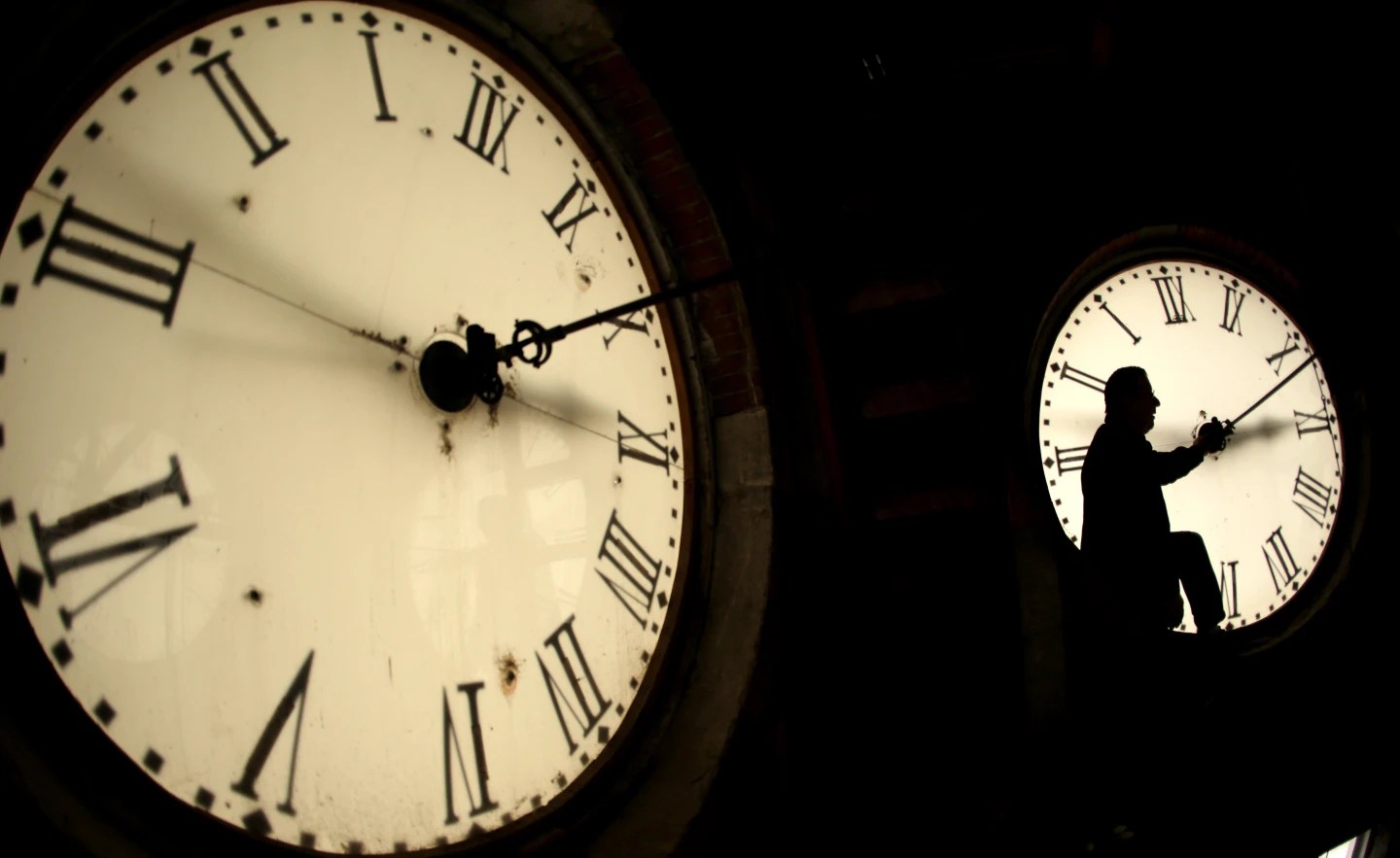
It turns out that our feeling that things are speeding up has some basis in science…
Earth’s changing spin is threatening to toy with our sense of time, clocks and computerized society in an unprecedented way — but only for a second.
For the first time in history, world timekeepers may have to consider subtracting a second from our clocks in a few years because the planet is rotating a tad faster than it used to. Clocks may have to skip a second — called a “negative leap second” — around 2029, a study in the journal Nature said Wednesday.
“This is an unprecedented situation and a big deal,” said study lead author Duncan Agnew, a geophysicist at the Scripps Institution of Oceanography at the University of California, San Diego. “It’s not a huge change in the Earth’s rotation that’s going to lead to some catastrophe or anything, but it is something notable. It’s yet another indication that we’re in a very unusual time.”
Ice melting at both of Earth’s poles has been counteracting the planet’s burst of speed and is likely to have delayed this global second of reckoning by about three years, Agnew said.
“We are headed toward a negative leap second,” said Dennis McCarthy, retired director of time for the U.S. Naval Observatory who wasn’t part of the study. “It’s a matter of when.”…
The full story: “A faster spinning Earth may cause timekeepers to subtract a second from world clocks,” from @AP.
For (even) more on leap seconds on their history, see “Will We Have a Negative Leap Second?“, by Demetrios Matsakis (also a retired director of time for the U.S. Naval Observatory).
See also: “Climate change is altering Earth’s rotation enough to mess with our clocks” (gift article): “in that one second, the Earth rotated about four football fields”
* Benjamin Franklin
###
As we muse on measurement, we might send carefully-observed birthday greetings to Sir Harold Spencer Jones; he was born on this date in 1890. An astronomer (indeed, for 23 years the tenth Astronomer Royal), he specialized in positional astronomy, particularly the motion and orientation of the Earth in space… a focus that helped him contribute to knowledge of the Earth’s rotation and improved timekeeping– efforts that led to Spencer Jones’ election (in 1947) as the first President of the Royal Institute of Navigation (which, In 1951, named its highest award, the Gold Medal, in his honor).

“Prediction is very difficult, especially if it’s about the future”*…

But, as Dylan Matthews reports, some are better at it than others…
The question before a group made up of some of the best forecasters of world events: What are the odds that China will control at least half of Taiwan’s territory by 2030?
Everyone on the chat gives their answer, and in each case it’s a number. Chinmay Ingalagavi, an economics fellow at Yale, says 8 percent. Nuño Sempere, the 25-year-old Spanish independent researcher and consultant leading our session, agrees. Greg Justice, an MBA student at the University of Chicago, pegs it at 17 percent. Lisa Murillo, who holds a PhD in neuroscience, says 15-20 percent. One member of the group, who asked not to be named in this context because they have family in China who could be targeted by the government there, posits the highest figure: 24 percent.
Sempere asks me for my number. Based on a quick analysis of past military clashes between the countries, I came up with 5 percent. That might not seem too far away from the others, but it feels embarrassingly low in this context. Why am I so out of step?
This is a meeting of Samotsvety. The name comes from a 50-year-old Soviet rock band — more on that later — but the modern Samotsvety specializes in predicting the future. And they are very, very good at it. At Infer, a major forecasting platform operated by Rand, the four most accurate forecasters in the site’s history are all members of Samotsvety, and there is a wide gap between them and fifth place. In fact, the gap between them and fifth place is bigger than between fifth and 10th places. They’re waaaaay out ahead.
While Samotsvety members converse on Slack regularly, the Saturday meetings are the heart of the group, and I was sitting in to get a sense of why, exactly, the group was so good. What were these folks doing differently that made them able to see the future when the rest of us can’t?…
The “secrets” of superforecasters: “How a ragtag band of internet friends became the best at forecasting world events,” from @dylanmatt in @voxdotcom.
(Image above: source)
* Niels Bohr
###
As we contemplate change, we might recall that it was on this date in 1781 that William Herschel discovered Uranus. The first planet to be discovered with the aid of a telescope, he initially thought that it was a comet.

And on this date in 1930, Clyde Tombaugh discovered Pluto. Originally designated the ninth planet, it has been “demoted” to minor (or dwarf) planet status.

“The pursuit of science is a grand adventure, driven by curiosity, fueled by passion, and guided by reason”*…
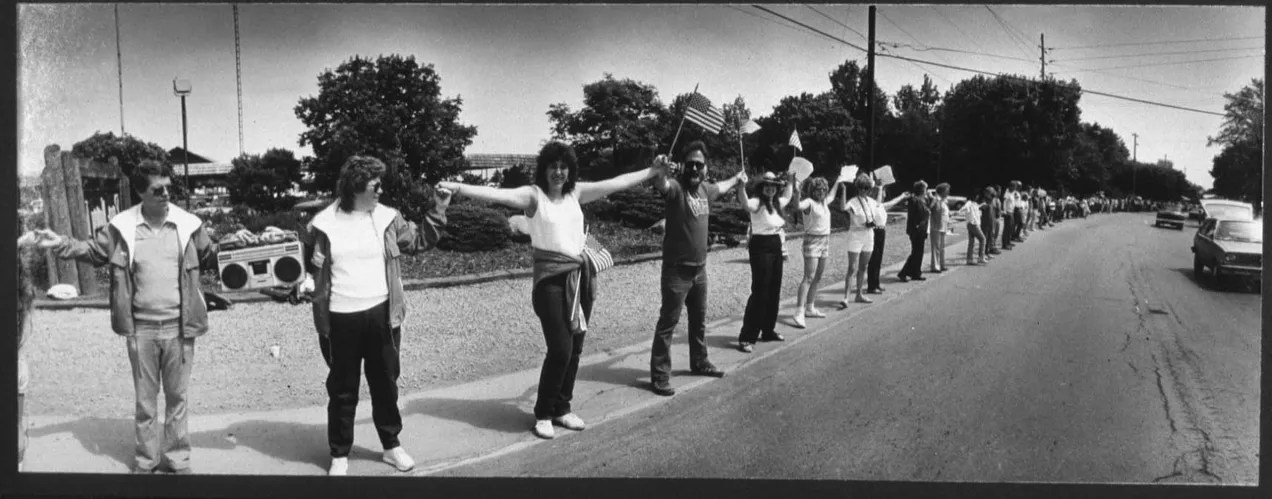
Adam Mastroianni on how science advances (and how it’s held back), with a provocative set of suggestions for how it might be accelerated…
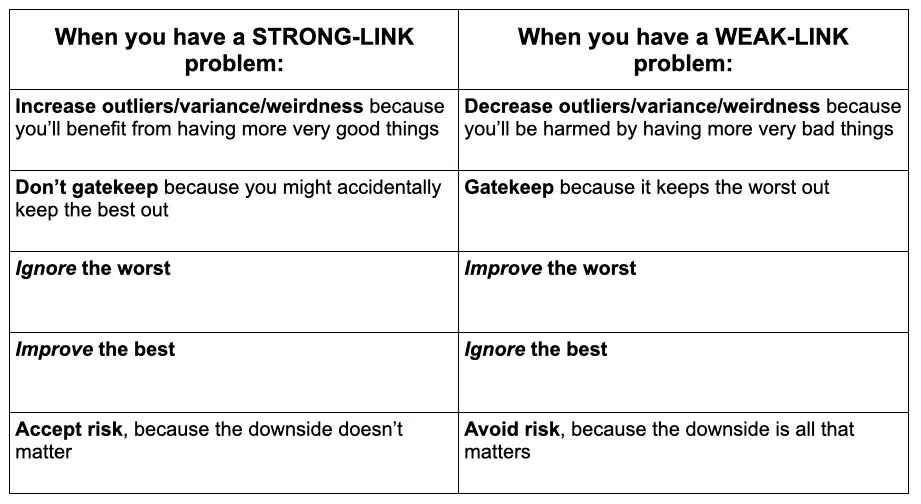
There are two kinds of problems in the world: strong-link problems and weak-link problems.
Weak-link problems are problems where the overall quality depends on how good the worst stuff is. You fix weak-link problems by making the weakest links stronger, or by eliminating them entirely.
Food safety, for example, is a weak-link problem. You don’t want to eat anything that will kill you. That’s why it makes sense for the Food and Drug Administration to inspect processing plants, to set standards, and to ban dangerous foods…
…
Weak-link problems are everywhere. A car engine is a weak-link problem: it doesn’t matter how great your spark plugs are if your transmission is busted. Nuclear proliferation is a weak-link problem: it would be great if, say, France locked up their nukes even tighter, but the real danger is some rogue nation blowing up the world. Putting on too-tight pants is a weak-link problem: they’re gonna split at the seams.
It’s easy to assume that all problems are like this, but they’re not. Some problems are strong-link problems: overall quality depends on how good the best stuff is, and the bad stuff barely matters. Like music, for instance. You listen to the stuff you like the most and ignore the rest. When your favorite band releases a new album, you go “yippee!” When a band you’ve never heard of and wouldn’t like anyway releases a new album, you go…nothing at all, you don’t even know it’s happened. At worst, bad music makes it a little harder for you to find good music, or it annoys you by being played on the radio in the grocery store while you’re trying to buy your beetle-free asparagus…
Strong-link problems are everywhere; they’re just harder to spot. Winning the Olympics is a strong-link problem: all that matters is how good your country’s best athletes are. Friendships are a strong-link problem: you wouldn’t trade your ride-or-dies for better acquaintances. Venture capital is a strong-link problem: it’s fine to invest in a bunch of startups that go bust as long as one of them goes to a billion…
In the long run, the best stuff is basically all that matters, and the bad stuff doesn’t matter at all. The history of science is littered with the skulls of dead theories. No more phlogiston nor phlegm, no more luminiferous ether, no more geocentrism, no more measuring someone’s character by the bumps on their head, no more barnacles magically turning into geese, no more invisible rays shooting out of people’s eyes, no more plum pudding…
Our current scientific beliefs are not a random mix of the dumbest and smartest ideas from all of human history, and that’s because the smarter ideas stuck around while the dumber ones kind of went nowhere, on average—the hallmark of a strong-link problem. That doesn’t mean better ideas win immediately. Worse ideas can soak up resources and waste our time, and frauds can mislead us temporarily. It can take longer than a human lifetime to figure out which ideas are better, and sometimes progress only happens when old scientists die. But when a theory does a better job of explaining the world, it tends to stick around.
(Science being a strong-link problem doesn’t mean that science is currently strong. I think we’re still living in the Dark Ages, just less dark than before.)
Here’s the crazy thing: most people treat science like it’s a weak-link problem.
Peer reviewing publications and grant proposals, for example, is a massive weak-link intervention. We spend ~15,000 collective years of effort every year trying to prevent bad research from being published. We force scientists to spend huge chunks of time filling out grant applications—most of which will be unsuccessful—because we want to make sure we aren’t wasting our money…
…
I think there are two reasons why scientists act like science is a weak-link problem.
The first reason is fear. Competition for academic jobs, grants, and space in prestigious journals is more cutthroat than ever. When a single member of a grant panel, hiring committee, or editorial board can tank your career, you better stick to low-risk ideas. That’s fine when we’re trying to keep beetles out of asparagus, but it’s not fine when we’re trying to discover fundamental truths about the world…
The second reason is status. I’ve talked to a lot of folks since I published The rise and fall of peer review and got a lot of comments, and I’ve realized that when scientists tell me, “We need to prevent bad research from being published!” they often mean, “We need to prevent people from gaining academic status that they don’t deserve!” That is, to them, the problem with bad research isn’t really that it distorts the scientific record. The problem with bad research is that it’s cheating.
I get that. It’s maddening to watch someone get ahead using shady tactics, and it might seem like the solution is to tighten the rules so we catch more of the cheaters. But that’s weak-link thinking. The real solution is to care less about the hierarchy…
Here’s our reward for a generation of weak-link thinking.
The US government spends ~10x more on science today than it did in 1956, adjusted for inflation. We’ve got loads more scientists, and they publish way more papers. And yet science is less disruptive than ever, scientific productivity has been falling for decades, and scientists rate the discoveries of decades ago as worthier than the discoveries of today. (Reminder, if you want to blame this on ideas getting harder to find, I will fight you.)…
…
Whether we realize it or not, we’re always making calls like this. Whenever we demand certificates, credentials, inspections, professionalism, standards, and regulations, we are saying: “this is a weak-link problem; we must prevent the bad!”
Whenever we demand laissez-faire, the cutting of red tape, the letting of a thousand flowers bloom, we are saying: “this is a strong-link problem; we must promote the good!”
When we get this right, we fill the world with good things and rid the world of bad things. When we don’t, we end up stunting science for a generation. Or we end up eating a lot of asparagus beetles…
“Science is a strong-link problem,” from @a_m_mastroianni in @science_seeds.
* James Clerk Maxwell
###
As we ponder the process of progress, we might spare a thought for Sir Christopher Wren; he died on this date in 1723. A mathematician and astronomer (who co-founded and later served as president of the Royal Society), he is better remembered as one of the most highly acclaimed English architects in history; he was given responsibility for rebuilding 52 churches in the City of London after the Great Fire in 1666, including what is regarded as his masterpiece, St. Paul’s Cathedral, on Ludgate Hill.
Wren, whose scientific work ranged broadly– e.g., he invented a “weather clock” similar to a modern barometer, new engraving methods, and helped develop a blood transfusion technique– was admired by Isaac Newton, as Newton noted in the Principia.

“Oh dark, dark, dark, amid the blaze of noon, irrevocably dark, total eclipse without all hope of day”*…

Today is the occasion of an annular eclipse, which will pass through eight U.S. states before crossing the Gulf of Mexico and to transit Mexico, Guatemala, Belize, Honduras, Nicaragua, Costa Rica, Panama, Colombia, and Brazil. While some people in the Western Hemisphere will witness a “ring of fire” during the eclipse, many more will experience the phenomenon of crescent sunlight. Rebecca Boyle has advice on how we might approach it…
… This Saturday, for some people in the Western Hemisphere, the Sun will disappear for a few minutes and appear to leave a flaming hole in the sky. Instead of a ball of fire, the Sun will transform into a ring of fire, a strange and wondrous sight. This is an annular solar eclipse, and it happens because the Moon is right smack in front of the Sun.
A solar eclipse only happens during new Moon phases, when we otherwise wouldn’t be able to see our nearest celestial companion. Though we get a new Moon every month, we do not get solar eclipses as often because of our satellite’s oddball path around the planet. Sometimes the Moon casts a shadow just above Earth, and sometimes just below. This weekend, the Moon’s shadow will fall onto Earth, just right for people in parts of the Western Hemisphere to see it.
The annular eclipse is a preview of a more incredible, rarer event next April, when a total solar eclipse will cross the continental United States. There is no experience on Earth like a total eclipse; make plans to see it, if you can. But this weekend’s “ring of fire” eclipse is an event you should try to see first (safely, with eclipse glasses), if you can get yourself into the western U.S. or parts of Central and South America. Here’s a map showing the eclipse path; if you can’t travel to see it in person, you can watch the eclipse online.
Eclipses happen because the Sun and Moon appear to be roughly the same diameter. The Sun is actually about 400 times larger than the Moon, but it is also about 400 times more distant, so they seem like the same size in our sky.
…
The Moon’s shadow forms two concentric cones, composed of an inner shadow called the umbra, where the sun is completely obscured, and an outer, broader cone called a penumbra, where sunlight still shines but it is partially blocked. The umbra can be seen in a narrow geographic ribbon across the Americas, and it’s where you will see a full eclipse; under the penumbra, which covers much of the western U.S., Central and South America, you will see a partial eclipse.
Like the gears of a clock, a combination of precise positions and movements initiate an eclipse of the Sun. As Earth spins, day breaks. The Sun and Moon appear to trace a path across the sky. The Sun is not moving (at least not perceptibly); Earth’s rotation makes the star’s position change. The Moon is moving around us while the Earth rotates, so it seems to move too, but it appears to go slower than our star. The partial solar eclipse begins as the Sun catches up to the Moon’s position in our sky. On Saturday morning around 8:06 a.m. Pacific time, people in Eugene, Oregon, will be the first to see the Moon appear to take a bite out of the Sun. The bite will get progressively bigger until the full annular eclipse begins at 9:16 a.m. Pacific time.
The annular eclipse only lasts about four minutes (depending on your precise location under the Moon’s shadow) but the partial eclipse, which will be visible over a much wider geographic area, lasts about an hour and 15 minutes before and afterward. During this phase, shadows cast by objects on Earth will change in unusual ways. One lovely place to be during a partial solar eclipse is underneath a tree, if you can find an evergreen or a deciduous tree that has not dropped its leaves yet. Look at the ground. In the dappled light, you will see crescents everywhere: the crescent Sun.
Sunlight is the heavens reaching down to touch us right where we stand; I think about this when I step into the light. But crescent sunlight is the Moon joining this experience. Its darkness, rather than its light, reaches out to touch us, too…
An informative and lyrical guide to today’s eclipse: “During an Annular Eclipse, Look to the Shadows,” from @rboyle31 in @atlasobscura.
* John Milton, Samson Agonistes
###
As we don’t look directly, we might recall that on this date in 1609, Galileo (who has claim to the titles Father of observational astronomy, modern-era classical physics, the scientific method, and modern science) put the telescope to use in his astronomical work. Upon hearing (at age 40) that a Dutch optician had invented a glass that made distant objects appear larger, Galileo crafted his telescope. He continued to improve his device, ultimately achieving 30X magnification, and recorded his observations of the Moon, the moons of Jupiter, the Phases of Venus, Sunspots, The Milky Way, and more. He published his initial telescopic astronomical observations in March 1610 in a brief treatise entitled Sidereus Nuncius (Starry Messenger).
Telescopes were also a profitable sideline for Galileo, who sold them to merchants who found them useful both at sea and as items of trade.

You must be logged in to post a comment.