A long-running experiment is testing tree mixes to develop the healthiest forests
… Yes, and, as John Parker and Justin Nowakowski explain, it turns out that what and how we plant matters enormously…
Around the world, people plan to plant more than 1 trillion trees this decade in an ambitious effort to slow climate change and reduce biodiversity loss. But if the past is prologue, many of those planted trees won’t survive. And if they do, they could end up as biological deserts that lack the richness and resilience of healthy forests.
However, many tree-planting commitments have a critical flaw: They rely too heavily on monoculture plantations – vast areas planted with just a single tree species.
Rather than gambling on a single species and hoping for the best, science now points to a smarter path that captures both ecological and economic benefits while minimizing risk: mixed-species plantings that mirror the biodiversity of a natural forest, ultimately creating forests that grow faster and are more resilient in the face of constant threats.
We are community and landscape ecologists at the Smithsonian Environmental Research Center. Since 2013, we and our colleagues have been rigorously testing this idea in a large, ecosystem-scale experiment called BiodiversiTREE. The verdict is striking: Trees in mixed forests don’t just survive – they outgrow their monoculture counterparts and support dramatically more biodiversity…
[Parker and Nowakowski outline their project, unpack it’s (impressive) results, and explore the challenges to sclaing their example. They conclude..]
… The stakes are high. Restoration has become a major global investment, with hundreds of billions of dollars already being spent annually. Getting it wrong means wasted resources and missed opportunities to address some of the most pressing environmental challenges of our time.
If the world is going to plant a trillion trees, we believe it needs to do more than just put seedlings in the ground. It needs to rethink what a forest should be.
The goal isn’t just to grow trees. It’s to grow forests that last.
As we see the forest, we might send observant birthday greetings to a man who spent a good bit of time in and around forests, John James Audubon; he was born on this date in 1785. An ornithologist, naturalist, and artist, Audubon documented all types of American birds with detailed illustrations depicting the birds in their natural habitats. His The Birds of America (1827–1839), in which he identified 25 new species, is considered one of the most important– and finest– ornithological works ever completed.
Print depicting a raven (Plate 101) from Birds of America
Mark Twain (the author of the observation above) was more correct than he may have understood. Alex Wakeman explains that, while most other plants have a single “most useful” element, wild cabbage has many. This makes it perfect for breeding….
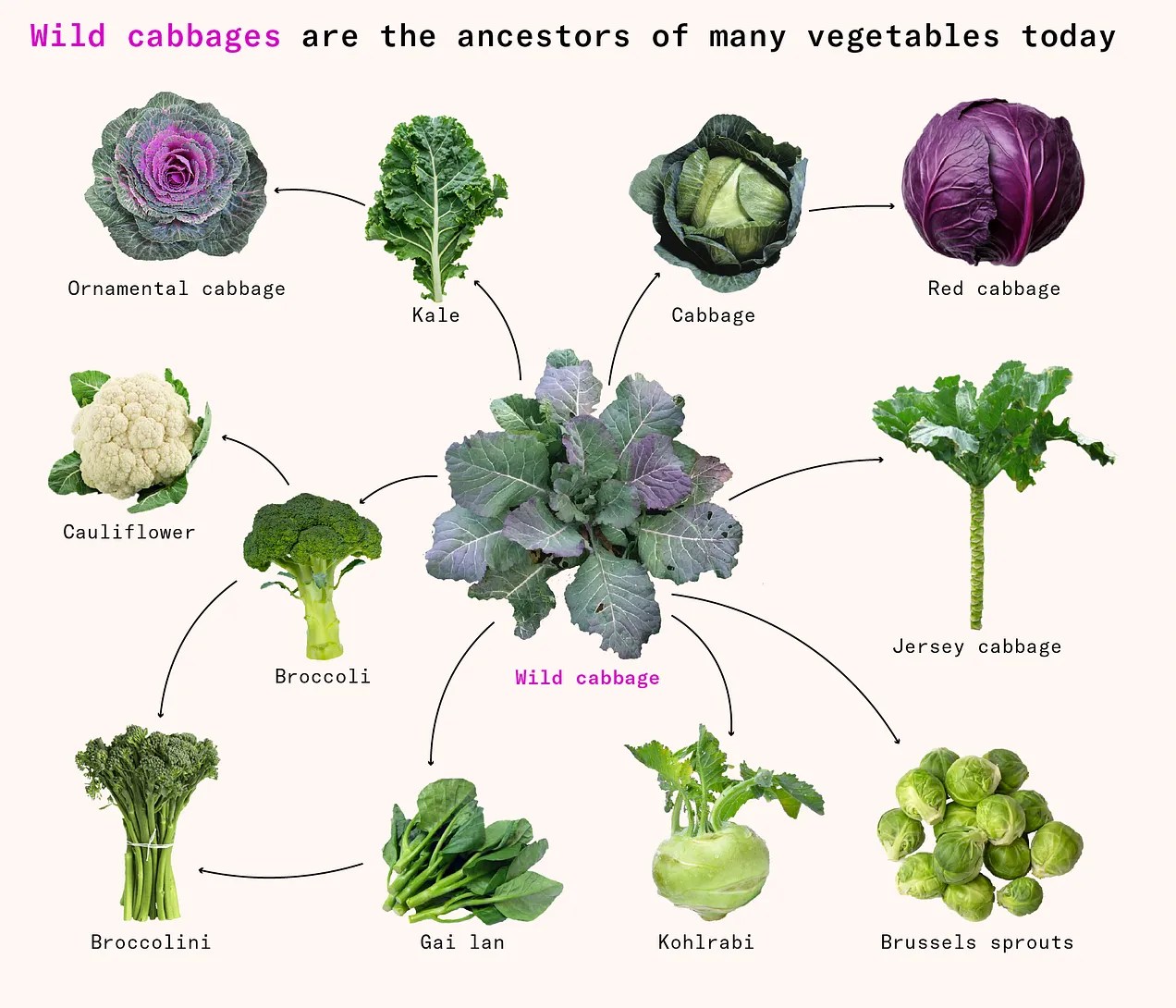
Every crop we consume came from a wild ancestor. Through breeding, people selected for bigger grains, juicier fruit, more branches, or shorter stems – gradually turning wild plants into improved yet recognizable versions of their originals. The rare exception is Brassica oleracea, wild cabbage: the origin of cabbage, bok choy, collard greens, broccoli, Brussels sprouts, cauliflower, and much else.
Wild cabbage is unassuming: some untidy leaves and a few thick, coarse stems on the browner side of purple that poke out from the soil. Nothing about it looks appetizing.
Wild cabbage (Brassica oleracea) growing in Northumberland. Source
Nevertheless, many cultures have recognized something special in this plant. By selecting plants with denser layers of leaves, ancient people created modern cabbage and kale. Others bred for the inflorescence, a dense bundle of small flowers that forms the head of cauliflower and broccoli. By favoring large, edible buds, thirteenth-century farmers living around modern day Belgium created Brussels sprouts. Under different selection pressures, Brassica oleracea has become German kohlrabi, or Chinese gai lan, or East African collard greens.
This level of morphological diversity is unusual. Modern tomatoes, for example, vary in size, shape, and color, but are all recognizably tomatoes. Since the 1920s, scientists have worked to understand how Brassica oleracea was domesticated and to deepen our knowledge of evolution and artificial selection.
By combining modern genetics, genomics, and molecular biology with linguistic, historical, and sociological sources, researchers are now beginning to develop conclusive answers…
Book illustration of a fish with four legs from The Comic History of Rome, published in 1852
The obligations of a multi-day meeting (and the travel involved) mean that, from this issue, (R)D will be on pause until February 12 or 13 (depending on how connections play out…)
… and indeed the evolutionary progress of others species. But, Deputy Co-chair of the Nuffield Council on BioethicsMelanie Challenger asks, have we been sufficiently thoughful about the implications of this power?…
In 2016, Klaus Schwab announced that we had entered the Fourth Industrial Revolution. This is the era of the industrialization of biology, the leveraging of technologies to modify biological materials to meet human goals. While the first two Industrial Revolutions exploited energy and materials and the Third exploited digital information, the current revolution is a direct manipulation of life-forms and life’s substances.
The signature invention of this new era is CRISPR, dubbed “genetic scissors.” CRISPR is a ground-breaking method of making precise changes to DNA for a wide range of possible uses from disease reduction and elimination to the eradication of “pest” species and increases in the productivity of farmed animals. CRISPRs (the best-known system being CRISPR-Cas9) originate in RNA-based bacterial defense systems. Naturally occurring in species of bacteria, the Cas9 enzyme cuts the genomes of bacteriophages (viruses that will attack a bacterium), saving a record for defense against future infections. Scientists realized that this immunological strategy could be coopted to innovate a general tool for cutting DNA.
The optimism among those that seek to utilize these tools has been palpable for some time. As noted by the researchers at The Roslin Institute, creators of Dolly the Sheep, the world’s first cloned mammal: “Until recently, we have only been able to dream of…the ability to induce precise insertions or deletions easily and efficiently in the germline of livestock. With the advent of genome editors this is now possible.”
But the technologies of this new industrial era present ethical dilemmas and unknown consequences. What will it take to ensure that this revolution avoids worsening the enormous challenges we already face, especially from biodiversity loss and climate change? How can we get the balance right between the benefits and risks of human inventiveness?
In the 1980s, tech theorist David Collingridge presented his eponymous dilemma for those seeking to control potentially disruptive technologies. First, there is an “information problem” in which significant impacts are often invisible until the technology is already in use. Second, there is a “power problem” in which the technology becomes difficult to shape, regulate or scale back once it has become integrated in our lives. If we are going to navigate the Fourth Industrial Revolution successfully, we need to examine our use of CRISPR through the Collingridge dilemma.
The investors and engineers of the first industrial revolutions in the nineteenth century provide a vivid example of the information problem. They hoped that innovations like the combustion engine would unlock efficiency across multiple human sectors, from transportation to logistics to tourism. Such optimism was not unwarranted. Yet, as Collingridge’s dilemma suggests, it is easier to picture gains than to predict trouble. Building road systems and infrastructure carved capital movements into the landscape, symbolising freedom and the flow of wealth and creativity. Yet the striking visual parallels with our circulatory system did not stimulate anyone to forecast the ninety per cent of people today who are exposed to unsafe pollution levels from traffic or the associated health burdens from heart and lung disease to asthma. Nobody then foresaw the yearly deaths of two billion or so non-human vertebrates on our roads today, or that high traffic areas would cause localised declines in insect abundance of at least a quarter and, in some studies, as much as eighty per cent.
And, of course, most calamitous of all, there is climate change. Traffic emissions account for a fifth of all contributions to global warming. Yet the idea that a profitable and efficient machine like the combustion engine might precede devastating shifts in temperature and weather patterns was scarcely conceivable at the time. Now, it is a near ubiquitous feature of our understanding of the world.
When it comes to the engineering of biology, a similar information problem abounds. Not only is our understanding of biological life incomplete, but we know little about what the industrial processes that we are advancing inside the cells of organisms will do. The changes are both physically and ethically occluded. The ramifications of this and other related biotechnologies are not only rendered uncertain by the inherently complex nature of biological systems but are largely inaccessible to our imaginations.
We must struggle with the radical character of the industrialization of biology. Gene drives (a tool to increase the likelihood of passing on a gene) can weaponize the bodies and reproductive strategies of organisms to bias evolution in a directed way. Artificial chimeric organisms (those composed of cells from more than one species) mix and match biological traits and functions to bring about beings that wouldn’t occur otherwise, transforming autonomous organisms into useful parts for plug and play. But while evolutionary processes will sift those forms and strategies that most benefit future organisms, our acts of creation primarily benefit us alone. Survival of the fittest gives way to the contrivance of the functional.
Yet, despite the disruptive nature of these technologies, CRISPR is already entrenched in our research and economic landscape: here is the power problem of our new technology. The efficiency of modern versions of CRISPR has allowed the technology to pick up users fast. It is now a commonplace tool in labs around the world – with uses amplified during the pandemic – and continues to be utilized in ethically provocative trials, including the cloning of mammal species. CRISPR has been normalised by stealth.
This largely uncontested rollout has been enabled by biases in the evaluation of who is at risk. Put bluntly, humans worry about humans, and take risks to non-humans less seriously. As such, there are vastly different acceptance thresholds for certain kinds of uses and these can be exploited by those that seek to deregulate or profit from the technologies…
… This discrepancy is evident in the anxieties of Jennifer Doudna, one of the Nobel-winning scientists who made the CRISPR breakthrough. In her book, A Crack in Creation, she writes of a dream in which Hitler appears to her with the face of a pig and questions her excitedly about the power she has unleashed. Doudna’s anxieties relate not to the pigs of her dream (who are subject to a wide range of CRISPR applications) but to the potential of eugenics re-emerging in human societies. Her dream reflects not only the inevitability that any technology such as this will be equal parts destruction to rewards, but also that we must confront uncomfortable ideas about what it is to be a creature as much as a creator. Recognizing that these technologies work in the bodies of all biological beings, including humans, is a continual assault on the reasoning behind a hard moral border between us and them.
At present, the lives of non-human animals are the experimental landscape for our technologies. Their powerlessness to protest the uses of their bodies, wombs, physical materials, or futures leaves them vulnerable to being the test sites for a wide range of possible human applications. As a direct consequence of the serviceability of the bodies of organisms, CRISPR has been integrated into our world with little fanfare, directly facilitating the power problem that will, eventually, impact us too. Given Collingridge’s dilemma, what concepts and strategies could help us reduce the risks from CRISPR?
The first thing we need is a new definition of pollution. When it comes to combustion engines and other technologies of the first industrial revolutions, pollution is by far the most consequential harm. Direct impacts include the release of particulate matter or chemical compounds like nitrogen oxides or carbon dioxide into the atmosphere. Pollution from traffic has an immediate impact, especially fifty to one hundred metres from the roadside, with effects that we can measure, such as reduced growth rates or leaf damage in plants, or changes to soil chemistry and nutrient availability. On the other hand, long term effects of emissions, such as global warming, or the sustained impacts of waste on organisms and ecosystems, have proven tricky to anticipate and even harder to hold in mind…
…What is curious about the Fourth Industrial Revolution is that while several branches of science are arming us with the evidence that justifies an expansion of the moral circle to encompass a larger range of organisms, other branches are cranking up the objectification and exploitation of life-forms. As a result, there’s an obvious gap. Without addressing this, most concepts of pollution will remain anthropocentric. This may prove a critical misstep…
As we ponder permuted progeny, we might send microbiological birthday greetings to Jacques Lucien Monod; he was born on this date in 1910. A biochemist, he shared (with with François Jacob and André Lwoff) the Nobel Prize in Physiology or Medicine in 1965, “for their discoveries concerning genetic control of enzyme and virus synthesis.”
But Monod, who became the director of the Pasteur Institute, also made significant contributions to the philosophy of science– in particular via his 1971 book (based on a series of his lectures) Chance and Necessity, in which he examined the philosophical implications of modern biology. The importance of Monod’s work as a bridge between the chance and necessity of evolution and biochemistry on the one hand, and the human realm of choice and ethics on the other, can be seen in his influence on philosophers, biologists, and computer scientists including Daniel Dennett, Douglas Hofstadter, Marvin Minsky, and Richard Dawkins… and as a context setter for the deliberations suggested above…
As Chris Armstrong reminds us, the environment is about so much more than climate…
Later this month [May 22] it will be World Biodiversity Day, and we will again celebrate the remarkable contributions that biodiversity makes to the resilience and productivity of the earth’s ecosystems. But it will also be a fitting time to face the continued failure of our institutions to grasp the scale of biodiversity loss. Or, if not to grasp it, to respond in any way adequately.
The figures speak for themselves. Since 1992, the Convention on Biological Diversity has been charged with agreeing global targets for biodiversity conservation. The Aichi Biodiversity Targets for 2011-2020, for instance, aimed to halve the rate of habitat loss, protect 17% of terrestrial ecosystems, and much else besides.
None of those targets were met. In response, the Kunming-Montreal Agreement recently agreed to protect 30% of ecosystems by 2030, to restore 30% of degraded ecosystems, and so on and so on and so on. On current projections, these targets are going to be missed too, by some distance. Like Canute ordering the tides to stop, it turns out that setting targets, by itself, achieves nothing.
So why has the biodiversity governance regime failed so spectacularly?…
As we value variety, we might recall that it was on this date in 1908 that President Theodore Roosevelt convened a three-day Conference of Governors. Largely driven by U.S. Chief Forester Gifford Pinchot, the gathering was focused on the problems of conservation. The Conference was a seminal event in the history of “conservationism,” most fundamentally in drawing public attention to the issue in a highly visible way. More concretely, there were two outgrowths of the Conference: the National Conservation Commission, (which Roosevelt and Pinchot set up with representatives from the states and Federal agencies, and which prepared the first inventory of the natural resources of the United States), and the first National Conservation Congress, which Pinchot led as an assembly of private conservation interests. Not long after, annual governors’ conferences became a regular event, and 38 state conservation commissions were created.
Governors of the U.S. states and territories pictured with President Roosevelt during the 1908 Conference (source)
The U.S. boasts an impressively vast array of agricultural and botanical species. In an attempt to document that fact, The United States Department of Agriculture collected over 7,500 botanical watercolour paintings of evolving fruit and nut varieties in its Pomological Watercolor Collection, assembled between 1886 and 1942…
Independent publishing house Atelier Éditions is now revisiting this documentation of American pomology with the release of its latest book: An Illustrated Catalog of American Fruits & Nuts. “I came across the collection a few years back while researching botanical artworks,” says Pascale Georgiev, editorial director of Atelier. “There was such potential for a book with this collection, and it fits with our way of building archival or collection-based volumes.” The book is a biophilic wonder, with beautiful images of fruits popping with gentle colours and careful watercolour work. Accompanying them are often texts by well-versed experts, giving a fascinating insight into the agriculture behind the produce.
“We only produce and consume a handful of varieties today, mainly hybrids that cater to our desire for a certain sweetness, juiciness, smoothness, even specific shapes and lack of seeds,” says Pascale on the importance of the book’s current publication. “In some respects, the collection is a time capsule, and a reminder about the importance of diversity and conservation,” she adds…
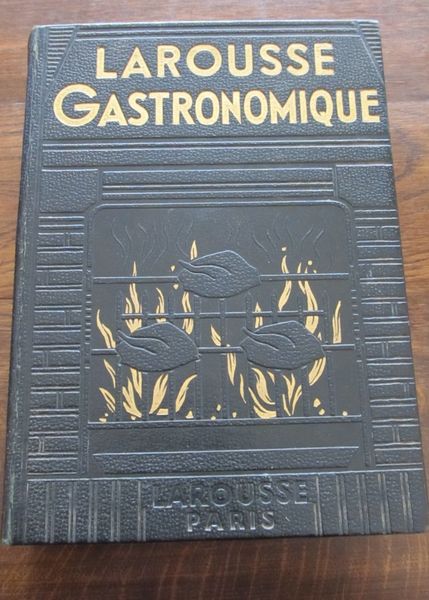
As we fancy favorite fruits, we might carefully compose a birthday greeting to Pierre Athanase Larousse, the French grammarian and lexicographer, born in Toucy on this date in 1817. In 1856 Larousse and his partner Augustin Boyer published the New Dictionary of the French Language, the forerunner of the Petit Larousse. On December 27, 1863 the first volume of Larousse’s masterwork, the great encyclopedic dictionary, the Grand dictionnaire universel du XIXe siècle (Great Universal 19th-Century Dictionary), appeared.
The cover of the first Larousse French dictionary (1856)
And Happy Mole Day (or to be more precise, October 23 at 6:02 pm, in honor of Avogadro’s number: 6.02 x 10²³ items are in a mole — it’s the chemist’s version of a dozen)




You must be logged in to post a comment.