Posts Tagged ‘quantum theory’
“It is wrong to think that the task of physics is to find out how nature is. Physics concerns what we can say about nature.”*…

Einstein fought to save our everyday notion of reality from the strangeness of quantum mechanics. But, as Charlie Wood reports, those who set out to aid him keep poking holes in his argument…
One of a human’s earliest developmental milestones is an understanding of object permanence. It generally takes less than a year for a baby to realize that when an adult hides their face behind their hands in a game of peek-a-boo, they don’t cease to exist. There’s more to the world around us than what we perceive.
This suggests — or at least, it suggested to Albert Einstein — that the world is “real,” in the sense that things in the world have properties that are intrinsically true no matter what anyone thinks. A red billiard ball is red, even in the dark, and even if no one is checking its color. The redness is a property belonging to the ball, not to some device measuring the ball, and not to the mind of some person operating the measuring device.
Yet quantum mechanics, a thoroughly validated theory of how the world works, seems to suggest otherwise. The theory’s math assigns redness to the billiard ball at the moment you measure it. Before then, the theory gives you only a set of probabilities telling you what color the ball might be. Key founders of quantum mechanics suggested that this math reflects the nature of reality — that in some sense, a single, objective reality doesn’t really exist.
In 1935, Einstein rebelled against this surreal reading of quantum theory, proposing one of the 20th century’s most famous thought experiments. But his rebellion was doomed. In 1964, the physicist John Stewart Bell showed with a thought experiment of his own that reality had to be stranger than Einstein assumed. Subsequent work would put Bell’s thought experiment to the test — and prove him right.
Then, 50 years after Bell, Matthew Pusey, at the time a graduate student at Imperial College London, took on what remained of Einstein’s notion of reality and — without originally intending to — delivered the killing blow.
The paradigm-shifting theorem became known as PBR, for Pusey and his academic accomplices, Jonathan Barrett and Terry Rudolph. Since the publication of PBR in 2012, many theorists have come to accept that it rules out our most commonsense understanding of reality.
“From the moment [PBR] came out, people knew it would be a landmark,” said Jacques Pienaar, a physicist now at the Federal University of Rio de Janeiro in Brazil.
At the time, Pienaar, like Pusey, had been walking in Einstein’s footsteps, dabbling in theories designed to show that objective reality exists and that quantum mechanics merely describes our incomplete knowledge of it. But when the PBR theorem appeared, Pienaar remembers thinking, “That’s it. The program’s dead.”
This is the story of how Einstein, Bell, and finally Pusey and his collaborators killed reality as we know it. In three theorems, they proved that quantum mechanics is incompatible with the world we perceive. And since experiment after experiment — including a recent realization of PBR — has established that quantum mechanics is the law of the land, something about reality has to go.
The question that remains is: How much do we have to give up?…
[Wood recounts the fascinating history of attempts to grapple with the issue, which have, cumulatively, strengthened the conclusions (and thus implications) of PBR. As to those implications, he concludes…]
… Many physicists have taken PBR to mean that the quantum state must be real — an objective property living in particles, people, and planets. If so, impossible-seeming events like collapse must also have some physical correlate. This stance amounts to taking the extreme path of Bohmian mechanics and other “realist” interpretations. As Pusey pithily puts it, PBR guarantees that “if anything is real, the quantum state is real.”
But to conclude that the quantum state is definitely real is to misunderstand the PBR theorem, because PBR also leaves open the other extreme path: It could be, as the Copenhagenists have steadfastly maintained since the days of Bohr, that in some sense nothing is real, including the quantum state. It’s perfectly possible that the quantum state lives in our minds and has no direct connection to an objective reality. In this case, the redness of the billiard ball would be inextricably linked with the act of observing it — precisely the state of affairs that so deeply offended Einstein. “Do you really believe the moon is not there when you are not looking at it?” Einstein once famously pressed his colleague Abraham Pais.
PBR doesn’t give us the answer. What it does do is end a century of bargaining with quantum mechanics. By ruling out the possibility that reality is real while the wave function is not, PBR requires that physicists either fully embrace the notion of an objective but entirely surreal reality, or fully reject objective reality altogether. “Do you bite the bullet, or do you try and dodge the bullet?” Pusey said.
Pienaar was one of the few physicists who were still playing around with middle-of-the-road theories, though with waning interest. PBR contributed to his choice to give up on objective reality once and for all. He switched to a modern offshoot of Copenhagenism known as QBism.
QBism asserts that the world itself may exist, but quantum mechanics can’t describe it. All the theory can really do is capture our relationship to — and subjective experience of — the world. “You need two to tango,” Pienaar said. “Without two systems, there’s no relation. And reality is nothing but relations.”
And yet, some physicists remain unsatisfied with the two extreme options: a surreal reality or no reality. So they are beginning to pick at the fine print on the technical definition of reality. “Maybe the correct way of thinking about a state of reality is something a bit more woolly, that doesn’t quite fit into this straitjacket,” Pusey said.
In this spirit, Hardy questions whether reality needs to necessarily have a single, objective state at every given moment. Perhaps states could somehow spread out across multiple moments. He doesn’t yet have a fully fleshed-out proposal, but his goal is to come up with a deeper, more general notion of reality that is still recognizable.
If underdogs like Hardy succeed in saving some notion of reality, it won’t quite be the one Einstein wanted; Bell and PBR guarantee that. But it may yet turn out to be the sort of reality Einstein needed, one that makes enough intuitive sense to win the hearts and minds of physicists, especially those fatigued from a lifetime of labyrinthine debates about what is real. “It needs to have the ring of truth, so that when people see it, they can’t unsee it,” Schmid said.
Curiouser and curiouser: “A Strange Quantum Theorem Has Killed Einstein’s Reality,” from @walkingthedot.bsky.social in @quantamagazine.org.
* Niels Bohr, who also famously– and relevantly– observed: “Those who are not shocked when they first come across quantum theory cannot possibly have understood it.”
###
As we get real, we might recall that it was on this date in 1974 that the discovery of the “charmed quark” subatomic particle was announced simultaneously by the two American experimental groups responsible: an MIT group at Brookhaven National Laboratory, and a SLAC-Berkeley group at the Stanford Linear accelerator center.
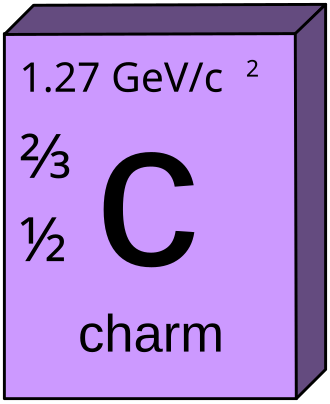
The existence of the charm quark was first predicted by James Bjorken and Sheldon Glashow in 1964. The new particle, made up of a charm quark and its antimatter opposite, anti-charm, was the fourth quark to be indentified; with a mass of 3095 MeV (or 1.27±0.02 GeV/c2), it had a lifetime about 1000 times longer than that of other particles of comparable mass. Its announcement set the world of high energy physics on fire and is now known in the physics community as “the November revolution.”
For their photo-finish discoveries, the scientists leading those groups, Samuel Ting and Burton Richter, were awarded the Nobel Prize in Physics in 1976.
“A physicist is just an atom’s way of looking at itself”*…
Encouraged by successes in understanding black holes, theoretical physicists are applying what they’ve learned to whole universes. As Matt von Hippel explains, what they’re finding has them questioning fundamental assumptions about how physics ought to be done…
Tinkering at their desks with the mathematics of quantum space and time, physicists have discovered a puzzling conundrum. The arcane rules of quantum theory and gravity let them imagine many different kinds of universes in precise detail, enabling powerful thought experiments that in recent years have addressed long-standing mysteries swirling around black holes.
But when a group of researchers examined a universe intriguingly like our own in 2019, they found a paradox: The theoretical universe seemed to admit only a single possible state. It appeared so simple that its contents could be described without conveying even a single bit of data, not even a choice of a zero or a one. This result clashed with the fact that this type of universe should be capable of hosting black holes, stars, planets — and people. Yet all those rich details were nowhere to be seen.
“We look around, and certainly the world seems more complex than that,” said Rob Myers, a theoretical physicist at the Perimeter Institute for Theoretical Physics in Waterloo, Canada, who has not been directly involved in this research.
Physicists have good reason to trust the calculation, which builds on fundamental physical ideas. The math implies a universe with only one state; our universe is clearly not like that. Now a team of theorists has floated a possible answer. The paradoxical result occurred when physicists sought an objective description of the state of an entire universe. But a description like that might not be possible, even in principle. It implicitly assumes a universe that exists without an observer to observe it. And perhaps without observers, the complexity of the universe loses its meaning…
[von Hippel unpacks the scientific thinking that led to this conundrum. He concludes with an account of recent work by Ying Zhao that hints at a resolution…]
… Quantum mechanics requires a distinction between an observer — such as the scientist carrying out an experiment — and the system they observe. The system tends to be something small and quantum, like an atom. The observer is big and far away, and thus well described by classical physics… Perhaps an observer could do the same to these closed, impossibly simple-seeming universes?
In 2024, Zhao moved to the Massachusetts Institute of Technology, where she began to work on the problem of how to put an observer into a closed universe. She and two colleagues —Daniel Harlow and Mykhaylo Usatyuk — thought of the observer as introducing a new kind of boundary: not the edge of the universe, but the boundary of the observer themself. When you consider a classical observer inside a closed universe, all the complexity of the world returns, Zhao and her collaborators showed.
The MIT team’s paper came out at the beginning of 2025, around the same time that another group came forward with a similar idea. Others chimed in to point out connections to earlier work.
At this stage, everyone involved emphasizes that they don’t know the full solution. The paradox itself may be a misunderstanding, one that evaporates with a new argument. But so far, adding an observer to the closed universe and trying to account for their presence may be the safest path.
“Am I really confident to say that it’s right, it’s the thing that solves the problem? I cannot say that. We try our best,” Zhao said…
“Cosmic Paradox Reveals the Awful Consequence of an Observer-Free Universe,” from @quantamagazine.org.
Apposite: “Biology Might Not Be Quantum, but Its Math Is Quantumlike“
###
As we keep an eye out, we might send cosmological birthday greetings to Enrico Fermi; he was born on this date in 1901. A physicist and Nobel Laureate (1938) for his discovery of nuclear reactions brought about by slow neutrons, he is best remembered for (literally) presiding over the birth of the Atomic Age. Fermi was perhaps especially remarkable as the last “double-threat” in his field: a genius at creating both important theories and elegant experiments. As observed before (and illustrated above :), the division of labor between theorists and experimentalists has since been pretty complete.
The novelist and historian of science C. P. Snow wrote that “if Fermi had been born a few years earlier, one could well imagine him discovering Rutherford’s atomic nucleus, and then developing Bohr’s theory of the hydrogen atom. If this sounds like hyperbole, anything about Fermi is likely to sound like hyperbole.”

“The universe is under no obligation to make sense to you”*…
Still, we try… In a consideration of three new books, the estimable Sean Carroll brings us up to date on the state of play…
Should scientists be embarrassed that they can’t settle on a definition for the Big Bang? The cosmologist Will Kinney describes it as the “physical theory of the hot infant universe,” while Wikipedia goes for the more elaborate “a physical theory that describes how the universe expanded from an initial state of high density and temperature.” The first refers only to early times, while the latter seems to extend to subsequent times as well. The physicist and science writer Tony Rothman offers the pithier “the universe’s origin,” the theoretical physicist Thomas Hertog suggests that it is the “primeval state” of cosmic history, and a NASA website gives us “the idea that the universe began as just a single point.” These seem to refer to one moment at the start of things, rather than the universe’s life since then.
All of these sources (except NASA, unfortunately) capture something correct. The confusion stems both from the inherent ambiguity of using ordinary language to describe novel scientific concepts and from the state of modern cosmology itself. Cosmology is the study of the universe on the largest scales. So it ignores details of stars and planets, focusing on galaxies and even bigger structures, up to the universe as a whole. Modern cosmology is only about a century old, as it wasn’t until the 1920s that astronomers determined that our own Milky Way is just one of a large number of galaxies and the origin and evolution of them all could be studied together. And it wasn’t until the 1990s that the field matured into the one that exists today, featuring precision measurements and ultralarge datasets.
Dealing as it does with some of the most profound questions about the nature of the cosmos, cosmological research has always involved a vigorous give-and-take between rampant speculation and unanticipated discoveries. Its practitioners have long been fond of spinning purportedly inviolate physical principles from their personal intuitions about how reality should work. But cosmology remains an empirical science—a cherished belief can be quickly swept away by a solid measurement.
The present moment in the science of cosmology is one of consolidation, as we have successfully incorporated the lessons of some impressive discoveries made near the turn of the twenty-first century. Yet crucially important questions remain unanswered, especially about what exactly happened at the onset of the expanding space that evolved into our contemporary universe. It is therefore a good time for books that take stock of where we are and what might come next, and that illustrate which puzzles modern physicists choose to take seriously.
This much we know: we live in a galaxy, the Milky Way, containing around 200 billion stars. There are something like a trillion galaxies in our observable universe, distributed almost uniformly through space. Stars and galaxies condensed out of an originally nearly smooth distribution of matter. Distant galaxies are moving apart from one another. Extrapolating backward, we reach a hot, densely packed configuration about 13.8 billion years ago. We can observe the remnants of this early period in nearly uniform cosmic background radiation coming from every direction in the sky.
The Big Bang model is precisely this general picture, of a universe that expands and cools out of a smooth, hot primordial state. It is well understood and almost universally accepted among modern cosmologists. The Big Bang event is a hypothetical moment when the whole thing might have started, at which the temperature and density are supposed to have been literally infinite—a “singularity,” in physics parlance. This is why the NASA definition above is unambiguously wrong: the Big Bang event has nothing to do with “a single point” in space—it refers to a moment in time.
Nobody knows whether there actually was such an event. To be honest, there probably wasn’t. Einstein’s theory of general relativity predicts that such a singularity would have happened, but most physicists think this signals a breakdown in the theory rather than being an accurate description of the physical world. A prediction of infinitely big physical quantities is apt to be a sign that we don’t have the right theoretical understanding…
[Starting with Einstein’s unification of space-time in 1905, Carroll explains the implications of quantum theory, in particular on the question of the expansion of the universe. Using the three (very different, but complementary) books under consideration, he unpacks the issues and demonstrates the way in which scientific theories about the origin of the universe often involve a vigorous give-and-take between speculation and discovery…]
… Taken together, these three books provide an illuminating view of the state of modern cosmology. There are established results, laudable efforts to connect promising hypotheses to a flood of incoming data, and brave speculations about the physical and metaphysical unknown. They are all notably well written for the genre and will keep readers entertained as they are educated. We can marvel at both how much scientists have learned about the universe and how much we have yet to understand.
The state of cosmology (and a look at science at work): “A First Time for Everything,” from @seanmcarroll.bsky.social in @nybooks.com.
* Neil deGrasse Tyson
###
As we wrestle with reality, we might spare a thought for a major (if, in the end, incorrect) character in tale that Carroll tells: Fred Hoyle; he died on this date in 2001. A prominent astronomer, he formulated the theory of stellar nucleosynthesis. But he is rather better remembered for his controversial stances on other scientific matters—in particular his rejection of the (as Carroll observes, now widely-accepted) “Big Bang” theory– a term he coined, derisively, in an episode of his immensely-popular series The Nature of the Universe on BBC radio– and his promotion of panspermia as the source of life on Earth (or maybe the traffic was in the other direction?).

“Anyone not shocked by quantum mechanics has not yet understood it”*…

In the summer of 1925, a young Werner Heisenberg retreated to Helgoland in the North Sea and reemerged with the first full-fledged version of quantum mechanics. A century later, the theory’s meaning remains unsettled. Charlie Wood joined a group of physicists in Helgoland to take stock of the theory on its centennial…
Happy 100th birthday, quantum mechanics!” a physicist bellowed into a microphone one evening in June, and the cavernous banquet hall of Hamburg’s Hotel Atlantic erupted into cheers and applause. Some 300 quantum physicists had traveled from around the world to attend the opening reception of a six-day conference marking the centennial of the most successful theory in physics. The crowd included well-known pioneers of quantum computing and quantum cryptography, and four Nobel Prize winners.
“I feel like I’m at Woodstock,” Daniel Burgarth of the University of Erlangen-Nuremberg in Germany told me. “It’s my only chance to see them all in one place.”
One hundred years to the month had passed since a 23-year-old postdoc named Werner Heisenberg was driven by a case of hay fever to Helgoland, a barren, windswept island in the North Sea. There, Heisenberg completed a calculation that would become the heart of quantum mechanics, a radical new theory of the atomic and subatomic world.
The theory remains radical.
Before quantum mechanics hit the scene, “classical” physics theories dealt directly with the stuff of the world and its properties: the orbits of planets, say, and the speeds of pendulums. Quantum mechanics deals in something more abstract: possibilities. It predicts the chances that we’ll observe an atom doing this or that, or being here or there. It gives the impression that particles can engage in multiple possible behaviors at once, that they have no fixed reality. So physicists have spent the last century grappling with questions like: What is real? And where does our reality come from?…
Wood recounts the genesis and development of the theory and considers some of the vexing questions that remain: e.g., the many-world interpretation, the place (?) of gravity in the theory, et al. He concludes with a quote from Robert Spekkens, a physicist at the Perimeter Institute (whose work illustrates Lawrence Krause‘s observation that “At the heart of quantum mechanics is a rule that sometimes governs politicians or CEOs – as long as no one is watching, anything goes”): “We’re privileged to live at a time when the great prize of making sense of quantum theory is still there for the taking.”
Eminently worth reading in full: “‘It’s a Mess’: A Brain-Bending Trip to Quantum Theory’s 100th Birthday Party” from @walkingthedot.bsky.social in @quantamagazine.bsky.social.
See also: “Physicists Can’t Agree on What Quantum Mechanics Says about Reality“
* Niels Bohr
###
As we wrestle with reality, we might send relativistic birthday greetings to one of quantum theory’s pioneers, Erwin Schrödinger; he was born on this date in 1887. A physicist, Schrödinger took Louis de Broglie‘s concept of atomic particles as having wave-like properties, and modified the earlier Bohr model of the atom to accommodate the wave nature of the electrons, which he instantiated in the Schrödinger equation, which provides a way to calculate the wave function of a system and how it changes dynamically in time. It was the basis of the work that earned him the Nobel Prize in 1933. And he coined the term “quantum entanglement” in 1935.
But surely Schrödinger is most widely known for creating the thought experiment we all know as “Schrödinger’s Cat” (and here).

“What happens when you get to the end of things?”*…

Charlie Wood introduces a remarkable new collection in Quanta…
A couple of years ago, I was chatting about black holes with Dan Harlow of the Massachusetts Institute of Technology when he made a casual comment that left a deep impression on me. I asked if some new work he’d been doing strengthened the case that space-time was “emergent.” Without missing a beat he replied, “Sure, if it needed strengthening.”
Harlow isn’t the only physicist with serious doubts about what reality is made of. For more than a decade now, Nima Arkani-Hamed of the Institute for Advanced Study has been delivering a polished lecture arguing that space-time is “doomed.” Time and again, I’ve heard theorists in high-energy physics make similar-sounding statements, and I’ve always been struck by their confidence. We don’t have the faintest idea what the next theory of physics will look like, whether it will involve strings, loops, triangles or something entirely new that no one has thought to propose. And yet so many theorists seem rather convinced that whatever it will be, it won’t involve space or time.
Why? What does that statement mean? What would it look like to do physics without referring to space or time? I’ve spent most of this year trying to find out. The results have just been published in “The Unraveling of Space-Time,” a massive package that includes articles, videos and interactive animations from me and my colleagues Mark Belan, Emily Buder, Amanda Gefter and Joseph Howlett.
Over the course of more than 40 interviews with nearly 30 physicists, I learned that there are many ways to define emergent space-time. But at the most basic level, “emergent space-time” means that space and time are the outputs of a theory instead of the inputs. A classic analogy is heat. To explain why a teacup cools, scientists of the 1700s put heat into their theory of the world as a substance that repels itself and naturally spreads out. But this “caloric theory” was ultimately replaced by thermodynamics, a theory where a primary input is molecules that buzz around with some energy. As molecules crash into each other, their energy spreads, and we now recognize this process as the origin of heat transfer. Heat is an output — a prediction — of thermodynamics. It is an emergent phenomenon.
Space-time is the ultimate input. If physics is largely about predicting what happens where and when, you need a stage upon which things can happen. Albert Einstein became a household name for revealing that this stage acts like a fabric that bends in ways we experience as gravity. He described in spectacular detail how space-time behaves, much as 19th-century scientists described how heat behaves with caloric theory. The idea that space-time is emergent is the idea that space-time will eventually go the way of heat, water, air and so many other substances before it; we will someday understand it to be the inevitable consequence of the behavior of simpler entities. Call them the “atoms” of space-time.This week’s series explores the mind-bending notion of emergent space-time from a number of angles. There is, of course, the why of it all. This mostly boils down to the strange things that happen when Einstein’s theory of space-time collides with quantum mechanics, the theory of the subatomic world. When we combine features from both theories, we see that any experiment that tries to probe reality a little too closely will get thwarted by the appearance of a black hole, an enigma that undermines the familiar picture of space-time in its own way.
For this and other reasons, physicists are pushing to escape our familiar space-time, often referred to as the “bulk,” in search of alien environments conducive to new ways of doing physics.
Where else might one do physics, if not in the bulk? A few ideas are being developed, including one that goes by the name of holography. This is roughly the idea that any gravitational system — even the entire universe — can have an alternative description as a collection of quantum particles moving around a flat surface. From these gravity-free surfaces, a bulk world with gravity somehow pops out. It’s a remarkable theoretical claim, and over the past few years, holographers have developed a suite of tools that have helped them decode the bulk from the behavior of these surface particles.Another research program, spearheaded by Arkani-Hamed, has even more ambitious aims — getting both space-time and quantum mechanics as outputs from even more alien inputs. His group has recently developed an entirely new language for making predictions, one that makes no reference to space-time. Instead, it uses only geometric shapes and primitive counting tasks.
Is space-time, at least in its current form, definitely doomed? The idea tortured one of the pioneers of gravitational theory, John Wheeler. And today, the end of space-time is even more widely accepted. Most of the theorists I spoke with struggled to think of colleagues in the quantum gravity community who would defend space-time as a fundamental ingredient of reality. However, some researchers are pursuing alternatives. I spoke at length with Latham Boyle about patterns in particle physics that have led him and his collaborators to the more conservative notion that space-time might come in two “sheets.”
The various proposals under development are unlikely to see experimental tests this century, so a conclusive answer doesn’t seem near. But if it were someday established that space-time does break down, what would that mean for us?
On a practical level, not much. Einstein’s fabric of space-time is so sturdy that little short of a black hole would put a noticeable dent in it. But at a conceptual level, it’s hard to imagine a more dramatic rethinking of reality. When Democritus suggested that matter emerges from tiny barbed “atoms” more than 2,000 years ago, he couldn’t possibly have foreseen that parts of his proposal would ultimately be realized in the form of quantum theory — a framework asserting that reality is an ocean of overlapping waves of possibility that resolve into fixed objects only in certain situations.
If the void itself emerges from something, that something will be at least as alien. Just as individual molecules don’t themselves have a well-defined notion of heat, the base level of reality could lack marquee features of our existence that we take for granted. Places. Times. The ability to influence only nearby objects. The requirement that causes precede effects. Physicists are already finding that these notions seem unlikely to be present in a more precise accounting of the world. They seem to be the approximate outputs of something stranger.“One of the most spectacular aspects of these new findings is the emergence of causality can only happen in the approximate description,” Elliott Gesteau, a quantum gravity researcher at the California Institute of Technology, told me over Zoom earlier this year. If there is gravity, he continued, “which is what we have in our world, then this causal structure is only approximate and must break down.”…
Are we on the verge of a new physics? “Why Space-Time Looks Doomed,” from @walkingthedot in @QuantaMagazine.
The full interactive collection is here, and eminently worth reading in full.
* John Wheeler
###
As we wrestle with reality, we might spare a thought for a physicist whose work helped move the questions we face forward– Max Karl Ernst Ludwig Planck; he died on this date in 1947. A theoretical physicist, he is best remembered as the originator of quantum theory. It was his discovery of energy quanta that won him the Nobel Prize in Physics in 1918.

You must be logged in to post a comment.