Posts Tagged ‘quark’
“It is wrong to think that the task of physics is to find out how nature is. Physics concerns what we can say about nature.”*…

Einstein fought to save our everyday notion of reality from the strangeness of quantum mechanics. But, as Charlie Wood reports, those who set out to aid him keep poking holes in his argument…
One of a human’s earliest developmental milestones is an understanding of object permanence. It generally takes less than a year for a baby to realize that when an adult hides their face behind their hands in a game of peek-a-boo, they don’t cease to exist. There’s more to the world around us than what we perceive.
This suggests — or at least, it suggested to Albert Einstein — that the world is “real,” in the sense that things in the world have properties that are intrinsically true no matter what anyone thinks. A red billiard ball is red, even in the dark, and even if no one is checking its color. The redness is a property belonging to the ball, not to some device measuring the ball, and not to the mind of some person operating the measuring device.
Yet quantum mechanics, a thoroughly validated theory of how the world works, seems to suggest otherwise. The theory’s math assigns redness to the billiard ball at the moment you measure it. Before then, the theory gives you only a set of probabilities telling you what color the ball might be. Key founders of quantum mechanics suggested that this math reflects the nature of reality — that in some sense, a single, objective reality doesn’t really exist.
In 1935, Einstein rebelled against this surreal reading of quantum theory, proposing one of the 20th century’s most famous thought experiments. But his rebellion was doomed. In 1964, the physicist John Stewart Bell showed with a thought experiment of his own that reality had to be stranger than Einstein assumed. Subsequent work would put Bell’s thought experiment to the test — and prove him right.
Then, 50 years after Bell, Matthew Pusey, at the time a graduate student at Imperial College London, took on what remained of Einstein’s notion of reality and — without originally intending to — delivered the killing blow.
The paradigm-shifting theorem became known as PBR, for Pusey and his academic accomplices, Jonathan Barrett and Terry Rudolph. Since the publication of PBR in 2012, many theorists have come to accept that it rules out our most commonsense understanding of reality.
“From the moment [PBR] came out, people knew it would be a landmark,” said Jacques Pienaar, a physicist now at the Federal University of Rio de Janeiro in Brazil.
At the time, Pienaar, like Pusey, had been walking in Einstein’s footsteps, dabbling in theories designed to show that objective reality exists and that quantum mechanics merely describes our incomplete knowledge of it. But when the PBR theorem appeared, Pienaar remembers thinking, “That’s it. The program’s dead.”
This is the story of how Einstein, Bell, and finally Pusey and his collaborators killed reality as we know it. In three theorems, they proved that quantum mechanics is incompatible with the world we perceive. And since experiment after experiment — including a recent realization of PBR — has established that quantum mechanics is the law of the land, something about reality has to go.
The question that remains is: How much do we have to give up?…
[Wood recounts the fascinating history of attempts to grapple with the issue, which have, cumulatively, strengthened the conclusions (and thus implications) of PBR. As to those implications, he concludes…]
… Many physicists have taken PBR to mean that the quantum state must be real — an objective property living in particles, people, and planets. If so, impossible-seeming events like collapse must also have some physical correlate. This stance amounts to taking the extreme path of Bohmian mechanics and other “realist” interpretations. As Pusey pithily puts it, PBR guarantees that “if anything is real, the quantum state is real.”
But to conclude that the quantum state is definitely real is to misunderstand the PBR theorem, because PBR also leaves open the other extreme path: It could be, as the Copenhagenists have steadfastly maintained since the days of Bohr, that in some sense nothing is real, including the quantum state. It’s perfectly possible that the quantum state lives in our minds and has no direct connection to an objective reality. In this case, the redness of the billiard ball would be inextricably linked with the act of observing it — precisely the state of affairs that so deeply offended Einstein. “Do you really believe the moon is not there when you are not looking at it?” Einstein once famously pressed his colleague Abraham Pais.
PBR doesn’t give us the answer. What it does do is end a century of bargaining with quantum mechanics. By ruling out the possibility that reality is real while the wave function is not, PBR requires that physicists either fully embrace the notion of an objective but entirely surreal reality, or fully reject objective reality altogether. “Do you bite the bullet, or do you try and dodge the bullet?” Pusey said.
Pienaar was one of the few physicists who were still playing around with middle-of-the-road theories, though with waning interest. PBR contributed to his choice to give up on objective reality once and for all. He switched to a modern offshoot of Copenhagenism known as QBism.
QBism asserts that the world itself may exist, but quantum mechanics can’t describe it. All the theory can really do is capture our relationship to — and subjective experience of — the world. “You need two to tango,” Pienaar said. “Without two systems, there’s no relation. And reality is nothing but relations.”
And yet, some physicists remain unsatisfied with the two extreme options: a surreal reality or no reality. So they are beginning to pick at the fine print on the technical definition of reality. “Maybe the correct way of thinking about a state of reality is something a bit more woolly, that doesn’t quite fit into this straitjacket,” Pusey said.
In this spirit, Hardy questions whether reality needs to necessarily have a single, objective state at every given moment. Perhaps states could somehow spread out across multiple moments. He doesn’t yet have a fully fleshed-out proposal, but his goal is to come up with a deeper, more general notion of reality that is still recognizable.
If underdogs like Hardy succeed in saving some notion of reality, it won’t quite be the one Einstein wanted; Bell and PBR guarantee that. But it may yet turn out to be the sort of reality Einstein needed, one that makes enough intuitive sense to win the hearts and minds of physicists, especially those fatigued from a lifetime of labyrinthine debates about what is real. “It needs to have the ring of truth, so that when people see it, they can’t unsee it,” Schmid said.
Curiouser and curiouser: “A Strange Quantum Theorem Has Killed Einstein’s Reality,” from @walkingthedot.bsky.social in @quantamagazine.org.
* Niels Bohr, who also famously– and relevantly– observed: “Those who are not shocked when they first come across quantum theory cannot possibly have understood it.”
###
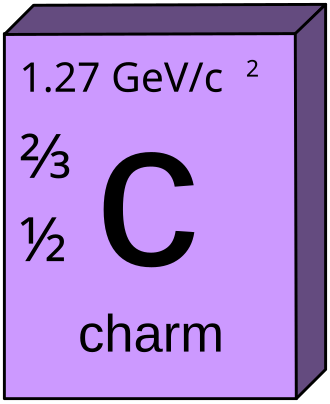
As we get real, we might recall that it was on this date in 1974 that the discovery of the “charmed quark” subatomic particle was announced simultaneously by the two American experimental groups responsible: an MIT group at Brookhaven National Laboratory, and a SLAC-Berkeley group at the Stanford Linear accelerator center.
The existence of the charm quark was first predicted by James Bjorken and Sheldon Glashow in 1964. The new particle, made up of a charm quark and its antimatter opposite, anti-charm, was the fourth quark to be indentified; with a mass of 3095 MeV (or 1.27±0.02 GeV/c2), it had a lifetime about 1000 times longer than that of other particles of comparable mass. Its announcement set the world of high energy physics on fire and is now known in the physics community as “the November revolution.”
For their photo-finish discoveries, the scientists leading those groups, Samuel Ting and Burton Richter, were awarded the Nobel Prize in Physics in 1976.
“Bohr was inconsistent, unclear, willfully obscure, and right. Einstein was consistent, clear, down-to-earth, and wrong.”*…

The founders of quantum mechanics understood it to be deeply, profoundly weird. Albert Einstein, for one, went to his grave convinced that the theory had to be just a steppingstone to a more complete description of nature, one that would do away with the disturbing quirks of the quantum.
Then in 1964, John Stewart Bell proved a theorem that would test whether quantum theory was obscuring a full description of reality, as Einstein claimed. Experimenters have since used Bell’s theorem to rule out the possibility that beneath all the apparent quantum craziness — the randomness and the spooky action at a distance — is a hidden deterministic reality that obeys the laws of relativity.
Now a new theorem has taken Bell’s work a step further. The theorem makes some reasonable-sounding assumptions about physical reality. It then shows that if a certain experiment were carried out — one that is, to be fair, extravagantly complicated — the expected results according to the rules of quantum theory would force us to reject one of those assumptions.
According to Matthew Leifer, a quantum physicist at Chapman University who did not participate in the research, the new work focuses attention on a class of interpretations of quantum mechanics that until now have managed to escape serious scrutiny from similar “no-go” theorems.
Broadly speaking, these interpretations argue that quantum states reflect our own knowledge of physical reality, rather than being faithful representations of something that exists out in the world. The exemplar of this group of ideas is the Copenhagen interpretation, the textbook version of quantum theory, which is most popularly understood to suggest that particles don’t have definite properties until those properties are measured. Other Copenhagen-like quantum interpretations go even further, characterizing quantum states as subjective to each observer…
… which has, as you will see as you read on in the piece excerpted above, some pretty profoundly weird implications. Either the rules of quantum mechanics don’t always apply, or at least one basic assumption about reality must be wrong: “A New Theorem Maps Out the Limits of Quantum Physics.”
See also “Reality is that which, when you stop believing in it, doesn’t go away.”
* John Stewart Bell
###
As we pity Schrödinger’s cat, we might we might send penetrating birthday greetings to Henry Way Kendall; he was born on this date in 1926. A particle physicist, he shared the Nobel Prize in Physics in 1990 (with Jerome Isaac Friedman and Richard E. Taylor) “for their pioneering investigations concerning deep inelastic scattering of electrons on protons and bound neutrons, which have been of essential importance for the development of the quark model in particle physics.”
In 1969, Kendall helped found the Union of Concerned Scientists. In 1997, in connection with the Kyoto Climate Summit, he helped produce a statement signed by 2,000 scientists calling for action on global warming.

“People almost invariably arrive at their beliefs not on the basis of proof but on the basis of what they find attractive”*…

A map characterizes the Republican trade policy platform in the 1888 election
When PJ Mode began to purchase old maps in the 1980s, he set out to amass a typical collection of world maps. But along the way, his attention turned to unusual maps that dealers weren’t sure how to categorize—those that attempted to persuade rather than convey geographic information.
“Most collectors looked down their noses at these maps because they didn’t technically consider them maps,” Mode says. “But they were fun and they were inexpensive, and over the years I became more interested in them than the old world maps.”
The interest has culminated in a collection of more than 800 “persuasive maps,” as they are now called, which can be found in digital form through Cornell University’s library…
Maps never succeed is depicting reality exactly, fully as it is. But as a digital collection at Cornell University shows, many important maps from our past haven’t even tried. How subjective maps can be used to manipulate opinion: “These ‘Persuasive Maps’ Want You to Believe.”
See also “Maps that Make a Point” and “A map of the world that does not include Utopia is not worth even glancing at, for it leaves out the one country at which Humanity is always landing.”
De l’art de persuader
###
As we try to find our way, we might send birthday greetings to a “cartographer” of a different sort: James Augustine Aloysius Joyce was born on this date in 1882. A poet and novelist best known for Ulysses, he was the preeminent figure in the Modernist avant-garde, and a formative influence on writers as various as (Joyce’s protege) Samuel Becket, Jorge Luis Borges, Salmon Rushdie, and Joesph Campbell.
In 1998, the Modern Library ranked Ulysses No. 1, A Portrait of the Artist as a Young Man No. 3, and Finnegans Wake No. 77, on its list of the 100 best English-language novels of the 20th century. The next year, Time Magazine named Joyce one of its 100 Most Important People of the 20th century, observing that “Joyce … revolutionized 20th century fiction.” And illustrating that Joyce’s influence was not confined to the arts: physicist Murray Gell-Mann used the sentence “Three quarks for Muster Mark!” (in Joyce’s Finnegans Wake) as source for the elementary particle he was naming– the quark.

Photo of Joyce included in a printed subscription order form for Ulysses, published Paris, 1921
You must be logged in to post a comment.