Posts Tagged ‘trade’
“Unless we change direction, we are likely to end up where we are headed”*…

… And so, the estimable Cory Doctorow argues in his wonderful blog/newsletter Pluralistic, we’d better make ourselves ready.
Further, in a fashion to last week’s (R)D post on the arrival of authoritarianism in the U.S. (to which your correspondent would have added Garret Graff‘s powerful essay had it landed in time)…
As Trump rails against free trade, demands public ownership stakes in corporations that receive government funds, and (selectively) enforces antitrust law, some (stupid) people are wondering, “Is Trump a communist?”
In The American Prospect, David Dayen writes about the strange case of Trump’s policies, which fly in the face of right wing economic orthodoxy and have the superficial trappings of a leftist economic program.
The problem isn’t that tariffs are always bad, nor is it that demanding state ownership stakes in structurally important companies that depend on public funds is bad policy. The problem is that Trump’s version of these policies sucks, because everything Trump touches dies, and because he governs solely on vibes, half-remembered wisdom imparted by the last person who spoke to him, and the dying phantoms of old memories as they vanish beneath a thick bark of amyloid plaque.
Take Trump’s demand for a 10% stake in Intel (a course of action endorsed by no less than Bernie Sanders). Intel is a company in trouble, whose financialization has left it dependent on other companies (notably TMSC) to make its most advanced chips. The company has hollowed itself out, jettisoning both manufacturing capacity and cash reserves, pissing away the funds thus freed up on stock buybacks and dividends.
Handing Trump a 10% “golden share” does nothing to improve Intel’s serious structural problems. And if you take Trump at his word and accept that securing US access to advanced chips is a national security priority, Trump’s Intel plan does nothing to advance that access. But it gets worse: Trump also says denying China access to these chips is a national security priority, but he greenlit Nvidia’s plan to sell its top-of-the-range silicon to China in exchange for a gaudy statuette and a 15% export tax.
It’s possible to pursue chip manufacturing as a matter of national industrial policy, and it’s even possible to achieve this goal by taking ownership stakes in key firms – because it’s often easier to demand corporate change via a board seat than it is to win the court battles needed to successfully invoke the Defense Production Act. The problem is that Trumpland is uninterested in making any of that happen. They just want a smash and grab and some red meat for the base: “Look, we made Intel squeal!”
Then there’s the Trump tariffs. Writing in Vox EU, Lausanne prof of international business Richard Baldwin writes about the long and checkered history of using tariffs to incubate and nurture domestic production.
The theory of tariffs goes like this: if we make imports more expensive by imposing a tax on them (tariffs are taxes that are paid by consumers, after all), then domestic manufacturers will build factories and start manufacturing the foreign goods we’ve just raised prices on. This is called “import substitution,” and it really has worked, but only in a few cases.
What do those cases have in common? They were part of a comprehensive program of “export discipline, state-directed credit, and careful government–business coordination.”
In other words, tariffs only work to reshore production where there is a lot of careful planning, diligent data-collection, and review. Governments have to provide credit to key firms to get them capitalized, provide incentives, and smack nonperformers around. Basically, this is the stuff that Biden did for renewables with the energy sector, and – to a lesser extent – for silicon with the CHIPS Act.
Trump’s not doing any of that. He’s just winging it. There’s zero follow-through. It’s all about appearances, soundbites, and the libidinal satisfaction of watching corporate titans bend the knee to your cult leader.
This is also how Trump approaches antitrust. When it comes to corporate power, both Trump and Biden’s antitrust enforcers are able to strike terror into the hearts of corporate behemoths. The difference is that the Biden administration prioritized monopolists based on how harmful they were to the American people and the American economy, whereas Trump’s trustbusters target companies based on whether Trump is mad at them.
What’s more, any company willing to hand a million or two to a top Trump enforcer can just walk away from the charges.
In her 2023 book Doppelganger, Naomi Klein introduces the idea of a right-wing “mirror world” that offers a conspiratorial, unhinged version of actual problems that leftists wrestle with.
For example, the antivax movement claims that pharma companies operate on the basis of unchecked greed, without regard to the harm their defective products cause to everyday people. When they talk about this, they sound an awful like leftists who are angry that the Sacklers killed a million Americans with their opiods and then walked away with billions of dollars.
Then there are the conspiracy theories about voting machines. Progressives have been sounding the alarm about the security defects in voting machine since the Bush v Gore years, but that doesn’t mean that Venezuelan hackers stole the 2020 election for Biden.
When anti-15-minute-city weirdos warn that automated license-plate cameras are a gift to tyrants both petty and gross, they are repeating a warning that leftists have sounded since the Patriot Act.
The mirror-world is a world where real problems (the rampant sexual abuse of children by powerful people and authortiy figures) are met with fake solutions (shooting up pizza parlors and transferring Ghislaine Maxwell to a country-club prison).
Most of the people stuck in the mirror world are poor and powerless, because desperation makes you an easy mark for grifters peddling conspiracy theories. But Trump’s policies on corporate power are what happens in the mirror world inhabited by the rich and powerful.
Trump is risking the economic future of every person in America (except a few cronies), but that’s not the only risk here. There’s also the risk that reasonable people will come to view industrial policy, government stakes in publicly supported companies, and antitrust as reckless showboating, a tactic exclusively belonging to right wing nutjobs and would-be dictators.
Sociologists have a name for this: they call it “schismogenesis,” when a group defines itself in opposition to its rivals. Schismogenesis is progressives insisting that voting machines and pharma companies are trustworthy and that James Comey is a resistance hero.
After we get rid of Trump, America will be in tatters. We’re going to need big, muscular state action to revive the nation and rebuild its economy. We can’t afford to let Trump poison the well for the very idea of state intervention in corporate activity…
Trump’s mirror-world New Deal: “The capitalism of fools,” from @pluralistic.net.web.brid.gy.
And for a (think tank’s) take on the state of socio-political play: “U.S. Democratic Backsliding in Comparative Perspective.”
* Chinese proverb
###
As we ready ourselves, we might note (per the Garret Graff piece linked above) that…
Just months short of the nation’s 250th birthday, Donald Trump is close to batting a thousand at speed-running the very abuses of power that led the Founders to write the Declaration of Independence in the first place. Does any of this sound familiar:
- He has refused his Assent to Laws, the most wholesome and necessary for the public good.
- For taking away our Charters, abolishing our most valuable Laws, and altering fundamentally the Forms of our Governments
- He has kept among us, in times of peace, Standing Armies without the Consent of our legislatures.
- He has erected a multitude of New Offices, and sent hither swarms of Officers to harrass our people, and eat out their substance.
- He has obstructed the Administration of Justice, by refusing his Assent to Laws for establishing Judiciary powers.
- He has abdicated Government here, by declaring us out of his Protection and waging War against us.
- For cutting off our Trade with all parts of the world
- For imposing Taxes on us without our Consent
- For depriving us in many cases, of the benefits of Trial by Jury
- For transporting us beyond Seas to be tried for pretended offences
And so on…
And we might recall that it was on this date in 1752 that the Liberty Bell was officially placed in the Pennsylvania State House (now Independence Hall) in Philadelphia. In its early years, the bell was used to summon lawmakers to legislative sessions and to alert citizens to public meetings and proclamations. It is likely that the Liberty Bell was among the bells in Philadelphia to ring on July 8, 1776, when the Declaration of Independence was first read to the public, although no contemporary account of the ringing exists.


“A strange idea was pecking at his brain like a chicken in the egg, and very, very much absorbed him”*…

The estimable Brad DeLong shares the prose outline of one of his lectures…
[In] my “roots of property, exchange, and the division of labor” lecture [I try] to make novel and strange the idea people think that they “own” things: to impress students with how just plain weird that is. And then there are the next steps: That people enter into reciprocal gift-exchange relationships with or using things they “own” is really weird. That reciprocal gift-exchange transforms into cash-on-the-barrelhead one-shot economic “trade” is perhaps the weirdest of all. Where do these things come from? And what are the chances that any Turing-Class intelligent social creature would ever develop them? And how much less efficient and functional as an action-taking anthology-intelligence could the East African Plains Ape possibly be without these social-institutional things that underpin the global-scale societal coördination mechanism we call the “market economy”?
What if we see the idea of “owning” something is one of humanity’s strangest inventions? Before markets, before money, there was a peculiar leap: the belief that things could be “mine” even when I’m not looking. Explore how property and exchange, far from being “natural”, are peculiar to the East African Plains Ape, are societal-scale technologies that turned us into a market-making species, and how that leap—property and exchange—became the foundation of our economic world and of a great deal of our success as an action-taking anthology-intelligence.
That we believe in property and exchange is absolutely key to the “market” institutional mode of organizing the practical-action coördination side of humanity as a successful anthology intelligence. And that is not all that property is key to, for spheres of ownership, action, and control that can be readjusted are very important parts of our conceptual map for a great deal of our additional collective modes and mechanisms of societal organization. And these ideas—not just “I will growl and bite you if you try to drag this zebra carcasse I am eating right now away from me”, but that this is mine and it stays mine even if I am not right here growling—is really weird.
Where and how does it originate?
And why did it make sense for the first of the homines erecti who added this to their shared conceptual maps?…
Touching on the thinking of Doug Jones (who locates the cultural emergence of “property” in the development of the hand-axe), Adam Smith, Aristoteles of Stagire, John Locke, Jean-Jacques Rousseau, and Friedrich Engels, DeLong concludes…
However, once we have constructed this jenga tower on top of its foundations of reciprocity and ownership, one of very key pieces of humanity’s glory and power as an action-taking coördinated anthology-intelligence has fallen into place.
The true genius of the market system lies in its capacity to decentralize decision-making, to push choices and authority out to the periphery—out to the individuals and enterprises who are closest to the ground, who possess the granular, local knowledge that no distant central planner or bureaucratic committee could ever hope to match. In this way, the market harnesses and aggregates the dispersed intelligence of society, transforming millions of individual judgments, preferences, and bits of information into a coherent pattern of production and allocation.
The result is an astonishingly adaptive and responsive system, one that can, at its best, direct resources toward their most valued uses with a minimum of wasted effort. But, and this is crucial, this remarkable coördination is only truly effective for rival and excludible commodities—goods and services for which one person’s consumption precludes another’s, and for which access can be limited to those who pay. In these domains, the market’s invisible hand is real and powerful, allocating goods through the interplay of supply, demand, and price.
When markets are functioning well—when property rights are secure, when contracts are enforced, when information is sufficiently available—they become the central nervous system of a vast, intricate organism. They coordinate sprawling networks of production and exchange, linking together farmers, manufacturers, merchants, workers, and consumers in a web of mutual interdependence. It is the division of labor, enabled and deepened by the existence of wide and deep markets, that serves as the engine of productivity and prosperity. As Adam Smith observed, the specialization of tasks allows individuals to become more skilled and efficient, unleashing a flood of innovation and output that no autarkic household or command economy could hope to rival.
Yet—and this is a point too often ignored—the benefits of this productivity are not distributed evenly or automatically. Who gets what, and how much, is determined by the prevailing structure of bargaining power and the existing arrangements of property. The market does not guarantee justice, only efficiency; it delivers abundance, but it apportions that abundance according to the rules of the game, rules that are themselves the product of history, law, and politics. Thus, while the market is a marvel of coordination, it is never a substitute for vigilance about the distributional consequences it generates…
How ownership and trade have made us truly weird: “‘Property’ & ‘Exchange’ as a Coördination Mechanism at Societal Scale,” from @delong.social.
Apposite (and in the spirit of both DeLong’s concluding observation and Aristotle’s injunction: “Property should be in a general sense common, but as a general rule private… In well-ordered states, although every man has his own property, some things he will place at the disposal of his friends, while of others he shares the use of them.”): “Think LIke a Commoner“
* Fyodor Dostoyevsky, Crime and Punishment
###
As we ponder property, we might send insightful birthday greetings to one of its most sardonic observers, William Makepeace Thackeray; he was born on this date in 1811. A novelist and illustrator, he is best known for his satirical works, particularly his 1847–1848 novel Vanity Fair, a panoramic– and piercing– portrait of British society, and the 1844 novel The Luck of Barry Lyndon (which was, of course, adapted for a 1975 film by Stanley Kubrick.

“Stand firmly in the present and focus on the future”*…

In a widely-cited article from May, Gillian Tett marks a fundamental shift– accelerated by the Trump administration, but underway beforehand:
… in the 20th century free-market intellectual framework — which is the one in which most western professionals built their careers — it was generally assumed that rational economic self interest ruled the roost, not grubby politics. Politics seemed to be derivative of economics — not the other way around.
No longer. The trade war unleashed by US President Donald Trump has shocked many investors, since it seems so irrational by the standards of neoliberal economics. But “rational” or not, it reflects a shift to a world where economics has taken second place to political games, not just in America, but many other places too…
…this phenomenon is not simply about one man (Trump), but rather marks a much bigger turning point in the intellectual zeitgeist — of a sort we have seen a few times before.
One such shift occurred just over a century ago, when the globalist, Imperialist vision of capitalism that reigned before the first world war was displaced by nationalist, protectionist policies. Another came after the second world war, when Keynesian economics took hold. Then, in the 1980s, free-market neoliberal ideas displaced Keynesianism.
The fact that the intellectual pendulum is now swinging again, towards more nationalist protectionism (with a dose of military Keynesianism), thus fits a historical pattern — although few predicted that the swing would take quite this form…
… one important facet of this zeitgeist shift is that governments are no longer “just” focused on their country’s absolute wellbeing, but on their relative positions too. This distinction might sound subtle. But it matters deeply, as a paper co-authored by Aaditya Mattoo, a World Bank economist, along with Michele Ruta and Robert Staige, spells out.
That is because an “absolute welfare” mentality supports trade co-operation, but unravels “if rivalry eclipses any consideration of own- country wellbeing,” the authors say. Trump’s angry rhetoric about America being “ripped off” by competitors, in other words, reflects a bigger mental shift… an (obvious) factor behind this rivalry is that China is now challenging America’s incumbent dominance…
It’s worth reading Tett’s piece in full (gift link)– and noting that the real-world evidence supporting her thesis is clear. Here, let us look more closely at China. Adam Tooze offers a primer– all-too-appropriate to Tett’s argument– on how to see China’s historic development through the veil of macroeconomics…
In the global economic conjuncture there are few if any factors more important than the state and future prospects of China’s economy. In purchasing power parity terms, it is the largest economy in the world, with a 20 percent share of global GDP. Measured in terms of current exchange rates, China comes second to the US.
China impacts the world economy as a huge market for exports from other countries. China’s imports range from raw materials, to Europe’s luxury brands. The share price of LVMH, Europe’s largest company by stock market valuation, bobs up and down in response to the spending patterns of Chinese women, the world’s most rapidly growing segment of luxury consumers.
China’s exports are a huge part of global markets. And when China’s domestic demand is less buoyant, there is a surge of anxiety about “excess capacity”, the pressure of exports increases and we start talking about “China shocks”.
In the macroeconomic balance, as discussed in World Economy Now of May, China’s huge surplus is the counterpart to the huge deficit of the USA.
China’s currency is pegged against a basket of other world currencies. This is backed up by some of the more effective capital account regulation in the world economy today. Funds cannot easily be transferred out of China on a large scale. So, there is structural uncertainty about what the exchange rate of the RMB should be. The trade account would suggest stronger. The scenario of mass capital flight in the event of a loosening of capital controls would suggest a much weaker currency, as happened during the crisis episode of 2015. A sudden adjustment in the Chinese exchange rate has the potential to destabilize the world economy as severely as Trump’s trade wars.
For all of these reasons, China is at the heart of global macroeconomics.
And there are a lot of news to be concerned about…
[Tooze reviews the decline in China’s growth rate…]
… But as useful as it is, this macroeconomic approach also minimizes the drama of history and qualitative transformation. China’s economy is huge because it encompasses the material destiny of one sixth of humanity. In the 1970s, China’s national income per head was less than that of Sudan and Zambia. It was not just the most populous country in the world but also one of the poorest. China’s ascent during the age of globalization is not just one economic story amongst many. It is the single most dramatic development in world economic history, bar none…
… Today, with a per capita GDP in purchasing power parity terms of $24,569, China is officially classed as an “upper middle-income” economy. It has far outstripped India (which in 1990 was still ahead of China). It has overtaken Indonesia. It has surpassed Brazil and caught up with Mexico. China is now on the cusp of being promoted to the ranks of the “high-income” countries…
… So here we have two images of China: One, as a big part of global macroeconomics, the other as a world historic development story. The trick is not to play these two accounts against each other, but to figure out how they interrelate and condition each other.
If we can sensibly discuss China today as just another big economy, rather than a country struggling with basic development issues, it is because it has actually undergone something truly exceptional, namely, utterly radical economic development in the space of less than two generations.
Pause for a second to consider this twist.
Dialectics offers us a way of imagining the process through which quantitative change turns into qualitative transformation. And there is plenty of that going on in the Chinese case. For example, it is one thing to be a big player in electric vehicles, it is quite another to entirely dominate every facet of the global supply chain. At that point market share measured in percentage points, a quantitative metric, turns into power, a statement of qualitative distinction.
But China also spectacularly illustrates the opposite process, through which qualitative change on a huge scale – “opening up” and “market reform” – transform a society’s entire mode of being so much that it becomes discussable as “just another really big piece of the world economy”, no different in macroeconomic terms than the Eurozone or the US economy. A history of radical qualitative change gives way to bland quantitative metrication.
Social theorists and market practitioners both use the same word to capture this dialectic of quality into quantity – commodification. When your distinctive, branded product with its specific qualities and associated narrative becomes commoditized, it widens the market, but also erases distinctions. In intellectual terms, rendering China’s utterly radical, world-changing development story as a question of “global growth”, is something akin to “commodification”.
Of course, quantitative comparison enabled by commodification has many uses. No less than commoditized goods. But both accept as a cost the erasure of specific qualities. In narrative terms, it involves a kind of blindness to history – how we got here – but also to the wider social and political meaning of current trends and the network of social, political, cultural and material forces that may drive future development. We do macroeconomics no injustice, if we call it heuristic and algorithmic in its approach. Its metier is not the in-depth search for historical meaning.
If we are to have both we need to learn to shuttle back and forth in our economic analysis from quality to quantity to quality to quantity etc.
Of course, you might object that all I am describing in rather highfalutin terms, are the methods of any good economic journalist. A good economics story weaves back and forth between the particular and the general, the experiential and the GDP numbers. That is true. It is a familiar narrative style. But there is a difference between an anecdote that merely serves as a “hook” and the effort to actually find a keyhole or opening that allows us to enter into the complexity of historical reality. As Stuart Hall once put it, the challenge is to find ways of “breaking in” to the historical conjuncture we are trying to decipher…
… How does the quality-quantity dialectic help us to better understand China’s economic situation and its relationship to the world economy in the summer of 2025?…
[Tooze uses that dialectic to unpack four key issues for China: real estate/urbanization, youth unemployment/generational shock, trade surplus/manufacturing power, and deflation (the “accumulation regime”)…]
… This essay had been a forced march, the aim of which is to connect four points of common concern about China’s macroeconomic situation – real estate, youth unemployment, the trade balance and deflation – with broader questions of China’s recent history and development. Doing justice to any of these themes would require far more space and far more expertise than I have my disposal. My aim here is simply to demonstrate the value of this kind of approach. My aim is to alert us to the moments when quality flattens into quantity – when “world-changing hundred-millionfold urbanization” is recharacterized as nothing more than a real estate boom – and to suggest the possibility of different narratives. The aim is to allow us to see through the bare bones of the macroeconomic schema, to the more historically specific and ultimately more powerful forces that are at play.
I’m not original in suggesting this. This is just what good history and good critical social analysis ought to do when it wrestles with the limitations of familiar macroeconomic concepts. In this particular case I am indebted to the work of Lan Xiaohuan of Fudan university, whose book How China Works: An Introduction to China’s State-led Economic Development offers a fascinating developmentalist perspective on recent Chinese economic history.
But not the least attraction of this approach is that it actually allows us to hear – as in really hear – how the Chinese describe their own situation. China insists on referring to itself as “developing” and “development” as the key objective of policy. The phrase 发展 (fāzhǎn) recurs in the titles of the National Development and Reform Commission, the de facto center of Chinese planning, and the Development Research Council of the State Council.
All too often the question of whether China should be counted as a “developing economy” is treated as a matter of cheap gamesmanship. Western critics, allege that China shirks its responsibilities by insisting on its status as a developing country. But triviality aside, as I have argued here, the question is actually a fundamental one. China is a huge and complex society with a powerful regime undergoing the most dramatic process of socio-economic change in world history. To describe this ongoing process as one of development is, if anything, an understatement.
Indeed, the question is why we don’t learn from the Chinese. Would it not behoove Western advanced economies to consider themselves, as well, as “developing”. Or does the difficulty of doing so betoken a telling blindspot? Development as a conception of economic change embodies a notion of comprehensiveness, qualitative change and deliberate purpose that is a challenge to policy in rich countries. In the US the bold vision of the Green New Deal was reduced to the Inflation Reduction Act. Trump’s tariffs and Big Beautiful Bill are a parody of economic nationalism. The best that the EU could manage was NextGen EU in 2020.
As Wang Yiwei of the Academy of Xi Jinping Thought at Renmin University remarked to The Economist:
Development is a permanent “political identity” … The party’s legitimacy depends in part on the riches yet to come. “Once you are ‘advanced’,” says Mr Wang, “you are declining.
The frankness is disarming. But does the West really have an answer?
Eminently worth reading in full: “Whither China? – World Economy Now, June 2025 Edition” from @adamtooze.bsky.social.
Pair with: “The Two Chinas.”
And for context, “Structure and Interpretation of the Chinese Economy.”
(Image above: source)
* ancient Chinese adage
###
As we synthesize, we might recall that it was on this date in 626 that Li Shimin ambushed and killed his rival brothers Li Yuanji and Li Jiancheng in the Xuanwu Gate Incident. Li Shimin went on to become Emperor Taizong of Tang– the second emperor of the Tang dynasty of China, ruling from 626 to 649. He is traditionally regarded as a co-founder of the dynasty for his role in encouraging his father Li Yuan (Emperor Gaozu) to rebel against the Sui dynasty in 617. Taizong subsequently played a pivotal role in defeating several of the dynasty’s most dangerous opponents and solidifying its rule over China proper.

“Nanotechnology is an idea that most people simply didn’t believe”*…

Indeed, in the 1980s, even as nanotech pioneer Erik Drexler, a graduate student at MIT at the time, was doing the early work of defining and charting a course for the nascent field, MIT’s departments of electric engineering and computer science refused to approve his Ph.D. topic and plan of study (though ultimately the Media Lab did, and Erik earned his doctorate).
Today the reality– and centrality– of the field are only too apparent and have become the subject of trade and industrial policy… because while the U.S. led in the development of nanotech science, it lags in manufacturing and commercialization. In an excerpt from their book Industrial Policy for the United States: Winning the Competition for Good Jobs and High-Value Industries, Ian Fletcher and Marc Fasteau explain…
Nanotechnology is the manipulation of matter at scales from a fraction of a nanometer to a few hundred nanometers — sizes between individual atoms and small single-celled organisms — at which it has radically different properties. Nanotech is already significant in many industries. Integrated circuits are a form of nanotech. Other nanotech provides the light, strong composites in aircraft and space vehicles. Still other nanotech powers the solid-state lasers used to transmit information through the internet and the light-emitting diodes in LED light bulbs and flat-screen TVs. Nanotech also makes possible solar cells, the batteries in electric cars, and medical technologies such as vaccines. It is thus the unifying thread of many of today’s most advanced technologies. Unfortunately, America is falling behind.
In the future, nanotech-based quantum computing and communications will lead to more powerful computers, transforming national security and internet commerce by making currently secret communications insecure. Medical nanotechnologies will permit targeted interventions at the cellular level, providing new weapons against diseases, biological weapons, and defenses against them. China is known to be working on these.
Much of the science underpinning these advances was developed at firms and universities in the US. But the huge manufacturing industries built on it are mostly overseas. For example, the organic light-emitting diode (OLED) technology Kodak created didn’t save that firm from going bankrupt in 2012. But it did enable lucrative businesses for Korea’s Samsung, to whom Kodak licensed the technology, and LG, which bought Kodak’s entire OLED business in 2009. Today, American firms like Nanosys and Universal Display develop important nanotechnologies, but do not actually manufacture the end products and are thus relatively small.
How did the US get itself into this situation? A major government program, the National Nanotechnology Initiative (NNI), has been funded since 2001, but Washington failed to appreciate the importance of having both a technology and a manufacturing strategy. The prevailing wisdom was that if the academic science was supported, mass manufacturing would follow automatically. By contrast, successful rival nations in nanotech have focused on making these technologies manufacturable at scale, employing every policy tool from R&D subsidies to cheap capital to tariffs. A 2020 National Academies review of the NNI urged that the US recognize that ‘the recent, focused, and in some cases novel commercialization approaches of other nations may be yielding better societal outcomes.’…
A little wonky, but both fascinating and important: “Nanotechnology,” via the invaluable Delanceyplace.com.
(Image above: source)
###
As we get small, we might send miniscule birthday greetings to a man who whose work has contributed to the development of medical applications of nanotech: Bert Sakmann; he was born on this date in 1942. A cell physiologist, he shared the Nobel Prize in Physiology or Medicine (with Erwin Neher) in 1991 for their work on “the function of single ion channels in cells”– work made possible in part by their invention of the patch clamp.

“The bond of our common humanity is stronger than the divisiveness of our fears and prejudices”*…
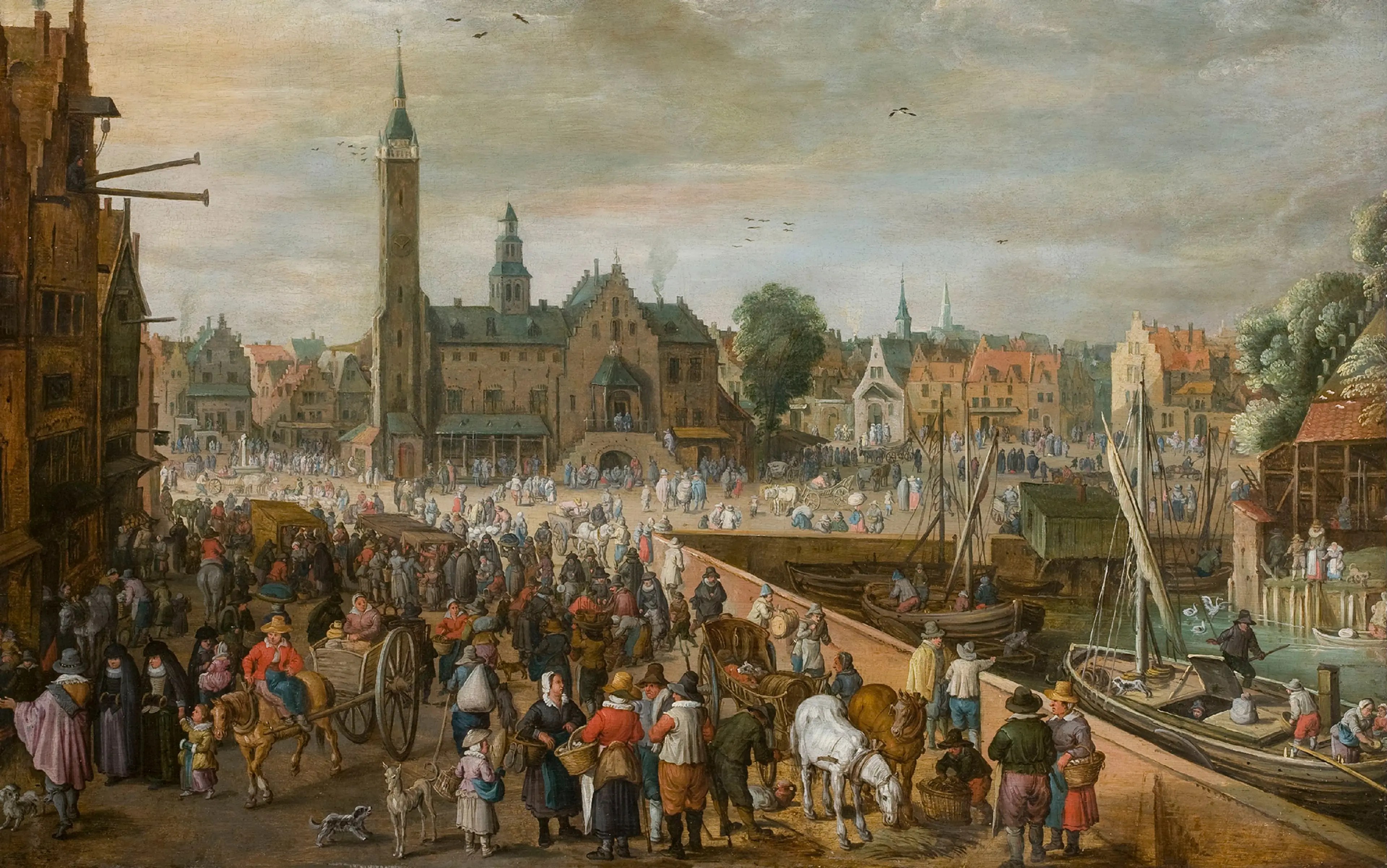
Inanna Hamati-Ataya on the importance of understanding our place in the world…
In the 1990s, an entire generation was robbed of its historical consciousness by a powerful and seemingly unprecedented tale. This story, crafted as the Cold War came to an end, declared that real or imagined boundaries had stopped working as they once had. Humans were no longer contained within their old geographies or identities. They now inhabited a new world that appeared to be unhinged from the normal evolution of human society.
The concept chosen to capture this transformational moment in human history was ‘globalisation’. It described how new technologies and networks of connectivity had suddenly brought human communities closer together and made them permeable to an uncontrollable flow of people, ideas, goods and cultural practices, which all moved freely across the integrated markets of the world economy. In the wake of this transformation, new jargon emerged, expressing new anxieties: the world had truly become the ‘global village’ that Marshall McLuhan anticipated in the 1960s, but it was a world shaped by multinational corporations and ‘elite globalisers’, who spoke a common, hegemonic ‘global English’, and were spearheading a destructive ‘homogenisation’ (or ‘McDonaldisation’) of human cultures that national borders were too fragile to withstand.
During the past three decades, more people have begun viewing our ‘global’ world as a cursed fate. With its suffocating time-space compression, globalisation seems to have uncoupled us from the logic and flow of history. Our suspicious, bastard identities – patched together from a mishmash of cultures – appear incompatible with our ancestors’ ‘authentic’ traditions and ways of life. We have become strangers to the places they called home, to the ways they dressed, ate or communicated with one another. And, with no template for how to live and no experience to learn from, the deafening siren songs of anti-globalisation movements are now luring us back into the safer identities and boundaries of a lost, golden past.
This tale of globalisation is the most successful scare story of our times. And like all scare stories, it stimulates our fear of an overwhelming unknown.
But it’s all an illusion. There is no new global world.
Our present appears that way only because we have forgotten our common past. Globalisation didn’t begin in the 1990s, or even in the past millennia. Remembering this older shared history is a path to a different tale, which begins much, much earlier – long before the arrival of international supply chains, ocean-going sailing ships, and continent-spanning silk roads. The tale of globalisation is written across human history. So why do we keep getting the story so wrong?…
[She unpacks the answer to her questions, then turns to it implications…]
… In our own contemporary era, anti-globalisation movements have recently shifted from the far Left to the far Right of national and global politics. Justified resentment against the locally experienced injustices of the global economy and the growing disruptive effect of global climate change are now couched in resentment for the social and cultural dimensions of globalisation. Identitarianism, a political ideology that stresses the preservation of narrowly conceived ‘Western’ ethnicities and cultures, has accordingly become the easiest and most efficient strategy to mobilise local grievances, and direct them at whatever is perceived as a threat to the wellbeing of those suffering within. The ugly age of nationalism is back.
Is nationalist identitarianism the ethos we will now deploy to confront the common existential threats that await us in the coming century? Why wouldn’t it be? Does anyone doubt that national borders will be turned, once again, into sacred physical boundaries and fiercely defended against those fleeing the environmental, economic or military devastation of their homes? Do we doubt that eloquent voices animated by the most (ig)noble intentions will rise to justify patriotic bullets being aimed at ‘alien migrants’ and climate refugees? And that leaders will say these displaced people cannot be accommodated because of their numbers and cultures, and the threat they pose to our secure lives – to our ‘identity’?
Such scenarios are far too likely given the rise of xenophobic worldviews, such as the conspiratorial idea of a ‘Great Replacement’, in which elites – imagined to be Jews and other minorities – have begun executing a plan to replace so-called indigenous white Europeans with other populations of apparently greater and threatening reproductive vitality. These racialist worldviews dangerously converge with a public misunderstanding of ‘race’ as reflected in the recent craze for DNA ‘ancestry tests’. DNA has little to do with ‘identity’, as social and political ideologies have constructed it, and much to do with physical and social geography. Our genes are a result of human adaptive mobility, and the journeys, rich encounters and kin-making that our freedom of movement made possible over tens of thousands of years. Our genome does not tell our whole story, but the story it does tell shows how past globalisations made us what we are today.
As we search for ways of communing with one another beyond the stubborn ideology of difference, we should also prepare for vicious future distortions and manipulations of our current scientific and historical understanding of identity. Some humans today carry a few genes that their Pleistocene ancestors inherited from intercourse with our Eurasian Neanderthalian and Denisovan cousins, whom some communities of Homo sapiens encountered on their journeys of cosmopolitan expansion. How might such a genetic difference among us be interpreted and used in the future by those intent on pursuing identitarianism to its silliest or most murderous conclusions? Might they declare that some humans are not ‘pure’ enough to enjoy the full freedom, security and dignity we recognise as the natural rights of humankind? Or might they, on the contrary, elevate the Neanderthalian or Denisovan gene as a marker of Eurasian ‘distinction’ to recreate narratives of racial superiority, similar to those that once plagued archaeological thinking about the allegedly more ‘advanced’ nature of those human fossils laying the farthest away from the species’ original African homes?
Palaeontologists who insist on ascribing the label ‘humans’ to the entire Homo genus while reserving that of ‘modern humans’ to the surviving representatives of the lineage (ie, us) probably understand better than most the dangers of ideological manipulations of scientific taxonomies. But in the open marketplace where ideas freely flow in the name of freedom of thought and expression, how can we protect ourselves and one another from such dangers, if we still perceive plurality as a threat to survival, and cannot see the richness of our shared human culture?
The wars we wage against one another are all civil wars. Until we recognise them as such, they will remain tragedies we accept as natural – or horrors we cheer on in the name of grand notions sold to us by loud voices who know our fears too well (and know too little of the richness of our world and our history). We have always been global, and this is our shared identity. It is our unique way of being and remaining in the world as one family. Whatever we cherish in our humanity and culture has been crafted by our global journeys and encounters. Through them, we will continue to write the story of how we become us…
All of our religions, stories, languages, and norms were muddled and mixed through mobility and exchange throughout history: “There are no pure cultures,” from @berytia.bsky.social in @aeon.co.
Still, as Venkatesh Rao reminds us, the “vacuous over-large abstractions like “globalization” make us underestimate the horizontal historicity of the world.”
* Jimmy Carter
###
As we go with the flow, we might recall that it was on this date in 1690 (or so musicologists believe) that Johann Christoph Denner, inspired by a reeded recorder-like instrument called the chalumeau, designed and created a longer and keyed (so more widely-ranged) instrument that was quickly copied and modified by other makers– and became what we know as the clarinet. By 1791, Mozart was composing for the instrument; by Beethoven’s time, the clarinet was a staple member in the orchestra.
To the point of the essay above, it’s worth noting that the chalumeau– and thus the clarinet– were direct descendants of ancient Greek and ancient Egyptian reeded pipes… that may themselves have been modeled on similar instruments from Central and East Asia.

The clarinet, as depicted in Diderot’s Encyclopedia, 1776 (source)
You must be logged in to post a comment.