Posts Tagged ‘sports’
“America believes in education: the average professor earns more money in a year than a professional athlete earns in a whole week”*…

The highest-paid athlete in the world in 2022 was LeBron James, who took home $36.9 million in salary and winnings, and another $90 million in endorsements, for a total of $126.9 million; Lionel Messi was second, with a total of $122 million. As professional players’ salaries seem to be steadily rising, we might assume that they are the highest-paid athletes of all time. We would be wrong…
1st century poet and satirist Juvenal had much to say about the Roman obsession with ‘bread and games’: “Long ago the people shed their anxieties, ever since we do not sell our votes to anyone. For the people – who once conferred imperium, symbols of office, legions, everything – now hold themselves in check and anxiously desire only two things, the grain dole and chariot races in the Circus”. The very phrase panem et circenses denotes this nigh unhealthy preoccupation with ‘materialistic’ stuff – a scope whose parallel can certainly be drawn in our modern terms. And mirroring our fascination with many an athlete and celebrity sport-star, the ancient Romans possibly boasted the highest paid athlete in the history of mankind. We are talking about one Gaius Appuleius Diocles – who according to classical studies professor Peter Struck (at University of Chicago), amassed around some 35,863,120 sesterces in prize money. That is equivalent to about a whopping $15 billion… it should be noted that the prize money of 35,863,120 sesterces was won only in competitions, without the added benefits of modern-day sponsorship and advertisements…
Almost replicating a Formula 1 career progression, Diocles starting his gig as a charioteer at a young age of 18 for the so-designated White Team. By the age of 24 he switched to the Green Team, and finally by the age of 27 (till his retirement at 42), he made his move to the Red Team. When translated to figures, his career spanning over 24 years, resulted in 1,462 victories out of the 4,257 four-horse races. In fact, his specialty lay with four-horse races, and most of his enthralling wins came after he caught up with his competitors from behind…
The extraordinary story of “Gaius Appuleius Diocles – possibly the highest paid athlete in the history of mankind,” from @RealmofHistory.
* Evan Esar (writing in the 1960s… so the comparison is probably more aptly a day or an hour)
###
As we ruminate on riches, we might recall that it was on this date in 1985 that the first WrestleMania was held at Madison Square Garden in New York. 19,121 fans watched Hulk Hogan and Mr. T defeated Paul Orndorff and Roddy Piper in the main event. on the undercard, Wendi Richter (accompanied by manager Cyndi Lauper) defeated Leilani Kai to win the WWF Women’s Championship, and Nikolai Volkoff and The Iron Sheik defeated The U.S. Express (Mike Rotundo and Barry Windham) to win the WWF Tag Team Championship. Celebrity guests included former heavyweight boxing champion Muhammad Ali as referee, baseball player/manager Billy Martin as ring announcer, and musician-actor Liberace as timekeeper.

“The excitement that a gambler feels when making a bet is equal to the amount he might win times the probability of winning it.”*…

This afternoon’s Super Bowl is yet to be played, but it is already destined for the record books…
The American Gaming Association expects 50.4 million Americans to wager legally on the game (up over 61% from last year), for a total of $16 Billion at stake (more than twice last year’s betting). To put this into context, in 2022, U.S. legal gambling totaled about $55 billion.
It will also be the first Championship game with an on-site sports book (though attendees don’t need to leave their seats to wager; Arizona is one of the 33 states [plus D.C.] in which they can make bets in licensed betting shops on the way to the game… or, of course, they can just use their phones to bet online).
Sports betting is exploding in the U.S. About 20% of U.S. adults said that they had placed sports bets in 2022. Some of those bets were through legal channels. But The AGA estimates that American also wagered almost $64 billion in 2021 with illegal sports books– part of the $511 Billion bet on those books, iGaming websites, and “skill games.”
These figures exclude the purchase of state lottery tickets, which has grown to over $100 billion. The average American spent $46 on lottery tickets in the U.S. in 2022; but the amounts varied wildly from state-to-state– in Massachusetts, residents spent an average of $805.30.
See also: “How Sports Betting Upended the Economies of Native American Tribes.”
* Blaise Pascal, whose correspondence with Pierre de Fermat on gambling laid the foundation for the modern theory of probability
###
As we wonder about wagering, we might send insightful birthday greetings to Charles Darwin; he was born on this date in 1809. A naturalist, geologist, and biologist, he is widely known for his contributions to evolutionary biology. His proposition that all species of life have descended from a common ancestor is now generally accepted and considered a fundamental concept in science.
In a 1858 joint publication with Alfred Russel Wallace, he introduced his scientific theory that this branching pattern of evolution resulted from a process he called natural selection, in which the struggle for existence has a similar effect to the artificial selection involved in selective breeding. Darwin published a more complete version of his theory of evolution, with compelling evidence. in his 1859 book On the Origin of Species.
Darwin’s scientific discovery is the unifying theory of the life sciences, explaining the diversity of life– for which he has been described as one of the most influential figures in human history.

“Oops, I did it again”*…

(Roughly) Daily has contemplated game theory a number of times (e.g., here). The Generalist Academy offers a particularly poignant example…
Football [or, as it’s called in the U.S., soccer] has a lot of strange rules – like Ted Lasso, I still don’t understand exactly how the offside rule works. But the basic game is pretty simple: get the ball into your opponent’s goal, and prevent them from getting the ball into your goal. Scoring a goal against your own side is a rare and accidental embarrassment. Usually.
The qualification round for the 1994 Caribbean Cup had some unusual rules. No match could end in a draw; if the teams were tied at the end of regular time, they would go into sudden death extra time. But! Any goal scored in extra time would count as two goals. This was presumably done because this tournament, like many, used goal difference to break ties in the qualifying groups. (Goal difference = total number of goals they’ve scored minus the number of goals they’ve conceded.) So that extra time “golden goal” would give a team an edge in the overall competition. Little did the organisers know that it would also lead to one of the strangest football games ever seen…
A truly remarkable match: “Own-Goal Football,” from @GeneralistAcad.
* Britney Spears (Songwriters: Martin Max / Rami Yacoub)
###
As we work backwards, we might send carefully-calculated birthday greetings to Félix Édouard Justin Émile Borel; he was born on this date in 1871. A mathematician (and politician, who served as French Minister of the Navy), he is remembered for his foundational work in measure theory and probability. He published a number of research papers on game theory and was the first to define games of strategy.
But Borel may be best remembered for a thought experiment he introduced in one of his books, proposing that a monkey hitting keys at random on a typewriter keyboard will – with absolute certainty – eventually type every book in France’s Bibliothèque Nationale de France. This is now popularly known as the infinite monkey theorem.

“This City is what it is because our citizens are what they are”*…

Joel Stein on the ascendance of Miami…
The last time Miami was relevant, it wasn’t important. In the 1980s, Miami provided nothing more than drugs, clubs, pastel blazers, jai alai gambling and, most notably, a hit TV show about all four.
But now Miami is the most important city in America. Not because Miami stopped being a frivolous, regulation-free, climate-doomed tax haven dominated by hot microcelebrities. It became the most important city in America because the country became a frivolous, regulation-free, climate-doomed tax haven dominated by hot microcelebrities…
How a refuge for the retired, divorced, bankrupt, and unemployed has evolved into a “paradise of freedom”: “How Miami became the most important city in America,” from @thejoelstein in @FinancialTimes. (A “gifted” article, so should be free of the paywall.)
An apposite look at ascendant cities worldwide, but especially in Africa: “Africa’s rising cities” (also “gifted”).
* Plato
###
As we investigate epicenters, we might recall that it was on this date in 1986 that figure skater Debi Thomas, a Stanford undergraduate, became the first African American to win the Women’s Singles event in the U.S. National Figure Skating Championship competition. She went on to win a gold medal in the World Championships later that year, and then (after battling Achilles tendinitis in both ankles) to earn a Bronze in the 1988 Olympics.
Thomas then attended medical school at Northwestern, and has since practiced as a surgeon.

“There’s always a shot; you just have to find it.”*…
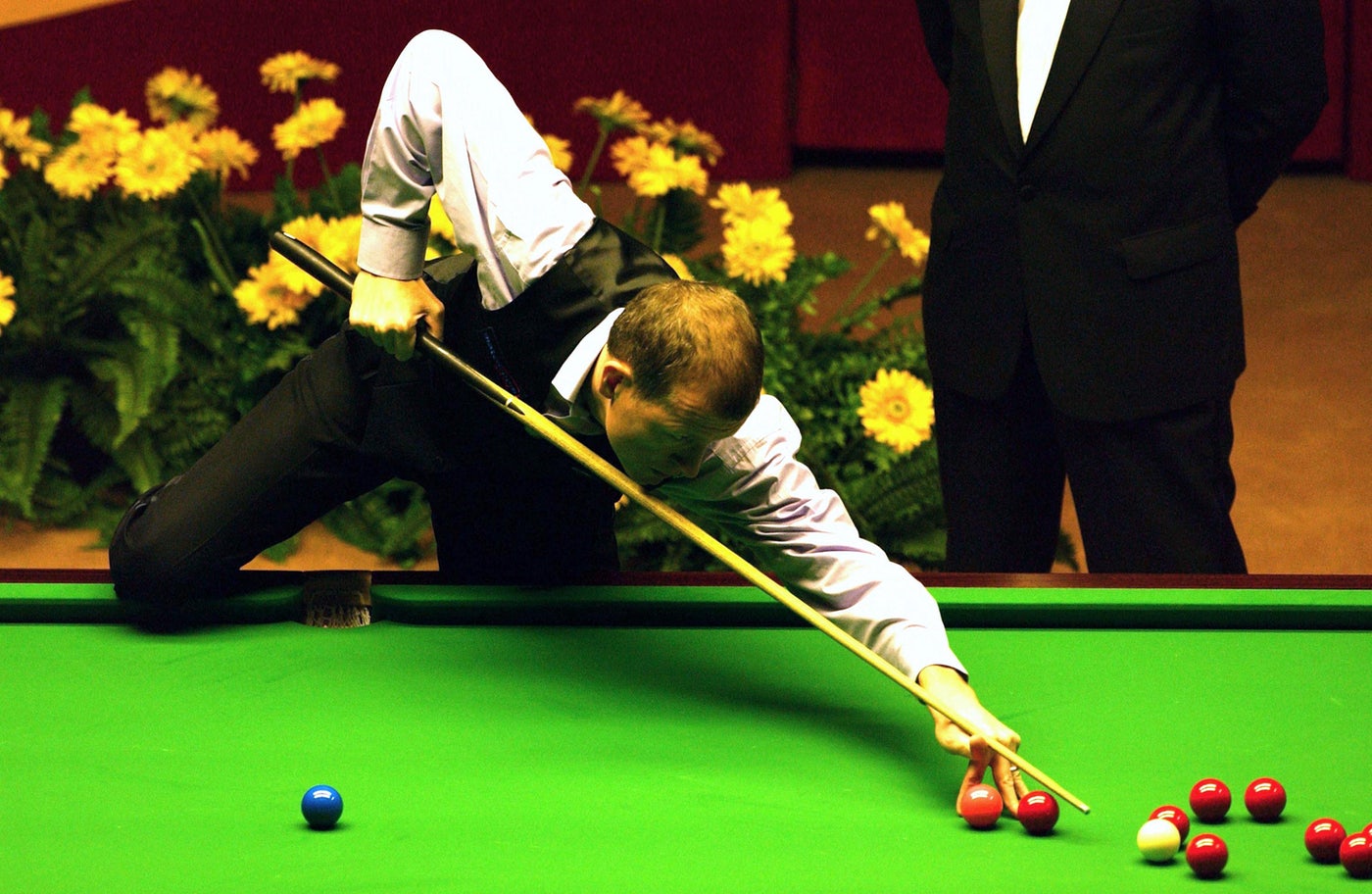
Finesse at it’s finest…
[image at top: source]
* billiards adage
###
As we take our cues, we might send accomplished birthday greetings to Mildred Ella “Babe” Didrikson Zaharias; she was born on this date in 1911. An athlete who excelled in golf, basketball, baseball and track and field, she won two gold medals (in track and field) at the 1932 Summer Olympics, before turning to professional golf and winning 10 LPGA major championships. She is widely regarded as one of the greatest athletes of all time.
Famed as an athlete, she had many other talents: she was a seamstress (who won the South Texas State Fair in Beaumont in 1931) and an musician (a singer and a harmonica player who recorded several songs on the Mercury Records label; her biggest seller was “I Felt a Little Teardrop”).
And she was a competitive pocket billiards player.

You must be logged in to post a comment.