Posts Tagged ‘music’
“Don’t throw the baby out with the bath water”*…
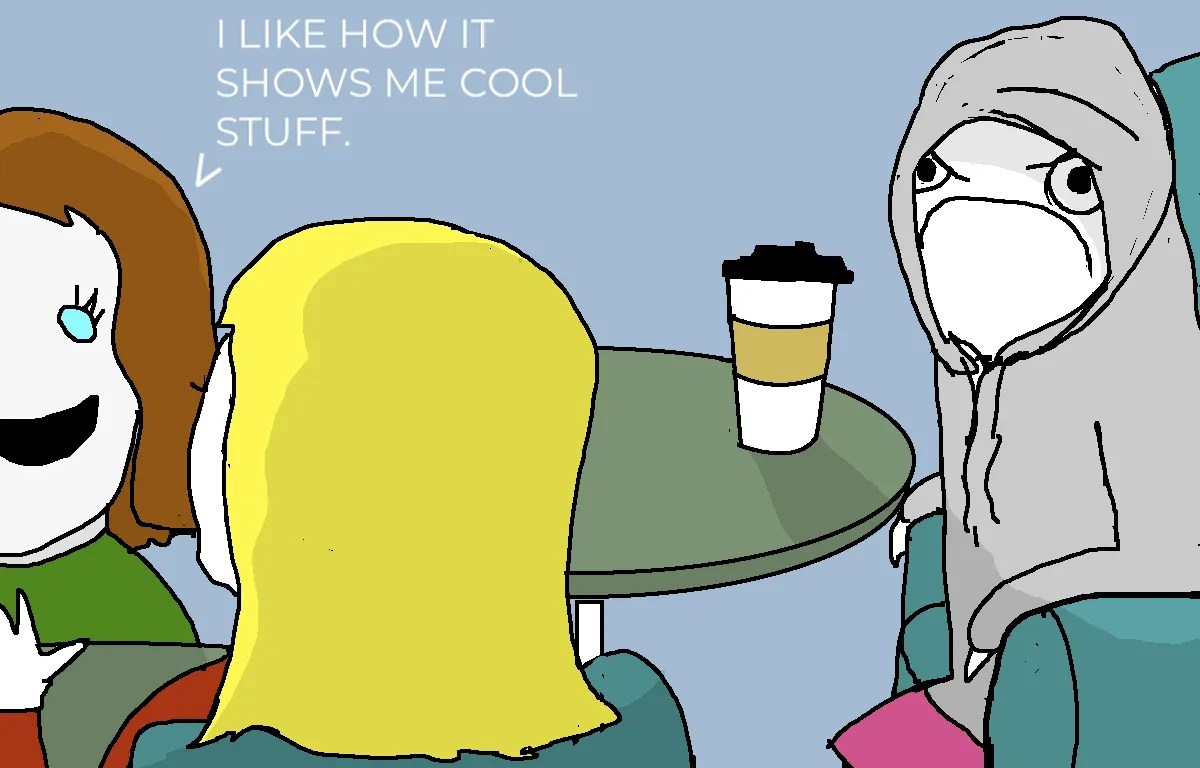
From Dynomight (and here), an argument that algorithms, while problematic today, aren’t necessarily evil…
What does “algorithmic ranking” bring to mind for you? Personally, I get visions of political ragebait and supplement hucksters and unnecessary cleavage. I see cratering attention spans and groups of friends on the subway all blankly swiping at glowing rectangles. I see overconfident charlatans and the hollow eyes eyes of someone reviewing 83 photo she just made her boyfriend take of her in front of a sunset. Most of all, I see dreams of creative expression perverted into a desperate scramble to do whatever it takes to please the Algorithm.
Of course, lots of people like algorithmic ranking, too.
I theorize that the skeptics are right and algorithmic ranking is in fact bad. But it’s not algorithmic ranking per se that’s bad—it’s just that the algorithms you’re used to don’t care about your goals. That might be an inevitable consequence of “enshittification”, but the solution isn’t to avoid all algorithms, but just to avoid algorithms you can’t control. This will become increasingly important in the future as algorithmic ranking becomes algorithmic everything…
Dynomight elaborates on the problem, its genesis, and a plausible answer: “Algorithmic ranking is unfairly maligned,” from @dynomighty.bsky.social.
###
As we rethink rankings, we might recall that on this date in 1969 a group at the top of most lists took it to the roof: The Beatles performed on the rooftop of their Apple Corps headquarters at 3 Savile Row, in central London’s office and fashion district. Joined by guest keyboardist Billy Preston, the band played a 42-minute set before the Metropolitan Police arrived and ordered them to “reduce the volume.” It was the final public performance of their career. The concert ended with “Get Back,” after which John Lennon quipped, “I’d like to say thank you on behalf of the group and ourselves, and I hope we’ve passed the audition.”
The full concert footage is available at the invaluable Internet Archive. Here, a taste of “Get Back”…
“The bond of our common humanity is stronger than the divisiveness of our fears and prejudices”*…
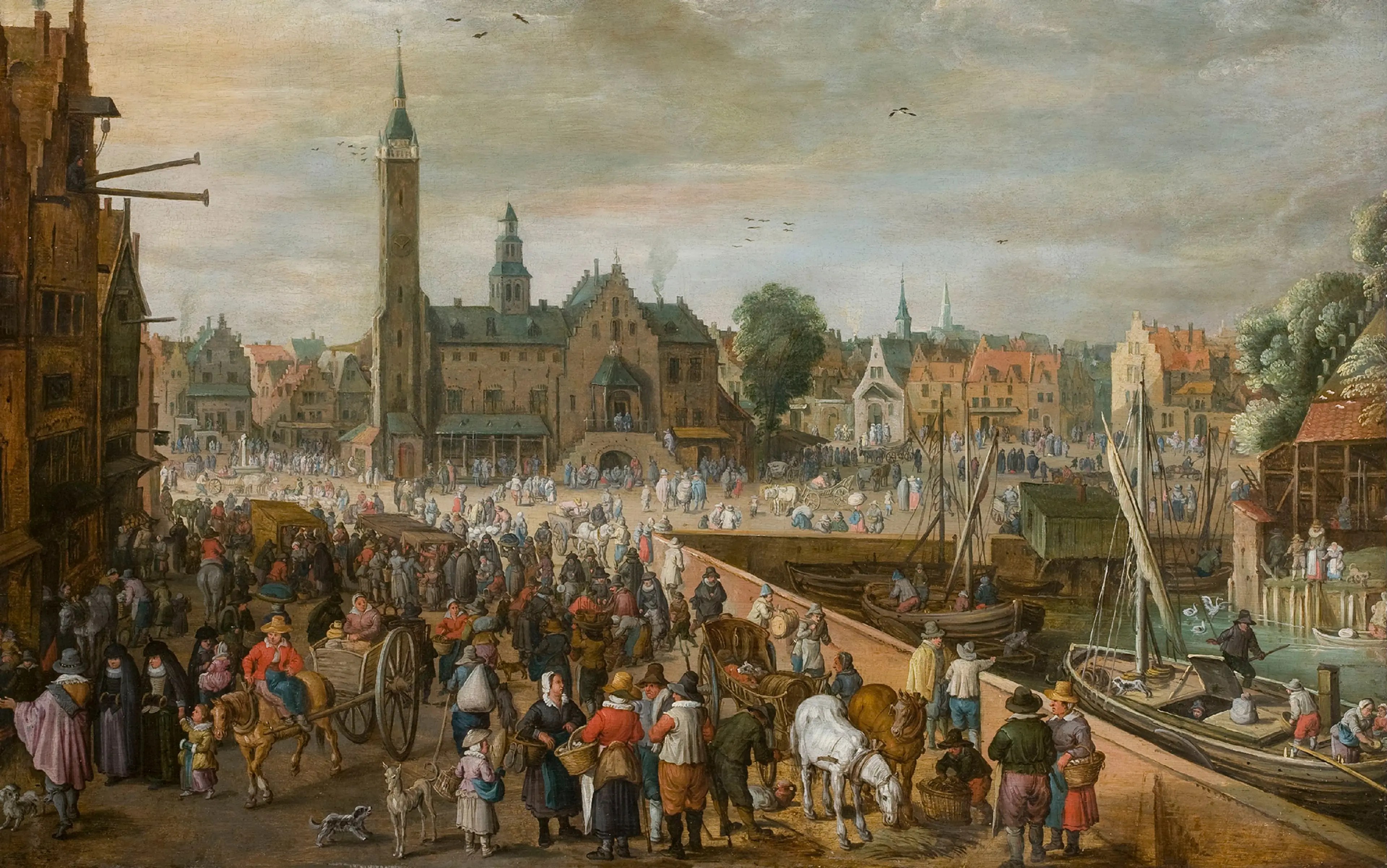
Inanna Hamati-Ataya on the importance of understanding our place in the world…
In the 1990s, an entire generation was robbed of its historical consciousness by a powerful and seemingly unprecedented tale. This story, crafted as the Cold War came to an end, declared that real or imagined boundaries had stopped working as they once had. Humans were no longer contained within their old geographies or identities. They now inhabited a new world that appeared to be unhinged from the normal evolution of human society.
The concept chosen to capture this transformational moment in human history was ‘globalisation’. It described how new technologies and networks of connectivity had suddenly brought human communities closer together and made them permeable to an uncontrollable flow of people, ideas, goods and cultural practices, which all moved freely across the integrated markets of the world economy. In the wake of this transformation, new jargon emerged, expressing new anxieties: the world had truly become the ‘global village’ that Marshall McLuhan anticipated in the 1960s, but it was a world shaped by multinational corporations and ‘elite globalisers’, who spoke a common, hegemonic ‘global English’, and were spearheading a destructive ‘homogenisation’ (or ‘McDonaldisation’) of human cultures that national borders were too fragile to withstand.
During the past three decades, more people have begun viewing our ‘global’ world as a cursed fate. With its suffocating time-space compression, globalisation seems to have uncoupled us from the logic and flow of history. Our suspicious, bastard identities – patched together from a mishmash of cultures – appear incompatible with our ancestors’ ‘authentic’ traditions and ways of life. We have become strangers to the places they called home, to the ways they dressed, ate or communicated with one another. And, with no template for how to live and no experience to learn from, the deafening siren songs of anti-globalisation movements are now luring us back into the safer identities and boundaries of a lost, golden past.
This tale of globalisation is the most successful scare story of our times. And like all scare stories, it stimulates our fear of an overwhelming unknown.
But it’s all an illusion. There is no new global world.
Our present appears that way only because we have forgotten our common past. Globalisation didn’t begin in the 1990s, or even in the past millennia. Remembering this older shared history is a path to a different tale, which begins much, much earlier – long before the arrival of international supply chains, ocean-going sailing ships, and continent-spanning silk roads. The tale of globalisation is written across human history. So why do we keep getting the story so wrong?…
[She unpacks the answer to her questions, then turns to it implications…]
… In our own contemporary era, anti-globalisation movements have recently shifted from the far Left to the far Right of national and global politics. Justified resentment against the locally experienced injustices of the global economy and the growing disruptive effect of global climate change are now couched in resentment for the social and cultural dimensions of globalisation. Identitarianism, a political ideology that stresses the preservation of narrowly conceived ‘Western’ ethnicities and cultures, has accordingly become the easiest and most efficient strategy to mobilise local grievances, and direct them at whatever is perceived as a threat to the wellbeing of those suffering within. The ugly age of nationalism is back.
Is nationalist identitarianism the ethos we will now deploy to confront the common existential threats that await us in the coming century? Why wouldn’t it be? Does anyone doubt that national borders will be turned, once again, into sacred physical boundaries and fiercely defended against those fleeing the environmental, economic or military devastation of their homes? Do we doubt that eloquent voices animated by the most (ig)noble intentions will rise to justify patriotic bullets being aimed at ‘alien migrants’ and climate refugees? And that leaders will say these displaced people cannot be accommodated because of their numbers and cultures, and the threat they pose to our secure lives – to our ‘identity’?
Such scenarios are far too likely given the rise of xenophobic worldviews, such as the conspiratorial idea of a ‘Great Replacement’, in which elites – imagined to be Jews and other minorities – have begun executing a plan to replace so-called indigenous white Europeans with other populations of apparently greater and threatening reproductive vitality. These racialist worldviews dangerously converge with a public misunderstanding of ‘race’ as reflected in the recent craze for DNA ‘ancestry tests’. DNA has little to do with ‘identity’, as social and political ideologies have constructed it, and much to do with physical and social geography. Our genes are a result of human adaptive mobility, and the journeys, rich encounters and kin-making that our freedom of movement made possible over tens of thousands of years. Our genome does not tell our whole story, but the story it does tell shows how past globalisations made us what we are today.
As we search for ways of communing with one another beyond the stubborn ideology of difference, we should also prepare for vicious future distortions and manipulations of our current scientific and historical understanding of identity. Some humans today carry a few genes that their Pleistocene ancestors inherited from intercourse with our Eurasian Neanderthalian and Denisovan cousins, whom some communities of Homo sapiens encountered on their journeys of cosmopolitan expansion. How might such a genetic difference among us be interpreted and used in the future by those intent on pursuing identitarianism to its silliest or most murderous conclusions? Might they declare that some humans are not ‘pure’ enough to enjoy the full freedom, security and dignity we recognise as the natural rights of humankind? Or might they, on the contrary, elevate the Neanderthalian or Denisovan gene as a marker of Eurasian ‘distinction’ to recreate narratives of racial superiority, similar to those that once plagued archaeological thinking about the allegedly more ‘advanced’ nature of those human fossils laying the farthest away from the species’ original African homes?
Palaeontologists who insist on ascribing the label ‘humans’ to the entire Homo genus while reserving that of ‘modern humans’ to the surviving representatives of the lineage (ie, us) probably understand better than most the dangers of ideological manipulations of scientific taxonomies. But in the open marketplace where ideas freely flow in the name of freedom of thought and expression, how can we protect ourselves and one another from such dangers, if we still perceive plurality as a threat to survival, and cannot see the richness of our shared human culture?
The wars we wage against one another are all civil wars. Until we recognise them as such, they will remain tragedies we accept as natural – or horrors we cheer on in the name of grand notions sold to us by loud voices who know our fears too well (and know too little of the richness of our world and our history). We have always been global, and this is our shared identity. It is our unique way of being and remaining in the world as one family. Whatever we cherish in our humanity and culture has been crafted by our global journeys and encounters. Through them, we will continue to write the story of how we become us…
All of our religions, stories, languages, and norms were muddled and mixed through mobility and exchange throughout history: “There are no pure cultures,” from @berytia.bsky.social in @aeon.co.
Still, as Venkatesh Rao reminds us, the “vacuous over-large abstractions like “globalization” make us underestimate the horizontal historicity of the world.”
* Jimmy Carter
###
As we go with the flow, we might recall that it was on this date in 1690 (or so musicologists believe) that Johann Christoph Denner, inspired by a reeded recorder-like instrument called the chalumeau, designed and created a longer and keyed (so more widely-ranged) instrument that was quickly copied and modified by other makers– and became what we know as the clarinet. By 1791, Mozart was composing for the instrument; by Beethoven’s time, the clarinet was a staple member in the orchestra.
To the point of the essay above, it’s worth noting that the chalumeau– and thus the clarinet– were direct descendants of ancient Greek and ancient Egyptian reeded pipes… that may themselves have been modeled on similar instruments from Central and East Asia.

The clarinet, as depicted in Diderot’s Encyclopedia, 1776 (source)
“I believe in copyright, within limited precincts. But I also believe in fair use, public domain, and especially transformation”*…

Last Wednesday was a big day. Jennifer Jenkins and James Boyle of the Center for the Study of the Public Domain explain…
On January 1, 2025, thousands of copyrighted works from 1929 [entered] the US public domain, along with sound recordings from 1924. They [are] free for all to copy, share, and build upon. 2025 marks a milestone: all of the books, films, songs, and art published in the 1920s will now be public domain. The literary highlights from 1929 include The Sound and the Fury by William Faulkner, A Farewell to Arms by Ernest Hemingway, and A Room of One’s Own by Virginia Woolf. In film, Mickey Mouse speaks his first words, the Marx Brothers star in their first feature film, and legendary directors from Alfred Hitchcock to John Ford made their first sound films. From comic strips, the original Popeye and Tintin characters will enter the public domain. Among the newly public domain compositions are Gershwin’s An American in Paris, Ravel’s Bolero, Fats Waller’s Ain’t Misbehavin’, and the musical number Singin’ in the Rain. Below is just a handful of the works that will be in the US public domain in 2025. To find more material from 1929, you can visit the Catalogue of Copyright Entries.
The title of Faulkner’s novel was itself taken from a public domain work, Shakespeare’s Macbeth, and its lament over the seeming meaningless of life. “Life…is a tale / Told by an idiot, full of sound and fury, / Signifying nothing.”…
… When works go into the public domain, they can legally be shared, without permission or fee. Community theaters can screen the films. Youth orchestras can perform the music publicly, without paying licensing fees. Online repositories such as the Internet Archive, HathiTrust, Google Books, and the New York Public Library can make works fully available online. This helps enable both access to and preservation of cultural materials that might otherwise be lost to history. 1929 was a long time ago and the vast majority of works from that year are not commercially available. You couldn’t buy them, or even find them, if you wanted. When they enter the public domain in 2025, anyone can rescue them from obscurity and make them available, where we can all discover, enjoy, and breathe new life into them.
The public domain is also a wellspring for creativity. You could think of it as the yin to copyright’s yang. Copyright law gives authors important rights that encourage creativity and distribution—this is a very good thing. But the United States Constitution requires that those rights last only for a “limited time,” so that when they expire, works go into the public domain, where future authors can legally build on the past—reimagining the books, making them into films, adapting the songs and movies. That’s a good thing too! It is part of copyright’s ecosystem. The point of copyright is to promote creativity, and the public domain plays a central role in doing so.
How does the public domain feed creativity? Here are just two examples from 2024. You may have enjoyed the film Wicked in 2024. Like many of its predecessors, it is based on L. Frank Baum’s The Wonderful Wizard of Oz books, and it offers origin stories for the Wicked Witch of the West and Glinda the Good. From the literary realm, Percival Everett’s 2024 novel James reimagines Mark Twain’s Adventures of Huckleberry Finn from the perspective of Jim, Huckleberry’s friend who is an escaped slave. The novel won the 2024 National Book Award and Kirkus Prize and was a finalist for the Booker Prize. As summed up by a New York Times review: “‘Huck Finn’ Is a Masterpiece. This Retelling Just Might Be, Too.” Mark Twain famously wanted copyright to last forever—if he had his wish, would his heirs have sued Everett? Thankfully, we did not have to find out, and Everett could publish James without such litigation…
More about the works that have entered the domain and about the underlying copyright regime: “Works from 1929 are open to all, as are sound recordings from 1924!”
Pair with the analogically related “Elon Musk and the right’s war on Wikipedia” from @molly.wiki.
And a gentle prod: now (indeed, any time) is a good time to support the Internet Archive.
###
As we acclaim access, we might note that today is a special day for Baker Street Irregulars the world over, Sherlock Holmes Day. Sherlockian Carl Thiel (and here):
Morley, incidentally, believed the year of Holmes’s birth was 1853. Subsequent tradition has settled on 1854, largely due to the fact that in the story ‘His Last Bow’ (which takes place in August 1914) Holmes is described as a ‘man of sixty.’
Although Holmes’s date of birth is nowhere mentioned in the Canon (ie, all 60 stories written by Doyle), the 6th of January was first suggested by Christopher Morley (1890-1957) in his ‘Bowling Green’ column in The Saturday Review of Literature in 1933. Through the efforts of the Baker Street Irregulars, and largely the influence of William S Baring-Gould’s 1962 biography of Holmes (Sherlock Holmes of Baker Street: A Biography of the World’s First Consulting Detective), January 6th has become the traditional birthday of the great detective.
Morley wrote: ‘I have not looked up the data, but if, as an astrologer has suggested, Sherlock Holmes was most likely born in January, some observance is due. Therefore, if the matter has never been settled, I nominate January 6th (the date of this issue of the Saturday Review) as his birthday.
The Sherlock Holmes stories have, of course, flourished in the public domain for years…

In the 60 original stories, Holmes was depicted in illustrations as wearing a deerstalker cap in only four. Nowhere does Doyle mention that type of headgear.
image source
“The more that you read, the more things you will know. The more that you learn, the more places you’ll go.”*…
The end of the year approaches, and thoughts turn to retrospectives. In what has become a (Roughly) Daily tradition, today’s edition features a year-end recap from the estimable Tom Whitwell, who shares a full deck of fascinating things he learned in 2024. For example…
6. The London Underground has a distinct form of mosquito, Culex pipiens f. Molestus, genetically different from above-ground mosquitos, and present since at least the 1940s. [Katharine Byrne & Richard A Nichols]
7. Ozempic is a modified, synthetic version of a protein discovered in the venomous saliva of the Gila monster, a large, sluggish lizard native to the United States. [Scott Alexander]
22. In 2022, 55% of Macy’s income came from credit cards rather than retail sales. That’s fairly normal for US department stores. [Pan Kwan Yuk]
29. You can buy 200 real human molars for $900. [B for Bones, via Lauren]
32. In 1800, 1 in 3 people on earth were Chinese. Today, it’s less than 1 in 5. [Our World in Data, via Boyan Slat]
42. n the 2020s, over 16% of movies have colons in the title (Like Spider-Man: Homecoming), up almost 300% since the 1990s. [Daniel Parris]
46. Between the 1920s and 1950s, millions of ‘enemies of the people’ — often educated elites — were sent to prison camps in the Soviet Union. Today, the areas around those camps are more prosperous and productive than similar areas. [Toews & Vézina]
Many more fascinating factoids at: “52 things I learned in 2024,” from @TomWhitwell.
Previous lists: 2014 2015 2016 2017 2018 2019 2020 2021 2022 2023… and sprinkled throughout the December postings in (R)D over the years.
###
As we forage, we might recall that on this date in 1968 Marvin Gaye’s version of “I Heard It Through the Grapevine” was in the middle of its seven-week occupancy of the #1 spot on Billboard’s Hot 100.
A year earlier, Gladys Knight and the Pips had had a hit with the tune (#1 on the R&B chart; #2 on the Hot 100). Gaye’s version overtook its predecessor and became the biggest hit single on the Motown family of labels up to that point. The Gaye recording has since become an acclaimed soul classic. In 1998 the song was inducted into the Grammy Hall of Fame for “historical, artistic and significant” value.
“I was conscious that I knew practically nothing”*…

The estimable Nicholas Carr observes that “you don’t make friends by telling people they’re not as smart as they think they are. And you definitely don’t make friends by telling all of humanity that it’s not as smart as it thinks it is. That’s why the philosophical school of Mysterianism has never caught on with the public.” As an amateur Mysterian himself, he reprises a 2017 essay to spread the good word…
By leaps, steps, and stumbles, science progresses. Its seemingly inexorable advance promotes a sense that everything can be known and will be known. Through observation and experiment, and lots of hard thinking, we will come to explain even the murkiest and most complicated of nature’s secrets: consciousness, dark matter, time, the origin and fate of the universe.
But what if our faith in nature’s knowability is just an illusion, a trick of the overconfident human mind? That’s the working assumption behind a school of thought known as Mysterianism. Situated at the fruitful if sometimes fraught intersection of scientific and philosophic inquiry, the Mysterianist view has been promulgated, in different ways, by many prominent thinkers, from the philosopher Colin McGinn to the linguist Noam Chomsky to the cognitive scientist Steven Pinker. The Mysterians propose that human intellect has boundaries and that many of the mysteries of the cosmos will forever lie beyond our comprehension.
Mysterianism is most closely associated with the so-called hard problem of consciousness: How can the inanimate matter of the brain produce subjective feelings? The Mysterians suggest that the human mind is incapable of understanding itself, that we will never know how consciousness works. But if Mysterianism applies to the workings of the mind, there’s no reason it shouldn’t also apply to the workings of nature in general. As McGinn has suggested, “It may be that nothing in nature is fully intelligible to us.”
The simplest and best argument for Mysterianism is founded on evolutionary evidence. When we examine any other living creature, we understand immediately that its intellect is limited. Even the brightest, most curious dog is not going to master arithmetic. Even the wisest of owls knows nothing of the physiology of the field mouse it devours. If all the minds that evolution has produced have bounded comprehension, then it’s only logical that our own minds, also products of evolution, would have limits as well. As Pinker has put it, “The brain is a product of evolution, and just as animal brains have their limitations, we have ours.” To assume that there are no limits to human understanding is to believe in a level of human exceptionalism that seems miraculous, if not mystical.
Mysterianism, it’s important to emphasize, is not inconsistent with materialism [with theism or idealism]. The Mysterians don’t suggest that what’s unknowable has to be spiritual or otherwise otherworldly. They posit that matter itself has complexities that lie beyond our ken. Like every other animal on earth, we humans are just not smart enough to understand all of nature’s laws and workings.
What’s truly disconcerting about Mysterianism is that, if our intellect is bounded, we can never know how much of existence lies beyond our grasp. What we know or may in the future know may be trifling compared with the unknowable unknowns. “As to myself,” remarked Isaac Newton in his old age, “I seem to have been only like a boy playing on the sea-shore, and diverting myself in now and then finding a smoother pebble or a prettier shell than ordinary, whilst the great ocean of truth lay all undiscovered before me.” It may be that we are all like that child on the strand, playing with the odd pebble or shell — and fated to remain so.
Mysterianism teaches us humility. Through science, we have come to understand much about nature, but much more may remain outside the scope of our perception and comprehension. If the Mysterians are right, science’s ultimate achievement may be to reveal to us its own limits…
On unknowable unknowns: Question Marks of the Mysterians, from @roughtype in his terrific newsletter, New Cartographies.
Pair with Flatland (here and here) and Godel’s second incompleteness theorem.
* Socrates (per Plato in Apology 22d)
###
As we wonder, we might recall that it was on this date (tough different sources offer different November dates) in 1966 that 96 Tears, the debut studio album by the American garage rock band ? and the Mysterians was released. The title single, which had been released some months earlier was at #1 on the Billboard Hot 100; the album joined the single on the charts for fifteen weeks; the follow-up single “I Need Somebody” charted for ten weeks.

You must be logged in to post a comment.