Posts Tagged ‘microbiology’
“The first wealth is health”*…

As Angela J. Wyse and Bruce D. Meyer explain, lack of health insurance explains five to twenty percent of the mortality disparity between high- and low-income Americans…
We examine the causal effect of health insurance on mortality using the universe of low-income adults, a dataset of 37 million individuals identified by linking the 2010 Census to administrative tax data. Our methodology leverages state-level variation in the timing and adoption of Medicaid expansions under the Affordable Care Act (ACA) and earlier waivers and adheres to a preregistered analysis plan, a rarely used approach in observational studies in economics. We find that expansions increased Medicaid enrollment by 12 percentage points and reduced the mortality of the low-income adult population by 2.5 percent, suggesting a 21 percent reduction in the mortality hazard of new enrollees. Mortality reductions accrued not only to older age cohorts, but also to younger adults, who accounted for nearly half of life-years saved due to their longer remaining lifespans and large share of the low-income adult population. These expansions appear to be cost-effective, with direct budgetary costs of $5.4 million per life saved and $179,000 per life-year saved falling well below valuations commonly found in the literature. Our findings suggest that lack of health insurance explains about five to twenty percent of the mortality disparity between high- and low-income Americans. We contribute to a growing body of evidence that health insurance improves health and demonstrate that Medicaid’s life-saving effects extend across a broader swath of the low-income population than previously understood…
“Saved by Medicaid: New Evidence on Health Insurance and Mortality from the Universe of Low-Income Adults,” from @nber.org.
Congress, of course, just moved to cut Medicaid; as the wording in the “Big, Beautiful BIll” stands, 8-10 million Americans stand to have the their covergae terminated orr severely reduced.
But even as we agree that extending coverage– fixing the “demand side” problem– could save lives, we should note that we have some serious supply side problems to address: 80% of the country, insured or not, lacks adequate access to healthcare service; and there’s a large and growing shortage of healthcare professionals and workers (a problem aggravated by the Trump administration’s draconian crackdown on immigration). Technology offers some hope, but humans remain at the center of the issue.
* Ralph Waldo Emerson
###
As we contemplate care, we might send insightful birthday greetings to Susan Lindquist; he was born on this date in 1949. A molecular biologist, she was a pioneer in the study of protein folding. She showed that alternate structural shapes of protein molecules could result in substantially different effects and demonstrated instances in fields as diverse as human diseases, evolution, and synthetic biomaterials designed to interact with biological systems. Her work laid the foundation for the development of AI-driven systems like Alpha-Fold that accelerate the discovery and development of new drugs and therapies.

“The past lives within the present, and our ancestors breathe through our children”*…
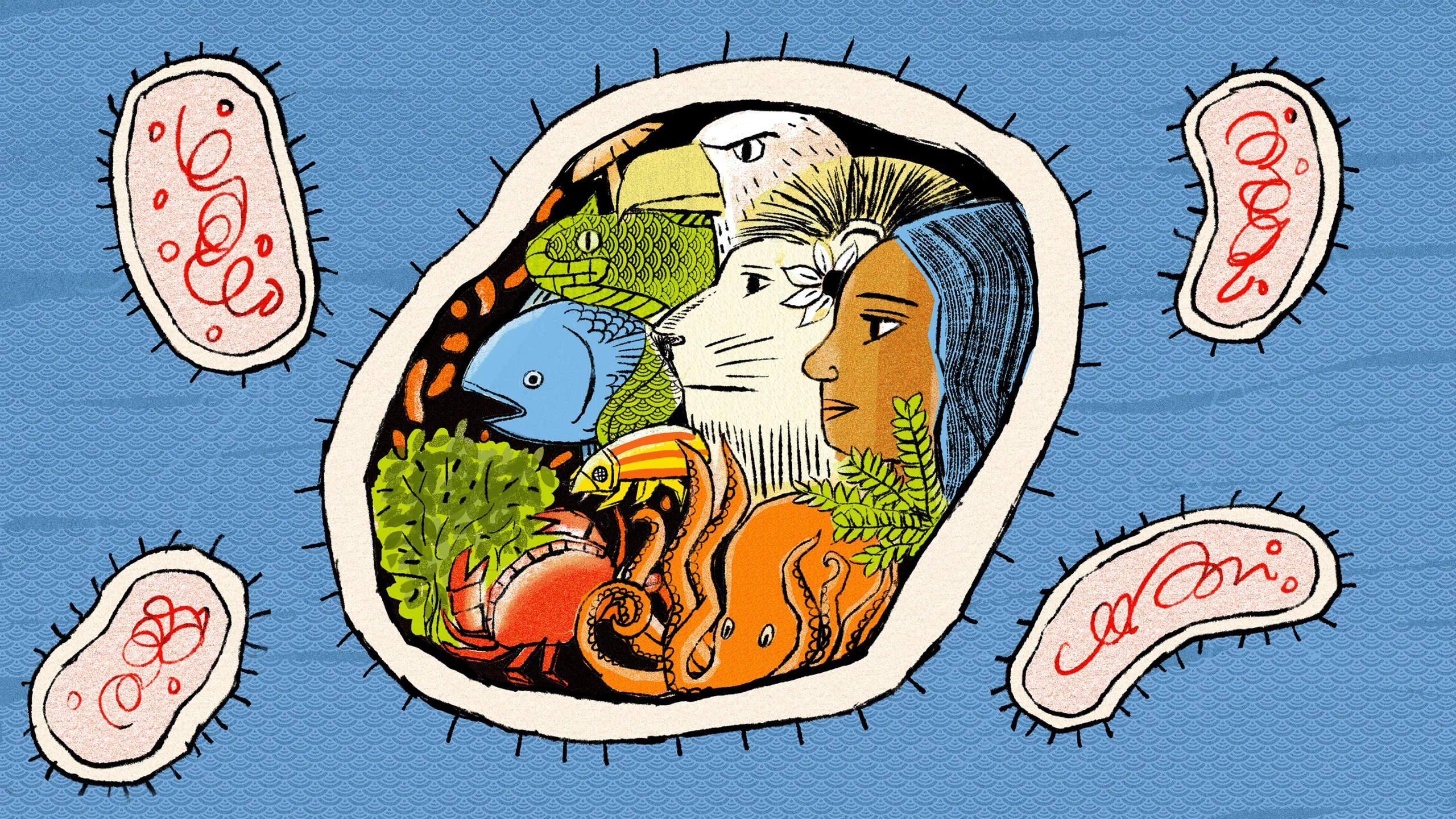
Indeed, that’s true all the way back. And as Jonathan Lambert explains, we now have more visibility on that distant past. The emerging understanding of our “last universal common ancestor” suggests it was a relatively complex organism living 4.2 billion years ago, a time long considered too harsh for life to flourish…
If you follow any path of ancestry back far enough, you’ll reach the same single point. Whether you begin with gorillas or ginkgo trees or bacteria that live deep in the bowels of the Earth — or yourself, for that matter — all roads lead to LUCA, the “last universal common ancestor.” This ancient, single-celled organism (or, possibly, population of single-celled organisms) was the progenitor of every varied form that makes a life for itself on our planet today.
LUCA does not represent the origin of life, the instance whereby some chemical alchemy snapped molecules into a form that allowed self-replication and all the mechanisms of evolution. Rather, it’s the moment when life as we know it took off. LUCA is the furthest point in evolutionary history that we can glimpse by working backward from what’s alive today. It’s the most recent ancestor shared by all modern life‚ our collective lineage traced back to a single ancient cellular population or organism.
“It’s not the first cell, it’s not the first microbe, it’s not the first anything, really,” said Greg Fournier, an evolutionary biologist at the Massachusetts Institute of Technology. “In a way, it is the end of the story of the origin of life.”
Still, understanding LUCA — whether it was simple or complex, and how quickly it emerged after life’s origin — could help answer some of our deepest questions about where we come from and whether we’re alone in the universe.
“[LUCA] tells our own story,” said Edmund Moody (opens a new tab), an evolutionary biologist at the University of Bristol. “It gives us a point from which we can look even further back.”
For half a century, biologists have focused on different kinds of physiological, genomic and fossil evidence to paint portraits of LUCA that sometimes clash dramatically. In 2024, Moody and a team of interdisciplinary researchers, including geologists, paleontologists, system modelers and phylogeneticists, combined their knowledge to build a probabilistic model that reconstructs modern life’s shared ancestor and estimates when it lived.
The analysis, published in Nature Ecology and Evolution in July, sketched a surprisingly complex picture of the cell. LUCA lived off hydrogen gas and carbon dioxide, boasted a genome as large as that of some modern bacteria, and already had a rudimentary immune system, according to the study. Its genomic complexity, the authors argue, suggests that LUCA was one of many lineages — the rest now extinct — living about 4.2 billion years ago, a turbulent time relatively early in Earth’s history and long thought too harsh for life to flourish.
The analysis reaches two conclusions that seem in conflict with each other, according to Aaron Goldman, who studies the molecular evolution of early life at Oberlin College and wasn’t involved in the new research. “The first is that LUCA was a complex cellular organism that likely lived in a complex ecological setting,” he said. “The second is that LUCA dates to a time that is pretty early in the history of Earth.” The results could mean that life evolved from a simple replicator into something resembling modern microbes remarkably quickly, he said. “That’s really exciting.”
“Our work suggests that those early steps of evolution weren’t hard; they’re pretty easy,” said co-author Phil Donoghue, an evolutionary biologist at the University of Bristol. “If you’re concerned with the origin of microbial-grade life, then that’s apparently very easy, and it should be quite common in the universe.”
Not all experts in the field agree, however. Some argue that a few hundred million years is not enough time for complex life to have evolved. The authors stress that their analysis is a first attempt to paint a fuller, admittedly fuzzy, picture of LUCA. “I fully expect and hope people prove us wrong in certain aspects,” said Moody, the paper’s lead author, especially if those new results offer a clearer view of the ancient ancestor of all life we know…
Eminently worth reading in full: “All Life on Earth Today Descended From a Single Cell. Meet LUCA,” from @evolambert in @QuantaMagazine.
###
As we look back, we might send microscopic birthday greetings to Lewis Thomas; he was born on this date in 1913. A physician, poet, etymologist, essayist, administrator, educator, policy advisor, and researcher, he distinguished himself in medicine and microbiology both for his suggestion that an immunosurveillance mechanism protects us from the possible ravages of mutant cells (an idea later championed by Macfarlane Burnett) and for his proposal that viruses have played a major role in the evolution of species by their ability to move pieces of DNA from one individual or species to another.
But Lewis is more widely known for his writing, perhaps most especially for his first two books– The Lives of a Cell: Notes of a Biology Watcher (which won National Book Awards in two categories) and The Medusa and the Snail: More Notes of a Biology Watcher (which won another National Book Award)– which underscored the interconnectedness of life by sketching the ways that what is seen under the microscope is similar to the way human beings live.

“Most of the knowledge and much of the genius of the research worker lie behind his selection of what is worth observing”*…

As Molly Herring reports, there’s trouble in labs around the U.S. Scientists are struggling to figure out why—and how—the standard growth medium is disrupting their studies. For now, it’s simply a problem; but as Herring suggests, it could lead to an exciting new discovery…
Reine Protacio couldn’t figure out why all her cells kept dying. A molecular biologist at the University of Arkansas for Medical Sciences College of Medicine, she kept trying to grow colonies of fission yeast (Schizosaccharomyces pombe) on petri dishes plated with nutrients. The lab uses the microbes to study what happens to DNA during cell division, but even in the control experiments, none of the yeast survived. Protacio and her colleagues investigated several possible suspects—from dirty glassware to contaminated water—before landing on a surprising culprit: bad agar.
Derived from seaweed, agar is a gelatinlike ingredient used to grow yeast on a solid surface. It’s like flour in cake batter, Protacio says. “You’d never expect the flour—it’s the most basic thing.” And yet here was agar, foiling day after day of experiments. As is turned out, Protacio’s lab wasn’t alone.
When Protacio first identified the bad agar last summer, one of the heads of her lab, molecular biologist Wayne Wahls, posted about the find on a community email group called PombeList. Labs on entirely different continents responded that they faced what seemed like the same problem, even though their agar had come from different companies and lots, sometimes years apart.
Nick Rhind, a cell biologist at the University of Massachusetts Chan Medical School, reported his lab had received a toxic batch of agar as far back as 2006. He had sourced his supply from the same company that sold bad agar to Protacio’s lab: Sunrise Science Products.
The problem probably didn’t arise there, Rhind says. Sunrise and other lab supply companies don’t manufacture the agar themselves; they buy it from other firms that make it from two polysaccharides—agarose and agaropectin—found in the cell walls of red algae, a kind of seaweed. “My understanding was that there were very few suppliers,” Rhind says. “Everyone pretty much bought it from the same bulk supplier, packaged it, and sent it out.”…
[Herring unpacks the efforts to figure out what’s going wrong…]
… Getting to the bottom of the issue might be more trouble than it’s worth, however. Purifying and identifying an active compound is a long and complex process of elimination, Rhind says. For the time being, he says, labs and suppliers should take extra steps to avoid contamination wherever possible. This could include more thorough quality control tests using many different formulas and microbes. “I don’t think anyone is that interested in why the [yeast] died,” he says. “They just want to make sure it doesn’t happen again.”…
But that could be an opportunity lost…
[One] possibility, Rhind says, is that the red algae, other algae growing on it, or even bacteria eating the algae produce an antifungal compound, which would kill yeast. If so, a nuisance for microbiologists could be a boon for drug developers. “There are actually not that many good antifungals in the world,” he says. “It would be a serendipitous discovery, but it’s a long shot.”…
Dissipating dark clouds– and searching for silver linings: “Bad agar is killing lab yeast around the world. Where is it coming from?” by @mollymherring in @ScienceMagazine.
###
As we muse on media, we might spare a thought for Virginia Apgar; she died on this date in 1974. A physician and medical researcher, she is best remembered as the creator of what’s now known as the 10-point Apgar Score, a way quickly to assess the health of a newborn child immediately after birth in order to combat infant mortality. Given at one minute and five minutes after birth, the Apgar test measures a child’s breathing, skin color, reflexes, motion, and heart rate. As colleague observed, “she probably did more than any other physician to bring the problem of birth defects out of back rooms.”

“Without debatement further, more or less, / He should the bearers put to sudden death, / Not shriving time allow’d.”*…
“Cell suicide” is inherently self-destructive, and yet it’s an essential and productive process in complex organisms. How did cells evolve a process to end their own lives? As Veronique Greenwood reports, recent research suggests it first arose, first arose billions of years ago… but why?…
It can be hard to tell, at first, when a cell is on the verge of self-destruction.
It appears to be going about its usual business, transcribing genes and making proteins. The powerhouse organelles called mitochondria are dutifully churning out energy. But then a mitochondrion receives a signal, and its typically placid proteins join forces to form a death machine.
They slice through the cell with breathtaking thoroughness. In a matter of hours, all that the cell had built lies in ruins. A few bubbles of membrane are all that remains.
“It’s really amazing how fast, how organized it is,” said Aurora Nedelcu, an evolutionary biologist at the University of New Brunswick who has studied the process in algae.
Apoptosis, as this process is known, seems as unlikely as it is violent. And yet some cells undergo this devastating but predictable series of steps to kill themselves on purpose. When biologists first observed it, they were shocked to find self-induced death among living, striving organisms. And although it turned out that apoptosis is a vital creative force for many multicellular creatures, to a given cell it is utterly ruinous. How could a behavior that results in a cell’s sudden death evolve, let alone persist?…
The story in full: “Cellular Self-Destruction May Be Ancient. But Why?“, from @vero_greenwood in @QuantaMagazine.
* Shakespeare, Hamlet (Act 5, Scene 2)
###
As we appreciate apoptosis, we might send healthy birthday greetings to Lillian Wald; she was born on this date in 1867. A nurse, humanitarian, political reformer, and author, she was instrumental in establishing a nationwide system of nurses in public schools. Known as “the Angel of Henry Street” (for her founding and running of the Henry Street Settlement in New York City), she directed the Henry Street Visiting Nurse Service, while at the same time tirelessly opposing political and social corruption. She helped initiate the revision of child labor laws, improved housing conditions in tenement districts, drove the enactment of pure food laws, championed and improved education for the mentally handicapped, and led the passage of enlightened immigration regulations.

“The spirit of inquiry and the courage to challenge the status quo are at the heart of scientific progress”*…

Adam Mastroianni on the challenges– and opportunities– facing science…
Randomized-controlled trials only caught on about 80 years ago, and whenever I think about that, I have to sit down and catch my breath for a while. The thing everybody agrees is the “gold standard” of evidence, the thing the FDA requires before it will legally allow you to sell a drug—that thing is younger than my grandparents.
There are a few records of things that kind of look like randomized-controlled trials throughout history, but people didn’t really appreciate the importance of RCTs until 1948, when the British Medical Research Council published a trial on streptomycin for tuberculosis. Humans have possessed the methods of randomization for thousands of years—dice, coins, the casting of lots—and we’ve been trying to cure diseases for as long as we’ve been human. Why did it take us so long to put them together?
I think the answer is: first, we had to stop trusting Zeus.
To us, coin flips are random (“Heads: I go first. Tails: you go first.”). But to an ancient human, coin flips aren’t random at all—they reveal the will of the gods (“Heads: Zeus wants me to go first. Tails: Zeus wants you to go first”). In the Bible, for instance, people are always casting lots to figure out what God wants them to do: which goat to kill, who should get each tract of land, when to start a genocide, etc.
This is, of course, a big problem for running RCTs. If you think that the outcome of a coin flip is meaningful rather than meaningless, you can’t use it to produce two equivalent groups, and you can’t study the impact of doing something to one group and not the other. You can only run a ZCT—a Zeus controlled trial.
It’s easy to see how technology can lead to scientific discoveries. Make microscope -> discover mitochondria.
Clearly, though, sometimes those technologies get invented entirely inside our heads. Stop trusting Zeus -> develop RCTs.
Which raises the question: what mental technologies haven’t we invented yet? What brain switches are just waiting to be flipped?…
On reinvigorating science: “Declining trust in Zeus is a technology,” from @a_m_mastroianni.
Apposite to an issue he raises: “Citation cartels help some mathematicians—and their universities—climb the rankings,” from @ScienceMagazine.
[Image above: source]
###
As we deliberate on discovery, we might send micro-biological birthday greetings to a woman who modeled the attitude and behavior that Mastroianni suggests: Ruth Sager; she was born on this date in 1918. A pioneering geneticist, she had, in effect, two careers.
In the 1950s and 1960s, she pioneered the field of cytoplasmic genetics by discovering transmission of genetic traits through chloroplast DNA, the first known example of genetics not involving the cell nucleus. She identified a second set of genes were found outside of the cell’s nucleus, which, even though they were nonchrosomomal, also influenced inherited characteristics. The academic community did not acknowledge the significance of her contribution until after the second wave of feminism in the 1970s.
Then, in the early 1970s, she moved into cancer genetics (with a specific focus on breast cancer); she proposed and investigated the roles of tumor suppressor genes. She identified over 100 potential tumor suppressor genes, developed cell culture methods to study normal and cancerous human and other mammalian cells in the laboratory, and pioneered the research into “expression genetics,” the study of altered gene expression.

You must be logged in to post a comment.