Posts Tagged ‘justice’
“I am not Cinna the conspirator”*…

As Philip Goldfarb Styrt explains, Shakespeare’s Julius Caesar offers a telling parable about the administration of justice—and rife mishandling thereof—in our day…
American politics has a long history of referencing William Shakespeare’s The Tragedy of Julius Caesar, from Abigail Adams, who identified with Portia, the wife of Brutus, as Betsy Erkkila has noted, to the assassination of Abraham Lincoln, which “both was and was not reenacting” the play, in Cary M. Mazer’s words. These references are likely due to the intersection of American identification with Roman republicanism, which the play dramatizes, and the long history of American interest in Shakespeare specifically. More recently, a great deal of ink was spilled during Donald Trump’s first term comparing the president to Caesar. But while an excellent hook for contemporary stagings of the play, this kind of parallel has limitations. King George III and Abraham Lincoln weren’t Caesar, and neither is Donald Trump, even if a lead actor sports a distinctive red tie. This history does, however, raise the question of what Shakespeare’s play might have to tell us about our current historical moment.
One overlooked area of governance that has become increasingly important in the early days of the current administration is due process: what procedures does the government have to go through and what kinds of hearings must be held, particularly in immigration cases, in order to arrest someone? To remove or deport someone from the country? From the Mahmoud Khalil case at Columbia University to the Rümeysa Öztürk case at Tufts, the Secretary of State has been personally marking individual visas and green cards for revocation; in addition, in cases like the one that centers on the removal of alleged gang members to El Salvador, whole categories of people are being removed without a hearing or a trial and with at least some allegations that the individuals removed aren’t even part of the targeted class.
Julius Caesar treats these issues directly. The play focuses on the assassination of the title character by a conspiracy headed by Brutus and Cassius and the defeat of the conspirators in battle by Caesar’s successors, the triumvirate of Marc Antony, Octavian, and Lepidus. Along the way, the play presents punishment as a major theme: First, the punishment of Caesar for the perceived sin of royal ambition, and second, the punishment of the conspirators for his murder. Because of this, a close look at the play and the scholarship surrounding it can help make clear the stakes of due process. While the term itself wouldn’t have been used in Shakespeare’s time, his era was one in which the procedures of law we now call due process were being formalized, and his plays show a consistent interest in whether that proper procedure is being followed.
A pair of crucial scenes related to this issue immediately follow the play’s most famous parts (Caesar’s assassination and the speeches delivered by Brutus and Antony over his body, in Act 3, Scenes 1 and 2, respectively) and may be sometimes overlooked. But when considered together, they give insight into why arbitrary executive action without due process is dangerous, whether it technically operates within the law or not.
The first of these two scenes—in Act 3, scene 3—features mob violence. Incited by Marc Antony to seek revenge, the citizens seek out conspirators to murder, and they mistake the poet Cinna for a conspirator of the same name. They tear him to pieces. Though this act is hardly the same as an official arrest, which might seem to distance it from discussions of due process, this moment isn’t just about the mob, as Martin Mueller points out; it’s about how power acts, whether through masses or through government. It’s a case of enacting punishment in a case of mistaken identity, particularly one where despite that mistake having been corrected in real time, the damage is done. “I am not Cinna the conspirator,” are the victim’s last words, but the play gives neither time nor opportunity for his insistence to convince anyone to keep him alive. Due process would allow for potential Cinnas to demonstrate innocence and remove themselves from the unwarranted threat; without it, everyone is imperiled.
There’s another element of the current concern regarding due process that relates to the fate of poor Cinna. His death isn’t merely the result of mistaken identity; as Jeffrey J. Yu writes, after he tries to identify himself the mob changes its tune, declaring that they’ll kill him for being a bad poet instead. Absent due process, there’s no pause to decide whether this person should be condemned or if the reason given for condemnation is legitimate. This episode serves as a reminder that due process doesn’t merely protect people from mistaken identification; it also requires those who would mete out punishment to specify, up front, the reason for it.
The Trump administration’s refusal to give key information to multiple judges in the removal cases recalls this danger. By refusing to specify details of the case, the government keeps the possibility alive of changing their reasoning or their claims to have the same effect for different reasons—just as the mob changes its reasoning for killing Cinna. This belies the question of whether those who are looking to deliver punishment are acting in good faith, a concern that became part of the appeals court decision in the El Salvador case and has subsequently been raised in other courtrooms as well. Just as Shakespeare’s mob finds new justifications for why Cinna the Poet should die, the government keeps open the possibility of producing a different reason for removing the people it currently claims are alien enemies—a process they have already begun with individual visa revocations. Due process requires a commitment to the reasons punishment is sought and thus allows those reasons to be addressed and countered.
As Nicholas Royle argues, the scene of Cinna’s death can easily be treated as a version of Julius Caesar in miniature. The play as a whole is about categorical error: killing someone because you think they are one thing only to find out you were wrong. This, in turn, centers the idea of due process, because only through it can deliberative decisions about identity, guilt, and punishment be properly engaged. The lynching of (the wrong) Cinna is the madness of a mob; the murder of (the right) Caesar is a conspiracy of nobles; the removal of hundreds of (alleged) Venezuelan gang members is the action of ICE. Each is a distinct entity, but they hold in common a lack of judicial process to determine what is to be done and to whom.
If the death of Cinna is a microcosm of the play, the other moment that reinforces the importance of due process in Julius Caesar is even more compressed, lasting a mere eight lines at the start of the fourth act. That’s all the time it takes for Marc Antony, Octavius (the future Augustus Caesar), and Lepidus to choose the Romans who will die by proscription in order to keep their triumvirate in power while they war against Caesar’s assassins. This is an arbitrary and impersonal form of execution: the triumvirs check off the names of those they want dead: “these many, then, shall die; their names are pricked.” As Robert Kalmey observes, this moment encapsulates what Roman historians thought of as the worst of all of Octavius’s crimes against the state before becoming emperor. This “tyrannical ruthlessness and cruelty,” in Robert Miola’s words, reveals that the triumvirate will be no better than Caesar’s assassins or the mob; they too will kill at whim to stay in power.
There’s something disturbing about these proscriptions, which is why both Kalmey and Miola identify them as critical. The triumvirate make a cold-blooded choice to kill many Romans; it has neither targeted motivation, as did the assassination of Caesar, nor does it possess the emotional if not legal justification embraced by the inflamed mob in its misdeeds. This isn’t to justify those prior murders. Rather, it’s to point out that the proscriptions somehow exceed even them in horror because of how they’re administered. There’s no due process here, either; the three triumvirs don’t get their hands dirty, their decisions can’t be appealed, and there’s no public process by which those to be killed will be identified before the decision is final.
In this there’s a distinct echo of the process currently in use for determining which visas (permanent or temporary) will be revoked under the current administration. The decision lies solely with Secretary of State Marco Rubio, who has the power to determine if a particular immigrant poses a threat to national security; if he makes that determination, then the immigrant in question can be picked up off the street without hearing or appeal. Thus far, there’s no venue for disputing such a determination nor is there a published list of those whose visas have been revoked, even though Rubio claims to have revoked as many as 300 (coincidentally, as Kalmey details, the number of senators proscribed by the triumvirate).
Of course, deportation or removal from the United States isn’t the same as death; Rubio’s unilateral visa revocation isn’t the same as the proscription. But the lack of transparency and due process are similar, and there are few to no guarantees of the safety of people whom ICE agents remove, often without identifying themselves, and move around without notifying the family or lawyers of the detained. In fact, the government has argued in court that it has no responsibility to return those who might be removed incorrectly or by accident.
In Julius Caesar Shakespeare demonstrates the extreme consequences of a lack of due process. Not every such deprivation becomes a literal matter of life and death as in the play, but making use of such scenarios enables Shakespeare to highlight more effectively the danger of arbitrary action. Whether we imagine ourselves, like Cinna the Poet, hunted for a crime of which we are innocent or, like the Roman dignitaries proscribed by the triumvirs, marked out for condemnation, the drama asserts that some kind of due process is a necessity for a free state. If, as Lloyd Matthews has argued, America’s founding ideals of liberty are intimately linked to Julius Caesar, that connection should remind us that such liberty requires due process to function properly…
“The Lessons of Due Process in Julius Caesar,” from @jstordaily.bsky.social.
Pair with: “Brush Up Your Shakespeare” (“A Harvard Law class uses the Bard’s plays to explore legal themes and concepts past and present”)
* Shakespeare, Julius Caesar, Act 3, Scene 3
###
As we recognize rights, we might recall that it was on this date in 1938 that the Mercury Theater broadcast the Halloween episode of their weekly series on the WABC Radio Network, Orson Welles’ adaptation of H.G. Wells’ War of the Worlds. The first two-thirds of the show (which was uninterrupted by ads) was composed of simulated news bulletins… which suggested to many listeners (a huge number of whom joined in progress, after tuning over from the Edgar Bergen show on NBC) that a real Martian invasion was underway.
While headlines like the one below suggest that there was widespread panic, research reveals that the fright was more subdued. Still there was an out-cry against the “phony-news” format… and Welles was launched into the notoriety that would characterize his career ever after.

“We are not what we know but what we are willing to learn”*…

Abigail Tulenko argues that folktales, like formal philosophy, unsettle us into thinking anew about our cherished values and views of the world…
The Hungarian folktale Pretty Maid Ibronka terrified and tantalised me as a child. In the story, the young Ibronka must tie herself to the devil with string in order to discover important truths. These days, as a PhD student in philosophy, I sometimes worry I’ve done the same. I still believe in philosophy’s capacity to seek truth, but I’m conscious that I’ve tethered myself to an academic heritage plagued by formidable demons.
The demons of academic philosophy come in familiar guises: exclusivity, hegemony and investment in the myth of individual genius. As the ethicist Jill Hernandez notes, philosophy has been slower to change than many of its sister disciplines in the humanities: ‘It may be a surprise to many … given that theology and, certainly, religious studies tend to be inclusive, but philosophy is mostly resistant toward including diverse voices.’ Simultaneously, philosophy has grown increasingly specialised due to the pressures of professionalisation. Academics zero in on narrower and narrower topics in order to establish unique niches and, in the process, what was once a discipline that sought answers to humanity’s most fundamental questions becomes a jargon-riddled puzzle for a narrow group of insiders.
In recent years, ‘canon-expansion’ has been a hot-button topic, as philosophers increasingly find the exclusivity of the field antithetical to its universal aspirations. As Jay Garfield remarks, it is as irrational ‘to ignore everything not written in the Eurosphere’ as it would be to ‘only read philosophy published on Tuesdays.’ And yet, academic philosophy largely has done just that. It is only in the past few decades that the mainstream has begun to engage seriously with the work of women and non-Western thinkers. Often, this endeavour involves looking beyond the confines of what, historically, has been called ‘philosophy’.
Expanding the canon generally isn’t so simple as resurfacing a ‘standard’ philosophical treatise in the style of white male contemporaries that happens to have been written by someone outside this demographic. Sometimes this does happen, as in the case of Margaret Cavendish (1623-73) whose work has attracted increased recognition in recent years. But Cavendish was the Duchess of Newcastle, a royalist whose political theory criticises social mobility as a threat to social order. She had access to instruction that was highly unusual for women outside her background, which lends her work a ‘standard’ style and structure. To find voices beyond this elite, we often have to look beyond this style and structure.
Texts formerly classified as squarely theological have been among the first to attract significant renewed interest. Female Catholic writers such as Teresa of Ávila or Sor Juana Inés de la Cruz, whose work had been largely ignored outside theological circles, are now being re-examined through a philosophical lens. Likewise, philosophy departments are gradually including more work by Buddhist philosophers such as Dignāga and Ratnakīrti, whose epistemological contributions have been of especial recent interest. Such thinkers may now sit on syllabi alongside Augustine or Aquinas who, despite their theological bent, have long been considered ‘worthy’ of philosophical engagement.
On the topic of ‘worthiness’, I am wary of using the term ‘philosophy’ as an honorific. It is crucial that our interest in expanding the canon does not involve the implication that the ‘philosophical’ confers a degree of rigour over the theological, literary, etc. To do so would be to engage in a myopic and uninteresting debate over academic borders. My motivating question is not what the label of ‘philosophy’ can confer upon these texts, but what these texts can bring to philosophy. If philosophy seeks insight into the nature of such universal topics as reality, morality, art and knowledge, it must seek input from those beyond a narrow few. Engaging with theology is a great start, but these authors still largely represent an elite literate demographic, and raise many of the same concerns regarding a hegemonic, exclusive and individualistic bent.
As Hernandez quips: ‘[W]e know white, Western men have not cornered the market on deeply human, philosophical questions.’ And furthermore, ‘we also know, prudentially, that philosophy as a discipline needs to (and must) undergo significant navel-gazing to survive … in an ever-increasingly difficult time for homogenous, exclusive academic disciplines.’ In light of our aforementioned demons, it appears that philosophy is in urgent need of an exorcism.
I propose that one avenue forward is to travel backward into childhood – to stories like Ibronka’s. Folklore is an overlooked repository of philosophical thinking from voices outside the traditional canon. As such, it provides a model for new approaches that are directly responsive to the problems facing academic philosophy today. If, like Ibronka, we find ourselves tied to the devil, one way to disentangle ourselves may be to spin a tale…
Wisdom is where we find it: “Folklore is philosophy,” in @aeonmag. Eminently worth reading in full.
Apposite: “Syncretic Past.”
* Mary Catherine Bateson
###
As we update our understanding of understanding, we might send thoughtful birthday greetings to Michael Sandel; he was born on this date in 1953. A philosopher and professor of government theory at Harvard Law School (where his course Justice was the university’s first course to be made freely available online and on television, seen so far by tens of millions of people around the world), he is probably best known for his critique of John Rawls‘ A Theory of Justice (in Sandel’s book, Liberalism and the Limits of Justice).
Sandel subscribes to a certain version of communitarianism (although he is uncomfortable with the label), and in this vein he is perhaps best known for his critique of John Rawls’s A Theory of Justice. Rawls’s argument depends on the assumption of the veil of ignorance, which Sandel argues commits Rawls to a view of people as “unencumbered selves”. Sandel’s view is that we are by nature encumbered to an extent that makes it impossible even hypothetically to have such a veil. Some examples of such ties are those with our families, which we do not make by conscious choice but are born with, already attached. Because they are not consciously acquired, it is impossible to separate oneself from such ties. Sandel believes that only a less-restrictive, looser version of the veil of ignorance should be postulated. Criticism such as Sandel’s inspired Rawls to subsequently argue that his theory of justice was not a “metaphysical” theory but a “political” one, a basis on which an overriding consensus could be formed among individuals and groups with many different moral and political views.
source

“Instant karma’s gonna get you, gonna knock you right on the head”*…

What goes round…
Bored Panda collected a schadenfreude-filled list of “50 Times Justice Was Served To People Who Totally Deserved It.”


… comes round: “Excellent examples of people getting exactly what they deserve,” from @pesco in @BoingBoing. All of them, here.
* John Lennon
###
As we ponder predestined propriety, we might recall that it was on this date in 1988 that Def Leppard‘s “Love Bites” hit #1 on the Billboard Hot 100. The follow-up single (from the #1 album Hysteria, which won a string of industry awards and racked up global sales totaling over 25 million) to “Pour Some Sugar on Me,” the power ballad is considered a classic of the glam metal genre.
“People are trapped in history and history is trapped in them”*…

The late David Graeber (with his co-author David Wengrow), left one last book; William Deresiewicz gives us an early look…
Many years ago, when I was a junior professor at Yale, I cold-called a colleague in the anthropology department for assistance with a project I was working on. I didn’t know anything about the guy; I just selected him because he was young, and therefore, I figured, more likely to agree to talk.
Five minutes into our lunch, I realized that I was in the presence of a genius. Not an extremely intelligent person—a genius. There’s a qualitative difference. The individual across the table seemed to belong to a different order of being from me, like a visitor from a higher dimension. I had never experienced anything like it before. I quickly went from trying to keep up with him, to hanging on for dear life, to simply sitting there in wonder.
That person was David Graeber. In the 20 years after our lunch, he published two books; was let go by Yale despite a stellar record (a move universally attributed to his radical politics); published two more books; got a job at Goldsmiths, University of London; published four more books, including Debt: The First 5,000 Years, a magisterial revisionary history of human society from Sumer to the present; got a job at the London School of Economics; published two more books and co-wrote a third; and established himself not only as among the foremost social thinkers of our time—blazingly original, stunningly wide-ranging, impossibly well read—but also as an organizer and intellectual leader of the activist left on both sides of the Atlantic, credited, among other things, with helping launch the Occupy movement and coin its slogan, “We are the 99 percent.”
On September 2, 2020, at the age of 59, David Graeber died of necrotizing pancreatitis while on vacation in Venice. The news hit me like a blow. How many books have we lost, I thought, that will never get written now? How many insights, how much wisdom, will remain forever unexpressed? The appearance of The Dawn of Everything: A New History of Humanity is thus bittersweet, at once a final, unexpected gift and a reminder of what might have been. In his foreword, Graeber’s co-author, David Wengrow, an archaeologist at University College London, mentions that the two had planned no fewer than three sequels.
And what a gift it is, no less ambitious a project than its subtitle claims. The Dawn of Everything is written against the conventional account of human social history as first developed by Hobbes and Rousseau; elaborated by subsequent thinkers; popularized today by the likes of Jared Diamond, Yuval Noah Harari, and Steven Pinker; and accepted more or less universally. The story goes like this. Once upon a time, human beings lived in small, egalitarian bands of hunter-gatherers (the so-called state of nature). Then came the invention of agriculture, which led to surplus production and thus to population growth as well as private property. Bands swelled to tribes, and increasing scale required increasing organization: stratification, specialization; chiefs, warriors, holy men.
Eventually, cities emerged, and with them, civilization—literacy, philosophy, astronomy; hierarchies of wealth, status, and power; the first kingdoms and empires. Flash forward a few thousand years, and with science, capitalism, and the Industrial Revolution, we witness the creation of the modern bureaucratic state. The story is linear (the stages are followed in order, with no going back), uniform (they are followed the same way everywhere), progressive (the stages are “stages” in the first place, leading from lower to higher, more primitive to more sophisticated), deterministic (development is driven by technology, not human choice), and teleological (the process culminates in us).
It is also, according to Graeber and Wengrow, completely wrong. Drawing on a wealth of recent archaeological discoveries that span the globe, as well as deep reading in often neglected historical sources (their bibliography runs to 63 pages), the two dismantle not only every element of the received account but also the assumptions that it rests on. Yes, we’ve had bands, tribes, cities, and states; agriculture, inequality, and bureaucracy, but what each of these were, how they developed, and how we got from one to the next—all this and more, the authors comprehensively rewrite. More important, they demolish the idea that human beings are passive objects of material forces, moving helplessly along a technological conveyor belt that takes us from the Serengeti to the DMV. We’ve had choices, they show, and we’ve made them. Graeber and Wengrow offer a history of the past 30,000 years that is not only wildly different from anything we’re used to, but also far more interesting: textured, surprising, paradoxical, inspiring…
A brilliant new account upends bedrock assumptions about 30,000 years of change: “Human History Gets a Rewrite,” @WDeresiewicz introduces the newest– and last?– book from @davidgraeber and @davidwengrow. Eminently worth reading in full.
* James Baldwin
###
As we reinterpret, we might spare a thought for Vic Allen; he died on this date in 1914. A British human rights activist, political prisoner, sociologist, historian, economist and professor at the University of Leeds, he worked closely with British trade unions, and was considered a key player in the resistance against Apartheid in South Africa. He spent much of his life supporting the South African National Union of Mineworkers (NUM), and was a key mentor to British trade union leader Arthur Scargill, In 2010 Allen was awarded the Kgao ya Bahale award, the highest honor afforded by the South African Union of Miners. After his death he was widely commended by his fellow academics and activists for his lifelong commitment to worker’s rights and racial equality.

“Slavery was an economic institution of the first importance”*…
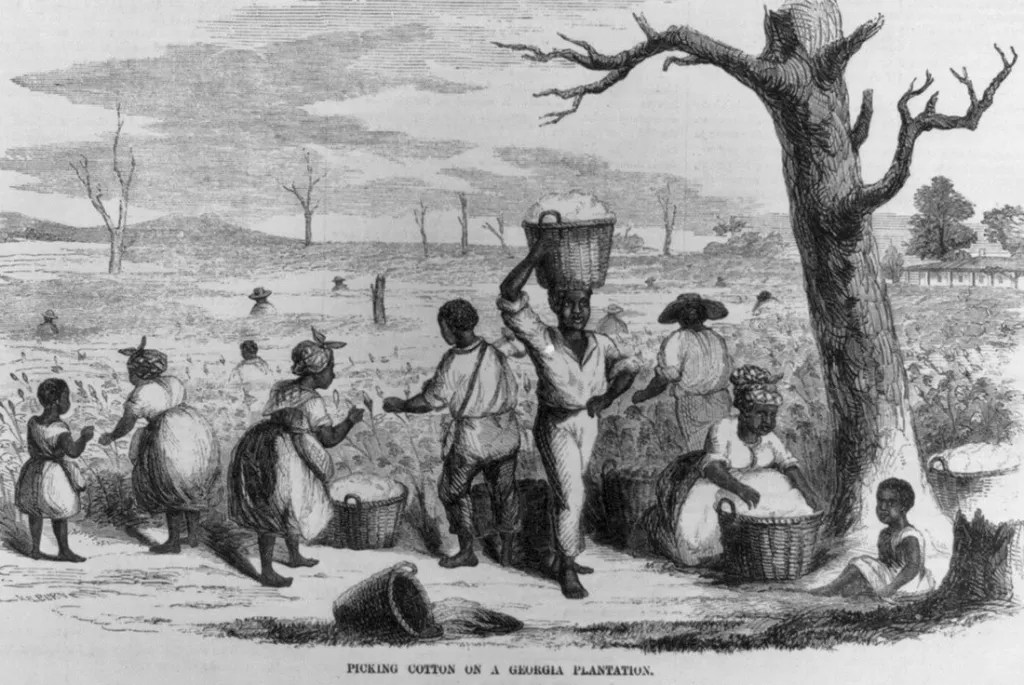
A thoughtful consideration of Eric Williams‘ groundbreaking Capitalism and Slavery and of his career as a politician…
… Despite his humble origins, the studious and disciplined Williams won a prized academic scholarship at the age of 11, putting him on track to become a “coloured Englishman,” he noted ruefully. His arrival at Oxford in 1931—again on a scholarship—seemingly confirmed this future. There he mingled in a progressive milieu that included the founder of modern Kenya, Jomo Kenyatta, and the self-exiled African American socialist Paul Robeson. It was at Oxford that Williams wrote “The Economic Aspect of the Abolition of the West Indian Slave Trade and Slavery,” which was later transformed into the book at hand. In both works, but in the book more decisively, Williams punctured the then-reigning notion that abolitionism had been driven by humanitarianism—an idea that conveniently kept Europeans and Euro-Americans at the core of this epochal development. Instead Williams stressed African agency and resistance, which in turn drove London’s financial calculations. He accomplished this monumental task in less than 200 pages of text, making the response that followed even more noteworthy. Extraordinarily, entire volumes have been devoted to weighing his conclusions in this one book.
It would not be an exaggeration, then, to say that when Williams published Capitalism and Slavery in 1944, it ignited a firestorm of applause and fury alike. His late biographer, Colin Palmer, observed that “reviewers of African descent uniformly praised the work, while those who claimed European heritage were much less enthusiastic and more divided in their reception.” One well-known scholar of the latter persuasion assailed the “Negro nationalism” that Williams espoused in it. Nonetheless, Capitalism and Slavery has become arguably the most academically influential work on slavery written to date. It has sold tens of thousands of copies—with no end in sight—and has been translated into numerous European languages as well as Japanese and Korean. The book continues to inform debates on the extent to which capitalism was shaped by the enslavement of Africans, not to mention the extent to which these enslaved workers struck the first—and most decisive—blow against their inhumane bondage.
Proceeding chronologically from 1492 to the eve of the US Civil War, Williams grounded his narrative in parliamentary debates, merchants’ papers, documents from Whitehall, memoirs, and abolitionist renderings, recording the actions of the oppressed as they were reflected in these primary sources. The book has three central theses that have captured the attention of generations of readers and historians. The first was Williams’s almost offhand assertion that slavery had produced racism, not vice versa: “Slavery was not born of racism,” he contended, but “rather, racism was the consequence of slavery.” To begin with, “unfree labor in the New World was brown, white, black and yellow; Catholic, Protestant and pagan,” with various circumstances combining to promote the use of enslaved African labor. For example, “escape was easy for the white servant; less easy for the Negro,” who was “conspicuous by his color and features”—and, Williams added, “the Negro slave was cheaper.” But it was in North America most dramatically that slavery became encoded with “race” and thus, through its contorted rationalizations, ended up producing a new culture of racism.
This thesis was provocative for several reasons, but perhaps most of all because it implied that once the material roots of slavery had been ripped up, the modern world would finally witness the progressive erosion of anti-Black politics and culture. This optimistic view was echoed by the late Howard University classicist Frank Snowden in his trailblazing book Before Color Prejudice: The Ancient View of Blacks. Of course, sterner critics could well contend that such optimism was misplaced, that it misjudged the extent to which many post-slavery societies had been poisoned at the root. But this sunnier view of post-slavery societies was spawned in part by the proliferation of anti-colonial and anti–Jim Crow activism in the 1940s and ’50s.
Williams’s second thesis hasn’t stirred as much controversy, but it also exerted an enormous influence on the scholarship to come: He insisted that slavery fueled British industrial development, and therefore that slavery was the foundation not only of British capitalism but of capitalism as a whole. To prove this claim, Williams cited the many British mercantilists who themselves knew that slavery and the slave trade (not to mention the transportation of settlers) relied on a complex economic system, one that included shipbuilding and shackles to restrain the enslaved, along with firearms, textiles, and rum—manufacturing, in short. Sugar and tobacco, then cotton, were ferociously profitable, adding mightily to London’s coffers, which meant more ships and firearms, in a circle devoid of virtue. Assuredly, the immense wealth generated by slavery and the slave trade—the latter, at times, bringing a 1,700 percent profit—provided rocket fuel to boost the takeoff of capitalism itself.
…
Williams the politician was forced to reckon with many of these knotty matters, in particular as they pertained to the purposefully incomplete process of decolonization and the rise of new forms of empire. As prime minister, in order to court the United States’ favor, he was derelict in extending solidarity to its antagonists in Cuba and neighboring Guyana, where Cheddi Jagan would be joined by Jamaica’s Michael Manley in seeking to pursue a noncapitalist path to independence.
Williams’s tenure as prime minister of Trinidad and Tobago extended for nearly two decades, from 1962 to 1981. But the presence of oil on the archipelago attracted the most vulturous wing of capital, further limiting his aspirations. As in Guyana, tensions between the various sectors of the working class—one with roots in Africa, the other in British India—were not conducive to anti-imperialist unity, hampering Williams’s ability to forge a sturdy base. Incongruously, though he did as much as any individual to assert the primacy of enslaved Africans in modern history, he ran afoul of the Black Power movement in his homeland, which—not altogether inaccurately—found him too compliant in dealing with the intrusive imperial presence in Trinidad. Yet despite being hampered by a divided working class and a proliferating Black Power movement that often regarded him with contempt, Williams was able to hang on to office, though he lacked the political strength to solve the persistent problems of poverty and underdevelopment.
The scholar whose X-ray vision detected the role of enslaved people in the innards of capitalism and empire was seemingly felled by both when the moment to confront their toxic legacy arrived. Even so, the failings of Williams the politico should not be used to vitiate the insights of Williams the scholar. As slavery-infused capitalism continues to run amok, we must, like an expert diagnostician, finally develop an adequate history that can drive a comprehensive prescription for our ills.
Eric Williams and the tangled history of capitalism and slavery: “The Politician-Scholar,” from Gerald Horne. Eminently worth reading in full. For a taste of the on-going dialogue that Williams provoked, see “A Few Random Thoughts on Capitalism and Slavery” (source of the image above).
* “Slavery was an economic institution of the first importance. It had been the basis of Greek economy and had built up the Roman Empire. In modern times it provided the sugar for the tea and the coffee cups of the Western world. It produced the cotton to serve as a base for modern capitalism. It made the American South and the Caribbean islands.” –Eric Williams, Capitalism and Slavery
###
As we puzzle out the past, we might recall that it was on this date in 1792 that construction began on the White House with the laying of the cornerstone. Slaves, free African Americans, and Europeans did much of the construction. Wage rolls for May 1795 listed five slaves Tom, Peter, Ben, Harry and Daniel, three of them owned by White House architect James Hoban.

You must be logged in to post a comment.