Posts Tagged ‘South Africa’
“Curation is a form of pattern recognition – pieces of information or insight which over time amount to an implicit point of view”*…

It’s that time of year again… we’re being inundated by “best-of” lists. Many of them are interesting, if only for the reactions they evoke (“how could you include/omit that???”). A few are gems. Here, two that your correspondent found especially interesting…
First, our (now annual) visit with Tom Whitwell and his “52 things I learned in 2025.” For example…
…
… 11. The Radioactive Shrimp Scare of 2025 was likely caused when a recycling plant in Cikande, Indonesia accidentally melted scrap metal from a piece of medical or industrial equipment containing Caesium-137. A plume of smoke was released across Java, entering the BMS Foods plant which processes 1/3rd of the shrimp imported into the US. [Paris Martineau]…
… 31. In 2023, Nigeria had a million more births than the whole of Europe. [Our World in Data, via Charles Onyango-Obbo]…
… 52. Gall’s law says: “A complex system that works is invariably found to have evolved from a simple system that worked. A complex system designed from scratch never works and cannot be patched up to make it work. You have to start over with a working simple system.” [John Gall p.52]
Next, “The 26 Most Important Ideas For 2026,” from Derek Thompson…
…
… 2. The triumph of streaming video
In my essay “Everything Is Television,” [highy recommended] I wrote that all media are converging toward the same flow of video. Social media is becoming less about keeping up with friends and more about watching short-form videos made by strangers—i.e., television. Podcasts are becoming less about listening to Internet radio and more about watching YouTube talk shows—i.e., television…
[in this entry– as in all of his points– Thompson elobaorates (e.g., here, the end of reading, the victory of streaming, the threat to movie theaters, and the warning that TikTok might be mealting your brain) and substantiates his points with data.]…
… 5. The whole US economy right now is one big bet on artificial intelligence
Housing is in a rut. Farmers are hurting. Manufacturing has been shrinking for months. Hiring is hell. And yet, the US economy continues to grow, powered by an AI infrastructure project unlike anything in modern history…
… 13. Americans aren’t drunk. They’re high.
In 2010, daily or near-daily drinkers outnumbered daily marijuana users by a two-to-one margin. But since then, a wave of decriminalization has allowed marijuana use to soar into the 2020s, so that today daily marijuana users exceed drinkers for the first time ever…
… 26. [in it’s glorious entirety] Great art can save lives.
We’ll close with one of the finer letters to the editor you’ll read, from the Times of London, on the occasion of the death of playwright Tom Stoppard.
“Saved by Stoppard”: Sir, In 1993 my wife and I went to see the first production of Arcadia by Tom Stoppard (obituary, Dec 1), and in the interval I experienced a Damascene conversion. As a clinical scientist I was trying to understand the enigma of the behaviour of breast cancer, the assumption being that it grew in a linear trajectory spitting off metastases on its way. In the first act of Arcadia, Thomasina asks her tutor, Septimus: “If there is an equation for a curve like a bell, there must be an equation for one like a bluebell, and if a bluebell, why not a rose?” With that Stoppard explains chaos theory, which better explains the behaviour of breast cancer. At the point of diagnosis, the cancer must have already scattered cancer cells into the circulation that nest latent in distant organs. The consequence of that hypothesis was the birth of “adjuvant systemic chemotherapy”, and rapidly we saw a striking fall of the curve that illustrated patients’ survival. Stoppard never learnt how many lives he saved by writing Arcadia. – Michael Baum, Professor emeritus of surgery; visiting professor of medical humanities, UCL
###
As we read ’em and reap, we might recall that it was on this date in 1964 that Dusty Springfield was deported from South Africa after performing before a desegregated audience at a show near Capetown. Springfield was the first British artist to stipulate the inclusion of a specific “No Apartheid” clause into her contract, and her disgust with the country’s policy of racial segregation and discrimination helped inspire a cultural boycott of South Africa.

“The only people who can fix Africa are talented young Africans. By unlocking and nurturing their creative potential, we can create a step change in Africa’s future.”*…

And there are about to be a great many of those young people… As we exit the Holidays looking forward, our global foci tend to be the Middle East, Eastern Europe, and East Asia. In an updated re-post (the original of which was featured here), the estimable Noah Smith reminds us not to neglect Africa…
Africa has been mostly out of the news in the U.S. these days. But if you think about the rest of this century, and what that’s going to look like, it’s impossible not to think about the world’s second-largest continent. The two reasons, simply put, are 1) population, and 2) poverty. Africa’s fertility rate is shrinking, just like everywhere else, but it started doing so much later. So population momentum is going to make Africa VERY populous by the time it peaks (which some forecasters think will happen at around the end of the century). [See the chart above, taken from this IMF report.]
You’ll notice that these estimates are quite a bit lower than the ones in my first graph in the [original post]. This is because Africa’s fertility rates have been falling a lot more than people expected. But even with these lower estimates, Africa is projected to be absolutely huge by the end of the century. And its fraction of the young population will be far higher still. There will come a time, not too long from now, when countries around the world are clamoring for African migrants instead of trying to keep them out.
The other reason Africa is important is poverty; it’s now clear that Africa will be the last major world region to escape a subsistence standard of living. The question of whether and how it can escape this fate is the subject of the post below. But notice that the flip side of poverty is potential; being poor means you have a lot of room to grow, and by the end of this century, most labor-intensive tasks will probably be done in Africa.
And growth is actually doing well. Despite all the talk of decoupling and the big slowdown in China, and despite the occasional hand-wringing in the Western press, growth in Sub-Saharan Africa has been pretty robust in 2022 and 2023. And that’s projected to continue this year…
…
Just how to jump-start productivity growth in African manufacturing is a difficult question. Should countries make their exchange rates cheaper? Improve infrastructure? Spend more on education and health? Are free trade agreements important here? Do industrial policies and/or export promotion have any role to play? Or does the rise of automation simply mean that countries can’t get rich with labor-intensive manufacturing anymore?
I don’t know. But… the fact that Africa has some productive manufacturers and the fact it has managed to shift more people into factory work are both good signs. And though Asia’s growth boom is still going strong, it can’t last forever, and Africa’s day as the workshop of the world may come soon.
But economists, leaders, policymakers, businesspeople, and international organizations need to be focusing on this challenge more than they are. The fate of humanity in the 21st century and beyond hinges on whether African countries can figure out the riddle of industrialization…
Smith may be over-optimistic… in which case, economic, political, and climate migrants will stream out of Africa. Or, it may be that Africa’s development will follow a new and different social, political, and economic logic (see. e.g., here, here, and here).
In any event, Africa matters absolutely: “All futurism is Afrofuturism,” from @Noahpinion.
See also: Reynaldo Anderson‘s contribution, “In a post-American world order, Africa becomes a power player,” to Politico‘s “The Unpredictable But Entirely Possible Events That Could Throw 2024 Into Turmoil” (all of which are provocative).
If I were not African, I wonder whether it would be clear to me that Africa is a place where the people do not need limp gifts of fish but sturdy fishing rods and fair access to the pond. I wonder whether I would realize that while African nations have a failure of leadership, they also have dynamic people with agency and voices.
Chimamanda Ngozi Adichie
###
As we devote ourselves to development, we might recall that it was on this date in 1912 (the anniversary of the 1806 Battle of Blaauwberg, as a result of which the British gained sovereignty over the Dutch Cape Colony, which we now know as South Africa) that the African National Congress was founded. Originally known as the South African Native National Congress, it began as a liberation movement, then became a political party. It has governed South Africa since 1994, when the first post-apartheid election resulted in Nelson Mandela‘s election as President of South Africa.

“How Africa’s population evolves, and how the continent’s economies develop, will affect everything people near and far assume about their lives today”*…

In these tumultuous times, there’s a lot of competition for one’s attention: Russia and its aggression? China and it’s ever-more-assertive rise? The tensions within Europe? The divisions within the U.S.? Indeed, as Adam Tooze argues, there’s so much going on that there’s a risk we’ll miss the most fundamentally important long-term dynamic of all…
Once you realize it’s scale, there is no global trend as dramatic today as the revolution in Africa’s demography.
Asia’s return to the center of the world economy dominates the headlines. But in the grand sweep of history that is a rebalancing or restoration not a revolution. Until the 18th century, the Pacific and Indian Oceans were the heart of sophisticated economic activity. That balance was grossly distorted in the “centuries of humiliation” by the rise of the West. Now, thanks to Asian economic growth, the centers of economic activity and population are realigning.
The same cannot be said for Africa. Despite optimism in recent years, the relative lack of economic growth in Africa is well-known. Less well-appreciated is the extraordinary historical novelty of its demographic development.
In 1914 according to the best estimates, Africa’s entire population was 124 million and that includes North Africa. Today it is 1.34 billion. Compared to Africa’s roughly elevenfold increase in population, Asia’s population increased by “only” between 3 and 4 times – China’s merely tripled and India’s increased by 4.5 times. Furthermore, whereas Asia’s population is beginning to stabilize – led by that of India and China – Africa’s population will, barring disasters, reach 2.4 billion by 2050 and will go on growing.
Longer term projections are hazardous, but a world with somewhere between 9 and 11 billion total population and close to 4 billion people living in Africa is what current trends would lead one to expect. That means that by 2100 the African share of global population will likely be between 35 and 40 percent. And in 2100 the population of several African countries – Chad, Mali, Niger, Nigeria, and South Sudan – is likely still to be growing.
That is something new under the sun. It means that in sheer quantitative terms Africa’s story increasingly drives world history…
Read on for a thoughtful unpacking: “Youth Quake. Why African demography should matter to the world,” from @adam_tooze in his newsletter Chartbook— in part a consideration of Youth Quake, by @EdPaiceARI.
See also: “We need to take a closer look at entrepreneurship in Africa,” from @sham_jaff in @whlwnews.
###
As we pay attention, we might send dedicated birthday greetings to Joe Slovo; he was born on this date in 1926. A South African citizen from a Jewish-Lithuanian family, Slovo was a delegate to the multiracial Congress of the People of June 1955 which drew up the Freedom Charter. He was imprisoned for six months in 1960, and emerged as a leader of Umkhonto we Sizwe the following year. He lived in exile from 1963 to 1990, conducting operations against the apartheid régime from the United Kingdom, Angola, Mozambique, and Zambia. In 1990 he returned to South Africa, and took part in the negotiations that ended apartheid. He is probably best known for proposing the “sunset clauses” covering the 5 years following a democratic election, including guarantees and concessions to all sides, and for his fierce non-racialist stance. After the elections of 1994, he became Minister for Housing in Nelson Mandela’s government, a post he held until his death from cancer in 1995.

“Oh, down in Mexico / I never really been so I don’t really know”*…
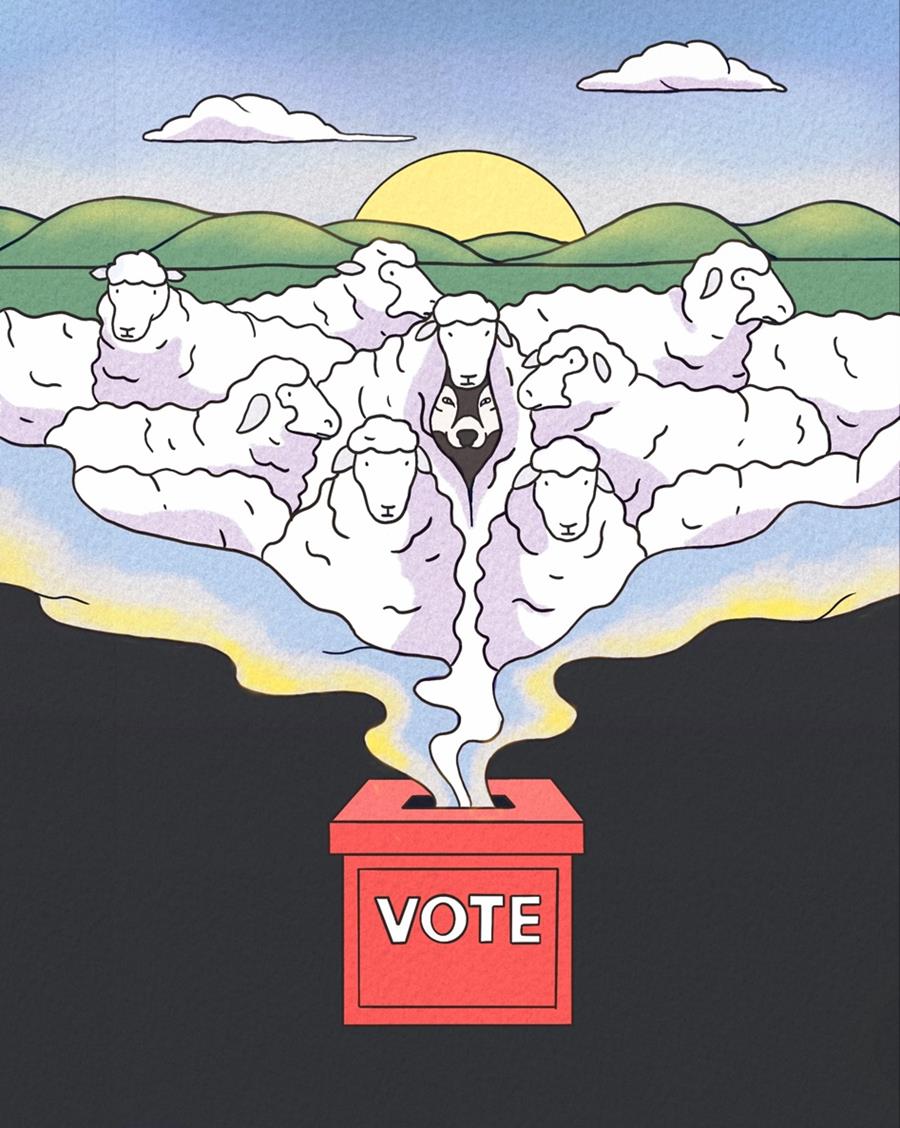
In this moment of altogether appropriate attention to the autocratic threat to Ukraine, it’s too easy to forget that genuine democracy is under threat all around the world. Nathan Gardels cites two examples close to home: Mexico and California…
The core crisis of governance in open societies today is the distrust that has grown between the public and its institutions of self-government. The response to this breach of trust has largely been unfolding in two directions — the autocratic tendency toward decisive strongmen who fashion themselves as tribunes of the people, or seeking to re-legitimize democracy through greater citizen engagement and participation.
Now, a new and concerning hybrid is emerging that exploits the tools of citizen engagement and participation (such as the recall of elected officials, the referendum, and ballot initiative) either to affirm autocratic leanings or to protect and promote the very special interests these tools were meant to challenge…
…
Participatory democracy unmediated by impartial institutions of deliberation or guarded against manipulation by the powers that be poses as significant a risk to citizen control of government as unchecked executive power or rule by those with the most gold. When plebiscitary practices are deployed from the top down to affirm the rule of a present regime, or hijacked by the most monied, instead of initiated from the bottom up, the very notion of citizen empowerment is nullified.
Top-down direct democracy is a wolf in sheep’s clothing: “Mexico: On The Path To A Perfect Autocracy?“, from @NoemaMag.
* James Taylor, “Mexico”
###
As we watch our backs, we might note that not all exercises of direct democracy (even when they are structurally flawed) end badly: on this date in 1992 a referendum to end apartheid in South Africa passed by a vote of 69% to 31%… a margin that would surely had been larger had the election not been restricted to white voters. (Universal suffrage was established two years later.)

“People are trapped in history and history is trapped in them”*…

The late David Graeber (with his co-author David Wengrow), left one last book; William Deresiewicz gives us an early look…
Many years ago, when I was a junior professor at Yale, I cold-called a colleague in the anthropology department for assistance with a project I was working on. I didn’t know anything about the guy; I just selected him because he was young, and therefore, I figured, more likely to agree to talk.
Five minutes into our lunch, I realized that I was in the presence of a genius. Not an extremely intelligent person—a genius. There’s a qualitative difference. The individual across the table seemed to belong to a different order of being from me, like a visitor from a higher dimension. I had never experienced anything like it before. I quickly went from trying to keep up with him, to hanging on for dear life, to simply sitting there in wonder.
That person was David Graeber. In the 20 years after our lunch, he published two books; was let go by Yale despite a stellar record (a move universally attributed to his radical politics); published two more books; got a job at Goldsmiths, University of London; published four more books, including Debt: The First 5,000 Years, a magisterial revisionary history of human society from Sumer to the present; got a job at the London School of Economics; published two more books and co-wrote a third; and established himself not only as among the foremost social thinkers of our time—blazingly original, stunningly wide-ranging, impossibly well read—but also as an organizer and intellectual leader of the activist left on both sides of the Atlantic, credited, among other things, with helping launch the Occupy movement and coin its slogan, “We are the 99 percent.”
On September 2, 2020, at the age of 59, David Graeber died of necrotizing pancreatitis while on vacation in Venice. The news hit me like a blow. How many books have we lost, I thought, that will never get written now? How many insights, how much wisdom, will remain forever unexpressed? The appearance of The Dawn of Everything: A New History of Humanity is thus bittersweet, at once a final, unexpected gift and a reminder of what might have been. In his foreword, Graeber’s co-author, David Wengrow, an archaeologist at University College London, mentions that the two had planned no fewer than three sequels.
And what a gift it is, no less ambitious a project than its subtitle claims. The Dawn of Everything is written against the conventional account of human social history as first developed by Hobbes and Rousseau; elaborated by subsequent thinkers; popularized today by the likes of Jared Diamond, Yuval Noah Harari, and Steven Pinker; and accepted more or less universally. The story goes like this. Once upon a time, human beings lived in small, egalitarian bands of hunter-gatherers (the so-called state of nature). Then came the invention of agriculture, which led to surplus production and thus to population growth as well as private property. Bands swelled to tribes, and increasing scale required increasing organization: stratification, specialization; chiefs, warriors, holy men.
Eventually, cities emerged, and with them, civilization—literacy, philosophy, astronomy; hierarchies of wealth, status, and power; the first kingdoms and empires. Flash forward a few thousand years, and with science, capitalism, and the Industrial Revolution, we witness the creation of the modern bureaucratic state. The story is linear (the stages are followed in order, with no going back), uniform (they are followed the same way everywhere), progressive (the stages are “stages” in the first place, leading from lower to higher, more primitive to more sophisticated), deterministic (development is driven by technology, not human choice), and teleological (the process culminates in us).
It is also, according to Graeber and Wengrow, completely wrong. Drawing on a wealth of recent archaeological discoveries that span the globe, as well as deep reading in often neglected historical sources (their bibliography runs to 63 pages), the two dismantle not only every element of the received account but also the assumptions that it rests on. Yes, we’ve had bands, tribes, cities, and states; agriculture, inequality, and bureaucracy, but what each of these were, how they developed, and how we got from one to the next—all this and more, the authors comprehensively rewrite. More important, they demolish the idea that human beings are passive objects of material forces, moving helplessly along a technological conveyor belt that takes us from the Serengeti to the DMV. We’ve had choices, they show, and we’ve made them. Graeber and Wengrow offer a history of the past 30,000 years that is not only wildly different from anything we’re used to, but also far more interesting: textured, surprising, paradoxical, inspiring…
A brilliant new account upends bedrock assumptions about 30,000 years of change: “Human History Gets a Rewrite,” @WDeresiewicz introduces the newest– and last?– book from @davidgraeber and @davidwengrow. Eminently worth reading in full.
* James Baldwin
###
As we reinterpret, we might spare a thought for Vic Allen; he died on this date in 1914. A British human rights activist, political prisoner, sociologist, historian, economist and professor at the University of Leeds, he worked closely with British trade unions, and was considered a key player in the resistance against Apartheid in South Africa. He spent much of his life supporting the South African National Union of Mineworkers (NUM), and was a key mentor to British trade union leader Arthur Scargill, In 2010 Allen was awarded the Kgao ya Bahale award, the highest honor afforded by the South African Union of Miners. After his death he was widely commended by his fellow academics and activists for his lifelong commitment to worker’s rights and racial equality.

You must be logged in to post a comment.