Posts Tagged ‘entrepreneurship’
“How Africa’s population evolves, and how the continent’s economies develop, will affect everything people near and far assume about their lives today”*…

In these tumultuous times, there’s a lot of competition for one’s attention: Russia and its aggression? China and it’s ever-more-assertive rise? The tensions within Europe? The divisions within the U.S.? Indeed, as Adam Tooze argues, there’s so much going on that there’s a risk we’ll miss the most fundamentally important long-term dynamic of all…
Once you realize it’s scale, there is no global trend as dramatic today as the revolution in Africa’s demography.
Asia’s return to the center of the world economy dominates the headlines. But in the grand sweep of history that is a rebalancing or restoration not a revolution. Until the 18th century, the Pacific and Indian Oceans were the heart of sophisticated economic activity. That balance was grossly distorted in the “centuries of humiliation” by the rise of the West. Now, thanks to Asian economic growth, the centers of economic activity and population are realigning.
The same cannot be said for Africa. Despite optimism in recent years, the relative lack of economic growth in Africa is well-known. Less well-appreciated is the extraordinary historical novelty of its demographic development.
In 1914 according to the best estimates, Africa’s entire population was 124 million and that includes North Africa. Today it is 1.34 billion. Compared to Africa’s roughly elevenfold increase in population, Asia’s population increased by “only” between 3 and 4 times – China’s merely tripled and India’s increased by 4.5 times. Furthermore, whereas Asia’s population is beginning to stabilize – led by that of India and China – Africa’s population will, barring disasters, reach 2.4 billion by 2050 and will go on growing.
Longer term projections are hazardous, but a world with somewhere between 9 and 11 billion total population and close to 4 billion people living in Africa is what current trends would lead one to expect. That means that by 2100 the African share of global population will likely be between 35 and 40 percent. And in 2100 the population of several African countries – Chad, Mali, Niger, Nigeria, and South Sudan – is likely still to be growing.
That is something new under the sun. It means that in sheer quantitative terms Africa’s story increasingly drives world history…
Read on for a thoughtful unpacking: “Youth Quake. Why African demography should matter to the world,” from @adam_tooze in his newsletter Chartbook— in part a consideration of Youth Quake, by @EdPaiceARI.
See also: “We need to take a closer look at entrepreneurship in Africa,” from @sham_jaff in @whlwnews.
###
As we pay attention, we might send dedicated birthday greetings to Joe Slovo; he was born on this date in 1926. A South African citizen from a Jewish-Lithuanian family, Slovo was a delegate to the multiracial Congress of the People of June 1955 which drew up the Freedom Charter. He was imprisoned for six months in 1960, and emerged as a leader of Umkhonto we Sizwe the following year. He lived in exile from 1963 to 1990, conducting operations against the apartheid régime from the United Kingdom, Angola, Mozambique, and Zambia. In 1990 he returned to South Africa, and took part in the negotiations that ended apartheid. He is probably best known for proposing the “sunset clauses” covering the 5 years following a democratic election, including guarantees and concessions to all sides, and for his fierce non-racialist stance. After the elections of 1994, he became Minister for Housing in Nelson Mandela’s government, a post he held until his death from cancer in 1995.

“Music is like a river or stream”*…
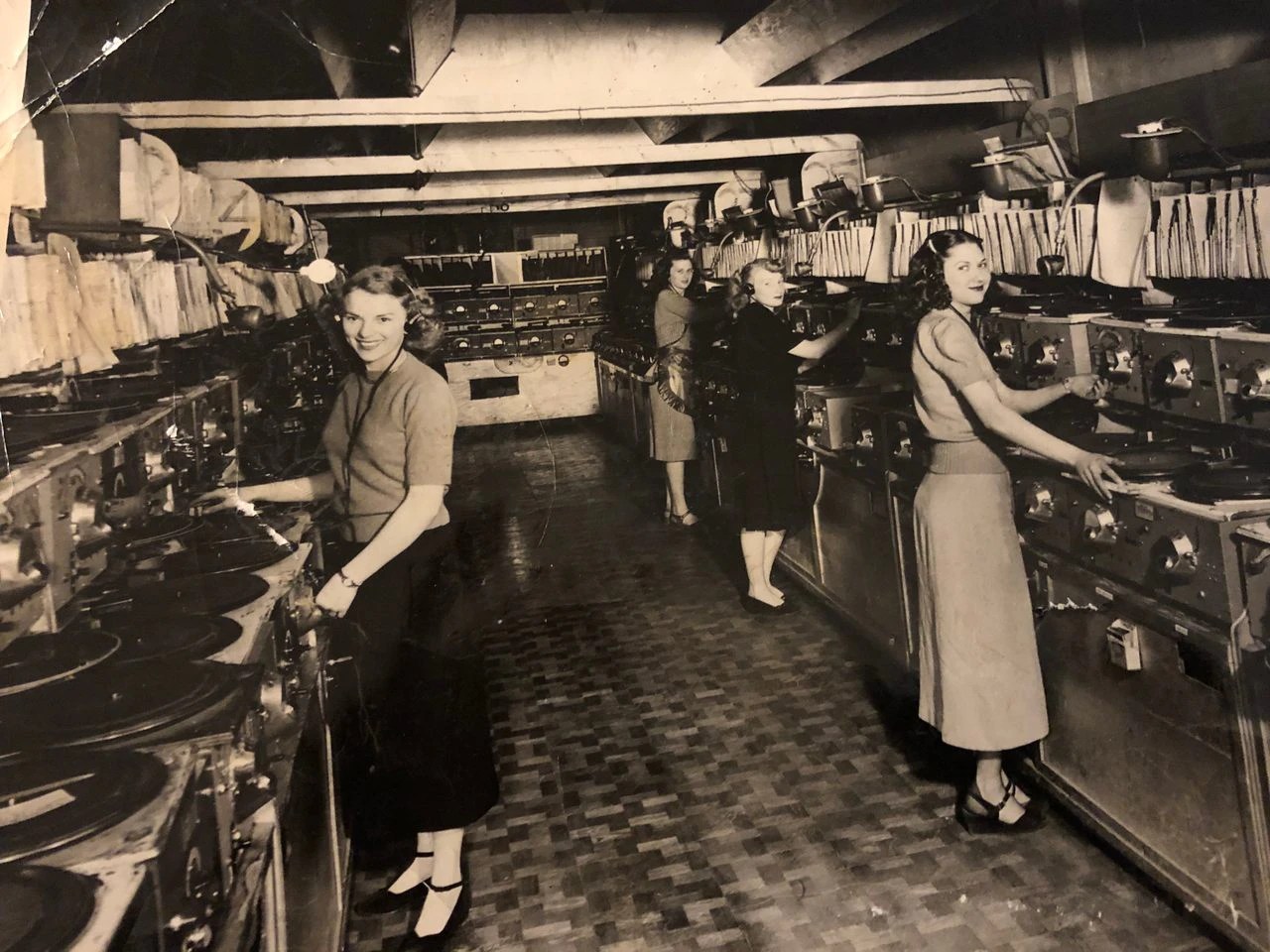
The estimable Ted Gioia on an early music streaming success…
Streaming music was a dream long before it became reality. Back in 1627, Francis Bacon imagined a futuristic kind of music streaming technology in his utopian story The New Atlantis—where the inhabitants “have means to convey sounds in trunks and pipes, in strange lines and distances.”
…
In the 1920s and 1930s, this dream started to turn into reality. An electric utility in Cleveland even offered a service to residents in Lakeland—three channels piped into their homes from the power substation for $1.50 per month. The Muzak company, originally launched as Wired Radio, Inc. in 1922, initially built its business model on the same concept: Music would be provided to homes as a kind of utility, and paid for as part of the monthly electricity bill.
The company eventually changed its name to Muzak, and shifted its emphasis to businesses. The much larger home market continued to rely on recordings and physical media. Even radios, which started showing up in almost every household during the 1920s, never became an actual utility with consumers paying for the service. Instead, radio broadcasts were embraced by station owners as a way to sell advertising and supported by music companies in order to promote recordings and tickets to live events.
…
At the end of the 1930s, Seattle inventor Ken Shyvers launched a bizarre business out of a kind of studio bunker in the Pacific Northwest. Here a team of women worked late into the night with odd-looking machines combining the capabilities of a turntable, jukebox, and phone line.
The price was five cents per song. The input device looked like a small art deco cylinder, only 18 inches tall and easily fitting on a restaurant tabletop or bar counter. Many customers must have assumed these were some kind of mini-jukebox—except they offered a much wider range of song choices than any other competing technology.

The Multiphones (as they were called) allowed a selection of up to 300 tracks—and typically came with a list of around 170 options. The song choices were relayed to the female disk jockeys [pictured at the top], who worked out of an available room in a drugstore at Fourth Street and Pacific Avenue in Bremerton. They would play the chosen track, which was broadcast back to the customer via a telephone line.
Bars and restaurants were the target market, but there was no reason why the concept couldn’t have spread to homes. The technology never gained national distribution, but thrived in Washington state, where it found a user base in Seattle, Tacoma, Spokane, and Bremerton. From 1939 to 1959, the Multiphone was not only a viable business, but anticipated many key aspects of the music distribution model of our own time…
From @tedgioia‘s wonderful newsletter, The Honest Broker, the instructive tale of a Seattle entrepreneur who created a successful analog streaming platform—and ran it out of a drugstore: “The First Music Streaming Service.”
* Ali Akbar Khan
###
As we tap our toes, we might might send tuneful birthday greetings to Herbert Butros Khaury; he was born on this date in 1932. Better known by his stage name, Tiny Tim, he was a ukulele-playing, falsetto-singing performer. He achieved tremendous celebrity in the late 1960s, appearing on Laugh-In and The Tonight Show Starring Johnny Carson (among others). His 1969 wedding (to “Miss Vicki”) on Tonight Show was watched by over 40 million viewers, a gargantuan audience for the time slot.
You must be logged in to post a comment.