Posts Tagged ‘engineering’
“The materials of city planning are: sky, space, trees, steel, and cement; in that order and that hierarchy”*…
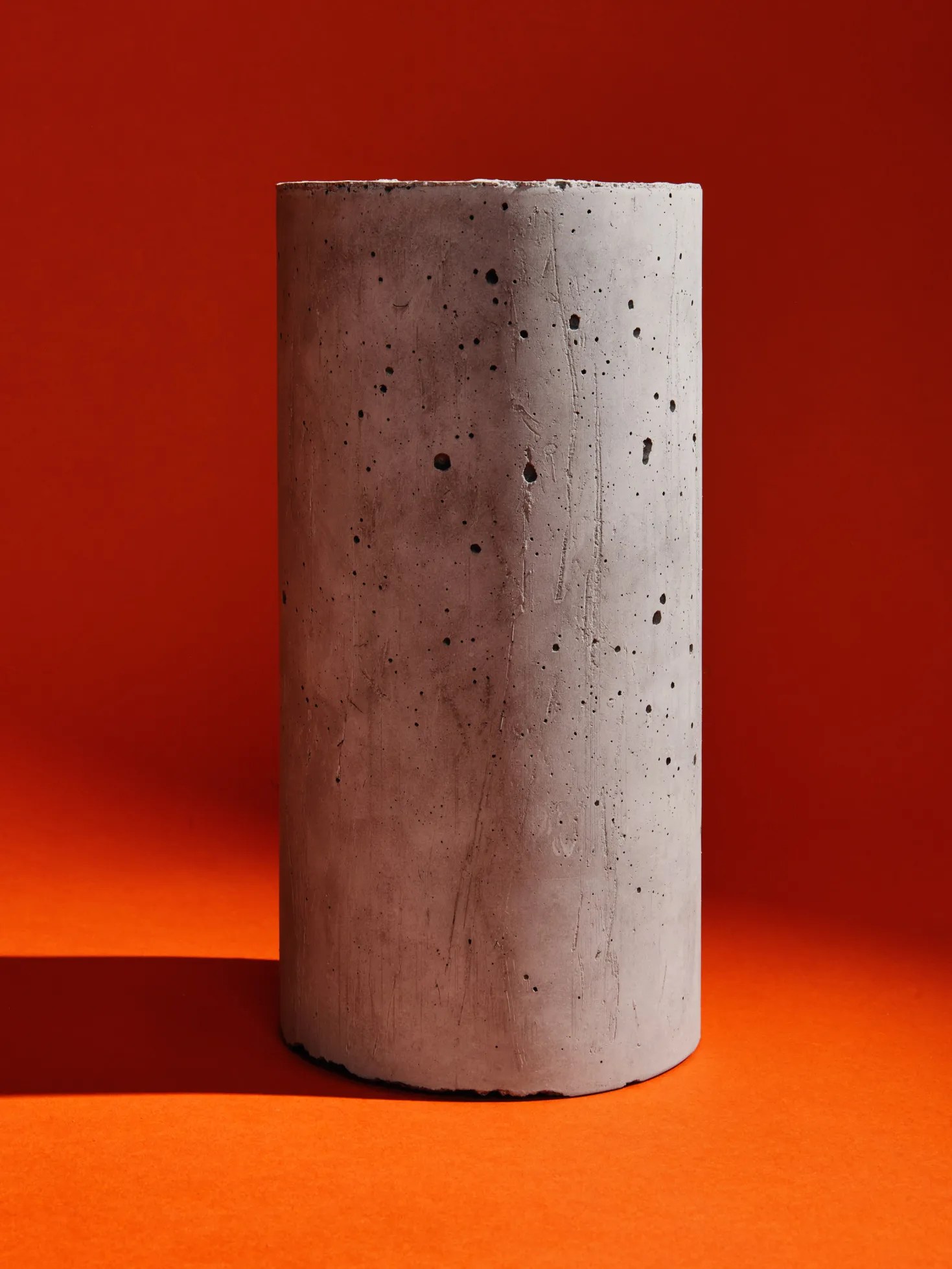
… problematically, the last of those is among the biggest sources of CO2 emissions on earth– between 7 and 8% of the total. Now, Casey Crownheart reports, there may be a way to produce that essential building material in a low- or no-carbon way…
Cement hides in plain sight—it’s used to build everything from roads and buildings to dams and basement floors. But there’s a climate threat lurking in those ubiquitous gray slabs. Cement production accounts for more than 7% of global carbon dioxide emissions—more than sectors like aviation, shipping, or landfills.
Humans have been making cement, in one form or another, for thousands of years. Ancient Romans used volcanic ash, crushed lime, and seawater to build the aqueducts and iconic structures like the Pantheon. The modern version of hydraulic cement—the sort that hardens when mixed with water and allowed to dry—dates back to the early 19th century. Derived from widely available materials, it’s cheap and easy to make. Today, cement is one of the most-used materials on the planet, with about 4 billion metric tons produced annually.
Industrial-scale cement is a multifaceted climate conundrum. Making it is energy intensive: the inside of a traditional cement kiln is hotter than lava in an erupting volcano. Reaching those temperatures typically requires burning fossil fuels like coal. There’s also a specific set of chemical reactions needed to turn crushed-up minerals into cement—and those reactions release carbon dioxide, the most common greenhouse gas in the atmosphere.
One solution to this climate catastrophe might be coursing through the pipes at Sublime Systems. Founded by two MIT battery scientists, the startup is developing an entirely new way to make cement. Instead of heating crushed-up rocks in lava-hot kilns, Sublime’s technology zaps them in water with electricity, kicking off chemical reactions that form the main ingredients in its cement.
Over the course of the past several years, the startup has gone from making batches of cement that could fit in the palm of your hand to starting up a pilot facility that can produce around 100 tons each year. While it’s still tiny compared with traditional cement plants, which can churn out a million tons or more annually, the pilot line represents the first crucial step to proving that electrochemistry can stand up to the challenge of producing one of the world’s most important building materials.
By the end of the decade, Sublime plans to have a full-scale manufacturing facility up and running that’s capable of producing a million tons of material each year. But traditional large-scale cement plants can cost over a billion dollars to build and outfit. Competing with established industry players will require Sublime to scale fast while raising the additional funding it will need to support that growth. The end of 0% interest rates makes such a task increasingly difficult for any business, but especially for one producing a commodity like cement. And in a high-stakes, low-margin industry like construction, Sublime will need to persuade builders to use its material in the first place…
A start-up is working to drive down the carbon footprint of cement production: “How electricity could help tackle a surprising climate villain,” from @casey_crownhart in @techreview.
See also: “We are closing in on zero-carbon cement.”
* Le Corbusier
###
As we prioritize progress, we might note that it was on this date in 1942 that Henry Ford patented the Soybean car. Per Wikipedia:
… a concept car built with agricultural plastic. The New York Times in 1941 states the car body and fenders were made from a strong material derived from soy beans, wheat and corn. One article claims that they were made from a chemical formula that, among many other ingredients, included soy beans, wheat, hemp, flax and ramie; while the man who was instrumental in creating the car, Lowell E. Overly, claims it was “…soybean fiber in a phenolic resin with formaldehyde used in the impregnation” (Davis, 51). The body was lighter and therefore more fuel efficient than a normal metal body. It was made in Dearborn, Michigan and was introduced to public view on August 13, 1941. It was made, in part, as a hedge against the rationing of steel during World War II. It was designed to run on hemp fuel.


“We shape our infrastructure; thereafter it shapes us”*…

Long-time readers of (R)D will know of your correspondent’s regard for Deb Chachra and her thoughtful pieces on infrastructure (see, e.g., here and here). On the occasion of the publication of her (terrific) new book, How Infrastructure Works: Transforming our Shared Systems for a Changing World, another (R)D regular, Hillary Predko of Scope of Work, talks with Deb…
Deb Chachra is a material scientist and engineering professor at Olin College who writes extensively about infrastructural systems. Astute readers may have noticed that she is one of the thinkers most frequently cited in SOW: I recently referenced her work, as did TW earlier this year. Deb also joined as a guest writer in 2017. Her thoughtful writing forefronts the interplay between technical and social factors, calling infrastructure the way we take care of each other at a planetary scale.
I have loved following Deb’s work over the years, and her new book, How Infrastructure Works: Transforming our Shared Systems for a Changing World… is a fascinating and nuanced extension of the same ideas. In compelling prose, the book traverses the history of the infrastructure systems we live with today and considers the new pressures posed by climate change. Another SOW favorite thinker, Robin Sloan, says, “Deb Chachra is the perfect guide not just to how infrastructure works but also how it feels. This book is just like the power plants it describes: a precise machine, a fountain of energy.”
In a world saturated with news of climate doom, How Infrastructure Works lays out a hopeful vision of a future – and one that is grounded in the technical realities of the world. Deb Chachra dreams in systems, and we are all invited to step into that dream. I recently sat down with Deb to talk about her book, and her perspective on the world and work…
An interview with Deb Chachra (@debcha), author of How Infrastructure Works: “An Ode to Living on The Grid,” from @the_prepared.
* Dax Bamania (a riff on a quote about tools often mis-attributed to Marshall McLuhan)
###
As we study structure, we might spare a thought for a man whose innovation added tremendous value to a ubiquitous 19th century infrastructure, George Pullman; he died on this date in 1897. An enginner and industrialist, he revolutionized rail travel when he designed and manufactured the Pullman sleeping car (and industrial relations, when he founded a company town in Chicago for the workers who manufactured it).

“I have spread my dreams under your feet”*…

From Brian Potter, a fascinating look at the history of a technology, tunnel boring, the products of which we tend to take for granted…
Tunneling is an important technology for modern civilization, as a tunnel is often the only reasonable way to create a direct path between two points. When the Hoosac tunnel was completed in 1875, it turned a difficult, 20-mile railroad route along “precipitous grades” into a direct 5 mile route, connecting Boston with the Upper Hudson Valley. Large infrastructure projects such as hydroelectric dams often require tunnels to function. The Hoover Dam required more than 3 miles of tunnels 56 feet in diameter to divert the Colorado River around the construction site. And a tunnel can be used to create new land beneath dense urban areas, making it possible to build large-scale horizontal infrastructure like sewers or mass transit that wouldn’t be feasible to build above ground.
A common way of building a tunnel today is with a tunnel boring machine (TBM), particularly in urban areas where other construction methods such as drill-and-blast or cut-and-cover would be too disruptive. Of the 89 transit projects around the world that required tunneling in a dataset compiled by Britain Remade, 80 of them used TBMs. But tunnel boring machines are a comparatively modern construction technology. The first successful rock tunneling machines weren’t invented until the 1950s, and into the late 1960s most tunneling was done using other construction methods. But as TBMs have improved, they have increasingly been the method of choice for tunneling through a wider variety of ground conditions. And while many construction tasks have resisted automation and mechanization, tunneling machinery has steadily gotten more automated, to the point where a modern TBM is akin to a mobile factory that burrows through the earth and constructs a tunnel behind it.
…
Soft ground TBMs evolved from unmechanized tunnel shields. The first tunnel shield [see illustration above] was designed by Marc Brunel, father of famous engineer Isambard Kingdom Brunel and an accomplished engineer in his own right, and built by Henry Maudslay for tunneling under the Thames in 1825. Brunel’s shield, which was inspired by the action of shipworms boring through the wood hulls of ships, consisted of a large cast-iron structure, 38 feet wide by 22 feet tall, which was broken into 12 separate “frames,” each consisting of three individual compartments stacked on top of another. Within each compartment was a series of horizontal boards, called “poling boards,” that were placed against the face of the tunnel. A worker in the compartment would remove a board, dig out the earth behind it to a depth of around 6 inches, and then proceed to the next board. Once all the soil behind the boards in a frame had been dug out, that section of the shield would be advanced forward using screw jacks, and the process would repeat. Behind the shield, masons would construct the brick lining around the sides of the tunnel, which prevented the tunnel from collapsing and provided a structure for the shield to push off against.
When the Thames Tunnel was completed, it was the first tunnel under a body of water in the world. But the project proved to be incredibly difficult, encountering “almost overwhelming problems” (West p115). Excavation was slow, advancing at around 8 feet per week on average, and the tunnel flooded repeatedly. Gas occasionally filled the tunnel, which caused “collapse and blindness of the workmen” (West p109), and at one point the entire shield needed to be replaced. The tunnel wasn’t completed until 1843, 18 years after it was started, and it was never a commercial success, though it is still in use today. Tunneling via shield wasn’t tried again for over 25 years…
[But it was tried again… and again, and again, being improved and enhanced each time. Potter describes (and illustrates) the steady mechanization of the process– up to and including The Boring Company]
… The arc of tunnel boring machinery looks much more like the progression we see in other industrial areas, and that we don’t often see in construction. Construction operations often remain craft-based and labor intensive, and have been performed in similar ways for decades (or centuries). With tunnel boring machines, we see gradual automation and “factoryization,” where the work increasingly takes place in a highly mechanized, factory-like environment. New technology comes along and displaces the old technology, even in an environment of high risk aversion. And the process gradually converges on the “continuous flow,” where the machine continuously transforms solid ground into a lined tunnel, and continuously removes excavated material with the use of conveyors, the same sort of development we see in things like Ford’s assembly line, chemical process industries, and the Toyota production system.
“The Evolution of Tunnel Boring Machines,” from @_brianpotter.
* W. B. Yeats, “Aedh Wishes for the Cloths of Heaven”
###
As we go deep, we might recall that it was on this date in 2017 that work on the Ryfast Tunnel, connecting the Norwegian city of Stavenger with the the village of Tau on the other side of the fjord, entered its final stage. It became the longest undersea road tunnel in the world; its 8.9 mile length was greater than the Eysturoyartunnilin in the Faroe Islands (at 7.0 miles), the Tokyo Bay Tunnel in Japan (at 6.0 miles), and the Shanghai Yangtze River Tunnel (at 5.6 miles) in China. It is also currently the world’s deepest subsea tunnel, reaching a maximum depth of 958 ft below sea level.


“A suburb is an attempt to get out of reach of the city without having the city be out of reach”*…

In mid-twentieth century, in contrast to the noisy and diverse city, the suburbs were seen as spacious, segregated, and quiet— a much more promising state of affairs to corporations bent on expansion. American cities had been spreading out into metropolitan areas since the 19th century; but for most of that time city centers remained the hub of economic and social life. As Luise A. Mozingo explains, that began to change after World War II; residents and businesses alike began to leave…
… As a number of scholars have emphasized, the iconic suburbs of white, middle-class, nuclear families were a well-known part of this story but by no means all of it. Added to prewar suburban expansion, the rapid restructuring of postwar metropolitan areas formed a complexity of patches, spokes, and swaths of separated, specialized, and low-density land uses in the peripheral zones around older city centers, including industry, retail centers, ethnic enclaves, and working-class neighborhoods. This rapid decentralization created the conditions that were conducive to the invention of specialized suburban management facilities by large corporations.
To many privileged Americans of the 1950s and 1960s, the center city appeared to be in a state of inexorable decline. The proliferating automobile inundated the center city’s gridded 19th-century street pattern, and “congestion” seemed intractable and highly detrimental to economic activity. Increasing numbers of people of color walked the streets. Vacancies and abandoned properties were on the rise as tenants relocated to the suburbs and owners could find no replacements. New construction in the city center required homage to an ensconced and layered system of political patronage. Even then, wedging in new skyscrapers that could accommodate large corporate staffs in a single building proved difficult in blocks divided into multiple parcels of land and built out with varied buildings, including many used for industry. To redress these perceived shortcomings, the urban renewal process acquired property, removed tenants, destroyed buildings, and reparceled land in order to insert freeways, offer large lots for corporate offices, supply parking, and confine the poor to mass public housing. In the process, it took apart what remained of the vitality of the old urban core and added to the inventory of open urban lots and dysfunctional neighborhoods. The center city was noisy, diverse, crowded, unpredictable, inflexible, expensive, old, and messy — a dubious state of affairs for postwar capitalists bent on expansion.
In contrast, the suburbs seemed to warrant a sense of forward-looking optimism. At the city’s edge, an effective alliance of well-financed real estate investors, large property owners, local governments, federal loan guarantors, and utopian planners opened property for speedy development. Building along federal- and state-funded road systems that brought these large tracts of land into the economy of metropolitan regions, this alliance conceived of low-density, auto-accessed landscapes of highly specified uses with plenty of parking, and wrote these forms into stringent zoning and building regulations. Once built, these suburban expansion zones were deliberately resistant to change, with the end of producing both social stasis and secure real estate values.
The suburbs as a whole may have been diverse, but the process of building their component parts created insidious racial and class divisions. While the separation of different classes and races of home dwellers is the best-understood part of this spatial process, all kinds of workers were categorically set apart in discrete landscapes as well — corporate executives from factory labor, retail clerks from typists, electronics researchers from accountants. Hence the suburbs were predictable, spacious, segregated, specialized, quiet, new, and easily traversed — a much more promising state of affairs to corporations bent on expansion.
…
My book “Pastoral Capitalism” describes how pioneering projects established the essential landscape patterns of the corporate campus, corporate estate, and office park and how, from those few early projects, other corporations followed suit in great numbers. These landscape types became embedded in the expectations of the corporate class and could, at a glance, embody both the reality and prospect of capitalist power. Hence, the development forms have remained remarkably consistent for six decades. By the end of the 20th century, the suburbs, not the central business district, contained the majority of office space in the United States. This was a new and potent force in the process of suburban expansion…
More at “The Birth of the Pastoral Corporation.”
###
As we ponder the prominence of the periphery, we might send altitudinous birthday greetings to Louis Sullivan; he was born on this date in 1856. An architect, he was hugely influential in the Chicago School, a mentor to Frank Lloyd Wright, and an inspiration to the Chicago group of architects who have come to be known as the Prairie School. He is considered by many to have been the “father of modernism” in architecture (the phrase “form follows function” is attributed to him) and (as he pioneered the steel high-rise) “the father of the skyscraper.”
Indeed, in Sullivan’s honor, this date is National Skyscraper Day.


“The most important things are paper airplanes and dreams”*…

The paper airplane has a long history of contributions to our understanding of flight…
… Our obsession with testing the boundaries of folded flight is relatively recent, but our desire to explore and explain the complex world of aerodynamics goes back much further.
Chinese engineers are thought to have invented what could be considered the earliest paper planes around 2,000 years ago. But these ancient gliders, usually crafted from bamboo and paper or linen, resembled kites more than the dart-shaped fliers that have earned numerous Guinness World Records in recent years.
Leonardo da Vinci would take a step closer to the modern paper airplane in the late 14th and early 15th centuries by building paper models of his aircraft designs to assess how they might sustain flight. But da Vinci’s knowledge of aerodynamics was fairly limited. He was more inspired by animal flight and, as a result, his design for craft like the ornithopter—a hang-glider-size set of bat wings that used mechanical systems powered by human movement—never left the ground.
Paper airplanes helped early engineers and scientists learn about the mechanics of flight. The British engineer and aviator Sir George Cayley reportedly crafted the first folded paper plane to approach modern specifications in the early 1800s as part of his personal experimentation with aerodynamics. “He was one of the early people to link together the idea that the lift from the wings picking up the aircraft for stable flight must be greater than or equal to the weight of the aircraft,” says Jonathan Ridley, PhD, the head of engineering and a scholar of early aviation at Solent University in the U.K.
More than a century later, before their famous 1903 flight in Kitty Hawk, North Carolina, the Wright Brothers built paper models of wings to better understand how their glider would sustain flight, explains Ridley. They then tested these models in a rudimentary, refrigerator-size wind tunnel—only the second to be built in the U.S. Paper planes are still illuminating the hidden wonders of flight. Today, these lightweight aircraft serve as a source of inspiration not only for aviation enthusiasts but also for fluid dynamicists and engineers studying the complex effects of air on small aircraft like drones…
For centuries, paper airplanes have unlocked the science of flight—now they could inspire drone technology: “A Living History of The Humble Paper Airplane,” from @PopMech.
* Christopher Morley
###
As we fold ’em and fly ’em, we might spare a thought for Wiley Post. A famed aviator of the interwar period, he was the first the first pilot to fly solo around the world. Post was also known for his work in high-altitude flying; he helped develop one of the first pressure suits and discovered the jet stream.
Today is also the anniversary of the death of famed humorist Will Rogers. On this date in 1935, Post and Rogers were killed when Post’s aircraft crashed on takeoff from a lagoon near Point Barrow in the Territory of Alaska.

You must be logged in to post a comment.