Posts Tagged ‘Alaska’
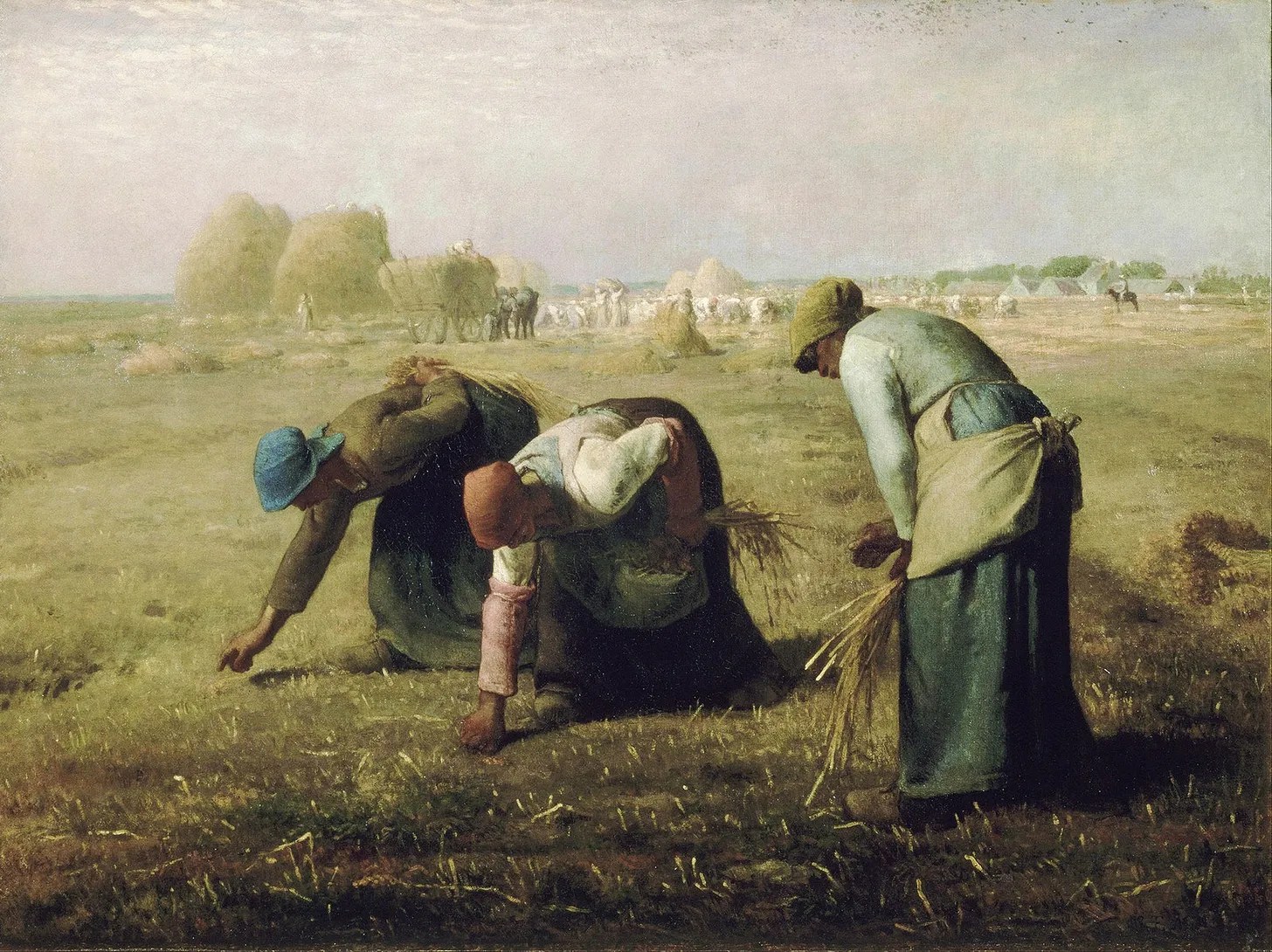
“The enclosure of the commons inaugurates a new ecological order. Enclosure did not just physically transfer the control over grasslands from the peasants to the lord. It marked a radical change in the attitudes of society toward the environment.”*…
Several days ago, juries in New Mexico and California found Facebook/Meta (and in California, also YouTube/Google) guilty of knowingly employing algorithms to serve content to minors that caused depression, anxiety, and other mental health harms… behavior par for the course of the (massive, “mechanical”) extractive behavior that is their business model. As NPR reports (on the California verdict):
While the financial punishment is miniscule for companies each worth trillions of dollars, the decision is still consequential. It represents the first time a jury has found that social media apps should be treated as defective products for being engineered to exploit the developing brains of kids and teenagers… The outcome of this case could influence thousands of other consolidated cases against the social media companies. The litigation has drawn comparisons to the legal crusade in the 1990s against Big Tobacco, which forced the industry to to stop targeting minors with advertising…
L. M. Sacasas draws on a comparison to the English “enclosure movement” (and here) to put the stakes of this battle against algorithmic extraction into historical context…
If you were to ask me something like “What’s the most urgent task before us?” or “What counsel do you have to offer in this cultural moment?” I would say this:
Resist the enclosure of the human psyche.
Don’t misunderstand me. I’m sure there are other necessary and urgent tasks. But this would be my contribution to the conversation. I would be offering not only an imperative to pursue, but also, and perhaps more importantly, an analogy to clarify and interpret the techno-economic forces at play in a digitized society. Such analogies or concepts can be useful. They can crystalize a certain understanding of the world and catalyze action and resolve. They can be a rallying cry.
In any case, I’ll say it again: resist the enclosure of the human psyche.
Some of you may immediately intuit the force of the analogy, but I suspect it needs a little unpacking.
Here’s the short version: I’m drawing an analogy between a historical development known as the enclosure of the commons and the condition of the human psyche in the context of a digitized society. The enclosure of the commons is the name given to the centuries-long process by which lands available to the many were turned into a resource to be managed and extracted by the few. My claim is that structurally similar processes are unfolding with the aim of enclosing the human psyche and transforming it into a resource to be managed and extracted…
The longer version, which follows, unpacks that analogy and explains what the impact of “enclosing the human psyche” could– would likely– be. Sacasas concludes…
… The individual human psyche does not seem like a thing held in common. But, in fact, that presumption may itself be a symptom of the enclosure of the psyche, although there are certainly many other forces leading toward that same conclusion. What if the psyche were a thing held in common? That is to say, what if our purchase on reality and the emergence of the self depended on human relationships and communities? From this perspective, the enclosure of the human psyche deprives us of a common world, which yields an experience of solidarity and belonging.
I’ve elsewhere developed this point at greater length, but here I’ll only note Hannah Arendt’s warning that we are deprived of a “truly human life” when we are “deprived of the reality that comes from being seen and heard by others, to be deprived of an ‘objective’ relationship with them that comes from being related to and separated from them through the intermediary of a common world of things.”
That last bit about a common world of things, a material, not only virtual world, is key. The logic of enclosure seeks to lock us into a private virtual world of “bespoke realities,” thus excluding us from the common world of things that yields as well a public consciousness. As Arendt put it, “Only the experience of sharing a common human world with others who look at it from different perspectives can enable us to see reality in the round and to develop a shared common sense.”…
Eminently worth reading in full: “The Enclosure of the Human Psyche“
* Ivan Illich, “Silence is a commons” in In the Mirror of the Past (to which Sacasas alludes in the essay linked above)
###
As we cosset commons, we might recall that it was on this date in 1867 that a bilateral treaty was signed effecting the sale of Alaska by Russia to the United States. It was ratified on May15 and American sovereignty took effect on October 18 of that year. The price for the 586,412 square miles that changed hands was $7.2 million in 1867 (equivalent to about $132 million in 2024), or about $0.02 per acre ($0.37 per acre in 2024).
Relevantly to the piece above, the land was and is largely commonly held, by the federal government, by the state, and by Native American tribes. Only roughly 1% of Alaska is in private hands. But that sliver is growing as the Trump Administration moves to “liquidate” federal real estate holdings (sell them to private owners) and in the meantime, licenses huge swathes of Alaska for oil and gas development, mineral extraction, and the infrastrucutre (roads, pipelines) needed to service them. Alaskans are worried.

“A republic, if you can keep it.”*

Just over a decade ago, Nils Gilman wrote an essay, The Twin Insurgency,” in which he warned of an emerging confluence of strategies between the rising global plutocratic class, on the one hand, and transnational criminal organizations, on the other. For all our sins, as you’ll see in his piece, he nailed the fundamental disposition of the tech-libertarian broligarch class. And…
One other thing I think I correctly intuited a decade ago was that a key politico-spatial implication of the Twin Insurgency was that the space of the national was fragmenting into “kaleidoscopic microsovereignties,” an argument that my friend Quinn Slobodian has recently developed at monographic length in his marvelous book Crack-Up Capitalism.
Quinn’s thesis is that the ultimate goal of what I called the plutocratic insurgents (and their intellectual and high-end service-economy henchmen) is to end the constraints that democratic nation-states impose on the privileges of the rich. These are rich men (and it is almost entirely men) who believe that their wealth should be untouchable, and that the privileges that this wealth buys should be unlimited. With Elon Musk’s DOGE, the mask is off: they are hell-bent on destroying any institutions of social care or risk-sharing that might touch their money or their privileges.
I cannot recommend Crack-Up Capitalism enough. Methodologically, is an intellectual history of the most notorious radical libertarians — from well-known assholes** like Milton Friedman and Peter Thiel to a congeries of even more colorful crackpots and kakistocrats — and their quest to craft for the perfect space for unfettered capitalism by shattering the map of allegedly sovereign territories into a variety of “exceptional” legal spaces: free ports, tax havens, special economic zones, etc. It is also an historical travelogue, taking the reader (as its cover blurb says) “from Hong Kong in the 1970s to South Africa in the late days of apartheid, from the neo-Confederate South to the former frontier of the American West, from the medieval City of London to the gold vaults of right-wing billionaires, and finally into the world’s oceans and war zones, charting the relentless quest for a blank slate where market competition is unfettered by democracy.” Best of all, Crack-Up Capitalism is wonderfully written: erudite and droll in equal measure (as the punning title itself suggests).
** I use the term “assholes” in the technical sense elaborated by Aaron James, chair of the UC Irvine philosophy department, in his 2012 book Assholes: A Theory, namely someone who “allows himself to enjoy special advantages in social relations out of an entrenched sense of entitlement that immunizes him against the complaints of other people.” I was reading the book when I wrote “The Twin Insurgency” and, even though I didn’t cite it (the anxiety of influence?), I realize now looking back how much it informed my understanding of phenomenon of the plutocratic insurgency. Conversely, I suspect the empirical fact of the rising plutocratic insurgency may well have been part of what inspired James to write his own book.
– Nils’ thoughts in full: “Revisiting the Plutocratic Insurgency.”
So, what can we expect? Steven Levitsky and Lucan A. Way paint a pretty grim picture…
… Democracy survived Trump’s first term because he had no experience, plan, or team. He did not control the Republican Party when he took office in 2017, and most Republican leaders were still committed to democratic rules of the game. Trump governed with establishment Republicans and technocrats, and they largely constrained him. None of those things are true anymore. This time, Trump has made it clear that he intends to govern with loyalists. He now dominates the Republican Party, which, purged of its anti-Trump forces, now acquiesces to his authoritarian behavior.
U.S. democracy will likely break down during the second Trump administration, in the sense that it will cease to meet standard criteria for liberal democracy: full adult suffrage, free and fair elections, and broad protection of civil liberties.
The breakdown of democracy in the United States will not give rise to a classic dictatorship in which elections are a sham and the opposition is locked up, exiled, or killed. Even in a worst-case scenario, Trump will not be able to rewrite the Constitution or overturn the constitutional order. He will be constrained by independent judges, federalism, the country’s professionalized military, and high barriers to constitutional reform. There will be elections in 2028, and Republicans could lose them.
But authoritarianism does not require the destruction of the constitutional order. What lies ahead is not fascist or single-party dictatorship but competitive authoritarianism—a system in which parties compete in elections but the incumbent’s abuse of power tilts the playing field against the opposition. Most autocracies that have emerged since the end of the Cold War fall into this category, including Alberto Fujimori’s Peru, Hugo Chávez’s Venezuela, and contemporary El Salvador, Hungary, India, Tunisia, and Turkey. Under competitive authoritarianism, the formal architecture of democracy, including multiparty elections, remains intact. Opposition forces are legal and aboveground, and they contest seriously for power. Elections are often fiercely contested battles in which incumbents have to sweat it out. And once in a while, incumbents lose, as they did in Malaysia in 2018 and in Poland in 2023. But the system is not democratic, because incumbents rig the game by deploying the machinery of government to attack opponents and co-opt critics. Competition is real but unfair.
Competitive authoritarianism will transform political life in the United States. As Trump’s early flurry of dubiously constitutional executive orders made clear, the cost of public opposition will rise considerably: Democratic Party donors may be targeted by the IRS; businesses that fund civil rights groups may face heightened tax and legal scrutiny or find their ventures stymied by regulators. Critical media outlets will likely confront costly defamation suits or other legal actions as well as retaliatory policies against their parent companies. Americans will still be able to oppose the government, but opposition will be harder and riskier, leading many elites and citizens to decide that the fight is not worth it. A failure to resist, however, could pave the way for authoritarian entrenchment—with grave and enduring consequences for global democracy.
The second Trump administration may violate basic civil liberties in ways that unambiguously subvert democracy. The president, for example, could order the army to shoot protesters, as he reportedly wanted to do during his first term. He could also fulfill his campaign promise to launch the “largest deportation operation in American history,” targeting millions of people in an abuse-ridden process that would inevitably lead to the mistaken detention of thousands of U.S. citizens.
But much of the coming authoritarianism will take a less visible form: the politicization and weaponization of government bureaucracy. Modern states are powerful entities. The U.S. federal government employs over two million people and has an annual budget of nearly $7 trillion. Government officials serve as important arbiters of political, economic, and social life. They help determine who gets prosecuted for crimes, whose taxes are audited, when and how rules and regulations are enforced, which organizations receive tax-exempt status, which private agencies get contracts to accredit universities, and which companies obtain critical licenses, concessions, contracts, subsidies, tariff waivers, and bailouts. Even in countries such as the United States that have relatively small, laissez-faire governments, this authority creates a plethora of opportunities for leaders to reward allies and punish opponents. No democracy is entirely free of such politicization. But when governments weaponize the state by using its power to systematically disadvantage and weaken the opposition, they undermine liberal democracy. Politics becomes like a soccer match in which the referees, the groundskeepers, and the scorekeepers work for one team to sabotage its rival…
[The authors explore the ways in which the government bureaucracy could be politicized: the threat of targeted prosecution, the weaponization of the IRS, and the mobilization of other executive departments to further the adminsistration’s agenda– which can, among them, punish identified opponents, reward loyalists, and operate like a “protection racket” on everyone else. For alll of that, they see a limit to the damage…]
… The Trump administration may derail democracy, but it is unlikely to consolidate authoritarian rule. The United States possesses several potential sources of resilience. For one, American institutions are stronger than those in Hungary, Turkey, and other countries with competitive authoritarian regimes. An independent judiciary, federalism, bicameralism, and midterm elections—all absent in Hungary, for instance—will likely limit the scope of Trump’s authoritarianism.
Trump is also weaker politically than many successful elected autocrats. Authoritarian leaders do the most damage when they enjoy broad public support: Bukele, Chávez, Fujimori, and Russia’s Vladimir Putin all boasted approval ratings above 80 percent when they launched authoritarian power grabs. Such overwhelming public support helps leaders secure the legislative supermajorities or landslide plebiscite victories needed to impose reforms that entrench autocratic rule. It also helps deter challenges from intraparty rivals, judges, and even much of the opposition.
Less popular leaders, by contrast, face greater resistance from legislatures, courts, civil society, and even their own allies. Their power grabs are thus more likely to fail. Peruvian President Pedro Castillo and South Korean President Yoon Suk-yeol each had approval ratings below 30 percent when they attempted to seize extraconstitutional power, and both failed. Brazilian President Jair Bolsonaro’s approval rating was well below 50 percent when he tried to orchestrate a coup to overturn his country’s 2022 presidential election. He, too, was defeated and forced out of office.
Trump’s approval rating never surpassed 50 percent during his first term, and a combination of incompetence, overreach, unpopular policies, and partisan polarization will likely limit his support during his second. An elected autocrat with a 45 percent approval rating is dangerous, but less dangerous than one with 80 percent support.
Civil society is another potential source of democratic resilience. One major reason that rich democracies are more stable is that capitalist development disperses human, financial, and organizational resources away from the state, generating countervailing power in society. Wealth cannot wholly inoculate the private sector from the pressures imposed by a weaponized state. But the larger and richer a private sector is, the harder it is to fully capture or bully into submission. In addition, wealthier citizens have more time, skills, and resources to join or create civic or opposition organizations, and because they depend less on the state for their livelihoods than poor citizens do, they are in a better position to protest or vote against the government. Compared with those in other competitive authoritarian regimes, opposition forces in the United States are well-organized, well-financed, and electorally viable, which makes them harder to co-opt, repress, and defeat at the polls. American opposition will therefore be harder to sideline than it was in countries such as El Salvador, Hungary, and Turkey.
Civil society is another potential source of democratic resilience. One major reason that rich democracies are more stable is that capitalist development disperses human, financial, and organizational resources away from the state, generating countervailing power in society. Wealth cannot wholly inoculate the private sector from the pressures imposed by a weaponized state. But the larger and richer a private sector is, the harder it is to fully capture or bully into submission. In addition, wealthier citizens have more time, skills, and resources to join or create civic or opposition organizations, and because they depend less on the state for their livelihoods than poor citizens do, they are in a better position to protest or vote against the government. Compared with those in other competitive authoritarian regimes, opposition forces in the United States are well-organized, well-financed, and electorally viable, which makes them harder to co-opt, repress, and defeat at the polls. American opposition will therefore be harder to sideline than it was in countries such as El Salvador, Hungary, and Turkey.
Weaponized states create a difficult collective action problem for establishment elites who, in theory, would prefer democracy to competitive authoritarianism. The politicians, CEOs, media owners, and university presidents who modify their behavior in the face of authoritarian threats are acting rationally, doing what they deem best for their organizations by protecting shareholders or avoiding debilitating lawsuits, tariffs, or taxes. But such acts of self-preservation have a collective cost. As individual actors retreat to the sidelines or censor themselves, societal opposition weakens. The media environment grows less critical. And pressure on the authoritarian government diminishes.
The depletion of societal opposition may be worse than it appears. We can observe when key players sideline themselves—when politicians retire, university presidents resign, or media outlets change their programming and personnel. But it is harder to see the opposition that might have materialized in a less threatening environment but never did—the young lawyers who decide not to run for office; the aspiring young writers who decide not to become journalists; the potential whistleblowers who decide not to speak out; the countless citizens who decide not to join a protest or volunteer for a campaign.
America is on the cusp of competitive authoritarianism. The Trump administration has already begun to weaponize state institutions and deploy them against opponents. The Constitution alone cannot save U.S. democracy. Even the best-designed constitutions have ambiguities and gaps that can be exploited for antidemocratic ends. After all, the same constitutional order that undergirds America’s contemporary liberal democracy permitted nearly a century of authoritarianism in the Jim Crow South, the mass internment of Japanese Americans, and McCarthyism. In 2025, the United States is governed nationally by a party with greater will and power to exploit constitutional and legal ambiguities for authoritarian ends than at any time in the past two centuries.
Trump will be vulnerable. The administration’s limited public support and inevitable mistakes will create opportunities for democratic forces—in Congress, in courtrooms, and at the ballot box.
But the opposition can win only if it stays in the game. Opposition under competitive authoritarianism can be grueling. Worn down by harassment and threats, many of Trump’s critics will be tempted to retreat to the sidelines. Such a retreat would be perilous. When fear, exhaustion, or resignation crowds out citizens’ commitment to democracy, emergent authoritarianism begins to take root…
See also: “There’s a Term for What Trump and Musk Are Doing- How regime change happens in America,” from Anne Applebaum in The Atlantic (gift article), “Trump As Sovereign Decisionist,” from Nathan Gardels and Noema, and this elaboration on Applebaum’s piece by Gilman, “What Comes after the Cleansing Fire of MAGA?“
Happily, there are some signs of the opposition for which Levitsky and Way call, among them: state’s Attorneys General, some major priviate law firms, even some red-state universities. Let us fervently hope that this is just the beginning. (Indeed, here, from the estimable Henry Farrell, a suggestion as of a step each of us can take: “Trump is weaponizing financial payments: here’s what you can do.”)
* Benjamin Franklin, in response to Elizabeth Willing Powel’s question: “Well, Doctor, what have we got, a republic or a monarchy?“
###
As we deliberate on democracy, we might recall that it was on this date in 1945 that the first anti-discrimination law in the United States, the Alaska Equal Rights Act of 1945, was signed and went into effect. The product of the Alaska Native fight against segregation and other forms of discrimination, it abolished Jim Crow laws in Alaska, then a territory (not yet a state). One wonders if such an Act will be legal in our future…

“The most important things are paper airplanes and dreams”*…

The paper airplane has a long history of contributions to our understanding of flight…
… Our obsession with testing the boundaries of folded flight is relatively recent, but our desire to explore and explain the complex world of aerodynamics goes back much further.
Chinese engineers are thought to have invented what could be considered the earliest paper planes around 2,000 years ago. But these ancient gliders, usually crafted from bamboo and paper or linen, resembled kites more than the dart-shaped fliers that have earned numerous Guinness World Records in recent years.
Leonardo da Vinci would take a step closer to the modern paper airplane in the late 14th and early 15th centuries by building paper models of his aircraft designs to assess how they might sustain flight. But da Vinci’s knowledge of aerodynamics was fairly limited. He was more inspired by animal flight and, as a result, his design for craft like the ornithopter—a hang-glider-size set of bat wings that used mechanical systems powered by human movement—never left the ground.
Paper airplanes helped early engineers and scientists learn about the mechanics of flight. The British engineer and aviator Sir George Cayley reportedly crafted the first folded paper plane to approach modern specifications in the early 1800s as part of his personal experimentation with aerodynamics. “He was one of the early people to link together the idea that the lift from the wings picking up the aircraft for stable flight must be greater than or equal to the weight of the aircraft,” says Jonathan Ridley, PhD, the head of engineering and a scholar of early aviation at Solent University in the U.K.
More than a century later, before their famous 1903 flight in Kitty Hawk, North Carolina, the Wright Brothers built paper models of wings to better understand how their glider would sustain flight, explains Ridley. They then tested these models in a rudimentary, refrigerator-size wind tunnel—only the second to be built in the U.S. Paper planes are still illuminating the hidden wonders of flight. Today, these lightweight aircraft serve as a source of inspiration not only for aviation enthusiasts but also for fluid dynamicists and engineers studying the complex effects of air on small aircraft like drones…
For centuries, paper airplanes have unlocked the science of flight—now they could inspire drone technology: “A Living History of The Humble Paper Airplane,” from @PopMech.
* Christopher Morley
###
As we fold ’em and fly ’em, we might spare a thought for Wiley Post. A famed aviator of the interwar period, he was the first the first pilot to fly solo around the world. Post was also known for his work in high-altitude flying; he helped develop one of the first pressure suits and discovered the jet stream.
Today is also the anniversary of the death of famed humorist Will Rogers. On this date in 1935, Post and Rogers were killed when Post’s aircraft crashed on takeoff from a lagoon near Point Barrow in the Territory of Alaska.

“I wasn’t worth a cent two years ago, and now I owe two million dollars”*…

If you think that our democracy cannot endure with the economic inequality that afflicts the 21st century, go back to the Gilded Age, when Americans worried that the nation could not stand with the economic inequality that arose in the late 19th century. If you think that the nature of work is changing dramatically, go back to the Gilded Age, when the economy was transformed. If you worry that changes in the environment are threatening health and humanity, go back to the Gilded Age when urbanization and industrialization gave birth to those worries. These parallels allow us to step back from the concerns we’re immersed in now and think about our world in new ways. The long lens of history shows us what we’re too myopic to see in the present…
Historian of the period Richard White recommends “The best books on The Gilded Age.” His five choices are each and all eminently worthy of reading; but his explanations for his choices are an education in themselves.
* Mark Twain, The Gilded Age
###
As we peer into the not-so-distant-mirror, we might recall that it was on this date in 1867, at the dawn of the Gilded Age, that U.S. Secretary of State William Seward and Russian minister Eduard de Stoeckl agreed to a treaty effecting the purchase of Alaska by the U.S.; it was briskly ratified by Congress.
The transaction added 586,412 square miles of new territory to the United States at a cost of $7.2 million 1867 dollars (2 cents per acre); in 2019 dollars, the price was $132 million (37 cents per acre).

“You have to remember one thing about the will of the people: it wasn’t that long ago that we were swept away by the Macarena”*…

At the higher elevations of informed American opinion these days, the voices of reason stand united in their fear and loathing of Donald J. Trump, real estate mogul, reality-TV star, forty-fifth president of the United States. Their viewing with alarm is bipartisan and heartfelt, but the dumbfounded question, “How can such things be?” is well behind the times. Trump is undoubtedly a menace, but he isn’t a surprise. His smug and self-satisfied face is the face of the way things are and have been in Washington and Wall Street for the last quarter of a century.
Trump staked his claim to the White House on the proposition that he was “really rich,” embodiment of the divine right of money and therefore free to say and do whatever it took to make America great again. A deus ex machina descending an escalator into the atrium of his eponymous tower on Manhattan’s Fifth Avenue in June 2015, Trump was there to say, and say it plainly, that money is power, and power, ladies and gentlemen, is not self-sacrificing or democratic…
Trump is a product of the junk entertainment industry but also product of what Marshall McLuhan recognized nearly half a century ago as an “acoustic world” in which there is “no continuity, no homogeneity, no connections, no stasis…an information environment of which humanity has never had any experience whatever.” McLuhan’s Understanding Media appeared in 1964 with the proposition that new means of communication give rise to new structures of feeling and thought. “We shape our tools and thereafter our tools shape us.” We become what we behold, and “the medium is the message.” Shift the means of communication from printed page to enchanted screen, and they establish new rules for what counts as knowledge. The visual order of print sustains a sequence of cause and effect, tells a story with a beginning, middle, and end. The speed of light spreads stories that run around in circles, eliminate the dimensions of space and time, construct a world in which nothing follows from anything else. Sequence becomes additive instead of causative, “Graphic Man” replaces “Typographic Man,” and images of government become a government of images signifying nothing other than their own transient magnificence. Like the moon acting upon the movement of the tides, the idols of divine celebrity (Ronald Reagan and Madonna, Lady Gaga and Donald Trump) call forth collective surges of emotion that rise and fall with as little inherent meaning as the surf breaking on the beach at Malibu.
The sound bites come and go on a reassuringly familiar loop, the same footage, the same spokespeople, the same commentaries. What was said last week certain to be said this week, next week, and then again six weeks from now. The ritual returns as surely as the sun, demanding of the constant viewer little else except devout observance. Pattern recognition becomes applied knowledge; the making of as many as 12,000 connections in the course of a day’s googling and shopping (Miller beer is wet, Nike is a sneaker or a cap, Rolex is not a golf ball), adds to the sum of all ye know or need to know on the yellow brick road to truth and beauty…
Advertising is the voice of money talking to money, a dialect characterized by Toni Morrison in her 1993 Nobel Prize speech as “language that drinks blood…dumb, predatory, and sentimental,” prioritized to “sanction ignorance and preserve privilege.” Which is the language in which we do our shopping and our politics. Typographic Man wrote the Constitution and the Gettysburg Address; Graphic Man elects the president of the United States. The media on the campaign trail with Donald Trump weren’t following a train of thought. Like flies to death and honey, they were drawn to the splendour and flash of money, to the romance of crime and the sweet decaying smell of overripe celebrity…
The consequence is the destruction of a credible political discourse without which democracy cannot exist…
From an essay (adapted from a talk) by Lewis Lapham, arguing that this “destruction of credible political discourse” started long before President Trump– eminently worth reading in its entirety: “The Myth of American Democracy.”
[The source of the image above, “American Democracy Is Broken. Here’s How to Fix It” makes a series of smart suggestions for adjustments to the mechanism of our democracy… but stops short of addressing the zeitgeist that Lapham dissects.]
* John Stewart
###
As we return from our patriotically-justified holidays, we might send annexing birthday greetings to Frederick William Seward; he was born on this date in 1830. Seward served twice as Assistant Secretary of State, from 1861 to 1869 under both Abraham Lincoln and Andrew Johnson and then from 1877 to 1879 in the administration of Rutherford B. Hayes. In his first stint, he served under his father, Secretary of State William H. Seward, and helped him engineer “Seward’s Folly,” the U.S. purchase of Alaska in 1867 from Russia.


And we might recall that it was on this date in 1898 that Jefferson Randolph “Soapy” Smith uttered his last words: “My God, don’t shoot!” Smith, a confidence man who was “following the gold,” had moved to Skagway, Alaska, after successful criminal careers in Denver and Creede, Colorado. He’d assembled a gang and taken control of the docks– an important distribution point in the Klondike Gold Rush. A committee of vigilantes formed to rid the town of Smith and his gang. When federal authorities failed to act, they decided to confront Soapy themselves. Smith met them carrying a Winchester rifle. In the event, only one of the citizen’s committee– Frank Reid, who’d been a bartender in on of Smith’s saloons– was armed. The two men struggled and wounded each other, after which another member of the committee, Jesse Murphy (a recently-arrived employee of the railroad) wrestled the rifle from Smith and killed him with it. Reid also died from his wounds; though his own reputation was far from untarnished, his funeral was the largest in Skagway’s history, and his gravestone was inscribed with the words “He gave his life for the honor of Skagway.”

Soapy Smith
You must be logged in to post a comment.