Posts Tagged ‘L M Sacasas’
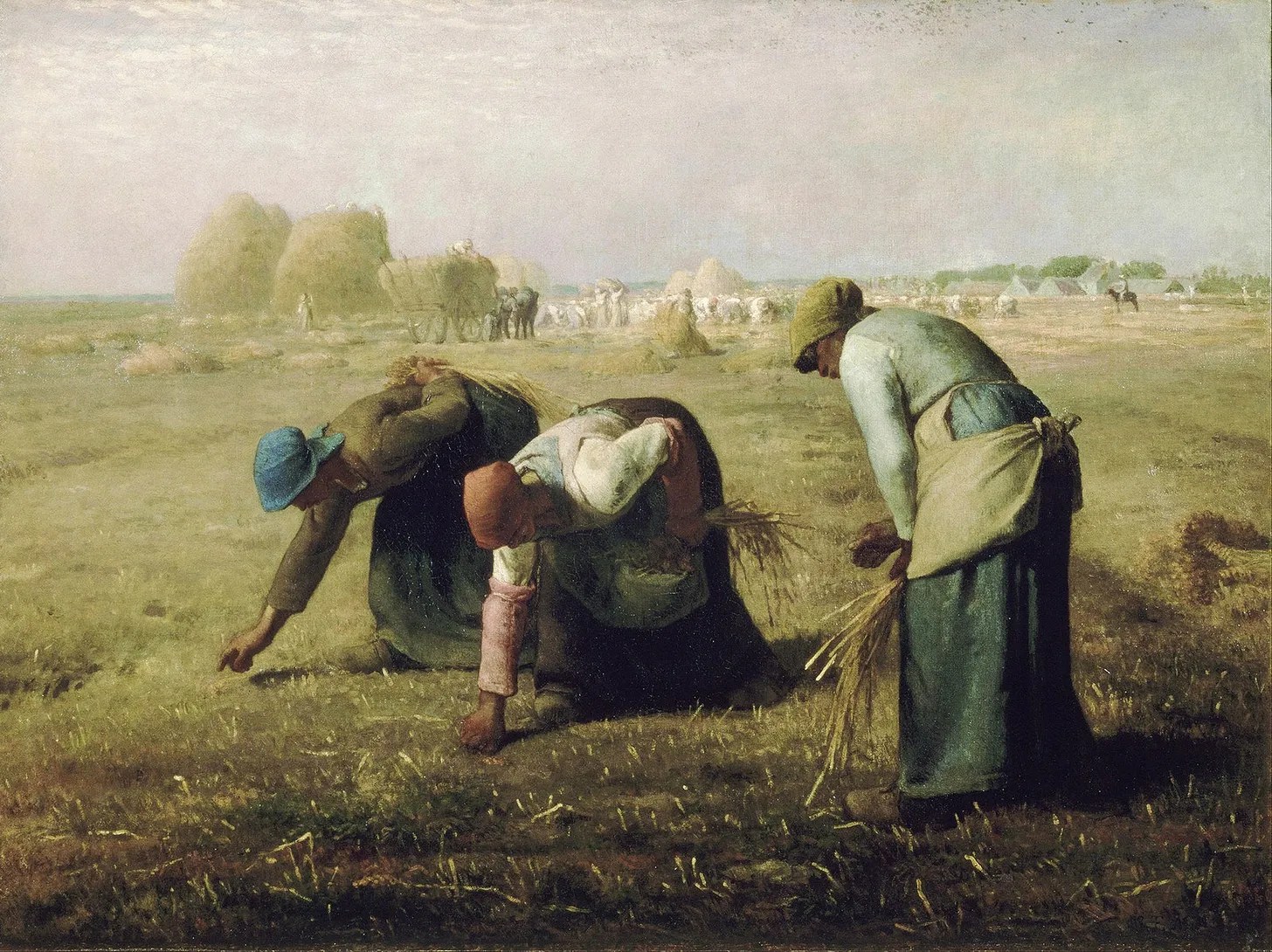
“The enclosure of the commons inaugurates a new ecological order. Enclosure did not just physically transfer the control over grasslands from the peasants to the lord. It marked a radical change in the attitudes of society toward the environment.”*…
Several days ago, juries in New Mexico and California found Facebook/Meta (and in California, also YouTube/Google) guilty of knowingly employing algorithms to serve content to minors that caused depression, anxiety, and other mental health harms… behavior par for the course of the (massive, “mechanical”) extractive behavior that is their business model. As NPR reports (on the California verdict):
While the financial punishment is miniscule for companies each worth trillions of dollars, the decision is still consequential. It represents the first time a jury has found that social media apps should be treated as defective products for being engineered to exploit the developing brains of kids and teenagers… The outcome of this case could influence thousands of other consolidated cases against the social media companies. The litigation has drawn comparisons to the legal crusade in the 1990s against Big Tobacco, which forced the industry to to stop targeting minors with advertising…
L. M. Sacasas draws on a comparison to the English “enclosure movement” (and here) to put the stakes of this battle against algorithmic extraction into historical context…
If you were to ask me something like “What’s the most urgent task before us?” or “What counsel do you have to offer in this cultural moment?” I would say this:
Resist the enclosure of the human psyche.
Don’t misunderstand me. I’m sure there are other necessary and urgent tasks. But this would be my contribution to the conversation. I would be offering not only an imperative to pursue, but also, and perhaps more importantly, an analogy to clarify and interpret the techno-economic forces at play in a digitized society. Such analogies or concepts can be useful. They can crystalize a certain understanding of the world and catalyze action and resolve. They can be a rallying cry.
In any case, I’ll say it again: resist the enclosure of the human psyche.
Some of you may immediately intuit the force of the analogy, but I suspect it needs a little unpacking.
Here’s the short version: I’m drawing an analogy between a historical development known as the enclosure of the commons and the condition of the human psyche in the context of a digitized society. The enclosure of the commons is the name given to the centuries-long process by which lands available to the many were turned into a resource to be managed and extracted by the few. My claim is that structurally similar processes are unfolding with the aim of enclosing the human psyche and transforming it into a resource to be managed and extracted…
The longer version, which follows, unpacks that analogy and explains what the impact of “enclosing the human psyche” could– would likely– be. Sacasas concludes…
… The individual human psyche does not seem like a thing held in common. But, in fact, that presumption may itself be a symptom of the enclosure of the psyche, although there are certainly many other forces leading toward that same conclusion. What if the psyche were a thing held in common? That is to say, what if our purchase on reality and the emergence of the self depended on human relationships and communities? From this perspective, the enclosure of the human psyche deprives us of a common world, which yields an experience of solidarity and belonging.
I’ve elsewhere developed this point at greater length, but here I’ll only note Hannah Arendt’s warning that we are deprived of a “truly human life” when we are “deprived of the reality that comes from being seen and heard by others, to be deprived of an ‘objective’ relationship with them that comes from being related to and separated from them through the intermediary of a common world of things.”
That last bit about a common world of things, a material, not only virtual world, is key. The logic of enclosure seeks to lock us into a private virtual world of “bespoke realities,” thus excluding us from the common world of things that yields as well a public consciousness. As Arendt put it, “Only the experience of sharing a common human world with others who look at it from different perspectives can enable us to see reality in the round and to develop a shared common sense.”…
Eminently worth reading in full: “The Enclosure of the Human Psyche“
* Ivan Illich, “Silence is a commons” in In the Mirror of the Past (to which Sacasas alludes in the essay linked above)
###
As we cosset commons, we might recall that it was on this date in 1867 that a bilateral treaty was signed effecting the sale of Alaska by Russia to the United States. It was ratified on May15 and American sovereignty took effect on October 18 of that year. The price for the 586,412 square miles that changed hands was $7.2 million in 1867 (equivalent to about $132 million in 2024), or about $0.02 per acre ($0.37 per acre in 2024).
Relevantly to the piece above, the land was and is largely commonly held, by the federal government, by the state, and by Native American tribes. Only roughly 1% of Alaska is in private hands. But that sliver is growing as the Trump Administration moves to “liquidate” federal real estate holdings (sell them to private owners) and in the meantime, licenses huge swathes of Alaska for oil and gas development, mineral extraction, and the infrastrucutre (roads, pipelines) needed to service them. Alaskans are worried.

“Can one desire too much of a good thing?”*…

In his wonderful newsletter, The Convivial Society, L. M. Sacasas wonders if the success, and thus proliferation, of language in the world around us has undermined its effectiveness…
Close to the start of the year, I reflected on the plight of language under digital conditions. I was motivated by the sense that “something of consequence is happening to ordinary language, the lifeblood of human thought and action, under digital conditions.” More specifically, I proposed the following thesis: “that having built our political structures on the assumption that human experience and human society can be ordered by human language and speech, we may now be suffering through the discovery that the world we have built is no longer responsive to either.”
To put this in parlance that has grown increasingly familiar in the intervening months, the human-built world is already unaligned to human values and well-being because it operates at a scale and according to a logic that elude our comprehension and confound our agency. And this is so largely because it exists beyond the reach of ordinary language. The realm of speech, specifically its public and thus political quarters, increasingly becomes the realm of exasperating and maddening futility. And we may all be forgiven for feeling as if we are the idiots whose words, however full of sound and fury, finally signify nothing, and, more to the point, effect no change in the world.
Just as in the modern West faith was deemed too irrational and volatile for the public sphere and thus relegated to the relative obscurity of private life, so now it seems that language itself is being likewise banished to the realm of the private, which is to say that, whatever pretenses to the contrary, real power no longer resides in ordinary human speech. We are not ruled by words but by formulas and algorithms and those who wield them…
… now, nearly a year later and after an unplanned hiatus, I find myself serendipitously drawn back to the theme of language but from a different angle: from the perspective of silence. The specific occasion has been my reading of The World of Silence, by the Swiss philosopher Max Picard.
Silence, like darkness, tends to be conceived chiefly as an absence, as nothing in itself. Darkness is merely the absence of light and, likewise, silence is merely the absence of sound. Considered this way, it’s tempting to imagine darkness and silence both as negations of some more positive reality. Light is to be preferred to darkness, and sound to silence. We bear this out when, if darkness or silence threaten, we instinctively flood our living spaces with both light and sound.
Not surprisingly, I suppose, it is hard to describe in words what I have chiefly learned from Picard. But if I were to try, it is this idea—which became more than idea, something sensible to me—that silence is what Picard called an autonomous reality, it is something of itself and not merely a negation, and, critically, that it is part of the nature of silence to be a vital, renewing force from whose absence we suffer more than we know.
…
Picard asserts that “silence is the only phenomenon today that is ‘useless’.” “It does not fit into the world of profit and utility,” he continues, “it simply is. It seems to have no other purpose; it cannot be exploited.”
This uselessness is precisely what gives silence, in Picard’s view, its healing quality. Consider these words:
“Yet there is more help and healing in silence than in all the ‘useful things’. Purposeless, unexplainable silence suddenly appears at the side of the all-too-powerful, and frightens us by its very purposelessness. It interferes with the regular flow of the purposeful. It strengthens the untouchable, it lessens the damage inflicted by exploitation. It makes things whole again, by taking them back from the world of dissipation into the world of wholeness.”
This wholeness emerges from Picard’s metaphysical reflections on the nature of silence. At another point he speaks of silence as a substance that enters into us. That substance creates a buffer among the various, often conflicting realities within us. Our own contradictions must pass over the substance of silence before coming into contact with one another. In this way, silence is a substance protective of our inner life. Picard also suggests that “man is better able to endure things hostile to his own nature, things that use him up, if he has the silent substance within …. Technics in itself, life with machines, is not injurious unless the protective substance of silence is absent.”
These are not words to be analyzed. They are, I believe, simply to be contemplated, and their truth ascertained only in practice. But they struck me. They struck me for the promise Picard holds out of help and healing and wholeness. We live in a scattering time, to borrow a line from the poet Richard Wilbur. All the forces at play within us and without seem to be centrifugal forces, pulling us apart. I remain interested in understanding the nature of these forces. The critical conversation remains important. But I’m increasingly interested in how we might find and deploy alternative ways of being in the world. What are the practices that will sustain us? Silence may be just such a practice, and we may do well to experiment with whatever possibilities are afforded to us to enter into silence and to allow silence to enter into us…
Eminently worth reading in full: “The Thing That Is Silence.”
Bonus recommendation: Percival Everett‘s Dr. No, a “caper” novel about an “expert on nothing” (that’s to say, a brilliant mathematician who is an expert in his area of study: nothing) drawn into a plot to rob Fort Knox. As thought-provoking as it is entertaining– which is to say, tons.
[Image above: source]
* Rosalind, in Shakespeare’s As You Like It
###
As we query quietness, we might recall that it was on this date in 1936 that Billboard magazine published the first pop music chart– the “Music Popularity Chart”– based on record sales. A listing of the ten most popular records, it became a weekly feature in 1940 (as pictured below). It fluctuated in size from ten to 30 records until 1955, when Billboard introduced its first Top 100 chart. The “Hot 100” chart, now recognized as the definitive singles chart in the US, was first published on August 4th, 1958.

You must be logged in to post a comment.