Posts Tagged ‘anatomy’
“Is life worth living? It all depends on the liver.”*…

These days, we tend to believe that the heart and the brain are the crucial human organs. It wasn’t always so– in medicine nor, as this article in Hepatology Communications explains, in literature and the arts…
Hepatocentrism was a medical doctrine that considered the liver the center of the whole human being. It originated in ancient populations (Mesopotamic civilization) and persisted in Western countries until the seventeenth century. Hidden references to hepatocentrism may be found in artistic representations and literary works, from the myth of Prometheus in the Greco‐Roman world to the crucifixion iconography throughout the Middle Ages. In the mid‐1600s, fundamental discoveries irrefutably demonstrated the central role of the heart in human physiology, which laid the foundations for creating cardiocentrism, shifting the life’s center from the liver to the heart. The advent of cardiocentrism immediately restricted the importance given to the liver, favoring the heart in the fine arts. Nevertheless, the liver maintained its importance in literature and popular belief as is evidenced by the widely acclaimed literary texts “Snow White” by the Brothers Grimm, “Moby Dick” by Herman Melville, and “Ode to the Liver” by Pablo Neruda. Our aim is to analyze the most significant artistic representations and literary works that contain references to hepatocentrism, evaluating the changing ideas and beliefs regarding the role and function of the liver throughout history. We want to underline the tight relationship between art and medicine; fine art and literature could be a valuable source for understanding the history of hepatology…
Fascinating: “‘I Miss My Liver.’ Nonmedical Sources in the History of Hepatocentrism,” from @HepCommJournal. (via Robin Sloan)
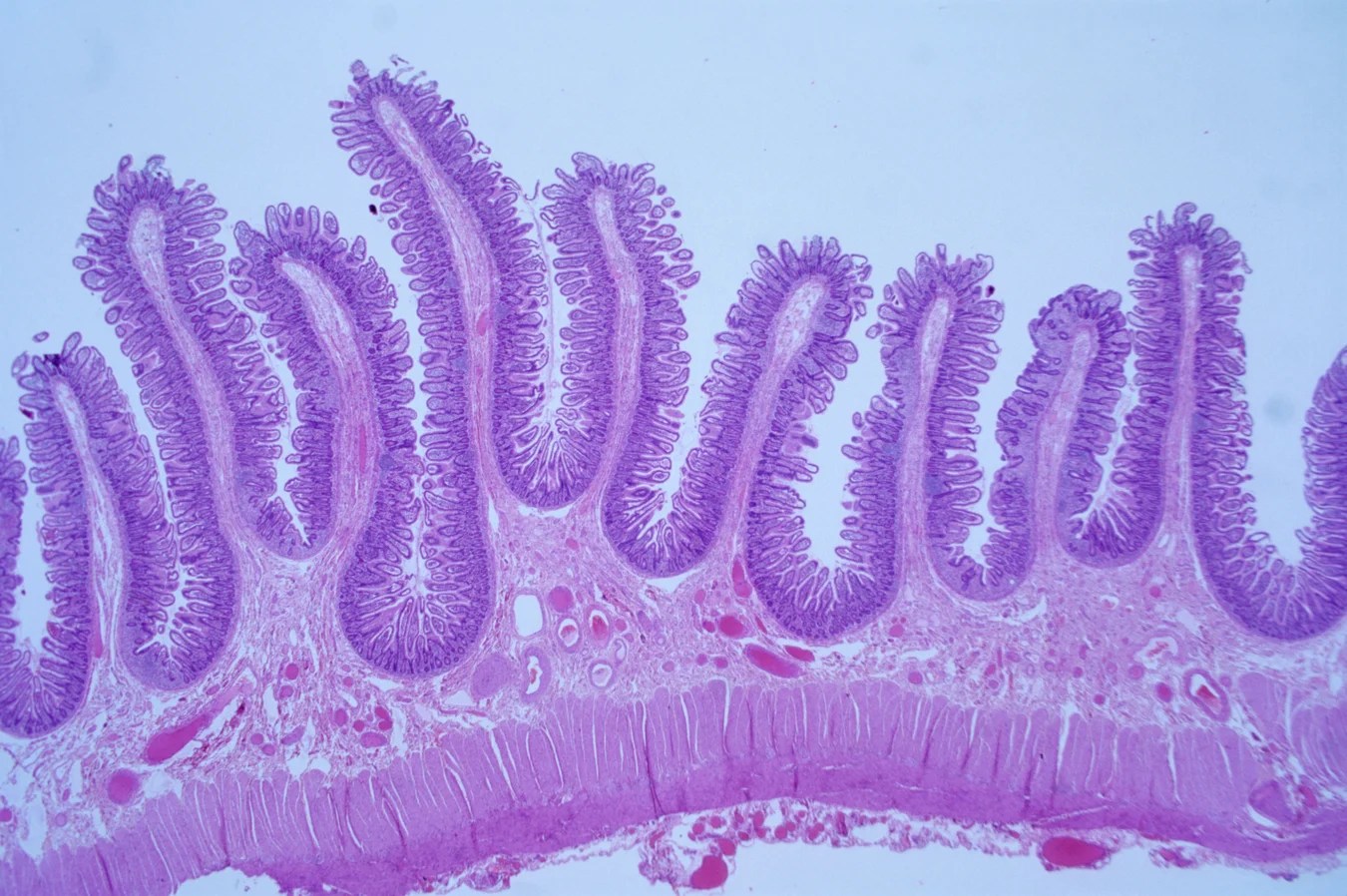
(Image above: source)
* William James
###
As we analyze anatomical art, we might send well-seasoned birthday greetings to Cat Cora; she was born on this date in 1967. A chef, restaurateur, television personality, and cookbook author, she made television history in 2005 as the first female Iron Chef, joining Bobby Flay, Mario Batali and Masaharu Morimoto on the first season of Food Network’s Iron Chef America, ultimately spending 10 seasons on the show.
She sautes a mean liver.

“Our mental models aren’t reality. They are tools… The tool is not reality. The key is knowing the difference.”*…
Medical researchers have found a network of fluid-filled spaces that they’d not really noticed before in connective tissue all over the body: below the skin’s surface; lining the digestive tract, lungs, and urinary systems; and surrounding muscles. It amounts, some argue, to a new “organ.” In any case, Jennifer Brandel suggests, it has much to teach us about our relationship with the world at large…
In 2018, scientists discovered a new organ (?) in the human body. You’d think after centuries of cutting ourselves open, we’d know the intimate details of the structures within us by now. Strangely, this body part wasn’t missed because it was invisible; it was overlooked because of what our belief systems wouldn’t let us perceive.
Until quite recently, if doctors wanted to study human tissue from a living person, they had to remove it first. Then they’d essentially mummify it: drying, freezing, slicing, and fixing it on a slide so they could peer at its shriveled dead form under a microscope to ascertain what was happening at a cellular level. As a result, scientists and doctors were taught in medical school that collagen tissue is essentially a dense wall: a barrier.
But a new endoscope, a microscope that snakes into the body through one of two holes (pie- or butt-), now enables us to see and study living tissue inside a breathing body with a beating heart. And once this special endoscope shone its light just below the skin into the collagen layer, it revealed something much more like a sponge than a wall, with fluid rushing between a fractal, honeycombed network.
The ‘they,’ here, of course doesn’t include everyone. Where Western, allopathic medicine focuses on isolating and treating symptoms, Traditional Chinese Medicine has for 2,500 years looked at the body as a dynamic, fluid-oriented system, and takes a more holistic approach to understanding root causes of discomfort and disease. Western doctors and scientists have often lacked the rubric to appreciate the efficacy of acupuncture, despite studies by reputable bodies like the NIH showing its measurable benefits.
Nor have Western doctors come to fully understand and appreciate the role of fascia — the dense collagen network that supports the structure of our musculature and keeps our bones and body aligned. Rolfers, Osteopaths, myofascial workers have been working for years with fascia structure and the fluid within it, looking at the health of the entire body through a lens of interconnection, dependent relationships, and movement.
We now have a shared language, or at least a word, for this system — or this organ, or this infrastructure (depending on whom you ask) — that’s been revealed as a fluid-filled superhighway spanning the entire body. It’s called: the interstitium. It’s such a new word that my autocorrect feature keeps wanting me to change it to “interstitial.”
… The structure of the interstitium is fractal; it exhibits the same pattern at various scales. It’s unified. While scientists had seen glimpses of this mesh-like network before, they had not realized that it connected the entire body — just underneath the skin, and wrapping around organs, arteries, capillaries, veins, head to toes. It’s juicy. It moves four times more fluid through the body than the vascular system does. The fluid isn’t blood, it’s a clear and “pre-lymphatic” substance, carrying within it nutrients, information, and new kinds of cells that are only just being discovered. It’s also a conduit for cancer spread. Turns out that cancer cells moving through the interstitium’s channels are fast.

In short: it’s very important. And it’s wild that, although the interstitium can be seen with the naked eye during surgery, it wasn’t really noticed until now. There is an entire scientific revolution set to unfurl as more studies are peer-reviewed and more science books and classrooms integrate its existence into their cosmologies. We are at the beginning of it all.
…
The reason I’m so hyped about this discovery, despite my last science class having been decades ago, is that the interstitium is a conceptual skeleton key, unlocking a more sophisticated, accurate way of seeing everything in the environment.
In the early modern period, Western scientists conceived of the world in terms of parts, of individuals. Everything was seen as a unit. A molecule, a cell, an organ, a person, a … noun. That’s no accident. The microscope plays an outsized role.
Before microscopes were invented, the composition of the body was a matter of philosophical debate. Aristotle, for instance, believed that the heart was the seat of intelligence and that the brain was a cooling mechanism for the blood. There were long-held beliefs attributed to divine influences, and diseases and recoveries were due to the favor or wrath of deities.
But once the microscope came along, it ushered in a worldview premised on individual identity. The first eyes to peer through those early eyepieces spotted what looked like empty boxes. English scientist Robert Hooke in 1665 coined them as “cells” because they reminded him of the small rooms where monks lived in monasteries. This formative moment led to a worldview called “cell-doctrine” — focusing on things — cells, this basic unit of life from which all living things are composed. Similar cells bundle to form tissues, which then cooperate to form organs, which then carry out the functions necessary to sustain the life of an organism, was how the thinking has gone.
We didn’t pay attention to all of the dynamic, fluid phenomenon, unseen and in between, which connects the organs to one another, and allows the whole system to communicate and stay in homeostasis.
And we grafted this same thinking onto how we organize labor and society. Similar people bundle to form departments, which then cooperate to form companies, which then carry out the functions to sustain our collective communities, countries and world. The enforcement of this model starts young. We ask children, “what do you want to be when you grow up?”, not “how do you want to be when you grow up?” We divide knowledge into subjects, disciplines, majors, then sectors and industries and specific job titles.
We need more navigators skipping between these constructed categories to subvert and replace a perspective of separation that has reached its limits and logical conclusion.
…
“We perceive only that part of nature that our technologies permit,” writes Scott F. Gilbert, Jan Sapp, and Alfred I. Tauber, “and so too, our theories about nature are highly constrained to what our technologies enable us to observe.” In other words, our cosmologies, worldviews, conceptions of the environment and how it works, are limited or expanded by what we can perceive. Our experiences then transmute into the metaphors and grammar that organize our thoughts. New language gives us new worldviews.
The Potawatomi plant ecologist, writer and an actual MacArthur fellow, Robin Wall Kimmerer, writes in Braiding Sweetgrass, “Science can be a language of distance which reduces a being to its working parts; it’s a language of objects.” And in Orion she writes, “The relationship between the structure of a language and the behavior characteristic of a culture, is not a causal one, but many linguists and psychologists agree that language reveals unconscious cultural assumptions and exerts some influence over patterns of thought.”
She wonders, “Can we make a new world with new words?”
Which makes me wonder, how can we activate and apply this new word, interstitium, to harness its meaning and power beyond biology? What will it take to find ways of seeing, languaging and remunerating interstitionary work, so our systems have a chance at correcting and finding balance? No one sector, industry or organization will be able to solve the wicked problems we face in challenges like climate or poverty or corruption…
Re-understanding human biology– and our place in the world: “Invisible Landscapes,” from @JenniferBrandel in @Orion_Magazine.
Listen to the Radiolab episode to which this essay is a companion here.
Learn more about the interstitium in “Meet Your Interstitium, a Newfound ‘Organ’” (source of the image at the top).
* Ed Catmull
###
As we reorient, we might spare a thought for Mary Leakey; she died on this date in 1996. A archaeologist and paleontologist, she made several of the most important fossil finds subsequently interpreted and publicized by her husband, the noted anthropologist Louis Leakey. For every vivid claim made by Louis about the origins of man, the supporting evidence tended to come from Mary’s scrupulous scientific approach. As “the woman who found our ancestors”, Mary’s work in East Africa shed new light on human evolution.
After Louis’ death in 1972, she enjoyed her most spectacular find: three trails of fossilized hominid footprints 3.6 million years old, which she discovered at Laetoli in Tanzania (1978-9) showing man’s ancestors were walking upright at a much earlier period than previously believed.

“You are the music while the music lasts”*…

Composer (and Stanford professor) Jonathan Berger explains how music works its magic on our brains…
One evening, some 40 years ago, I got lost in time. I was at a performance of Schubert’s String Quintet in C major. During the second movement I had the unnerving feeling that time was literally grinding to a halt. The sensation was powerful, visceral, overwhelming. It was a life-changing moment, or, as it felt at the time, a life-changing eon.
It has been my goal ever since to compose music that usurps the perceived flow of time and commandeers the sense of how time passes. Although I’ve learned to manipulate subjective time, I still stand in awe of Schubert’s unparalleled power. Nearly two centuries ago, the composer anticipated the neurological underpinnings of time perception that science has underscored in the past few decades.
The human brain, we have learned, adjusts and recalibrates temporal perception. Our ability to encode and decode sequential information, to integrate and segregate simultaneous signals, is fundamental to human survival. It allows us to find our place in, and navigate, our physical world. But music also demonstrates that time perception is inherently subjective—and an integral part of our lives. “For the time element in music is single,” wrote Thomas Mann in his novel, The Magic Mountain. “Into a section of mortal time music pours itself, thereby inexpressibly enhancing and ennobling what it fills.”
We conceive of time as a continuum, but we perceive it in discretized units—or, rather, as discretized units. It has long been held that, just as objective time is dictated by clocks, subjective time (barring external influences) aligns to physiological metronomes. Music creates discrete temporal units but ones that do not typically align with the discrete temporal units in which we measure time. Rather, music embodies (or, rather, is embodied within) a separate, quasi-independent concept of time, able to distort or negate “clock-time.” This other time creates a parallel temporal world in which we are prone to lose ourselves, or at least to lose all semblance of objective time.
In recent years, numerous studies have shown how music hijacks our relationship with everyday time…
The fascinating story of “How Music Hijacks Our Perception of Time,” in @NautilusMag.
* T. S. Eliot
###
As we tangle with tempo, we might spare a thought for Charles Sumner Tainter; he died on this date in 1940. A scientific instrument maker, engineer, and inventor, he is best known for his collaborations with Alexander Graham Bell, and for his significant improvements to Thomas Edison’s phonograph, resulting in the Graphophone— which, beyond bringing music to living rooms around the world by making Edison’s idea commercially feasible, also spawned the Dictaphone.

“Simplicity is the ultimate sophistication”*…

Sometimes less is more…
Scientists have identified evolutionary modifications in the voice box distinguishing people from other primates that may underpin a capability indispensable to humankind – speaking.
Researchers said… an examination of the voice box, known as the larynx, in 43 species of primates showed that humans differ from apes and monkeys in lacking an anatomical structure called a vocal membrane – small, ribbon-like extensions of the vocal cords.
Humans also lack balloon-like laryngeal structures called air sacs that may help some apes and monkeys produce loud and resonant calls, and avoid hyperventilating, they found.
The loss of these tissues, according to the researchers, resulted in a stable vocal source in humans that was critical to the evolution of speech – the ability to express thoughts and feelings using articulate sounds. This simplification of the larynx enabled humans to have excellent pitch control with long and stable speech sounds, they said.
…
Sound production mechanisms in people and nonhuman primates are similar, with air from the lungs driving oscillations of the vocal cords. Acoustical energy generated this way then passes through the pharyngeal, oral and nasal cavities and emerges in a form governed by the filtering of specific frequencies dictated by the vocal tract.
“Speech and language are critically related, but not synonymous,” said primatologist and psychologist Harold Gouzoules of Emory University in Atlanta, who wrote a commentary in Science accompanying the study. “Speech is the audible sound-based manner of language expression – and humans, alone among the primates, can produce it.”
Paradoxically, the increased complexity of human spoken language followed an evolutionary simplification.
“I think it’s pretty interesting that sometimes in evolution ‘less is more’ – that by losing a trait you might open the door to some new adaptations,” Fitch said…
“Pivotal evolutionary change helped pave the way for human speech,” from Will Dunham @Reuters.
[Image above: source]
* Leonardo da Vinci
###
As we simpify, we might send thoughtfully-analyzed birthday greetings to Karl Gegenbaur; he was born on this date in 1826. An anatomist and professor, he was the first to demonstrate that the field of comparative anatomy offers important evidence supporting of the theory of evolution— of which, he became one of Europe’s leading proponents.
Gegenbaur’s book Grundzüge der vergleichenden Anatomie (1859; English translation: Elements of Comparative Anatomy) became the standard textbook, at the time, of evolutionary morphology, emphasizing that structural similarities among various animals provide clues to their evolutionary history. In a way that prefigured the research featured above, Gegenbaur noted that the most reliable clue to evolutionary history is homology, the comparison of anatomical parts which have a common evolutionary origin.

“The body is our general medium for having a world”*…

The biggest component in any human, filling 61 percent of available space, is oxygen. It may seem a touch counterintuitive that we are almost two-thirds composed of an odorless gas. The reason we are not light and bouncy like a balloon is that the oxygen is mostly bound up with hydrogen (which accounts for another 10 percent of you) to make water — and water, as you will know if you have ever tried to move a wading pool or just walked around in really wet clothes, is surprisingly heavy. It is a little ironic that two of the lightest things in nature, oxygen and hydrogen, when combined form one of the heaviest, but that’s nature for you. Oxygen and hydrogen are also two of the cheaper elements within you. All of your oxygen will set you back just $14 and your hydrogen a little over $26 (assuming you are about the size of Benedict Cumberbatch). Your nitrogen (2.6 percent of you) is a better value still at just forty cents for a body’s worth. But after that it gets pretty expensive.
You need about thirty pounds of carbon, and that will cost you $69,550, according to the Royal Society of Chemistry. (They were using only the most purified forms of everything. The RSC would not make a human with cheap stuff.) Calcium, phosphorus, and potassium, though needed in much smaller amounts, would between them set you back a further $73,800. Most of the rest is even more expensive per unit of volume, but fortunately only needed in microscopic amounts.
Thorium costs over $3,000 per gram but constitutes just 0.0000001 percent of you, so you can buy a body’s worth for thirty-three cents. All the tin you require can be yours for six cents, while zirconium and niobium will cost you just three cents apiece. The 0.000000007 percent of you that is samarium isn’t apparently worth charging for at all. It’s logged in the RSC accounts as costing $0.00.
Of the fifty-nine elements found within us, twenty-four are traditionally known as essential elements, because we really cannot do without them. The rest are something of a mixed bag. Some are clearly beneficial, some may be beneficial but we are not sure in what ways yet, others are neither harmful nor beneficial but are just along for the ride as it were, and a few are just bad news altogether. Cadmium, for instance, is the twenty-third most common element in the body, constituting 0.1 percent of your bulk, but it is seriously toxic. We have it in us not because our body craves it but because it gets into plants from the soil and then into us when we eat the plants. If you are from North America, you probably ingest about eighty micrograms of cadmium a day, and no part of it does you any good at all.
A surprising amount of what goes on at this elemental level is still being worked out. Pluck almost any cell from your body, and it will have a million or more selenium atoms in it, yet until recently nobody had any idea what they were there for. We now know that selenium makes two vital enzymes, deficiency in which has been linked to hypertension, arthritis, anemia, some cancers, and even, possibly, reduced sperm counts. So, clearly it is a good idea to get some selenium inside you (it is found particularly in nuts, whole wheat bread, and fish), but at the same time if you take in too much you can irremediably poison your liver. As with so much in life, getting the balances right is a delicate business.
Altogether, according to the RSC, the full cost of building a new human being, using the obliging Benedict Cumberbatch as a template, would be a very precise $151,578.46. … That said, in 2012 Nova, the long-running science program on PBS, did an exactly equivalent analysis for an episode called ‘Hunting the Elements’ and came up with a figure of $168 for the value of the fundamental components within the human body…
An excerpt from Bill Bryson’s The Body: A Guide for Occupants, via the ever-illuminating Delanceyplace.com: “How much, in materials, would it cost to build a human body?“
* Maurice Merleau-Ponty, Phenomenology of Perception
###
As we take our vitamins, we might we might send dynamically-evolved birthday greetings to Stephen Jay Gould; he was born on this date in 1941. One of the most influential and widely read writers of popular science in his generation (e.g., Ever Since Darwin, The Panda’s Thumb), Gould was a highly-respected academic paleontologist, evolutionary biologist, and historian of science. With Niles Eldridge, he developed the theory of “punctuated equilibrium,” an explanation of evolution that suggests (in contrast with the gradualism that was prevalent until then) that most evolution is marked by long periods of evolutionary stability, which are interrupted– “punctuated”– by rare instances of branching evolution (c.f., the Burgess Shale).
Scientists have power by virtue of the respect commanded by the discipline… We live with poets and politicians, preachers and philosophers. All have their ways of knowing, and all are valid in their proper domain. The world is too complex and interesting for one way to hold all the answers.
Stephen Jay Gould, Bully for Brontosaurus: Reflections in Natural History

You must be logged in to post a comment.