Posts Tagged ‘Fossils’
“Nature uses only the longest threads to weave her patterns, so that each small piece of her fabric reveals the organization of the entire tapestry”*…

More than 70 years ago, mathematician Alan Turing proposed a mechanism that explained how patterns could emerge from bland uniformity. As Amber Dance explains, scientists are still using his model — and adding new twists — to gain a deeper understanding of animal markings…
There’s a reason fashion designers look to animal prints for inspiration. Creatures have evolved a dizzying array of patterns: stripes, spots, diamonds, chevrons, hexagons and even mazelike designs. Some, like peacocks, want to be seen, to attract a mate or scare off a rival or predator. Others, like tigers or female ducks, need to blend in, either to sneak up on prey or to avoid becoming lunch themselves.
Some patterns arise simply or randomly, but others develop via complex, precise interactions of pattern-generating systems. Their beauty aside, the intricacies of these systems are inspiring the scientists who aim to elucidate how the tiger got its stripes, the cheetah its spots and more besides.
Mammals like cats and dogs can have white tummies. They get them in a straightforward way: As the embryo develops, pigment-making cells originate along the site of the future spine and migrate down and around toward the belly. But sometimes they don’t make it all the way. Where the pigment cells run out of steam, the white begins.
The black dots on Dalmatians are generated randomly. So are the black-and-orange splotches on calico cats.
But the stripes of chipmunks and tigers, the speckles on fishes and chickens, and many other glorious animal features are laid down with exquisite precision. In a remarkable feat of self-organization, a uniform surface becomes patterned.
The person who figured out how this happens was Alan Turing [here]. You may know him as the 20th century mathematician who broke Nazi codes during World War II and developed early concepts in artificial intelligence.Turing also turned his math skills to understanding how regular features could emerge on the developing embryo. Scientists since then have applied his equations to the development of such patterns as fingerprint ridges, the places where hairs will sprout, and color patterns like stripes and spots.And it turns out he was really onto something: Today, scientists studying animal patterns still find Turing’s ideas to be remarkably effective — especially when combined with other factors that elaborate the patterns further….
A colorful tour of what scientists are learning today, starting with Turing’s theory: “Spots, stripes and more: Working out the logic of animal patterns,” from @amberldance in @KnowableMag.
* Richard Feynman
###
As we contemplate coloring, we might spare a thought for Emanuel Mendes da Costa; he died on this date in 1791. A naturalist, he published A Natural History of Fossils in 1757 and served as clerk (from 1763) to the Royal Society– from which he embezzled membership funds to indulge his reckless penchant for collecting. When caught in 1767, the treasury was short by £1500—a substantial amount in those years. He confessed; his collections were auctioned to make restitution; but he was still sentenced for five years to debtor’s prison. After release he scraped by, with lecturing about fossils, translating, and trading in mineral, fossil and shell specimens. He wrote two books on shells and was perhaps the first to coin the word conchology. Still impoverished, he died in penury.

“Our mental models aren’t reality. They are tools… The tool is not reality. The key is knowing the difference.”*…
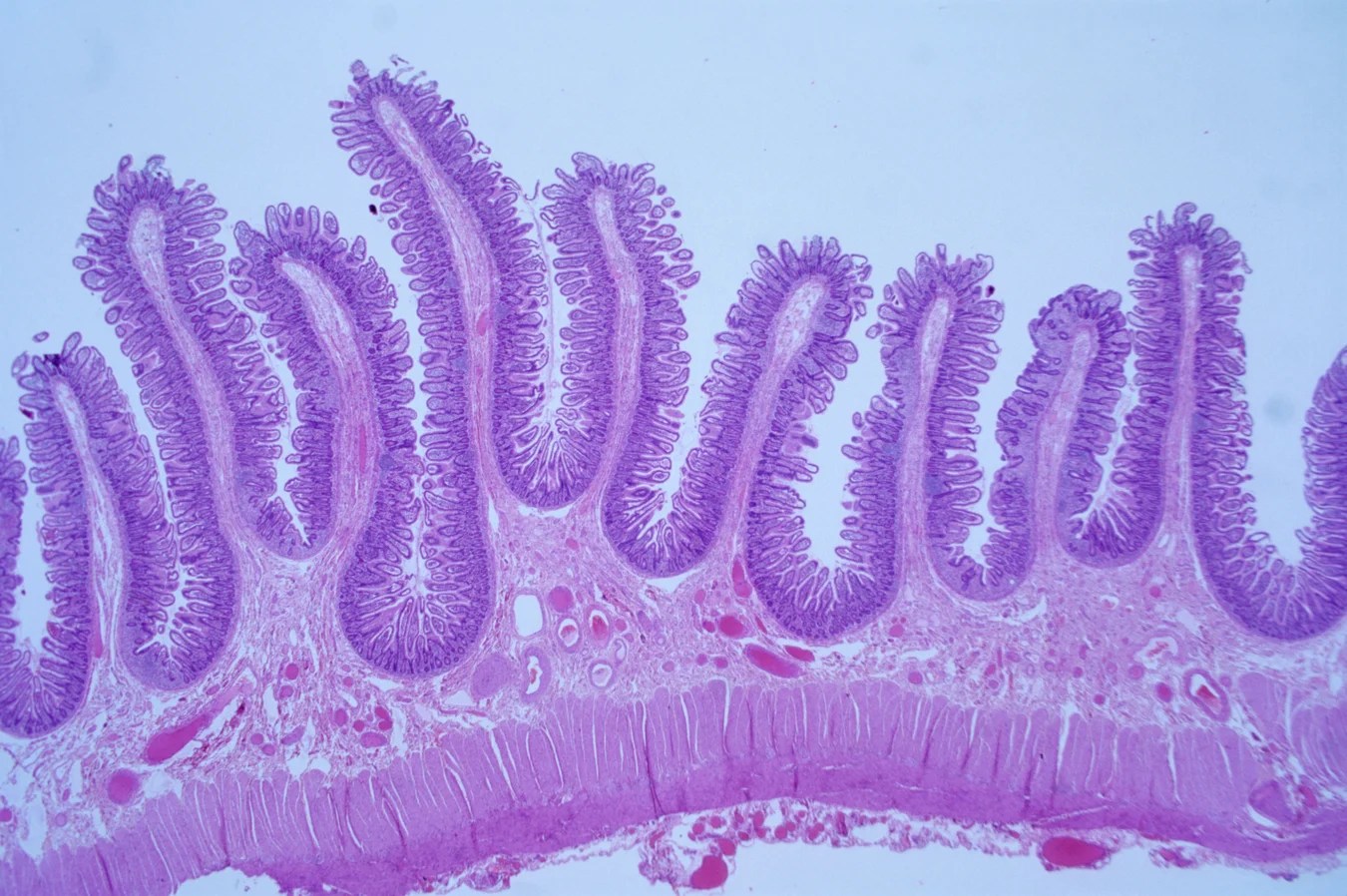
Medical researchers have found a network of fluid-filled spaces that they’d not really noticed before in connective tissue all over the body: below the skin’s surface; lining the digestive tract, lungs, and urinary systems; and surrounding muscles. It amounts, some argue, to a new “organ.” In any case, Jennifer Brandel suggests, it has much to teach us about our relationship with the world at large…
In 2018, scientists discovered a new organ (?) in the human body. You’d think after centuries of cutting ourselves open, we’d know the intimate details of the structures within us by now. Strangely, this body part wasn’t missed because it was invisible; it was overlooked because of what our belief systems wouldn’t let us perceive.
Until quite recently, if doctors wanted to study human tissue from a living person, they had to remove it first. Then they’d essentially mummify it: drying, freezing, slicing, and fixing it on a slide so they could peer at its shriveled dead form under a microscope to ascertain what was happening at a cellular level. As a result, scientists and doctors were taught in medical school that collagen tissue is essentially a dense wall: a barrier.
But a new endoscope, a microscope that snakes into the body through one of two holes (pie- or butt-), now enables us to see and study living tissue inside a breathing body with a beating heart. And once this special endoscope shone its light just below the skin into the collagen layer, it revealed something much more like a sponge than a wall, with fluid rushing between a fractal, honeycombed network.
The ‘they,’ here, of course doesn’t include everyone. Where Western, allopathic medicine focuses on isolating and treating symptoms, Traditional Chinese Medicine has for 2,500 years looked at the body as a dynamic, fluid-oriented system, and takes a more holistic approach to understanding root causes of discomfort and disease. Western doctors and scientists have often lacked the rubric to appreciate the efficacy of acupuncture, despite studies by reputable bodies like the NIH showing its measurable benefits.
Nor have Western doctors come to fully understand and appreciate the role of fascia — the dense collagen network that supports the structure of our musculature and keeps our bones and body aligned. Rolfers, Osteopaths, myofascial workers have been working for years with fascia structure and the fluid within it, looking at the health of the entire body through a lens of interconnection, dependent relationships, and movement.
We now have a shared language, or at least a word, for this system — or this organ, or this infrastructure (depending on whom you ask) — that’s been revealed as a fluid-filled superhighway spanning the entire body. It’s called: the interstitium. It’s such a new word that my autocorrect feature keeps wanting me to change it to “interstitial.”
… The structure of the interstitium is fractal; it exhibits the same pattern at various scales. It’s unified. While scientists had seen glimpses of this mesh-like network before, they had not realized that it connected the entire body — just underneath the skin, and wrapping around organs, arteries, capillaries, veins, head to toes. It’s juicy. It moves four times more fluid through the body than the vascular system does. The fluid isn’t blood, it’s a clear and “pre-lymphatic” substance, carrying within it nutrients, information, and new kinds of cells that are only just being discovered. It’s also a conduit for cancer spread. Turns out that cancer cells moving through the interstitium’s channels are fast.

In short: it’s very important. And it’s wild that, although the interstitium can be seen with the naked eye during surgery, it wasn’t really noticed until now. There is an entire scientific revolution set to unfurl as more studies are peer-reviewed and more science books and classrooms integrate its existence into their cosmologies. We are at the beginning of it all.
…
The reason I’m so hyped about this discovery, despite my last science class having been decades ago, is that the interstitium is a conceptual skeleton key, unlocking a more sophisticated, accurate way of seeing everything in the environment.
In the early modern period, Western scientists conceived of the world in terms of parts, of individuals. Everything was seen as a unit. A molecule, a cell, an organ, a person, a … noun. That’s no accident. The microscope plays an outsized role.
Before microscopes were invented, the composition of the body was a matter of philosophical debate. Aristotle, for instance, believed that the heart was the seat of intelligence and that the brain was a cooling mechanism for the blood. There were long-held beliefs attributed to divine influences, and diseases and recoveries were due to the favor or wrath of deities.
But once the microscope came along, it ushered in a worldview premised on individual identity. The first eyes to peer through those early eyepieces spotted what looked like empty boxes. English scientist Robert Hooke in 1665 coined them as “cells” because they reminded him of the small rooms where monks lived in monasteries. This formative moment led to a worldview called “cell-doctrine” — focusing on things — cells, this basic unit of life from which all living things are composed. Similar cells bundle to form tissues, which then cooperate to form organs, which then carry out the functions necessary to sustain the life of an organism, was how the thinking has gone.
We didn’t pay attention to all of the dynamic, fluid phenomenon, unseen and in between, which connects the organs to one another, and allows the whole system to communicate and stay in homeostasis.
And we grafted this same thinking onto how we organize labor and society. Similar people bundle to form departments, which then cooperate to form companies, which then carry out the functions to sustain our collective communities, countries and world. The enforcement of this model starts young. We ask children, “what do you want to be when you grow up?”, not “how do you want to be when you grow up?” We divide knowledge into subjects, disciplines, majors, then sectors and industries and specific job titles.
We need more navigators skipping between these constructed categories to subvert and replace a perspective of separation that has reached its limits and logical conclusion.
…
“We perceive only that part of nature that our technologies permit,” writes Scott F. Gilbert, Jan Sapp, and Alfred I. Tauber, “and so too, our theories about nature are highly constrained to what our technologies enable us to observe.” In other words, our cosmologies, worldviews, conceptions of the environment and how it works, are limited or expanded by what we can perceive. Our experiences then transmute into the metaphors and grammar that organize our thoughts. New language gives us new worldviews.
The Potawatomi plant ecologist, writer and an actual MacArthur fellow, Robin Wall Kimmerer, writes in Braiding Sweetgrass, “Science can be a language of distance which reduces a being to its working parts; it’s a language of objects.” And in Orion she writes, “The relationship between the structure of a language and the behavior characteristic of a culture, is not a causal one, but many linguists and psychologists agree that language reveals unconscious cultural assumptions and exerts some influence over patterns of thought.”
She wonders, “Can we make a new world with new words?”
Which makes me wonder, how can we activate and apply this new word, interstitium, to harness its meaning and power beyond biology? What will it take to find ways of seeing, languaging and remunerating interstitionary work, so our systems have a chance at correcting and finding balance? No one sector, industry or organization will be able to solve the wicked problems we face in challenges like climate or poverty or corruption…
Re-understanding human biology– and our place in the world: “Invisible Landscapes,” from @JenniferBrandel in @Orion_Magazine.
Listen to the Radiolab episode to which this essay is a companion here.
Learn more about the interstitium in “Meet Your Interstitium, a Newfound ‘Organ’” (source of the image at the top).
* Ed Catmull
###
As we reorient, we might spare a thought for Mary Leakey; she died on this date in 1996. A archaeologist and paleontologist, she made several of the most important fossil finds subsequently interpreted and publicized by her husband, the noted anthropologist Louis Leakey. For every vivid claim made by Louis about the origins of man, the supporting evidence tended to come from Mary’s scrupulous scientific approach. As “the woman who found our ancestors”, Mary’s work in East Africa shed new light on human evolution.
After Louis’ death in 1972, she enjoyed her most spectacular find: three trails of fossilized hominid footprints 3.6 million years old, which she discovered at Laetoli in Tanzania (1978-9) showing man’s ancestors were walking upright at a much earlier period than previously believed.

“Always carry a flagon of whiskey in case of snakebite and furthermore always carry a small snake.”*…

Your correspondent has to be away for a few days, so (Roughly) Daily will, for a time, be more roughly than daily… Regular service should resume on or around Thursday, August 10. Meantime, a little reminder of the extraordinary pageant that is life…
Amar Guriro on a community with a unique lifestyle…
… This is the mound of snake charmers, Jogi Daro, which was once situated about one-and-a-half kilometres away from Umerkot city [in Pakistan]. With Umerkot’s population swelling and new housing schemes having popped up to meet demand, Jogi Daro now finds itself part of the city proper.
Each house owns at least one black Indian cobra, but most actually own several snakes, including cobras, kraits and vipers, locally known as Lundi Bala. None of the serpents are defanged but children play with them as if they were toys. [Ustad Misri, snake charmer and chieftain of his tribe] says this is because a certain contract exists between the jogis and the serpents living with them.
“A snake cannot bite a jogi child, and even if it does, it will not harm our child since we administer a drop of snake venom as suti (first food) to our newborns. This establishes immunity against snake poison for their entire life,” claims Ustad Misri.
Jogis or snake charmers are a gypsy community in Sindh. They mostly wander around the entire year from one place to another, either in search of a livelihood or a snake…
The way of the snake: “Rule of the jogi,” from @amarguriro in @Dawn_News.
See also: “How did snakes lose their limbs? Mass genome effort provides clues,” from @ScienceMagazine.
* W. C. Fields
###
As we ponder partnerships, we might recall that it was on this date in 1769 that the Portolá expedition, a group of Spanish explorers led by Gaspar de Portolá, made the first written record of the tar pits in 1769. Father Juan Crespí wrote:
While crossing the basin, the scouts reported having seen some geysers of tar issuing from the ground like springs; it boils up molten, and the water runs to one side and the tar to the other. The scouts reported that they had come across many of these springs and had seen large swamps of them, enough, they said, to caulk many vessels. We were not so lucky ourselves as to see these tar geysers, much though we wished it; as it was some distance out of the way we were to take, the Governor [Portolá] did not want us to go past them. We christened them Los Volcanes de Brea [the Tar Volcanoes].
(The English name of the site is redundant, as “La Brea” comes from the Spanish word for “tar.”)
While evidence suggests that prehistoric native Americans used and traded the asphalt, the site is now noted for the fossils found there (first by Professor William Denton in 1875). Among the prehistoric Pleistocene species associated with the La Brea Tar Pits are Columbian mammoths, dire wolves, short-faced bears, American lions, ground sloths (predominantly Paramylodon harlani, with much rarer Megalonyx jeffersonii and Nothrotheriops shastensis), coyotes, ancient bison, and the state fossil of California, the saber-toothed cat (Smilodon fatalis)– largely dating from the last glacial period.

The eyes have it…
Two extraordinary repositories; two extraordinary new web visualization tools…
From The Smithsonian Institution’s National Museum of Natural History, the 3D Collection:
 Amud
Amud
Date of Discovery: 1961
Discovered by: Hisashi Suzuki
Age: About 41,000 years old
Fossil Name: Amud
Location of Discovery: Wadi Amud, Israel
The purpose of this collection [of 3D fossils and artifacts] is to allow you to view your favorite objects from our David H. Koch Hall of Human Origins and to help you share your museum experience with your friends and family. Before our exhibit opened, the objects on display were either CT or laser scanned. The scanning process enabled Human Origins Progam staff to generate 3D models of each object that you can view, rotate, and interact with online. It may take a minute or two to load depending on your computer, but after it is loaded you will be able to move the 3D object around by holding down the left-click button and moving your mouse.
And from the Vatican, the Virtual Reality Tour of the Sistine Chapel:

A virtual tour of Michelangelo’s masterwork — move around the space and inspect from any angle, using your mouse– designed by the Augustinian computer scientists at Villanova University.
As we marvel at time, at space, and at the technology that aims to tame them, we might recall that it was on this date in 1979 that operators failed to notice that a relief valve was stuck open in the primary coolant system of Three Mile Island’s Unit 2 nuclear reactor following an unexpected shutdown. Consequently, enough coolant drained out of the system to allow the core to overheat and partially melt down– the worst commercial nuclear accident in American history.
 Three Mile Island Nuclear Power Plant, near Harrisburg, PA
182 years earlier, on this date in 1797, Nathaniel Briggs (of New Hampshire) patented the first “washing machine,” known as the Box Mangler– a heavy frame containing a large box filled with rocks, resting on a series of long wooden rollers. Washing was laid flat on a sheet and wound round one of the rollers, then two people pulled on levers to move the heavy box back and forth over the rollers. While it was expensive, heavy, difficult to operate, and even then, jammed often, its failures never led to the evacuation of major population centers.

You must be logged in to post a comment.