Posts Tagged ‘research’
“Research is formalized curiosity. It is poking and prying with a purpose.”*…

First, internet search, then AI– we live in an age of ever-easier answers. But, of course, that bounty comes with two issues; most obviously, can we trust the answers we get? But as important as that is, it’s secondary to the other issue: what do we lose when we “outsource” the research? As Ben Franklin is reputed to have said (though it seems likelier to be a quote from he Xunzi, the works of Xun Kuang, a Chinese Confucian philosopher who lived the 4th century BC), “Tell me and I forget. Teach me and I remember. Involve me and I learn.”
Librarian Hana Lee Goldin is here to help, with an approach to building a map of where knowledge lives, and advice on how to find our way through it…
Suppose we want to understand why a freeway was built through a particular neighborhood and what happened to the people who lived there afterward. A search engine can surface articles about the project, while a chatbot can summarize those articles into one response. Neither interface necessarily reveals the full range of places where information about that history may exist. City planning records may explain how officials chose the route, while census tables can show how the neighborhood changed. A local archive may preserve residents’ letters or photographs from before construction, while later scholarship can connect that history to broader patterns of transportation policy and displacement.
Finding those materials involves more than searching for the right words because different kinds of information are organized and made discoverable in different ways. A library catalog contains structured records for books, journals, media, digital resources, and other materials, and it may also link to or include records for archival collections. An archive may organize thousands of records according to the person or institution that created or accumulated them, then describe groups of records rather than every individual document. A government data portal organizes measurements according to categories such as geography or reporting period, while a scholarly database helps us find research distributed across many publications. Each system is designed around different kinds of information and discovery, which means we may need to search each one differently.
That difference becomes easy to miss when many of these systems can be reached through the same general interfaces. A search engine can return a library record next to a government report, while an AI tool can synthesize information drawn from several kinds of sources into a single response. The access feels flattened even though the underlying information is still organized according to very different rules. When a search produces weak results, we may keep changing the keywords even though the larger problem is that we’re looking in the wrong place.
Before deciding what to search, then, we need to know what we’re trying to find. If we want to understand how the freeway route was approved, we need records of the decision-making process. If we want to know how the neighborhood’s population changed, we need measurements that allow us to compare the neighborhood before and after construction. Once we know what kind of information could answer each part of the question, we can ask who would have created or preserved that information and which research system is designed to help us find it.
What we need, then, is a way to see that larger research environment as a whole: the different kinds of places it contains, the roles those places play, and the paths that can carry a question from one to another. An atlas offers a model for doing that. An atlas can bring together different maps of the same territory, allowing us to see features and relationships that no single map can represent on its own.
From that model comes the Atlas of Learning, a framework for mapping the research environment itself. Instead of geographic territory, it maps where different kinds of information can be found, how those places and systems organize what they contain, and how we can move among them as a question develops. One part of the Atlas might show where original records are preserved, while another shows the systems through which published research can be discovered. Other parts can include places for structured learning or people whose expertise helps us find our way through systems we don’t yet know.
The routes among those parts are part of the Atlas too. A planning document may give us the formal name of an agency, while a scholarly article may give us a citation to an earlier source. An archival record may introduce the name of an organization whose records are preserved somewhere else. Those names, citations, institutions, and other clues allow one source to generate the next search.
The framework isn’t meant to contain every research resource that exists. It gives us a way to recognize different kinds of resources, understand what each can help us find, and see how one can lead toward another. As we discover new places and learn how to navigate them, we can add those destinations and routes to the Atlas ourselves.
Before so much of research converged onto a common screen, the form and setting of a resource often revealed what kind of knowledge we were entering: a card catalog described and located materials, a statistical yearbook gathered institutional measurements, and an archival collection placed us among the records of a person or organization. Those distinctions can become harder to see when a government report, library record, and generated response arrive through the same interface. Many parts of the research world can now be reached from the same screen, but that ease of access can make those parts look more interchangeable than they are.
The Atlas restores that larger view. Instead of presenting every resource as another result arriving through the same interface, it makes the different parts of the research environment visible in relation to one another. We can see which places are built for which kinds of questions and how a discovery in one part of the Atlas can open a route into another. As more of our information environment is encountered through common interfaces or generated responses, that layered view gives us back a sense of the terrain we’re moving through…
[Goldin unpacks the Atlas; explains how to find “routes” within it (and what to “pack” for the different “terrains” we will traverse); and offers a strategy for those occasions on which one finds oneself “stuck.” She concludes by explaining that, in fact, there is no one “master,” but rather a multiplicity of use-specific atlases…]
… An Atlas of Learning can begin whenever there is something we want to understand beyond a quick factual lookup. Each inquiry creates its own terrain because the places we need to visit depend on the question. A health question may take us through medical literature and public health agencies, while a historical question may lead toward archives, newspapers, or census records. The Atlas gives that particular inquiry a visible research environment of its own.
Because the Atlas is organized around a question, that question becomes the compass. It gives the research direction as new possibilities appear, helping us decide whether a newly discovered resource is relevant to what we’re trying to understand and what it might contribute to an answer. And it becomes the point we return to whenever the terrain grows more complicated, helping us recover our bearing and decide what to pursue next.
The working Atlas can be extremely lightweight. A spreadsheet, Notion page, mind map, document, or another information-management tool can all serve the same purpose. At minimum, we need the question, the research destinations that become relevant to answering it, and a brief note about what each can contribute. The form matters less than being able to look at the Atlas and see, at a glance, where this particular inquiry can go.
The Atlas represents the research terrain for a single question. It keeps the destinations connected to that question visible together, giving us a way to see the terrain as it develops and maintain our orientation within it. Something becomes part of the Atlas when it materially advances the inquiry, either by helping us answer the question or by opening a direction we may need to follow next. The result is a record of the sources and destinations that have become consequential to the research, rather than everything we happened to encounter along the way.
Building an Atlas gives us practice locating a question within a larger information environment and recognizing how different parts of that environment can help answer it. We also learn to follow connections as new territory appears and to find our bearings when the direction becomes uncertain. Taken together, those abilities form a kind of information literacy we can apply when we enter subjects we have never explored before.
With that practice, entering an unfamiliar subject becomes an act of orientation as much as discovery. We may begin with little sense of how knowledge about that subject is organized or where its records, research, and expertise reside, but we know that those structures are there to be found. As they come into view, the subject begins to acquire a geography of its own, one that we can learn to read even though we have never traveled through it before.
The Atlas of Learning is something we draw as each question opens a new research terrain around us. The destinations will change from one subject to the next, and the route will develop differently each time. What remains is the ability to look beyond the interface in front of us and see a larger world of places we can learn to navigate…
Mapping where knowledge lives: “The Atlas of Learning.”
And because we will continue to use online search in our research, this earlier piece from Goldin: “Google Has a Secret Reference Desk. Here’s How to Use It.“
* Zora Neale Hurston
###
As we do the work, we might take caution from the story of Paul Kammerer; he was born on this date in 1880. A biologist, he claimed to have produced experimental evidence that acquired traits could be inherited. Almost all of Kammerer’s experiments involved forcing various amphibians to breed in environments that were radically different from their native habitat to demonstrate Lamarkian inheritance. (This is the idea that learning one acquires during one’s lifetime is passed on to that person’s offspring: e,g, if you play guitar, your children will have nimble fingers; each generation builds upon the past and continues to improve.)
Several scientists tried– and failed– to replicate the results of his most famous (and striking) findings, from his experiments with the mid-wife toad; and Kammerer was accused of fraud. Suffering depression at the time, he shot himself. Arthur Koestler’s 1971 book The Case of the Midwife Toad, argued that while Kammerer’s results were incorrect, he had been the victim of Nazi sympathizers at the University of Vienna, who’d tampered with his results. But most biologists believe that Kammerer was a fraud and even the others, that he misinterpreted the results of his experiments.
(That said, it is worth noting that, while Kammerer’s results remain tainted, the notion of heritable learning has (re-)gained some steam, through the work of geneticists like Barbara McClintock and epigeneticists.)

“Science is a cooperative enterprise spanning the generations… a community of minds, reaching back to antiquity and forward to the stars”*…

The sharing of experimental results and the underlying data is critical to the advance of science. Indeed, when I had the chance to do a scenario planning exercise with a collection of the leading research university librarians in the U.S. a couple of decades ago, the biggest threat/fear they surfaced was the concern that the free and open exchange of ideas and data, as manifest formally in scientific publication and informally in the collegial cooperation among scientists, would be occluded by an increasing proprietary embrace of knowledge.
73% of geneticists surveyed in an article in the 23/30 January 2002 issue of the Journal of the American Medical Association agreed that although keeping data private may help the individual researcher, data hoarding is detrimental to the progress of science Still, sadly, that threat has grown since the turn of the millennium.
By way of current (and dramatic) example: as Celina Zhao reports, more than half of AI “unicorns” have never published a paper or preprint…
Today’s biggest artificial intelligence (AI) startups make no shortage of bold promises. Their technologies, some boast, will revolutionize software development, drug discovery, and scientific research.
Yet a new preprint posted on 16 July on bioRxiv suggests many of these firms barely participate in one of science’s most fundamental practices: publicly documenting discoveries in scientific literature so other researchers can evaluate and build on them. More than half of AI unicorns—private companies valued at more than $1 billion—have never played a leading role in publishing a scientific paper or preprint, according to the new analysis. Collectively, they accounted for just one in every 1000 AI papers published in 2025.
“For a field that is supposedly reshaping science and is so advanced in terms of scientific potential, not having any scientific documentation seems like a very weird paradox,” says paper co-author John Ioannidis, a metascientist at Stanford University [see here]. “How can you judge that what they say is real, validated, and reproducible?” The scarcity of publications, others say, also makes it harder to assess AI’s social impacts, including energy use and safety.
But University of Alberta AI ethicist Mohamed Abdalla says the findings reflect the incentives facing commercial AI developers, rather than solely a failure to uphold scientific norms. “It’s not the company’s job to advance science, right?” he says. “The company’s job is to advance money.”
Ioannidis has long studied how unicorns, particularly in biotech, engage with the scientific literature. (In 2015, he was the first to publicly scrutinize the lack of peer-reviewed studies produced by Theranos, the blood testing startup that proved to be based on fraudulent data.) He wondered whether AI unicorns would show similar patterns.
To find out, he and his team first identified all 317 unicorn AI companies that have existed from 1998 to 2025. Then, they searched for publications affiliated with these startups—including journal articles, conference papers, reviews, and preprints. They selected those where a company researcher played a leading role as a first or last author, indicating the startup had made a substantial contribution to the work. The final data set included 2077 final publications, comprising 1389 peer-reviewed papers and 688 preprints.
More than half of the startups had never produced a single qualifying paper, the analysis revealed. Scientific influence proved even more concentrated, with the top 5% of firms accounting for greater than 90% of all citations. OpenAI alone was responsible for nearly 40% of all citations in the data set, followed by the Chinese computer vision company Megvii and the platform Hugging Face. And even at the most prolific companies, much of the output came from the same small group of repeat authors. For example, despite OpenAI employing roughly 4500 people, only eight researchers had authored five or more qualifying papers.
The findings are unsurprising to some AI researchers given how the industry is structured. For example, unlike the pharmaceutical industry, where published discoveries can be protected by patents, AI companies have learned they often gain little from publicly disclosing technical advances, says Nur Ahmed, an AI researcher at the University of Arkansas. Google’s landmark 2017 paper on the transformer—the architecture that underpins today’s large language models—has become a classic cautionary example, Abdalla adds. Although Google patented aspects of the technology, “I don’t think anybody’s paying Google for that,” he says.
Startups also operate on much faster timelines than academia, where peer review can lumber on for months or even years. That’s why many AI companies have embraced what Avijit Ghosh, an AI policy researcher at Hugging Face, calls the “blogification” of research: announcing new models and releasing code or data sets through blog posts and technical reports rather than scientific journals. The new analysis didn’t track those outputs, he points out.
For Ghosh, the debate shouldn’t center on publishing in journals versus blogs. What matters is whether companies are releasing enough code, data sets, or model weights (the numbers that determine how a model interprets and responds to a prompt) for others to independently verify and build on their work, he says.
The preprint also found that firms based in China consistently published more papers than their counterparts based in the United States. Whereas leading U.S. frontier labs have increasingly kept the details of their most capable models secret or “closed sourced,” leading Chinese companies have embraced “open-source” models. Moonshot AI, one of the Chinese startups included in the study, recently unveiled Kimi K3—one of the strongest open models to date—and publicly released its model weights through Hugging Face today.
But whether models are open or closed, the rapid pace toward increasingly powerful generalist AI worries Emma Pierson, a computer scientist at the University of California, Berkeley. She argues AI research—whether published freely or kept secret—risks accelerating models that pose serious societal and safety concerns, including supercharging cyberattacks. “If we were racing forward on cancer-curing AI, I would be like, ’Fantastic, full steam ahead,’” she says. “But that’s not what we’re racing toward, right?”…
The secretive unicorns: “AI’s top startups are barely publishing their research,” from @science.org.
By way of example? In order to have a broader footprint in AI for (default proprietary) scientific discovery, Google moves away from a successful AI effort (that did publish): “Google DeepMind dismantles Nobel-winning AlphaFold team in strategy shift” (gift article from the FT). One wonders: when these LLMs run out of published papers on which to train, where (and how) will they source the knowledge they need to stay useful?
* Neil deGrasse Tyson
###
As we share and share alike, we might recall that it was on this date in 1887 that Chester A. Hodge of Beloit, Wisconsin received patent No. 367,398 for ‘spur rowel’ barbed wire (consisting of spur shaped wheels with 8 or 10 points mounted between 2 wires). It was one of many patents for barbed wire (e.g., here), which spread across the American West rapidly (thanks, in no small measure to the guy featured in the almanac entry here)– and (by protecting farmers from foraging free-ranging cattle) paved the way for the expansion of wheat (and other kinds of) farming… even as it spelled the doom of a commons– the open range.

“When you mix science and politics, you get politics:*…
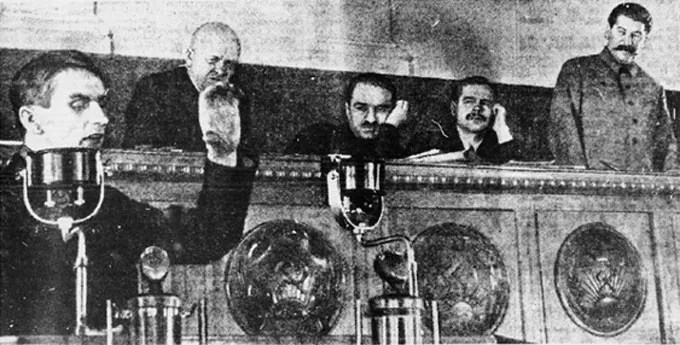
Tina Hesman Saey on a looming threat to the U.S…
Soviet scientists in the 1930s knew what could happen if they bucked the party line: denunciation, firing and banishment from the scientific establishment, even imprisonment and death. Political reprisals against those who opposed the views of dictator Joseph Stalin and his followers — and the dubious science they endorsed — led to the starvation of millions, as well as to decades of lost progress in fields from agriculture to molecular biology.
Now, scientists are warning that history could repeat itself — but in the United States.
A new proposal from the U.S. Office of Management and Budget would put political appointees in charge of funding decisions traditionally overseen by scientists. In recent years, the federal government has funded about 40 percent of basic science research in the United States.
The OMB’s more than 400-page proposed rule change would let political appointees decide how to hand out federal research funds and who can get them. It would cut funding for collaboration with scientists in other countries and restrict scientists’ ability to communicate their findings. What’s more, it could prevent research on matters that President Donald Trump’s administration has deemed “not in the national interest” — such as studies on health disparities, mRNA-based vaccines and research that doesn’t recognize biological sex as a strict binary.
The new rules would also give OMB the power to rescind previously approved research funds. The proposal “poses a sweeping threat to federal grantmaking and the responsible stewardship of American taxpayer dollars,” the science advocacy group Stand Up for Science Foundation said in a report. In addition, it would impact nonscientific grants supporting services for mental health, housing, education, veterans and Tribal nations, affecting the health and well-being of millions.
So far, OMB has received more than 98,000 comments on the proposal. The public comment period closes July 13. It then will be up to OMB to decide whether to keep the rule as is, revise it or scrap it.
These far-reaching measures are already drawing parallels to dark moments in scientific history. Some researchers say the recent mass firings, policy changes and grant cancellations at federal research institutions, including the U.S. National Institutes of Health and Centers for Disease Control and Prevention, closely mirror what happened in the U.S.S.R. under Stalin. “A similar threat now hangs over U.S. science,” the editorial board of The New England Journal of Medicine wrote in June.
Its editorial invoked the example of Trofim Lysenko [see here], an agronomist and astute political operator who rose to power in the 1930s Soviet Union under Stalin.
Until the 1930s, “the Soviet Union was a real powerhouse in the field of genetics,” says Lee Dugatkin, an evolutionary biologist and historian of science at the University of Louisville in Kentucky.
Then, Lysenko came along. “This guy was your sort of classic charlatan,” Dugatkin says. “He had the equivalent of a mail order degree in agriculture, but he was quite good with the press, and he started to basically spread this idea out there that he was capable of dramatically increasing crop yield, particularly wheat.”
Lysenko’s supposed innovation was a process called vernalization and amounted to soaking seeds in freezing water. The resulting plants — and all their offspring — should be resistant to the U.S.S.R.’s famously cold winters, Lysenko reasoned.
His reasoning was based on a disproven idea in evolutionary biology called Lamarckian inheritance. French biologist Jean-Baptiste Lamarck and his followers thought that things an organism experiences in its lifetime can be handed down to the next generation. The classic example is a giraffe that has to stretch to reach leaves producing offspring with long necks.
This idea ran counter to Mendelian genetics, which holds that genes — not environmental influences — control traits and are passed to offspring. Mendelian geneticists thought it would take five years to breed more cold-tolerant crops. Lysenko said he could do it in two to three years.
Stalin didn’t have time to wait. He was trying to get collective farms going and needed to increase crop yields to feed more than 150 million people. Large parts of the country had already suffered from famine in 1932 and 1933 and about 6 million people died. Some resorted to cannibalism.
Stalin embraced Lysenko’s quick-fix approach. That decision, says Michael Gordin, a historian of science at Princeton University, was “something that the majority of people at the time, and everyone since, considers the wrong side of the dispute.”
Lysenko was put in charge of a prestigious genetics institute and forced his scientifically unsound farming practices on the collective farms. His methods were disastrous.
Soaking seeds in freezing water hampered germination, leading to crop losses. Millions starved. Meanwhile, Mendelian genetics was branded a “whore of capitalism,” and geneticists were forced to renounce their views or lose their jobs. Many were jailed, and almost a dozen were executed or died in prison.
The Soviet Union lost its scientific leadership role and sat on the sidelines for important scientific discoveries of the 1950s and beyond. One, Gordin says, was the development of “massively” productive hybrid corn. The country also missed out on the discovery of DNA and the advent of molecular biology, putting Soviet genetics decades behind the rest of the world.
Soviet genetics did not recover from Lysenko’s influence until after the break-up of the Soviet Union in the late 1980s and early 1990s, Gordin says. “I think you’d be hard pressed to find anybody who thinks that … Russia is today, or Ukraine, or any post-Soviet successor state, is a leading molecular biology country.”…
The Soviets did it, and it didn’t end well: “Here’s what happens when you put politicians in charge of science,” from @thsaey.bsky.social in @sciencenews.bsky.social.
See also: Idiocracy
###
As we remember the past so as not to repeat it, we might recall that it was on this date in 1834 that the Spanish Inquisition (finally) ended. Authorized by Pope Sixtus IV in 1478, the Inqusition was initially led by inquisitors (Miguel de Morillo and Juan de San Martín) who were appointed by the future Catholic monarchs, King Ferdinand II of Aragon and Queen Isabella I of Castile. It was originally (ostensibly) intended primarily to identify heretics; its aim, to maintain Christian orthodoxy. But it became an effective instrument of state power by replacing the Medieval Inquisition, which was under Papal control.
Over its course, the Inquisition prosecuted an estimated 150,000 people for various offences. An estimated 3,000–5,000 were turned over to the state for execution, particularly in the initial 50 years, mostly by burning at the stake. Other punishments included penance and public flogging, exile, enslavement on galleys, and prison terms ranging from several years to life. In many of these punishments an important motive was the confiscation of all the victims’ property.
As Monty Python observed, “nobody expects the Spanish Inquisition.” And nobody expected it to last 356 years.

“It is what you read when you don’t have to that determines what you will be when you can’t help it”*…

… What we read– and, librarian Carlo Iacono argues, how we read.
Our inabilty to focus isn’t a failing. It’s a design problem, and the answer isn’t getting rid of our screen time…
Everyone is panicking about the death of reading. The statistics look damning: the share of Americans who read for pleasure on an average day has fallen by more than 40 per cent over the past 20 years, according to research published in iScience this year. The OECD calls the 2022 decline in educational outcomes ‘unprecedented’ across developed nations. In the OECD’s latest adult-skills survey, Denmark and Finland were the only participating countries where average literacy proficiency improved over the past decade. Your nephew speaks in TikTok references. Democracy itself apparently hangs by the thread of our collective attention span.
This narrative has a seductive simplicity. Screens are destroying civilisation. Children can no longer think. We are witnessing the twilight of the literate mind. A recent Substack essay by James Marriott proclaimed the arrival of a ‘post-literate society’ and invited us to accept this as a fait accompli. (Marriott does also write for The Times.) The diagnosis is familiar: technology has fundamentally degraded our capacity for sustained thought, and there’s nothing to be done except write elegiac essays from a comfortable distance.
I spend my working life in a university library, watching how people actually engage with information. What I observe doesn’t match this narrative. Not because the problems aren’t real, but because the diagnosis is wrong.
The declinist position rests on a category error: treating ‘screen culture’ as a unified phenomenon with inherent cognitive properties. As if the same device that delivers algorithmically curated rage-bait and also the complete works of Shakespeare is itself the problem rather than how we decide to use it…
[… observing that “people who ‘can’t focus’ on traditional texts can maintain extraordinary concentration when working across modes, he argues that “we haven’t become post-literate. We’ve become post-monomodal. Text hasn’t disappeared; it’s been joined by a symphony of other channels.”…]
… What troubles me most about the declinist position is not its diagnosis but its conclusion. The commentators who lament the post-literate society often identify the same villains I do. They recognise that technology companies are, in Marriott’s words, ‘actively working to destroy human enlightenment’, that tech oligarchs ‘have just as much of a stake in the ignorance of the population as the most reactionary feudal autocrat.’
And then they surrender. As Marriott says: ‘Nothing will ever be the same again. Welcome to the post-literate society.’
This is the move I cannot follow. To name the actors responsible and then treat the outcome as inevitable is to provide them cover. If the crisis is a force of nature, ‘screens’ destroying civilisation like some technological weather system, then there’s nothing to be done but write elegiac essays from a comfortable distance. But if the crisis is the product of specific design choices made by specific companies for specific economic reasons, then those choices can be challenged, regulated, reversed.
The fatalism, however beautifully expressed, serves the very interests it condemns. The technology companies would very much like us to believe that what they’re doing to human attention is simply the inevitable result of technological progress rather than something they’re doing to us, something that could, with sufficient political will, be stopped.
Your inability to focus isn’t a moral failing. It’s a design problem. You’re trying to think in environments built to prevent thinking. You’re trying to sustain attention in spaces engineered to shatter it. You’re fighting algorithms explicitly optimised to keep you scrolling, not learning.
The solution isn’t discipline. It’s architecture. Build different defaults. Create different spaces. Establish different rhythms. Make depth as easy as distraction currently is. Make thinking feel as natural as scrolling currently does.
What if, instead of mourning some imaginary golden age of pure text, we got serious about designing for depth across all modes? Every video could come with a searchable transcript. Every article could offer multiple entry points for different levels of attention. Our devices could recognise when we’re trying to think and protect that thinking. Schools could teach students to translate between modes the way they once taught translation between languages.
Books aren’t going anywhere. They remain unmatched for certain kinds of sustained, complex thinking. But they’re no longer the only game in town for serious ideas. A well-crafted video essay can carry philosophical weight. A podcast can enable the kind of long-form thinking we associate with written essays. An interactive visualisation can reveal patterns that pages of description struggle to achieve.
The future belongs to people who can dance between all modes without losing their balance. Someone who can read deeply when depth is needed, skim efficiently when efficiency matters, listen actively during a commute, and watch critically when images carry the argument. This isn’t about consuming more. It’s about choosing consciously.
We stand at an inflection point. We can drift into a world where sustained thought becomes a luxury good, where only the privileged have access to the conditions that enable deep thinking. Or we can build something unprecedented: a culture that preserves the best of print’s cognitive gifts while embracing the possibilities of a world where ideas travel through light, sound and interaction.
The choice isn’t between books and screens. The choice is between intentional design and profitable chaos. Between habitats that cultivate human potential and platforms that extract human attention.
The civilisations that thrive won’t be the ones that retreat into text or surrender to the feed. They’ll be the ones that understand a simple truth: every idea has a natural form, and wisdom lies in matching the mode to the meaning. Some ideas want to be written. Others need to be seen. Still others must be heard, felt or experienced. The mistake is forcing all ideas through a single channel, whether that channel is a book or a screen.
Your great-grandchildren won’t read less than you do. They’ll read differently, as part of a richer symphony of sense-making. Whether that symphony sounds like music or noise depends entirely on the choices we make right now about the shape of our tools, the structure of our schools, and the design of our days.
The elegant lamenters offer a eulogy. I’m more interested in a fight…
Reunderstanding reading: “Books and screens,” from @carloiacono.bsky.social in @aeon.co.
* Oscar Wilde
###
As we turn the page, we might note that we’ve been here before, and celebrate the emergence of a design, an innovation, a technology that took on a life of its own and changed reading and… well, everything: this day in 1455 is the traditionally-given date of the publication of the Gutenberg Bible, the first Western book printed from movable type.
(Lest we think that there’s actually anything new under the sun, we might recall that The Jikji— the world’s oldest known extant movable metal type printed book– was published in Korea in 1377; and that Bi Sheng created the first known moveable type– out of wood– in China in 1040.)

“The difference between screwing around and science is writing it down”*…

It’s that time of year again: the 2025 IgNobel Awards have been awarded. Jennifer Ouellette reports…
Does alcohol enhance one’s foreign language fluency? Do West African lizards have a preferred pizza topping? And can painting cows with zebra stripes help repel biting flies? These and other unusual research questions were honored tonight in a virtual ceremony to announce the 2025 recipients of the annual Ig Nobel Prizes… when the serious and the silly converge—for science.
Established in 1991, the Ig Nobels are a good-natured parody of the Nobel Prizes; they honor “achievements that first make people laugh and then make them think.” The unapologetically campy awards ceremony features miniature operas, scientific demos, and the 24/7 lectures whereby experts must explain their work twice: once in 24 seconds and the second in just seven words.
Acceptance speeches are limited to 60 seconds. And as the motto implies, the research being honored might seem ridiculous at first glance, but that doesn’t mean it’s devoid of scientific merit. In the weeks following the ceremony, the winners will also give free public talks, which will be posted on the Improbable Research website…
Read on for accounts (each both amusing and fascinating) of this year’s winners: “Meet the 2025 Ig Nobel Prize winners,” @jenlucpiquant.bsky.social in @arstechnica.com.
More at the web site of Improbable Research— “research that makes people LAUGH, then THINK”– the organization behind the IgNobels.
* Adam Savage (@asavage.bsky.social)
###
As we have some serious fun, we might we might spare a thought for a man who embodied the marriage of science and glee: Ron Toomer; he died on this date in 2011. Toomer began his career as an aeronautical engineer who contributed to the heat shields on NASA’s Apollo spacecraft. But in 1965, he joined Arrow Development, an amusement park ride design company, where he became a legendary creator of steel roller coasters. His first assignment was “The Run-Away Mine Train” (at Six Flags Over Texas), the first “mine train” ride, and the second steel roller coaster (after Arrow’s Matterhorn Ride at Disneyland). Toomer went on to design 93 coasters worldwide, and was especially known for his creation of the first “inversion” coasters (he built the first coasters with 1, 2, 3, 4, 5, 6, and 7, loops). In 2000, he was inducted in the International Association of Amusement Parks and Attractions (IAAPA) Hall of Fame as a “Living Legend.”


You must be logged in to post a comment.