Posts Tagged ‘Naturalism’
“There is only one world, the natural world, exhibiting patterns we call the ‘laws of nature’”*…
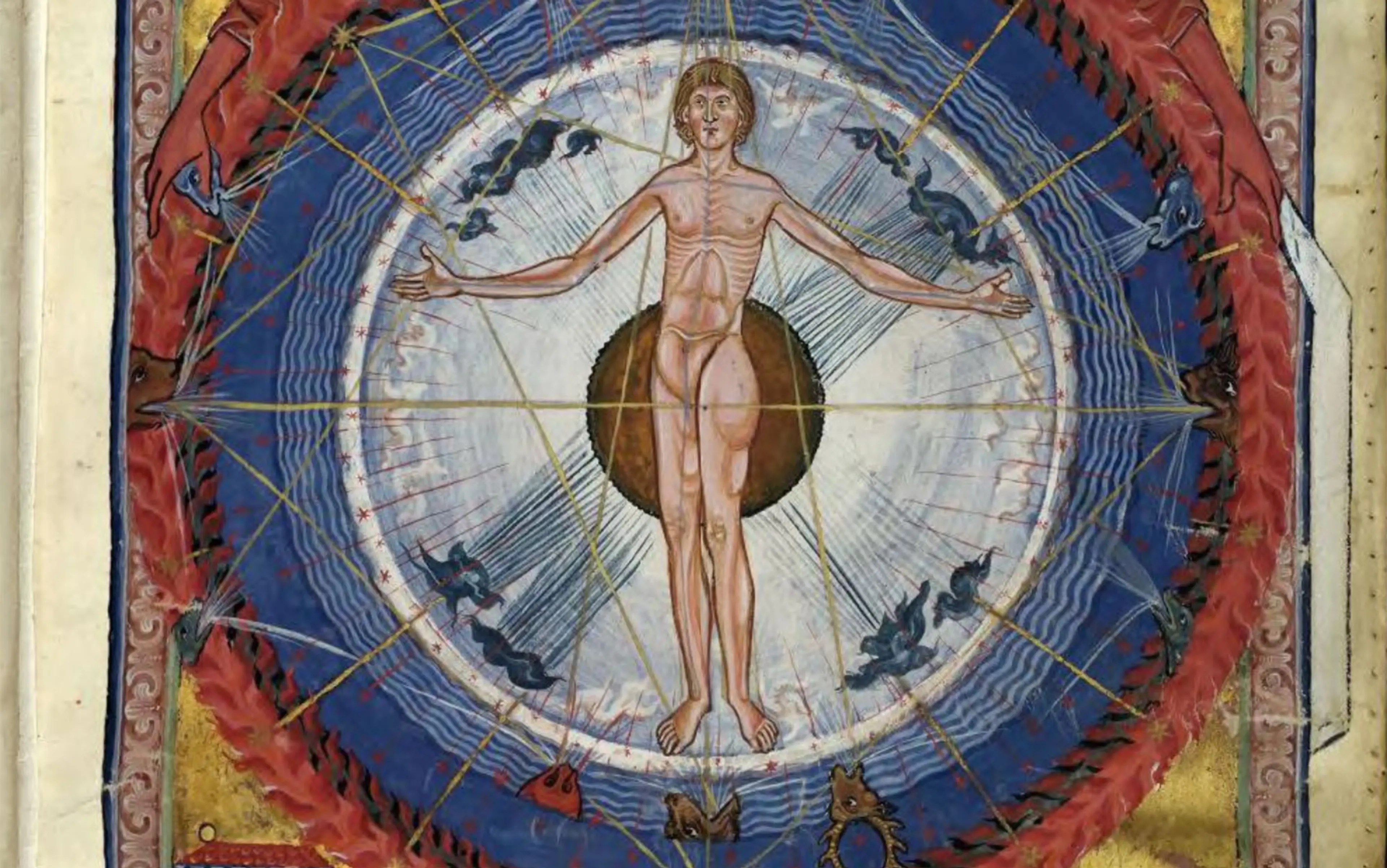
The quote above (in full, below) is the reigning substantive understanding of scientific naturalism that is commonplace today. Indeed, the modern era is often seen as the triumph of science over supernaturalism. But, as Peter Harrison explains, what really happened is far more interesting…
By any measure, the scientific revolution of the 17th century was a significant milestone in the emergence of our modern secular age. This remarkable historical moment is often understood as science finally liberating itself from the strictures of medieval religion, striking out on a new path that eschewed theological explanations and focused its attentions solely on a disenchanted, natural world. But this version of events is, at best, half true.
Medieval science, broadly speaking, had followed Aristotle in seeking explanations in terms of the inherent causal properties of natural things. God was certainly involved, at least to the extent that he had originally invested things with their natural properties and was said to ‘concur’ with their usual operations. Yet the natural world had its own agency. Beginning in the 17th century, the French philosopher and scientist René Descartes and his fellow intellectual revolutionaries dispensed with the idea of internal powers and virtues. They divested natural objects of inherent causal powers and attributed all motion and change in the universe directly to natural laws.
But, for all their transformative influence, key agents in the scientific revolution such as Descartes, Johannes Kepler, Robert Boyle and Isaac Newton are not our modern and secular forebears. They did not share our contemporary understandings of the natural or our idea of ‘laws of nature’ that we imagine underpins that naturalism…
[Harrison traces the history of the often contentious, but ultimately momentous rise of naturalism, then considers the historical acounts of that ascension– and what they gloss over or miss altogether. He then turns to whay that matters…]
… the contrived histories of naturalism that purport to show its victory over supernaturalism were fabricated in the 19th century and are simply not consistent with the historical evidence. They are also tainted by a cultural condescension that, in the past at least, descended into outright racism. Few, if any, would today endorse the chauvinism that attends these older, triumphalist accounts of the history of naturalism. Yet, it is worth reflecting upon the extent to which elements of cultural condescension necessarily colour scholarly endeavours that are premised on the imagined ‘neutral’ grounds of naturalism. Careful consideration of the contingent historical circumstances that gave rise to present analytic categories that enjoy significant standing and authority would suggest that there is nothing especially neutral or objective about them. Any clear-eyed crosscultural comparison – one that refrains from assessing worldviews in terms of how they measure up to the standard of the modern West – will reinforce this. We might go so far as to adopt a form of ‘reverse anthropology’, where we think how our own conceptions of the world might look if we adopted the frameworks of others. This might entail dispensing with the idea of the supernatural, and attempting to think outside the box of our recently inherited natural/supernatural distinction.
History [that is, the “actual” history that Harrison recounts] suggests that our regnant modern naturalism is deeply indebted to monotheism, and that its adherents may need to abandon the comforting idea that their naturalistic commitments are licensed by the success of science. As for the idea of the supernatural, ironically this turns out to be far more important for the identity of those who wish to deny its reality than it had ever been for traditional religious believers…
Fascinating and provocative: “The birth of naturalism,” from @uqpharri in @aeonmag.
* “There is only one world, the natural world, exhibiting patterns we call the ‘laws of nature’, and which is discoverable by the methods of science and empirical investigation. There is no separate realm of the supernatural, spiritual, or divine; nor is there any cosmic teleology or transcendent purpose inherent in the nature of the universe or in human life.” – Sean Carroll, The Big Picture
###
As we rethink reality, we might recall that it was on this date in 1588 that Tycho Brahe first outlined his “Tychonic system” concept of the structure of the solar system. The Tychonic system was a hybrid, sharing both the basic idea of the geocentric system of Ptolemy, and the heliocentric idea of Nicholas Copernicus. Published in his De mundi aethorei recentioribus phaenomenis, Tycho’s proposal, retaining Aristotelian physics, kept the the Sun and Moon revolving about Earth in the center of the universe and, at a great distance, the shell of the fixed stars was centered on the Earth. But like Copernicus, he agreed that Mercury, Venus, Mars, Jupiter, and Saturn revolved about the Sun. Thus he could explain the motions of the heavens without “crystal spheres” carrying the planets through complex Ptolemaic epicycles.

On this same date, in 1633, Galileo Galilei arrived in Rome to face trial before the Inquisition. His crime was professing the belief that the earth revolves around the sun– based on observations that he’d made further to Copernicus and Tycho.

“The braid is always stronger than the strand”*…

From Grace Ebert, a novel look at the world’s densest “city”…
At its height in the 1990s, Kowloon Walled City in Hong Kong housed about 50,000 people. Its population is unremarkable for small cities, but what set Kowloon apart from others of its size was its density. Spanning only 2.6 hectares, the tiny enclave contained [the equivalent of] 1,255,000 people per square kilometer, making it the densest city in the world. For context, New York City boasts about 11,300 per square kilometer, while Manila, the most highly concentrated municipality today, tops out at about 42,000.
Kowloon was built as a small military fort around the turn of the 20th century. When the Chinese and English governments abandoned it after World War II, the area attracted refugees and people in search of affordable housing. With no single architect, the urban center continued to grow as people stacked buildings on top of one another and tucked new structures in between existing ones to accommodate the growing population without expanding beyond the original fort’s border.
With only a small pocket of community space at the center, Kowloon quickly morphed into a labyrinth of shops, services, and apartments connected by narrow stairs and passageways through the buildings. Rather than navigate the city through alleys and streets, residents traversed the structures using slim corridors that always seemed to morph, an experience that caused many to refer to Kowloon as “a living organism.”
The city devolved into a slum with crime and poor living conditions and was razed in 1994. Before demolition, though, a team of Japanese researchers meticulously documented the architectural marvel, which had become a sort of cyberpunk icon that even inspired a gritty arcade as tribute.
For a now out-of-print book titled Kowloon City: An Illustrated Guide, artist Hitomi Terasawa drew a meticulous cross-sectioned rendering of the urban phenomenon to preserve its memory. The massive panorama peers into the compact neighborhood, glimpsing narrow dance halls, laundry dangling from balconies, and entire factories tucked inside cramped quarters.
Thanks to psychologist Greg Jensen, we now have a stunning high-resolution scan of Terasawa’s illustration complete with annotations and diagramming. It’s worth viewing the full panorama in its entirety to zoom in on all the details of this infamous city [and here, animated]. And, for photos of Kowloon and its inhabitants, check out this incredibly informative video detailing its history…
A real-life human hive: “A Rare Cross-Section Illustration Reveals the Infamous Happenings of Kowloon Walled City,” from @Colossal.
* Ryan Graudin, The Walled City
###
As we pack it in, we might we might send the simplest of birthday greetings to a writer, philosopher, and naturalist who might not have gravitated naturally to Kowloon City, Henry David Thoreau; he was born on this date in 1817. From 1845 to 1847, Thoreau lived in a small cabin on the banks of Walden Pond, a small lake near Concord, Massachusetts. Striving to “simplify, simplify,” he strictly limited his expenditures, his possessions, and his contact with others, intending “to live deliberately, to front only the essential facts of life, and see if I could not learn what it had to teach.”
Thoreau became a pillar of New England Transcendentalism, embracing and exemplifying the movement’s belief in the universality of creation and the primacy of personal insight and experience. Perhaps best remembered for his advocacy of simple, principled living, his writings on the relationship between humans and the environment also helped define the nature essay.

“These are the forgeries of jealousy”*…

Is it authentic? Attorney and AI practitioner Steven J. Frank, working with his wife, art historian and curator Andrea Frank (together, Art Eye-D Associates), brings machine learning to bear…
The sound must have been deafening—all those champagne corks popping at Christie’s, the British auction house, on 15 November 2017. A portrait of Jesus, known as Salvator Mundi (Latin for “savior of the world”), had just sold at Christie’s in New York for US $450.3 million, making it by far the most expensive painting ever to change hands.
But even as the gavel fell, a persistent chorus of doubters voiced skepticism. Was it really painted by Leonardo da Vinci, the towering Renaissance master, as a panel of experts had determined six years earlier? A little over 50 years before that, a Louisiana man had purchased the painting in London for a mere £45. And prior to the rediscovery of Salvator Mundi, no Leonardo painting had been uncovered since 1909.
Some of the doubting experts questioned the work’s provenance—the historical record of sales and transfers—and noted that the heavily damaged painting had undergone extensive restoration. Others saw the hand of one of Leonardo’s many protégés rather than the work of the master himself.
Is it possible to establish the authenticity of a work of art amid conflicting expert opinions and incomplete evidence? Scientific measurements can establish a painting’s age and reveal subsurface detail, but they can’t directly identify its creator. That reLeonardo da quires subtle judgments of style and technique, which, it might seem, only art experts could provide. In fact, this task is well suited to computer analysis, particularly by neural networks—computer algorithms that excel at examining patterns. Convolutional neural networks (CNNs), designed to analyze images, have been used to good advantage in a wide range of applications, including recognizing faces and helping to pilot self-driving cars. Why not also use them to authenticate art?
That’s what I asked my wife, Andrea M. Frank, a professional curator of art images, in 2018. Although I have spent most of my career working as an intellectual-property attorney, my addiction to online education had recently culminated in a graduate certificate in artificial intelligence from Columbia University. Andrea was contemplating retirement. So together we took on this new challenge…
With millions at stake, deep learning enters the art world. The fascinating story: “This AI Can Spot an Art Forgery,” @ArtAEye in @IEEESpectrum.
* Shakespeare (Titania, A Midsummer Night’s Dream, Act II, Scene 1)
###
As we honor authenticity, we might spare a thought for a champion of authenticity in a different sense, Joris Hoefnagel; he died on this date in 1601. A Flemish painter, printmaker, miniaturist, draftsman, and merchant, he is noted for his illustrations of natural history subjects, topographical views, illuminations (he was one of the last manuscript illuminators), and mythological works.
Hoefnagel made a major contribution to the development of topographical drawing. But perhaps more impactfully, his manuscript illuminations and ornamental designs played an important role in the emergence of floral still-life painting as an independent genre in northern Europe at the end of the 16th century. The almost scientific naturalism of his botanical and animal drawings served as a model for a later generation of Netherlandish artists. Through these nature studies he also contributed to the development of natural history and he was thus a founder of proto-scientific inquiry.

“It would be a very naive sort of dogmatism to assume that there exists an absolute reality of things which is the same for all living beings”*…

Detail of the nerves of the trunk from Cerebri Anatome 1664 by Thomas Willis
The model of nature as a complex, clockwork mechanism has been central to modern science ever since the 17th century. It continues to appear regularly throughout the sciences, from quantum mechanics to evolutionary biology. But for Descartes and his contemporaries, ‘mechanism’ did not signify the sort of inert, regular, predictable functioning that the word connotes today. Instead, it often suggested the very opposite: responsiveness, engagement, caprice. Yet over the course of the 17th century, the idea of machinery narrowed into something passive, without agency or force of its own life. The earlier notion of active, responsive mechanism largely gave way to a new, brute mechanism…
The idea that nature is a humming, complex, clockwork machine has been around for centuries. Is it due for a revival? “Alive and Ticking.”
An Essay on Man: An Introduction to a Philosophy of Human Culture
###
As we muse on the mechanical, we might send insightful birthday greetings to Loren Eiseley; he was born on this date in 1907. An anthropologist, educator, philosopher, and natural science writer, he was one of the preeminent literary naturalists of our time. Publishers Weekly called him “the modern Thoreau.” Fellow science writer Orville Prescott praised him as a scientist who “can write with poetic sensibility and with a fine sense of wonder and of reverence before the mysteries of life and nature.” And Ray Bradbury, praising Eiseley’s “The Unexpected Universe,” remarked, “[Eiseley] is every writer’s writer, and every human’s human… One of us, yet most uncommon…”
You can find his annotated bibliography here.

“There are too many books in the world to read in a single lifetime; you have to draw the line somewhere”*…
 click here (and again) to enlarge
Via Goodreads.
* Diane Setterfield
###
As we dogear the page, we might send avant-garde birthday greetings to Hermann Bahr; he was born on this date in 1863. A journalist, playwright, director, and critic, Bahr helped found Die Zeit (one of Germany’s leading newspapers) and edited Oesterreichische Volkszeitungwas (one of Austria’s). He worked as a director with Max Reinhardt at the Berlin Deutsches Theater and as Dramaturg with the Vienna Burgtheater. And he was the first critic to apply the label “Modernism” to literary works– part of a critical career in which he championed (successively) Naturalism, Romanticism, Expressionism, and Symbolism.

You must be logged in to post a comment.