Posts Tagged ‘Writing’
“Your memory and your senses will be nourishment for your creativity”*…

On which senses do great creators rely? Randall Collins investigates…
Beethoven started going deaf in his late 20s. Already famous by age 25 for his piano sonatas, at 31 he was traumatized by losing his hearing. But he kept on composing: the Moonlight Sonata during the onset of deafness; the dramatic Waldstein Sonata at 32; piano sonatas kept on coming until he was 50. In his deaf period came the revolutionary sounds of his 3rd through 8th symphonies, piano and violin concertos (age 32-40). After 44 he became less productive, with intermittent flashes (Missa Solemnis, Diabelli variations, 9th symphony) composed at 47-53, dying at 56. His last string quartets were composed entirely in his head, left unperformed in his lifetime.
Handel went blind in one eye at age 66; laboriously finished the oratorio he was working on; went completely blind at 68. He never produced another significant work. But he kept on playing organ concertos, “performing from memory, or extemporizing while the players waited for their cue” almost to the day he died, aged 74.
Johann Sebastian Bach fell ill in his 64th year; next year his vision was nearly gone; he died at 65 “after two unsuccessful operations for a cataract.” At 62 he was still producing great works; at 64 he finished assembling the pieces of his B Minor Mass (recycling his older works being his modus operandi). At death he left unfinished his monument of musical puzzles, The Art of the Fugue, on which he had been working since 55.
Can we conclude, it is more important for a composer to see than hear?…
And given examples like Milton, that it’s more critical to poets and writers to hear than see? More at “Deaf or Blind: Beethoven, Handel,” from @sociologicaleye.
* Arthur Rimbaud
###
As we contemplate creativity, we might recall that it was on this date in 2013 that Google– Google Search, YouTube, Google Mail, and Google Drive, et al.– went down for about 5 minutes. During that brief window, internet traffic around the world dropped by 40 percent.

“Based on his liberal use of the semicolon, I just assumed this date would go well”*…

Mary Norris (“The Comma Queen“) appreciates Cecelia Watson‘s appreciation of a much-maligned mark, Semicolon…
… Watson, a historian and philosopher of science and a teacher of writing and the humanities—in other words, a Renaissance woman—gives us a deceptively playful-looking book that turns out to be a scholarly treatise on a sophisticated device that has contributed eloquence and mystery to Western civilization.
The semicolon itself was a Renaissance invention. It first appeared in 1494, in a book published in Venice by Aldus Manutius. “De Aetna,” Watson explains, was “an essay, written in dialogue form,” about climbing Mt. Etna. Its author, Pietro Bembo, is best known today not for his book but for the typeface, designed by Francesco Griffo, in which the first semicolon was displayed: Bembo. The mark was a hybrid between a comma and a colon, and its purpose was to prolong a pause or create a more distinct separation between parts of a sentence. In her delightful history, Watson brings the Bembo semicolon alive, describing “its comma-half tensely coiled, tail thorn-sharp beneath the perfect orb thrown high above it.” Designers, she explains, have since given the mark a “relaxed and fuzzy” look (Poliphilus), rendered it “aggressive” (Garamond), and otherwise adapted it for the modern age: “Palatino’s is a thin flapper in a big hat slouched against the wall at a party.”
The problem with the semicolon is not how it looks but what it does and how that has changed over time. In the old days, punctuation simply indicated a pause. Comma, colon: semicolon; period. Eventually, grammarians and copy editors came along and made themselves indispensable by punctuating (“pointing”) a writer’s prose “to delineate clauses properly, such that punctuation served syntax.” That is, commas, semicolons, and colons were plugged into a sentence in order to highlight, subordinate, or otherwise conduct its elements, connecting them syntactically. One of the rules is that, unless you are composing a list, a semicolon is supposed to be followed by a complete clause, capable of standing on its own. The semicolon can take the place of a conjunction, like “and” or “but,” but it should not be used in addition to it. This is what got circled in red in my attempts at scholarly criticism in graduate school. Sentence length has something to do with it—a long, complex sentence may benefit from a clarifying semicolon—but if a sentence scans without a semicolon it’s best to leave it alone.
Watson has been keeping an eye out for effective semicolons for years. She calculates that there are four-thousand-odd semicolons in “Moby-Dick,” or “one for every 52 words.” Clumsy as nineteenth-century punctuation may seem to a modern reader, Melville’s semicolons, she writes, act like “sturdy little nails,” holding his wide-ranging narrative together….
Eminently worth reading in full: “Sympathy for the Semicolon,” on @ceceliawatson from @MaryNorrisTNY.
Sort of apposite (and completely entertaining/enlightening): “Naming the Unnamed: On the Many Uses of the Letter X.”
(Image above: source)
* Raven Leilani, Luster
###
As we punctuate punctiliously, we might recall that it was on this date in 1990 that CBS aired the final episode of Bob Newhart’s second successful sitcom series, Newhart, in which he co-starred with Mary Fran through a 184 episode run that had started in 1982. Newhart had, of course, had a huge hit with his first series, The Bob Newhart Show, in which he co-starred with Suzanne Pleshette.
Newhart‘s ending, its final scene, is often cited as the best finale in sit-com history.
“You say you’re a pessimist, but I happen to know that you’re in the habit of practicing your flute for two hours every evening”*…

A couple of weeks ago, (R)D featured a piece by Jonathan Haidt, “Why the Past 10 Years of American Life Have Been Uniquely Stupid,” in which Haidt critiqued, among others, Robert Wright and his influential book, Non-Zero. In the spirit of George Bernard Shaw (who observed: “Both optimists and pessimists contribute to society. The optimist invents the aeroplane, the pessimist the parachute.“) Wright responds…
… There are three main culprits in Haidt’s story, three things that have torn our world asunder: the like button, the share button (or, on Twitter, the retweet button), and the algorithms that feed on those buttons. “Babel is a metaphor for what some forms of social media have done to nearly all of the groups and institutions most important to the country’s future—and to us as a people.”
I would seem uniquely positioned to cheer us up by taking issue with Haidt’s depressing diagnosis. Near the beginning of his piece, he depicts my turn-of-the-millennium book Nonzero: The Logic of Human Destiny as in some ways the antithesis of his thesis—as sketching a future in which information technology unites rather than divides…
Well, two things I’m always happy to do are (1) cheer people up; and (2) defend a book I’ve written. I’d like to thank Haidt (who is actually a friend—but whom I’ll keep calling “Haidt” to lend gravitas to this essay) for providing me the opportunity to do both at once.
But don’t let your expectations get too high about the cheering people up part—because, for starters, the book I’m defending wasn’t that optimistic. I wrote in Nonzero, “While I’m basically optimistic, an extremely bleak outcome is obviously possible.” And even if we avoid a truly apocalyptic fate, I added, “several moderately bleak outcomes are possible.”
Still, looking around today, I don’t see quite as much bleakness as Haidt seems to see. And one reason, I think, is that I don’t see the causes of our current troubles as being quite as novel as he does. We’ve been here before, and humankind survived…
Read on for a brief history of humankind’s wrestling with new information technologies (e.g., writing and the printing press). Wright concludes…
In underscoring the importance of working to erode the psychology of tribalism (a challenge approachable from various angles, including one I wrote a book about), I don’t mean to detract from the value of piecemeal reforms. Haidt offers worthwhile ideas about how to make social media less virulent and how to reduce the paralyzing influence of information technology on democracy. (He spends a lot of time on the info tech and democracy issue—and, once again, I’d say he’s identified a big problem but also a longstanding problem; I wrote about it in 1995, in a Time magazine piece whose archival version is mis-dated as 2001.) The challenge we face is too big to let any good ideas go to waste, and Haidt’s piece includes some good ones.
Still, I do think that stepping back and looking at the trajectory of history lets us assess the current turmoil with less of a sense of disorientation than Haidt seems to feel. At least, that’s one takeaway from my argument in Nonzero, which chronicled how the evolution of technology, especially information technology, had propelled human social organization from the hunter-gatherer village to the brink of global community—a threshold that, I argued, we will fail to cross at our peril.
This isn’t the place to try to recapitulate that argument in compelling form. (There’s a reason I devoted a whole book to it.) So there’s no reason the argument should make sense to you right now. All I can say is that if you do ever have occasion to assess the argument, and it does make sense to you, the turbulence we’re going through will also make more sense to you.
“Is Everything Falling Apart?” @JonHaidt thinks so; @robertwrighter is not so sure.
Apposite: “An optimist’s guide to the future: the economist who believes that human ingenuity will save the world,” and “The Future Will Be Shaped by Optimists,” from @kevin2kelly at @TedConferences.
* Friedrich Nietzsche (criticizing Schopenhauer)
###
As we look on the bright side of life, we might send darkly-tinted birthday greetings to Oswald Spengler; he was born on this date in 1880. Best known for his two-volume work, The Decline of the West (Der Untergang des Abendlandes), published in 1918 and 1922, he was a historian and philosopher of history who developed an “organic theory” of history that suggested that human cultures and civilizations are akin to biological entities, each with a limited, predictable, and deterministic lifespan– and that around the year 2000, Western civilization would enter the period of pre‑death emergency whose countering would lead to 200 years of Caesarism (extra-constitutional omnipotence of the executive branch of government) before Western civilization’s final collapse. He was a major influence on many historians (including Arnold Toynbee and Samuel “Clash of Civilizations” Huntington).

“Anything down there about your souls?”*…

Andrew Delbanco on the difficulty, to date, of capturing Herman Melville’s central importance in a biography…
The fact is that Herman Melville is a singularly unyielding subject for literary biography. “One portrait may hit the mark much nearer than another,” as he says of the whale, “but none can hit it with any very considerable degree of exactness…[because] there is no earthly way of finding out precisely what the whale really looks like.” The dim record of Melville’s life simply disappears into the glare of his work, and the best one can hope for is to glimpse a few moments of convergence between them…
By what alchemy did an apparently unremarkable boy become the genius who broke open the conventional form of the novel and pushed the American language far beyond where any previous practitioner had taken it? Where did he acquire his knowledge of evil that made him seem mad to his contemporaries, but prescient of our own blasted century?…
On the problem of understanding Melville’s work via his life: “The Great Leviathan.”
* Queequeg, Moby-Dick, Chapter 19
###
As we wonder about white whales, we might recall that it was on this date in 1855 that David Livingstone became the first European to see (what we now call) Victoria Falls in what is now Zambia-Zimbabwe.


“I’ve always thought of the T-shirt as the Alpha and Omega of the fashion alphabet”*…
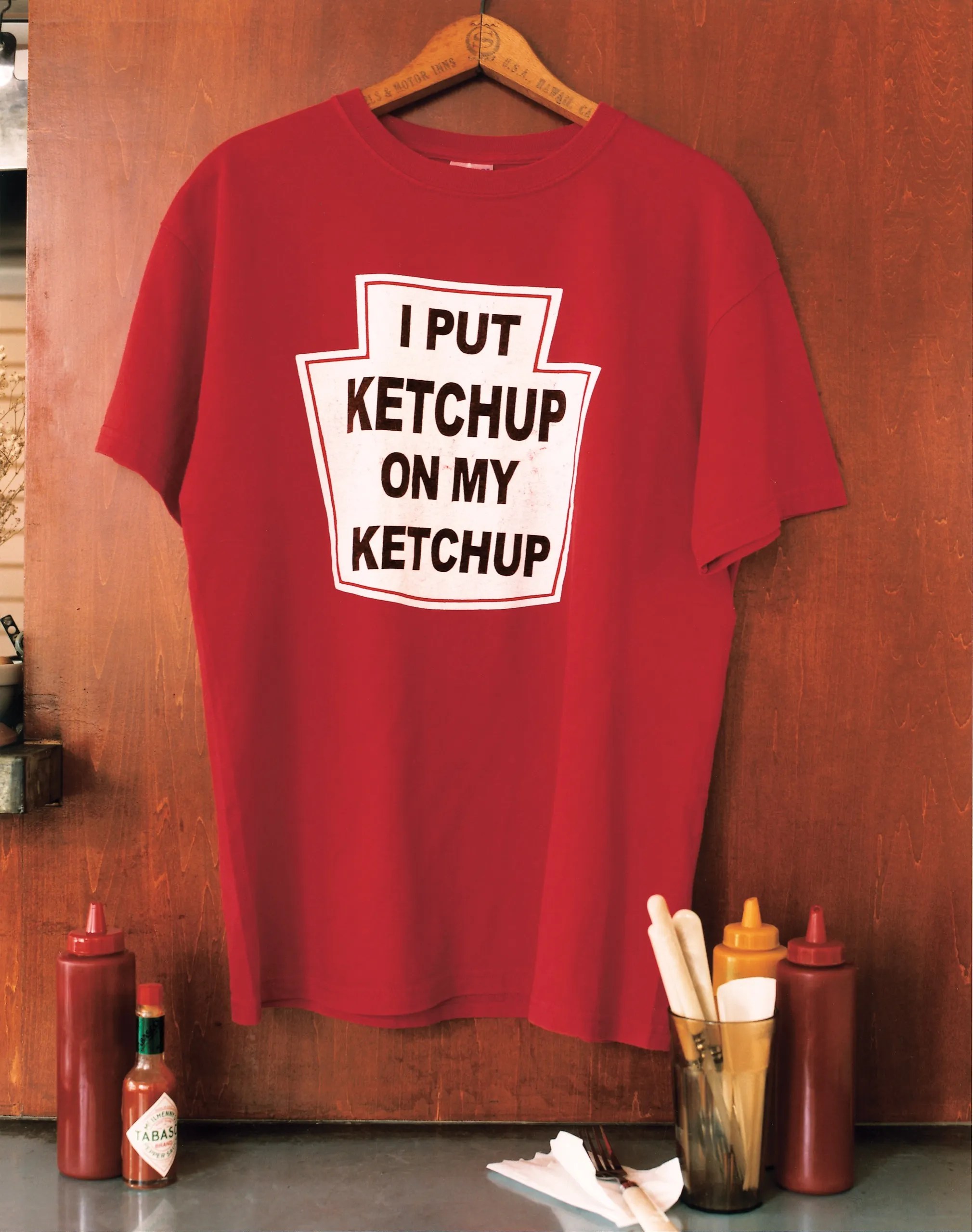
Haruki Murakami on the semiotics of casual accumulation…
I’m not particularly interested in collecting things, but there is a kind of running motif in my life: despite my basic indifference, objects seem to collect around me. Stacks and stacks of LPs, so many I’ll never listen to them all; books I’ve already read and will probably never open again; a ragtag assemblage of magazine clippings; dinky little pencils, so worn down they don’t fit into a pencil sharpener anymore. All sorts of things just keep on piling up.
T-shirts are one of those things which naturally pile up. They’re cheap, so whenever an interesting one catches my eye I buy it. People give me various novelty T-shirts from around the world, I get commemorative T-shirts whenever I run a marathon, and when I travel I often pick up a few, instead of bringing along extra clothes. Which is why the number of T-shirts in my life has skyrocketed, to the point where there’s no room in my drawers anymore and I have to store the overflow in stacked-up cardboard boxes.
Whenever I go to the U.S., after I leave the airport and get settled in town I invariably find myself wanting to go out and grab a hamburger. It’s a natural urge, but you could also see it as a kind of ritual I go through. Either one’s O.K.
Ideally, I go to a hamburger joint around one-thirty, after the lunch crowd has left, plunk myself down at the counter, and order a Coors Light on tap and a cheeseburger. I like the burger cooked medium, and I always get raw onions, tomatoes, lettuce, and pickles. Plus an order of French fries and, like an old buddy I’m visiting, a side of coleslaw. Critical partners in all this are mustard (it’s got to be Dijon) and Heinz ketchup. I sit there, quietly sipping my Coors Light, listening to the voices of the people around me and the clatter of dishes, attentively imbibing the atmosphere of this different land, as I wait for my cheeseburger to emerge. Which is when it finally hits me that, yes, I really am in America.
This T-shirt has a straightforward message: “i put ketchup on my ketchup.” Now, that’s the statement of somebody who is seriously in love with ketchup. It kind of teases those Americans who put ketchup on everything, but I find it interesting that one of the companies that distribute these shirts is none other than Heinz. A little self-deprecatory humor going on here, but you can’t help feeling the American spirit in it, the optimistic, cheerful lack of introspection that says, “Who cares about being sophisticated! I’m gonna do what I want!”
When I walk around town in this shirt, Americans sometimes call out, “Love the shirt!” The ones who do this usually have that “I love ketchup” look about them. Sometimes I feel like coming back with a “Hey, don’t lump me in with you guys,” but usually I just give a cheerful “Yeah, pretty nice, huh? Ha-ha.” This kind of T-shirt communication does a lot to liven things up. You’d never find that happening in Europe. For one thing, Europeans by and large hardly ever eat ketchup.
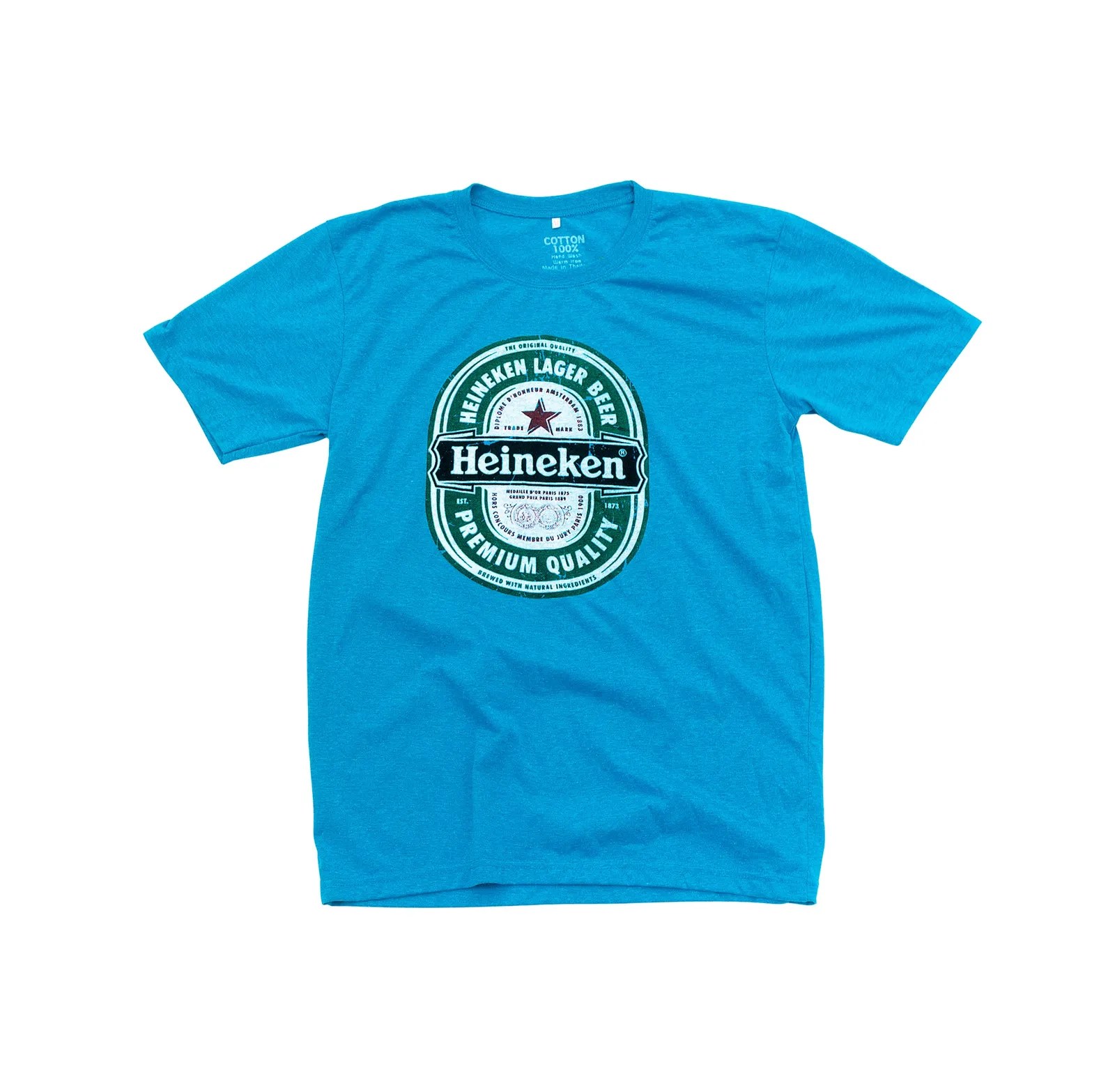
How (and why) @harukimurakami_ amassed more T-shirts than he can store (and more examples): “An Accidental Collection,” from @NewYorker.
* Giorgio Armani
###
As we slip it on, we might send stream of consciousness birthday greetings to William Cuthbert Faulkner; he was born on this date in 1897. A writer of novels, short stories, poetry, essays, screenplays, and one play, Faulkner is best remembered for his novels (e.g., The Sound and the Fury, As I Lay Dying, and Light in August) and stories set in “Yoknapatawpha County,” a setting largely based on Lafayette County, Mississippi, where Faulkner spent most of his life. They earned him the 1949 Nobel Prize for Literature.
The past is never dead. It’s not even past.
From Requiem for a Nun, Act I, Scene III, by William Faulkner

You must be logged in to post a comment.