Posts Tagged ‘Psychology’
“Metaphors and similes (puns, too, I might add) extend the dimensions and expand the possibilities of the world”*…
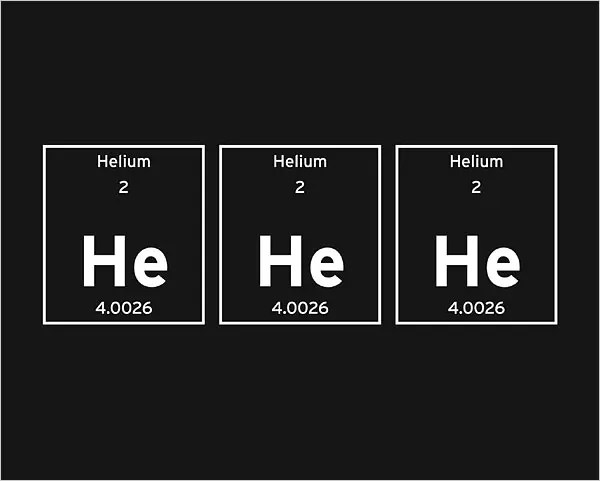
A. J. Jacobs, in defense of “the lowest form of humor“…
… I used to hate puns. Here’s an anti-pun passage from my first book, The Know-It-All – it occurs when I’m describing my trip to a Mensa convention (that’s the high IQ society).
Mensans love puns. I heard about how the eating of frogs’ legs makes the frogs hopping mad. A person who is interested in architecture has an edifice complex. When I met one Mensan who worked in a photo shop, he told me “It gives me a very negative outlook on life.”
“I shudder to think,” I responded, which simultaneously earned his respect and made me hate myself a lot.
Two reactions on re-reading this passage:
First, a photo shop? Things have certainly changed in twenty-plus years.
Second, maybe I shouldn’t have had so much self-loathing (and maybe I should have gone with the sentence “Things have certainly developed in twenty-plus years).
The point is, since writing my first book, I’ve made a U-turn on puns, or at least non-obvious twisty puns. I don’t consider myself a great punster. I’m no Myq Kaplan. But in recent years, I’ve improved a bit (or gotten worse, depending on your view of puns).
One reason for my newfound respect for puns is that I host a podcast all about word puzzles, which wouldn’t really exist without puns. Another is that my wife Julie is president of Watson Adventures Scavenger Hunts, a company that puts on events where teams work together to solve punny riddles (and have a delightful time doing it!)
But I like to tell myself that another reason I’m now pro-pun is that I had an epiphany: Puns serve a greater purpose. They make us more aware of something important about language: That it is often arbitrary, slippery, and ambiguous.
I believe my interest in puns has helped me become more linguistically aware, a more flexible thinker. Whenever I read the news nowadays, I’m hyper-conscious of the different meanings of words, which makes me more skeptical of people who try to manipulate language to make their point.
Consider the word “free” as an example. “Free” has multiple definitions. Mostly, it’s got a positive aura to it. So when you say “free market,” for instance, you’re immediately disposed to like a free market. But if a market is totally “free” in this sense—zero government regulations whatsoever—it may cause the opposite of freedom in other ways: monopolies thrive, customers lack freedom of choice, and workers lack freedom to negotiate.
Do I have proof that puns make us better thinkers? Sadly, there’s no decades-long study in which a pun-loving population and a pun-hating population create two societies from scratch, allowing us to study which is more susceptible to propaganda and authoritarianism.
But if you conduct a Google Scholar search, you can find some hints that back up my idea. Such as…
—A study in the journal Personality and Individual Differences argues that pun-based humor “not only facilitates insight problem-solving directly, but may also exert an indirect positive influence on insight problem-solving through cognitive flexibility.”
—A neuroscience paper arguing that puns ignite the same areas of the brain as frame-shifting, which is key for problem-solving.
—A paper linking awareness of ambiguous words with critical thinking.
So…maybe?
Puns, of course, have their downsides. First, I’ve been in conversations with people who are so focused on making puns that they can’t engage in meaningful dialogue.
Some argue, as Samuel Johnson allegedly did, that puns are a “lower form of wit.” (It’s not clear he said this, but he did once write that Shakespeare’s weakness for following puns “engulfed him in the mire.” Johnson later — allegedly, again — confessed to his own pun use, saying: “If I were to be punishèd for every pun I shed, there would be no puny shed of my punnish head.”)
Also in puns’ disfavor: people often refer to puns as “groaners.” But I’d argue not all puns are groaners. Only the easy ones. If someone on a tennis court complains about losing his balls and his friend replies with a comment about testicles, I don’t think the friend should automatically be awarded the Mark Twain Prize for American Humor.
On the other side of the spectrum, there are the puns so complex and intricate that they require mental gymnastics of a Simone Biles-ian level.
Perhaps the most elaborate pun I’ve run across is by Thomas Pynchon. In his novel Gravity’s Rainbow, Pynchon relates a story about the classic film director Cecille B. DeMille, a fleet of rowboats, and a bunch of criminals in the fur trade. Does this story advance the novel’s plot? Not at all, but it allowed Pynchon to write the following sentence at the end of the section:
“For DeMille, young fur henchman cannot be rowing.”
Get it? I didn’t. But when I looked it up, it turns out to be an elaborate pun on the phrase “40 million Frenchmen can’t be wrong,” which was a 1920s phrase arguing that France’s pro-alcohol, sex-positive attitudes were superior to America’s puritanism.
Perhaps you could accuse Pynchon of making too great a leap — that it’s no fun if there’s so little chance of figuring the pun out. But I still appreciate the effort.
I also appreciate when puns are pushed to their limit in another direction – namely, a relentless barrage of puns. In fact, I’ll end with my friend (and new dad!) Joe Sabia’s award-winning pun routine in the O. Henry Museum Pun-Off World Championships a few years back…
“Can Puns Save Democracy? Probably not. But maybe a little?“
See also: “Pun for the Ages” (gift article, and source of te image above)
And for contrast(?), enjoy: “A Collection of Terrible Puns.”
* “Metaphors and similes (puns, too, I might add) extend the dimensions and expand the possibilities of the world. When both innovative and relevant, they can wake up a reader, make him or her aware, through elasticity of verbiage, that reality—in our daily lives as well as in our stories—is less prescribed than tradition has led us to believe.” Tom Robbins, Wild Ducks Flying Backwards
###
As we double down on doble entendre, we might send painfully-observant birthday greetings to a man in whose repertoire puns sometimes figured, Lenny Bruce; he was born on this date in 1925. A comedian, social critic, and satirist, he was ranked (in a 2017 Roling Stone poll) the third best stand-up comic of all time– behind Richard Pryor and George Carlin, both of whom credit Bruce as an influence.
“The American Constitution was not written to protect criminals; it was written to protect the government from becoming criminals.”- Lenny Bruce

“The best way out is always through”*…

Adam Mastroianni (and here) with a diagnosis of the malaise (“Borg vibes,” as he calls them) that so many of us feel– and a remedy (or, at least, a constructive response)…
Everyone I know has given up. That’s how it feels, at least. There’s a creeping sense that the jig is up, the fix is in, and the party’s over. The Earth is burning, democracies are backsliding, AI is advancing, cities are crumbling—somehow everything sucks and it’s more expensive than it was last year. It’s the worst kind of armageddon, the kind that doesn’t even lower the rent.
We had the chance to prevent or solve these problems, the thinking goes, but we missed it. Now we’re past the point of no return. The world’s gonna end in fascists and ashes, and the only people still smiling are the ones trying to sell you something. It feels like we’re living through the Book of Revelation, but instead of the Seven Seals and the apocalyptic trumpeters, we have New York Times push notifications.
On the one hand, it’s totally understandable that these crises would make us want to curl up and die. If the world was withering for lack of hot takes, I’d assemble a daredevil crew and we’d be there in an instant. But if history is heading more in the warlords ‘n’ water wars direction, I’m out.
On other hand, this reaction is totally bonkers. If our backs are against the wall, shouldn’t we put up our dukes? For people supposedly facing the breakdown of our society, our response is less fight-or-flight and more freeze-and-unease, frown-and-lie-down, and despair-and-stay-there.
Maybe humanity has finally met its match, but even though people talk like that’s the case, the way they act is weirdly…normal. Every conversation has a dead-man-walking flavor to it, and yet the dead men keep on walking. “Yeah, so everything’s doomed and we’re all gonna die. Anyway, talk to ya later, I gotta put the lasagna in the oven.” If things are just about to go kaput, why is everyone still working 60 hours a week?
Something strange is going on here, and I’d like to offer an explanation in two parts: a wide circle, and a bullet with a foot in it…
Eminently worth the read: “Use this magic bullet to shoot yourself in the foot,” from @mastroianni.bsky.social.
Pair with: “Apocalypse 24/7” (an excerpt from Roy Scranton‘s Impasse: Climate Change and the Limits of Progress)… a deeper, darker– but sadly, all-too-credible– dive into the context that Mastrioanni sketches… while (as your correspondent reads it, anyway) it doesn’t contradict Mastroianni’s prescription (“pick up a sponge and start washing”), it reminds us just how much grime there is to get through… all the more reason to get started…
* Robert Frost
###
As we grapple, we might recall that it was on this date in 1965 that Bob Dylan’s “Positively 4th Street” was released. Dropping between Highway 61 Revisited and Blonde on Blonde, as the follow-up to Dylan’s hit single “Like a Rolling Stone“, it was not included on either album. But it reached No. 1 on Canada’s RPM chart, No. 7 on the U.S. Billboard Hot 100, and No. 8 on the UK Singles Chart, and has been ranked by Rolling Stone No. 203 in their 500 Greatest Songs of All Time list.

“We don’t laugh because we’re happy – we’re happy because we laugh”*…

Emily Herring on Henri Bergson and the importance of laughter…
… Before Bergson, few philosophers had given laughter much thought. The pre-Socratic thinker Democritus was nicknamed the ‘laughing philosopher’ for espousing cheerfulness as a way of life. However, we know more about his thoughts on atomism than on laughter. Similarly, the section of Aristotle’s Poetics that dealt with comedy hasn’t come down to us. Other major thinkers who have offered passing, often humourless, reflections about humour include Thomas Hobbes and René Descartes, who believed that we laugh because we feel superior; Immanuel Kant and Arthur Schopenhauer who argued that comedy stems from a sense of incongruity; and Herbert Spencer and Sigmund Freud who suggested that comedians provide a form of much-needed relief (from, respectively, ‘nervous energy’ and repressed emotions). Bergson was unconvinced by these accounts. He believed that the problem of laughter deserved more than a few well-worded digressions. Although his theory retained elements of the incongruity and superiority theories of humour, it also opened entirely new perspectives on the problem…
… Why did a philosopher of such renown deviate from his more traditional and serious philosophical obsessions – the nature of time, memory, perception, free will and the mind-body problem – to focus on the apparently frivolous case-studies of slapstick, vaudeville and word play? And what was there to be gained from such analysis? The topic was a ticklish one. Laughter, wrote Bergson, had ‘a knack of baffling every effort, of slipping away and escaping only to bob up again, a pert challenge flung at philosophic speculation’. It was almost as though there was something unnatural about subjecting one of the most pleasurable and ubiquitous human experiences to dry philosophical speculation…
… He believed that laughter should be studied as ‘a living thing’ and treated ‘with the respect due to life’. His investigation was therefore more like that of a field zoologist observing frogs in the wild:
we shall not aim at imprisoning the comic spirit within a definition … We shall confine ourselves to watching it grow and expand.
Like all good metaphorical field zoologists, Bergson started his study by familiarising himself with his metaphorical frog’s natural habitat: in other words, the conditions under which laughter is most likely to appear and thrive. Following this method, Bergson arrived at three general observations.
The first one, according to Bergson, was so ‘important’ and ‘simple’ that he was surprised it hadn’t attracted more attention from philosophers: ‘The comic does not exist outside the pale of what is strictly human.’ When Bergson wrote these words, he couldn’t have foreseen that, a century later, through the power of the internet, one of the most popular forms of comedy would be provided by our own pets in the form of viral videos, memes and gifs. But, in a way, he anticipated it in what he wrote about laughter directed at non-humans:
You may laugh at an animal, but only because you have detected in it some human attitude or expression…
… Bergson’s second observation might appear counterintuitive to anyone who has been reduced to tears by a fit of uncontrollable giggles: ‘Laughter has no greater foe than emotion.’ But his point was that certain emotional states – pity, melancholy, rage, fear, etc – make it difficult for us to find the humour in things we might otherwise have laughed at (even anthropomorphic vegetables). We instinctively know that there are situations in which it is best to refrain from laughing. Those who choose to ignore these unspoken rules are immediately sanctioned…
… This is not to say that it’s impossible to laugh in times of hardship. In many cases, humour appears to serve as a coping mechanism in the face of tragedy or misfortune. In 1999, as he was being carried out of his house on a stretcher after a crazed fan stabbed him, the former Beatle George Harrison asked a newly hired employee: ‘So what do you think of the job so far?’ On his death bed, Voltaire allegedly told a priest who was exhorting him to renounce Satan: ‘This is no time for making new enemies.’ Following Bergson’s logic, perhaps in some cases humour is cathartic precisely because it forces us to look at things from a detached perspective.
Finally, laughter ‘appears to stand in need of an echo’, according to Bergson. Evolutionary theorists have hypothesised about the adaptive value of laughter, in particular in the context of social bonding. Laughter might have emerged as a prelinguistic signal of safety or belonging within a group. Laughter and humour continue to play an important role in our various social groups. Most countries, regions and cities share a wide repertoire of jokes at the expense of their neighbours. For example, this Belgian dig at my compatriots, the French: ‘After God created France, he thought it was the most beautiful country in the world. People were going to get jealous, so to make things fair he decided to create the French.’
Jokes need not be nationalistic or even derogatory in nature to facilitate social bonding. Most friends share ‘in-jokes’ that are meant to be understood only within the context of their particular social group, as do certain communities brought together by a football team, political opinions or shared specialist knowledge (‘Why are obtuse angles so depressed? Because they’re never right’). Our laughter ‘is always the laughter of a group’, as Bergson put it. Even in those cases when we are effectively laughing alone, to, or perhaps at ourselves, laughter always presupposes an imagined audience or community.
Bergson’s observations tell us where to find laughter, under which conditions it is possible for laughter to emerge, but they don’t tell us why we laugh. They do nonetheless provide us with important clues. It is no accident that we laugh exclusively at other humans, and that laughter is a communal experience: its purpose, or ‘function’, wrote Bergson, is social. In addition, it isn’t by chance that laughter requires a temporary shutdown of our emotions: though pleasurable, laughter is above all punitive. But what, or whom, is laughter punishing, and how does it do that?
Read on to find out how Bergson reached his conclusion that laughter solves a serious human conundrum– how to keep our minds and social lives elastic: “Laughter Is Vital,” from @emilyherring.bsky.social in @aeon.co.
For those finding it difficult to laugh in these troubled times, see this piece on the pessimisitic Schopenhauer‘s conoisseurship of very distinctive kinds of happiness: “The semi-satisfied life.”
###
As we chortle, we might send smiling birthday greetings to Ramón Valdés; he was born on this date in 1924. An actor and comedian, he is best known for the character he made iconic: “Don Ramón” in El Chavo del Ocho, a hugely-successful Mexican sitcom that aired for 8 seasons (31 episodes) across Latin America and in Spain.

“Whoever wishes to foresee the future must consult the past; for human events ever resemble those of preceding times”*…

In times like these, perspective is at a premium. Here, Derek Thompson on what we might learn from our not-so-terribly-distant past…
When we hear about technological change and social crisis in the 21st century, it is easy to imagine that we are living through a special period of history. But many eras have grappled with the problems that seem to uniquely plague our own. The beginning of the 20th century was a period of speed and technological splendor (the automobile! the airplane! the bicycle!), shattered nerves, mass anxiety, and a widespread sense that the world had been forever knocked off its historical axis: a familiar stew of ideas. I think we can learn a lot about the present by studying historical periods whose challenges rhyme with our own.
My favorite period of history is the 30- to 40-year span between the end of the 19th century and the early innings of the 20th century. It was an era of incredible change. From Abundance (which Thompson co-authored with Ezra Klein):
Imagine going to sleep in 1875 in New York City and waking up thirty years later. As you shut your eyes, there is no electric lighting, Coca-Cola, basketball, or aspirin. There are no cars or “sneakers.” The tallest building in Manhattan is a church.
When you wake up in 1905, the city has been remade with towering steel-skeleton buildings called “skyscrapers.” The streets are filled with novelty: automobiles powered by new internal combustion engines, people riding bicycles in rubber-soled shoes—all recent innovations. The Sears catalog, the cardboard box, and aspirin are new arrivals. People have enjoyed their first sip of Coca-Cola and their first bite of what we now call an American hamburger. The Wright brothers have flown the first airplane. When you passed into slumber, nobody had taken a picture with a Kodak camera or used a machine that made motion pictures, or bought a device to play recorded music. By 1905, we have the first commercial versions of all three—the simple box camera, the cinematograph, and the phonograph.
No book on turn-of-the-century history has influenced me more, or brought me more joy, than The Vertigo Years: Europe 1900-1914 by Philipp Blom. I think it might be the most underrated history book ever written. In my favorite chapters focusing on the years around 1910, Blom describes how turn-of-the-century technology changed the way people thought about art and human nature and how it contributed to a nervous breakdown across the west. Disoriented by the speed of modern times, Europeans and Americans suffered from record-high rates of anxiety and a sense that our inventions had destroyed our humanity. Meanwhile, some artists channeled this disorientation to create some of the greatest art of all time.
[Thompson uses passages from Blom to unpack those issues– a world moving too fast, the anxiety occasioned by technological change, and the responses of artists and creators of culture. He concludes with a consideration of two influential new theories of human nature that arose at that point…]
… Blom closes his chapter “1910: Human Nature Changed” by considering two intellectual giants of the time: the sociologist Max Weber and the psychoanalyst Sigmund Freud, whose International Psychoanalytic Association was founded in 1910. The tension between their theories of human nature are profoundly relevant today.
In his famous work The Protestant Ethic and the Spirit of Capitalism, Weber, a German sociologist, argued that certain Protestant—especially Calvinist—traditions supported habits that aligned with the development of modern capitalism. He argued that the Protestant tradition of northern European worshippers cultivated a disciplined approach to work, savings, and investment that proved valuable in commerce, while the Calvinist doctrine of divine grace “could lead believers to read worldly success as a possible sign of God’s favor,” as Blom summarizes. Weber believed that Protestantism not only encouraged followers to pour their energies into labor (hence the allusion to Work Ethic in the book’s title) but also helped create a culture of trade and investment that supported the rise of modern capitalism.
“It is easy to see how Freud’s analysis follows on from Weber’s,” Blom writes. To Freud, human nature was at risk of being fully dissolved by capitalism and modern society, like chalk dropped in acid. Beneath the polite masks demanded by modern society, he said, there lurked a more atavistic and instinctual self. Freud saw our psyche as a tug-of-war between the id (our animal urges) and superego (the voice in our head that internalizes society’s rules), with the ego stuck in the middle trying to negotiate an authentic identity in the face of mass inauthenticity. One of Freud’s most fantastic insights was that some people can channel or redirect their most raw and unacceptable urges toward productive and acceptable work. His name for this bit of psychological alchemy was sublimation.
Modern capitalism, in Freudian terms, was the sublimation of self-interest—or, one might even say, the sublimation of greed. “The suppression of natural urges is a necessary precondition for capitalist success,” Blom writes in summary, “but while it is productive for the group and its wealth, such an approach will eventually exact its revenge on the individual.” By this interpretation, the mass anxiety of the early 1900s—whether you call it neurasthenia, American Nervousness, or Newyorkitis—was price of modernity, technological development, and even capitalism itself.
There is little evidence that Freud and Weber ever debated one another. Yet when you set their theories side by side, it’s hard not to hear a conversation that still shapes much modern commentary. Weber wrote that modern capitalism evolved from religious doctrines that fit our nature, while Freud argued that human nature is unfit for a modern world that distorts and represses our basic urges. Are our most impressive inventions the ultimate expression of our humanity, or are they the ultimate threat to it? This is the question that every generation must answer for itself, including our own. It is a question equally worthy of the automobile and artificial intelligence. The troubling answer—for Weber and for Freud; for 1910 and for 2025—is: perhaps, both.
Learning from our past: “1910: The Year the Modern World Lost Its Mind,” from @dkthomp.bsky.social. Eminently worth reading in full.
Pair with another “history lesson,” a consideration of American mechanisms of voter restriction/suppression over the years (as context for the current application of the Orban playbook by the Trump Administration and states like Texas: “Competitive authoritarianism” and America’s slide toward it.” moves fueled by appeals to the very anxieties (and to false nostalgia for times that were free of it) discussed above.
* Machiavelli
###
As we look back to look forward, we might send altitudinous birthday greetings to a man whose work figured into the tale that Thompson and Blom tell: Orville Wright; he was born on this date in 1871. An inventor and aviator, he American inventor and aviator, he invented, with his elder brother Wilbur, the first powered airplane, Flyer, capable of sustained, controlled flight. In 1903, at Kitty Hawk, North Carolina, Orville made the first ever manned powered flight, airborn for 12 sec. By 1905, the brothers had improved the design, built and and made several long flights in Flyer III, which was the first fully practical airplane, able to fly up to 38-min and travel 24 miles (though not without incident). Their Model A was produced later in 1908, capable of over two hours of flight. By 1909 their flights were the subject of wide public interest, watched by leaders (like President Taft) and by public crowds of as many as a million people (in Manhattan during the Hudson-Fulton Celebration in New York City)… by 1910, flight and its future had become one of the many accelerating vectors driving the turmoil that THompson describes.

“What is the reward for knowing the worst?”*…

The estimable Adam Phillips on the (ultimately constructive) tension between psychoanalysis and (especially American) pragmatism…
When Richard Rorty wrote, in one of his many familiar pragmatist pronouncements, that the only way you can tell if something is true is if it helps you get the life you want, it sounded either like a provocative assertion or another advertisement, masquerading as epistemology, for consumer capitalism. How one feels about Rorty’s eloquent, deliberate and subtle brashness depends on one’s education and sensibility, on one’s cultural preferences and prejudices, and indeed on one’s politics. There may be a significant difference between getting the life I want and getting the life ‘we’ might want, between a certain kind of possessive, acquisitive individualism and a collective political project (the phrase ‘the life I want’ also implies a stability and a degree of certainty in myself; the idea of the life I want fixes the flux of myself). And there are also, by the same token, interesting difficulties in using Rorty’s pragmatist definition of truth in relation to psychoanalysis, which in a quite different way claims to have an interest in truth and in the lives people claim that they want. Rorty’s description of truth here, read in a psychoanalytic context, couldn’t easily be squared with, say, Lacan’s goal for psychoanalytic treatment, which, in the useful words of Slavoj Žižek, clearly seeks a different version of truth. Lacan’s goal for psychoanalytic treatment, Žižek writes, ‘is not the patient’s wellbeing, successful social life or personal fulfilment, but to bring the patient to confront the elementary co-ordinates and deadlocks of his or her desire’. It doesn’t sound as though helping the patient get the life he wants is among Lacan’s priorities (and ‘deadlocks’, of course, aren’t Rorty’s thing). This can’t help but make us wonder whether, or in what sense, Freud’s psychoanalysis has got anything to do with getting the life you want; and if it doesn’t, what it might be to do with. Freud does, after all, put wishing at the centre of his theory, but only to radically temper it; as if to say, what you think you want is where the problems start. And yet wanting is what, for both psychoanalysis and American pragmatism, there is, in William James’s words, ‘to be going on from’. Both Freud’s psychoanalysis and Rorty’s pragmatism tell us, in their different ways, why wanting matters, and also that wanting has become the thing we most want to know about, as though now we are simply our wants.
It is easy to forget that all accounts of the goals of psychoanalysis are prescriptions presented as descriptions. In the guise of telling us what the goal of psychoanalysis is – what the concept of cure is, what a successful treatment entails – theorists are simply giving us their own account of what they take a good life to be and what they assume a person wants (a person who walks into an analyst’s office walks into a vocabulary, and a vocabulary is always a vocabulary of wants). Psychoanalysts, to their credit, have been more than willing to tell us what the good is that we should seek; though not quite so willing to open up their proposed goods for discussion, or indeed to suggest that their proposed goods might be experiments in living and not absolute values. For Freud, the goal is recovering the capacity to love and work, or, rather more grimly, to turn hysterical misery into ordinary unhappiness. For Lacan it is ‘not giving ground relative to one’s desire’; for Klein it is reaching the Depressive Position; for Winnicott it is about enabling the patient to play and to surprise themselves; for Ferenczi the patient is not cured through free association, but cured when he can free associate, and so on and on and on. All the interesting psychoanalytic theorists are telling us what, in their view, constitutes a good life. Old-fashioned psychoanalysis always had a known destination.
What the Rortyan pragmatist wants us to ask is whether and in what way, say, Lacanian psychoanalysis helps us to get the life we want, understood in terms of the good we have been encouraged to seek. It does not need us to ask whether Lacanian theory and practice is in any sense true. Pragmatism wants us to ask, what is the life we want – or think we want? Whereas psychoanalysis wants us to ask, why do we not want to know what we want? (According to Michel Serres, the only modern question is: what is it you don’t want to know about yourself?) Psychoanalysis wants us to ask – against the grain of traditional philosophy – why do we obscure the good that we seek? Pragmatism takes for granted that the good we seek is what we want and asks us how we are going to go about getting it. Indeed, pragmatism tells us that we are good at knowing what we want and good at letting our wants change. In an implicit critique of, among other things, American pragmatism, Charles Taylor, in The Ethics of Authenticity, defines his notion of a moral ideal: ‘I mean a picture of what a better or higher mode of life would be where “better” and “higher” are defined not in terms of what we happen to desire or need, but offer a standard of what we ought to desire.’ Rorty’s work always runs the risk of seeming to promote a kind of capricious, impulsive egotism.
Clearly psychoanalysis and American pragmatism are uneasy bedfellows; they fall out over the phrase ‘knowing what you want’…
Read on to Phillips’ unpacking of that tension, and for his “resolution”: “On Getting the Life You Want,” from @lrb.co.uk.
(Image above: source)
* Donald Barthelme, Snow White
###
As we decipher desire, we might send experimental birthday greetings to Stanley Milgram; he was born on this date in 1933. A social psychologist, he is best known for his obedience experiment conducted at Yale University in 1961, three months after the start of the trial of German Nazi war criminal Adolf Eichmann in Jerusalem. The experiment found, unexpectedly, that a very high proportion of subjects (asked to administer painful electric shocks to “learners” they believed they were supervising) would fully obey the instructions, albeit reluctantly. Milgram first described his research in a 1963 article in the Journal of Abnormal and Social Psychology and later discussed his findings in greater depth in his 1974 book, Obedience to Authority: An Experimental View.
Among the most controversial of all psychology studies ever published, the experiment has been repeated many times around the globe, and with fairly consistent results; but its interpretations have been in dispute from the start.

You must be logged in to post a comment.