Posts Tagged ‘Nikola Tesla’
“Technology doesn’t force us… it merely opens the door”*…
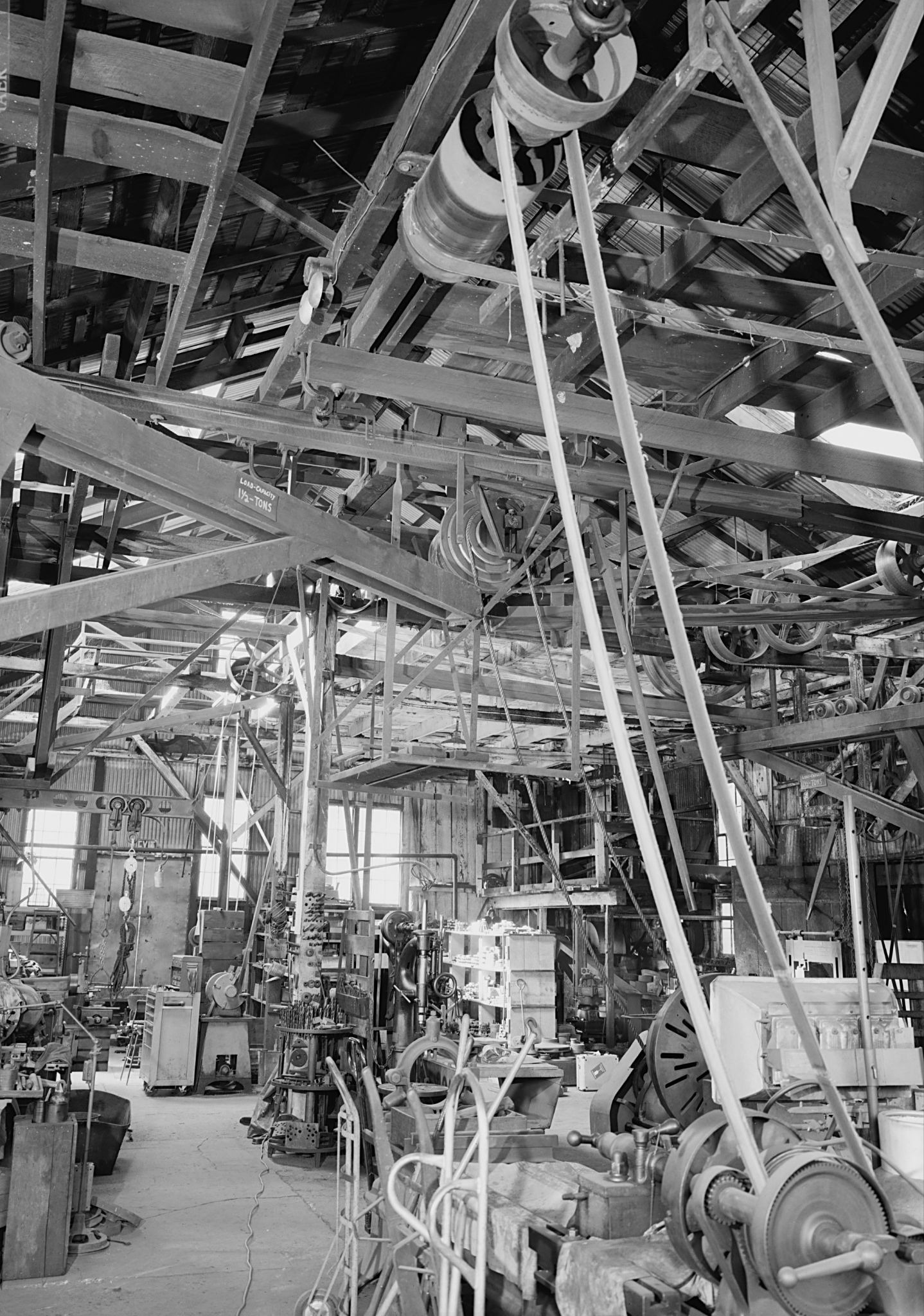
The estimable Tim O’Reilly reminds us to think deeply about how AI could and should turn out. He suggests that Jeff Ding‘s diffusion theory of the role of technology in great-power competition also applies to AI adoption– and that it suggests that companies obsessed with the frontier might be optimizing for the wrong thing…
In the 1980s, Japan led the world in semiconductors, consumer electronics, and computer hardware, the industries everyone assumed would decide the next phase of economic power. Japan won them and still did not overtake the United States in the information revolution that followed. Jeff Ding, a political scientist at George Washington University, opens his book Technology and the Rise of Great Powers with the history of the first and second industrial revolutions and the third, the information revolution. The explanation he gives for who wins and who loses applies to companies as well as it does to nations, and very much to the current trajectory of AI.
Ding contrasts two theories of how technological revolutions reshape economic power. The conventional one he calls the leading sector model, or LS theory. It goes like this: New technologies create fast-growing new industries like steel and railroads and automobiles and semiconductors, and the country that dominates invention in those sectors captures the monopoly profits and the upstream and downstream economic linkages that come with them. As the story goes, if you win the leading sector, you win the era. Britain won in the first industrial revolution through its mastery of steam power, and then was surpassed by the US in the second through its leadership in electrification, the internal combustion engine, and mass manufacturing. The US kept its lead over Japan in the information systems revolution not by competing in the “leading sector” of electronic hardware but by diffusing “up the stack” via software that took the power of computing into every sector of the economy. (OK, that last bit is my explanation of what happened rather than Ding’s, but it’s consistent with his theory.)
Leading Sector theory is pretty clearly the working hypothesis of today’s AI industry and the national strategy that is forming around that industry. The company and the country with the biggest and best models wins. Everyone else is an also-ran.
Ding offers another explanation, which he calls diffusion theory. He points out that general-purpose technologies, foundational ones like the steam engine, electricity, and the computer, don’t just create massive profits and productivity gains in a single industry but instead spread across the whole economy. National economic leadership comes not from inventing the new sector but from diffusing the general-purpose technology more quickly and more broadly than your rivals. This happens over decades. The win goes to whoever most successfully embeds the technology into a wide range of ordinary productive work. This is how the US kept its lead over Japan rather than being surpassed by it.
This is obviously aligned with the thinking of Arvind Narayanan and Sayash Kapoor in “AI as Normal Technology,” which Ding cites in his book.
A big part of what enables diffusion is what Ding calls skill infrastructure, the education and training systems that widen the pool of people who can actually work with the technology. When the priority is widespread adoption rather than invention, he argues, the institutions that matter are the ones that build engineering skill at scale, standardize good practice, and tie research to industry. He writes:
GPT diffusion theory highlights the importance of GPT [General Purpose Technology] skill infrastructure. Education and training systems that widen the pool of engineering skills and knowledge linked to a GPT. When widespread adoption of GPTs is the priority, it is ordinary engineers, not heroic inventors, who matter.
Music to my ears, as it should be to yours: “It is ordinary engineers, not heroic inventors, who matter.”
That is not how the current AI narrative goes. Everyone is fixated on the labs, the frontier models, and the most famous researchers. And that fixation shapes enterprise strategy. Inside many companies AI strategy is a procurement decision: Which model and which vendor and which flagship tool should we choose? Or it’s a moonshot to stand up a lab and build an impressive demo and hire your own famous developer. Both approaches treat AI as a sector to be won. Ding’s argument is that the breakthrough sector itself is not where the long-term value for national power lives. And I believe that the same applies to corporate success. The value is in how widely and how well the technology gets embedded into the work of the people you already employ. The company that puts AI to work in finance and support and legal and sales and operations, across every unglamorous process, as well as in product and engineering, outperforms its competitors and drives its industry forward.
The reason diffusion takes a long time is that it is an organizational problem and not a technical one…
[Tim elaborates, and specifies the requirements for successful management of what is an “enterprise transformation problem”; he then unpacks the geopolitics of AI. He concludes…]
… Sovereign AI is not just a matter of national power. It is a predictable consequence of diffusion. A technology that diffuses widely will be adapted by different societies, firms, and institutions to suit their own needs, values, and constraints. Sovereign AI is AI designed for diffusion, not just raw increases in capability.
This is one reason the arms-race framing is unhelpful. It encourages us to treat AI as if it were a weapons system or a scarce strategic asset. But if AI is closer to electrification, computing, or the written word, the important thing is how the technology is embedded into the ordinary life of economies and institutions, and whether that embedding happens in ways that increase agency broadly rather than concentrating it in a few hyperpowerful companies.
There are a few additional lessons we can take from the history of electrification. While motors became decentralized, factories stopped generating their own power and bought it from a centralized grid. The unit-drive revolution decentralized application, not generation. This limitation, which we are now working to overcome to some extent with decentralized solar generation, is perhaps ironically showing up most strongly in the strain that AI data centers are placing on the grid. Let’s learn from that misstep. You can diffuse AI into every workflow via API calls to a big centralized model, or it can be diffused by a network of smaller models that turbocharge every part of the economy.
We should design for a future of multiple AIs, not a single universal system. Different countries will want systems shaped by different legal regimes, languages, histories, and cultural assumptions. So will companies. So will professions and communities of practice. The instinct of some frontier labs is to imagine that the right answer is to homogenize the technology, purge it of bias, and offer a single sanitized intelligence layer for the world. But AI is a social and cultural technology. The differences are not a defect to be smoothed away.
We do need to think about standards and interoperability. The historical analogy that comes to mind is railroad gauge. When real world systems are built to incompatible standards, the result is not healthy diversity but decades of friction, kludges, and retrofitting. The same may prove true for AI. If we force the future into a choice between one universal model and a patchwork of disconnected sovereign systems, we will get the worst of both worlds. We need a layer between uniformity and fragmentation, which can come from standardized protocols that allow different models, tools, and institutions to interoperate without requiring them to become identical.
This is also why open source matters, but only if it is properly understood. Open source is not just about licenses. My earliest introduction to the shared development of software that now goes by that name came from the research community that grew up around Bell Labs’ Unix operating system despite AT&T’s proprietary (albeit permissive) licensing. Because of that experience, I became convinced that it was the modular, protocol-centric architecture of Unix that was a key driver of collaborative, internet-enabled software development.
Open source AI depends on far more than open models. It depends on the architecture of participation built into the systems above and around them: the protocols, servers, interfaces, and shared technical conventions that let many different actors build on common foundations. The Open Source AI Gap Map shows just how rich that open source AI ecosystem is becoming. But open source can also coexist with proprietary, de facto standards like the OpenAI and Anthropic APIs. Like the electric grid we are now beginning to rebuild, the AI future will be a mix of centralized and decentralized systems. Cooperation and competition can coexist. Different actors can build different systems, for different purposes, under different forms of governance, while still participating in a shared technical and economic order.
This is how the future can belong not just to the inventors of AI but to the people who make it usable, adaptable, interoperable, and worth adopting.
Eminently worth reading in full. AI for all of us: “Ordinary Engineers, Not Heroic Inventors,” from @timoreilly.bsky.social
Apposite: “How to talk about “AI” without adding to the anthropomorphization“
###
As we amplify access, we might we might spare a thought for someone who launched more than one central technology into braod diffusion: the Serbian-American electrical engineer and inventor Nikola Tesla; he died on this date in 1943. Tesla is probably best remembered for his rivalry with Thomas Edison: Tesla invented and patented the first AC motor and generator (c.f.: Niagara Falls); Edison promoted DC power… and went to great lengths to discredit Tesla and his approach. In the end, of course, Tesla was right.
Tesla patented over 300 inventions worldwide, though he kept many of his creations out of the patent system to protect their confidentiality. His work ranged widely, from technology critical to the development of radio to the first remote control. At the turn of the century, Tesla designed and began planning a “worldwide wireless communications system” that was backed by J.P. Morgan… until Morgan lost confidence and pulled out. “Cyberspace,” as described by the likes of William Gibson and Neal Stephenson, is largely prefigured in Tesla’s plan. On Tesla’s 75th birthday in 1931, Time put him on its cover, captioned “All the world’s his power house.” He received congratulatory letters from Albert Einstein and more than 70 other pioneers in science and engineering. But Tesla’s talent ran far, far ahead of his luck. He died penniless in Room 3327 of the New Yorker Hotel.

“The earth is bountiful, and where her bounty fails, nitrogen drawn from the air will refertilize her womb.”*…

As the Iran War continues to unfold, there is understandably a great deal of concern about energy prices (and the prices of things that depend on energy). We might forget that the Middle East is also crucial to the world’s fertilizer supply– though not for long, as farmers (along with everyone else in the food chain, all the way down to all of us eaters) are beginning to feel the pain.
But, as Diana Kruzman reports, even as fertilizer trade concerns are growing, a revolutionary sourcing alternative has emerged– one that could make a huge positive difference if it proves out at scale…
The world has an almost insatiable demand for nitrogen. Crops need it to grow, but although it makes up 78 percent of our atmosphere, plants can’t just pull it in from the air the way they do with oxygen. Instead, they rely on bacteria in the soil to convert it into nitrate, a form they can use; in the case of agriculture, think of fertilizer spread by humans. Leaving aside organic options like cow manure, most farmers use ammonia produced mainly from natural gas using a technique called the Haber-Bosch process, which was invented in 1909. [See also here.]
Haber-Bosch is expensive and energy-intensive, responsible for up to two percent of the world’s annual greenhouse gas emissions. It’s also spurred a global nitrogen pollution crisis; as much as two-thirds of nitrogen fertilizer applied to crops is never used, and the excess escapes into the soil, air, and water, raising the cancer risk in nearby communities and contributing to climate change.
Researchers have been trying to find an alternative way to get nitrogen to plants for decades — turning to everything from microbes to human urine. But so far, these scientific advancements haven’t translated into much practical change for farmers, who for the most part still rely on ammonia (which, granted, is getting greener, but is increasingly vulnerable to global price shocks).
That could soon change with the growth in popularity of a new technology known as plasma activated water, or PAW. Around the U.S., scientists and startups are experimenting with this high-tech solution, which uses electricity to pull nitrogen from the air, mix it with water, and create fertilizer straight on the farm. The concept, on the surface, seems suspiciously rosy — on-demand nitrogen, in a form plants can use, at just the cost of electricity (and the initial price of the machine used to make it). But early adopters have told Offrange that it genuinely works…
… PAW uses electricity to transform air into plasma — the fourth state of matter (besides gases, solids, and liquids), which typically forms at high temperatures. When the plasma comes into contact with water, it encourages chemical reactions that form nitrates — the type of nitrogen that plants need. Though this process was actually invented in 1903, even before Haber-Bosch, it required so much energy that it never achieved widespread use.
But in recent years, those energy needs have gone down thanks to the development of “cold plasma” technology, which operates at less than 60 degrees Fahrenheit. It’s also used for medical sterilization and food safety, and over the last decade researchers have worked to develop new ways to apply it for agricultural production…
More at: “Pulling Nitrogen From the Air” from @dkruzman.bsky.social.
* Nikola Tesla (who, around 1900, imagined and experimented with something like the Birkeland–Eyde-based plasma process described above)
###
As we count on creativity, we might send healthy birthday greetings to a man who explained one of the central ways in which we depend on the food that we eat, William Cumming Rose; he was born on this date in 1887. A biochemist, he researched amino acids, discovered threonine, and established the importance of the nine essential amino acids in human nutrition (that’s to say, the amino acids that our bodies cannot synthesize and that we must consume in our food). He received the National Medal of Science in 1966.

“Human progress is neither automatic nor inevitable”*…

Over the last decade there has emerged a growing and influential intellectual movement focused on progress— how it happens and how to speed it up. Fomented by thinkers like Tyler Cowan and Patrick Collison, the movement has raised tantalizing prospects… and some real fears about the risks that experimental, entrepreneurial efforts to accelerate advancement might entail: will enthusiasm outrun safeguards? And who gets to define what represents “progress” anyway?
Jason Crawford, another leader of the progress movement addresses these concerns…
In one sense, the concept of progress is simple, straightforward, and uncontroversial. In another sense, it contains an entire worldview.
The most basic meaning of “progress” is simply advancement along a path, or more generally from one state to another that is considered more advanced by some standard. (In this sense, progress can be good, neutral, or even bad—e.g., the progress of a disease.) The question is always: advancement along what path, in what direction, by what standard?
“Scientific progress,” “technological progress,” and “economic progress” are relatively straightforward. They are hard to measure, they are multi-dimensional, and we might argue about specific examples—but in general, scientific progress consists of more knowledge, better theories and explanations, a deeper understanding of the universe; technological progress consists of more inventions that work better (more powerfully or reliably or efficiently) and enable us to do more things; economic progress consists of more production, infrastructure, and wealth.
“Scientific progress,” “technological progress,” and “economic progress” are relatively straightforward. They are hard to measure, they are multi-dimensional, and we might argue about specific examples—but in general, scientific progress consists of more knowledge, better theories and explanations, a deeper understanding of the universe; technological progress consists of more inventions that work better (more powerfully or reliably or efficiently) and enable us to do more things; economic progress consists of more production, infrastructure, and wealth.
But this form of progress is not an end in itself. True progress is advancement toward the good, toward ultimate values—call this “ultimate progress,” or “progress in outcomes.” Defining this depends on axiology; that is, on our theory of value.
[Crawford unpacks humanist and biocentrist values as examples…]
… What are we talking about when we refer to “progress” unqualified, as in “the progress of mankind” or “the roots of progress”?
“Progress” in this sense is the concept of material progress, social progress, and human progress as a unified whole. It is based on the premise that progress in capabilities really does on the whole lead to progress in outcomes. This doesn’t mean that all aspects of progress move in lockstep—they don’t. It means that all aspects of progress support each other and over the long term depend on each other; they are intertwined and ultimately inseparable…
David Deutsch, in The Beginning of Infinity, is even more explicit, saying that progress includes “improvements not only in scientific understanding, but also in technology, political institutions, moral values, art, and every aspect of human welfare.”
Skepticism of this idea of progress is sometimes expressed as: “progress towards what?” The undertone of this question is: “in your focus on material progress, you have lost sight of social and/or human progress.” On the premise that different forms of progress are diverging and even coming into opposition, this is an urgent challenge; on the premise that progress a unified whole, it is a valuable intellectual question but not a major dilemma.
“Progress” is also an interpretation of history according to which all these forms of progress have, by and large, been happening.
In this sense, the study of “progress” is the intersection of axiology and history: given a standard of value, are things getting better?
In Steven Pinker’s book Enlightenment Now: The Case for Reason, Science, Humanism, and Progress, the bulk of the chapters are devoted to documenting this history. Many of the charts in that book were sourced from Our World in Data, which also emphasizes the historical reality of progress.

Not everyone agrees with this concept of progress. It depends on an Enlightenment worldview that includes confidence in reason and science, and a humanist morality…
[Crawford reviews critiques of “progress” and unpacks the disastrous history of “progress” thinking– which contributed to totalitarianism– in the 20th century…]
… To move forward, we need a wiser, more mature idea of progress.
Progress is not automatic or inevitable. It depends on choice and effort. It is up to us.
Progress is not automatically good. It must be steered. Progress always creates new problems, and they don’t get solved automatically. Solving them requires active focus and effort, and this is a part of progress, too.
Material progress does not automatically lead to moral progress. Technology within an evil social system can do more harm than good. We must commit to improving morality and society along with science, technology, and industry.
With these lessons well learned, we can rescue the idea of progress and carry it forward into the 21st century and beyond…
Agree? “What is Progress?” from @jasoncrawford.
* Dr. Martin Luther King, Jr.
###
As we analyze advancement, we might spare a thought for George Westinghouse; he died on this date in 1914. An engineer, inventor, and industrialist, he built his first fortune marketing the railroad air brake that he invented. But he soon turned his attention to the emerging electrical industry– of which he became a pioneer. He acquired the rights to inventor Nikola Tesla‘s brushless AC induction motor (the initial “engine” of everything electric from industrial motors to household appliances) along with patents for a new type of electric power distribution, polyphase alternating current… which put Westinghouse into direct competition with Thomas Edison, who was promoting direct current. (In the end, AC came to dominate.)

“People overestimate what they can do in one year and underestimate what they can do in 10 years”*…

This is especially true, argue Sam Butler-Sloss and Kingsmill Bond of the Rocky Mountain Institute, when it comes to assessing our progress in addressing the challenges of climate change with renewable energy solutions…
The renewable revolution is advancing at remarkable speed. In fact, the speed of the renewable revolution has defied many leading energy commentators who have continuously underestimated its true trajectory. They have suffered from what statisticians call a systematic bias, that is, an error that consistently skews in one direction. Noise, or a random error, is inherent to forecasting; bias, however, requires a deeper explanation.
So why do so many intelligent people undersell the pace and dynamism of the renewable revolution? Leaving aside the inherent bias of those seeking to prop up the fossil fuel system in order to enjoy the largesse of its annual $2 trillion in rents, we identify eight deadly sins of the energy transition.
Whether intentional or unwitting, these eight general errors of perspective are holding back understanding, wasting time and capital, and fueling unproductive climate pessimism…
The renewable revolution is plainly gaining speed and impact. Read on to learn why are so many analysts so wrong about the pace and scale of innovation: “The Eight Deadly Sins of Analyzing the Energy Transition,” from @SamButl3r and @KingsmillBond at @RockyMtnInst. (TotH to friend MZ)
See also: “When Idiot Savants Do Climate Economics.”
* Bill Gates
###
As we contemplate compounding, we might recall that it was on this date in 1896 that Nikola Tesla and Westinghouse Electric achieved the first long-distance transmission of hydroelectricity: from the Niagara Falls Power Company to Buffalo, N.Y., 26 miles away.

“‘Now I understand,’ said the last man”*…

All revolutions come to an end, whether they succeed or fail.
The digital revolution began when stored-program computers broke the distinction between numbers that mean things and numbers that do things. Numbers that do things now rule the world. But who rules over the machines?
Once it was simple: programmers wrote the instructions that were supplied to the machines. Since the machines were controlled by these instructions, those who wrote the instructions controlled the machines.
Two things then happened. As computers proliferated, the humans providing instructions could no longer keep up with the insatiable appetite of the machines. Codes became self-replicating, and machines began supplying instructions to other machines. Vast fortunes were made by those who had a hand in this. A small number of people and companies who helped spawn self-replicating codes became some of the richest and most powerful individuals and organizations in the world.
Then something changed. There is now more code than ever, but it is increasingly difficult to find anyone who has their hands on the wheel. Individual agency is on the wane. Most of us, most of the time, are following instructions delivered to us by computers rather than the other way around. The digital revolution has come full circle and the next revolution, an analog revolution, has begun. None dare speak its name.
Childhood’s End was Arthur C. Clarke’s masterpiece, published in 1953, chronicling the arrival of benevolent Overlords who bring many of the same conveniences now delivered by the Keepers of the Internet to Earth. It does not end well…
George Dyson explains that nations, alliances of nations, and national institutions are in decline, while a state perhaps best described as “Oligarchia” is on the ascent: the Edge New Year’s Essay, “Childhood’s End.”
(For Nick Bilton’s thoughts on the piece, see here; and for a different perspective on the same dynamics, see, e.g., Kevin Kelly’s The Inevitable.)
Childhood’s End
###
As we ponder the possibilities of posterity, we might spare a thought for Serbian-American electrical engineer and inventor Nikola Tesla; he died on this date in 1943. Tesla is probably best remembered for his rivalry with Thomas Edison: Tesla invented and patented the first AC motor and generator (c.f.: Niagara Falls); Edison promoted DC power… and went to great lengths to discredit Tesla and his approach. In the end, of course, Tesla was right.
Tesla patented over 300 inventions worldwide, though he kept many of his creations out of the patent system to protect their confidentiality. His work ranged widely, from technology critical to the development of radio to the first remote control. At the turn of the century, Tesla designed and began planning a “worldwide wireless communications system” that was backed by J.P. Morgan… until Morgan lost confidence and pulled out. “Cyberspace,” as described by the likes of William Gibson and Neal Stephenson, is largely prefigured in Tesla’s plan. On Tesla’s 75th birthday in 1931, Time put him on its cover, captioned “All the world’s his power house.” He received congratulatory letters from Albert Einstein and more than 70 other pioneers in science and engineering. But Tesla’s talent ran far, far ahead of his luck. He died penniless in Room 3327 of the New Yorker Hotel.

You must be logged in to post a comment.