Posts Tagged ‘railway’
“Human progress is neither automatic nor inevitable”*…
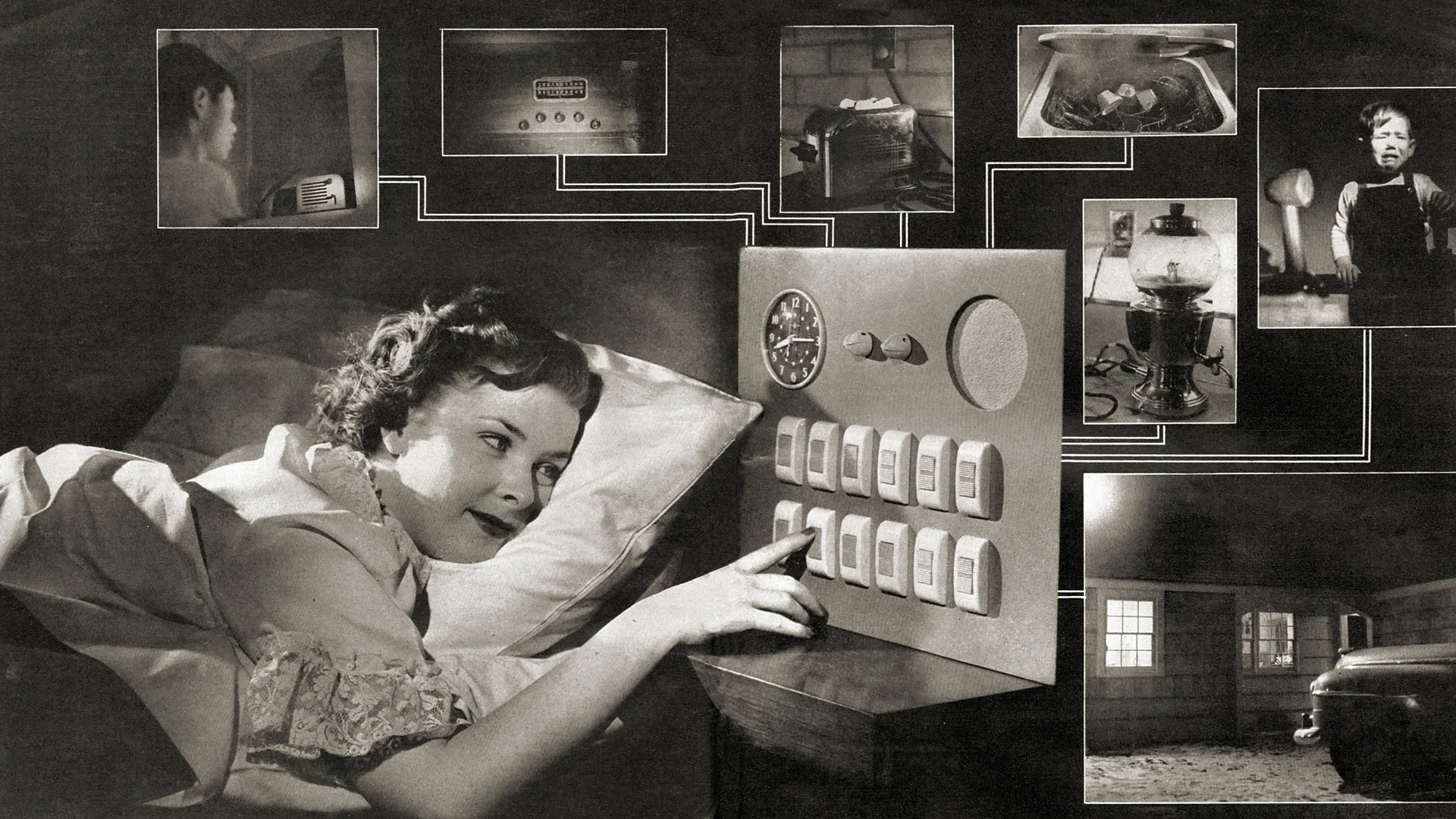
Over the last decade there has emerged a growing and influential intellectual movement focused on progress— how it happens and how to speed it up. Fomented by thinkers like Tyler Cowan and Patrick Collison, the movement has raised tantalizing prospects… and some real fears about the risks that experimental, entrepreneurial efforts to accelerate advancement might entail: will enthusiasm outrun safeguards? And who gets to define what represents “progress” anyway?
Jason Crawford, another leader of the progress movement addresses these concerns…
In one sense, the concept of progress is simple, straightforward, and uncontroversial. In another sense, it contains an entire worldview.
The most basic meaning of “progress” is simply advancement along a path, or more generally from one state to another that is considered more advanced by some standard. (In this sense, progress can be good, neutral, or even bad—e.g., the progress of a disease.) The question is always: advancement along what path, in what direction, by what standard?
“Scientific progress,” “technological progress,” and “economic progress” are relatively straightforward. They are hard to measure, they are multi-dimensional, and we might argue about specific examples—but in general, scientific progress consists of more knowledge, better theories and explanations, a deeper understanding of the universe; technological progress consists of more inventions that work better (more powerfully or reliably or efficiently) and enable us to do more things; economic progress consists of more production, infrastructure, and wealth.
“Scientific progress,” “technological progress,” and “economic progress” are relatively straightforward. They are hard to measure, they are multi-dimensional, and we might argue about specific examples—but in general, scientific progress consists of more knowledge, better theories and explanations, a deeper understanding of the universe; technological progress consists of more inventions that work better (more powerfully or reliably or efficiently) and enable us to do more things; economic progress consists of more production, infrastructure, and wealth.
But this form of progress is not an end in itself. True progress is advancement toward the good, toward ultimate values—call this “ultimate progress,” or “progress in outcomes.” Defining this depends on axiology; that is, on our theory of value.
[Crawford unpacks humanist and biocentrist values as examples…]
… What are we talking about when we refer to “progress” unqualified, as in “the progress of mankind” or “the roots of progress”?
“Progress” in this sense is the concept of material progress, social progress, and human progress as a unified whole. It is based on the premise that progress in capabilities really does on the whole lead to progress in outcomes. This doesn’t mean that all aspects of progress move in lockstep—they don’t. It means that all aspects of progress support each other and over the long term depend on each other; they are intertwined and ultimately inseparable…
David Deutsch, in The Beginning of Infinity, is even more explicit, saying that progress includes “improvements not only in scientific understanding, but also in technology, political institutions, moral values, art, and every aspect of human welfare.”
Skepticism of this idea of progress is sometimes expressed as: “progress towards what?” The undertone of this question is: “in your focus on material progress, you have lost sight of social and/or human progress.” On the premise that different forms of progress are diverging and even coming into opposition, this is an urgent challenge; on the premise that progress a unified whole, it is a valuable intellectual question but not a major dilemma.
“Progress” is also an interpretation of history according to which all these forms of progress have, by and large, been happening.
In this sense, the study of “progress” is the intersection of axiology and history: given a standard of value, are things getting better?
In Steven Pinker’s book Enlightenment Now: The Case for Reason, Science, Humanism, and Progress, the bulk of the chapters are devoted to documenting this history. Many of the charts in that book were sourced from Our World in Data, which also emphasizes the historical reality of progress.

Not everyone agrees with this concept of progress. It depends on an Enlightenment worldview that includes confidence in reason and science, and a humanist morality…
[Crawford reviews critiques of “progress” and unpacks the disastrous history of “progress” thinking– which contributed to totalitarianism– in the 20th century…]
… To move forward, we need a wiser, more mature idea of progress.
Progress is not automatic or inevitable. It depends on choice and effort. It is up to us.
Progress is not automatically good. It must be steered. Progress always creates new problems, and they don’t get solved automatically. Solving them requires active focus and effort, and this is a part of progress, too.
Material progress does not automatically lead to moral progress. Technology within an evil social system can do more harm than good. We must commit to improving morality and society along with science, technology, and industry.
With these lessons well learned, we can rescue the idea of progress and carry it forward into the 21st century and beyond…
Agree? “What is Progress?” from @jasoncrawford.
* Dr. Martin Luther King, Jr.
###
As we analyze advancement, we might spare a thought for George Westinghouse; he died on this date in 1914. An engineer, inventor, and industrialist, he built his first fortune marketing the railroad air brake that he invented. But he soon turned his attention to the emerging electrical industry– of which he became a pioneer. He acquired the rights to inventor Nikola Tesla‘s brushless AC induction motor (the initial “engine” of everything electric from industrial motors to household appliances) along with patents for a new type of electric power distribution, polyphase alternating current… which put Westinghouse into direct competition with Thomas Edison, who was promoting direct current. (In the end, AC came to dominate.)

“How dare you try to hog all the continent!”*…

Historian Richard White on the greed, ineptitude, and economic cost behind the transcontinental railroads of the 19th century, and what that says about the development of infrastructure today…
Politicians love a good historical analogy. That’s why Joe Biden has compared his infrastructure law to the construction of the interstate highway system and the transcontinental railroad. The president, of course, means such comparisons in a flattering light. For those who have studied these revolutionary policy choices, however, the consequences are not so unblemished.
Ten years ago, historian Richard White catalogued the greed and ineptitude of railroad executives and the policymakers who blindly enabled their schemes. In Railroaded: The Transcontinentals and the Making of Modern America, he explored the history of corporations that have gone down in American myth as corrupt but ultimately productive and necessary.
White argues that the transcontinental railroad companies were not necessary for stitching the young country together; they were simply an example of “dumb growth” that hurt more than it helped. Sped along by state subsidy and paid-for politicians, these corporations built in places where there were no markets. They never made money. The entire enterprise was a vast Ponzi scheme, and its periodic turmoil threw the nation into repeated economic crisis. Their selfish flailing scourged wildlife, oppressed Native Americans, and spread new settlements to areas where they could not be sustained (and after long suffering were not).
Instead of an all-powerful “octopus” engulfing the country, he saw the railroad men as a collection of myopic and unintelligent executives who could not have survived year to year without government subsidy. Instead of a monstrous kraken, he suggested a better analogy would be “a group of fat men in an Octopus suit fighting over the controls” of a train going off the rails…
Governing (@GOVERNING) talks with White about lessons for today’s infrastructure programs: “Breaking the Myth About America’s ‘Great’ Railroad Expansion.”
See also: “Years of Delays, Billions in Overruns: The Dismal History of Big Infrastructure” “These days, the bigger the company, the less you can figure out what it does.”
* Collis Huntington (lead investor in the Central Pacific Railroad) to “Doc” Durant (V.P., and operating head of the Union Pacific Railroad) in 1862
###
As we learn from our mistakes, we might recall that it was on this date in 1845 that President James K. Polk, citing “Manifest Destiny” in a State of the Union message, proposed that the United States should aggressively expand into the West.
It was the 22nd anniversary of President James Monroe‘s declaration of the New World as a sphere of influence off-limits to intervention by Old World (colonial) powers, and suggesting that any such incursion would be deemed an act of aggression against the U.S. From 1850, this policy has been known as “the Monroe Doctrine.”

“When you’re dead, they really fix you up”*…

For 87 years, nearly every day, a single train ran out of London and back. It left from a dedicated station near Waterloo built specifically for the line and its passengers. The 23-mile journey, which had no stops after leaving London, took 40 minutes. Along the way to their destination, riders glimpsed the lovely landscapes of Westminster, Richmond Park and Hampton Court — no mistake, as the route was chosen partly for its “comforting scenery”, as one of the railway’s masterminds noted.
How much comfort a route gives passengers isn’t a usual consideration for a train line. But this was no normal train line.
Many of the passengers on the train would be distraught. The others — those passengers’ loved ones — be dead. Their destination: the cemetery.
In operation from 1854 to 1941, the London Necropolis Railway was the spookiest, strangest train line in British history. It transported London’s dead south-west to Brookwood Cemetery, near Woking, in Surrey, a cemetery that was built in tandem with the railway. At its peak, from 1894 to 1903, the train carried more than 2,000 bodies a year.
It also transported their families and friends. Guests could leave with their dearly departed at 11:40am, attend the burial, have a funeral party at one of the cemetery’s two train stations (complete with home-cooked ham sandwiches and fairy cakes), and then take the same train back, returning to London by 3:30pm.
The pairing of grief and efficiency may seem a little jarring. It did then, too…
For the full story, hop aboard at “The passenger train created to carry the dead.”
* J.D. Salinger, The Catcher in the Rye
###
As we struggle with our sugar hangovers, we might recall that today is Graveyard Day– or more politely, All Hallows or All Saints Day– a Christian celebration of all saints, “known and unknown.”

“The Forerunners of Christ with Saints and Martyrs,” Fra Angelico (c. 1423-4)
You must be logged in to post a comment.