Posts Tagged ‘creationism’
“I failed in some subjects in exams, but my friend passed in all. Now he is an engineer in Microsoft and I am the owner of Microsoft.”*…

And that, Yasheng Huang argues, is not something likely to happen in China, for a reason that dates back to the 6th century…
On 7 and 8 June 2023, close to 13 million high-school students in China sat for the world’s most gruelling college entrance exam. ‘Imagine,’ wrote a Singapore journalist, ‘the SAT, ACT, and all of your AP tests rolled into two days. That’s Gao Kao, or “higher education exam”.’ In 2023, almost 2.6 million applied to sit China’s civil service exam to compete for only 37,100 slots.
Gao Kao and China’s civil service exam trace their origin to, and are modelled on, an ancient Chinese institution, Keju, the imperial civil service exam established by the Sui Dynasty (581-618). It can be translated as ‘subject recommendation.’ Toward the end of its reign, the Qing dynasty (1644-1911) abolished it in 1905 as part of its effort to reform and modernize the Chinese system. Until then, Keju had been the principal recruitment route for imperial bureaucracy. Keju reached its apex during the Ming dynasty (1368-1644). All the prime ministers but one came through the Keju route and many of them were ranked at the very top in their exam cohort…
Much of the academic literature focuses on the meritocracy of Keju. The path-breaking book in this genre is Ping-ti Ho’s The Ladder of Success in Imperial China (1962). One of his observations is eye catching: more than half of those who obtained the Juren degree were first generation: ie, none of their ancestors had ever attained a Juren status. (Juren was, at the time, the first degree granted in the three-tiered hierarchy of Keju.) More recent literature demonstrates the political effects of Keju. In 1905, the Qing dynasty abolished Keju, dashing the aspirations of millions and sparking regional rebellions that eventually toppled China’s last imperial regime in 1911.
The political dimension of Keju goes far beyond its meritocracy and its connection to the 1911 republican revolution. For an institution that had such deep penetration, both cross-sectionally in society and across time in history, Keju was all encompassing, laying claims to the time, effort and cognitive investment of a significant swathe of the male Chinese population. It was a state institution designed to augment the state’s own power and capabilities. Directly, the state monopolised the very best human capital; indirectly, the state deprived society of access to talent and pre-empted organised religion, commerce and the intelligentsia. Keju anchored Chinese autocracy.
The impact of Keju is still felt today, not only in the form and practice of Gao Kao and the civil service exam but also because Keju incubated values and work ethics. Today, Chinese minds still bear its imprint. For one, Keju elevated the value of education and we see this effect today. A 2020 study shows that, for every doubling of successful Keju candidates per 10,000 of the population in the Ming-Qing period, there was a 6.9 per cent increase in years of schooling in 2010. The Keju exams loom as part of China’s human capital formation today, but they also cultivated and imposed the values of deference to authority and collectivism that the Chinese Communist Party has reaped richly for its rule and legitimacy…
An ultimate autocracy is one that reigns without society. Society shackles the state in many ways. One is ex ante: it checks and balances the actions of the state. The other is ex post. A strong society provides an outside option to those inside the state. Sometimes, this is derisively described as ‘a revolving door’, but it may also have the positive function of checking the power of the state. State functionaries can object to state actions by voting with their feet, as many US civil servants did during the Donald Trump administration, and thereby drain the state of the valuable human capital it needs to function and operate. A strong society raises the opportunity costs for the state to recruit human capital but such a receptor function of society has never existed at scale in imperial China nor today, thanks – in large part, I would argue – to Keju.
Keju was so precocious that it pre-empted and displaced an emergent society. Meritocracy empowered the Chinese state at a time when society was still at an embryonic stage. Massive resources and administrative manpower were poured into Keju such that it completely eclipsed all other channels of upward mobility that could have emerged. In that sense, the celebration by many of Keju’s meritocracy misses the bigger picture of Chinese history. It is a view of a tree rather than of a forest…
…Its impressive bureaucratic mobility demolished all other mobility channels and possibilities. Keju was an anti-mobility mobility channel. It packed all the upward mobility within one channel – that of the state. Society was crowded out, and over time, due to its deficient access to quality human capital, it atrophied. This is the root of the power of Chinese autocracy and, I would argue, it is a historical development that is unique to China and explains the awesome power of Chinese autocracy…
…
There was, however, a massive operational advantage to the Neo-Confucianist curriculum: it standardised everything. Standardisation abhors nuance and the evaluations became more straightforward as the baseline comparison was more clearly delineated. There was objectivity, even if the objectivity was a manufactured artefact. The Chinese invented the modern state and meritocracy, but above all the Chinese invented specialised standardised testing – the memorisation, cognitive inclination and frame of references of an exceedingly narrow ideology.
Ming standardised Keju further: it enforced a highly scripted essay format, known as the ‘eight-legged essay’, or baguwen in Chinese (八股文), to which every Keju candidate had to adhere. A ‘leg’ here refers to each section of an essay, with a Keju essay requiring eight sections: 1) breaking open the topic; 2) receiving the topic; 3) beginning the discussion; 4) the initial leg; 5) the transition leg; 6) the middle leg; 7) the later leg; and 8) conclusion. The eight-legged essay fixed more than the aggregate structure of exposition. The specifications were granular and detailed. For example, the number of phrases was specified in each of the sections and the entire essay required expressions in paired sentences – a minimum of six paired sentences, up to a maximum of 12. The key contribution of the eight-legged essay is that it packed information into a pre-set presentational format.
Standardisation was designed to scale the Keju system and it succeeded brilliantly in that regard, but it had a devastating effect on expositional freedom and human creativity. All elements of subjectivity and judgment were taken out. In his book Traditional Government in Imperial China (1982), the historian Ch’ien Mu describes the ‘eight-legged essay’ as ‘the greatest destroyer of human talent.’…
In his book The WEIRDest People in the World (2020), Joseph Henrich posited that the West prospered because of its early lead in literacy. Yet the substantial Keju literacy produced none of the liberalising effects on Chinese ideas, economy or society. The literacy that Henrich had in mind was a particular kind of literacy – Protestant literacy – and the contrast with Keju literacy could not have been sharper. Keju literacy was drilled and practised in classical and highly stratified Chinese, the language of the imperial court rather than the language of the masses, in sharp contrast to Protestant literacy. Protestant literacy empowered personal agency by embracing and spreading vernaculars of the masses. Henrich’s liberalising ‘WEIRD’ effect – Western, educated, industrialised, rich and democratic – was a byproduct of Protestant literacy. It is no accident that Keju literacy produced an opposite effect…
Not everyone sees the Western/WEIRD definition of creativity and innovation as the only important one (c.f., here and here), nor that China is as lacking in what Westerners call creativity and innovation (c.f., here— possible soft paywall, and here). Still, Huang’s essay on Keju, China’s incredibly difficult civil service test, and how it strengthened the state at the cost of freedom and creativity, is eminently worthy of reading full: “The exam that broke society,” from @YashengHuang in @aeonmag.
And for the amazing (and amusing) story of how the Keju was instrumental in the introduction of Catholicism into China, see Jonathan Spence’s wonderful The Memory Palace of Matteo Ricci.
* Bill Gates
###
As we study, we might recall that it was on this date in 4004 BCE that the Universe was created… as per calculations by Archbishop James Ussher in the mid-17th century.
When Clarence Darrow prepared his famous examination of William Jennings Bryan in the Scopes trial [see here], he chose to focus primarily on a chronology of Biblical events prepared by a seventeenth-century Irish bishop, James Ussher. American fundamentalists in 1925 found—and generally accepted as accurate—Ussher’s careful calculation of dates, going all the way back to Creation, in the margins of their family Bibles. (In fact, until the 1970s, the Bibles placed in nearly every hotel room by the Gideon Society carried his chronology.) The King James Version of the Bible introduced into evidence by the prosecution in Dayton contained Ussher’s famous chronology, and Bryan more than once would be forced to resort to the bishop’s dates as he tried to respond to Darrow’s questions.
“Bishop James Ussher Sets the Date for Creation”

“24 hours in a day, 24 beers in a case. Coincidence?”*…

Social distancing makes a soul thirsty– and as the Journal of the American Medical Association reports, that has had consequences…
Alcohol consumption has substantially increased during the COVID-19 pandemic… We examined national changes in waiting list registration and liver transplantation for ALD and the association with alcohol sales during the COVID-19 pandemic. We hypothesized that waiting list registrations and deceased donor liver transplants (DDLTs) for alcoholic hepatitis (AH), which can develop after a short period of alcohol misuse, would disproportionately rise…
This cross-sectional study found that waiting list registrations and DDLTs for AH increased significantly during COVID-19, exceeding the volumes forecasted by pre–COVID-19 trends by more than 50%, whereas trends for AC and non-ALD remained unchanged. While we cannot confirm causality, this disproportionate increase in association with increasing alcohol sales may indicate a relationship with known increases in alcohol misuse during COVID-19. Since less than 6% of patients with severe AH are listed for transplantation, increasing waiting list volume during COVID-19 represents a small fraction of the increase in AH, a preventable disease with 6-month mortality up to 70%.
Pandemic drinking is up– way up. So, it turns out, is serious liver disease: “Association of COVID-19 With New Waiting List Registrations and Liver Transplantation for Alcoholic Hepatitis in the United States.”
And lest we think think that waning COVID-19 pressure will be the end of all of this, a warning: “The Coming Age of Climate Trauma.”
[Image above: source]
* Steven Wright
###
As we muse on moderation, we might recall that it was on this date in 2012 that Charles Darwin received about 4,000 write-in votes in the election in Georgia’s 10th Congressional District. Republican Paul Broun, an M.D. who was running unopposed for re-election, had given (the September before) a campaign speech at the Liberty Baptist Church Sportsman’s Banquet in which he said “All that stuff I was taught about evolution and embryology and the Big Bang Theory, all that is lies straight from the pit of Hell.”
In response, radio talk show host Neil Boortz and University of Georgia plant biology professor Jim Leebens-Mack spearheaded a campaign to run the English naturalist and evolutionary theorist against Broun, a young earth creationist. They had no expectation of unseating him (and indeed, Broun carried his district handily) but hoped to draw attention to these comments from the scientific community and to have Broun removed from his post on the House Science Committee– at which they also failed.

Lower head, insert into sand…
 Exhibit at the Creation Museum: humans and dinosaurs existing together peacefully…
From Talking Points Memo:
[In a vote in Congress last week] thirty-one Republicans on the House Energy And Commerce Committee — the entire Republican contingent on the panel — declined on Tuesday to vote in support of the very idea that climate change exists.
Democrats on the panel had suggested three amendments that said climate change is a real thing, is caused by humans and has potentially dire consequences for the future. The amendments came on a Republican bill to block the EPA from offering regulations to mitigate the results of global climate shifts. The global scientific community is in near unanimous agreement that climate change is real, and that humans contribute to it…
One appreciates that the dialectic machinery of partisan politics was at work here; still…
Read the full report, including the “offending” language in the proposed amendments, here.
As we prepare for an(other) epic flood, we might recall that it was on this date in 1827 that Charles Darwin made his earliest scientific discovery, at age 18. He dissected some specimens of a barnacle-like marine organism, the polyzoan Flustra… Thus beginning what became a lifelong commitment to natural history.
 Young Darwin (source)
It’s positively evolutionary!…

Since 1982, the Gallup polling organization has been asking Americans about their beliefs as to the origin of our species. The latest results are in; and while a plurality of those queried still believe that “God created human beings pretty much in their present form at one time in the last ten thousand years or so,” a growing minority professes belief in some form of evolution:

There’s been no revolutionary change of beliefs over the last three decades, but one can detect a shift that’s… well, positively evolutionary.
As we begin at the beginning, we might wish a happy birthday to Isaak Yudovich Ozimov– aka Isaac Asimov– who was born on this date in 1920. A biochemistry professor, he is better remembered as an author– more specifically, as one one of the greatest science fiction authors of his time (imaginer of “The Foundation,” coiner of the term “robotics,” and author of “The Three Laws of Robotics”). But Asimov was extraordinarily prolific; he published over 500 books– including (in addition to sci fi) mysteries, a great deal of popular science, even a worthy volume on Shakespeare– and wrote an estimated 9,000 letters and postcards.

Inheriting the Wind*…
From DetentionSlip.com (“your daily cheat sheet for education news”), a sobering infographic on the state of education in the U.S., “Creationism vs. Darwinism in the U.S.”; an excerpt:

Click here to see the infographic in full (and then again on the image there, to enlarge).
* Inherit the Wind, the play (then movies) that fictionalized the Scopes trial, took it’s title from Proverbs 11:29, which (in the King James version) reads:
He that troubleth his own house shall inherit the wind:
and the fool shall be servant to the wise of heart.
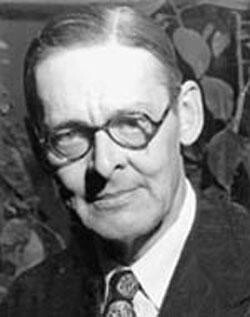
As we own up to ontology, we might might recall that it was on this date in 1950 that T.S. Eliot, then 62, observed that “the years between 50 and 70 are the hardest. You are always being asked to do things, and yet are not decrepit enough to turn them down.” Among those nagging tasks: picking up his Nobel Prize for literature two years earlier.
Signs are taken for wonders. “We would see a sign!”
The word within a word, unable to speak a word,
Swaddled with darkness.
– “Gerontion”
You must be logged in to post a comment.