Posts Tagged ‘books’
“I spend too much money on books, many of which I will never read. I know that already. I certainly intend to read all of them, more or less. My intentions are good. Anyway, it’s my money. And I’ll bet you do it too.”*…

‘Twas ever thus. As Denise Gigante eaplains, nineteenth-century New York City was filled with books, bibliophilia, and marginalia…
By the nineteenth century, readers were feeling lost in a sea of print, and though this feeling was not entirely new, it was exacerbated by new print technologies and cheap reprints flooding the literary marketplace….
In New York in the 1840s, books and printed matter were everywhere. Up and down Broadway, boxes of used books cluttered the sidewalks. Newsstands stocked papers, literary journals, and magazines, while street vendors hawked the latest serialized novels by Dickens: “He-e-ere’s the New World—Dick’s new work. Here’s the New World—buy Master Humphrey, sir?”
From storefront windows, new books appealed to pedestrians with siren songs of entertainment and instruction at bargain prices, while literary annuals, gift books, and illustrated editions catered to an expanding American readership. New steam-powered rotary printing technology invented in New York in the mid-1840s revolutionized the print industry, rolling out thousands of pages per hour, while other innovations, such as stereotype printing, enabled a boom in cheap reading matter…
When technologically-enhanced supply met increased demand: “Choice Reading,” from @laphamsquart.
See also: “The value of owning more books than you can read.”
* Nick Hornby
###
As we read on, we might note that it was on this date in 1865 that a notable volume joined the parade of new books described in the article linked above: Alice’s Adventures in Wonderland (and here) was written by Charles Lutwidge Dodgson– better known as Lewis Carroll– went on sale in America for the first time (a revised edition of the first British version). Copies of the first U.S. edition, with illustrations created by John Tenniel, sold out quickly; the volume has never gone out of print since.

First edition cover (source)
“There is only one recipe for a best seller and it is a very simple one. You have to get the reader to turn over the page.”*…

Turns out, as Jordan Pruett explains, that while page-turning is necessary, it’s not sufficient…
In 1983, William Blatty—author of The Exorcist—sued the New York Times. His lawsuit alleged that the Times had incorrectly excluded his latest novel, Legion (a sequel to The Exorcist), from its bestseller list—the coveted ranking that purports to show the books that have sold the most copies that week in the United States. According to Blatty’s lawyers, Legion had sold enough copies to warrant a spot on the list, so its absence was due to negligence or fraud, for which Blatty was entitled to compensation. The Times countered with what might sound like a surprising admission: the bestseller list is not mathematically objective; it is editorial content, which is protected by the First Amendment. The court ruled in favor of the New York Times.
The Blatty case draws attention to a fundamental truth about bestseller lists, one that often gets forgotten amid the drama of their weekly publication: they are not a neutral window into what the public is really reading. Rather, they reflect editorial decisions about how and what to count. Changes on the list might reflect changes in counting procedure, rather than changes in the market. Despite their lack of neutrality—or, perhaps, because of it—these editorial and counting decisions can have a big effect on which books and authors get the honor of appearing on the list; in turn, they shape the public’s perception of what it is reading and what it should consider reading next.
In this piece, I want to explore one way such decisions have affected the Times list over its almost 90-year publication history: the separation of sales by book format (hardcover, paperback). In the 1950s and 1960s, the fact that the Times exclusively publicized hardcover sales meant that some of the most popular novelists of the time rarely appeared on the list, because they made most of their sales in paperback. Today, the Times publishes distinct lists for different formats, and the content of these lists often reflects status hierarchies associated with different genres and communities of readers.
It turns out, then, that “bestseller” is a more complicated category than you might at first think. Though its name seems to refer to something very straightforward, there are all sorts of weird historical factors and counting choices that affect whether a book might make the cut. Given the influence of the Times list, it’s worth examining the effects of the choices made when assembling it, and what they can tell us about the kinds of information about books we consider valuable…
What’s in and what’s left out- @pruett_jordan brings the data: “What Counts as a Bestseller?” in @PublicBooks.
* Ian Fleming
###
As we (re-)count what counts, we might recall that it was on this date in 1955 that The Return of the King, the third and final volume of J.R.R. Tolkien’s The Lord of the Rings trilogy, was published. While it never made the bestseller list in its hardcover edition, the trilogy has become a classic– and a bestseller– with over 150 million copies sold.

“When you read a book, the story definitely happens inside your head. When you listen, it seems to happen in a little cloud all around it, like a fuzzy knit cap pulled down over your eyes.”*…

Audiobooks are on the rise. Karl Berglund explores what that might mean to literature, literacy, and the business of publishing…
For an increasing number of people, reading means listening to streamed audio files through a smartphone. The audiobook has a long history, of course, but what is new is its commercial impact: For the first time, audiobooks can no longer be seen as a niche market. Now, the audio medium competes with print books and ebooks for the attention of book readers in a large and diverse range of national book markets. Most people in the book trade believe that the audiobook share will continue to grow in the coming years. According to the Association of American Publishers (AAP), 8.1 percent of the revenues of the total US book trade in 2021 came from audiobooks. This figure can be compared to ebooks (11.6 percent), but also to change over time: in fact, it is audiobooks—in contrast to all other book formats—that have shown a rapid and steady increase over the past ten years.
The audiobook boom is altering the book business and reading culture. It provides opportunities for people to read more and in new ways, but it also affects how “reading” can be understood. In highlighting the complexities of popular fiction reading, Janice Radway once famously objected to the metaphor of consumption when equated with reading. Reading is not a passive thing, she claimed. I agree, and a multitude of readership scholars have convincingly proved this to be true: reading is active, participatory, social.
But thanks to audiobooks, we might need to update this reasoning. In fact, some of the audiobook practices surfacing indeed seem to be exactly this: passive. One can easily pose the argument that the rise of audiobooks is a sign of an ongoing crisis of our book culture, where people no longer actively engage in books but lend them half an ear as a mere distraction while doing something else. People are reading while doing the dishes, driving, working out, sleeping, etc. Can such practices really be regarded as reading? In any case, passivity must be a problem for literature, right?
In one sense, it is true. But it is also not true, since print-book sales are not dropping when audiobook streams are skyrocketing. Perhaps audiobooks are not primarily competing with print books and ebooks, but with podcasts and other audio media? If this is so, audiobooks could be regarded not as a threat to our book culture but, rather, as a defender. Well, I don’t believe that to be the case either. But I do believe that audiobooks are about to fundamentally change our reading habits.
In fact, what appears to be happening is rather that people are expanding how they make use of books. Or, if you will, expanding what reading is, and what it can be…
Read on for Berglund’s explication: “Audiobooks: Every Minute Counts,” in @PublicBooks.
Tangentially apposite (albeit not your correspondent’s sentiment): “Good riddance to long books.”
* Robin Sloan, Mr. Penumbra’s 24-Hour Bookstore
###
As we muse on metamorphosis, we might spare a thought for Edwin Abbott Abbott; he died on this date in 1926. A schoolmaster, theologian, and Anglican priest, he is best known as the author of the classic 1884 novella Flatland (c.f. also here and here)… a book that it’s hard to imagine consuming aurally…

“The library is inhabited by spirits that come out of the pages at night”*…

A graphic designer (and here) by day, Doyle has spent the last few years expanding his Hypertexts series. Grace Ebert explores…
Stephen Doyle describes his interconnected book sculptures as “miniature monuments, testaments to the power of language and metaphors of imagination.” Featuring angled scaffolding and interlocking constructions that appear to grow directly from the bound pages, the sprawling sculptural forms that comprise his Hypertexts series are unruly and enchanting reimaginings of how information is communicated.
The New York City-based artist lobs off parts of sentences, tethers phrases together with an unrelated word, and generally obscures the author’s intended meaning, producing arbitrary and striking connections within the text. Although the paper sculptures are tangible manifestations of language, Doyle tells Colossal that he originally envisioned the spliced works as satirical commentaries on digital diagramming. “I first started when ‘hypertext’ was a novel term of the internet: blue underlined text was a portal, linked to another document in the ether. Linking one text to another seemed rather DADA in intent, abstract, random, and capricious,” he says, explaining further:
I conjured sculptures in which the lines of text shook off the shackles of the page, leapt up, out of the book, and started conferring with their neighboring lines of text, creating an aerial network of language, turning text into synapse, circulation… I soon realized that these three-dimensional diagrams seemed to have a poetic power of their own, recontextualizing language and ideas into sculptural forms, inspired by the books themselves…

More at “Interlocking Lines of Text Spring from Stephen Doyle’s Poetic Book Sculptures,” @Colossal.
* Isabel Allende
###
As we ponder prose, we might send birthday greetings to two writers whose words are ripe for Doyle’s enshrinement…
Dorothy Parker was born on this date in 1893. A poet, writer, critic, and satirist based in New York, she was best known for her wit, wisecracks, and eye for 20th-century urban foibles, routinely published in The New Yorker— and for her membership in the Algonquin Round Table.
“There’s a hell of a distance between wise-cracking and wit. Wit has truth in it; wise-cracking is simply calisthenics with words.”

Ray Bradbury was born on this date in 1920. One of the most celebrated 20th-century American writers, he worked in a variety of modes, including fantasy, science fiction, horror, mystery, and realistic fiction– but is best remembered for his speculative fiction, perhaps especially for his novel Fahrenheit 451 and his short-story collections The Martian Chronicles and The Illustrated Man. he New York Times called Bradbury “the writer most responsible for bringing modern science fiction into the literary mainstream.”
Summertime, 1950, I recognized [Christopher] Isherwood browsing in a Santa Monica bookstore. My book had just come out, so I grabbed a copy off the shelf, signed it and gave it to him. His face fell and my heart sank, but two days later he called and said, “Do you know what you’ve done?” I asked, “What?” And he simply told me to read his review in the Times. His rave turned my life around; the book immediately made the best-seller lists and has been in print ever since.
Bradbury, on his chance meeting with Christopher Isherwood just after publication of The Martian Chronicles which led to fame and acclaim outside of SF fandom
He was very kind in introducing me to various people he thought I should know, like Aldous Huxley, who had been my literary hero since Brave New World came out.

“I suppose illustration tends to live in the streets, rather than in the hermetically sealed atmosphere of the museum, and consequently it has come to be taken less seriously”*…
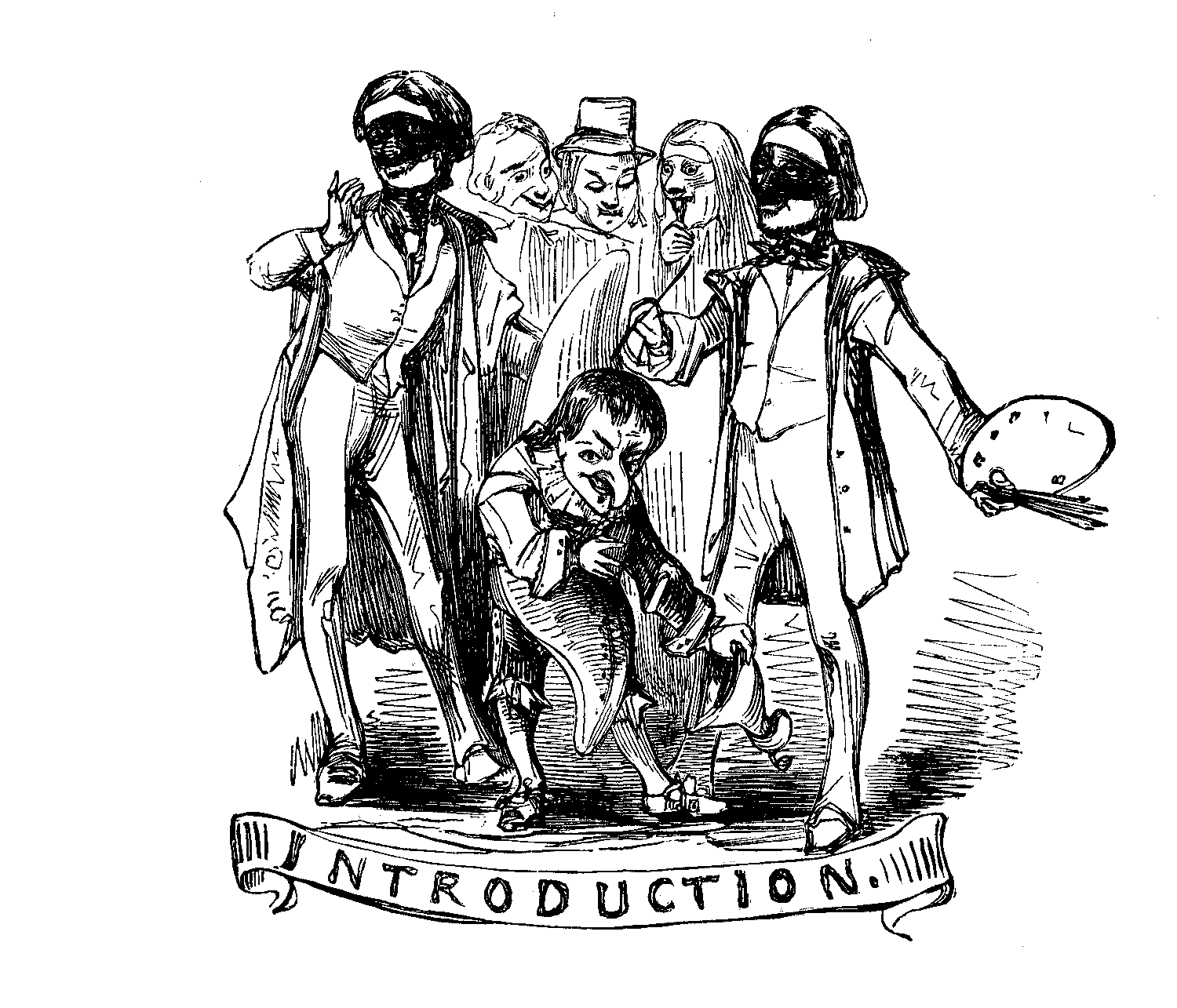
From illustrator, writer, and educator Philip Kennedy, 175 stories “illustrating” 175 years of illustration…
Illustration is a fascinating subject and yet its history is rarely told. This project aims to champion the medium and bring some inspiration, insight and knowledge to readers everywhere.
Illustration Chronicles explores a history of illustration through the images, illustrators and events of the past 175 years. Every few months the site picks a topic [e.g., Music, Animals, Satire, History] to explore. These topics inspire the types of work that get selected and once a piece has been chosen, the year it was made gets marked off the project timeline.
To learn more about Illustration Chronicles you can read a more detailed introduction here…
Take a look at the fascinating work-in-progress: “Illustration Chronicles,” from @philipkennedy.
* master illustrator Quentin Blake
###
As we delight in drawing, we might send carefully-limned birthday greetings to Barbara Cooney; she was born on this date in 1917. An illustrator and writer, primarily of children’s books, she received two Caldecott Medals for her work on Chanticleer and the Fox (1958) and Ox-Cart Man (1979), and a National Book Award for Miss Rumphius (1982). Her books have been translated into 10 languages.

You must be logged in to post a comment.