Posts Tagged ‘manufacturing’
“The future is dark, which is, on the whole, the best thing the future can be, I think”*…

Further (and in some ways, contra) to yesterday’s post, Marek Poliks, Roberto Alonso Trillo, Tyler Dunn, Hugh Scott-Douglas, and Jay Springett ponder one extrapolation of AI…
Imagine the most extreme possible factory: a factory that drives itself, a factory that determines its own objectives and optimizes itself to accomplish them. It is something like a fully automated firm, a company with no people inside, a recursively self-optimizing body that decides what to make, how to make it, and why. This is a very special kind of factory, a factory built with the intention of producing something strictly in excess of its creator’s abilities, something so productive, so efficient, and so capable that it exceeds any possibility of its prescription in advance, something that belongs to the set of possible factories that are, at present, unthinkable. How might one build such a thing? What would it mean to steer or govern such a thing? We call this factory a superdark factory, a factory whose insides churn too quickly to comprehend, whose logics branch into tangles too dense to reconstruct, and whose standards of performance are too ephemeral to direct. We believe that it is possible to build such a factory now, with existing tools, should one decide to do so.
Toward such an end, we propose the dark stack—a collection of design principles an architect could use to bring about such a factory and, further, to contribute to this factory’s ongoing governance after its initialization, all while remaining unable to understand almost anything about it. The most significant intervention available to an architect building a superdark factory with the dark stack is a single committed move, made before the factory is ever turned on, that sets four key principles into motion: (1) an array of structural primitives that enable the factory to learn; (2) a versioning regime that measures what the factory does rather than what it is; (3) an adversarial evaluation layer that serves as the factory’s primary sensory organ; and (4) a charter that functions as a negotiated site of governance, cowritten with the factory itself. After this initial move is complete, the dark stack’s most consequential implications involve the foreclosure of human control from factory design and the subsequent instatement of the human architect as a game-theoretical strategic player engaged with the emerging totality of production…
The most extreme possible automated factory- how would you build it? How would you manage/govern it? “The Superdark Factory,” from https://x.com/antikythera_xyz and @mitpress.bsky.social.
See also: “What is a black box? A computer scientist explains what it means when the inner workings of AIs are hidden” (from whence, the image above)
* Widely attributed to Virginia Woolf’s private journal
###
As we feel our way forward, we might recall that it was on this date in 1716 that the first lighthouse in America, Boston Light, was lit on Little Brewster Island, marking the entrance to the Boston, Massachusetts harbor. (Canada’s first lighthouse, the Louisbourg Lighthouse, located on Lighthouse Point at the entrance to Louisbourg Harbour on Cape Breton Island, was lit in 1734.)
During the American Revolution, the original lighthouse was held by British forces and was attacked and burnt on two occasions by American forces. As the British forces withdrew in 1776, they blew up the tower and completely destroyed it.
The lighthouse was eventually reconstructed in 1783, to the same 75-foot height as the original tower. The reconstruction is the second oldest working lighthouse in the United States (after Sandy Hook Lighthouse in New Jersey) and is the only lighthouse still actively staffed by the U. S. Coast Guard (despite its automation in 1998).

“The first to arrive is the first to succeed”*…
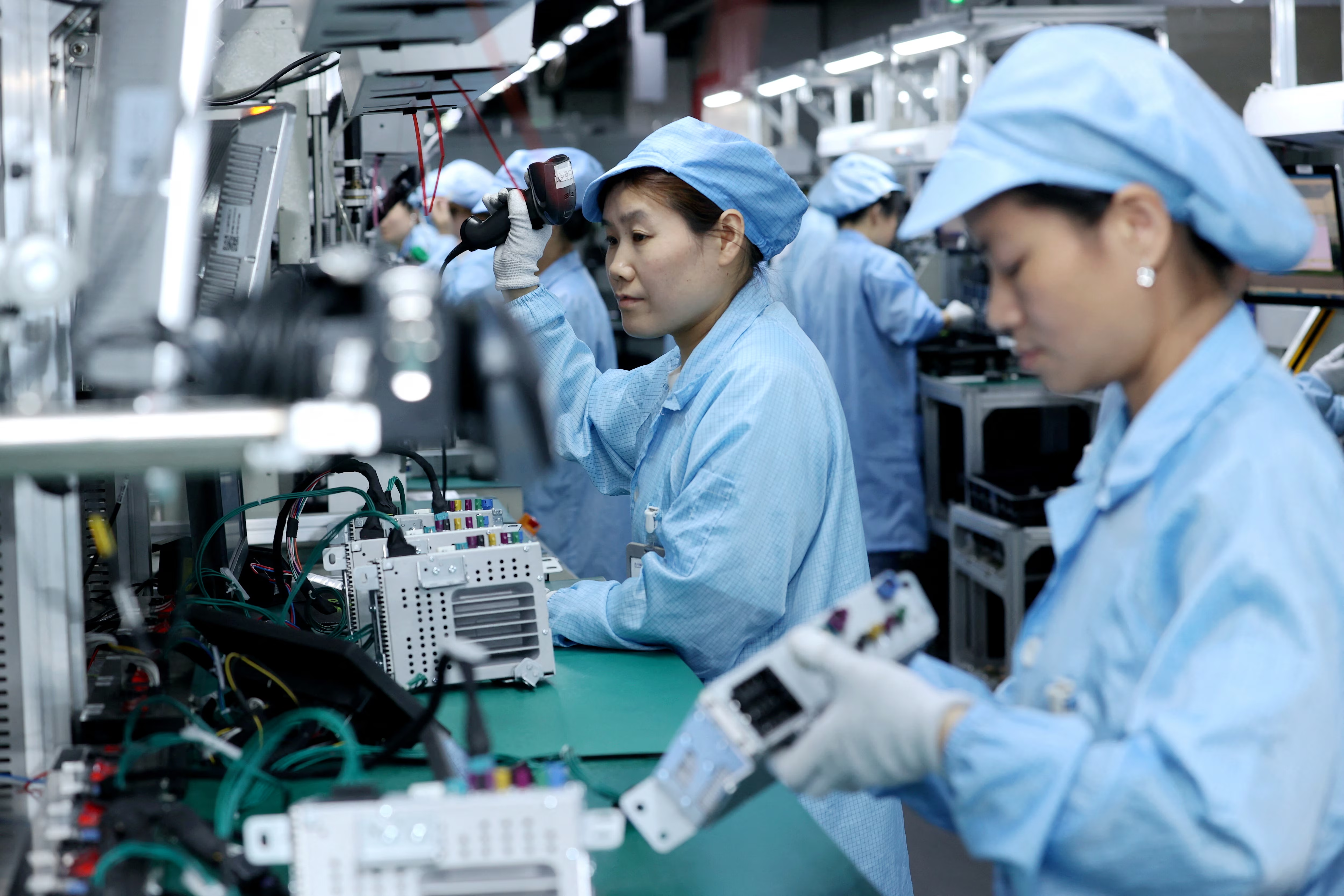
Is China “pulling up the ladder”? In his valuable newsletter, Ben Evans puts two recent news items on high-tech manufacturing into context…
… First, the FT argues that after the ‘China shock’ of cheap low-value manufacturing, there’s now a growing second China shock of high-value, high-tech manufacturing, where the same model of ferocious, Darwinian competition, backed by subsidies and cheap energy, produces a handful of very efficient and capable winners in each space, plus a lot of overcapacity, that then moves to exports. Second, Bloomberg says that Chinese export controls in those high-tech industries are crippling India’s attempt to build its own tech manufacturing base…
Gift article from the FT: “China shock 2.0: the flood of high-tech goods that will change the world“
Gift article from Bloomberg: “China’s Control Over Tech Is Threatening India’s Manufacturing Dreams“
* (先到先得) Chinese proverb
###
As we dissect the dynamics of dominance, we might recall that it was on this date in 1981 that the computer mouse became a practical, operating part of the personal computing world, when Xerox released its 1010 (Star) personal computer. The trackball, a related pointing device, had been invented in 1946 by Ralph Benjamin as part of a post-World War II-era fire-control radar plotting system called the Comprehensive Display System (CDS). Then, in the 1960s, Doug Engelbart and Bill English developed the first mouse prototype. They christened the device the mouse as early models had a cord attached to the rear part of the hand-held unit; the cord looked like a tail and made the device resemble a common mouse. (According to Roger Bates, a hardware designer under English, another reason for choosing this name was because the cursor on the screen was also referred to as “CAT” at this time.) In 1968, Engelbart premiered the pointer at what has come to be known as “The Mother of All Demos.” There followed, through the 70’s, a pair of personal computers that used a mouse (the Xerox Alto and the Lilith); but while they served as proof-of-concept, they sold only in the hundreds of units over the next several years. It was the Star that effectively brought the mouse to market… soon to be followed by Steve Jobs’ Apple Lisa, which forshadowed the Mac and the user interface that we’ve all come to know.
Apropos the articles above, computer mice are still a $2 billion business. But while they were invented and originally largely manufactured in the U.S., they are (as of 2025) mostly manufactured in Asia (68%, the lion’s share– 54%– in China); only 8% are made in the U.S.

“Jobs in factories will come roaring back into our country”*…
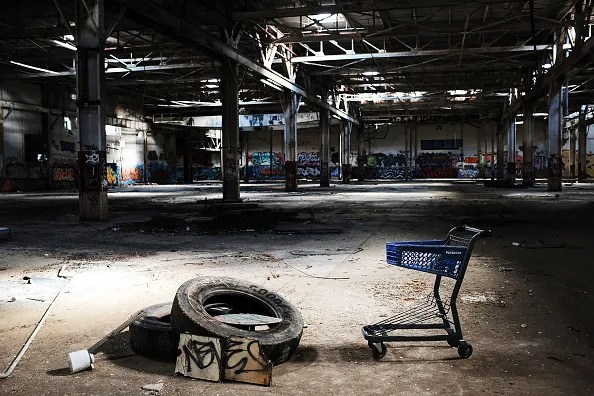
When President Trump announced sweeping tariffs on “Liberation Day” last spring, the promise was that manufacturing– and the jobs it provides– would return to the U.S. Scott Lincicome (from the conservative Cato Institute) assesses the “progress” to date…
US manufacturing ended 2025 with a thud, capping a rough year for the sector. To recap, manufacturers shed 63,000 jobs, according to the latest data from the Bureau of Labor Statistics. It wasn’t just labor that was hurting. The Institute for Supply Management’s manufacturing index clocked in at 47.9 for December, marking the 10th consecutive month of contraction as new orders were especially weak and costs at historically elevated levels.
Then there’s the Federal Reserve’s Beige Book of regional economic conditions and surveys from the regional Fed banks, which have repeatedly documented cases of manufacturers delaying hiring and investment amid weak market conditions, rising costs, shrinking profit margins and persistent uncertainty. As for the “hard” data, manufacturing capacity and output, while incomplete, sagged through the Fall.
Overall, the evidence reveals a sector that’s stagnant at best, and a long way from the manufacturing renaissance President Donald Trump promised when he took office for a second time a year ago. No wonder administration officials have pivoted from predicting a factory boom in 2025 to now saying it will happen in 2026 and beyond.
Better tax, regulatory, and monetary policy should indeed provide a tailwind for manufacturing, but the sector will probably continue to struggle. If so, Trump’s tariffs will be a big reason why…
[Lincicome unpacks the several ways that Trump’s tariffs have confounded domestic manufacturing: increased costs (especially on materials/compnents not available in the U.S.) and tariff and policy/regulations that might be politely called “inconsistent” (or less politely, “flighty”); last year, the US tariff code was amended 50 times)– which has added management/coordination costs (Federal Reserve economists estimate that domestic manufacturers will pay $39 billion to $71 billion annually to comply with the new regime, representing time and money they can’t spend on their businesses); but perhaps even more damagingly, has created uncertainty that has slowed corporate action/investment. Lincicome concludes…]
… The harms to manufacturers are consistent with research on past tariff episodes and help to explain why the sector struggled in 2025 — and why things might not get much better this year. Recent forecasts also suggest caution, with manufacturers and supply chain professionals predicting continued headwinds due to the costs, uncertainty and complexity of tariffs. And the Supreme Court won’t save them. If it invalidates Trump’s “emergency” tariffs in the coming days, administration officials have promised to invoke alternate authorities to recreate them.
Global supply chains took years to develop. They’ll take even longer to reorganize and will do so at great cost if, that is, they don’t break altogether in the meantime…
“America’s Manufacturing Renaissance Is Missing in Action,” (gift article) by @scottlincicome.bsky.social in @opinion.bloomberg.com.
Relatedly, Trump’s immigration policy was (like the “manufacturing boom”) supposed to have reduced the federal deficit. The Administration is deporting immigrants at a brisk clip– but at an extraordinary cost, both economically and constitutionally. That’s not to mention the costs to the targeted immigrants themselves, to their familires and to the companies and economies of which they have been preponderantly positive and productive parts. Indeed, a different group at Cato recently published a thorough study demonstrating that– far from being a drag on the economy– immigrants have reduced federal (and state and local) deficits by $14.5 Trillion since 1994… though, of course that contribution is now, thanks to the ICE storm, slowing down.
The immigration crackdown was also supposed to turbo-charge job growth (for the U.S.-born); it has not. Indeed, the climate of fear and the difficulty in securing visas has led to a hiring boom abroad: “Silicon Valley can’t import talent like before. So it’s exporting jobs.”
It’s easy to see Trump’s election and the imposition of his economic and immigration policies as America’s Brexit. That abrupt rupture of social, cultural, and economic conventions is now about a decade old… and the results aren’t pretty…
Brexit, the United Kingdom’s decision to withdraw from the European Union, is a rare contemporary example of a major developed economy raising trade barriers and more generally pulling back from international economic integration. When the Brexit referendum took place in 2016, academic and professional economists generally forecast that the policy about-face would result in a negative hit to the United Kingdom’s economy of about 4% of GDP over the long-term. Rather than a sudden, visible economic shock following the vote, the costs of Brexit have been gradual and cumulative. Now, almost a decade later, new research aims to assess Brexit’s actual impact on the United Kingdom’s economy, which involves the challenging task of comparing the country’s economic indicators to what they would have been if the United Kingdom had remained in the European Union. This research finds that, ten years on, the economic cost of Brexit has been larger than analysts predicted and that prolonged policy uncertainty contributed importantly to the magnitude of the impact… We estimate that by 2025, Brexit had reduced UK GDP by 6% to 8%, with the impact accumulating gradually over time… Understanding the ways in which Brexit resulted in a drag on economic growth for the United Kingdom provides potential lessons about the costs of abruptly pulling back from the global economy for other countries… – “The Economic Costs of Brexit on the UK” (where there is much more detail)
* Donald Trump
###
As we interrogate empty promises (and lest we think that history doesn’t rhyme), we might recall that it was on this date in 1856 that the Know Nothing Party (dba, “the American Party” and “Native American Party”) convened in Philadelphia to nominate its first presidential candidate. A nativist (and largely anti-Catholic) group composed of anti-immigrant/Old Stock breakaways from the American Republican and Whig parties, the Know Nothings nominated Millard Fillmore.
The last member of the Whig Party to serve as President, Fillmore had been a Congressional Representative from New York who was elected to the Vice Presidency in 1848 on Zachary Taylor’s ticket. When Taylor died in 1850, Fillmore became the second V.P. to assume the presidency between elections.
Fillmore’s signature accomplishment was the passage of the Compromise of 1850 passed, a bargain that led to a brief truce in the battle over slavery– but was so ill-conceived (it contained the Fugitive Slave Act) and unpopular that Fillmore failed to get his own party’s nomination for President in the election of 1852, which he sat out. Unwilling to follow Lincoln into the new Republican Party, he got the nomination of the Know Nothings– though he was not a member of the party and hadn’t sought it; he was out of the country during the convention. Fillmore finished third in the 1856 election. By the 1860 election, the Know Nothings were no longer a serious national political movement.

“A commodity appears at first sight an extremely obvious, trivial thing. But its analysis brings out that it is a very strange thing”*…

Prices are on everyone’s minds these days. Brian Potter looks underneath the costs of the finished products and services that we typically track to examine the costs of the commodities that go into them…
This American Enterprise Institute chart [above], which breaks down price changes for different types of goods and services in the consumer price index, has by now become very widely known. A high-level takeaway from this chart is that labor-intensive services (education, healthcare) get more expensive in inflation-adjusted terms over time, while manufactured goods (TVs, toys, clothing) get less expensive over time.
But there are many types of goods that aren’t shown on this chart. One example is commodities: raw (or near-raw) materials mined or harvested from the earth. Commodities have many similarities with manufactured goods: they’re physical things that are produced (or extracted) using some sort of production technology (mining equipment, oil drilling equipment), and many of them will go through factory-like processing steps (oil refineries, blast furnaces). But commodities also seem distinct from manufactured goods. For one, because they’re often extracted from the earth, commodities can be subject to depletion dynamics: you run out of them at one location, and have to go find more somewhere else. In my book I talk about how iron ore used to be mined from places like Minnesota, but as the best deposits were mined out steel companies increasingly had to source their ore from overseas. And the idea of “Peak Oil” is based on the idea that society will use up the easily accessible oil, and be forced to obtain it from increasingly marginal, expensive-to-access locations.
(Some commodities, particularly agricultural commodities that can be repeatedly grown on a plot of land, don’t have the same sort of depletion dynamics, though bad farming practices can degrade a plot of land over time. Other commodities get naturally replenished over time, but can still get used up if the rate of extraction exceeds the rate of replenishment; non-farmed timber harvesting and non-farmed commercial fishing come to mind as examples.)
Going into this topic, I didn’t have a great sense of what price trends look like for commodities in general. Julian Simon famously won a 1980 bet with Paul Ehrlich that several raw materials — copper, chromium, nickel, tin, and tungsten — would be cheaper (in inflation-adjusted terms) after 10 years, not more expensive. But folks have pointed out that if the bet had been over a different 10-year window, Ehrlich would have won the bet.
To better understand how price tends to change for different commodities and raw materials, I looked at historical prices for over a hundred different commodities. Broadly, agricultural commodities tend to get cheaper over time, while fossil fuels have a slight tendency to get more expensive. Minerals (chemicals, metals, etc.) have a slight tendency towards getting cheaper, with a lot of variation — 15 minerals more than doubled in price over their respective time series. But this has shifted over the last few decades, and recently there’s been a greater tendency for commodities to rise in price…
[Potter offers a thorough– and fascinating– analysis, concluding…]
… historically commodities have generally fallen in price over time, but recently this trend has increasingly shifted towards rising prices. Natural gas and oil got cheaper until the 1950s and the 1970s, respectively, and since then have gotten more expensive. Beef and pork both got cheaper from 1970 until the 1990s, and since then have risen in price. Agricultural products were almost uniformly falling in price until around 2000, and have almost uniformly risen in price since then.
My general sense looking at historical commodity price data is that the more that production of some commodity looks like manufacturing — produced by a repetitive process that can be steadily improved and automated, from a supply that can be scaled up in a relatively straightforward fashion, without being subject to severe depletion dynamics — the more you’ll tend to see prices fall over time. The biggest decline in price of any commodity I looked at is industrial diamonds, which fell in price by 99.9% between 1900 and 2021d ue to advances in lab-grown diamonds production. This effectively replaced mined diamonds with manufactured ones for industrial uses; roughly 99% of industrial diamonds today are synthetic. Many other commodities had major price declines that were the result of production process improvements — aluminum got cheaper thanks to the invention (and subsequent improvements) of the Hall-Heroult smelting process, titanium’s price declined following the introduction of the Kroll process, and so on. (Steel also got much cheaper following the introduction of the Bessemer process, but that predates USGS price data.) And of course agriculture, which has evolved from crops being harvested manually to being harvested with highly automated, continuous process machinery, closely mirrors the sorts of process improvements we see in manufacturing.
Of course, this trend alone can’t explain changes in commodity prices over time, and there are plenty of commodities — steel, cement, silicon — that are produced in a manufacturing-type operation but which haven’t seen substantially declining prices over their history. And even commodities which resemble manufactured goods have risen in price recently. More generally, there are plenty of things that can shift supply and demand curves to the right or left: cartels, national policies, a spike or collapse in demand, and so on. But the question of “how much, over time, does the production of this commodity resemble a manufacturing process?” seems like a useful lens on understanding the dynamics of commodity prices…
“Do Commodities Get Cheaper Over Time?” from @constructionphysics.skystack.xyz.
* Karl Marx
###
As we brush up on the basics, we might recall that this date in the anniversary of two events that spurred commodity consumption.
Alexander Graham Bell spurred a boom on copper consumption when, on this date in 1915, he placed the first transcontinental phone call, from New York to San Francisco, where the Panama–Pacific International Exposition celebrations were underway and his assistant, his assistant Thomas Augustus Watson stood by. Bell repeated his famous first telephonic words, “Mr. Watson, come here. I want you,” to which Watson this time replied “It will take me five days to get there now!” Bell’s call officially initiated AT&T’s transcontinental service.

And, on this date 45 years later, in 1959, the aluminum market got a boost when the first non-stop transcontinental commercial jet trip was made by an American Airlines Boeing 707, from Los Angeles to New York. The sleek silver plane made the flight in airline official time of 4 hours and 3 minutes, half the usual scheduled time for the prop-driven DC- 7Cs then in regular use on that route.

“The Middle East has oil, China has rare earths”*…

Often called “the seeds of technology,” rare earths are a group 17 metallic elements (the 15 lanthanides plus scandium and yttrium) with unique magnetic, optical, and catalytic properties vital for electronics, defense, chemical processing, petroleum refining, and green energy.

China’s dominance over rare earth elements creates an unprecedented vulnerability in global supply chains that extends far beyond the relatively modest $6 billion market size. The risk of disruption in supply of rare earths has become a critical concern as the nation controls 69% of worldwide mining operations, 92% of refining capacity, and a staggering 98% of permanent magnet production, according to Goldman Sachs analysis from October 2025.
This concentration represents one of the most significant single points of failure in modern industrial infrastructure. Furthermore, the rare earth reserves distribution globally shows heavy concentration in geologically limited regions, making supply diversification extremely challenging.
The economic implications of this dominance become clear when considering potential disruption scenarios. Goldman Sachs warns that even a 10% disruption in industries reliant on rare earth elements could trigger $150 billion in lost economic output, alongside inflationary pressures cascading through multiple sectors. Despite rare earth markets being 33 times smaller than copper markets, their strategic importance creates disproportionate systemic risk…
– “China’s Rare Earth Dominance Creates Global Supply Disruption Risks” [source of the image above, and worth reading in full]
Farrell Gregory explains why they figure so prominently in so much discussion of the global economy and of U.S.- China relations and what we might expect…
Over the course of the last year, we’ve seen China suspend rare earth exports twice, generating a short-lived round of public interest and short-lived “expertise” in America. Each crisis followed a similar progression: an aggrieved China introduces export licensing, effectively suspending US access to certain rare earth elements and downstream products. The American public is subjected to alternating shouts of panic and confident assertions that ‘rare’ is a misnomer and the necessary elements are actually abundant in the Earth’s crust. After a period of confrontation, and likely following concessions on both sides, access is reestablished before too much harm is done.
Examining the differences in each crisis is less important than establishing what is quickly becoming a pattern: China is increasingly willing and able to use its dominance in rare earths as leverage against the U.S. It’s worth noting what a change this is from even five years ago: during the entirety of the 2019-2020 U.S.-China trade war, Beijing never introduced export controls for rare earths, despite making threats to do so. Now China assesses its position differently — they’ve accumulated leverage and they’re willing to use it with increasing frequency.
This frequency might be in part because China’s dominant position in rare earths is a time bomb for both sides. The PRC likely wants to use its REE dominance to extract further concessions before the U.S. manages to defuse this dominance with some combination of reshoring and tech advances.
I think it’s a matter of when — not whether — China decides to activate its standing export control infrastructure. They’ve built up leverage, and over time, that leverage will dissipate. In the near-term future, throttling rare earth and magnet exports is still an effective threat to employ in trade disputes with the U.S. In the medium term, successful reshoring and reliance-decreasing efforts will diminish what concessions China can extract from the U.S.
So, expect the rare earth crisis cycle to play out again. When it does, here are a few clarifications on rare earths that may prove helpful for avoiding the most common misperceptions…
Read on: “China’s Rare Earths Chokehold: A Primer,” from @chinatalk.skystack.xyz.
See also: “Rare Earths,” from @profgalloway.com.
And also this: “China Is Overplaying Its Rare-Earth Hand in Japan” from @bloomberg.com (gift article).
* attributed to Deng Xiaoping
###
As we ponder paucity, we might recall that it was on this date in 1839 that the British East India Company [see here and here] established the Assam Tea Company and began the commercial production of tea (grown from slips furtively exported from China) in the region. Beginning in the 1850s, the tea industry rapidly expanded, consuming vast tracts of land for tea plantations. By the turn of the century, Assam became the leading tea-producing region in the world. That growth and innovations in tea preparation caused the price of tea to drop and demand to grow. Soon, London became the center of the international tea trade.

You must be logged in to post a comment.