Posts Tagged ‘naming’
“What’s in a name?”*…
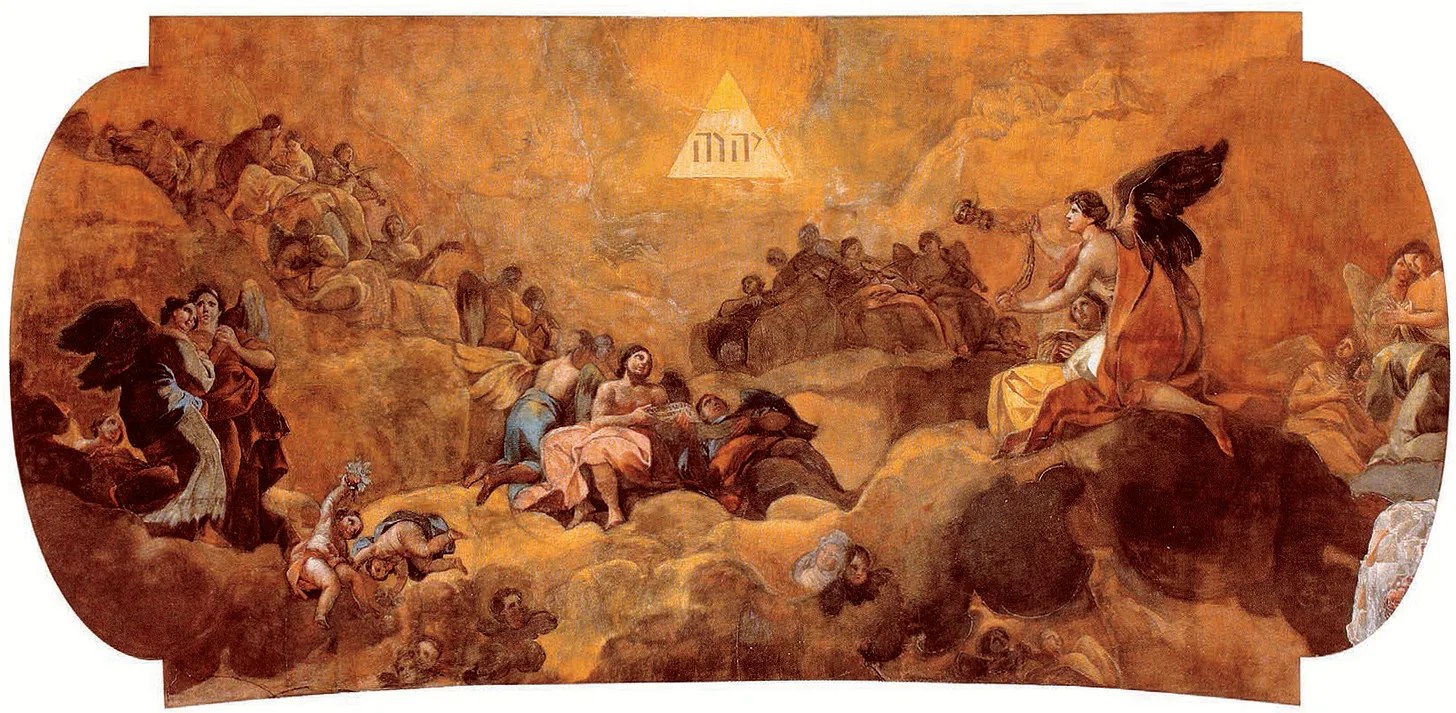
… maybe, Roger’s Bacon suggests, more than we typically think…
An aptronym is when a person has a name that is uniquely suited to its owner. Some examples:
- Usain Bolt, the fastest human ever
- Mark De Man, Belgian football defender
- William Headline, Washington Bureau Chief for CNN
- Marijuana Pepsi Vandyck, American education professional with a dissertation on uncommon African-American names in the classroom
- William Wordsworth, poet
- Philander Rodman, father of basketball player Dennis Rodman, who fathered 26 children by 16 mothers
- Sue Yoo, attorney
And of course there are also inaptronyms:
- Rob Banks, a British police officer
- Don Black, white supremacist
- Robin Mahfood, President and CEO of Food for the Poor
- I.C. Notting, an ophthalmologist at Leiden University
Maybe this is all coincidence, or maybe it’s nominative determinism, the hypothesis that people tend to gravitate towards areas of work that fit their names (an idea captured in the ancient Roman proverb “nomen est omen” meaning “the name is the sign”). Psychologist Lawrence Casler proposed three possible explanations for nominative determinism: one’s self-image and self-expectation being internally influenced by one’s name; the name acting as a social stimulus, creating expectations in others that are then communicated to the individual; and genetics—attributes suited to a particular career being passed down the generations alongside the appropriate occupational surname.
But does nominative determinism actually exist—are people with occupation-related names over-represented in those occupations?…
[RB considers the evidence… then ponders a more fundamental issue: “the virtually universal practice of assigning a permanent name at birth”…]
… When naming conventions are created by governments and for governments, they favor legibility and as a consequence, individuality and stability of identity. In my brief heretical statement, I suggested that our modern naming conventions have caused a species-wide shift towards a more narcissistic and egotistical mode of being. Maybe this goes too far (or not far enough…), but the more general idea is that personal nomenclature is never value neutral and never without cultural and psychological ramifications. In other words, we shouldn’t be surprised that our culture has become sterile, stagnant, and individualistic to a fault when those values are embedded in the way we name ourselves.
The global hegemony of governmentally-developed naming systems has crippled our imagination by removing alternative models of nomenclature…
[He considers alternatives with examples from New Guinean and Native American cultures…]
… Naming systems are reflections of a culture’s values, but, as I’ve argued, it’s a two-way street—the way we name ourselves reinforces these values and frames how we think about ourselves and the world around us. When legibility, individuality, and stability of identity are the master values of our personal nomenclature, of course we will look for legible, de-personalized solutions (e.g. technology, laws, governmental programs) to society’s ills (environmental degradation, social isolation and loss of community, mental health and addiction, to name just a few). These solutions are only partial and always will be because they don’t get to the root of the problem: ourselves—who we are as people, what we value, and how we think. There is no shortcut to profound personal change, but a first step in the right direction might make all the difference—if we want to be the kind of people who value community and the natural world and who believe that people can grow and then perhaps we should name ourselves in a way that inspires us to be those kind of people…
A provocative challenge to the way we name ourselves: “Nomen est Omen,” from @RogersBacon1.
* Shakespeare, Romeo and Juliet
###
As we dig into denotation, we might note that today is a red-letter day for another of the descriptors of our idenitities, one with increasing importance (at least unless we use trustworthy password managers or come up with a better system): it’s Change Your Password Day.

“Of course there’s a lot of knowledge in universities: the freshmen bring a little in; the seniors don’t take much away, so knowledge sort of accumulates”*…

Professor Paul Musgrave on the wacky world of university fundraising…
I would like you to buy me a chair. Not just any chair: an endowed chair.
Let me explain.
Universities have strange business models. The legendary University of California president Clark Kerr once quipped that their functions were “To provide sex for the students, sports for the alumni, and parking for the faculty.” These days, the first is laundered for public consumption as “the student experience” and the third is a cost center (yes, many to most professors have to pay, rather a lot, for their parking tags). (The second remains unchanged.)
You can tell that Kerr was president during a time of lavish support because he didn’t include the other function of a university: to provide naming opportunities for donors.
…
Presidents, chancellors, and provosts seek to finagle gifts because the core business of universities—providing credits to students in exchange for tuition—is both volatile and insufficient to meet the boundless ambitions of administrators and faculty alike. (Faculty might protest that their ambitions are quite modest, as they include merely limitless research budgets and infinite releases from course time—but other than that, they ask only for cost of living adjustments as well as regular salary increases.) Trustees expect presidents to bring in new buildings and new chairs; presidents expect trustees to help dun their friends and acquaintances for donations. The incentives even trickle down to deans, directors, and chairs, all of whom live with increasingly austere baseline budgets and a concomitant incentive to find and cultivate donors to expand, or even just support, their operations.
It’s easy, and wrong, for faculty to be cynical about this. First, these operations reflect the gloriously incongruous medieval nature of the university. Higher education in its upper reaches resembles medieval monasteries, and such monasteries provided not just seclusion and sanctity for their initiates but the possibility of the purchase of virtue for the wealthy. So, too, do universities offer grateful alumni and those sentimental about the generation of knowledge opportunities to turn worldly wealth into tax-deductible noblesse oblige.
Second, donors are the customers for the other product of the university: the social proof of good works. Universities offer donors solicitous for the future of the less fortunate opportunities to subsidize tuition, and they offer donors more interested in the benefits of knowledge the opportunity to subsidize research. The reward comes in some combination of the knowledge that such works are being done and the fact that the donor’s name will be associated with it. (Few large university buildings are named the Anonymous Center for Cancer Research.)
…
The bar for giving continues to rise. Nine-figure gifts were once unheard of; nowadays, they are striking but no longer unprecedented. For such a sum you can have a constituent college named for yourself. The next frontier must be the billion, or multi-billion, dollar gift. For that level, of course, the reward would have to be commensurate. Given that Harvard was named for a donor who left some books and a few hundred pounds to his eponymous university, one wonders whether someone in Harvard’s charitable receiving arm hasn’t calculated how much it would cost to become, say, the Zuckerberg-Harvard University. (I would wager that an earnest offer of $10 billion would at least raise the issue.)…
[There follows a price list for endowed/named Chairs at different universities, and an analysis of their economics. The author suggest that a chair for him would run $2.5-3 million…]
Fascinating: “Buy Me a Chair,” from @profmusgrave.
* A. Lawrence Lowell (legal scholar and President of Harvard University from 1909 to 1933)
###
As we dig deep, we might recall that it was on this date in 1991 that the World Wide Web was introduced to the world at large.
In 1989, Tim Berners-Lee (now Sir Tim) proposed the system to his colleagues at CERN. He got a working system implemented by the end of 1990, including a browser called WorldWideWeb (which became the name of the project and of the network) and an HTTP server running at CERN. As part of that development, he defined the first version of the HTTP protocol, the basic URL syntax, and implicitly made HTML the primary document format.
The technology was released outside CERN to other research institutions starting in January 1991, and then– with the publication of this (likely the first public) web page— to the whole Internet 32 years ago today. Within the next two years, there were 50 websites created. (Today, while it is understood that the number of active sites fluctuates, the total is estimated at over 1.5 billion.)

“The sea hath fish for every man”*…

A few weeks ago, (Roughly) Daily shared the story of The Illinois Department of Natural Resources’ attempt to rebrand invasive Asian Carp as Copi in an attempt to make it a more appealing food. Kane Hsieh, writing in Spencer Wright‘s always-illuminating The Prepared, elaborates on the theme…
… It’s worked in the past: Chilean sea bass (Patagonian toothfish), monkfish (goosefish), and uni (urchin, also called whore’s eggs by American fisherman as recently as 1990) were all successful rebrandings.
Speaking of fish, it’s always a surprise to me how much of what feels like traditional cuisine is actually very modern, accidental, or even engineered. In Japanese cuisine, tuna and salmon rose to their contemporary status only in the 20th century: tuna was a poor man’s fish until post-war Western influence brought a taste for fattier meat, and salmon was an undesirable fish until the 80s when a desperate Norwegian government ran aggressive ad campaigns in Japan…
Trash to table: rebranding fish to make them more palletable, from @kane in @the_prepared.
###
As we contemplate cuisine, we might recall that it was on this date in 1838 that it rained frogs in London. Indeed, there have been numerous instances on polliwog precipitation in the area, most recently in 1998, when an early morning rain shower in Croydon (South London) was accompanied by hundreds of dead frogs.

“Ultimately, it is the desire, not the desired, that we love”*…

Or is it? The web– and the world– are awash in talk of the Mimetic Theory of Desire (or Rivalry, as its creator, René Girard, would also have it). Stanford professor (and Philosophy Talk co-host) Joshua Landy weights in with a heavy word of caution…
Here are two readings of Shakespeare’s Hamlet. Which do you think we should be teaching in our schools and universities?
Reading 1. Hamlet is unhappy because he, like all of us, has no desires of his own, and therefore has no being, properly speaking. The best he can do is to find another person to emulate, since that’s the only way anyone ever develops the motivation to do anything. Shakespeare’s genius is to show us this life-changing truth.
Reading 2. Hamlet is unhappy because he, like all of us, is full of body thetans, harmful residue of the aliens brought to Earth by Xenu seventy-five million years ago and disintegrated using nuclear bombs inside volcanoes. Since it is still some time until the practice of auditing comes into being, Hamlet has no chance of becoming “clear”; it is no wonder that he displays such melancholy and aimlessness. Shakespeare’s genius is to show us this life-changing truth.
Whatever you make of the first, I’m rather hoping that you feel at least a bit uncomfortable with the second. If so, I have a follow-up question for you: what exactly is wrong with it? Why not rewrite the textbooks so as to make it our standard understanding of Shakespeare’s play? Surely you can’t fault the logic behind it: if humans have indeed been full of body thetans since they came into existence, and Hamlet is a representation of a human being, Hamlet must be full of body thetans. What is more, if everyone is still full of body thetans, then Shakespeare is doing his contemporaries a huge favor by telling them, and the new textbooks will be doing us a huge favor by telling the world. Your worry, presumably, is that this whole body thetan business is just not true. It’s an outlandish hypothesis, with nothing whatsoever to support it. And since, as Carl Sagan once said, “extraordinary claims require extraordinary evidence,” we would do better to leave it alone.
I think you see where I’m going with this. The fact is, of course, that the first reading is just as outlandish as the second. As I’m about to show (not that it should really need showing), human beings do have desires of their own. That doesn’t mean that all our desires are genuine; it’s always possible to be suckered into buying a new pair of boots, regardless of the fact that they are uglier and shoddier than our old ones, just because they are fashionable. What it means is that some of our desires are genuine. And having some genuine desires, and being able to act on them, is sufficient for the achievement of authenticity. For all we care, Hamlet’s inky cloak could be made by Calvin Klein, his feathered hat by Diane von Furstenberg; the point is that he also has motivations (to know things, to be autonomous, to expose guilt, to have his story told accurately) that come from within, and that those are the ones that count.
To my knowledge, no one in the academy actually reads Hamlet (or anything else) the second way. But plenty read works of literature the first way. René Girard, the founder of the approach, was rewarded for doing so with membership in the Académie française, France’s elite intellectual association. People loved his system so much that they established a Colloquium on Violence and Religion, hosted by the University of Innsbruck, complete with a journal under the ironically apt name Contagion. More recently, Peter Thiel, the co-founder of PayPal, loved it so much that he sank millions of dollars into Imitatio, an institute for the dissemination of Girardian thought. And to this day, you’ll find casual references to the idea everywhere, from people who seem to think it’s a truth, one established by René Girard. (Here’s a recent instance from the New York Times opinion pages: “as we have learned from René Girard, this is precisely how desires are born: I desire something by way of imitation, because someone else already has it.”) All of which leads to an inevitable question: what’s the difference between Girardianism and Scientology? Why has the former been more successful in the academy? Why is the madness of theory so, well, contagious?…
Are we really dependent on others for our desires? Does that mechanism inevitably lead to rivalry, scapegoating, and division? @profjoshlandy suggests not: “Deceit, Desire, and the Literature Professor: Why Girardians Exist,” in @StanfordArcade. Via @UriBram in @TheBrowser. Eminently worth reading in full.
* Friedrich Nietzsche (an inspiration to Girard)
###
As we tease apart theorizing, we might spare a thought for William Whewell; he died on this date in 1866. A scientist, Anglican priest, philosopher, theologian, and historian of science, he was Master of Trinity College, Cambridge.
At a time when specialization was increasing, Whewell was renown for the breadth of his work: he published the disciplines of mechanics, physics, geology, astronomy, and economics, while also finding the time to compose poetry, author a Bridgewater Treatise, translate the works of Goethe, and write sermons and theological tracts. In mathematics, Whewell introduced what is now called the Whewell equation, defining the shape of a curve without reference to an arbitrarily chosen coordinate system. He founded mathematical crystallography and developed a revision of Friedrich Mohs’s classification of minerals. And he organized thousands of volunteers internationally to study ocean tides, in what is now considered one of the first citizen science projects.
But some argue that Whewell’s greatest gift to science was his wordsmithing: He created the words scientist and physicist by analogy with the word artist; they soon replaced the older term natural philosopher. He also named linguistics, consilience, catastrophism, uniformitarianism, and astigmatism.
Other useful words were coined to help his friends: biometry for John Lubbock; Eocine, Miocene and Pliocene for Charles Lyell; and for Michael Faraday, electrode, anode, cathode, diamagnetic, paramagnetic, and ion (whence the sundry other particle names ending -ion).

“People seemed to believe that technology had stripped hurricanes of their power to kill. No hurricane expert endorsed this view.”*…
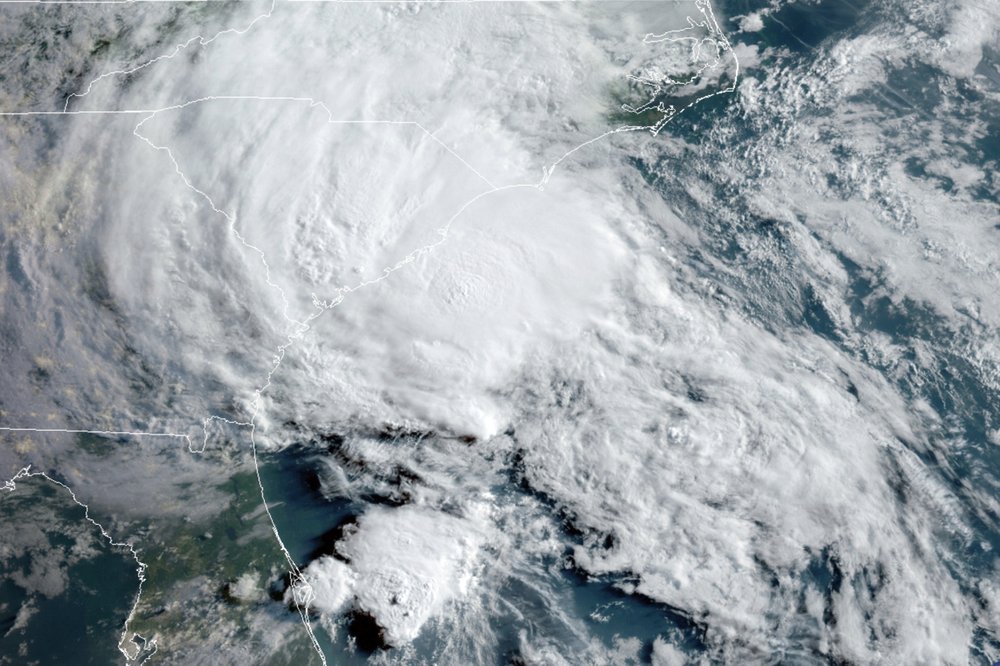
For six straight years, Atlantic storms have been named in May, before [hurricane] season even begins. During the past nine Atlantic hurricane seasons, seven tropical storms have formed between May 15 and the official June 1 start date. Those have killed at least 20 people, causing about $200 million in damage, according to the WMO.
Last year, the hurricane center issued 36 “special” tropical weather outlooks before June 1, according to center spokesman Dennis Feltgen. Tropical Storms Arthur and Bertha both formed before June 1 near the Carolinas.
torms seem to be forming earlier because climate change is making the ocean warmer, University of Miami hurricane researcher Brian McNoldy said. Storms need warm water as fuel — at least 79 degrees (26 degrees Celsius). Also, better technology and monitoring are identifying and naming weaker storms that may not have been spotted in years past, Feltgen said…
With named storms coming earlier and more often in warmer waters, the Atlantic hurricane season is going through some changes with meteorologists ditching the Greek alphabet during busy years…
A special World Meteorological Organization committee Wednesday ended the use of Greek letters when the Atlantic runs out of the 21 names for the year, saying the practice was confusing and put too much focus on the Greek letter and not on the dangerous storm it represented. Also, in 2020 with Zeta, Eta and Theta, they sounded so similar it caused problems.
The Greek alphabet had only been used twice in 2005 and nine times last year in a record-shattering hurricane season.
Starting this year, if there are more than 21 Atlantic storms, the next storms will come from a new supplemental list headed by Adria, Braylen, Caridad and Deshawn and ending with Will. There’s a new back-up list for the Eastern Pacific that runs from Aidan and Bruna to Zoe.
Meanwhile, the National Oceanic Atmospheric Administration is recalculating just what constitutes an average hurricane season… But the Atlantic hurricane season will start this year on June 1 as traditionally scheduled, despite meteorologists discussing the idea of moving it to May 15…
With so much activity, MIT’s [Kerry] Emanuel said the current warnings are too storm-centric, and he wants them more oriented to where people live, warning of specific risks such as floods and wind. That includes changing or ditching the nearly 50-year-old Saffir Simpson scale of rating hurricanes Category 1 to 5.
That wind-based scale is “about a storm, it’s not about you. I want to make it about you, where you are,” he said. “It is about risk. In the end, we are trying to save lives and property”… Differentiating between tropical storms, hurricanes and extratropical cyclones can be a messaging problem when a system actually has a cold core, because these weaker storms can kill with water surges rather than wind… For example, some people and officials underestimated 2012’s Sandy because it wasn’t a hurricane and lost its tropical characteristic…
Rethinking hurricanes in a time of climate change: “Bye Alpha, Eta: Greek alphabet ditched for hurricane names.”
* Erik Larson, Isaac’s Storm: A Man, a Time, and the Deadliest Hurricane in History
###
As we accommodate climate change, we might spare a thought for George Alfred Leon Sarton; he died on this date in 1956. A chemist by training, his primary interest lay in the past practices and precepts of his field…an interest that led him to found the discipline of the history of science as an independent field of study. His most influential work was the Introduction to the History of Science (three volumes totaling 4,296 pages). Sarton ultimately aimed to achieve an integrated philosophy of science that connected the sciences and the humanities– what he called “the new humanism.” His name is honored with the prestigious George Sarton Medal, awarded by the History of Science Society.

You must be logged in to post a comment.