Posts Tagged ‘nothing’
“I love to talk about nothing. It’s the only thing I know anything about.”*…

Try as they might, scientists can’t truly rid a space or an object of its energy. But as George Musser reports, what “zero-point energy” really means is up for interpretation…
Suppose you want to empty a box. Really, truly empty it. You remove all its visible contents, pump out any gases, and — applying some science-fiction technology — evacuate any unseeable material such as dark matter. According to quantum mechanics, what’s left inside?
It sounds like a trick question. And in quantum mechanics, you know to expect a trick answer. Not only is the box still filled with energy, but all your efforts to empty it have barely put a dent in the amount.
This unavoidable residue is known as ground-state energy, or zero-point energy. It comes in two basic forms: The one in the box is associated with fields, such as the electromagnetic field, and the other is associated with discrete objects, such as atoms and molecules. You may dampen a field’s vibrations, but you cannot eliminate every trace of its presence. And atoms and molecules retain energy even if they’re cooled arbitrarily close to absolute zero. In both cases, the underlying physics is the same.
Zero-point energy is characteristic of any material structure or object that is at least partly confined, such as an atom held by electric fields in a molecule. The situation is like that of a ball that has settled at the bottom of a valley. The total energy of the ball consists of its potential energy (related to position) plus its kinetic energy (related to motion). To zero out both components, you would have to give a precise value to both the object’s position and its velocity, something forbidden by the Heisenberg uncertainty principle.
What the existence of zero-point energy tells you at a deeper level depends ultimately on which interpretation of quantum mechanics you adopt. The only noncontentious thing you can say is that, if you situate a bunch of particles in their lowest energy state and measure their positions or velocities, you will observe a spread of values. Despite being drained of energy, the particles will look as if they’ve been jiggling. In some interpretations of quantum mechanics, they really have been. But in others, the appearance of motion is a misleading holdover from classical physics, and there is no intuitive way to picture what’s happening…
More on the development of our understanding of “zero-point energy” and on the questions that remain: “In Quantum Mechanics, Nothingness Is the Potential To Be Anything,” from @georgemusser.com in @quantamagazine.bsky.social.
For the most amusing of musings on nothing, see Percival Everett‘s Dr. No.
* Oscar Wilde
###
As we noodle on nought, we might spare a thought for Kurt Gödel; he died on this date in 1978. A mathematician, logician, and author of Gödel’s proof. He is best known for his proof of Gödel’s Incompleteness Theorems (in 1931). He proved fundamental that in any axiomatic mathematical system there are propositions that cannot be proved or disproved within the axioms of the system. In particular, the consistency of the axioms cannot be proved… thus ending a hundred years of attempts to establish axioms to put the whole of mathematics on an axiomatic basis. [See here for a consideration of what his finding might mean for moral philosophy…]

“I love to talk about nothing. It’s the only thing I know anything about.”*…
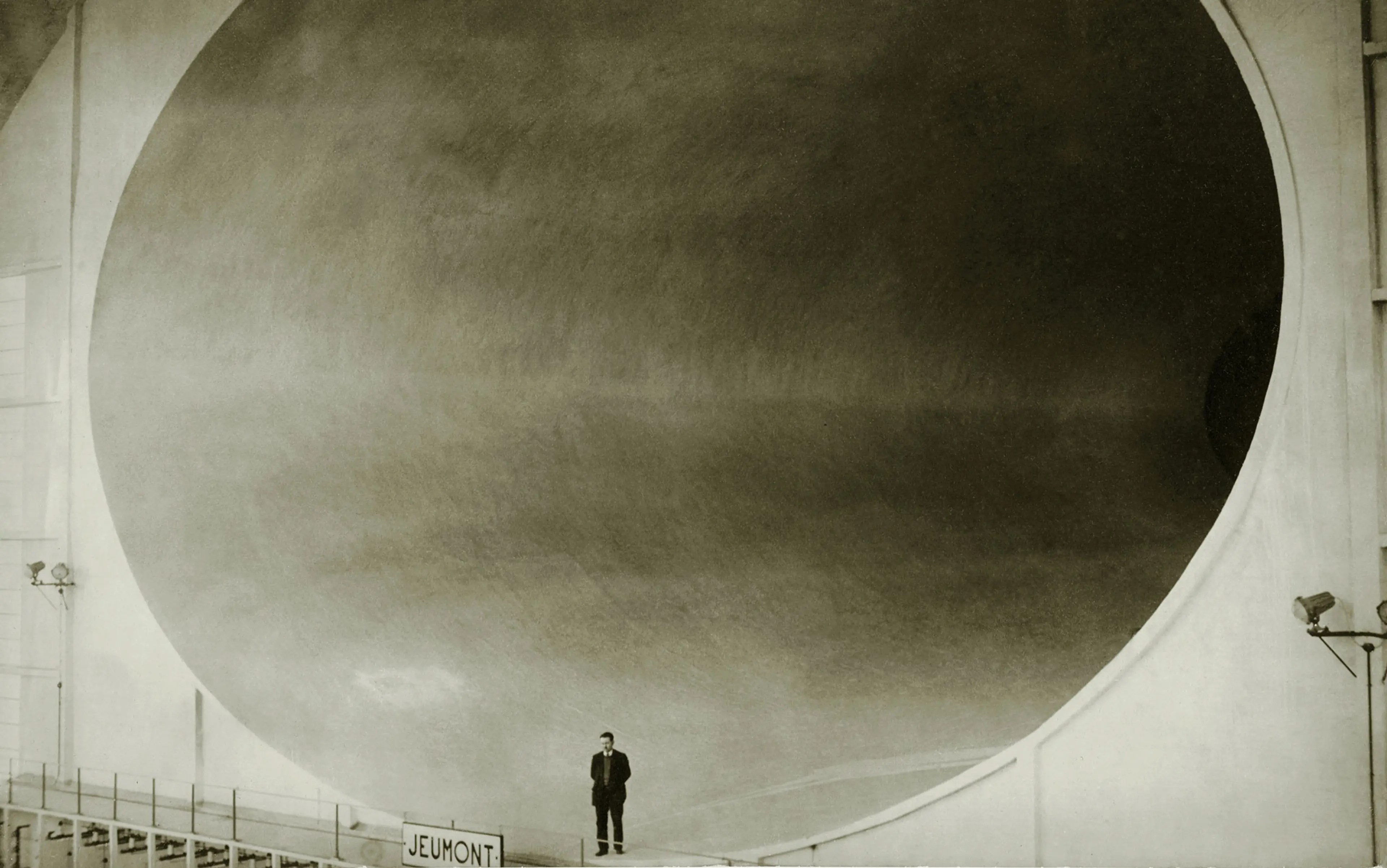
It took centuries for people to embrace the zero. Now, as Benjy Barnett explains, it’s helping neuroscientists understand how the brain perceives absences…
When I’m birdwatching, I have a particular experience all too frequently. Fellow birders will point to the tree canopy and ask if I can see a bird hidden among the leaves. I scan the treetops with binoculars but, to everyone’s annoyance, I see only the absence of a bird.
Our mental worlds are lively with such experiences of absence, yet it’s a mystery how the mind performs the trick of seeing nothing. How can the brain perceive something when there is no something to perceive?
For a neuroscientist interested in consciousness, this is an alluring question. Studying the neural basis of ‘nothing’ does, however, pose obvious challenges. Fortunately, there are other – more tangible – kinds of absences that help us get a handle on the hazy issue of nothingness in the brain. That’s why I spent much of my PhD studying how we perceive the number zero.
Zero has played an intriguing role in the development of our societies. Throughout human history, it has floundered in civilisations fearful of nothingness, and flourished in those that embraced it. But that’s not the only reason it’s so beguiling. In striking similarity to the perception of absence, zero’s representation as a number in the brain also remains unclear. If my brain has specialised mechanisms that have evolved to count the owls perched on a branch, how does this system abstract away from what’s visible, and signal that there are no owls to count?
The mystery shared between the perception of absences and the conception of zero may not be coincidental. When your brain recognises zero, it may be recruiting fundamental sensory mechanisms that govern when you can – and cannot – see something. If this is the case, theories of consciousness that emphasise the experience of absence may find a new use for zero, as a tool with which to explore the nature of consciousness itself…
[Barnett provides a fascinating history of the zero, of its uses, and of brain scientost’s attepts to understand the (not so masterful) human ability to perceive absence…]
… All of this returns us to zero. The question is, does the same underlying neural mechanism drive experiences of both zero and perceptual absence? If it does, this would show us that, when we’re engaged in mathematics using zero, we’re also invoking a more fundamental and automatic cognitive system – one that is, for instance, responsible for detecting an absence of birds when I’m birdwatching.
The brain systems used to extract positive numbers from the environment are relatively well understood. Parts of the parietal cortex have evolved to represent the number of ‘things’ in our environment while stripping away information of what those ‘things’ are. This system would simply indicate ‘four’ if I saw four owls, for example. It is thought to be central to learning the structure of our environment. If the neural systems that govern our ability to decide if we consciously see something or not were found to rely on this same mechanism, it would help theories like HOSS and PRM get a handle on how exactly this ability arises. Perhaps, just as this system learns the structure and regularities of our environment, it also learns the structure of our brain’s sensory activity to help determine when we have seen something. This is what PRM and HOSS already predict, but grounding the theories in established ideas about how the brain works may provide them with a stronger foothold in explaining the precise mechanisms that allow us to become aware of the world.
An intriguing hypothesis inspired by the ideas above is that, if the brain basis of zero relies on the kinds of absence-related neural mechanisms that the above frameworks take to be necessary for conscious experience, then for any organism to successfully employ the concept of zero, it might first need to be perceptually conscious. This would mean that understanding zero could act as a marker for consciousness. Given that even honeybees have been shown to enjoy a rudimentary concept of zero, this may seem – at least to some – far fetched. Nonetheless, it seems attractive to suggest that the similarities between numerical and perceptual absences could help reveal the neural basis of not only experiences of absence but conscious awareness more broadly. Jean-Paul Sartre testified that nothingness was at the heart of being, after all.
The evolution of the number zero helped unlock the secrets of the cosmos. It remains to be seen whether it can help to unpick the mysteries of the mind. For now, studying it has at least led to less disappointment about my birdwatching failures. Now I know that there’s great complexity in seeing nothing and that, more importantly, nothing really matters…
Noodling on nowt: “Why nothing matters,” from @benjyb.bsky.social in @aeon.co.
Apposite: Percival Everett‘s glorious novel, Dr. No.
* Oscar Wilde
###
As we analyze our apprehension of absence, we might send empty bithday greetings to a man who ruled out the use of “0” in one specific case: Georg Ohm; he was born on this date in 1789. A mathematician and physicist, he demonstrated by experiment (in 1825) that there are no “perfect” electrical conductors– that’s to say, no conductors with 0 resistance.
Working with the new electrochemical cell, invented by Italian scientist Alessandro Volta, Ohm found that there is a direct proportionality between the potential difference (voltage) applied across a conductor and the resultant electric current— a relationship since known as Ohm’s law (V=iR). The SI unit of resistance is the ohm (symbol Ω).

“Horror vacui”*…

Recently, (Roughly) Daily took a look at nothing– and the perplexing philosophical questions that it raises. Today, Charlie Wood examines nothing’s physical manifestation, the vacuum, and the similarly perplexing questions it raises for physicists…
Millennia ago, Aristotle asserted that nature abhors a vacuum, reasoning that objects would fly through truly empty space at impossible speeds. In 1277, the French bishop Etienne Tempier shot back, declaring that God could do anything, even create a vacuum.
Then a mere scientist pulled it off. Otto von Guericke invented a pump to suck the air from within a hollow copper sphere, establishing perhaps the first high-quality vacuum on Earth. In a theatrical demonstration in 1654, he showed that not even two teams of horses straining to rip apart the watermelon-size ball could overcome the suction of nothing. [See illustration above.]
Since then, the vacuum has become a bedrock concept in physics, the foundation of any theory of something. Von Guericke’s vacuum was an absence of air. The electromagnetic vacuum is the absence of a medium that can slow down light. And a gravitational vacuum lacks any matter or energy capable of bending space. In each case the specific variety of nothing depends on what sort of something physicists intend to describe. “Sometimes, it’s the way we define a theory,” said Patrick Draper, a theoretical physicist at the University of Illinois.
As modern physicists have grappled with more sophisticated candidates for the ultimate theory of nature, they have encountered a growing multitude of types of nothing. Each has its own behavior, as if it’s a different phase of a substance. Increasingly, it seems that the key to understanding the origin and fate of the universe may be a careful accounting of these proliferating varieties of absence.
“We’re learning there’s a lot more to learn about nothing than we thought,” said Isabel Garcia Garcia, a particle physicist at the Kavli Institute for Theoretical Physics in California. “How much more are we missing?”
So far, such studies have led to a dramatic conclusion: Our universe may sit on a platform of shoddy construction, a “metastable” vacuum that is doomed — in the distant future — to transform into another sort of nothing, destroying everything in the process.
Nothing started to seem like something in the 20th century, as physicists came to view reality as a collection of fields: objects that fill space with a value at each point (the electric field, for instance, tells you how much force an electron will feel in different places). In classical physics, a field’s value can be zero everywhere so that it has no influence and contains no energy. “Classically, the vacuum is boring,” said Daniel Harlow, a theoretical physicist at the Massachusetts Institute of Technology. “Nothing is happening.”
But physicists learned that the universe’s fields are quantum, not classical, which means they are inherently uncertain. You’ll never catch a quantum field with exactly zero energy…
For an explanation of how key to understanding the origin and fate of the universe may be a more complete understanding of the vacuum: “How the Physics of Nothing Underlies Everything,” from @walkingthedot in @QuantaMagazine.
* attributed to Aristitole, and usually “translated,” as above, “Nature abhors a vacuum”
###
As we noodle on nought, we might spare a thought for Hugo Gernsback, a Luxemborgian-American inventor, broadcast pioneer, writer, and publisher; he died on this date in 1967 at the age of 83.
Gernsback held 80 patents at the time of his death; he founded radio station WRNY, was involved in the first television broadcasts and is considered a pioneer in amateur radio. But it was a writer and publisher that he probably left his most lasting mark: In 1926, as owner/publisher of the magazine Modern Electrics, he filled a blank spot in his publication by dashing off the first chapter of a series called “Ralph 124C 41+.” The twelve installments of “Ralph” were filled with inventions unknown in 1926, including “television” (Gernsback is credited with introducing the word), fluorescent lighting, juke boxes, solar energy, television, microfilm, vending machines, and the device we now call radar.
The “Ralph” series was an astounding success with readers; and later that year Gernsback founded the first magazine devoted to science fiction, Amazing Stories. Believing that the perfect sci-fi story is “75 percent literature interwoven with 25 percent science,” he coined the term “science fiction.”
Gernsback was a “careful” businessman, who was tight with the fees that he paid his writers– so tight that H. P. Lovecraft and Clark Ashton Smith referred to him as “Hugo the Rat.”
Still, his contributions to the genre as publisher were so significant that, along with H.G. Wells and Jules Verne, he is sometimes called “The Father of Science Fiction”; in his honor, the annual Science Fiction Achievement awards are called the “Hugos.”
(Coincidentally, today is also the birthday– in 1906– of Philo T. Farnsworth, the man who actually did invent television…)

“I love to talk about nothing. It’s the only thing I know anything about.”*…

Nonbeing belongs to that category of concepts that seem self-evident and self-explanatory, but as FT explains, it has perplexed philosophers for ages…
Bertrand Russell’s 1951 obituary for Ludwig Wittgenstein is only a few paragraphs long, and the second consists largely of a single pointed anecdote:
Quite at first I was in doubt as to whether he was a man of genius or a crank…. He maintained, for example, at one time that all existential propositions are meaningless. This was in a lecture room, and I invited him to consider the proposition: “There is no hippopotamus in this room at present.” When he refused to believe this, I looked under all the desks without finding one; but he remained unconvinced.
The exchange is typical of the two philosophers’ relationship: Russell’s proper British demeanor was frequently ruffled by the Austrian’s dry humor. But it also illustrates two general approaches to philosophy: one that takes pleasure in complexities, absurdities, and ironies, and one that takes pleasure in resolving them. Just as Wittgenstein surely realized that there was no hippopotamus in the room, Russell surely realized that Wittgenstein’s objection could not be dispelled empirically by looking under each desk. At stake was not a fact of perception but the epistemological status of negation—the philosophical meaning and value of assertions about nothing.
Nothing, or nonbeing, belongs to that category of concepts—like being, space, and consciousness—that seem self-evident and self-explanatory to most people most of the time, but that for philosophy have been objects of deepest perplexity and millennia-long dispute. It’s a little like breathing, which happens automatically until we stop to think about it. To most of us, Russell’s statement “There is no hippopotamus in this room” is both easily understood and easily verified. We think we know what it means, and most of us would only need a quick look around to affirm or deny the proposition.
But here our troubles begin. If you look around the room and don’t see a hippopotamus, presumably you do still see something: some kind of perception or sensory data is reaching your consciousness, which allows you to make a judgment. What is it that you do see when you see a hippopotamus not being there? Are you perceiving a nonbeing, seeing a particular thing whose nature is absence, or are you not perceiving any being, seeing no “thing” at all? When you see a hippopotamus not being there, are you also seeing a whale and a lion and a zebra not being there? Is every room full of all the things that aren’t in it?
From an evolutionary perspective, one predator not being there is just as good as any other predator not being there, but dialectics and logic are a little more particular. If every possible animal is not there at the same time, what specific truth-value can the assertion “There is no hippopotamus in this room” possibly have? Hence Wittgenstein’s insistence, facetious or not, that all existential propositions are meaningless. In this manner the complications and implications of nothing spill into every area of philosophical inquiry, and we quickly come to sympathize with Aristophanes’ brutal satire of philosophers in The Clouds:
Socrates: Have you got hold of anything?
Strepsiades: No, nothing whatever.
Socrates: Nothing at all?
Strepsiades: No, nothing except my tool, which I’ve got in my hand.
Nonbeing, through the ages: “Apropos of Nothing,” from @ft_variations in @nybooks.
* Oscar Wilde
###
As we analyze absence, we might send mindful birthday greetings to Mahasi Sayadaw; he was born on this date in 1904. A Burmese Theravada Buddhist monk and meditation master, he had a significant impact on the teaching of vipassanā (insight) meditation in the West and throughout Asia.

“No great artist ever sees things as they really are”*…

Indeed, sometimes they see nothing at all…
Earlier this month, an Italian artist named Salvatore Garau went viral when his “immaterial sculpture”—that is, a work of art made of literally nothing—sold for €15,000 ($18,300) at auction.
Articles about the sale was shared widely, often accompanied by captions of the “I could have done that” variety. Users posted pictures of blank spaces—their own invisible sculptures which could surely be had for a fraction of Garau’s price. Many bemoaned the fact that they didn’t think of it first.
Then there was Tom Miller, a performance artist from Gainesville, Florida, who says he actually did do it first—and now he’s filing a lawsuit against Garau to prove it.
The Florida artist says that, in 2016, he installed his own invisible sculpture in Gainesville’s Bo Diddley Community Plaza, an outdoor event space. He titled it Nothing and erected it over the course of five days with a team of workers who moved blocks of air like mimes building the Great Pyramid of Giza. Tens of people were on hand to see the opus unveiled that June.
Miller even made a short film about the work, a mockumentary that features fake artists and curators as talking heads. He compares his respective take on nothingness to John Cage’s “4′33″ and Seinfeld.
“All I can say personally is that Nothing is very important to me,” Miller told Artnet News in an email. “I should be credited with Nothing (specifically the idea of Nothing fashioned into sculpture form), and Gainesville, Florida—not Italy—is where Nothing happened first.”
It’s worth pointing out, of course, that immaterial art has a long history stretching back to the 20th century. Yves Klein exhibited an empty gallery space in 1958 and envisioned an “architecture of air” a couple of years later. Tom Friedman installed an invisible object atop a plinth in 1992—and it sold for £22,325 nine years later.
…
Miller may have even more competition than he realizes. Since Artnet News first published an article about Garau’s work, numerous other artists have written to me about their own invisible sculpture practices. It turns out it’s hard to get noticed when you’re an artist who makes… nothing.
Tom Miller, who says he made an invisible sculpture in 2016, is demanding visibility: “A Florida Man Is Threatening to Sue an Artist Whose Invisible Sculpture Sold for $18,000, Saying He Came Up With the Idea First”; from Taylor Dafoe (@tddafoe) in @artnet
* Oscar Wilde
###
As we muse on the missing, we might might recall that it was on this date in 1989 that Northrop Grumman did its best to make something all-too-tangible disappear: it first flew what became the B-2 Spirit— better known as the Stealth Bomber.

You must be logged in to post a comment.