Posts Tagged ‘autocracy’
“You live and learn. At any rate, you live.”*…

… and to the extent that we care about our democracy, that’s an issue.
In an article based on his recent Sakurada-Kai Foundation Oxbridge Lecture at Keio University, Tokyo, John Dunn argues that our democracies depend on our picking up the pace of learning. The abstract:
There cannot be a coherent democratic theory because democracy is not a determinate topic. Representative democracy is a relatively modern regime form. It now needs rehabilitation because so many instances have performed poorly for so long. Representative democracy is now also an aging regime. As a type of state, it is subject to the territorial contentiousness and contested legitimacy of any state. It claims its legitimacy from iterative popular choice, but the plausibility of that claim is increasingly strained by the drastic disparities in life chances reproduced through the property systems it protects. The inherent difficulty for citizens to judge how to advance their collective interests is aggravated by the recent transformation of the information economy. In the cumulative damage inflicted by climate change it faces a deadlier peril than any previous regime and one which only a citizenry that can enlighten itself in time can reasonably hope to nerve itself to meet…
There follows a fascinating– and provocative– elaboration of this thesis in which Dunn considers the history of democracy and the alternatives with which it has, since its inception, vied. He concludes in a bracing fashion…
… The varieties of autocracy which will be on offer wherever the rest of the world has the opportunity to take them up will be without exception the reverse of enlightened – instrumentally and compulsively bound to the extremes of obscurantism, Darkness as a full-on fideist commitment, deliberate self-blinding as a navigational strategy. Move fast, break lots, and never pause to inspect the wreckage.
Representative democracy has recently proved itself a poor structure for collective enlightenment, but the case for it depends on its at least not precluding that, its being still open to making the attempt, and responding to what it can contrive to learn. The most optimistic vision of democracy in action has always seen it as an opportunity for collective self-education on the content of shared goods and the means to achieve them. If that is scarcely a realist picture of what it has ever been, at least it is an image of the right shape. It is too late to ask who will educate the educators. At this point we must educate ourselves together and heed the lessons of that education or we must and will die – not just each of us one by one, as we were always fated to do, but soon enough all of us and for ever…
Eminently worth reading in full: “Can Democracy be Rehabilitated?“
Apposite: “How American Democracy Fell So Far Behind,” from Steven Levitsky and Daniel Ziblatt (gift article– and source of the image above)
* Douglas Adams, Mostly Harmless
###
As we devote ourselves to democracy, we might spare a thought for Ludwig van Beethoven; he died on this date in 1827. A crucial figure in the transition between the Classical and Romantic eras in Western music, he remains one of the most famous and influential of all composers. His best-known compositions include 9 symphonies, 5 concertos for piano, 32 piano sonatas, and 16 string quartets. He also composed other chamber music, choral works (including the celebrated Missa Solemnis), a single opera (Fidelio), and numerous songs.
Relevantly to the piece above…
Beethoven admired the ideals of the French Revolution, so he dedicated his third symphony to Napoleon Bonaparte… until Napoleon declared himself emperor. Beethoven then sprung into a rage, ripped the front page from his manuscript and scrubbed out Napoleon’s name…
Beethoven’s temper and Symphony No. 3 ‘Eroica’

“He is seen, but he does not see; he is the object of information, never a subject in communication”*…

We’ve looked before at digital regimes that seem a little too close for comfort to Jeremey Bentham‘s notion of the Panopticon. Surveillance has continued to intensify. 404 Media’s Jason Koebler and Joseph Cox bring us up to speed…
It’s nearly impossible not to be watched these days. It can start right at home with your neighbors and their Ring cameras—a company that sold fear to the American public and is now integrating AI to turn entire neighborhoods into networked, automated surveillance systems.
Head out a bit further and you’ll likely be confronted by Flock’s network of cameras that not only track license plates, but also track people’s movements with detailed precision. And as the Trump administration raids cities across the U.S. for undocumented immigrants, tech giants like Palantir are powering tools for ICE, including one called ELITE that helps the agency pick which neighborhoods to raid.
To better understand what exactly we’re looking at in this dystopian hellscape, 404 Media’s Jason Koebler and Joseph Cox joined r/technology for an AMA.
Understandably, people are worried about violations of their privacy by companies and the government. And many wonder, is there any way to go back once we’ve released all this AI-powered, surveillance tech?…
The (lightly edited for clarity) transcript is a bracing– but critically-important– read: “From Flock to ICE, Here’s a Breakdown of How You’re Being Watched,” @jasonkoebler.mastodon.social.ap.brid.gy and @josephcox.bsky.social in @404media.co.
* “Bentham’s Panopticon [at top] is the architectural figure of this composition. We know the principle on which it was based: at the periphery, an annular building; at the centre, a tower; this tower is pierced with wide windows that open onto the inner side of the ring; the peripheric building is divided into cells, each of which extends the whole width of the building; they have two windows, one on the inside, corresponding to the windows of the tower; the other, on the outside, allows the light to cross the cell from one end to the other. All that is needed, then, is to place a supervisor in a central tower and to shut up in each cell a madman, a patient, a condemned man, a worker or a schoolboy. By the effect of backlighting, one can observe from the tower, standing out precisely against the light, the small captive shadows in the cells of the periphery… He is seen, but he does not see; he is the object of information, never a subject in communication. – Michel Foucault, Discipline and Punish: The Birth of the Prison
###
As we feel seen, we might recall that it was on this date in 2000, that the dot.com bust effectively began. Between 1995 and its peak five days earlier, on March 10, 2000, investments in the Nasdaq Composite stock market index rose from 1,006 to 5,048—a 400% gain fueled by the conviction that the internet would render every prior valuation framework obsolete. It did not.
On March 13, 2000, news that Japan had once again entered a recession triggered a global sell off that disproportionately affected technology stocks. Soon after, Yahoo! and eBay ended merger talks and the Nasdaq fell 2.6%; still, the S&P 500 rose 2.4% as investors shifted from strong performing technology stocks to poor performing established stocks. The market held steady on the 14th. Then, on this date 26 years ago, the broader market begin to drop… and kept dropping. By the end of the stock market downturn of 2002 (the “second chapter” in the correction that began in 2000), stocks had lost $5 trillion in market capitalization since the peak. At its trough on October 9, 2002, the NASDAQ-100 had dropped to 1,114, down 78% from its peak. It took 15 years for the Nasdaq to regain its March, 2000 peak.

“Nationalism is not the awakening of nations to self-consciousness: it invents nations where they do not exist… It is nationalism which engenders nations, and not the other way round.”*…

The estimable Henry Farrell unpacks Ernest Gellner‘s understanding of the conditions of liberty– and the centraliity of civil society– and how they are threatened today…
There are many possible stories about why American political conservatism is such an intellectual trainwreck. Here’s one. Conservatives used at least nominally to argue that it was important to protect civil society from the depredations of government, and many genuinely believed it. Some still do, but now, the dominant figures in political conservatism want to use government to weaponize and suborn civil society.
Like all simplified fables, this gets a fair amount wrong, both in its understanding of what happened and in what it leaves out. Still, it isn’t a bad way to start understanding some of what is taking place. Yet it begs an important question. What is civil society?
When I wrote about how civil society could beat Trumpism a couple of weeks ago, I felt a mild sensation of intellectual guilt – I knew I was invoking a complicated set of ideas without properly explaining them. So here’s my attempt to make up for that, and to explain why we ought want to protect civil society too, leaning on the account in Ernest Gellner’s book, Conditions of Liberty.
I suspect that few people younger than 50 have read this book – it’s been out of print for thirty years or so. [Though it is avaiable at the Internet Archive, in other lbraries, and used.] Gellner wrote it back in the 1990s, when civil society seemed to promise a path forward for the newly freed democracies of Eastern Europe. Now people are rediscovering the idea, not because of future hopes, but because they want to explain what is going wrong as the state escapes its restraints and threatens to crush the people’s liberties.
Gellner’s understanding of civil society is both relevant and a possible bridge between certain parts of the left and right. While he identified loosely with the left, Gellner was profoundly influenced by the kinds of classical liberalism articulated by Adam Ferguson and David Hume. They, in turn, wrote in the aftermath of the English Civil War and Glorious Revolution of the previous century, when Scottish and English society had been torn apart by vicious religious controversies.
Gellner’s account of civil society, like those of his intellectual forebears, begins from the fact of profound disagreement and asks how best to manage it. From Gellner’s perspective, civil society is a marvelous accident, an unanticipated by-product of the seventeenth century stalemate between Calvinist enthusiasts (here and below, the term ‘enthusiast’ refers to Protestants who believe that God lives inside them, and are accordingly uncomfortable with certain kinds of hierarchy) and the English state. Yet this accident has shaped the world that we live in, creating a realm of autonomy in which people are free to live their lives in many different ways, within broad structures that support a reasonable degree of peace and shared order.
The dominant strain in American political conservatism has abandoned any commitments that it once had to this vision of pluralism. Some conservatives favor a shared notion of the common good, which ought be imposed as necessary on society. Others are more straightforwardly interested in domination and plunder. Neither faction has any interest in preserving the autonomy of civil society. Instead of a pluralistic realm to be protected or left alone, they see a “cathedral” of left ideology and argue that universities, non-profits, even multinational corporations are redoubts of the enemy that must be taken by storm. This is dingbat Gramscianism, strained through the turd-encrusted sieve of Curtis Yarvin Thought…
[Farrell unpack’s Gellner’s thinking and puts it into context. He concludes…]
… There is plenty that is missing from the classical liberal account of civil society that Gellner lays out. It doesn’t capture many of the power dynamics that actually existing civil society entails. Civil society’s actual degree of pluralism varies, and is the subject both of legitimate debate and actual political struggle (something that both intelligent left- and right-Gramscian approaches capture better than classical liberal accounts).
Still, it does an excellent job in explaining why it is a problem when the government tries to capture civil society. If we lived in a world where the winning faction of conservatives recognized the value of civil society, we would be a lot better off than we are. There is also excellent reason to think that the left should be more appreciative of civil society too, and less prone to fantasies that everyone would change their politics if only this or that intellectual institution was controlled by the right people with the right way of thinking.
Liberal accounts of civil society push us to recognize the benefits of genuine pluralism, however painful and messy it may be, and however difficult to maintain in practice. Gellner’s particular version also has the particular benefit of emphasizing how contingent the development of civil society was, and how chancy its survival may be without relentless hard work.
Other societies may develop the economic benefits that helped civil society take off. [Quoting Gellner…]
Whether we like it or not, the deadly angel who spells death to economic inefficiency is not always at the service of liberty. He had once rendered liberty some service, but does not seem permanently at her command. This may sadden those of us who are liberals and were pleased at being given such a potent ally – but facts had better be faced.
There will always be tensions in the relationship between nationalism and liberalism, which endanger the pluralism of civil society. Strong forms of national identity and strongman government based on fostering us-them divisions go hand-in-hand with each other. If economic growth stutters or fails, then social mobility is likely to become more problematic, and abusive hierarchy – the default condition of human society – may return.
That, then, is what civil society is (under one useful definition) and why we ought care about it…
Eminently worth reading in full: “What is civil society, and why should we care?” from @himself.bsky.social. For more from Farrell on the importance of civil society an what drives it: “Liberalism transforms plurality from weakness to strength.”
Lest we need a more “commercial” form of convincing (that, among its other defects, inequality doesn’t pay): Noah Smith on “Our Age of Kings” and why “the ‘cure’ is worse than the disease.” One example:

See also: “Equality and Development: A Comparative & Historical Perspective 1800-2025,” and “The Rise and Fall of the Project State: Rethinking the Twentieth Century.”
As Kant said, “The greatest problem for the human species, the solution of which nature compels him to seek, is that of attaining a civil society which can administer justice universally.” Further to which, as Abbie Hoffman observed, “Democracy is not something you believe in or a place to hang your hat, but it’s something you do. You participate. If you stop doing it, democracy crumbles.”
* Ernest Gellner (a la George Orwell’s distinction between the defensive patriot and the offensive nationalist: the former naturally prefers his particular customs, whereas the latter cannot be satisfied without demonstrating their superiority over others — by conflict if necessary).
###
As we push for plurality, we might spare a thought for “the only man to enter Parliament with honest intentions”– it’s Guy Fawkes Day.
On the eve of a general parliamentary session scheduled for November 5, 1605, Sir Thomas Knyvet, a justice of the peace, found Guy Fawkes lurking in a cellar of the Parliament building, and ordered the premises thoroughly searched. Nearly two tons of gunpowder were found hidden within the cellar. The authorities determine that the suspect was a participant in an English Catholic conspiracy, largely organized by Robert Catesby, to annihilate England’s entire Protestant government including King James I. Over the next few months, English authorities killed or captured all of the conspirators in the “Gunpowder Plot,” and also arrested, tortured, or killed dozens of innocent English Catholics. Fawkes himself was executed on January 31, 1606.
The day after Fawkes arrest, November 5, 1605 Londoners were encouraged to celebrate the King’s escape from assassination by lighting bonfires, “always provided that ‘this testemonye of joy be carefull done without any danger or disorder'”; an Act of Parliament later that year designated November 5th as an official day of thanksgiving for “the joyful day of deliverance”, and remained in force until 1859.
But as historian Lewis Call has observed, Fawkes is now “a major icon in modern political culture.” The image of Fawkes’s face has become “a potentially powerful instrument for the articulation of postmodern anarchism” during the late 20th century, exemplified by the mask worn by V in the comic book series V for Vendetta, who fights against a fictional fascist English state, and by activists who were part of the Occupy Movement.

“I am not Cinna the conspirator”*…

As Philip Goldfarb Styrt explains, Shakespeare’s Julius Caesar offers a telling parable about the administration of justice—and rife mishandling thereof—in our day…
American politics has a long history of referencing William Shakespeare’s The Tragedy of Julius Caesar, from Abigail Adams, who identified with Portia, the wife of Brutus, as Betsy Erkkila has noted, to the assassination of Abraham Lincoln, which “both was and was not reenacting” the play, in Cary M. Mazer’s words. These references are likely due to the intersection of American identification with Roman republicanism, which the play dramatizes, and the long history of American interest in Shakespeare specifically. More recently, a great deal of ink was spilled during Donald Trump’s first term comparing the president to Caesar. But while an excellent hook for contemporary stagings of the play, this kind of parallel has limitations. King George III and Abraham Lincoln weren’t Caesar, and neither is Donald Trump, even if a lead actor sports a distinctive red tie. This history does, however, raise the question of what Shakespeare’s play might have to tell us about our current historical moment.
One overlooked area of governance that has become increasingly important in the early days of the current administration is due process: what procedures does the government have to go through and what kinds of hearings must be held, particularly in immigration cases, in order to arrest someone? To remove or deport someone from the country? From the Mahmoud Khalil case at Columbia University to the Rümeysa Öztürk case at Tufts, the Secretary of State has been personally marking individual visas and green cards for revocation; in addition, in cases like the one that centers on the removal of alleged gang members to El Salvador, whole categories of people are being removed without a hearing or a trial and with at least some allegations that the individuals removed aren’t even part of the targeted class.
Julius Caesar treats these issues directly. The play focuses on the assassination of the title character by a conspiracy headed by Brutus and Cassius and the defeat of the conspirators in battle by Caesar’s successors, the triumvirate of Marc Antony, Octavian, and Lepidus. Along the way, the play presents punishment as a major theme: First, the punishment of Caesar for the perceived sin of royal ambition, and second, the punishment of the conspirators for his murder. Because of this, a close look at the play and the scholarship surrounding it can help make clear the stakes of due process. While the term itself wouldn’t have been used in Shakespeare’s time, his era was one in which the procedures of law we now call due process were being formalized, and his plays show a consistent interest in whether that proper procedure is being followed.
A pair of crucial scenes related to this issue immediately follow the play’s most famous parts (Caesar’s assassination and the speeches delivered by Brutus and Antony over his body, in Act 3, Scenes 1 and 2, respectively) and may be sometimes overlooked. But when considered together, they give insight into why arbitrary executive action without due process is dangerous, whether it technically operates within the law or not.
The first of these two scenes—in Act 3, scene 3—features mob violence. Incited by Marc Antony to seek revenge, the citizens seek out conspirators to murder, and they mistake the poet Cinna for a conspirator of the same name. They tear him to pieces. Though this act is hardly the same as an official arrest, which might seem to distance it from discussions of due process, this moment isn’t just about the mob, as Martin Mueller points out; it’s about how power acts, whether through masses or through government. It’s a case of enacting punishment in a case of mistaken identity, particularly one where despite that mistake having been corrected in real time, the damage is done. “I am not Cinna the conspirator,” are the victim’s last words, but the play gives neither time nor opportunity for his insistence to convince anyone to keep him alive. Due process would allow for potential Cinnas to demonstrate innocence and remove themselves from the unwarranted threat; without it, everyone is imperiled.
There’s another element of the current concern regarding due process that relates to the fate of poor Cinna. His death isn’t merely the result of mistaken identity; as Jeffrey J. Yu writes, after he tries to identify himself the mob changes its tune, declaring that they’ll kill him for being a bad poet instead. Absent due process, there’s no pause to decide whether this person should be condemned or if the reason given for condemnation is legitimate. This episode serves as a reminder that due process doesn’t merely protect people from mistaken identification; it also requires those who would mete out punishment to specify, up front, the reason for it.
The Trump administration’s refusal to give key information to multiple judges in the removal cases recalls this danger. By refusing to specify details of the case, the government keeps the possibility alive of changing their reasoning or their claims to have the same effect for different reasons—just as the mob changes its reasoning for killing Cinna. This belies the question of whether those who are looking to deliver punishment are acting in good faith, a concern that became part of the appeals court decision in the El Salvador case and has subsequently been raised in other courtrooms as well. Just as Shakespeare’s mob finds new justifications for why Cinna the Poet should die, the government keeps open the possibility of producing a different reason for removing the people it currently claims are alien enemies—a process they have already begun with individual visa revocations. Due process requires a commitment to the reasons punishment is sought and thus allows those reasons to be addressed and countered.
As Nicholas Royle argues, the scene of Cinna’s death can easily be treated as a version of Julius Caesar in miniature. The play as a whole is about categorical error: killing someone because you think they are one thing only to find out you were wrong. This, in turn, centers the idea of due process, because only through it can deliberative decisions about identity, guilt, and punishment be properly engaged. The lynching of (the wrong) Cinna is the madness of a mob; the murder of (the right) Caesar is a conspiracy of nobles; the removal of hundreds of (alleged) Venezuelan gang members is the action of ICE. Each is a distinct entity, but they hold in common a lack of judicial process to determine what is to be done and to whom.
If the death of Cinna is a microcosm of the play, the other moment that reinforces the importance of due process in Julius Caesar is even more compressed, lasting a mere eight lines at the start of the fourth act. That’s all the time it takes for Marc Antony, Octavius (the future Augustus Caesar), and Lepidus to choose the Romans who will die by proscription in order to keep their triumvirate in power while they war against Caesar’s assassins. This is an arbitrary and impersonal form of execution: the triumvirs check off the names of those they want dead: “these many, then, shall die; their names are pricked.” As Robert Kalmey observes, this moment encapsulates what Roman historians thought of as the worst of all of Octavius’s crimes against the state before becoming emperor. This “tyrannical ruthlessness and cruelty,” in Robert Miola’s words, reveals that the triumvirate will be no better than Caesar’s assassins or the mob; they too will kill at whim to stay in power.
There’s something disturbing about these proscriptions, which is why both Kalmey and Miola identify them as critical. The triumvirate make a cold-blooded choice to kill many Romans; it has neither targeted motivation, as did the assassination of Caesar, nor does it possess the emotional if not legal justification embraced by the inflamed mob in its misdeeds. This isn’t to justify those prior murders. Rather, it’s to point out that the proscriptions somehow exceed even them in horror because of how they’re administered. There’s no due process here, either; the three triumvirs don’t get their hands dirty, their decisions can’t be appealed, and there’s no public process by which those to be killed will be identified before the decision is final.
In this there’s a distinct echo of the process currently in use for determining which visas (permanent or temporary) will be revoked under the current administration. The decision lies solely with Secretary of State Marco Rubio, who has the power to determine if a particular immigrant poses a threat to national security; if he makes that determination, then the immigrant in question can be picked up off the street without hearing or appeal. Thus far, there’s no venue for disputing such a determination nor is there a published list of those whose visas have been revoked, even though Rubio claims to have revoked as many as 300 (coincidentally, as Kalmey details, the number of senators proscribed by the triumvirate).
Of course, deportation or removal from the United States isn’t the same as death; Rubio’s unilateral visa revocation isn’t the same as the proscription. But the lack of transparency and due process are similar, and there are few to no guarantees of the safety of people whom ICE agents remove, often without identifying themselves, and move around without notifying the family or lawyers of the detained. In fact, the government has argued in court that it has no responsibility to return those who might be removed incorrectly or by accident.
In Julius Caesar Shakespeare demonstrates the extreme consequences of a lack of due process. Not every such deprivation becomes a literal matter of life and death as in the play, but making use of such scenarios enables Shakespeare to highlight more effectively the danger of arbitrary action. Whether we imagine ourselves, like Cinna the Poet, hunted for a crime of which we are innocent or, like the Roman dignitaries proscribed by the triumvirs, marked out for condemnation, the drama asserts that some kind of due process is a necessity for a free state. If, as Lloyd Matthews has argued, America’s founding ideals of liberty are intimately linked to Julius Caesar, that connection should remind us that such liberty requires due process to function properly…
“The Lessons of Due Process in Julius Caesar,” from @jstordaily.bsky.social.
Pair with: “Brush Up Your Shakespeare” (“A Harvard Law class uses the Bard’s plays to explore legal themes and concepts past and present”)
* Shakespeare, Julius Caesar, Act 3, Scene 3
###
As we recognize rights, we might recall that it was on this date in 1938 that the Mercury Theater broadcast the Halloween episode of their weekly series on the WABC Radio Network, Orson Welles’ adaptation of H.G. Wells’ War of the Worlds. The first two-thirds of the show (which was uninterrupted by ads) was composed of simulated news bulletins… which suggested to many listeners (a huge number of whom joined in progress, after tuning over from the Edgar Bergen show on NBC) that a real Martian invasion was underway.
While headlines like the one below suggest that there was widespread panic, research reveals that the fright was more subdued. Still there was an out-cry against the “phony-news” format… and Welles was launched into the notoriety that would characterize his career ever after.

“Power tends to corrupt, and absolute power corrupts absolutely”*…
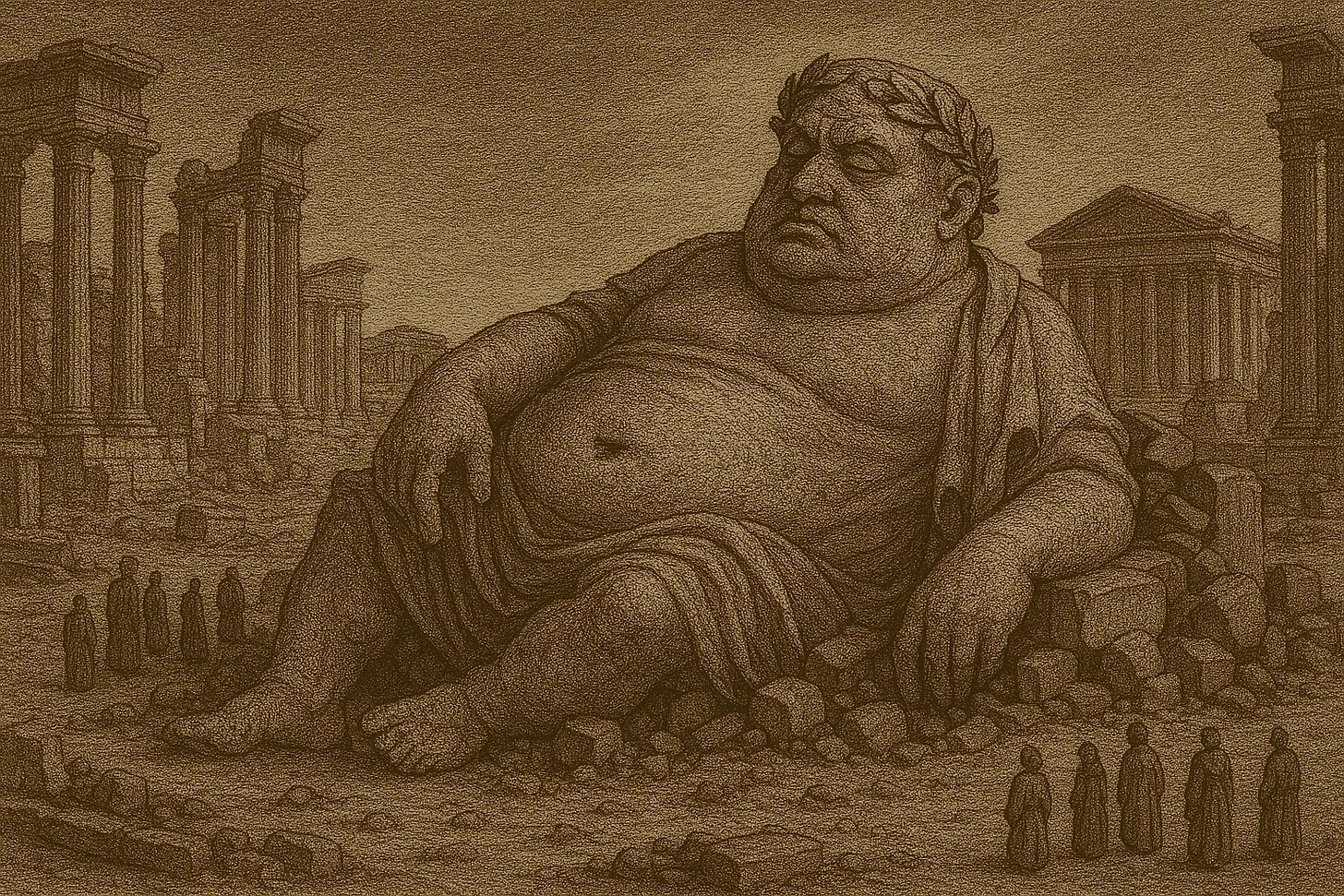
The estimable Henry Farrell has re-posted a (slightly revised) piece that was sub-linked in an early (R)D– a compelling argument that “we need, right at the moment, to think very clearly about how power is won or lost”…
… The current U.S. president is looking to seize power that he clearly is not entitled to under the law and the constitution, and that will usher through some kind of regime change if he succeeds. Many people are trying to resist. What are Trump’s strengths and weaknesses? What are the strengths and weaknesses of those who want to oppose him?
There’s a simple account of power that I think is useful here. It is developed in this paper by the late Russell Hardin, but really descends from David Hume’s understanding of politics.
The fundamental argument is this: that power in modern societies depends on social coordination. That is just as true of aspiring authoritarians like Trump as of the people who want to mobilize against him. As Hume says (quoted in Hardin):
No man would have any reason to fear the fury of a tyrant, if he had no authority over any but from fear; since, as a single man, his bodily force can reach but a small way, and all the farther power he possesses must be founded either on our own opinion, or on the presumed opinion of others.
Those who want to win power can only do so by persuading others. All tyrants must worry that their grip on power rests on such opinion. Hardin:
As a contemporary lawyer puts this argument: “No state could possibly compel people to obey all these rules at gunpoint; there would not be enough soldiers and policemen to hold the guns (a sort of Orwellian vision of society), they would have to sleep sooner or later, and then anarchy might break out.”
Equally, even if the people might overwhelm the tyrant if they ever joined together, it is very hard for them to organize against him, especially in a fully developed authoritarian state.
That is why authoritarian rulers devote a lot of time to preventing unrest from breaking out. Their best strategy for survival is to actually be popular. But that is hard to keep up. Acceptable substitutes include preventing people from discovering how unpopular the regime is, controlling media (to prevent coordination), and deploying the threat of physical violence to intimidate.
The problem with all of these strategies is that the ruler can do none of it on their own. Even the threat of violence, when looked at closely, requires some degree of willing coordination among the soldiers and policemen. That is why dictators are so careful about how they treat their armed forces. Authoritarians need to worry about the masses, but even more about their own coalitions.
More generally: struggles for power are struggles over the means of coordination. Who is capable of coordinating better, wins. And want-to-be authoritarians and mass publics face different coordination problems.
If you are an aspiring authoritarian, your strategy is to persuade others that they need to be part of your coalition. Hardin (this time on Adam Smith):
In a competitive world of pastoralists, one benefits best from association with the most powerful tribe. Hence, if someone rises to capable leadership with [sic] a tribe, others will be attracted to join with it. The result eventually will be remarkable power in the control of the leader of the tribe. Combination for the sake of survival then makes it possible not merely to survive but to thrive and even to plunder.
In more modern circumstances, your best strategy as an aspiring tyrant is likely to convince others (a) that they do live in a society of competing groups, and (b) that the smart money will always be on joining the dominant group, and not being one of the dominated ones.
Hardin continues:
This is essentially an argument from coordination. We coalesce because it is individually in our interest to do so as long as others do so as well. What we need to guide is in coalescing with others is merely the evidence of sufficient leadership and sufficient members to make our joining them clearly beneficial.
That, however, isn’t quite right. The authoritarian who wants to build a ruling coalition needs not only to make her success seem like a fait accompli. She also needs to persuade others that they will prosper rather than suffer from joining. The aspiring authoritarian needs to persuade allies that she (and they) will predate on outgroups, and that she will not predate on the allies themselves.
That process of persuasion becomes more difficult, the more unbounded the ambitions of the wannabe authoritarian are (I lay out a version of this argument here, in a paper that began from a conversation with Hardin and Margaret Levi a quarter of a century ago). The more powerful and unruly the authoritarian becomes, the more readily they can make promises or threats. Equally, the less credible those promises or threats become, both to allies and to enemies.
Absolute power implies absolute impunity: if I enjoy such power, I have no incentive to behave trustworthily to anyone. For just the same reason, no-one has any incentive to trust me. You will not believe my promises, and you may fear that if you give in to my threats, you will only open yourself to further abuse. Thus – as I, as an aspiring authoritarian move closer to unbounded control, I need to artfully balance the benefits that my power can bring to my allies with the fear those allies may reasonably have over what happens should that power be turned against them.
The problem faced by mass publics is different. For all the language about the ‘tyranny of the masses,’ they find it difficult to coordinate on rewarding friends and punishing enemies. That makes them less likely to go bad, at least in the way that tyrants can go bad. But it also makes it more difficult for them to coordinate against incipient tyranny, even when they know that everyone would be better off if they did.
On the one hand, under some circumstances, the costs of action may be quite low. If protest is cheap, then protestors are playing a nearly pure coordination game, where everyone will resist if they reasonably assume that everyone else will resist too. Hardin:
coordination may so greatly reduce costs that the latter are almost negligible, so that the slightest moral commitment may tip the scales toward action. Just as it would be odd for many Americans in communities in which voting is easy to balk at the minor cost in inconvenience, so it might seem odd for many workers or soldiers or others to balk at joining a crowd to march on the palace or the Bastille. This is not identical to a multiple coordination problem, such as that in the driving convention, in which one simply wants to go with the majority. In the revolutionary coordination, one has an active preference between the outcome of full attack and that of no attack. Still, one prefers to attack if enough others do and not to attack if enough others do not.
On the other, rulers and aspiring rulers can recognize this risk and counter-attack.
It was perhaps the startling ease with which spontaneous revolutions took control in cities that led the French under Thiers to put down the Paris Commune with such thoroughgoing brutality as to make it seem more nearly like murder than warfare. The answer to the coordination explanation of revolutionary action is draconian force. This lesson of the Commune has been learned well by many later regimes and leaders in various places, such as the Nazis in Czechoslovakia, Stalin in the Soviet Union, Pinochet in Chile, and Videla in Argentina, with their harsh, blanket suppression of dissenters and potential dissenters. They raise the likely costs of revolutionary activity enough to change its structure. … If the old state raises the costs enough to individuals for revolutionary activity, it overcomes the power of coordination to reduce the costs of revolutionary activity. It forces potential revolutionaries to see their problem overwhelmingly as a prisoner’s dilemma in which free-riding is in the individuals’ interest.
This helps explain some of the actions of Trump and those around him. Their approach to both universities and law firms has been to make simple coordination seem like a prisoner’s dilemma, by picking off opponents, one by one, and by trying to create a common understanding that collective resistance is useless, since your potential allies are likely to defect. The early decision of one extremely prominent law firm, Paul Weiss, to defect, shaped common expectations so that several others rushed immediately to defect too, for fear that they would be stranded amidst the dominated group, rather than joining the dominating coalition in a subordinated role.
To bring the different strands of the argument together, Trump’s strategy has been much less effective than it might have been. Trump has shown he is unwilling to stick by deals. Law firms that have submitted find that they are on the hook for far more than they bargained for. Columbia University, after making humiliating and profound concessions, finds that it is expected to make far greater ones, with no guarantee that even these will satisfy the Trump administration’s demands
As a whole body of research on “tying the king’s hands” argues, independent actors will prefer to flee monarchs who refuse to be bound rather than to cooperate with them, because they know that such monarchs can’t be trusted. Any deal that they make can later be un-made, and probably will be, if unmaking it is to the king’s advantage. The best option may be not to submit, especially if you believe that others are similarly unwilling to comply. This may, in effect, turn what was a prisoner’s dilemma (in which everyone’s best strategy is to defect) back into a nearly pure coordination game again, allowing easier collective resistance.
Or, it may not. If people don’t have reason to believe that others will stand up, then they still are unlikely to stand up themselves.
This then, gives us a simplified but useful understanding of where we are right now. The good news is that the Trump administration is playing its hand very badly. If Trump had been more willing to accept defectors into his camp, by sticking to deals that gave them something worth having, he would be in a much stronger situation than he is at the moment. Furthermore, and somewhat less obviously, this may also disrupt his own existing coalition. Wall Street, for example, may worry that it is next for the chopping block. Silicon Valley the same.
The bad news is that the opposition is much more disorganized than it ought to be. Coordination is bolstered by shared knowledge that others will coordinate too. We don’t have that, in part because of lack of leadership, in part because of a media landscape that makes it difficult to generate such shared knowledge. Remember Hume’s phrase about the “presumed opinion of others.” Our presumptions about what other people think can play an extraordinarily powerful role in shaping how we ourselves think, and what we are prepared to do. And in a country where such presumptions can be grossly skewed, it can be very hard to generate coordinated action. Finally, exactly because the opposition is disorganized, and because humans are human, it faces its own collective version of Trump’s temptation to humiliate and subjugate defectors from the other side, rather than welcoming them in.
The strategic implications for what to do are not surprising. Leadership is crucial. It is really, really hard to make a coalition cohere if the plausible leaders abdicate. More generally, figure out how to generate common knowledge that will enable coordination. Protests – especially if they are widespread, and especially if they happen in unusual places, or involve surprising coalitions can help generate information cascades. But getting media coverage and broader conversation is important.
Welcome in the strayed sheep, and work on widening the cracks in the other coalition. Leopard-face-eating memes may feel personally satisfying, but they usually do not ease the process of converting disillusioned opponents into active allies. As Adam Przeworski says, the Polish coalition to push back against the populists only succeeded when people who were ferociously divided over a moral issue agreed to make common cause.
Crucially, the parties forming the alliance agreed not to confront the major issue that divided them: abortion. They agreed that defending democracy was more important than whatever values divided them, and that conflicts over abortion would be managed once victory over PiS was secured. Hence, both the opponents and the supporters of the freedom of choice could promise their respective electorates that they would promote their values if democracy was restored, while claiming that the immediate task was to restore it.
If power involves coordination, coordinate! Help build your coalition as far as it can go. Do everything you can to minimize defections from it, and to maximize defections from the other side. Take advantage of the opposition’s vulnerabilities and mistakes – especially the trust problems that are likely to flourish in a coalition around an actor who aspires to untrammeled power and is deeply untrustworthy.. Assume that the other side is trying to attack your own vulnerabilities, and mitigate as much as possible. And do what you can now; things are likely to get much harder, very quickly, if the opposition’s victory becomes a self-confirming expectation…
The respective vulnerabilities of tyrants and crowds: “Absolute power can be a terrible weakness,” from @himself.bsky.social.
Pair with: “Power always reveals.”
And apposite: “Two scholars ask whether democracy can survive if AI does all the jobs,” gift article from The Economist.
###
As we get it together, we might recall that it was on this date in 1962 that Bob Dylan appeared for the first time at Carnegie Hall in New York City as part of a hootenanny which included his first public performance of “A Hard Rain’s a-Gonna Fall.”
You must be logged in to post a comment.