Posts Tagged ‘geometry’
“If geometry is dressed in a suit coat, topology dons jeans and a T-shirt”*…

Paulina Rowińska on how, in the mid-19th century, Bernhard Riemann conceived of a new way to think about mathematical spaces, providing the foundation for modern geometry and physics…
Standing in the middle of a field, we can easily forget that we live on a round planet. We’re so small in comparison to the Earth that from our point of view, it looks flat.
The world is full of such shapes — ones that look flat to an ant living on them, even though they might have a more complicated global structure. Mathematicians call these shapes manifolds. Introduced by Bernhard Riemann in the mid-19th century, manifolds transformed how mathematicians think about space. It was no longer just a physical setting for other mathematical objects, but rather an abstract, well-defined object worth studying in its own right.
This new perspective allowed mathematicians to rigorously explore higher-dimensional spaces — leading to the birth of modern topology, a field dedicated to the study of mathematical spaces like manifolds. Manifolds have also come to occupy a central role in fields such as geometry, dynamical systems, data analysis and physics.
Today, they give mathematicians a common vocabulary for solving all sorts of problems. They’re as fundamental to mathematics as the alphabet is to language. “If I know Cyrillic, do I know Russian?” said Fabrizio Bianchi, a mathematician at the University of Pisa in Italy. “No. But try to learn Russian without learning Cyrillic.”
So what are manifolds, and what kind of vocabulary do they provide?…
[Rowińska explains manifolds and the history of the development of our understanding of them, concentrating on the pivotal role of Riemann…]
… Manifolds are crucial to our understanding of the universe… In his general theory of relativity, Einstein described space-time as a four-dimensional manifold, and gravity as that manifold’s curvature. And the three-dimensional space we see around us is also a manifold — one that, as manifolds do, appears Euclidean to those of us living within it, even though we’re still trying to figure out its global shape.
Even in cases where manifolds don’t seem to be present, mathematicians and physicists try to rewrite their problems in the language of manifolds to make use of their helpful properties. “So much of physics comes down to understanding geometry,” said Jonathan Sorce, a theoretical physicist at Princeton University. “And often in surprising ways.”
Consider a double pendulum, which consists of one pendulum hanging from the end of another. Small changes in the double pendulum’s initial conditions lead it to carve out very different trajectories through space, making its behavior hard to predict and understand. But if you represent the configuration of the pendulum with just two angles (one describing the position of each of its arms), then the space of all possible configurations looks like a doughnut, or torus — a manifold. Each point on this torus represents one possible state of the pendulum; paths on the torus represent the trajectories the pendulum might follow through space. This allows researchers to translate their physical questions about the pendulum into geometric ones, making them more intuitive and easier to solve. This is also how they study the movements of fluids, robots, quantum particles and more.
Similarly, mathematicians often view the solutions to complicated algebraic equations as a manifold to better understand their properties. And they analyze high-dimensional datasets — such as those recording the activity of thousands of neurons in the brain — by looking at how those data points might sit on a lower-dimensional manifold.
Asking how scientists use manifolds is akin to asking how they use numbers, Sorce said. “They are at the foundation of everything.”…
“What Is a Manifold?” from @quantamagazine.bsky.social.
Apposite: Rowińska in conversation with Ira Flatow on Science Friday: “How Math Helps Us Map The World.”
* David S. Richeson, Euler’s Gem: The Polyhedron Formula and the Birth of Topology (Riemann’s work was an advance on the foundation that Euler laid in his 1736 paper on the Seven Bridges of Königsberg, which led to his polyhedron formula)
###
As we get down with geometry, we might spare a thought for John Wallis; he died on this date in 1703. A clergyman and mathematician, he served as chief cryptographer for Parliament (decoding Royalist messages during the Civil War) and, later (as Savilian Chair of geometry at Oxford after the hostilities), for the the royal court. Wallis is credited with introducing the symbol ∞ to represent the concept of infinity, and used 1/∞ for an infinitesimal… which earned him (along with his contemporaries Isaac Newton and Gottfried Wilhelm Leibniz) a share of the credit for the development of infinitesimal calculus. He was a founding member of the Royal Society and one of its first Fellows.

“Topology is precisely the mathematical discipline that allows the passage from local to global”*…

Jordana Cepelewicz on two new topographical results that bring some order to the confoundingly difficult study of four-dimensional shapes…
The central objects of study in topology are spaces called manifolds, which look flat when you zoom in on them. The surface of a sphere, for instance, is a two-dimensional manifold. Topologists understand such two-dimensional manifolds very well. And they have developed tools that let them make sense of three-dimensional manifolds and those with five or more dimensions.
But in four dimensions, “everything goes a bit crazy,” said Sam Hughes, a postdoctoral researcher at the University of Oxford. Tools stop working; exotic behavior emerges. As Tom Mrowka of the Massachusetts Institute of Technology explained, “There’s just enough room to have interesting phenomena, but not so much room that they fall apart.”
In the early 1990s, Mrowka and Peter Kronheimer of Harvard University were studying how two-dimensional surfaces can be embedded within four-dimensional manifolds. They developed new techniques to characterize these surfaces, allowing them to gain crucial insights into the otherwise inaccessible structure of four-dimensional manifolds. Their findings suggested that the members of a broad class of surfaces all slice through their parent manifold in a relatively simple way, leaving a fundamental property unchanged. But nobody could prove this was always true.
In February, together with Daniel Ruberman of Brandeis University, Hughes constructed a sequence of counterexamples — “crazy” two-dimensional surfaces that dissect their parent manifolds in ways that mathematicians had believed to be impossible. The counterexamples show that four-dimensional manifolds are even more remarkably diverse than mathematicians in earlier decades had realized. “It’s really a beautiful paper,” Mrowka said. “I just keep looking at it. There’s lots of delicious little things there.”
Late last year, Ruberman helped organize a conference that created a new list of the most significant open problems in low-dimensional topology. In preparing for it, he looked at a previous list of important unsolved topological problems from 1997. It included a question that Kronheimer had posed based on his work with Mrowka. “It was in there, and I think it was a little bit forgotten,” Ruberman said. Now he thought he could answer it…
Read on for the details: “Mathematicians Marvel at ‘Crazy’ Cuts Through Four Dimensions,” from @jordanacep in @QuantaMagazine.
* Rene Thom
###
As we savor surprising shapes, we might send carefully-modeled birthday greetings to William Bowie; he was born on this date in 1872. A geodetic engineer who joined the United States Coast and Geodetic Survey in 1895, he investigated isostasy (a principle that dense crustal rocks to tend cause topographic depressions and light crustal rocks cause topographic elevations).
Bowie was the first President of the American Geophysical Union from 1920 to 1922 and served as president a second time from 1929 to 1932. The William Bowie Medal, the highest honor of the AGU, is named in his honor.

“Everything we care about lies somewhere in the middle, where pattern and randomness interlace”*…

… A French mathematician has just won the Abel Prize for his decades of work developing a set of tools now widely used for taming random processes…
Random processes take place all around us. It rains one day but not the next; stocks and bonds gain and lose value; traffic jams coalesce and disappear. Because they’re governed by numerous factors that interact with one another in complicated ways, it’s impossible to predict the exact behavior of such systems. Instead, we think about them in terms of probabilities, characterizing outcomes as likely or rare…
… the French probability theorist Michel Talagrand was awarded the Abel Prize, one of the highest honors in mathematics, for developing a deep and sophisticated understanding of such processes. The prize, presented by the king of Norway, is modeled on the Nobel and comes with 7.5 million Norwegian kroner (about $700,000). When he was told he had won, “my mind went blank,” Talagrand said. “The type of mathematics I do was not fashionable at all when I started. It was considered inferior mathematics. The fact that I was given this award is absolute proof this is not the case.”
Other mathematicians agree. Talagrand’s work “changed the way I view the world,” said Assaf Naor of Princeton University. Today, added Helge Holden, the chair of the Abel prize committee, “it is becoming very popular to describe and model real-world events by random processes. Talagrand’s toolbox comes up immediately.”
…
A random process is a collection of events whose outcomes vary according to chance in a way that can be modeled — like a sequence of coin flips, or the trajectories of atoms in a gas, or daily rainfall totals. Mathematicians want to understand the relationship between individual outcomes and aggregate behavior. How many times do you have to flip a coin to figure out whether it’s fair? Will a river overflow its banks?
Talagrand focused on processes whose outcomes are distributed according to a bell-shaped curve called a Gaussian. Such distributions are common in nature and have a number of desirable mathematical properties. He wanted to know what can be said with certainty about extreme outcomes in these situations. So he proved a set of inequalities that put tight upper and lower bounds on possible outcomes. “To obtain a good inequality is a piece of art,” Holden said. That art is useful: Talagrand’s methods can give an optimal estimate of, say, the highest level a river might rise to in the next 10 years, or the magnitude of the strongest potential earthquake…
Say you want to assess the risk of a river flooding — which will depend on factors like rainfall, wind and temperature. You can model the river’s height as a random process. Talagrand spent 15 years developing a technique called generic chaining that allowed him to create a high-dimensional geometric space related to such a random process. His method “gives you a way to read the maximum from the geometry,” Naor said.
The technique is very general and therefore widely applicable. Say you want to analyze a massive, high-dimensional data set that depends on thousands of parameters. To draw a meaningful conclusion, you want to preserve the data set’s most important features while characterizing it in terms of just a few parameters. (For example, this is one way to analyze and compare the complicated structures of different proteins.) Many state-of-the-art methods achieve this simplification by applying a random operation that maps the high-dimensional data to a lower-dimensional space. Mathematicians can use Talagrand’s generic chaining method to determine the maximal amount of error that this process introduces — allowing them to determine the chances that some important feature isn’t preserved in the simplified data set.
Talagrand’s work wasn’t just limited to analyzing the best and worst possible outcomes of a random process. He also studied what happens in the average case.
In many processes, random individual events can, in aggregate, lead to highly deterministic outcomes. If measurements are independent, then the totals become very predictable, even if each individual event is impossible to predict. For instance, flip a fair coin. You can’t say anything in advance about what will happen. Flip it 10 times, and you’ll get four, five or six heads — close to the expected value of five heads — about 66% of the time. But flip the coin 1,000 times, and you’ll get between 450 and 550 heads 99.7% of the time, a result that’s even more concentrated around the expected value of 500. “It is exceptionally sharp around the mean,” Holden said.
“Even though something has so much randomness, the randomness cancels itself out,” Naor said. “What initially seemed like a horrible mess is actually organized.”…
“Michel Talagrand Wins Abel Prize for Work Wrangling Randomness,” from @QuantaMagazine.
* James Gleick, The Information
###
As we comprehend the constructs in chance, we might spare a thought for Caspar Wessel; he died on this date in 1818. A mathematician, he the first person to describe the geometrical interpretation of complex numbers as points in the complex plane and vectors.
Not coincidentally, Wessel was also a surveyor and cartographer, who contributed to the Royal Danish Academy of Sciences and Letters‘ topographical survey of Denmark.

“The control of large numbers is possible, and like unto that of small numbers, if we subdivide them”*…

It’s always been intuitively obvious that we handle small numbers more easily than large ones. But the discovery that the brain has different systems for representing small and large numbers provokes new questions about memory, attention, and mathematics…
More than 150 years ago, the economist and philosopher William Stanley Jevons discovered something curious about the number 4. While musing about how the mind conceives of numbers, he tossed a handful of black beans into a cardboard box. Then, after a fleeting glance, he guessed how many there were, before counting them to record the true value. After more than 1,000 trials, he saw a clear pattern. When there were four or fewer beans in the box, he always guessed the right number. But for five beans or more, his quick estimations were often incorrect.
Jevons’ description of his self-experiment, published in Nature in 1871, set the “foundation of how we think about numbers,” said Steven Piantadosi, a professor of psychology and neuroscience at the University of California, Berkeley. It sparked a long-lasting and ongoing debate about why there seems to be a limit on the number of items we can accurately judge to be present in a set.
Now, a new study in Nature Human Behaviour has edged closer to an answer by taking an unprecedented look at how human brain cells fire when presented with certain quantities. Its findings suggest that the brain uses a combination of two mechanisms to judge how many objects it sees. One estimates quantities. The second sharpens the accuracy of those estimates — but only for small numbers…
Although the new study does not end the debate, the findings start to untangle the biological basis for how the brain judges quantities, which could inform bigger questions about memory, attention and even mathematics…
One, two, three, four… and more: “Why the Human Brain Perceives Small Numbers Better,” from @QuantaMagazine.
* Sun Tzu
###
As we stew over scale, we might spare a thought for a man untroubled by larger (and more complicated) numbers, Émile Picard; he died on this date in 1941. A mathematician whose theories did much to advance research into analysis, algebraic geometry, and mechanics, he made his most important contributions in the field of analysis and analytic geometry. He used methods of successive approximation to show the existence of solutions of ordinary differential equations. Picard also applied analysis to the study of elasticity, heat, and electricity. He and Henri Poincaré have been described as the most distinguished French mathematicians in their time.
Indeed, Picard was elected the fifteenth member to occupy seat 1 of the Académie française in 1924.


“The structure of the universe- I mean, of the heavens and the earth and the whole world- was arranged by one harmony through the blending of the most opposite principles”*…
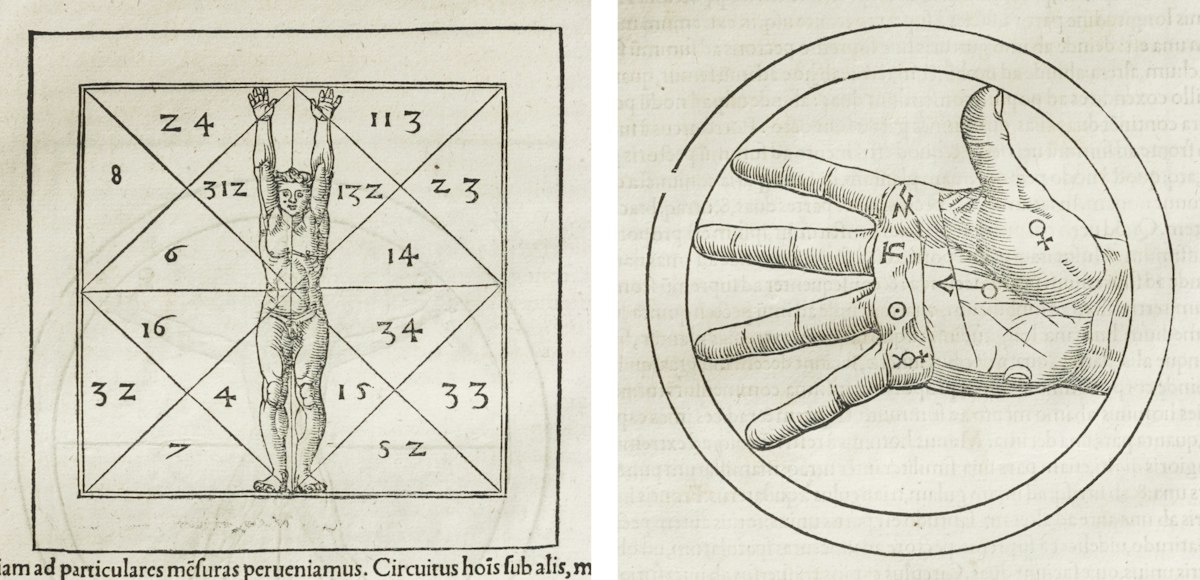
… And as we undertake to understand that structure, we use the lens– the mental models and language– that we have. The redoubtable Anthony Grafton considers and early 16th century attempt: Heinrich Cornelius Agrippa‘s De Occulta Philosophia libri III, Agrippa’s encyclopedic study of magic that was, at the same time, an attempt to describe the structure of the universe, sketching a path that leads both upward and downward: up toward complete knowledge of God, and down into every order of being on earth…
Heinrich Cornelius Agrippa’s manual of learned magic, De occulta philosophia (1533), explicated the ways in which magicians understood and manipulated the cosmos more systematically than any of his predecessors. It was here that he mapped the entire network of forces that passed from angels and demons, stars and planets, downward into the world of matter. Agrippa laid his work out in three books, on the elementary, astrological, and celestial worlds. But he saw all of them as connected, weaving complex spider webs of influence that passed from high to low and low to high. With the zeal and learning of an encyclopedist imagined by Borges, Agrippa catalogued the parts of the soul and body, animals, minerals, and plants that came under the influence of any given planet or daemon. He then offered his readers a plethora of ways for averting evil influences and enhancing good ones. Some of these were originally simple remedies, many of them passed down from Roman times in the great encyclopedic work of Pliny the Younger and less respectable sources, and lacked any deep connection to learned magic.
[Grafton describes the many dimensions of Agrippa’s compilation of the then-current state of magic…]
But few of the dozens of manuscript compilations that transmitted magic through the Middle Ages reflected any effort to impose a system on the whole range of magical practices, as Agrippa’s book did. He made clear that each of the separate arts of magic, from the simplest form of herbal remedy to the highest forms of communication with angels, fitted into a single, lucid structure with three levels: the elementary or terrestrial realm, ruled by medicine and natural magic; the celestial realm, ruled by astrology; and the intellectual realm, ruled by angelic magic. Long tendrils of celestial and magical influence stitched these disparate realms into something like a single great being…
Agrippa offered, in other words, both a grand, schematic plan of the cosmos, rather like that of the London Underground, which laid out its structure as a whole, and a clutch of minutely detailed local Ordinance Survey maps, which made it possible to navigate through any specific part of the cosmos. Readers rapidly saw what Agrippa had to offer. The owner of a copy of On Occult Philosophy, now in Munich, made clear in his only annotation that he appreciated Agrippa’s systematic presentation of a universe in which physical forms revealed the natures of beings and their relations to one another: “Physiognomy, metoposcopy [the interpretation of faces], and chiromancy, and the arts of divination from the appearance and gestures of the human body work through signs.” Agrippa’s book not only became the manual of magical practice, but it also made the formal claim that magic was a kind of philosophy in its own right…
A 16th century attempt to understand the structure of the universe: “Marked by Stars- Agrippa’s Occult Philosophy,” from @scaliger in @PublicDomainRev.
* Aristotle
###
As we take in the totality, we might send more modern birthday greetings to a rough contemporary of Agrippa’s, Evangelista Torricelli; he was born on this date in 1608. Even as Agrippa was trying to understand the world via magic, Torricelli, a student of Galileo, was using observation and reason to fuel the same quest. A physicist and mathematician, he is best known for his invention of the barometer, but is also known for his advances in optics, his work on the method of indivisibles, and “Torricelli’s Trumpet.” The torr, a unit of pressure, is named after him.

You must be logged in to post a comment.