Posts Tagged ‘surveying’
“We say the cows laid out Boston. Well, there are worse surveyors.”*…

On plotting the relationships of things in space…
Written by Leonhard Zubler, a Swiss goldsmith and instrument maker who is credited with popularizing the use of the plane table as a tool for surveying, Novum instrumentum geometricum illuminates the shared history of land-surveying and militaristic range-finding technologies. The text is intercut with elaborate copperplate engravings that showcase the might of trigonometry and triangulation in the immediacy of conflict. Bombardiers pack canons that are aimed with advanced precision at distant towers; the construction of ornate fortifications are planned with ease thanks to geometric instruments; and seemingly insurmountable crags are brought down to earth through the surveyor’s sightline. Readers are promised that they will learn how to measure the width of a moat or the height of wall in order to breach them more efficiently.
Novum instrumentum geometricum mainly features images related to an early modern instrument known as the triquetrum or Dreistab, a three-armed ruler, with two pivot points, used for charting angles in the heavens and on earth. Zubler most often showcases a two-armed variation known as the Zweistab, which includes a “finely divided scale and micrometer slide for exact settings”, writes Uta Lindgren. As if to show the versatility of this technology, the instrument is wielded on the masts of ships, balconies, and by a man perched atop the stump of a felled tree — even comically enlarged to depict its arms stretching out to touch the objects of their reconnaissance. Frequently two instruments are employed in parallel, by a pair of figures a fixed distance apart, which would allow the surveyors to estimate the distance to a faraway point using trigonometry.
Little is known about Leonhard Zubler (b. 1565), aside from his divorce in 1604, and probable death by plague circa 1611. He once created an extensive plan for modernizing the cityscape of Zurich, which was subsequently lost. During his lifetime, Zubler’s instruments were so desired that he was able to open a commercial outlet in Frankfurt am Main in 1608…


More mesmerizing illustrations: “Angles of Reconnaissance: Novum Instrumentum Geometricum (1607)” from @PublicDomainRev.
* Ralph Waldo Emerson
###
As we triangulate, we might recall that it was on this date in 1667, about a year after the Great Fire of London, that Robert Hooke, a physicist (“natural philosopher”), astronomer, geologist, meteorologist, and architect was sub-contracted by friend and fellow architect Christopher Wren to conduct a survey of the fire-damaged area to establish ownership and facilitate reconstruction. As Lisa Jardine observed, “in the four weeks from the 4th of October, [Hooke] helped map the fire-damaged area, began compiling a Land Information System for London, and drew up building regulations for an Act of Parliament to govern the rebuilding.” Hooke also designed some of the buildings that made up the “new” London, among them: the Monument to the Great Fire of London (1672), Montagu House in Bloomsbury )1674 and Bethlem Royal Hospital (1674), which became known as “Bedlam.”
In 1670, Hooke was appointed Surveyor of the Royal Works. Together with Scottish cartographer and printer John Ogilby, he made precise and detailed surveys that led to the production in 1677 of a large-scale map of London, the first-known to be of a specific scale (1:1200).

“Everything we care about lies somewhere in the middle, where pattern and randomness interlace”*…

… A French mathematician has just won the Abel Prize for his decades of work developing a set of tools now widely used for taming random processes…
Random processes take place all around us. It rains one day but not the next; stocks and bonds gain and lose value; traffic jams coalesce and disappear. Because they’re governed by numerous factors that interact with one another in complicated ways, it’s impossible to predict the exact behavior of such systems. Instead, we think about them in terms of probabilities, characterizing outcomes as likely or rare…
… the French probability theorist Michel Talagrand was awarded the Abel Prize, one of the highest honors in mathematics, for developing a deep and sophisticated understanding of such processes. The prize, presented by the king of Norway, is modeled on the Nobel and comes with 7.5 million Norwegian kroner (about $700,000). When he was told he had won, “my mind went blank,” Talagrand said. “The type of mathematics I do was not fashionable at all when I started. It was considered inferior mathematics. The fact that I was given this award is absolute proof this is not the case.”
Other mathematicians agree. Talagrand’s work “changed the way I view the world,” said Assaf Naor of Princeton University. Today, added Helge Holden, the chair of the Abel prize committee, “it is becoming very popular to describe and model real-world events by random processes. Talagrand’s toolbox comes up immediately.”
…
A random process is a collection of events whose outcomes vary according to chance in a way that can be modeled — like a sequence of coin flips, or the trajectories of atoms in a gas, or daily rainfall totals. Mathematicians want to understand the relationship between individual outcomes and aggregate behavior. How many times do you have to flip a coin to figure out whether it’s fair? Will a river overflow its banks?
Talagrand focused on processes whose outcomes are distributed according to a bell-shaped curve called a Gaussian. Such distributions are common in nature and have a number of desirable mathematical properties. He wanted to know what can be said with certainty about extreme outcomes in these situations. So he proved a set of inequalities that put tight upper and lower bounds on possible outcomes. “To obtain a good inequality is a piece of art,” Holden said. That art is useful: Talagrand’s methods can give an optimal estimate of, say, the highest level a river might rise to in the next 10 years, or the magnitude of the strongest potential earthquake…
Say you want to assess the risk of a river flooding — which will depend on factors like rainfall, wind and temperature. You can model the river’s height as a random process. Talagrand spent 15 years developing a technique called generic chaining that allowed him to create a high-dimensional geometric space related to such a random process. His method “gives you a way to read the maximum from the geometry,” Naor said.
The technique is very general and therefore widely applicable. Say you want to analyze a massive, high-dimensional data set that depends on thousands of parameters. To draw a meaningful conclusion, you want to preserve the data set’s most important features while characterizing it in terms of just a few parameters. (For example, this is one way to analyze and compare the complicated structures of different proteins.) Many state-of-the-art methods achieve this simplification by applying a random operation that maps the high-dimensional data to a lower-dimensional space. Mathematicians can use Talagrand’s generic chaining method to determine the maximal amount of error that this process introduces — allowing them to determine the chances that some important feature isn’t preserved in the simplified data set.
Talagrand’s work wasn’t just limited to analyzing the best and worst possible outcomes of a random process. He also studied what happens in the average case.
In many processes, random individual events can, in aggregate, lead to highly deterministic outcomes. If measurements are independent, then the totals become very predictable, even if each individual event is impossible to predict. For instance, flip a fair coin. You can’t say anything in advance about what will happen. Flip it 10 times, and you’ll get four, five or six heads — close to the expected value of five heads — about 66% of the time. But flip the coin 1,000 times, and you’ll get between 450 and 550 heads 99.7% of the time, a result that’s even more concentrated around the expected value of 500. “It is exceptionally sharp around the mean,” Holden said.
“Even though something has so much randomness, the randomness cancels itself out,” Naor said. “What initially seemed like a horrible mess is actually organized.”…
“Michel Talagrand Wins Abel Prize for Work Wrangling Randomness,” from @QuantaMagazine.
* James Gleick, The Information
###
As we comprehend the constructs in chance, we might spare a thought for Caspar Wessel; he died on this date in 1818. A mathematician, he the first person to describe the geometrical interpretation of complex numbers as points in the complex plane and vectors.
Not coincidentally, Wessel was also a surveyor and cartographer, who contributed to the Royal Danish Academy of Sciences and Letters‘ topographical survey of Denmark.

“How many things have been denied one day, only to become realities the next!”*…
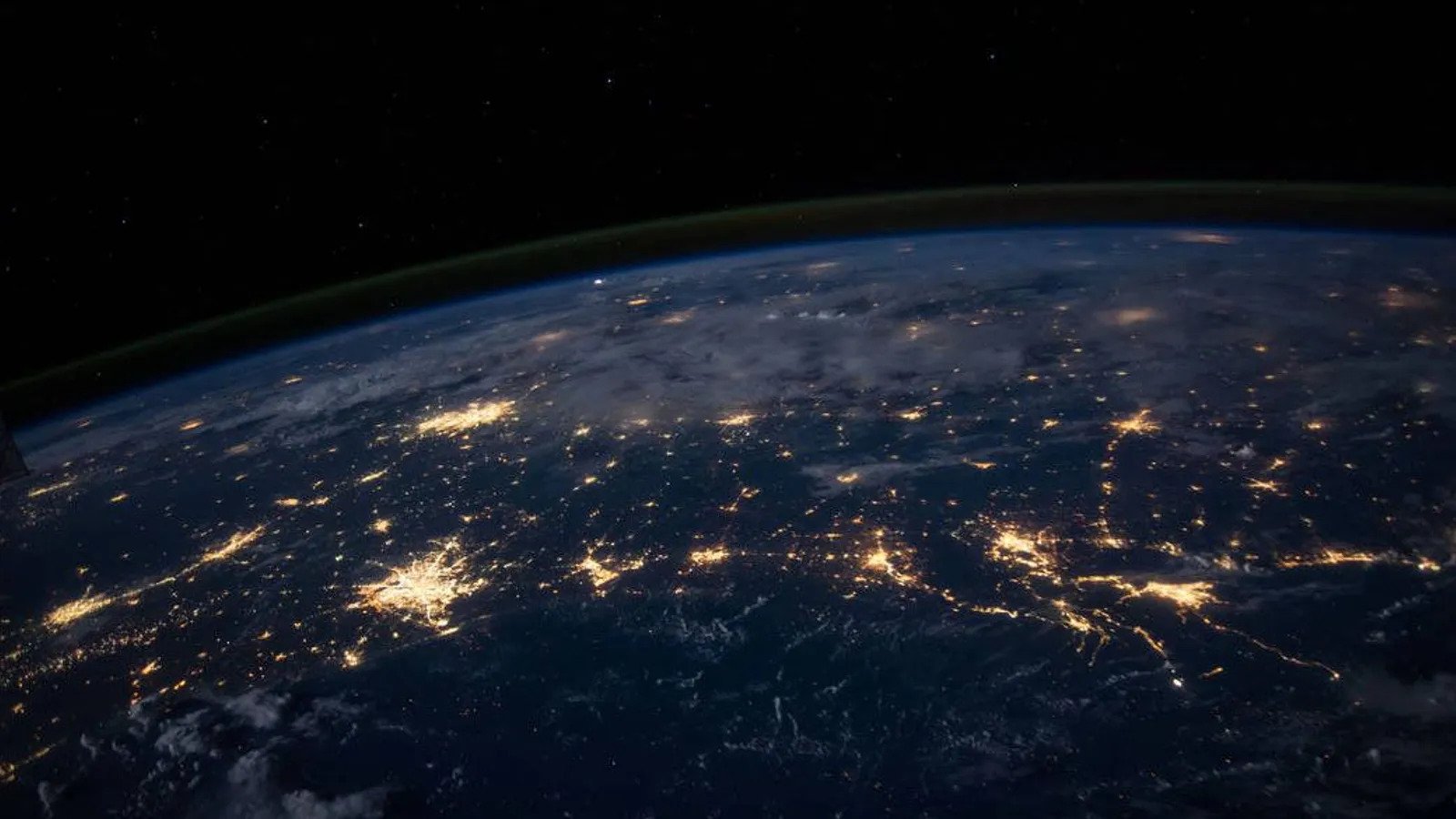
In 1603, a Jesuit priest invented a machine for lifting the entire planet with only ropes and gears.
Christoph Grienberger oversaw all mathematical works written by Jesuit authors, a role akin to an editor at a modern scientific journal. He was modest and productive, and could not resist solving problems. He reasoned that since a 1:10 gear could allow one person to lift 10 times as much as one unassisted, if one had 24 gears linked to a treadmill then one could lift the Earth… very slowly.
Like any modern academic who prizes theory above practice, he left out the pesky details: “I will not weave those ropes, or prescribe the material for the wheels or the place from which the machine shall be suspended: as these are other matters I leave them for others to find.”
You can see what Grienberger’s theoretical device looked like here.
For as long as we have had mathematics, forward-thinking scholars like Grienberger have tried to imagine the far limits of engineering, even if the technology of the time was lacking. Over the centuries, they have dreamt of machines to lift the world, transform the surface of the Earth, or even reorganise the Universe. Such “megascale engineering” – sometimes called macro-engineering – deals with ambitious projects that would reshape the planet or construct objects the size of worlds. What can these megascale dreams of the future tell us about human ingenuity and imagination?
What are the biggest, boldest things that humanity could engineer? From planet lifters to space cannons, Anders Sandberg (@anderssandberg) explores some of history’s most ambitious visions – and why they’re not as ‘impossible’ as they seem: “The ‘megascale’ structures that humans could one day build.”
* Jules Verne (imagineer of many megascale projects)
###
As we think big, we might send very carefully measured birthday greetings to (the other noteworthy) John Locke; he was born on this date in 1792. A geologist, surveyor, and scientist, he invented tools for surveyors, including a surveyor’s compass, a collimating level (Locke’s Hand Level), and a gravity escapement for regulator clocks. The electro-chronograph he constructed (1844-48) for the United States Coast Survey was installed in the Naval Observatory, in Washington, in 1848. It improved determination of longitudes, as it was able to make a printed record on a time scale of an event to within one one-hundredth of a second. When connected via the nation’s telegraph system, astronomers could record the time of events they observed from elsewhere in the country, by the pressing a telegraph key. Congress awarded him $10,000 for his inventions in 1849.

You must be logged in to post a comment.