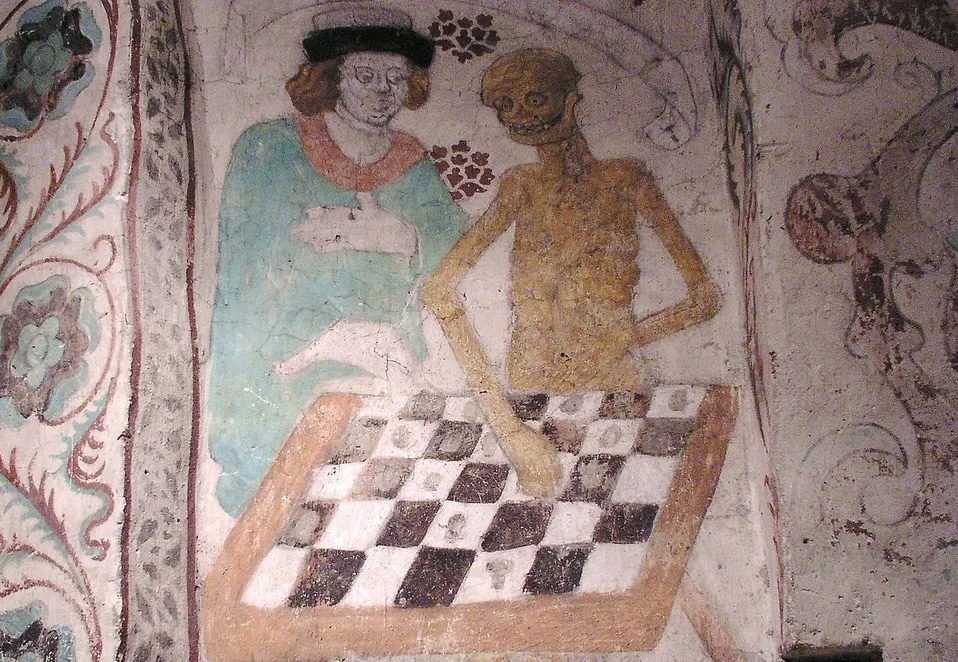
Mardean Isaac, in The Republic of Letters, on chess and what it can– and can’t– teach us. He begins by recounting his personal history with the Royal Game, culminating in an intense period of play…
… Soon after I started my spree, I could already feel subtle cognitive re-wiring beginning to take place. The shape of those changes seemed to align with the objective lessons chess imparts; as if contemplating the findings on a psychedelic drug trip, the issue then becomes whether this is really the case.
People read themselves into interpretations of the greater significance of the game. For Vladimir Nabokov, like the sentence, chess reaches its most elevated form in the perfect rendering of problems into compositions. Stanley Kubrick, who used to put in 12 hour days playing in Washington Square Park, had a stab at life lesson stuff in an old Playboy interview: “Among a great many other things that chess teaches you is to control the initial excitement you feel when you see something that looks good. It trains you to think before grabbing, and to think just as objectively when you’re in trouble.” A 1966 profile of the director in the New Yorker reveals the grubbier material underneath that prudence. At the end of the piece, Kubrick sees the reporter eyeing what he perceives as a killer move, and breaks out in agony to encourage him to make it. But it turned out to be a trap; the move opened a pathway for Kubrick to win. The game’s laws are objective, and can be understood by analysing the outcomes of actions and potential actions. But while players are necessarily guided by explicit rules, they often gain their edge from covert ones. The edge-seeking on display there, rooted in an absence of institutional cushioning, would never leave Kubrick, as he strove to reach the apex of the most logistically burdensome and patronage dependent of art forms.
Chess is primarily a strategic, not a cultural, phenomenon. That is the key to its longevity: where culture changes and evolves, strategy survives and persists—merely as itself. Chess reveals the chiselled edges of strategic veracity: the failures that ensue from not registering your adversary; the complacency that sets in when seemingly comfortably in control; not recognising that risk is a constant, meaning that a good move, coming at the expense of a great one, can also harm you.
The logic of chess exists outside of us; and yet every move feels so personal. Is there an illustration of personal limits more acutely painful than making a truly dumb move, or not spotting a killer one? Not seeing things objectively is not only a guarantor of psychic torment—it often also leads to a kind of self-defeat anyway, because it shuts off routes to our own self-advancement, even if the solipsistic voice in your head might tell us otherwise.
This is where zugzwang (“move compulsion” in German) comes in. This strategic concept refers to a situation in which you have no choice but to make a move that will worsen your position. For example: you are in check, and have to protect your king by moving over a piece that will certainly be taken, reducing your pool of available pieces to the point where victory is made more difficult or impossible. (The only way out of zugzwang—resignation—is no way out at all: a fact which carries a dark metaphorical valence.) It seems to reach into the ultimate dynamic: biology set against time. The problem is: the onus is always on you—you who are always either preparing, or executing, the move you must make. The issue of needing to make a move; there being no such thing as stasis; and each one either advancing or worsening, is a kind of approximation of our biological existence. It’s a reminder that everything is advancing or hurting your cause. Whether or not you are creating the conditions for zugzwang boils down to the accumulated consequences of your own actions. It affirms that you are always responsible for advancing yourself—even, and especially, into oblivion. Worst of all, it affirms that you were responsible for creating the objective conditions that brought about your own drive towards defeat.
I can’t hang onto this moment any longer. It is up to me to decide whether I’ve played too many games for that, or too few. I can either accept that I now have to drive on into the endless forest of chess—or step back altogether, leaving this essay as the only footprint of my ramble across its periphery. As I contemplate the problems with either position, I realise I have already entered my own personal zugzwang…
Perhaps we’d do well to sort the “games” we play into those like chess worth playing, win or lose, and those that are not… Of those latter– especially of those the present themselves not so much as games, but as “the way things are”– as “Joshua / WOPR,” the computer in War Games, observes to “David Lightman” (Matthew Broderick) after thermonuclear annihilation is narrowly avoided: “A strange game. The only winning move is not to play.”
As we make a move, we might recall that it was on this date in 1964 that The Addams Family premiered on ABC. Based on a series of single-paneled cartoons by cartoonist Charles Addams for The New Yorker magazine that began in 1938, the series took the unnamed characters in the single-panel gag cartoons and gave them names, backstories, and a household setting. The main cast was: Gomez (John Astin), Morticia (Carolyn Jones), Lurch (Ted Cassidy), Pugsley (Ken Weatherwax), and Wednesday (Lisa Loring).
The show went off the air in 1966, but The Addams Family’s popularity never really died. Since that time, Hanna-Barbera created two different cartoon series based on the show, three feature films were released in 1991, 1993, and 1998 plus a direct-to-video movie in 1998. In 2019, MGM released a brand new full-length animated film which was pretty good followed by a sequel two years later which wasn’t. In 2022, Jenna Ortega starred in a Netflix show centering on the character of Wednesday Addams, but all of the Addams have supporting roles for the series Wednesday including Luis Guzman (Gomez), Catherine Zeta-Jones (Morticia) and Isaac Ordonez (Pugsley).
Philip K. Dick, whose work appeared from the 1950s into the early 1980s, is one of those too-rare writers whose deep questions–and the mind-bending ideas they spawned– are at least as relevant today as then. Jared Shurin offers a path in…
Philip K. Dick is a persistent, iconic cultural presence. His work has given us Blade Runner, Minority Report, The Man in the High Castle, A Scanner Darkly and a pair of Total Recall movies (one of which is an undisputed cinematic classic, the other of which has Colin Farrell). Like all adaptations, these all have a strained (and occasionally distant) relationship with the source material. But however bastardised they are, they demonstrate the greatest strength of PKD’s work: the big idea.
Science fiction’s history is filled with big ideas. But Philip K. Dick had an exceptional, if not unmatched, ability to think about the biggest ideas of them all. What if we are not who we think we are? What are memories if they are not our own? What if reality itself were not, in any sense, real? His work is unbothered with how we make fusion energy or break light speed or maintain life on the moon. The ‘how’ and the ‘what’ are often taken for granted; traditional science fiction platforms used as launch pads for deeper, more provocative expeditions into perception, interpretation, and the nature of truth itself.
Big Ideas are great for inspiring Big Movies, even if something gets lost in translation along the way. Why have Arnie wrestle with existential angst when he can pull a giant metal booger out of his brain instead? With that ease in mind, it is hardly a surprise that Dick thrives in adaptation while his fiction, I’m sorry to say, remains (relatively, at least) unappreciated.
This is not entirely Hollywood’s fault. Dick is inspirational. He’s exciting! He is challenging and surprising, always finding ways to push ideas forward; often beyond the point of exhaustion. His books can twist like a child’s tangled Slinky, and be—frankly—just as infuriating to unwind. In short, and I say this in full transparency: PKD’s works can be hard to read. Especially if one goes in expecting the film.
They are, however, well worth reading. Below, you’ll find a few suggestions on where to start, and why. I’m a believer in not plunging into the deep end, which, with Dick, can be outright abyssal. Instead, there’s merit in starting with some of the slightly more straightforward (for him) works, which riff off recognisable tropes and scenarios, but in a uniquely Dickian way. (I’m sure there are many brilliant readers out there that read VALIS when they were ten and think I’m a big weenie. I look forward to hearing from you in the comments.)…
There follows a path into the extraordinary works of PKD.
FWIW, your correspondent, while agreeing that VALIS (and The Divine Invasion) are titles to hold until one is acclimated, would include Time Out of Joint (1959) as one of the novels with which to start… but then, that’s the point of lists like this :)
* Hunter S. Thompson
###
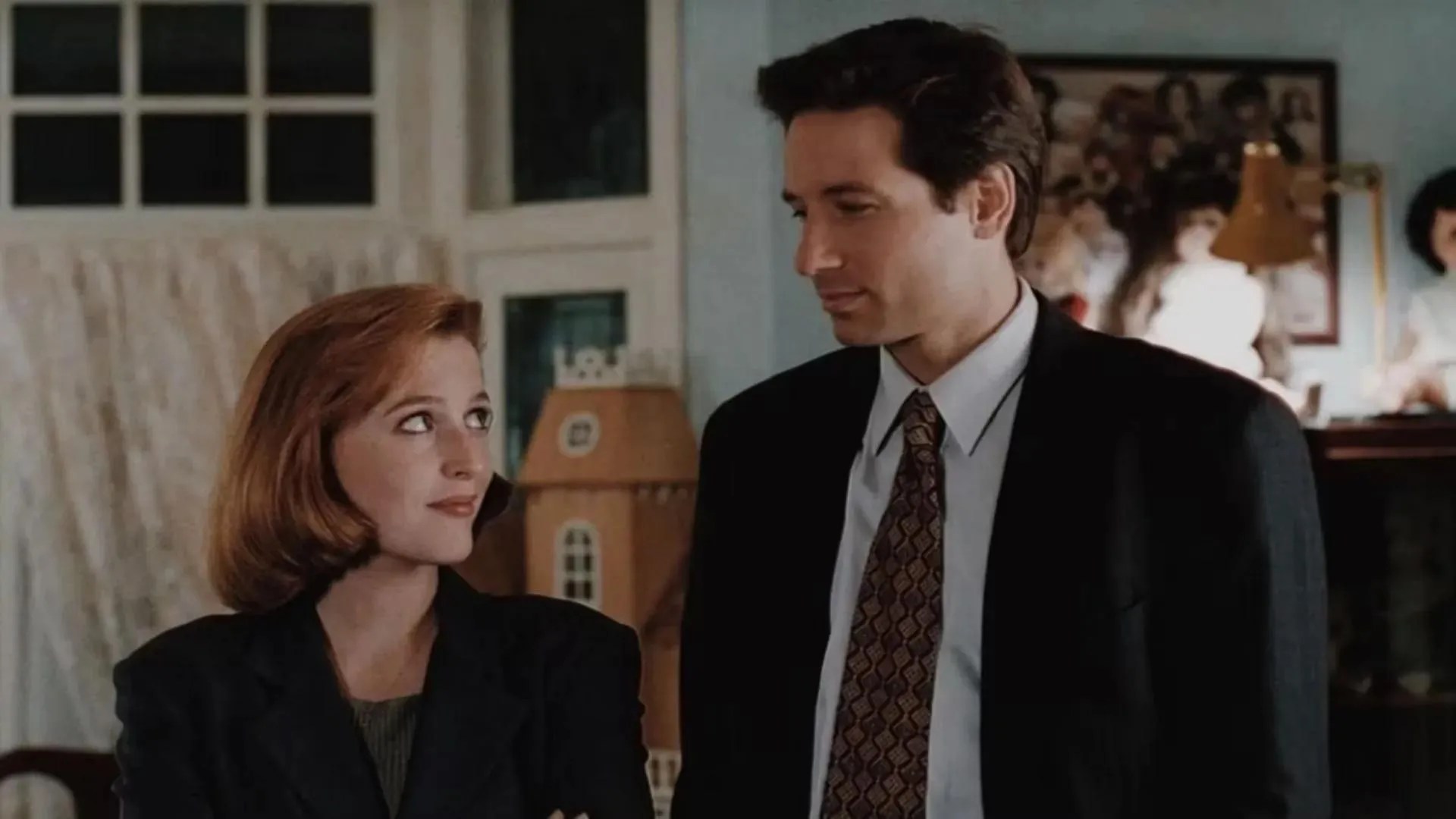
As we wrestle with reality, we might recall that it was on this date in 1993 (on the anniversary of the introduction of the first “TV dinner” about 40 years earlier) that the The X-Files, created by Chris Carter, premiered on Fox. The series– which followed FBI agents Fox Mulder (David Duchovny) and Dana Scully (Gillian Anderson) as they investigated unsolved cases involving paranormal phenomena, government conspiracies, and extraterrestrial life– spawned two feature films, multiple spin-offs, a revival series, and a dedicated fanbase known as “X-Philes.” The show’s tagline, “The Truth Is Out There,” has, of course, become an enduring phrase in popular culture.
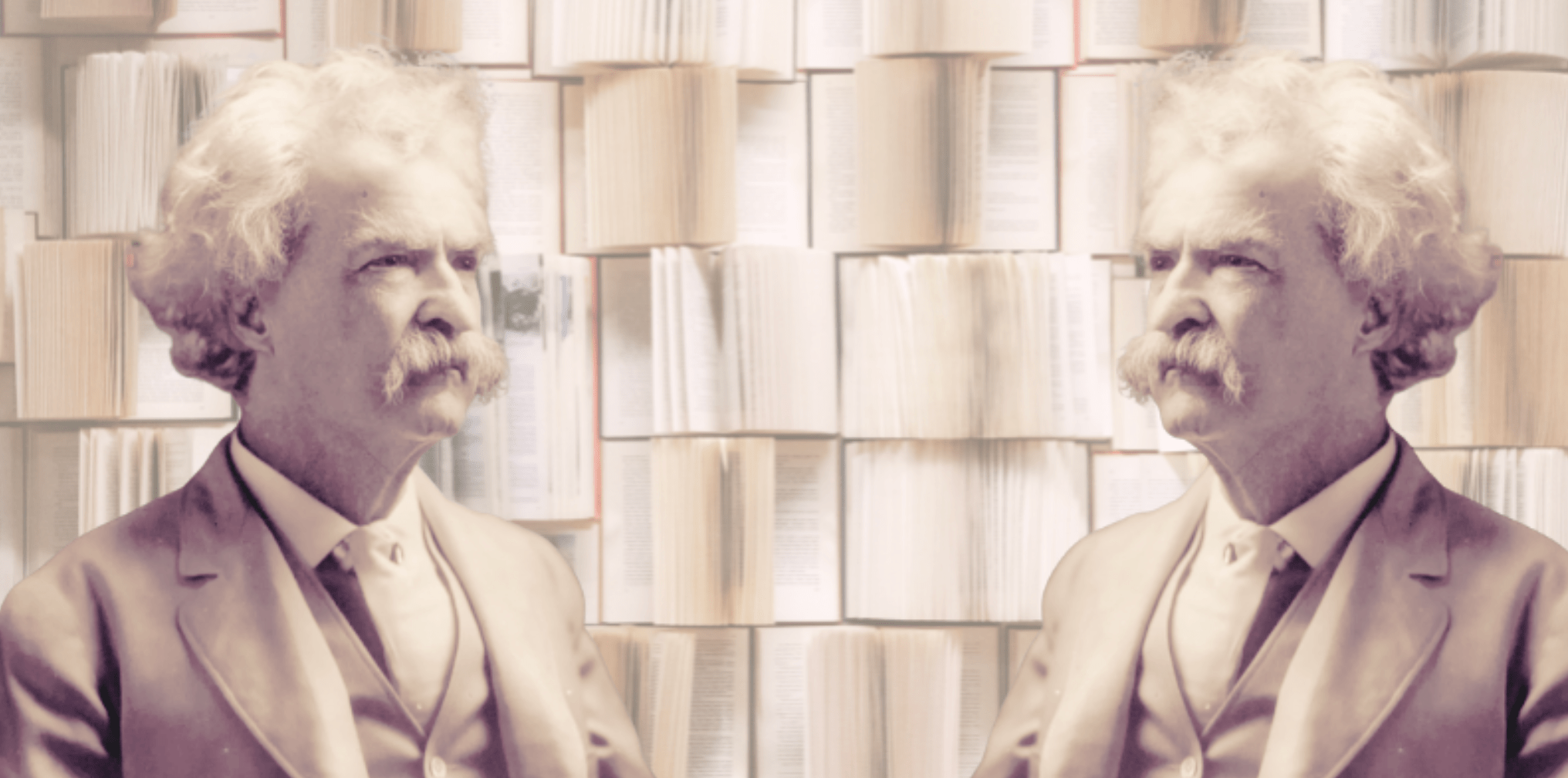
Before he became the renowned author we know, Samuel Clemens– Mark Twain– worked (among other things) as a printer. He knew both the painstaking (and sometimes painful) labor of hand-setting type and the extraordinary cultural power of the mass-printed (by Twain’s time, on steam-powered presses) products that it enabled.
In the history of the invention of the typesetting machine and the consequent birth of mass media, Mark Twain is the Zelig of our tale, returning frequently as a typesetter in his brother’s ratty newspaper; as a tramp printer witnessing an explosion of progress in printing technology; as the bankrupted investor in the failed Paige Compositor, a competitor to the successful Linotype; as an early best-selling author and cultural celebrity; and as a publisher trying to invent a business model for books as an industry.
Now that their machinery could produce volume, publishers needed ways to sell at scale, to build the modern phenomenon of the best-seller. The problem: In 1859, only 1,090 bookstores dotted America. By 1914, there were still only 3,501. So if readers couldn’t find books, books had to find their readers. For certain authors and publishers, including Twain, that was accomplished through subscription publishing, with door-to-door canvassers taking orders for books before they were printed. Until the end of the nineteenth century, three quarters of books in the U.S. were sold this way.
In 1874, the New York Tribune estimated that 50,000 agents were employed by subscription publishers. What a wonderful fictional character it would be to imagine the itinerant peddler pitching not pots or patent medicines but literature and literacy, foot in door after door, blurbing Twain with a few dozen sample pages and illustrations to whet curiosity and demand.
Subscription publishing brought advantages. By collecting orders for books before printing, publishers knew how many copies to produce. Publishers could use customers’ capital to finance production—not unlike a content producer today raising money via Kickstarter or Patreon. Subscription publishing’s cross to bear was snobbery. William Dean Howells dismissed subscription books, carving out a caveat only for his friend Twain: “No book of literary quality was made to go by subscription except Mr. Clemens’s books, and I think these went because the subscription public never knew what good literature they were.”
The regular trade carped that subscription publishers “flood the country with worthless books, poorly written, poorly printed and bound, containing a small amount of matter in large type and with wide margins to the page, for a large price.” Elisha Bliss, Twain’s publisher, defended the trade to the Tribune: “Instead of injuring the regular book business I think we create a thirst for knowledge and thus increase the sale of all kinds of books. In the little town where there are no bookstores the book agent induces people to buy.”
Twain valued these readers as they valued him. They freed him from the expectations of high culture and its critics. And he was certain they’d make him rich. “Harper publishes very high-class books,” he wrote to a friend, “and they go to people who are accustomed to read. That class are surfeited. But there is a vast class that isn’t—the factory hands and the farmers. They never go to a bookstore; they have to be hunted down by the canvasser.”
Twain knew that a new, mass audience had to be corralled, one door knocked after another. As he wrote to London critic Andrew Lang: “The thin top crust of humanity—the cultivated—are worth pacifying, worth pleasing, worth coddling, worth nourishing and preserving with dainties and delicacies, it is true; but to cater to that little faction is of no very dignified or valuable occupation, it seems to me; it is merely feeding the over-fed, and there must be small satisfaction in that.” He sought instead to entertain “the mighty mass of the uncultivated who are underneath….I have never tried in even one single instance, to help cultivate the cultivated classes. I was not equipped for that, either by native gifts or training. And I never had any ambition in that direction, but always hunted for bigger game—the masses.”
In 1866, Twain nabbed the assignment of a dream: sailing to the Sandwich Islands (now Hawaii) to send back reports to the Sacramento Union. Upon his return to San Francisco, he launched a side gig as a lecturer, amusing ever-larger audiences with his travel tales and humor. “He wouldn’t be a cloistered writer so much as a showman, a public personality, a professional crowd-pleaser. In short, a celebrity,” wrote Ron Chernow. Next, Twain reported for the Alta California about a journey Back East. Then he issued his first book, The Celebrated Jumping Frog of Calaveras County and Other Sketches, which debuted to good reviews and established Twain’s reputation as a wry humorist. The book was published by Twain’s friend Charles Henry Webb, whom he soon dumped, complaining—as would become his habit—about sales.
Next came another enviable gig and a reputation-setting assignment from Alta California, to report from a five-month cruise to the Holy Land on the Quaker City. His letters ran in the paper and were picked up in others across the country. He returned home to a letter from Elisha Bliss of Hartford’s American Publishing Company, soliciting a book on the adventure, which became The Innocents Abroad.
Twain received negotiating advice from famed minister Henry Ward Beecher, who had inspired the Holy Land trip but didn’t go along. In Twain’s telling, Beecher offered a prophetic warning: “Now here—you are one of the talented men of the age—nobody is going to deny that—but in matters of business, I don’t suppose you know more than enough to come in when it rains.” Twain reported to his family, “I listened well, and then came up here and made a splendid contract for a Quaker City book of 5 or 600 large pages, with illustrations….But I had my mind made up to one thing—I wasn’t going to touch a book unless there was money in it, and a good deal of it.” He soon complained this was a bad deal.
Subscription books were fancy and rich in illustration, not so much elegant as tarted up. Buyers had the choice of various bindings as upgrades. The average price of Innocents was $4 (almost $100 today). Readers bought them to display their erudition to visitors: every book a coffee-table book. The Innocents Abroad was received well, favorably reviewed in The Atlantic Monthly by Howells, who noted its length—“in compliance with one of the main conditions of a subscription book’s success, bigness namely”; praised its drollery five times, its irony three times, and its impudence twice; applauded the “amount of pure human nature in the book, that rarely gets into literature”; and counted Twain among America’s humorists, “quite worthy of the company of the best.” Twain’s head swelled sufficiently to accept the praise: “It was quite generally conceded that I was a valuable asset to the American nation and to the great ranks of literature.”
In a year and a half, Innocents sold 82,524 copies, nowhere near Uncle Tom’s Cabin’s 300,000 in its first year, but a success nonetheless. Twain had negotiated well, for he rejected a $10,000 flat payment from Bliss in favor of the 5-percent royalty, which added up to $16,504—about $400,000 today. During his lifetime, no book of Twain’s sold as well as quickly, fueling his chronic grievances with publishers.
Twain wrote a next book for Bliss, about his life Out West, this time demanding half of the profits after manufacturing costs, equaling a royalty of 7.5 percent. Twain told Bliss, “We shall sell 90,000 copies in the first 12 months. I haven’t even a shadow of doubt of that.” Published in 1872, it sold 65,000 in the first year—again, respectable.
Twain and Warren joined to write The Gilded Age, published by Bliss for a 10-percent royalty. The book sold 50,000 copies in its first year. Twain thought he would be a better publisher. He would soon try.
He released The Adventures of Tom Sawyer in 1876, selling only 23,600 copies in its first year. He blamed Bliss for mistiming its release. He next published A Tramp Abroad in 1880. Walter A. Friedman provided an accounting: American Publishing sold 62,000 copies in the first year at $3.50 each for a total of $218,000. Just over half of that went to sales agents, who paid their canvassers. The company kept $106,000, out of which it spent $41,540 on printing, leaving a profit of $64,460, of which Twain received $32,000—nearly $1 million today.
As Twain was writing The Prince and the Pauper, Bliss died. He shifted publication of The Prince to his friend James Osgood. This time, Twain funded the book’s publication—complaining that he was out $65,000 before the first copy was printed. Instead of receiving a royalty, he paid Osgood 7.5 percent of sales. Neither was experienced in subscription sales, and of a first printing of 25,000, 5,000 remained in their warehouses after two years. He repeated the mistake with the publication of Life on the Mississippi, which lured only 30,000 orders, far from the 100,000 Twain hoped for. Osgood’s company ended in bankruptcy in 1885. This might have discouraged a sensible man from deciding to become a publisher. Not Twain.
Twain established his own publishing house, giving it the name of his general manager and dogsbody, Charles L. Webster & Co. The aim was to publish only Twain’s books. The first was his masterpiece, Huckleberry Finn, in 1885. Infamously, an engraver subverted the publication by endowing Uncle Silas Phelps with an erect penis, necessitating the scissoring of the offending image from thousands of copies and delaying publication past prime Christmas season. Nonetheless, the Webster Company’s agents sold 60,000 copies, rewarding the author with a check for $54,000. “Once more I experienced a new birth,” Twain wrote. “I have been born more times than anybody except Krishna, I suppose.”
Huck’s success emboldened Twain and Webster to expand as a full-fledged publishing house. Twain worked diligently to solicit the memoirs of Ulysses S. Grant. Twain offered Grant an astounding 70 percent of profits. He told Webster to hire veterans as canvassers, have them wear their Grand Army regalia, and deliver his script: “I presume it is simply a question with you of your choice of bindings, as no American will want to have it said that he has not read General Grant’s book, a work that will descend to your children and will increase in value with every generation.” The memoirs were a stupendous best-seller, 10,000 door-to-door canvassers selling 325,000 two-volume sets in 1886, earning the general’s widow and children as much as $15 million in today’s dollars.
It was downhill from there for Twain and Webster, their record studded with poor choices of books by a half-dozen Civil War generals or their widows, the king of Hawaii, and Pope Leo XIII (“’Twas kind of a fizzle,” recalled Twain’s maid Katy Leary). Twain signed Henry Ward Beecher to write his memoirs, but the minister died before setting pen to paper. Twain was inspired to publish the ambitious Library of American Literature with 1,700 selections by 500 authors in eleven volumes, but failed to grasp the perilous economics of selling such a gargantuan series by subscription. Readers paid a three-dollar down-payment, but Webster & Co. would not collect the rest of its thirty-three-dollar price until after paying the printers thirteen dollars, on top of twelve dollars to sales agents, with Twain carrying that debt in the meantime. The company needed capital to tide itself over, but where was Twain’s—and his wife’s—money? Sunk into the Paige Compositor. [see here] The business analysis was not complicated. His maid understood it: “Mr. Clemens was all deep in the typesetting machine, and he was putting all his money in that so he didn’t have much left to help out the publishing company. That was the beginning of the end of that venture.”
Even without their bad business decisions, Twain’s venture was likely doomed, along with the subscription publishing industry, for books were getting radically cheaper, with ever-more competition. The number of titles published in the U.S. more than doubled, from 4,559 in 1890 to 12,010 in 1914. In 1895, The Bookman began publishing the first lists of most-popular books according to store sales. The term “best-seller” came into general use around 1910, according to historian of publishing Frank Luther Mott, who set the bar for “best-seller” at “one percent of the total population of continental United States for the decade in which the book was published.” To meet Mott’s benchmark, books today would need to sell 3.4 million copies. For comparison, Kristen McLean, a lead industry analyst at NPD BookScan, reported that in 2022, of 45,571 titles released by just the top ten publishers, only 163 books or 0.36 percent sold more than 100,000 copies in a year.
In our age of mass media, we have developed a skewed definition of big—a presumption that many means most. To sell 100,000 books—and congratulations if you do!—is to speak to 0.03 percent of the nation, hardly a resounding expression of the cultural zeitgeist. The blockbuster economics of media—in film, television, music, and books—depends on a few best-sellers to make up for the vast number of lesser bets. But that eternal quest for blockbusters gives the impression that anything called a best-seller is widely influential, while all else is dismissed. Whether selling entertainment to an audience or an audience to advertisers, the mechanization and industrialization of media—begun with the steam-powered press and culminating with the Linotype—spawned a business and cultural obsession with scale…
As we roll the presses, we might send illuminating birthday greetings to Lee de Forrest; he was born on this date in 1873. An electrical engineer and inventor, he ultimately held 300 patents on a variety of inventions crucial to electronic communications, and co-founded the forerunner organization to the IEEE, De Forest is probably best remembered as the inventor of the Audion vacuum tube, which made possible live radio broadcasting (which he also pioneered) and became the key component of all radio, telephone, radar, television, and computer systems before the invention of the transistor in 1947.
Unwittingly then had I discovered an Invisible Empire of the Air, intangible, yet solid as granite, whose structure shall persist while man inhabits the planet.
– Father of Radio: The Autobiography of Lee De Forest (1950), p. 4
Coincidentally, today is also the anniversary of the award in 1930 of Philo Farnsworth‘s first patent: a television system (U.S. 1,773,980), with a description of his image dissector tube, which was his most important contribution to the development of television.
Clergy stealing from the nobility and handing it to the poor. (Bettmann Archive via Getty Images)
Progressives have been fighting on the neoliberals’ terms. Nick Hanauer and Eric Beinhocker propose a flip, an approach that is more humane– and that promises a far more prosperous country…
In 1962, the historian of science Thomas Kuhn published a short book that changed how educated people think about intellectual progress. The Structure of Scientific Revolutions argued that knowledge does not advance through the steady accumulation of better facts. It advances through ruptures—moments when a prevailing framework, or paradigm, collapses under the weight of anomalies it cannot explain, and a new one takes its place. The Ptolemaic model of the solar system gave way to the Copernican. Newtonian mechanics gave way to relativity. The shift is rarely smooth or purely rational. People resist. Institutions resist. The old framework doesn’t simply yield to better evidence; it has to be displaced by an alternative that can explain not just the anomalies but everything the old model explained, plus more.
We are living through one of those moments now. The prevailing economic paradigm—the neoliberal consensus that dominated policymaking across the Western world from roughly the mid-1970 to 2020—has collapsed. It has not collapsed quietly, in the pages of academic journals, where it was already in serious disrepute. It has collapsed loudly, publicly, and catastrophically, in the lived experience of hundreds of millions of people who were told the model would deliver prosperity. Instead, they watched it deliver stagnation and insecurity and drew the obvious conclusion: The people running the system either do not know what they’re doing or do not care about them, or both. The democratic consequences of that conclusion are now visible everywhere.
This essay argues three points. First, that the democratic emergency we face—the rise of authoritarian populism across the developed world—is not primarily a political failure but an economic one. It is the result of a failed set of economic ideas: When the neoliberal paradigm lost its intellectual and popular support after the 2008 crisis, there was no credible alternative, and the resulting vacuum was filled by populism. Second, progressive responses—while valuable—have not filled the paradigm vacuum because they have operated largely within the neoliberal frame rather than replacing it. Third, that an emerging modern economic consensus we call Market Humanism has the potential to replace neoliberalism—not by proposing a new set of policies, but by constructing a new paradigm grounded in twenty-first-century science. This new paradigm can not only to help us create an economy that is fair, prosperous, and sustainable, but also repair our broken democracy…
[The authors explain how neoliberalism broke the social contract (and democracy) and why the progressive response has failed. They explain the “scientific revolutions” that set the stage for Market Humanism: “From Selfish Homo Economicus to Cooperative Homo Sapiens,” “From Markets as Efficient Allocators to Markets as Evolutionary Innovators,” “From Value Is Market Price to Value Is Solutions to Human Problems,” and “From Inequality Is Meritocratic to Inequality Is Created by Structure and Power.” They then outline the steps necessary– the four imperatives of Market Humanism: “Grow the economy by making it fairer,” “Grow the economy by supporting the middle class,” “Measure what matters—human flourishing,” and “Make the state a partner in prosperity.” And they explain how Market Humanism can help democracy succeed. They conclude…}
… It is useful to recall what happened during a previous time a major paradigm changed. For most of recorded history—thousands of generations—people looked up at the sky and saw what seemed obvious: the sun moved, the earth stood still. Entire systems of knowledge, theology, and political authority were built on that foundation. Then, in the early seventeenth century, Galileo Galilei perfected the telescope and turned it on the heavens. What he saw—moons rotating around Jupiter and the phases of Venus—was inconsistent with a universe organized around a stationary earth at the center of the universe. Galileo’s theory actually had evidence you could see with your own eyes.
He brought that evidence to the most powerful institution of his day. He showed the Church’s leaders what the telescope revealed. They looked. They understood what they were seeing. And then they told Galileo to shove his telescope where the sun did not shine. He was tried by the Inquisition and spent the rest of his life under house arrest.
Why? Not because they couldn’t see the evidence. But because if the earth was diminished, so were they. The geocentric paradigm was not just a theory of astronomy. It was a foundation of institutional authority, and the people whose power rested on that foundation were not interested in whether it was true. They were interested in whether it was useful—to them.
This is the situation we are in now. The evidence against the neoliberal paradigm is not ambiguous—we can see it right in front of our eyes. But the paradigm has made a small number of people very wealthy, and they have spent decades building the infrastructure that keeps it alive in policy long after it died in the academy. They will not abandon it. They will call the alternative radical, un-American, dangerous. The rich and powerful will circle the wagons and spend whatever it takes.
They will still lose. Not because they suddenly see the light. Because a paradigm that is empirically wrong cannot indefinitely outrun one that is empirically right—not when ordinary people are the ones living the difference and noticing it. The defenders of the old paradigm will lose because stagnant wages, predatory healthcare, and hollowed-out communities are not abstract to the Americans paying their costs. They will lose because ordinary people pick up the telescope, look through it, and refuse to look away.
That is what Market Humanism is. It is not the property of the academics who built it or the policymakers who will implement it. It belongs to the people whose lives it describes—workers, small business owners, teachers, nurses, scientists, young people told their whole lives that the rules of the neoliberal economy are incontestable facts of nature, and who now are beginning to suspect, rightly, that they were scammed.
This paradigm does not need permission from the people in power to take hold. It needs only to be claimed by the people who have been waiting for it. That is how every paradigm that ever displaced a wrong one has won—not because the powerful changed their minds, but because enough ordinary people stopped accepting a story that no longer matched the world they lived in.
That is what is being asked of us now. The telescope is pointing at the sky. The evidence is clear. The alternative is built. What remains is the work of ordinary people, in extraordinary numbers, refusing to live inside a story that no longer explains the world. The people told for 50 years there is no alternative are about to discover that there is—and that it has been theirs all along.
* Adam Smith, Inquiry into the Nature and Causes of the Wealth of Nations, 1776
###
As we cultivate change, we might recall that it was on this date in 1991 that Nickelodeon premiered its first three original animated series– “Nicktoons“– Doug, Rugrats, and Ren & Stimpy. One of these was not like the other two.
Ren & Stimpy follows the misadventures of Ren Höek, an emotionally unstable (indeed, psychotic) chihuahua; and Stimpy, a good-natured and dimwitted Manx cat. But while Doug and Rugrats were clearly family fare, Ren & Stimpy featured a surreal blend of dark humor, sexual innuendo, violence, and shock. It’s producers had trouble with Standards and Practices; it’s creator was fired after the first year… but kids loved it. It ran for five seasons and 52 episodes (93 segments).
Times have changed. As the New York Times reports (in a piece apposite to Tuesday’s post)…
When Google prepared to go public in 2004, Larry Page, a co-founder of the company, wrote a letter to shareholders describing the internet firm’s responsibility to the world.
“We believe a well-functioning society should have abundant, free and unbiased access to high-quality information,” Mr. Page said.
Google fulfilled that responsibility by acting as a gateway to the internet. It answered people’s search queries with lists of hyperlinks, pushing users out to what is known as the “open web” — the millions of websites run by merchants, publishers, universities and others — for more information. In the ensuing decades, Google became one of the planet’s richest and most powerful companies by directing people to the vastness of the open web.
Now in the age of artificial intelligence, Google appears to be shrinking back from the open web — and may be imperiling it.
Since last year, the Silicon Valley giant has revamped its search with A.I. It introduced AI Mode, which replaces search results of hyperlinks with conversational responses written by Gemini, its A.I. chatbot. Most recently, Google changed its iconic search box for the first time in 25 years so that people could add photos and videos to their queries and assign A.I. “agents” to run searches for them.
The effect of these moves is becoming clear: People are spending more time with Google than ever…
… and spending less time with the sites that supply the information Google’s AI returns. Stephen Follows unpacks one web site’s experience– a cautionary tale for the open web and a reminder that, if we kill the sites generating the answers on which we depend, they won’t be there for anyone (directly or via AI) to find…
If you work in or around the film industry, there is a decent chance you have used the work of The Numbers this month, whether you realise it or not.
Its hand-researched data is the highest quality, tracking box office grosses, budgets, home video and streaming across more than 78,000 films and 236,000 people. It gets north of eight million visitors a year, and is treated as THE definitive authority by journalists, academics, filmmakers, prediction markets, and even Guinness World Records.
And it was this GOAT status which caused the catastrophic events of March this year.
The site was down for over a week, without explanation. A week later, it resurfaced at a fraction of its former size. Gone were the historical charts, the individual movie pages, and even the much-loved Report Builder.
With only a generic “we’re rebuilding, please bear with us” message to go on, the internet responded as it always does – with confusion, anger, and conspiracy theories. One Reddit theory even suggested it was a deliberate rug pull designed to cripple the free site to push people towards paid products.
Three months on, I spoke at length with Bruce Nash, founder and CEO of The Numbers, about what happened. He describes quite an unpleasant and eventful experience:
We got a lot of angry emails from people who are like, ‘Where’s this page that you used to have and you don’t have anymore?’
Within his tale are a number of things that should worry anyone who runs, relies on, or simply appreciates the internet…
[Follows recounts the history of The Numbers: its launch on Geocities, its growth, the onslaught of robots, the attack of hackers, and the coming of the LLMs and their relentless scraping…
… How bad could [AI bot scraping] be? Pretty bad, tbh. Enough that site owners such as Bruce have to question the value of something that will take so much time and money to build and defend.
Cloudflare, which protects a huge share of the world’s websites, publishes data on how many pages each AI platform crawls for every one visitor it sends back to the websites it crawled.
Google crawls about five pages for every visitor it sends you. OpenAI crawls over 1,000. Anthropic crawls over 38,000 pages for every single visitor it refers.
Note that the scale is logarithmic, i.e. each step along the bottom is ten times bigger than the last, because otherwise the differences are quite literally too large for me to include on one chart.
For the history of the internet to date, the principle of the open web was that, in return for letting the search engine robots read your site, they would send you readers. But now, that trade no longer applies. The number of robots has exploded, and they no longer send anyone back.
When this firehose is aimed at a small site, it can inflate the bandwidth bill and possibly even take down an entire site…
[Follows looks at other sites, including Wikipedia, in similar straights, and at attempts to protect these sites…]
… Whether any of this works depends on whether the AI companies play along rather than route around it. But as Bruce put it to me, somebody has to try.
Let’s look beyond the specifics for a moment and consider what happened here.
A beloved, useful, free website, run carefully by a competent, honest person for nearly thirty years, was crushed between two features of the new AI economy.
Unsustainable machine traffic hammered it from above, and in all likelihood a financially motivated intruder, operating in a world where breaking into websites has never been easier, took it down.
Bruce’s business and livelihood survived only because the website was not the whole business.
Others have not been so fortunate. Just last week, ZEGO, a German textile firm that had been in business for 37 years, filed for insolvency after a single cyberattack in March shut down its production for six weeks. Unlike The Numbers, they had no other business to fall back on.
The web is full of independent archives, hobby databases, local news sites, forums, reference works. Decades of accumulated human effort, running on old code, maintained by small teams or single individuals, quietly holding up far more of our shared knowledge than anyone acknowledges.
The Numbers is coming back, better built than before. I would encourage you to keep using it, keep supporting it, and, if you are one of the many people who emailed Bruce in fury about a missing page, perhaps send a kinder one now you know why it was missing…
As we conserve our culture, we might spare a thought for Vladimir Zworykin; he died on this date in 1982. An engineer and inventor, he is considered “the father of television” (or at least one of them). At the dawn of radio broadcasting, Zworykin began developing a system for transmitting sound and pictures. Other inventors were using a motorized, mechanical scanning system with rotating disks capable of a picture about one inch square– bulky, heavy, and impractical for home use. Zworykin, at Westinghouse, instead developed an electronic scanning television system using cathode-ray tubes; his innovations– among them, the iconoscope (the forerunner of the television camera) and the kinescope (which allowed the transfer of video to film)– laid the technical foundation for television as we came to know it… and contributed to the development of the electron microscope.







You must be logged in to post a comment.