Posts Tagged ‘puppets’
“The arts are not a way to make a living. They are a very human way of making life more bearable.”*…

… Still, there are bills to be paid. Mathilde Montpetit (and here) on how the young Claude Monet made bank…
At the age of fifteen, Claude Monet was, by his own account, one of the most successful artists in Le Havre. Crowds would gather in the Norman port city to gawk at the pictures he sold through a framing shop: not paintings of haystacks or of the sea or water lilies, but slightly cruel caricatures of local bigwigs and minor celebrities. He had already learned to commercialize, charging his customers 20 francs (around 200€ in today’s money). “If I had continued”, he claimed to an interviewer in Le Temps almost fifty years later, “I would have been a millionaire.”
Spurred by profits, the young Monet was productive, creating up to seven or eight of these caricatures a day; a small collection of them is now held at the Art Institute of Chicago, most donated by the former mayor Carter Harrison IV (1860–1953). The French art historian Rodolphe Walter has claimed that his caricatures constituted a “clandestine apprenticeship”, the first attempts by a son of Le Havre’s bourgeois shipbuilders to make his way in the art world.
The earliest are anonymous: the identities of The Man in the Small Hat or The Man with the Big Cigar are now lost, although the framing shop devotees may well have been able to name them. Some of the works are imitations, like the 1859 drawing of the French journalist August Vacquerie (1819–1895) that Monet seems to have copied from Nadar (1820–1910), probably the period’s most famous caricaturist.
Monet’s own 1858 caricature of Léon Manchon, the treasurer of Le Havre’s Société des amis des arts, captures his subject’s appearance but also, in the background, both his love of the arts and his work as a notary. Most fantastical is the 1858 caricature of Jules Didier (1831–1914), which shows the 1857 winner of the Prix de Rome as a “Butterfly Man” being led on a leash by a dog. Monet scholars remain divided as to the symbolic meaning of the iconography, though more obviously derisive is the drawing of a dejected fellow applicant to an 1858 Le Havre art subsidy, Henri Cassinelli. Monet has captioned it “Rufus Croutinelli”: a slightly forced pun on “croute”, meaning a daub of paint. Monet didn’t receive the subsidy either.
Sixty-year-old Monet’s claims about how he could have made his young fortune probably had more to do with his later difficulties in selling Impressionism than the actual fortunes to be made in portraits-charge, but it was the roughly 2,000 francs (20,000€) from selling these caricatures that allowed him to, against his father’s wishes, move to Paris and begin training as an artist. (He also received a pension from his wealthy aunt Marie-Jeanne Lecadre, with whom he had been living since his mother’s death in 1857.)
Perhaps it helped him in other ways as well. In the Le Temps interview, Monet claimed that it was while admiring his admirers at the framing shop window that he first encountered the work of his mentor Eugène Boudin (1824–1898), whose paintings were also hung there. Boudin would later take him en plein air for the first time. Perhaps, too, there’s something in the quickness of the caricature that speaks to what Impressionism would become — a desire to capture not just the literal appearance of a thing, but its true essence…
“Doing Impressions: Monet’s Early Caricatures (ca. late 1850s)” from @mathildegm.bsky.social in @publicdomainrev.bsky.social.
Re: the other end of Monet’s career, readers in (or visiting) the Bay Area might appreciate “Monet and Venice,” over a hundred works– mostly the fruits of Monet’s only visit to the City of Canals, but spiced with Venetian views from artists including Renoir, Sargent, and Canaletto– on display at the de Young Museum in San Francisco through July 26.
* Kurt Vonnegut
###
As we cherish cartoons, we might might send pointedly-insightful birthday greetings to Peter Fluck; he was born on this date in 1941. An artist, caricaturist, and puppeteer, he was half of the partnership known as Luck and Flaw (with Roger Law), creators of the epochal British satirical TV puppet show Spitting Image.
The show ran from 1984 through 1996. (It was revived, with a different crew, in 2020.) Here’s a BBC appreciation of the original…
“I’m Your Puppet”*…

Your correspondent is hitting the road again. (Roughly) Daily will be on hiatus until July1…
The first English language history of puppets…
Anybody who grew up with Shari Lewis’ Lamb Chop, Fred Rogers’ King Friday XIII, or Jim Henson’s Muppets will surely feel that they have entered a more expansive puppet realm at the outset of Helen Haiman Joseph’s A Book of Marionettes (1920). Late one evening in Cleveland, Ohio as she makes alterations to their costumes, a cast of stringed characters from Anglo-Irish dramatist Lord Dunsany’s otherworldly drama The Golden Doom — the Chief Prophet of the Stars, the Chamberlain, a pair of Spies, and a Priest — treat Joseph as rudely and defiantly as Pinocchio abused Geppetto. Beating her retreat from this imagined Lilliputian assault, the weary marionette seamstress overhears them vainly reciting their august, cosmopolitan ancestry, from the ancient Indian Ramayana, Japanese jōruri dramas, and medieval Passion plays to pugilistic stars like Pulcinella, Punch, Kasperle and Karaghöz, on down to the devotion of modern immortals spanning from Shakespeare, Voltaire, and Goethe to George Bernard Shaw and Maurice Maeterlinck.
The first comprehensive history of marionette artistry in the English language, A Book of Marionettes appeared at a watershed moment in both American and world puppetry, after a century of artistic and technical innovation, and before the cinema’s global supplanting of human attention and storytelling. Drawing on her field study of European puppetry, Helen Haiman Joseph magisterially surveys the millennia-long world history of string and silhouette marionettes. Born seemingly simultaneously with organized religion, the little creatures never leave their creators’ sides, fully capable of expressing the entire range of human emotion and experience in every corner of the globe, in every age. Enlisted as surrogate actors, marionettes perform with their necessarily circumscribed mechanical gestures deeds of immense gravity, all while barely touching the earth. As Joseph moves adeptly through the ever-dynamic world of marionette theaters, one gets the feeling that she is actually narrating a kind of alternate history of the world, one that is altogether more joyously humane than any epic recounted about mere human beings.
Granted the power to subvert any worldly authority, marionettes, as Joseph proves, perennially overthrow all social, political, religious, and even artistic conventions. When Martin Luther’s Calvinist confrères refused to administer the sacrament to actors, they became puppeteers. On more than a few occasions, both puppeteers and puppets found themselves behind bars, so effective was their satire against oppressive ecclesiastics and governments. Since the modern Western state arose at a time when marionette theaters were ubiquitous, the diminutive legion was always at hand to model courage and stoutheartedness for their momentarily cowed audiences. That Shakespeare’s Julius Caesar, Christopher Marlowe’s Massacre of Paris, and Ben Jonson’s Every Man Out of His Humour were inspired by puppet plays, or that Lord Byron drew his model of Don Juan from a Punch & Judy piece titled The Libertine Destroyed, suggests the deep fraternity of modern drama with its little brother…
More history– and illustrations: “Strings Attached: Helen Haiman Joseph’s A Book of Marionettes (1920)” from @publicdomainrev.bsky.social.
Browse the book in full at the invaluable Internet Archive.
* a song written by Dan Penn and Spooner Oldham, best known in the version recorded by James & Bobby Purify (Hear here)
###
As we untangle the strings, we might recall that it ws on this date in 1623 that a large codfish, split open at a Cambridge market, was found to contain a copy of a book of religious treatises by John Frith.
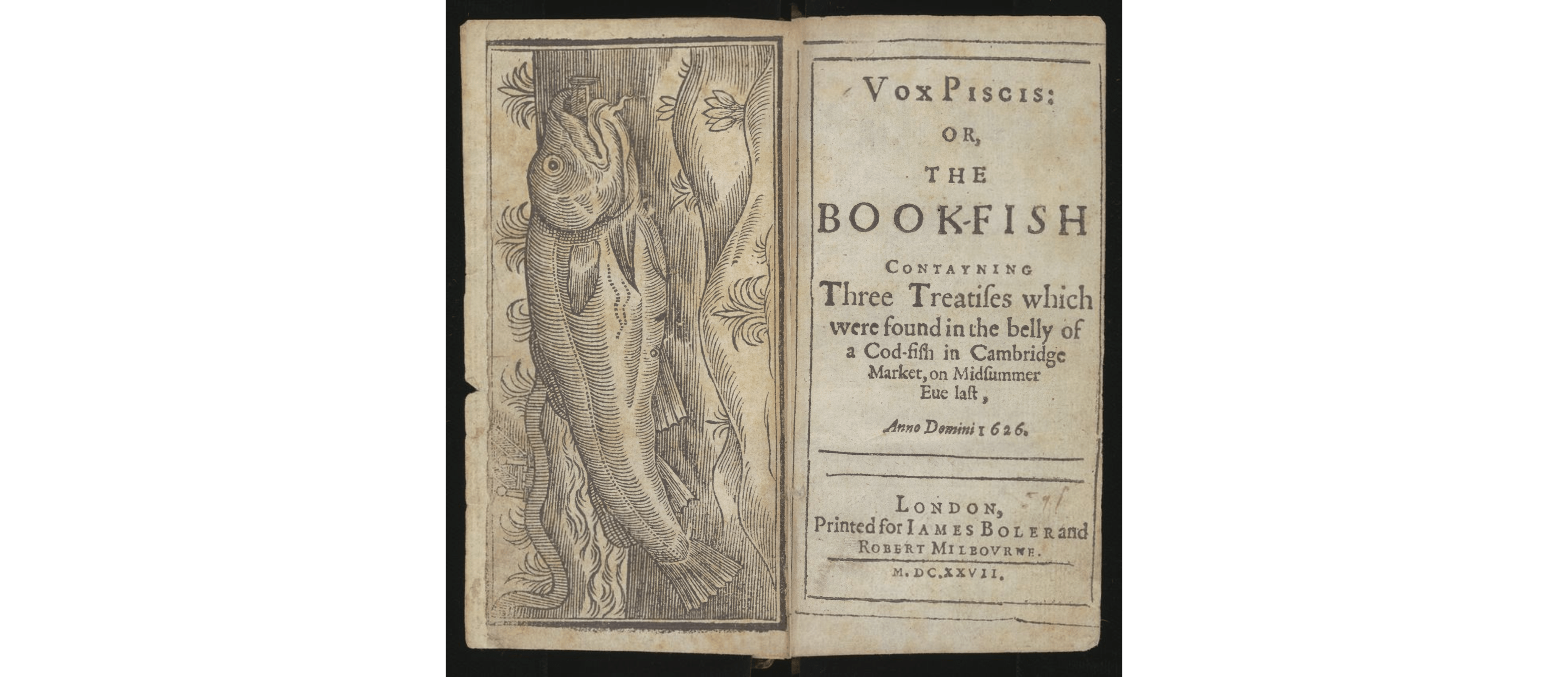
“Great changes, even in the field of science, are always preceded by a certain carnival consciousness that prepares the way”*…

After receiving our 7,482nd corporate email about “Our Covid Response,” we knew we had to do something. That something was hose down the internet machine with brake cleaner and go make something… behold! Art!
While you’re at home flattening the curve, why not take a break from your rigorous nap schedule to make a puppet show?
Entries to our contest must be original work and less than 1 minute long. Extra points for:
• all homemade and recycled props
• pyrotechnics
• involving children and/or pets
• non-professional jingles.
Remember, basically anything can be a puppet: Peanut shells, over-ripe tomatoes, political regimes. Be creative!
Our top prize is a t-shirt and $100 gift certificate to Dean’s Car Care, and the runner up gets $50 gift certificate and some oily rags…

From’s Portland’s Dean’s Car Care (“Buy Less, Fix More”), the “Socially Distant Puppet Show.”
*
###
As we lend a hand, we might recall that it was on this date in 1953 that CIA director Allen Dulles launched the secret program Project MKUltra. Its aim was to develop a perfect truth drug for interrogating suspected Soviet spies during the Cold War, and to explore other possibilities of mind control, including the manipulation of foreign leaders (indeed, several schemes to drug Fidel Castro were devised).
Techniques explored included the covert administration of high doses of psychoactive drugs (especially LSD) and other chemicals, electroshocks, hypnosis, sensory deprivation, isolation, verbal and sexual abuse, and other forms of torture. Many of the experiments– especially those involving drugs– were conducted on unwitting test subjects.
The project ran until 1973, when most project documentation was destroyed on the order of CIA director Richard Helms.

A declassifed copy of one of the few surviving MKUltra files
“Over the years I have learned that what is important in a dress is the woman who is wearing it”*…
email readers click here for video
“Fabulously glamorous puppets model fashions and bewitch men at The Cypress Club in London, 1960”
Part of Vintage Fashion, a subset of the 85,000 historical films available from British Pathé.
* Yves Saint-Laurent
###
As we canter down the catwalk, we might send elegant birthday greetings to Giorgio Armani; he was born on this date in 1934. A fashion designer probably best known for his mens line, Armani brought clean, tailored lines, natural fit, and subtle colors to his work. While he was warmly received from his first collection (in 1975), Armani became a sensation in the 80s when his clothes were worn by Richard Gere in American Gigolo and by the protagonists of Miami Vice. By the late 80s, his “power suits” had become a symbol of success. Today, Armani’s brand adorns home goods, books, and hotels in addition to clothing; he’s widely regarded as the most successful Italian designer ever.


You must be logged in to post a comment.