Posts Tagged ‘codfish’
“I’m Your Puppet”*…

Your correspondent is hitting the road again. (Roughly) Daily will be on hiatus until July1…
The first English language history of puppets…
Anybody who grew up with Shari Lewis’ Lamb Chop, Fred Rogers’ King Friday XIII, or Jim Henson’s Muppets will surely feel that they have entered a more expansive puppet realm at the outset of Helen Haiman Joseph’s A Book of Marionettes (1920). Late one evening in Cleveland, Ohio as she makes alterations to their costumes, a cast of stringed characters from Anglo-Irish dramatist Lord Dunsany’s otherworldly drama The Golden Doom — the Chief Prophet of the Stars, the Chamberlain, a pair of Spies, and a Priest — treat Joseph as rudely and defiantly as Pinocchio abused Geppetto. Beating her retreat from this imagined Lilliputian assault, the weary marionette seamstress overhears them vainly reciting their august, cosmopolitan ancestry, from the ancient Indian Ramayana, Japanese jōruri dramas, and medieval Passion plays to pugilistic stars like Pulcinella, Punch, Kasperle and Karaghöz, on down to the devotion of modern immortals spanning from Shakespeare, Voltaire, and Goethe to George Bernard Shaw and Maurice Maeterlinck.
The first comprehensive history of marionette artistry in the English language, A Book of Marionettes appeared at a watershed moment in both American and world puppetry, after a century of artistic and technical innovation, and before the cinema’s global supplanting of human attention and storytelling. Drawing on her field study of European puppetry, Helen Haiman Joseph magisterially surveys the millennia-long world history of string and silhouette marionettes. Born seemingly simultaneously with organized religion, the little creatures never leave their creators’ sides, fully capable of expressing the entire range of human emotion and experience in every corner of the globe, in every age. Enlisted as surrogate actors, marionettes perform with their necessarily circumscribed mechanical gestures deeds of immense gravity, all while barely touching the earth. As Joseph moves adeptly through the ever-dynamic world of marionette theaters, one gets the feeling that she is actually narrating a kind of alternate history of the world, one that is altogether more joyously humane than any epic recounted about mere human beings.
Granted the power to subvert any worldly authority, marionettes, as Joseph proves, perennially overthrow all social, political, religious, and even artistic conventions. When Martin Luther’s Calvinist confrères refused to administer the sacrament to actors, they became puppeteers. On more than a few occasions, both puppeteers and puppets found themselves behind bars, so effective was their satire against oppressive ecclesiastics and governments. Since the modern Western state arose at a time when marionette theaters were ubiquitous, the diminutive legion was always at hand to model courage and stoutheartedness for their momentarily cowed audiences. That Shakespeare’s Julius Caesar, Christopher Marlowe’s Massacre of Paris, and Ben Jonson’s Every Man Out of His Humour were inspired by puppet plays, or that Lord Byron drew his model of Don Juan from a Punch & Judy piece titled The Libertine Destroyed, suggests the deep fraternity of modern drama with its little brother…
More history– and illustrations: “Strings Attached: Helen Haiman Joseph’s A Book of Marionettes (1920)” from @publicdomainrev.bsky.social.
Browse the book in full at the invaluable Internet Archive.
* a song written by Dan Penn and Spooner Oldham, best known in the version recorded by James & Bobby Purify (Hear here)
###
As we untangle the strings, we might recall that it ws on this date in 1623 that a large codfish, split open at a Cambridge market, was found to contain a copy of a book of religious treatises by John Frith.
“One day I will find the right words, and they will be simple”*…

Words that don’t exist for feelings that do…
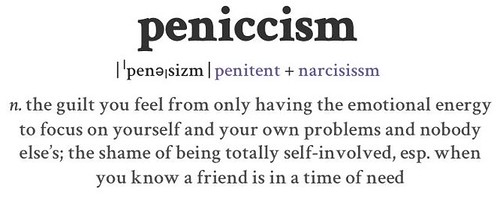
… these and more at The Emotionary.
* Jack Kerouac, The Dharma Bums
###
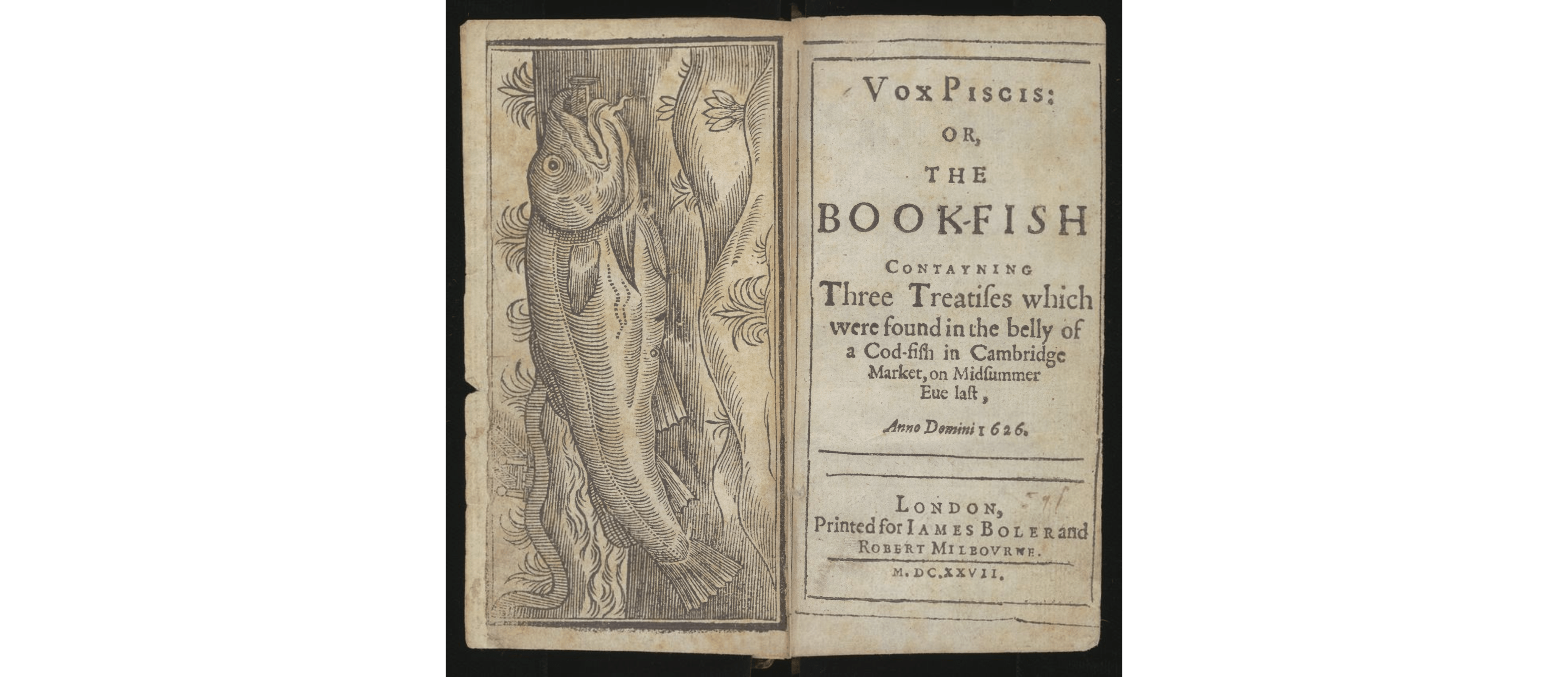
As we pack our portmanteaus, we might recall that it was on this date in 1626 that a large codfish, split open at a Cambridge market, revealed a religious text inside, written by John Frith. Frith, a English protestant and preacher of religious tolerance, had been imprisoned a century before by Cardinal Wolsey in the fish cellar at Cardinal College.
The text was ultimately published by Cambridge University Press as “Vox Piscis.”

Frith (and Andrew Hewet) being burned at the stake for heresy, 1533
The Future of Newspapers…

Tucson-based artist Nick Georgiou finds an enduring use for the broadsheet and the tabloid… See more inspired folding on his blog, My Human Computer, and at The Design Inspiration.

As we rethink recycling, we might recall that it was on this date in 1626 that a large codfish, split open at a Cambridge market, revealed a religious text inside, written by John Frith. Frith, a English protestant and preacher of religious tolerance, had been imprisoned a century before by Cardinal Wolsey in the fish cellar at Cardinal College.
The text was ultimately published by Cambridge University Press as “Vox Piscis.”
 Frith (and Andrew Hewet) being burned at the stake for heresy, 1533 (source)
You must be logged in to post a comment.