Posts Tagged ‘infrastructure’
“Labor is the superior of capital, and deserves much the higher consideration”*…

Christopher Payne is watching Gay Burdick work, and I am watching Christopher Payne work.
We’re at the MTA’s 207th Street repair shop, which Payne has, for some time, been photographing for the New York Times. Payne says he wants to wrap up the shoot and publish the photos; the MTA has experienced some turnover since the project began; they want to meet with Payne (and writer David Waldstein) and get a better understanding of what his goals are. While we’re here, Payne wants to see Gay’s workstation again…
Spencer Wright with an appreciation of photographer Christopher Payne— and his chosen subject matter…
I became aware of Payne through his previous work in the Times, where he has published shoots from factories that make colored pencils, container ships, and the paper version of the Times itself. His photography is striking, and from the accounts in his most recent book, Made in America, his process is meticulous. Payne will apparently return to the same factory dozens of times, waiting for the moment when a production run lines up just right, or the material being processed is just the right color, or — I don’t know — his subject finally lifts their hand in a particularly elegant way. Payne is an artist, and his art documents, explains, and valorizes manufacturing, fabrication, and maintenance work.
Aspects of Payne’s work might be categorized as genre art. He captures moments in everyday time; he captures human intention and effort; he captures the infrastructure required to make stuff. His subjects are often highly engineered (he has photographed ASML’s EUV machines, Boeing’s 787 assembly line, and NASA’s Space Launch System), but just as often they’re highly soulful (Payne published a book about Steinway pianos; he has also photographed Martin’s guitar factory and Zildjian’s cymbal production process). Regardless of what he’s shooting, Payne’s photographs often feel just as carefully assembled as the objects in them…
…
… In the introduction to Made in America, Simon Winchester writes about industrialization, consumerization and the abstraction of knowledge and skill that occurred in the past few centuries. Before factories, it took forty-three individual craftsmen to make a block for the British Navy; in 1803, with the invention of Henry Maudslay’s block-making machines, that number was reduced to ten. Winchester writes of this transition with reverence, but he also suggests that Made in America “poses questions which, given the uncertain condition of our present-day planet, sorely need to be addressed.” I asked Payne what these questions were, and his answer mirrored something that he had written in the book’s afterward: “My photographs are a celebration of the making of things, of the transformation of raw materials into useful objects… They are also a celebration of teamwork and community…These are the people who make the stuff that fuels our economy, and in this time of social polarization and increasing automation, they offer a glimmer of hope.”
But I think that Payne himself is the one who offers a glimmer of hope. The factories he visits are complicated, complex, kludgy. Factories take knowledge away from craftspeople and turn it into bureaucracy and institutional anxiety. Factories pollute our waterways. Factories take razor-sharp lathe swarf and try to convince us it’s jewelry; factories enlist workers to help someone else fulfill their dreams. But then Christopher Payne comes in, and he crawls around for a few months, and he finds parts of the factory that we can be purely and unabashedly proud of. I don’t think that Payne’s work is asking questions at all; he’s just taking something messy, and pointing a spotlight on the honorable parts. And, to be honest, I think that’s probably what we need…
Documenting the making and maintenance of things– fascinating and beautifully illustrated: “The Honorable Parts,” from @the_prepared. Eminently worth reading in full.
* Abraham Lincoln
###
As we pay attention, we might recall that it was on this date in 1919 that fiery hot molasses poured into the streets of Boston, killing 21 people and injuring scores of others– the Great Boston Molasses Flood:
The United States Industrial Alcohol building was located on Commercial Street near North End Park in Boston. It was close to lunch time on January 15 and Boston was experiencing some unseasonably warm weather as workers were loading freight-train cars within the large building. Next to the workers was a 58-foot-high tank filled with 2.5 million gallons of crude molasses.
Suddenly, the bolts holding the bottom of the tank exploded, shooting out like bullets, and the hot molasses rushed out. An eight-foot-high wave of molasses swept away the freight cars and caved in the building’s doors and windows. The few workers in the building’s cellar had no chance as the liquid poured down and overwhelmed them.
The huge quantity of molasses then flowed into the street outside. It literally knocked over the local firehouse and then pushed over the support beams for the elevated train line. The hot and sticky substance then drowned and burned five workers at the Public Works Department. In all, 21 people and dozens of horses were killed in the flood. It took weeks to clean the molasses from the streets of Boston.
This disaster also produced an epic court battle, as more than 100 lawsuits were filed against the United States Industrial Alcohol Company. After a six-year-investigation that involved 3,000 witnesses and 45,000 pages of testimony, a special auditor finally determined that the company was at fault because the tank used had not been strong enough to hold the molasses. Nearly $1 million [over $15.5 million in today’s dollars] was paid in settlement of the claims… – source

“We shape our infrastructure; thereafter it shapes us”*…

Long-time readers of (R)D will know of your correspondent’s regard for Deb Chachra and her thoughtful pieces on infrastructure (see, e.g., here and here). On the occasion of the publication of her (terrific) new book, How Infrastructure Works: Transforming our Shared Systems for a Changing World, another (R)D regular, Hillary Predko of Scope of Work, talks with Deb…
Deb Chachra is a material scientist and engineering professor at Olin College who writes extensively about infrastructural systems. Astute readers may have noticed that she is one of the thinkers most frequently cited in SOW: I recently referenced her work, as did TW earlier this year. Deb also joined as a guest writer in 2017. Her thoughtful writing forefronts the interplay between technical and social factors, calling infrastructure the way we take care of each other at a planetary scale.
I have loved following Deb’s work over the years, and her new book, How Infrastructure Works: Transforming our Shared Systems for a Changing World… is a fascinating and nuanced extension of the same ideas. In compelling prose, the book traverses the history of the infrastructure systems we live with today and considers the new pressures posed by climate change. Another SOW favorite thinker, Robin Sloan, says, “Deb Chachra is the perfect guide not just to how infrastructure works but also how it feels. This book is just like the power plants it describes: a precise machine, a fountain of energy.”
In a world saturated with news of climate doom, How Infrastructure Works lays out a hopeful vision of a future – and one that is grounded in the technical realities of the world. Deb Chachra dreams in systems, and we are all invited to step into that dream. I recently sat down with Deb to talk about her book, and her perspective on the world and work…
An interview with Deb Chachra (@debcha), author of How Infrastructure Works: “An Ode to Living on The Grid,” from @the_prepared.
* Dax Bamania (a riff on a quote about tools often mis-attributed to Marshall McLuhan)
###
As we study structure, we might spare a thought for a man whose innovation added tremendous value to a ubiquitous 19th century infrastructure, George Pullman; he died on this date in 1897. An enginner and industrialist, he revolutionized rail travel when he designed and manufactured the Pullman sleeping car (and industrial relations, when he founded a company town in Chicago for the workers who manufactured it).

“Infrastructure is much more important than architecture”*…
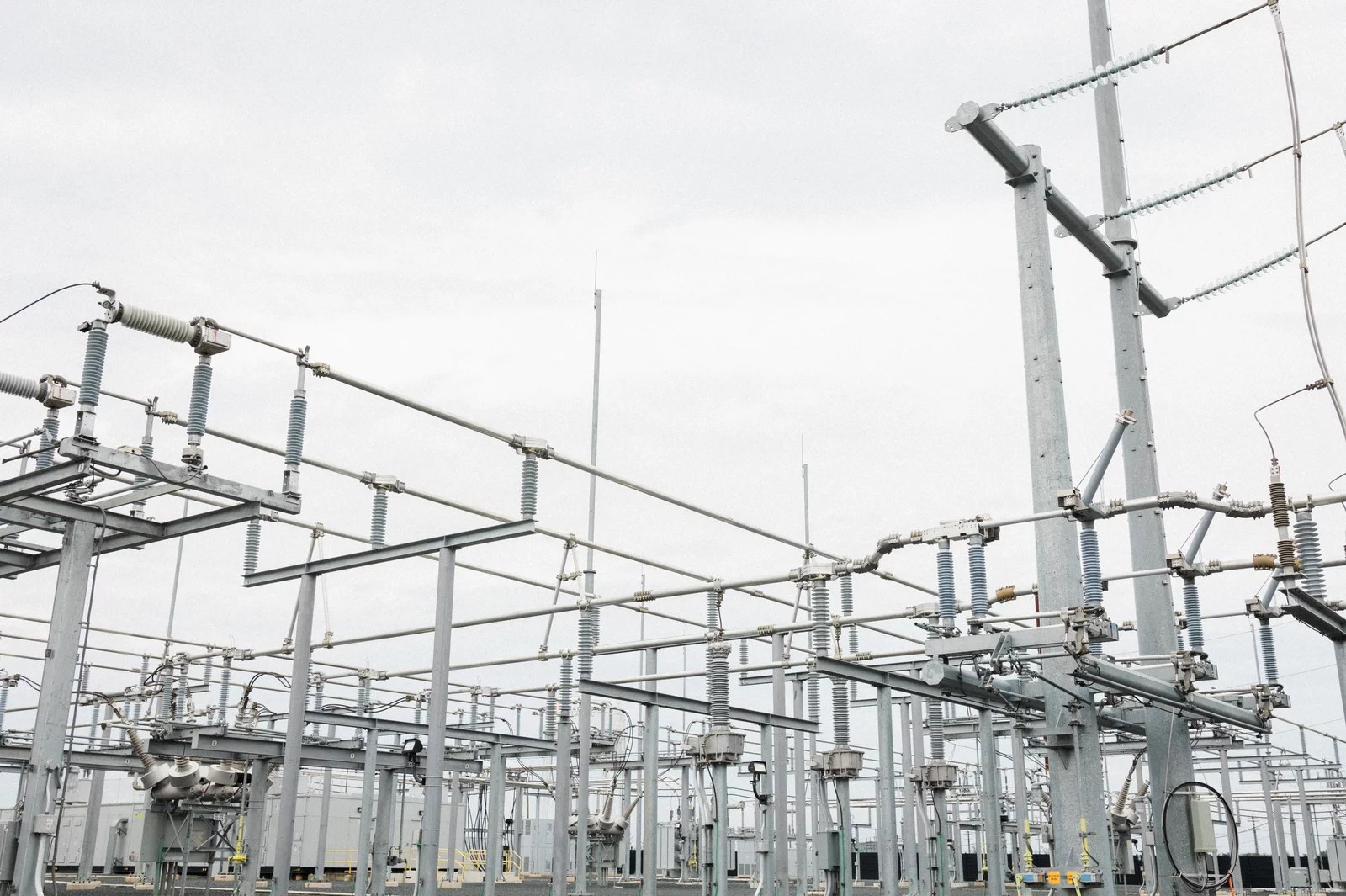
.. much, much more important, as Debbie Chachra explains in a piece featured once before in (R)D. It’s excerpted here again, with special emphasis on our power grid…
We use exogenous energy every day to exceed the limits of what our bodies can do. Artificial light compensates for our species’ poor night vision and gives us control over how we spend our time, releasing us from the constraints of sunrise and sunset. So valuable is artificial light that it’s a reliable correlate of wealth and economic development: researchers use the growing brightness of regions over time, as quantified from satellite images taken at night, as a proxy measure—more resources, more light. The southern half of the Korean Peninsula and the ocean surrounding it is ablaze with light; while North Korea has just faint threads of light leading out from Pyongyang, a result of decades of imposed scarcity.
Energy in the form of mechanical work also replaces our body’s labour, from the domestic scale—all the technologies for textiles, for example, from spinning and weaving to sewing and laundry—to scales that are nearly impossible for human bodies alone, like building skyscrapers and bridges. And we use mechanical energy to move our bodies and ferry goods around: transportation. Exogenous energy also makes our living environments more comfortable; for a long time, this was mostly limited to heating, but in the twentieth century, the technologies of refrigeration and air conditioning became widespread. The newest uses of energy are telecommunications technologies—from Morse code to TikTok, they turn electrons into bits of information, facilitating human connections on a global scale.
In fact, this ability to access more energy than our bodies themselves can provide is—all but literally—baked into being a human. All cultures eat cooked food (and no animals cook their food). While it’s not required to survive, strictly speaking, heating food breaks it down, making the nutrients more bioavailable; in essence, the food becomes more nutritious. Learning to cook our food is thought to have been an important contributor to the development of our calorie-dense brains and all that followed, helping to free humans from the ongoing labour of foraging and eating that occupies most animals. But the near-necessity of cooking food then requires a different labour: for most women on most of the planet, obtaining fuel for cooking remains their primary daily occupation.
“Care at Scale”
How is that we in the U.S. have more-or-less abundant power? Brian Potter explains the evolution of our electric grid…
Abundant electricity is a defining feature of the modern era. At the turn of the 20th century electrical power was a rare, expensive luxury: in 1900 electricity provided less than 5% of industrial power in the US, and as late as 1907 was in only 8% of US homes. Today, however, 89.6% of the world’s population has access to electricity (97.3% if you just consider urban areas), and Wikipedia’s “list of countries by electrification rate” has 123 countries sharing the top spot at 100% electrification.
Electrical service is considered critical in a way that’s different from most other services. Even a brief interruption in electrical power is considered a serious problem in industrialized countries where power outage durations are typically measured in minutes per year. To put this in perspective, the average yearly outage time in the US is around 475 minutes per year, which is considered especially unreliable despite representing ~99.9% uptime. By comparison, Germany averaged just 12.7 minutes of power outages per year in 2021—a remarkable 99.998% uptime.
Electricity’s transition from a luxury good to the foundation of modern life happened quickly. By 1930, electricity was available in nearly 70% of US homes, and supplied almost 80% of industrial mechanical power. By 1950, the US was tied together by an enormous network of high-voltage transmission lines…
“The Birth of the Grid” (and Part Two) from @_brianpotter.
Keep an eye out for @debcha‘s forthcoming book, How Infrastructure Works.
* Rem Koolhaas
###
As we think systemically, we might recall that it was on this date in 1752 that Benjamin Franklin and his son tested the relationship between electricity and lightning by flying a kite in a thunder storm. Franklin was attempting a (safer) variation on a set of French investigations about which he’d read. The French had connected lightning rods to a Leyden jar, but one of their experiments electrocuted the investigator. Franklin– who was, of course, no fool– used a kite; the increased height/distance from the strike reduces the risk of electrocution. (But it doesn’t eliminate it: Franklin’s experiment is now illegal in many states.)
In fact (other) French experiments had successfully demonstrated the electrical properties of lightning a month before, but word had not yet reached Philadelphia.

The Treasury’s Bureau of Engraving and Printing created this vignette (c. 1860), which was used on the $10 National Bank Note from the 1860s to 1890s
“The only thing useful banks have invented in 20 years is the ATM”*…

ATM’s have been around in the U.S. since 1969; there were, as of 2018, 470,135 of them in operation, from which $5.1 Billion was withdrawn. The market for the machines and the technology that connects them was $20 Billion in 2020, projected to grow to $30 Billion in 2028. They were originally– and are still primarily used for cash disbursement; but over the years they’ve added a number of other functions: account deposits, bill payment, even lottery and movie ticket purchase– there are over 10 Billion ATM transactions in the U.S. alone. As cash plays a less central role in transactions, the the number of machines and transactions has slightly declined. Still they are a major factor in today’s financial infrastructure– and that few of us really understand. Patrick McKenzie is here to help– and to remind us that their history has lessons that are broader…
The first automated teller machines, which debuted in the late 1960s, were, as the name suggests, strictly cost-saving devices for bank branches. Branches exist as sales offices but have incidental cash-management functions. The denser depositors are around a branch, the more transactions happen during peak windows like e.g. the morning commute and lunchtime. The more transactions you need to support in a window, the more tellers you need to employ. Tellers are both surprisingly inexpensive relative to the degree of trust placed in them but surprisingly costly relative to occupations like e.g. cashiers which look outwardly similar. Banks have long wanted to control the costs of the teller base.
The original thesis behind the ATM was that you could move the most routine teller transactions, like cash withdrawals and balance inquiries, to a machine, and then reserve the teller for higher-complexity routine transactions like cashing checks. The machines gradually gained more features as they achieved ubiquity.
Interestingly, teller employment is actually up substantially since the introduction of ATMs. Secular demand for retail banking grew with the economy and the larger number of branches has compensated for reduced numbers of tellers per branch. See Bessen 2016…
ATMs are a fascinating example of a pattern we see a lot in finance: an internal operations improvement which was built into a business which eventually begat an infrastructure layer that may be a much bigger business. And for all their ubiquity, almost no one, even people professionally involved in finance, understand how they work…
See also: “Automated Teller Machines” (source of the image above)
The plumbing of finance: “The infrastructure behind ATMs,” from @patio11.
* Paul Volcker (2009)
###
As we insert our cards, we might send carefully-denominated birthday greetings to Kaushik Basu; he was born on this date in 1952. An economist, he served as Chief Economist of the World Bank from 2012 to 2016. Having taught at MIT, Harvard University, the Institute for Advanced Study at Princeton, and the London School of Economics, he is currently a professor at Cornell. From 2009 to 2012, during the United Progressive Alliance‘s second term, Basu served as the Chief Economic Adviser to the Government of India. His recent work has been on collective moral responsibilities and the role that individuals play in fulfilling them. In 2021, he was awarded the Alexander von Humboldt Foundation Research Award.

“How dare you try to hog all the continent!”*…

Historian Richard White on the greed, ineptitude, and economic cost behind the transcontinental railroads of the 19th century, and what that says about the development of infrastructure today…
Politicians love a good historical analogy. That’s why Joe Biden has compared his infrastructure law to the construction of the interstate highway system and the transcontinental railroad. The president, of course, means such comparisons in a flattering light. For those who have studied these revolutionary policy choices, however, the consequences are not so unblemished.
Ten years ago, historian Richard White catalogued the greed and ineptitude of railroad executives and the policymakers who blindly enabled their schemes. In Railroaded: The Transcontinentals and the Making of Modern America, he explored the history of corporations that have gone down in American myth as corrupt but ultimately productive and necessary.
White argues that the transcontinental railroad companies were not necessary for stitching the young country together; they were simply an example of “dumb growth” that hurt more than it helped. Sped along by state subsidy and paid-for politicians, these corporations built in places where there were no markets. They never made money. The entire enterprise was a vast Ponzi scheme, and its periodic turmoil threw the nation into repeated economic crisis. Their selfish flailing scourged wildlife, oppressed Native Americans, and spread new settlements to areas where they could not be sustained (and after long suffering were not).
Instead of an all-powerful “octopus” engulfing the country, he saw the railroad men as a collection of myopic and unintelligent executives who could not have survived year to year without government subsidy. Instead of a monstrous kraken, he suggested a better analogy would be “a group of fat men in an Octopus suit fighting over the controls” of a train going off the rails…
Governing (@GOVERNING) talks with White about lessons for today’s infrastructure programs: “Breaking the Myth About America’s ‘Great’ Railroad Expansion.”
See also: “Years of Delays, Billions in Overruns: The Dismal History of Big Infrastructure” “These days, the bigger the company, the less you can figure out what it does.”
* Collis Huntington (lead investor in the Central Pacific Railroad) to “Doc” Durant (V.P., and operating head of the Union Pacific Railroad) in 1862
###
As we learn from our mistakes, we might recall that it was on this date in 1845 that President James K. Polk, citing “Manifest Destiny” in a State of the Union message, proposed that the United States should aggressively expand into the West.
It was the 22nd anniversary of President James Monroe‘s declaration of the New World as a sphere of influence off-limits to intervention by Old World (colonial) powers, and suggesting that any such incursion would be deemed an act of aggression against the U.S. From 1850, this policy has been known as “the Monroe Doctrine.”

You must be logged in to post a comment.