Posts Tagged ‘electric grid’
“Here comes the sun”*…

Further, in a fashion, to last Wednesday’s post… We’ve looked before (e.g., here) at the potential havoc that solar storms could wreak on our electified lives. Now, as Paul Voosen reports, scientists are speculating on a defense, suggesting that gases released from satellites could slash the threat of severe “space weather”…
When violent eruptions from the Sun slam into Earth’s magnetic field, they do more than paint aurorae across the night sky. They can scramble the electronics of satellites and induce powerful ground currents that knock out electrical grids. It’s been estimated that a one-in-a-100-year solar storm like the 1859 Carrington Event could cause more than $3 trillion of damage to the power grid alone. [See here.]
Yet for decades, society’s only defenses have been better space weather forecasts and more durable technology on the ground and in space. Now, a small group of space physicists says humanity should intervene and weaken solar storms in real time. In a study published [recently] in Space Weather, the researchers describe a provocative proposal called “StormWall”: a fleet of satellites that would release hundreds of tons of gases into space just before a solar storm strikes Earth. Computer simulations suggest the artificial cloud could cut the intensity of a major solar storm by half or more. “It’s as if you could install an airbag in the magnetosphere,” says Daniel Welling, a co-author and space physicist at the University of Michigan.
Call it “helioengineering”—a deliberate intervention in the near-Earth space environment. But unlike controversial geoengineering proposals to mitigate global warming, which would inject long-lived Sun-blocking particles into the atmosphere, StormWall’s protective gases would dissipate within hours, says Brian Walsh, the study’s lead author and a space physicist at Boston University. “It’s waiting for us to do some temporary modification.”
The proposal would require more extensive simulations and testing. But it is “highly innovative and appears to be quite feasible in the near term,” says Allison Jaynes, a space physicist at the University of Iowa. It’s a “laudable idea,” adds Gurudas Ganguli, a space physicist at the U.S. Naval Research Laboratory (NRL)…
[Voosen explains the technology proposed and considers the challenges in its implementation…]
… Of course, like an airbag, StormWall would have to be replaced if deployed. But just as NASA and other space agencies are studying how to protect the planet from asteroids [and here], Walsh says there’s a good argument for fortifying an electronics-dependent society against massive solar eruptions. “If we lose all our power grids and can’t use the internet for 6 years, it would be traumatic.”
“Radical proposal would block solar storms with orbital ‘airbag’” from @science.org.
* George Harrison
###
As we apply sunscreen, we might send bright birthday greetings to Godfried Wendelen; he was born on this date in 1580. And astronomer (and Catholic priest) known as “the Ptolemy of his time.” Despite the tenets of his church, Wendelen was an audacious proponent of the Copernican theory that the planets orbit around the sun. He made more accurate measurements of the distance to the sun than those previously made by Aristachus (2,000 years earlier) from the geometrical relationships at the exact time of a half-moon.
Wendelen is considered by many as a precursor of Kepler and Newton, and was in fact cited by Newton in his Principia. The crater Vendelinus on the Moon is named after him

“Infrastructure is much more important than architecture”*…
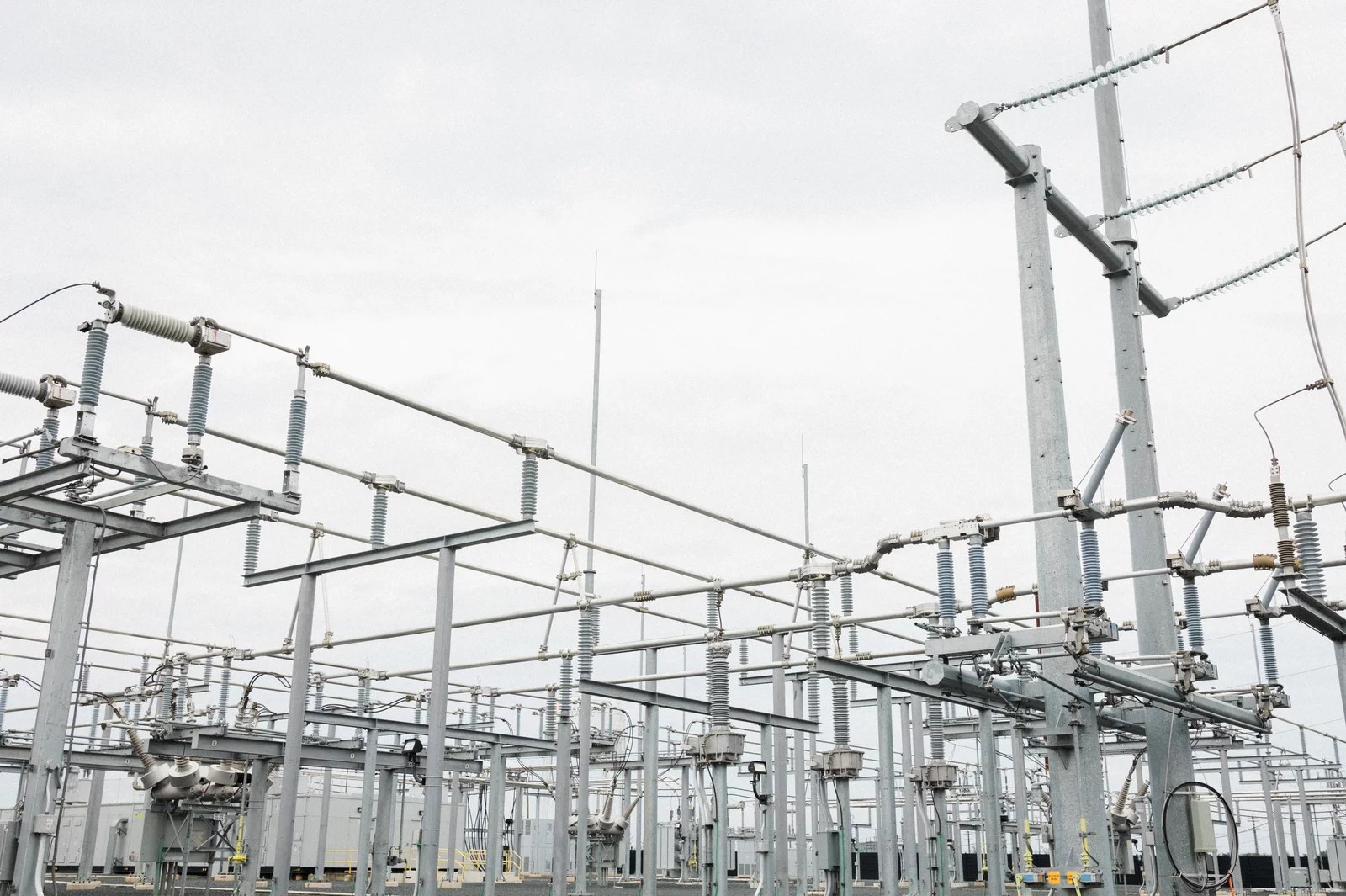
.. much, much more important, as Debbie Chachra explains in a piece featured once before in (R)D. It’s excerpted here again, with special emphasis on our power grid…
We use exogenous energy every day to exceed the limits of what our bodies can do. Artificial light compensates for our species’ poor night vision and gives us control over how we spend our time, releasing us from the constraints of sunrise and sunset. So valuable is artificial light that it’s a reliable correlate of wealth and economic development: researchers use the growing brightness of regions over time, as quantified from satellite images taken at night, as a proxy measure—more resources, more light. The southern half of the Korean Peninsula and the ocean surrounding it is ablaze with light; while North Korea has just faint threads of light leading out from Pyongyang, a result of decades of imposed scarcity.
Energy in the form of mechanical work also replaces our body’s labour, from the domestic scale—all the technologies for textiles, for example, from spinning and weaving to sewing and laundry—to scales that are nearly impossible for human bodies alone, like building skyscrapers and bridges. And we use mechanical energy to move our bodies and ferry goods around: transportation. Exogenous energy also makes our living environments more comfortable; for a long time, this was mostly limited to heating, but in the twentieth century, the technologies of refrigeration and air conditioning became widespread. The newest uses of energy are telecommunications technologies—from Morse code to TikTok, they turn electrons into bits of information, facilitating human connections on a global scale.
In fact, this ability to access more energy than our bodies themselves can provide is—all but literally—baked into being a human. All cultures eat cooked food (and no animals cook their food). While it’s not required to survive, strictly speaking, heating food breaks it down, making the nutrients more bioavailable; in essence, the food becomes more nutritious. Learning to cook our food is thought to have been an important contributor to the development of our calorie-dense brains and all that followed, helping to free humans from the ongoing labour of foraging and eating that occupies most animals. But the near-necessity of cooking food then requires a different labour: for most women on most of the planet, obtaining fuel for cooking remains their primary daily occupation.
“Care at Scale”
How is that we in the U.S. have more-or-less abundant power? Brian Potter explains the evolution of our electric grid…
Abundant electricity is a defining feature of the modern era. At the turn of the 20th century electrical power was a rare, expensive luxury: in 1900 electricity provided less than 5% of industrial power in the US, and as late as 1907 was in only 8% of US homes. Today, however, 89.6% of the world’s population has access to electricity (97.3% if you just consider urban areas), and Wikipedia’s “list of countries by electrification rate” has 123 countries sharing the top spot at 100% electrification.
Electrical service is considered critical in a way that’s different from most other services. Even a brief interruption in electrical power is considered a serious problem in industrialized countries where power outage durations are typically measured in minutes per year. To put this in perspective, the average yearly outage time in the US is around 475 minutes per year, which is considered especially unreliable despite representing ~99.9% uptime. By comparison, Germany averaged just 12.7 minutes of power outages per year in 2021—a remarkable 99.998% uptime.
Electricity’s transition from a luxury good to the foundation of modern life happened quickly. By 1930, electricity was available in nearly 70% of US homes, and supplied almost 80% of industrial mechanical power. By 1950, the US was tied together by an enormous network of high-voltage transmission lines…
“The Birth of the Grid” (and Part Two) from @_brianpotter.
Keep an eye out for @debcha‘s forthcoming book, How Infrastructure Works.
* Rem Koolhaas
###
As we think systemically, we might recall that it was on this date in 1752 that Benjamin Franklin and his son tested the relationship between electricity and lightning by flying a kite in a thunder storm. Franklin was attempting a (safer) variation on a set of French investigations about which he’d read. The French had connected lightning rods to a Leyden jar, but one of their experiments electrocuted the investigator. Franklin– who was, of course, no fool– used a kite; the increased height/distance from the strike reduces the risk of electrocution. (But it doesn’t eliminate it: Franklin’s experiment is now illegal in many states.)
In fact (other) French experiments had successfully demonstrated the electrical properties of lightning a month before, but word had not yet reached Philadelphia.

The Treasury’s Bureau of Engraving and Printing created this vignette (c. 1860), which was used on the $10 National Bank Note from the 1860s to 1890s
“You must not fool yourself, and you are the easiest person to fool”*…

The quest for room-temperature superconducting seems a bit like the hunt for the Holy Grail. A superconductor is a material that will transmit electricity with no resistance– thus very quickly and with no loss. (Estimates of loss in the U.S. electric grid, most of it due to heat loss from resistance in transmission, range from 5-10%; at the low end, that’s enough to power all seven Central American countries four times over.) Beyond that (already extraordinary) benefit, superconductivity could enable high-efficiency electric motors, maglev trains, low-cost magnets for MRI and nuclear fusion, a promising form of quantum computing (superconducting qubits), and much, much more.
Superconductivity was discovered in 1911, and has been the subject of fervent study ever since; indeed, four Nobel prizes have gone to scientists working on it, most recently in 2003. But while both understanding and application have advanced, it has remained the case that superconductivity can only be achieved at very low temperatures (or very high pressures). Until the mid-80s, it was believed that it could be established only below 30 Kelvin (-405.67 degrees Farenheit); by 2015, scientists had gotten that up to 80 K (-316 degrees Farenheit)… that’s to say, still requiring way too much cooling to be widely practical.
So imagine the excitement earlier this month, when…
In a packed talk on Tuesday afternoon at the American Physical Society’s annual March meeting in Las Vegas, Ranga Dias, a physicist at the University of Rochester, announced that he and his team had achieved a century-old dream of the field: a superconductor that works at room temperature and near-room pressure. Interest was so intense in the presentation that security personnel stopped entry to the overflowing room more than fifteen minutes before the talk. They could be overheard shooing curious onlookers away shortly before Dias began speaking.
The results, published in Nature, appear to show that a conventional conductor — a solid composed of hydrogen, nitrogen and the rare-earth metal lutetium — was transformed into a flawless material capable of conducting electricity with perfect efficiency.
While the announcement has been greeted with enthusiasm by some scientists, others are far more cautious, pointing to the research group’s controversial history of alleged research malfeasance. (Dias strongly denies the accusations.) Reactions by 10 independent experts contacted by Quanta ranged from unbridled excitement to outright dismissal…
Interesting if true– a paper in Nature divides the research community: “Room-Temperature Superconductor Discovery Meets With Resistance,” from @QuantaMagazine.
* Richard Feynman
###
As we review research, we might pause, on Pi Day, for a piece of pi(e)…

… in celebration of Albert Einstein’s birthday; he was born on this date in 1879.

“Everything should be made as simple as possible, but not simpler.”
“The grid is awesomely complex. It is the largest machine in the world.”*…

Solar Flare (upper left), May 28, 2020
The Sun emitted its largest solar flare since 2017 on Friday, indicating that our star may be awakening from a quiet period that has lasted several years. Though the flare erupted on the opposite side of the Sun from Earth, NASA’s Solar Dynamics Observatory was able to detect its glow above the solar surface, which is visible in the upper left corner of the above image…
Solar flares, sudden bursts of light blasted out by the Sun, are sometimes accompanied by arcing ejections of hot plasma from the star. These flashes normally show up in the same area as sunspots, which are dark patches of the solar surface that are slightly cooler than other parts of the Sun.
Our star experiences solar cycles that last about 11 years and are timed by the number of sunspots visible on the surface: peak activity correlates to the largest numbers of sunspots in a cycle, while a relatively spotless Sun is considered to be in hibernation. The last cycle started in 2008, and produced a major solar storm in 2012.
These storms also cause extremely bright and vivid auroras, popularly called the Northern and Southern Lights, as the glut of charged particles from a more energetic Sun illuminates the skies. However, past incidents show that extremely powerful flares and ejections—which blast out powerful surges of X-ray and UV radiation—can also scramble satellite systems and even cause energy failures on Earth, such as a blackout in March 1989 that left millions of people in Québec without power… (source and more info)
Indeed, after the 1989 event, earth had a near miss when the effects of a much more powerful storm barely passed us by…
Back in 2012, the Sun erupted with a powerful solar storm that just missed the Earth but was big enough to “knock modern civilization back to the 18th century,” NASA said.
The extreme space weather that tore through Earth’s orbit on July 23, 2012, was the most powerful in 150 years, [see here for info on that earlier storm] according to a statement posted on the US space agency website Wednesday.
However, few Earthlings had any idea what was going on.
“If the eruption had occurred only one week earlier, Earth would have been in the line of fire,” said Daniel Baker, professor of atmospheric and space physics at the University of Colorado…. (source and more info)
The damage, should another huge solar storm hit, could be massive– but wouldn’t be evenly distributed…

This map shows 100-year storm-induced voltages on the national electric power grid
A new study about solar-induced power outages in the U.S. electric grid finds that a few key regions—a portion of the Midwest and Eastern Seaboard—appear to be more vulnerable than others…
Solar flares and other solar-mass ejections that travel through space can slam into Earth’s atmosphere and generate powerful electric and magnetic fields. These magnetic storms can occasionally be intense enough to interfere with the operation of high-voltage electricity lines.
Depending on the geology of a given region, the currents a geomagnetic storm induces in the power lines can destabilize the power grid’s operation and cause damage to (or even destroy) transformers….
Utilities in those [most vulnerable] regions need to know that power disturbances and outages—and possibly blown transformers—are more likely in the case of a big solar storm hitting Earth.
In a worst-case scenario… portions of the electric grid without enough backup transformers and other equipment could find themselves unable to operate until they can swap in backup systems. Of course, if there are not enough transformers and other devices, many in the hardest-hit regions could be without power for days or weeks until equipment could be delivered or built from scratch…
The worst-case scenario, the one that keeps grid experts up at night, happened last in 1859. It originated in a solar flare that blasted off the solar surface on 1 September 1859 and was observed by the English amateur astronomers Richard Carrington and Richard Hodgson.
Fortunately, when the “Carrington Event” hit Earth, the world had precious little electric infrastructure to disturb. It was mostly telegraph wires along railway lines that felt any high-voltage surges.
“There’s some expectation that if we were to have a repeat of the 1859 storm, it could have some substantial effects on the electric power grid and other technology that modern society depends upon,” [USGS research geophysicist Jeffrey] Love said. And because so many of today’s electrical systems are built around computer chips that are not robust to high-voltage surges, the fear is that a modern-day Carrington event could also blow out some portion of our computerized world… (source and more info)
What can we do about it? We can urge utilities (and their regulators) to expand and extend the emergency transformer stockpile (Grid Assurance) and to shore up the grid’s resilience to electromagnetic pulses.
As though we need one more thing about which to be concerned…
* The Grid: The Fraying Wires Between Americans and Our Energy Future
###
As we have a sunny day, we might spare a thought for Joseph Ritter von Fraunhofer; he died on this date in 1826. A physicist and optical lens manufacturer, he made optical glass and achromatic telescope objective lenses, invented the spectroscope, and developed diffraction grating. But he is perhaps best remembered for his discovery of the dark absorption lines in the spectrum of the sun (created by selective absorption of those wavelengths by the atoms of different elements)– now, appropriately, known as Fraunhofer lines.

You must be logged in to post a comment.