Posts Tagged ‘Kite’
“Infrastructure is much more important than architecture”*…
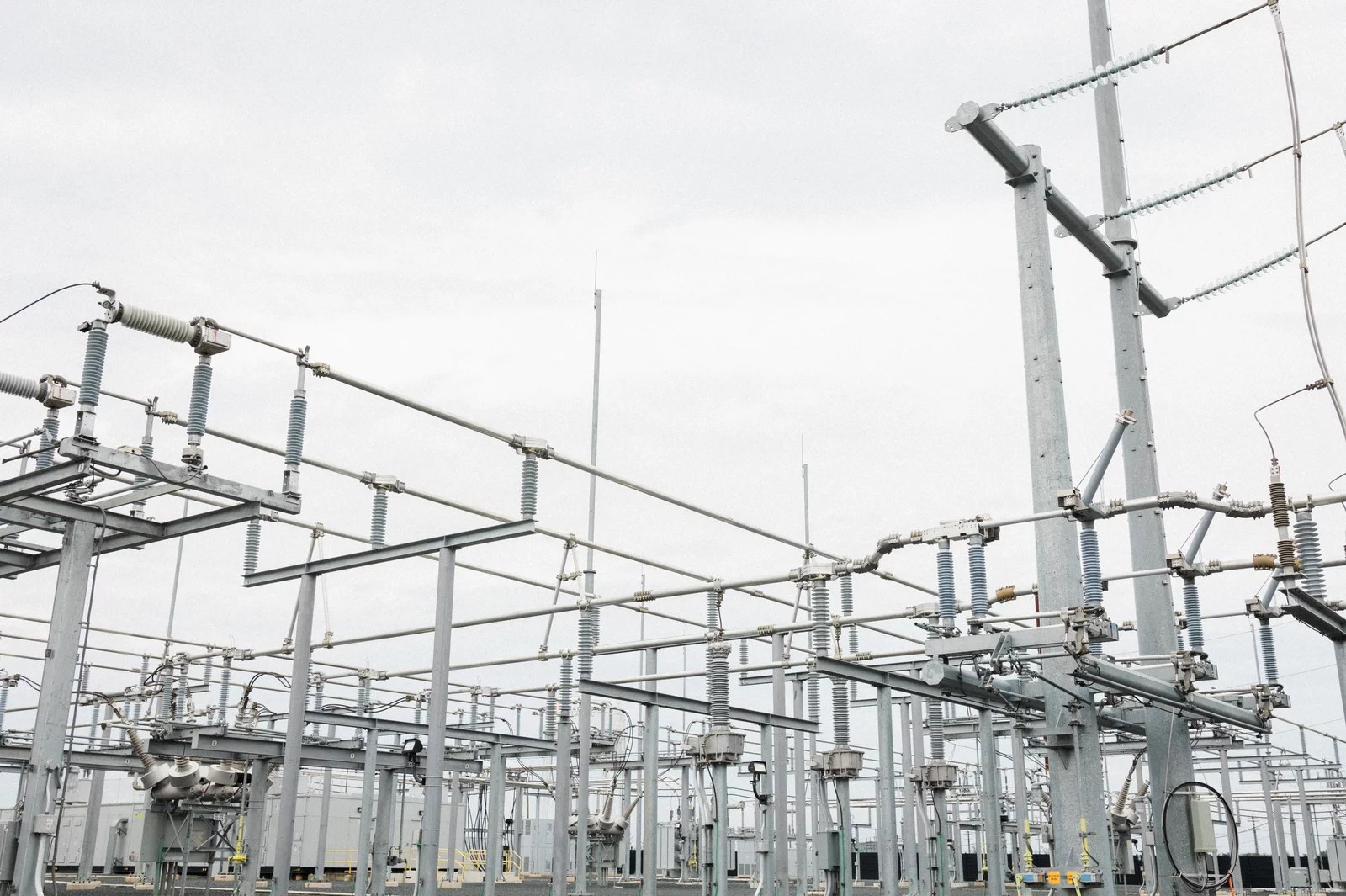
.. much, much more important, as Debbie Chachra explains in a piece featured once before in (R)D. It’s excerpted here again, with special emphasis on our power grid…
We use exogenous energy every day to exceed the limits of what our bodies can do. Artificial light compensates for our species’ poor night vision and gives us control over how we spend our time, releasing us from the constraints of sunrise and sunset. So valuable is artificial light that it’s a reliable correlate of wealth and economic development: researchers use the growing brightness of regions over time, as quantified from satellite images taken at night, as a proxy measure—more resources, more light. The southern half of the Korean Peninsula and the ocean surrounding it is ablaze with light; while North Korea has just faint threads of light leading out from Pyongyang, a result of decades of imposed scarcity.
Energy in the form of mechanical work also replaces our body’s labour, from the domestic scale—all the technologies for textiles, for example, from spinning and weaving to sewing and laundry—to scales that are nearly impossible for human bodies alone, like building skyscrapers and bridges. And we use mechanical energy to move our bodies and ferry goods around: transportation. Exogenous energy also makes our living environments more comfortable; for a long time, this was mostly limited to heating, but in the twentieth century, the technologies of refrigeration and air conditioning became widespread. The newest uses of energy are telecommunications technologies—from Morse code to TikTok, they turn electrons into bits of information, facilitating human connections on a global scale.
In fact, this ability to access more energy than our bodies themselves can provide is—all but literally—baked into being a human. All cultures eat cooked food (and no animals cook their food). While it’s not required to survive, strictly speaking, heating food breaks it down, making the nutrients more bioavailable; in essence, the food becomes more nutritious. Learning to cook our food is thought to have been an important contributor to the development of our calorie-dense brains and all that followed, helping to free humans from the ongoing labour of foraging and eating that occupies most animals. But the near-necessity of cooking food then requires a different labour: for most women on most of the planet, obtaining fuel for cooking remains their primary daily occupation.
“Care at Scale”
How is that we in the U.S. have more-or-less abundant power? Brian Potter explains the evolution of our electric grid…
Abundant electricity is a defining feature of the modern era. At the turn of the 20th century electrical power was a rare, expensive luxury: in 1900 electricity provided less than 5% of industrial power in the US, and as late as 1907 was in only 8% of US homes. Today, however, 89.6% of the world’s population has access to electricity (97.3% if you just consider urban areas), and Wikipedia’s “list of countries by electrification rate” has 123 countries sharing the top spot at 100% electrification.
Electrical service is considered critical in a way that’s different from most other services. Even a brief interruption in electrical power is considered a serious problem in industrialized countries where power outage durations are typically measured in minutes per year. To put this in perspective, the average yearly outage time in the US is around 475 minutes per year, which is considered especially unreliable despite representing ~99.9% uptime. By comparison, Germany averaged just 12.7 minutes of power outages per year in 2021—a remarkable 99.998% uptime.
Electricity’s transition from a luxury good to the foundation of modern life happened quickly. By 1930, electricity was available in nearly 70% of US homes, and supplied almost 80% of industrial mechanical power. By 1950, the US was tied together by an enormous network of high-voltage transmission lines…
“The Birth of the Grid” (and Part Two) from @_brianpotter.
Keep an eye out for @debcha‘s forthcoming book, How Infrastructure Works.
* Rem Koolhaas
###
As we think systemically, we might recall that it was on this date in 1752 that Benjamin Franklin and his son tested the relationship between electricity and lightning by flying a kite in a thunder storm. Franklin was attempting a (safer) variation on a set of French investigations about which he’d read. The French had connected lightning rods to a Leyden jar, but one of their experiments electrocuted the investigator. Franklin– who was, of course, no fool– used a kite; the increased height/distance from the strike reduces the risk of electrocution. (But it doesn’t eliminate it: Franklin’s experiment is now illegal in many states.)
In fact (other) French experiments had successfully demonstrated the electrical properties of lightning a month before, but word had not yet reached Philadelphia.

The Treasury’s Bureau of Engraving and Printing created this vignette (c. 1860), which was used on the $10 National Bank Note from the 1860s to 1890s
“The city’s full of people who you just see around”*…

An archaeologist’s reconstruction of Dvin, one of the most ancient settlements of the Armenian Highland and an ancient capital of Armenia [source], and modern day New York City [source]
Much of the history of the city—its built forms and its politics, the urban experience, and the characteristic moral ambivalence that cities arouse—can be written as a tension between the visible and the invisible. What and who gets seen? By whom? Who interprets the city’s meaning? What should remain unseen?
Rulers of cities have always had an interest in visibility, both in representing their power and in controlling people by seeing them. The earliest cities emerged out of the symbiosis of religion and political power, and the temple and the citadel gave early urbanism its most visible elements…
Warren Breckman‘s fascinating history of the city as a place to see and be seen: “A Matter of Optics.”
* Terry Pratchett, Men at Arms
###
As we wonder, with Juvenal (and Alan Moore), who watches the watchmen, we might recall that it was on this date in 1752 that Benjamin Franklin and his son tested the relationship between electricity and lightning by flying a kite in a thunder storm. Franklin was attempting a (safer) variation on a set of French investigations about which he’d read. The French had connected lightning rods to a Leyden jar, but one of their experiments electrocuted the investigator. Franklin– who may have been a wastrel, but was no fool– used a kite; the increased height/distance from the strike reduces the risk of electrocution. (But it doesn’t eliminate it: Franklin’s experiment is now illegal in many states.)
In fact, (other) French experiments had successfully demonstrated the electrical properties of lightning a month before; but word had not yet reached Philadelphia.
The Treasury’s Bureau of Engraving and Printing created this vignette (c. 1860), which was used on the $10 National Bank Note from the 1860s to 1890s
“His whole life has been one continued insult to good manners and to decency”*…

A man whose wit was matched only by the looseness of his tongue, the combative John Adams quickly acquired a hefty reputation for articulate jabs and razor-sharp put-downs at the expense of his allies and (numerous) rivals alike, including some of the most celebrated figures in American history (Bob Dole once described him as “an eighteenth-century Don Rickles”)…
American history comes alive: “7 of John Adams’ Greatest Insults.”
* John Adams, on Benjamin Franklin
###
As we hail the heckler, we might recall, in fairness to the heckled, that it was on this date in 1752 that Benjamin Franklin and his son tested the relationship between electricity and lightning by flying a kite in a thunder storm. Franklin was attempting a (safer) variation on a set of French investigations about which he’d read. The French had connected lightning rods to a Leyden jar; one one their experiments electrocuted the investigator. Franklin– who may have been a wastrel, but was no fool– used used a kite; the increased height/distance from the strike reduces the risk of electrocution. (But it doesn’t eliminate it: Franklin’s experiment is now illegal in many states.)
In fact, the French experiments had successfully demonstrated the electrical properties of lightning a month before; but word had not yet reached Philadelphia.
The Treasury’s Bureau of Engraving and Printing created this vignette (c. 1860), which was used on the $10 National Bank Note from the 1860s to 1890s
You must be logged in to post a comment.