Archive for the ‘Uncategorized’ Category
“What are Americans still buying? Big Macs, Campbell’s soup, Hershey’s chocolate, and Spam– the four food groups of the apocalypse”*…

Rachel Handler weighs in with a deep dive on the enshittification (and here) of a couple of storied brands…
… Everyone in my life I spoke to agreed that something was amiss, that Reese’s — and commercial chocolate in general — didn’t taste the way it used to. Plus everything from Smartfood popcorn to HVAC to mattresses to car-door handles sucked now. Why wouldn’t Reese’s Peanut Butter Cups, whose entire reason for being was to taste good, also suck? And why was it so hard to know how — and why — they tasted worse?
I would spend the next several months tumbling down a chocolate vortex, encountering dozens of eccentric characters, all disagreeing about the fundamental question of what chocolate even is and who it should be for. I entered a terrifying fun house of American enshittification. I learned that — not to sound like a LinkedIn guy — what’s going on with chocolate is a parable for the modern world. That at this particularly bleak end stage of capitalism, everything we once treasured has or will lose its essential essence and MrBeast will always be involved somehow…
Into the molten belly of our crumbling world: “The Chocolate Conspiracy” (archived version), from @rachelhandler.bsky.social in @nymag.com. Eminently worth reading in full.
Via the ever-illuminating Ingrid Burrington (@lifewinning.com) and her wonderful newsletter, Perfect Sentences, the most recent edition of which included these bangers from Handler’s article:
It was a classic American story about men and the things they will do to cheat death (betray their fathers) and how, with enough drugs, you could lose the ability to taste or feel things.
Polling the average Hersheypark consumer had taught me a lot about individual taste preferences within the increasingly deteriorating conditions of the imperial core and about how hot I could get before I started to weep.
As we remember the real, we might note that today is National Chocolate Day.

“All it takes is just a little change of perspective and you begin to see a whole new world”*…
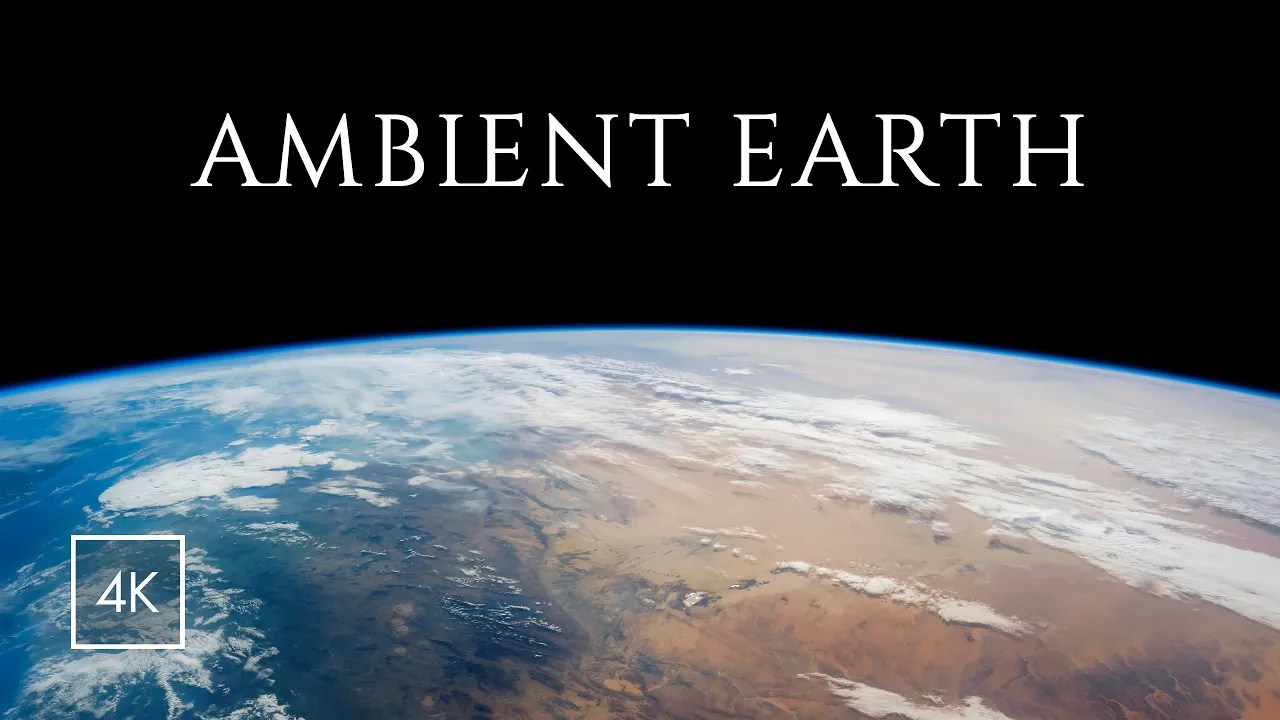
… and we could all use a change of perspective…
Ambient Earth is a 7.5-hour, real-time, 4K, remastered video of the orbital view from the International Space Station. Seán Doran took almost 49,000 images from 27 time-lapse sequences captured from the ISS by astronaut Butch Wilmore, repaired, remastered, and interpolated them into this incredible video.
Perspective is lost when the world speeds by. The scale and beauty of our home planet is truly appreciated when observed on an epic 7.5 hour journey from The International Space Station. This ambitious 4k compilation, crafted through months of meticulous restoration, invites you to slow down and experience Earth in real time just as astronauts do.
The video is accompanied by ambient audio recorded on the station by Chris Hadfield…
A pause that refreshes– and reframes: “Ambient Earth” via @kottke.org.
* Bob Ross
###
As we see the big picture, we might we might spare a thought for Ulugh Beg; he died on this date in 1449. Probably the greatest scientist in Mongolia’s history, Beg was a Timurid ruler and sultan, a mathematician, and the greatest astronomer of his time. In his observatory at Samarkand he discovered a number of errors in the computations of the 2nd-century Alexandrian astronomer Ptolemy, whose figures were still being used; his star map (of 994 stars) was the first since Hipparchus‘ (c. 135 BCE).

“Anarchism is democracy taken seriously”*…
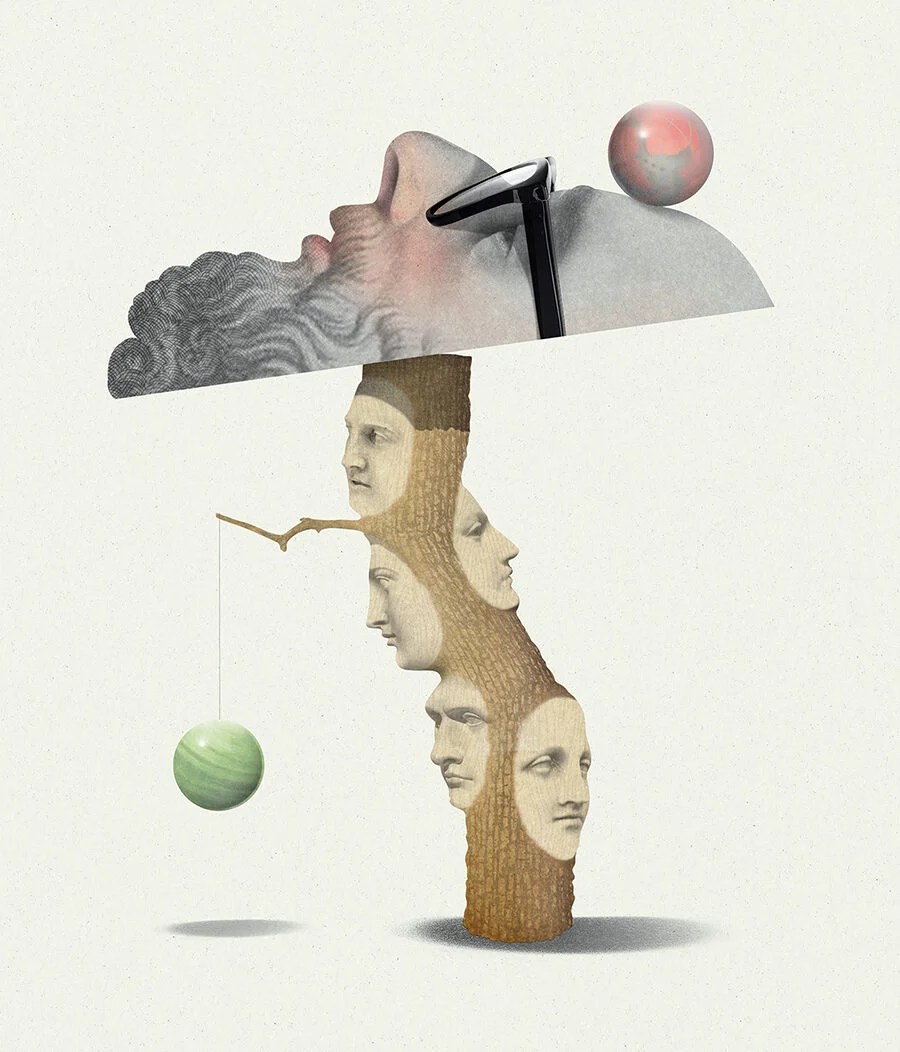
Further (and to some extent, contra) to yesterday’s post– Martin Gurri on the need to reground Liberal Democracy— the estimable Alan Jacobs, who suggests that we need to get in touch with our “inner anarchist.” In a recent post, he shares a “mini-manifesto”…
I am temperamentally and morally a conservative, which is to say: I believe that I am charged with preserving my inheritance, nurturing it, and passing it along to the next generation. That inheritance is spiritual, cultural, natural, and political. (It may or may not be financial; that matters little.) Our largest social problems stem from the fact that our political economy promotes the concentration of power and money, and the concentration of power and money militates against the preservation of any spiritual, cultural, and natural inheritance. That is how we get an unprecedentedly rich and theoretically free society that also features corrupt religious institutions, insipid art, and dying rivers. I will continue to do my best to conserve and promote my Christian faith, my convictions about art, and my natural environment, but I must do so in unpropitious conditions. We need an alternative political economy that encourages rather than inhibiting the work of conservation, and I think anarchism, properly understood, is that alternative.
Citing his “major guides” to thinking about anarchism– Peter Marshall, Demanding the Impossible: A History of Anarchism; James Scott, Two Cheers for Anarchism; and David Graeber, essays— he notes that, on his old blog he posted often on the subject, and directs us to “this essay [source of the image above] and then this reflection on Christian anarchy” for his fundamental thoughts.
But the meat of the post is the “notebook” of thoughts on anarchism that follow. A few examples:
It is vitally important to distinguish anarchism from libertarianism. The highest goods of the libertarian are freedom of action and freedom to own property, both conceived as belonging to the individual. The anarchist, by contrast, seeks some form of the good life in collaboration and cooperation with others. Anarchism is therefore intrinsically social, pluralistic, and unplanned. Because, as Isaiah Berlin says, the Great Goods are not always compatible with one another, you collaborate with people who share your priorities, understanding and accepting that others will find other structures of collaboration. And in pursuing those goods you have the humility to recognize that you don’t know how they may be achieved; that is something you discover through your collaboration. (Related by me: this and this.)
Anarchism is therefore not a system of government but a practice, and one can practice it at any level of social interaction. The parent who tells two squabbling children to work out their differences themselves, rather than appealing to a parental verdict, is practicing anarchism, and a very important form of it too. (See my comments on machi no hoiku and mimamoru in this post. Anarchist pedagogy!)…
The true anarchist can never throw bombs, because when you do that you are making decisions for other people without their consent, which is anthithetical to anarchism…
Anarchism can never be revolutionary in the sense in which political systems (communism, socialism, fascism) can be revolutionary. But the ultimate effects of anarchism can be far greater than the effects of any of those other movements. As Hannah Arendt said, every revolutionary becomes a conservative the day after the revolution; as The Who said, “Meet the new boss, same as the old boss.” Anarchism declines bosses [but importantly, not leaders] altogether. And that is truly revolutionary – but it is only brought about by means so slow and patient that no one can see them at work…
So much more, eminently worth reading in full: “Anarchist Notebook.”
Extra credit opportunity: recognizing that Jacobs’ critique of the status quo is not inconsistent with Gurri’s, how might we take up Gurri’s challenge to reground Democracy in a way that stirs in the “commons” thinking of anarchism?
###
As we rebuild better, we might send revolutionary birthday greetings to Nestor Makhno (AKA Bat’ko Makhno); he was born on this date in 1888 (O.S.). He was a Ukrainian anarchist revolutionary and the commander of the Revolutionary Insurgent Army of Ukraine during the Ukrainian War of Independence (a war to regain independence by the Ukrainian People’s Republic against the Bolsheviks, who had annexed Ukraine into the Soviet Union). He established the Makhnovshchina (loosely translated as “Makhno movement”), a mass movement in the Ukrainian peasantry to establish an anarchist system in the country between 1918 and 1921.
Sadly, that struggle for independence continues to this day.

“Justice is the first virtue of social institutions, as truth is of systems of thought… Each person possesses an inviolability founded on justice that even the welfare of society as a whole cannot override.”*…

Stephen Colbert once observed that “reality has a well-known liberal bias.” And indeed, liberalism— the political/moral philosophy rooted in individual liberty, consent of the governed, and equality before the law– has been a major ideology through modern times… and, of course, the major ideology animating the founding of the United States.
But as Easten European states turn to authoritarians, Western European nations wrestle with the rise of nationalist far-right parties, and the U.S. is “steered” by MAGA using Project 2025‘s “map,” there’s a concern that liberalism’s days may be past.
Persuasion is running a series of essays on “Liberal Virtues and Values.”
The series, made possible with the generous support of the John Templeton Foundation, will make the case that liberalism has its own distinctive set of virtues and values that are capable not only of responding to the dissatisfaction that drives authoritarianism, but also of restoring faith in liberalism as an ideology worth believing in—and defending—on its own terms.
The latest installment is from Martin Gurri, who argues that Liberalism needs a new foundation (and that how we handle AI will matter fundamentally)…
That liberal democracy is in a state of terminal decline I take to be beyond dispute. Like Alice in the rabbit hole, those of us who dwell in democratic societies suffer from a nauseating sense of falling without ever landing on solid ground. The usual suspects blamed for this tumble—populism, inequality, the economy—are mere surface symptoms of an internal breakdown. We have arrived at the conclusion of a world-historical cycle. Liberal democracy is the procedural embodiment of Enlightenment ideology—and after two centuries of dominance, that ideology has lost all purchase and stands utterly exhausted.
Radical alternatives confront us. Either we reorient our system to post-Enlightenment principles or we risk staggering into the nihilist’s paradise I have called the Endarkenment.
Enlightenment philosophers placed their faith in reason and science. These are purely critical disciplines: liberal propagandists wielded criticism like a scalpel to dissect conservative laggards and utopian revolutionaries alike. Once triumphant at the “end of history,” liberal democracy turned the knife on itself—a process of self-criticism and self-doubt that has shredded its own ideals to ribbons.
The positive values inherited from the Enlightenment—equality, individualism, compassion—were always parasitic on Christianity. But Christianity, like all religions, has no place in a universe ruled by reason and science. Nietzsche long ago brought us the troubling news: the Christian God is dead. Oblivious to the implications of this calamity, liberal democracy kept marching like a cartoon character over the edge of the abyss, until the laws of moral gravity asserted themselves. So began the Great Fall.
Criticism is a force for progress so long as there are blatant irrationalities, like slavery or Jim Crow discrimination, to overcome. But under the hammer of Enlightenment ideals, modern society has been flattened, centralized, and rationalized. Deprived of obvious superstitions to debunk and totalitarian rivals to defeat, liberal democracy has been revealed in all its internal contradictions.
One such contradiction, I contend, pits the cherished principle of equality against the chosen few who actually practice reason and science: let’s call this the problem of the elites.
A second contradiction finds freedom of the press and of opinion arrayed against the need to protect objective truth: call it the problem of information.
Finally, freedom of worship and the life of the spirit collide head-on with the materialist criticism favored by Enlightenment ideology: the problem of meaning.
Each of these contradictions could prove fatal to the democratic project, but none is insoluble, and the search for solutions offers an opportunity for renewal. While there are no guarantees, we could emerge from the crisis with a better understanding of the reach and limits of equality, a more transparent information sphere, and even, it may be, a rich infusion of the transcendental into everyday life…
[Gurri unpacks each of those contradictions…]
… So what is to be done?
The first, obvious step is to move the question to the center of our shared conversations. The most capacious thinkers of the age should contemplate first principles and ultimate goals with at least as much intensity as they invest in Donald Trump or the latest economic report. There’s nothing artificial about this. Science and reason are necessary for modernity. Meaning and moral aspiration are necessary for humanity. A balance must be struck that preserves the one and gives full weight to the other.
Materialism, we must understand, is a valuable perspective for science but not a realistic appraisal of the human condition. Scientists work as if on a geometric point, abstracted from nature and indifferent to its dispositions. In reality, however, we come from nature, we are of nature, and we are far from indifferent to our place in it. Our intuitions are internal to the system: humanity’s spiritual quest is, in every sense, nature reflecting on itself. One such intuition is agency—the belief that, at the crossroads, I am free to go right or left, and I alone make the choice. Another is faith in causation. These stances are irrational, or rather pre-rational, but without them liberal democracy as well as science itself would be impossible.
In the end, materialism is self-defeating. To say, “I choose to be a materialist” is to fall into an absurd fallacy. Either our bodies, which consist of matter, obey unchanging laws, or the mind, transcending matter, is capable of choice. There can be no middle ground.
Politics, in a metaphysical age, will resume its traditional place as a secondary activity—a means to an end. This will leave liberal democracy vulnerable to false prophets who are willing to trample on individual rights in pursuit of some apocalyptic scheme. The interesting question is whether the post-truth condition will make the peril greater or lesser. On the one hand, the lack of universal firewalls might make it easier for a fanatic to flood the system. Yet post-truth itself, I believe, is the strongest kind of firewall. In our fractured, eternally contested environment, the progress of any totalizing doctrine will be painfully slow. The quest for meaning and the struggle over frames of reference are, in the end, really one and the same.
We have inherited a rich and evocative spiritual vocabulary, but it belongs to a worldview thousands of years old. “King of kings,” to cite just one example, should sound archaic in a democratic age. Can we awaken the scientific world to the spirit? Is it possible to sanctify our largely instrumental relations? This shouldn’t entail a belief in fairies and goblins, or even necessarily in religion. Any good empiricist will admit that the richest human lives are lived symbolically. Can we climb the symbolic ladder to the mountaintop, where meaning and modern humanity come harmoniously together—anchoring, it may be, a loftier understanding of equality and social life, and of the sanctity of truth?
We won’t know until we try. Pessimism, let me suggest, is unwarranted. History moves in mysterious ways. We may be due for a second coming of historian Karl Jaspers’ “Axial Age”: preachers and philosophers who conceived a drastically updated transcendental vision, with the rational and the sacred, truth and meaning, reconciled with political freedom.
For 200 years, we placed society under the sway of universal principles. That’s gone with the wind. We have entered an era of radical contingency, in which even truth is indeterminate. The natural tendency is to retreat to the certainties of the past—but there’s no going back. If we hope to preserve the gains from Enlightenment society, and resolve its many contradictions, we’ll have to do so within a new and wildly unstable conceptual framework.
With the spell of the Enlightenment broken, liberal democracy will have to redefine what “created equal” means. This process could end in a rigid caste system, with the institutions in the hands of self-selected mandarins who wield the power of the state to impose their “solutions.” Preferably, and more likely given the thrust of the new technology, we’ll see a flattening of the institutions and the continued trampling by the public into the sacred spaces of politics and communication.
Equality, however understood, will be forged in the will of the citizenry rather than granted by a benevolent God. That will make it contingent like everything else, and so liable to variation and in constant need of defense. And if perfect equality is an impossible dream, eternal inequality requires impossible discipline. The current elite class, already under enormous pressure, may lose its cohesion and melt into the impermanence of the age, divided among the various schools and sects and frames of reference.
The structure of information will follow the definition of equality. The commanding heights will be control over AI. If AI development and deployment is a closed game, the elites could set themselves up as intermediaries in the oracle of an omniscient divinity. If AI is a competitive product, the public will gain the upper hand. In that case, we can expect a flowering of eccentric applications, the individualization of commerce and industry, and the final overthrow of the expert class. The information sphere will remain the mirror to our passions, divisions, and metaphysical longings. Freedom of speech, no longer “endowed by our Creator,” will become the battleground on which the question of equality is ultimately settled.
Here I finally reveal myself in my true colors. I’m an analyst. My task is to describe reality, and that’s what this essay is about. But I also lead an active life inside the world that I’m describing—and I have preferences. I see equality as a factor of opportunity, law, and human dignity, not of perfect outcomes. I think truth emerges from examining a subject from a large number of perspectives, even those that may seem disturbing or false. I hope that my story—as a person, a father, a grandfather—connects to other stories in the past and will connect to more in the future, in a pattern that is not entirely devoid of meaning. And I believe fervently in liberal democracy, because—born in Cuba—I have tasted the alternative.
The breakdown of Enlightenment ideology is only the latest challenge liberal democracy has faced in my lifetime. I’m not entitled, as an analyst, to downplay the perils ahead, but I’m allowed, as an American, to have faith that they will once again be overcome…
Eminently worth reading in full: “The Search for a Post-Enlightenment Democracy”
###
As we renew, we might send free-thinking birthday greetings to Henri-Benjamin Constant de Rebecque (or as he’s usually called, Benjamin Constant); he was born on this date in 1767. A French political thinker, activist, and writer on political theory and religion (whose work influenced, among many others, Sir Isaiah Berlin), Constant was a committed republican from 1795, backing the coup d’état of 18 Fructidor in1797, and the following one on 18 Brumaire, in 1799. He became the leader of the Liberal opposition in 1800, during the Consulate. Constant fell out with Napoleon, and had to flee (first to Switzerland, then to Saxony). Nonetheless, after his return to France, Constant sided with the Emperor during the Hundred Days, drafting the Charter of 1815. He became politically active again during the Bourbon Restoration and was elected to the Chamber of Deputies in 1818 (where he remained until his death in 1830). As the head of the Liberal opposition, known as Indépendants, Constant was one of the most notable orators in the Chamber, especially in his role as a proponent of the parliamentary system.

“Men argue. Nature acts.”*…
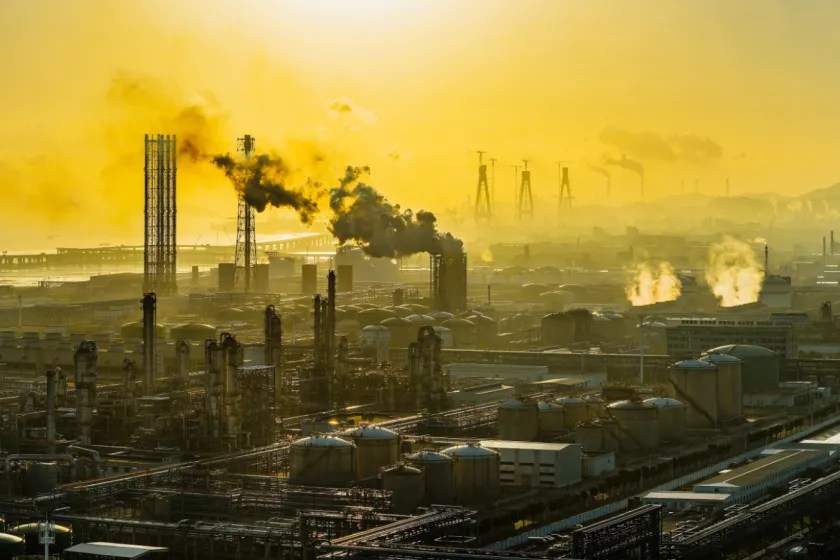
… and after Nature acts, so must we. But despite decades of warning, global emissions still aren’t falling.
As Madeleine Cuff reports, we should be springing into action…
It is now impossible for the world to limit global warming to 1.5°C above pre-industrial levels, with emissions on track to cause 2.8°C of warming by the end of the century, the UN says.
Despite increasingly urgent warnings from scientists outlining the dangers of warming above 1.5°C, global emissions aren’t yet falling and governments around the world aren’t doing anywhere near enough to decarbonise their economies.
The only way to meet the 1.5°C target now is by “overshooting” that goal in the short term, the UN said in its latest Emissions Gap report, before relying on vast amounts of global cooling, delivered via technologies such as direct air capture, in the latter half of the century.
This “lowest possible” overshoot scenario would see the global temperature rise peak at 1.7°C to 1.8°C, with a 50 per cent chance of temperatures falling back to 1.5°C by 2100. To deliver this, the world would need to cut emissions by 18 per cent by 2030, 45 per cent by 2035 and 69 per cent by 2040, relative to 2025 levels. Under current climate pledges, emissions will only fall by 5 to 8 per cent by 2030, and 11 to 15 per cent by 2035.
Many scientists are hugely sceptical that the lowest possible overshoot scenario is politically and technologically feasible, given the rapid pace of emissions cuts required and the huge volume of mechanical and natural cooling that would be needed to reduce global temperatures after 2050 to achieve it.
“We don’t know whether we can overshoot,” says Bob Watson, emeritus professor at the University of East Anglia in the UK and former chair of the Intergovernmental Panel on Climate Change. “We don’t know if any of those technologies are real, and so when people assume that we can meet 1.5°C or 2°C, and the assumption is based on overshooting and coming back, I think they’re in cuckoo land.”
Last year’s Emissions Gap report saw the UN warn that overshooting 1.5°C was now inevitable. This year’s analysis sets out new “overshoot pathways” designed to keep the 1.5°C goal – a political totem for many countries – on life support. It calls on nations to focus on delivering the “lowest possible” 1.5°C pathway.
“Overshoot is not surrender. We can still keep it as small and as short as possible – and bring temperatures back below 1.5 degrees by the end of the century,” UN Secretary-General António Guterres said in a statement.
But the UN’s new report makes it clear how far off track the world still is to deliver even this “limited overshoot” pathway. Current national policies put the world on track for 2.8°C of warming by the end of the century. If nations meet all their climate promises, that is lowered to 2.1°C. This is worse than last year’s projection of 1.9°C of warming, driven mainly by the US’s exit from the UN climate process.
Joeri Rogelj at Imperial College London says overshoot should be seen “as a failure that we try to rectify”. But he says there is still value in using the 1.5°C goal, rather than adopting a higher temperature goal that could be achieved without overshoot. “The target is still to limit harm to vulnerable and poor populations, and that we don’t do by resetting the target to an inadequate limit of 2°C, or 2.5°C,” he says. “In the public debate, this failure to stay within this most ambitious limit should re-emphasise the need to stay as close to it as possible.”
The best-case scenario now is that the planet will only temporarily breach 1.5°C of warming, but current climate pledges fall way short of that hope: “UN says 1.5°C is over and world is on track for 2.8°C of global warming” [archived version], from @tinymaddie.bsky.social in @newscientist.com.
* Voltaire
###
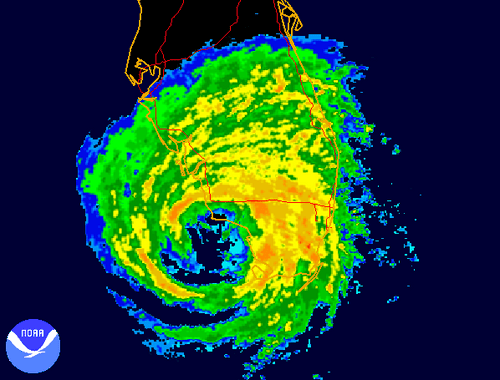
As we act to ameliorate and adapt, we might recall that it was on this date in 2015 that Hurricane Wilma made landfall in the Everglades in Florida with maximum sustained winds near 120 mph. The hurricane accelerated across south Florida and the Miami/Fort Lauderdale area, exiting the coast later the same day. There were 10 fatalities in Florida, and nearly 6 million people lost power, the most widespread power outage in Florida history. Preliminary estimates of insured losses in Florida were over $6 billion, while uninsured losses were over $12 billion.
Scientists suggest that, while climate change may not increase the total number of storms (indeed, this year’s El Nino reduced them in the Atlantic), it will intensify hurricanes, making them stronger, wetter, slower-moving, and more destructive.
You must be logged in to post a comment.