Archive for February 2022
“Every decent man is ashamed of the government he lives under”*…

The majority of countries are democracies, but how many people enjoy what we think of as democratic rights? A nifty interactive map from Our World In Data charts the changes in political regimes across the globe, country by country, over the last 200 years. By way of explaining its categories:
• In closed autocracies, citizens do not have the right to choose either the chief executive of the government or the legislature through multi-party elections.
• In electoral autocracies, citizens have the right to choose the chief executive and the legislature through multi-party elections; but they lack some freedoms, such as the freedoms of association or expression, that make the elections meaningful, free, and fair.
• In electoral democracies, citizens have the right to participate in meaningful, free and fair, and multi-party elections.
• In liberal democracies, citizens have further individual and minority rights, are equal before the law, and the actions of the executive are constrained by the legislative and the courts.
As Visual Capitalist observes…
Do civilians get a representative say in how the government is run where you live?
While it might seem like living with a basic level of democratic rights is the status quo, this is only true for 93 countries or territories today—the majority of the world does not enjoy these rights.
It also might surprise you that much of the progress towards democracy came as late as the mid-20th century…
An interactive look at the state of democracy around the world, and how it has evolved. From @OurWorldInData, via @VisualCap.
* H. L. Mencken
###
As we ruminate on representation, we might recall that it was on this date in 1933, the day after an arsonist ignited the Reichstag building, home of the German parliament in Berlin (and four weeks after Nazi leader Adolf Hitler had been sworn in as Chancellor of German), that Adolf Hitler attributed the fire to a conspiracy of Communist agitators.
Marinus van der Lubbe, a Dutch “council communist”, was the apparent culprit; but Hitler insisted on a wider network of villains. He used it as a pretext to claim that Communists were plotting against the German government, and induced President Paul von Hindenburg to issue the Reichstag Fire Decree suspending civil liberties, and to pursue a “ruthless confrontation” with the Communists. A court later found that van der Lubbe had in fact acted alone. But Hitler’s orchestrated reaction to the Reichstag Fire began the effective rule of the Nazi Party and the establishment of Nazi Germany.

“Technology makes everyone feel old”*…
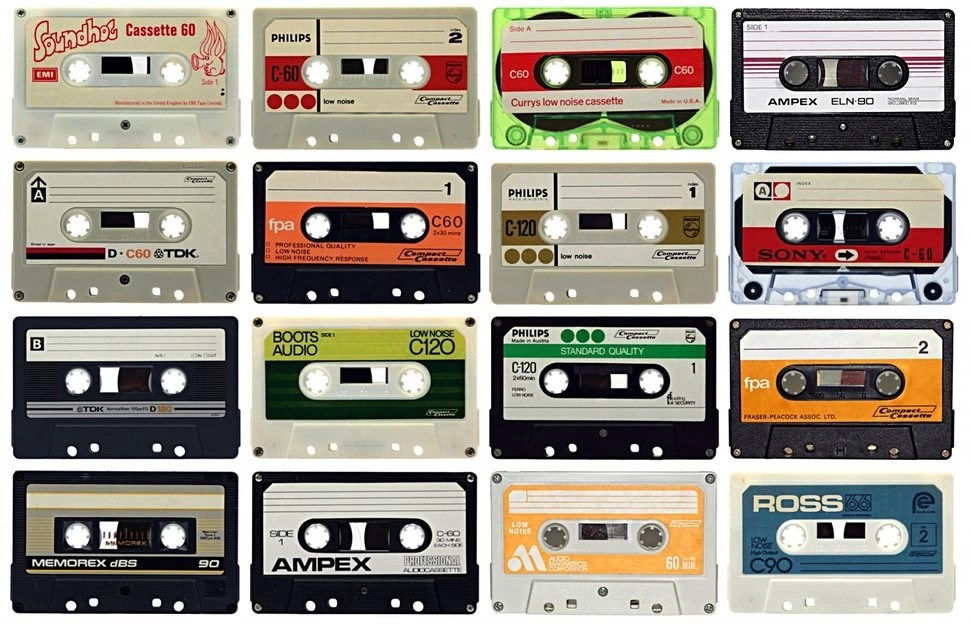
Cassette tapes, the fax machine, overhead projectors… Adrian Willings catalogues some transitional technologies that, he suggests, are headed for the dust bin of history…
… we’re… looking at some of the biggest, best and most memorable gadgets from the last century that have been outdated, outmoded or just forced into irrelevance by better, modern technologies.
You might remember many of these, but there are plenty of the younger generation that don’t…
… and won’t? “39 obsolete technologies that will baffle modern generations,” from @Age_Dub in @Pocketlint.
* Jennifer Egan
###
As we mosey down memory lane, we might send electronic birthday greetings to David Sarnoff; he was born on this date in 1891. An early employee of Marconi Wireless Telegraph, he befriended its owner, and began a a long career in broadcasting.
Unlike many who were involved with early radio communications, who often viewed radio as a point-to-point medium, Sarnoff saw the potential of radio as point-to-mass. One person (the broadcaster) could speak to– inform, entertain, sell to– many. When Owen D. Young of General Electric arranged the purchase of American Marconi and turned it into the Radio Corporation of America, a radio patent monopoly, Sarnoff got his chance.
His colleagues were wary, but in 1921, Sarnoff arranged a broadcast of a heavyweight boxing match between Jack Dempsey and Georges Carpentier. An estimated 300,000 people heard the fight, and demand for home radio equipment bloomed that winter. As head of radio broadcasting for RCA, Sarnoff was instrumental in building and establishing the AM broadcasting radio business that became the preeminent public radio standard for the majority of the 20th century.
In that late 1920s and early 30s Sarnoff (who had become RCA’s President) drove the company’s push to develop television. In April, 1939, regularly scheduled television in America was initiated by RCA under the name of their broadcasting division at the time, The National Broadcasting Company (NBC). The first television broadcast aired was the dedication of the RCA pavilion at the 1939 New York World’s Fairgrounds and was introduced by Sarnoff himself.
Along the way, Sarnoff led the formation of RKO (in which the “R” stood for RCA) and bought Victor Talking Machine Company, the nation’s largest manufacturer of records and phonographs, assuring RCA a piece of the content business.

“I hate housework. You make the beds, you wash the dishes, and six months later, you have to start all over again.”*…

The remarkable Lillian Gilbreth…
Lillian Moller Gilbreth (1878-1972) was famous for being two seemingly mutually exclusive things at once. She was one of the most celebrated mothers and one of the most celebrated engineers in the 20th-century United States. That one self-effacing woman could conquer the cut-and-thrust world of industry while bringing up a dozen children made her the subject of endless public fascination. Her career didn’t suffer either. It spanned six decades, four after the death of her husband and partner, Frank Bunker Gilbreth.
Unlike many professional women of her era, Gilbreth has never been forgotten. Her impact on human environments and design, however, is not much discussed. An exception was Sigfried Giedion who, in Mechanization Takes Command (1948), cited Gilbreth as a founder of industrial psychology and a key figure in modernising kitchens. Yet when Giedion was writing, the work she was most proud of – designing rehabilitation facilities for the disabled – had only just begun.
Although Gilbreth regularly headlined at national conferences, served on presidential commissions and featured in the media, she was modest to a fault. Her lifelong pursuit was to memorialise Frank, posthumously keeping the spotlight firmly fixed on him. And then there was the Hollywood effect. Two Gilbreth children would chronicle their experiences of growing up efficiently in bestselling memoirs, Cheaper by the Dozen (1948) and Belles on their Toes (1950), both made and remade into popular films.
…
In 1924, Frank died, leaving Gilbreth with 11 surviving children to put through college. She tried to continue Gilbreth Inc on her own, but as contracts dried up, she shifted focus. Capitalising on media interest in her family life – a female engineer with a plethora of children was ‘good copy’ – she reinvented herself as a domestic authority, publishing The Home-Maker and Her Job in 1927.
We might think the home terrain was well covered, particularly by Christine Frederick, whose The New Housekeeping (1913) influentially applied scientific management principles to domestic life. But as a co‑inventor of motion study, Gilbreth’s interventions were regarded as more credible and rigorous, and she did more to secure acceptance for home engineering among North American university researchers, philanthropic funders and government officials.
The difference is evident in Gilbreth’s ‘Kitchen Practical’ designed for the Brooklyn Borough Gas Company in 1929. Whereas Frederick sought to save steps by routing workflow linearly and eliminating cross traffic, Gilbreth explored ‘circular routing’, compressing the plan and using a wheeled table to bring key equipment and work surfaces as close to the homemakeras possible. In her diagram, the homemaker can easily reach most of the equipment needed for simplified coffee cake making, minimising motions by half and steps by five-sixths.
…
Gilbreth’s re-envisioning of women’s household labour went beyond kitchen planning. She had no patience with women wearing themselves out to meet impossible standards of cleanliness and maintained that if tasks that could be ‘handed over’ to outside help or businesses, they should be. Useless chores like ironing sheets should be eliminated altogether; any remaining should be simplified and done cooperatively by all family members including the husband according to aptitude. The time and energy saved would allow the homemaker time for self-cultivation or even a career.
Gilbreth’s consistent belief in the human need to work meant she was increasingly concerned by what happened when people were unable to do so due to age or infirmity. During the war, she worked on rehabilitation projects for the US Navy, and collaborated on a 1944 book Normal Lives for the Disabled. After the war, she turned to disabled homemakers, who had been ignored in vocational rehabilitation. Gilbreth believed this was a mistake: paid or not, homemaking was productive work without which the well-being of the household, community and nation would suffer…

Reimagining both women’s household labor and the home environment, Lillian Gilbreth sought an efficient and body-centred kitchen, from Barbara Penner in @ArchReview.
* Joan Rivers
###
As we put the heart in home, we might spare a thought for John Landis Mason; he died on this date in 1902. A tinsmith, he patented the metal screw-on lids for fruit jars that have come to be known as Mason jars (many of which were printed with the line “Mason’s Patent Nov 30th 1858”).
That same year he invented the screw top salt shaker.

“I resemble that remark”*…

Swiss linguist and philosopher Ferdinand de Saussure articulated the modern version of a belief that dates from Plato, and extended through Locke to modern linguistic scholarship…
… that the letters and words in many writing and language systems have no relationship to what they refer to. The word “cat” doesn’t have anything particularly cat-like about it. The reason that “cat” means cat is because English speakers have decided so—it’s a social convention, not anything ingrained in the letters c-a-t. (According to Saussure, a language like Chinese, where each written character stands for a whole word, was a separate writing system, and his ideas were directed towards writing systems made up of letters or syllables.)
But new research calls this foundational assumption into question. “The Color Game,” created by researchers at the Max Planck Institute for the Science of Human History to study the evolution of language, suggests that there may be a representational relationship after all…
…the idea that words, or other signs, do actually relate to what they’re describing has been gaining ground. This is called iconicity: when a spoken or written word, or a gestured sign, is iconic in some way to what it’s referring to…
… research now suggests that our languages are riddled with iconicity, and that it may play a role in language evolution, and how we learn and process language. Along with this evidence from The Color Game, in the last decade and a half, an increase in cross-cultural studies has re-upped the attention on iconicity, and pushed back against the doctrine of arbitrariness.
“It is now generally accepted that natural languages feature plenty of non-arbitrary ways to link form and meaning, and that some forms of iconicity are pretty pervasive,” said Mark Dingemanse, a linguist at Radboud University, who said that he too learned in Linguistics 101 that “the sign is arbitrary.” “Iconicity has become impossible to ignore.”…
Iconicity has always been around. One familiar example is onomatopoeias, like “ding-dong,” “chirp,” or “swish”—words that sound like what they’re referring to. Those words aren’t random, they have a direct relationship to what they represent. Yet, onomatopoeias were thought to be the exception to a wholly arbitrary set of signifiers, said Marcus Perlman, a lecturer in English language and linguistics at the University of Birmingham. This belief persisted despite hints that other words might have some connection to what they signified…
There could also be iconicity in what the letters themselves look like, and not just the sounds or gestures of words. In 2017, linguists Nora Turoman and Suzy Styles showed people who spoke unfamiliar languages different letters and asked them to guess which made the /i/ sound (“ee” in feet), and which was /u/ (“oo” sound in shoe). The participants were able to do so better than chance just by looking at the shape of the letters…
Language is most likely a mix of arbitrariness and iconicity, Perlman said, along with something called systematicity, when relationships form between words and meaning that aren’t necessarily iconic. (An example is words that start with gl- in English often are related to light, like glisten, glitter, gleam, and glow. There’s nothing necessarily light-like about the sound gl-, but the relationship is still there.)
Morin thinks of iconicity as the “icing on the cake” of language. It makes words more intuitive, more easy to guess. Iconicity might make languages easier to learn; Kim said there’s a saying about Hangul, that: “A wise man can learn it in a morning, and a fool can learn it in the space of ten days.”…
Rethinking our most fundamental tool, as new research reveals a connection between what words look and sound like, and what they mean: “Why Are Letters Shaped the Way They Are?,” from @shayla__love in @motherboard.
* Curly, in The Three Stooges’ “Idle Roomers“
###
As we reflect on resemblance, we might spare a thought for a champion of a different sort of mimesis: James Morrison Steele (“Steele”) MacKaye; he died on this date in 1894. A well-known theatrical actor, dramatist, producer, and scenic innovator in his time, he is best remembered for his revolutionary contributions to theatrical design. MacKaye opened the Madison Square Theatre in 1879, where he created a huge elevator with two stages stacked one on top of the other so that elaborate furnishings could be changed quickly between scenes. MacKaye was the first to light a New York theatre– the Lyceum, which he founded in 1884– entirely by electricity. And he invented and installed overhead and indirect stage lighting, movable stage wagons, artificial ventilation, the disappearing orchestra pit, and folding seats. In all, MacKaye patented over a hundred inventions, mostly for the improvement of theatrical production and its experience.

“Disruptive movement must come from within”*…

Disruption can be the engine of deep and rapid change to industries, political systems, or indeed societies. As COVID reminds us, some of those disruptions are involunatry. But many aren’t. Indeed, on the back of champions like Clayton Christensen and his promotion of “disruptive innovation,” disruption has become a go-to strategy– if not the go-to strategy– for entrepreneurs (and some intrapreneurs) around the world. And it has begun to define the strategies of social and political actors/movements as well.
Disruption can be a powerful approach to solving problems that have been allowed to fester (e.g., in-grown, oligarchical markets; climate change.) But Santiago Zabala warns us that as disruption has become more dominant, it risks losing any purpose beyond simply “winning” the game (the market, the election) in question…
… “disruption,” according to its Latin origin, signifies “rupture,” tearing apart, and violently dissolving continuity. As a metonym for progress, since the nineties it has spread the illusion that innovation is always an improvement regardless of its social consequences. Its association with Silicon Valley and business culture in general has led us to disregard the reckless adverse effects of progress without responsibility. In fact, this indifference is vital to understanding the meaning of disruption and our fascination with a notion that is constantly deployed to exploit our hope that innovation will save us. “Disruption,” as Bernard Stiegler noted, “radicalizes the reversal of all values,” whether technological, political, or religious.
Like other concepts whose meanings are eroded by overuse, such as nihilism, postmodernism, and populism, disruption requires a philosophical elucidation. In recent decades, technological disruptions were heralded as collective life-shaping events, but is necessary to question this disruption is seen as a value worth pursuing even though its worship is tearing apart the possibilities for a sustainable future…
Disruptive innovation, as [historian Jill] Lepore illustrates, holds out the hope of salvation from the very damnation it encourages because the idea of progress has been stripped of the aspirations of the Enlightenment. The West in the eighteenth century embraced the idea of progress; in the nineteenth, evolution; and in the twentieth, growth and innovation. And the problem today is that the idea of disruption dominates the rhetoric of not only Silicon Valley but also other industries and contemporary societies all over the world. Disruption has taken over as a common language in which to project not just success but also a future of unforeclosed possibilities. This success is premised on technology’s capacity to continuously offer cheaper alternatives to established products—and on the promise that innovation is always an improvement, regardless of its consequences.
Disruptive innovation in journalism, education, and medicine has emerged as an all-purpose replacement of traditional methods with new ways that value novelty and speed. This valuation of progress without quality has allowed these pillars of democratic nations to be further subverted by capital, prey to market drives that ignore the value of the product for the value to shareholders. The belief that companies and industries that failed were somehow destined to fail is at the heart not only of Christensen’s concept of disruptive innovation but also of a neoliberal age that holds that government should play no role in restraining corporate behavior. Giving corporate behavior a free pass has facilitated the application of disruption’s indifference to arenas that affect society, politics, and culture. Numerous conferences, centers, summits, and labs established even in just the most recent decade demonstrate that “disruptive” has become an admiring adjective, a positive valence, even a brand.
In order to resist disruption it is not enough to demonstrate that its benefits are based on shaky evidence. This has been the approach taken by Lepore (“Christensen’s sources are often dubious and his logic questionable”), Michael Porter (“disruptive technologies that are successful in displacing established leaders are extremely rare”) and Andrew A. King and Baljir Baatartogtokh (“only seven of the 77 business case studies covered by Christensen’s fit his own criteria of what constitutes disruptive innovation”), among other scholars. While these analyses are useful to debunk the illusion that innovation is always an improvement, they do not modify the widespread enthusiasm for it. “Exaggerated claims for disruption,” as Mark C. Taylor points out, “usually result from a failure of memory, which is symptomatic of a preoccupation with the present in a culture addicted to speed.”
This addiction can be overcome by thinking through longer stretches of time…
… and the social and cultural hopes and values that should guide us. Disruption can be a force for altogether positive and overdue kinds of change… but only if its aims are higher than simply the bottom line.
A critical look at what we talk about when we talk about “disruption”: “Disruption: Neither Innovative nor Valuable,” in @LAReviewofBooks.
See also: “‘Disruption’ Is a Two-Way Street.”
* Leo Tolstoy
###
As we contemplate change, we might recall that it was on this date in 1920 that a disruptive force was named and energized: Adolf Hitler delivered “the Hofbrauhaus speech,” in which he gave a crowd of nearly 2,000 members of the German Workers’ Party a twenty-five point platform and a new name– the “National Socialist German Workers’ Party,” or Nazi, Party.
Hitler was, at the time, the head of publicity and propaganda; the next year, he became the Party’s head. The event was sufficiently momentous that the Nazi Party celebrated it founding at the Hofbrauhaus each year thereafter.

You must be logged in to post a comment.