Posts Tagged ‘astronomy’
“Where all think alike there is little danger of innovation”*…

Last week, Northwestern Professor Joel Mokyr was awarded a half-share in The Nobel Prize in Economic Sciences (AKA The Sveriges Riksbank Prize in Economic Sciences in Memory of Alfred Nobel) “for having identified the prerequisites for sustained growth through technological progress.” Anton Howes explains why this is noteworthy…
Among today’s winners of the Nobel prize in Economics is Joel Mokyr, the professor at Northwestern whose name is indelibly associated with the primacy of innovation to modern economic growth – the gradual, sustained, and unprecedented improvement in living standards that first Britain, and then country after country, have enjoyed over the past few hundred years. It was reading Mokyr’s The Enlightened Economy that first opened my eyes to the importance of studying the history of invention to explaining the causes of the Industrial Revolution, which I have since made my career.
What makes this Nobel win so remarkable, and so pleasantly surprising, is that Mokyr’s work is not the kind that is often published by economics journals, or even many economic history journals anymore. Over the past few decades, journal editors and peer-reviewers have increasingly insisted that papers must present large datasets that have been treated using complex statistical methods in order to make even the mildest claims about what caused what. Although Mokyr is a master of such methods – he was one of the early pioneers of economic history’s quantitative turn – the work for which he has won the prize is firmly and necessarily qualitative.
Mokyr’s is the economic history that gets written up in books – his classics are The Lever of Riches, The Gifts of Athena, The Enlightened Economy, and A Culture of Growth – and in readable papers shorn of unnecessary formulae. His is history accessible to the layman, though rigorously applying the insights of economics. The prize is a clear signal from the economics profession that it doesn’t just value the application of fancy statistical methods; its highest prize can go to works of history.
Whereas most of the public, and even many historians, think of the causes of modern economic growth – the beginnings of the Industrial Revolution – as being rooted in material factors, like conquest, colonialism, or coal, Mokyr tirelessly argued that it was rooted in ideas, in the intellectual entrepreneurship of figures like Francis Bacon and Isaac Newton, and in the uniquely precocious accumulation in eighteenth-century Britain of useful, often mechanically actionable knowledge. Britain, he argued, through its scientific and literary societies, and its penchant for publications and sharing ideas, was the site of a world-changing Industrial Enlightenment – the place where progress was thoughtpossible, and then became real.
One of Mokyr’s big early insights, first appearing in Lever of Riches, was that many inventions could not be predicted by economic factors. Society could enjoy remarkable productivity improvements from simply increasing the size of the market, leading to division of labour and specialization – what he labelled ‘micro-inventions’ – in the vein popularised by Adam Smith. But this could not explain an invention that appeared out of the blue, like Montgolfier’s hot air balloon in the 1780s – what he called a ‘macro-invention’, not for the magnitude of its impact, but for its novelty. Macro-inventions often required further development to make them important, but the original breakthrough could not be predicted by looking at changes in prices or the availability of resources. It ultimately came down to advances in our understanding of the world. Mokyr put the Scientific Revolution – and the factors that contributed to it – on the economist’s map.
Mokyr also looked at the relationship between different kinds of knowledge. A scientist might know, through observation, that the air has a weight. A craftsman might know, through long training and experience with glass, how to make a long glass tube. Each could not get far alone. But combining them, by creating means to ensure that scientists and craftsmen talked with one another and collaborated – through connecting their propositional and prescriptive knowledge, their heads and hands – very quickly led to the invention of thermometers, barometers, and much more besides, in an ever expanding field of knowledge. What Mokyr taught economists is that it’s not knowledge per se that makes the difference, but the way it is organized. Much of his later work has shown just how deep a pool Britain’s scientists could draw on, of skilled artisans.
In a way, Mokyr himself has practised what he preached. As editor of Princeton University Press’s book series on the Economic History of the Western World, Mokyr has for decades provided an all-important space for economists and historians to write the kinds of research that would never have been publishable in economics journals – including of explanations of the Industrial Revolution that are the polar opposite to his own. He helped keep the connection between history and economics alive.
Mokyr’s case for the primacy of knowledge and ideas was not an easy one to make to economists. They are naturally drawn to data that can be counted, and not to narrative, often no matter how well evidenced. But it appears that Mokyr’s persistence, elevated by his infectious, irrepressible sprightliness, has paid off. His prize is a long overdue recognition of the historyin economic history, and a remarkable testament to the power of ideas to persuade…
A triumph for history and the importance of ideas: “Joel Mokyr’s Nobel,” from @antonhowes.bsky.social.
See also: “Why Joel Mokyr deserves his Nobel prize,” gift article from The Economist.
* Edward Abbey, Desert Solitaire
###
As we ponder the process of progress, we might send creative birthday greetings to one of the subjects Mokyr’s study, Sir Christopher Wren; he born on this date in 1632. A mathematician and astronomer (who co-founded and later served as president of the Royal Society), he is better remembered as one of the most highly acclaimed English architects in history; he was given responsibility for rebuilding 52 churches in the City of London after the Great Fire in 1666, including what is regarded as his masterpiece, St. Paul’s Cathedral, on Ludgate Hill.
Wren, whose scientific work ranged broadly– e.g., he invented a “weather clock” similar to a modern barometer, new engraving methods, and helped develop a blood transfusion technique– was admired by Isaac Newton, as Newton noted in the Principia.

“The universe is under no obligation to make sense to you”*…
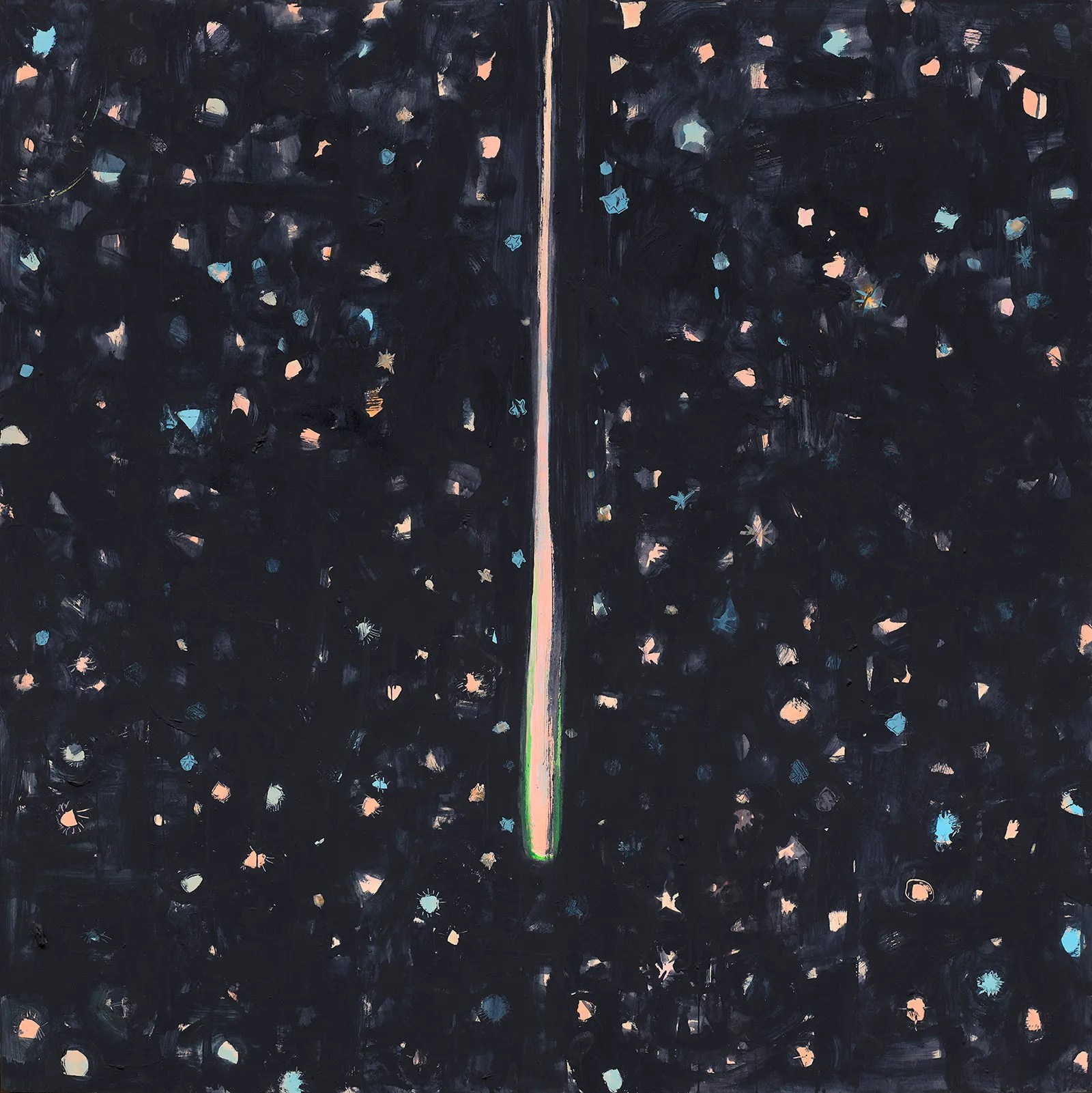
Still, we try… In a consideration of three new books, the estimable Sean Carroll brings us up to date on the state of play…
Should scientists be embarrassed that they can’t settle on a definition for the Big Bang? The cosmologist Will Kinney describes it as the “physical theory of the hot infant universe,” while Wikipedia goes for the more elaborate “a physical theory that describes how the universe expanded from an initial state of high density and temperature.” The first refers only to early times, while the latter seems to extend to subsequent times as well. The physicist and science writer Tony Rothman offers the pithier “the universe’s origin,” the theoretical physicist Thomas Hertog suggests that it is the “primeval state” of cosmic history, and a NASA website gives us “the idea that the universe began as just a single point.” These seem to refer to one moment at the start of things, rather than the universe’s life since then.
All of these sources (except NASA, unfortunately) capture something correct. The confusion stems both from the inherent ambiguity of using ordinary language to describe novel scientific concepts and from the state of modern cosmology itself. Cosmology is the study of the universe on the largest scales. So it ignores details of stars and planets, focusing on galaxies and even bigger structures, up to the universe as a whole. Modern cosmology is only about a century old, as it wasn’t until the 1920s that astronomers determined that our own Milky Way is just one of a large number of galaxies and the origin and evolution of them all could be studied together. And it wasn’t until the 1990s that the field matured into the one that exists today, featuring precision measurements and ultralarge datasets.
Dealing as it does with some of the most profound questions about the nature of the cosmos, cosmological research has always involved a vigorous give-and-take between rampant speculation and unanticipated discoveries. Its practitioners have long been fond of spinning purportedly inviolate physical principles from their personal intuitions about how reality should work. But cosmology remains an empirical science—a cherished belief can be quickly swept away by a solid measurement.
The present moment in the science of cosmology is one of consolidation, as we have successfully incorporated the lessons of some impressive discoveries made near the turn of the twenty-first century. Yet crucially important questions remain unanswered, especially about what exactly happened at the onset of the expanding space that evolved into our contemporary universe. It is therefore a good time for books that take stock of where we are and what might come next, and that illustrate which puzzles modern physicists choose to take seriously.
This much we know: we live in a galaxy, the Milky Way, containing around 200 billion stars. There are something like a trillion galaxies in our observable universe, distributed almost uniformly through space. Stars and galaxies condensed out of an originally nearly smooth distribution of matter. Distant galaxies are moving apart from one another. Extrapolating backward, we reach a hot, densely packed configuration about 13.8 billion years ago. We can observe the remnants of this early period in nearly uniform cosmic background radiation coming from every direction in the sky.
The Big Bang model is precisely this general picture, of a universe that expands and cools out of a smooth, hot primordial state. It is well understood and almost universally accepted among modern cosmologists. The Big Bang event is a hypothetical moment when the whole thing might have started, at which the temperature and density are supposed to have been literally infinite—a “singularity,” in physics parlance. This is why the NASA definition above is unambiguously wrong: the Big Bang event has nothing to do with “a single point” in space—it refers to a moment in time.
Nobody knows whether there actually was such an event. To be honest, there probably wasn’t. Einstein’s theory of general relativity predicts that such a singularity would have happened, but most physicists think this signals a breakdown in the theory rather than being an accurate description of the physical world. A prediction of infinitely big physical quantities is apt to be a sign that we don’t have the right theoretical understanding…
[Starting with Einstein’s unification of space-time in 1905, Carroll explains the implications of quantum theory, in particular on the question of the expansion of the universe. Using the three (very different, but complementary) books under consideration, he unpacks the issues and demonstrates the way in which scientific theories about the origin of the universe often involve a vigorous give-and-take between speculation and discovery…]
… Taken together, these three books provide an illuminating view of the state of modern cosmology. There are established results, laudable efforts to connect promising hypotheses to a flood of incoming data, and brave speculations about the physical and metaphysical unknown. They are all notably well written for the genre and will keep readers entertained as they are educated. We can marvel at both how much scientists have learned about the universe and how much we have yet to understand.
The state of cosmology (and a look at science at work): “A First Time for Everything,” from @seanmcarroll.bsky.social in @nybooks.com.
* Neil deGrasse Tyson
###
As we wrestle with reality, we might spare a thought for a major (if, in the end, incorrect) character in tale that Carroll tells: Fred Hoyle; he died on this date in 2001. A prominent astronomer, he formulated the theory of stellar nucleosynthesis. But he is rather better remembered for his controversial stances on other scientific matters—in particular his rejection of the (as Carroll observes, now widely-accepted) “Big Bang” theory– a term he coined, derisively, in an episode of his immensely-popular series The Nature of the Universe on BBC radio– and his promotion of panspermia as the source of life on Earth (or maybe the traffic was in the other direction?).

“There is only one world, the natural world, exhibiting patterns we call the ‘laws of nature’”*…
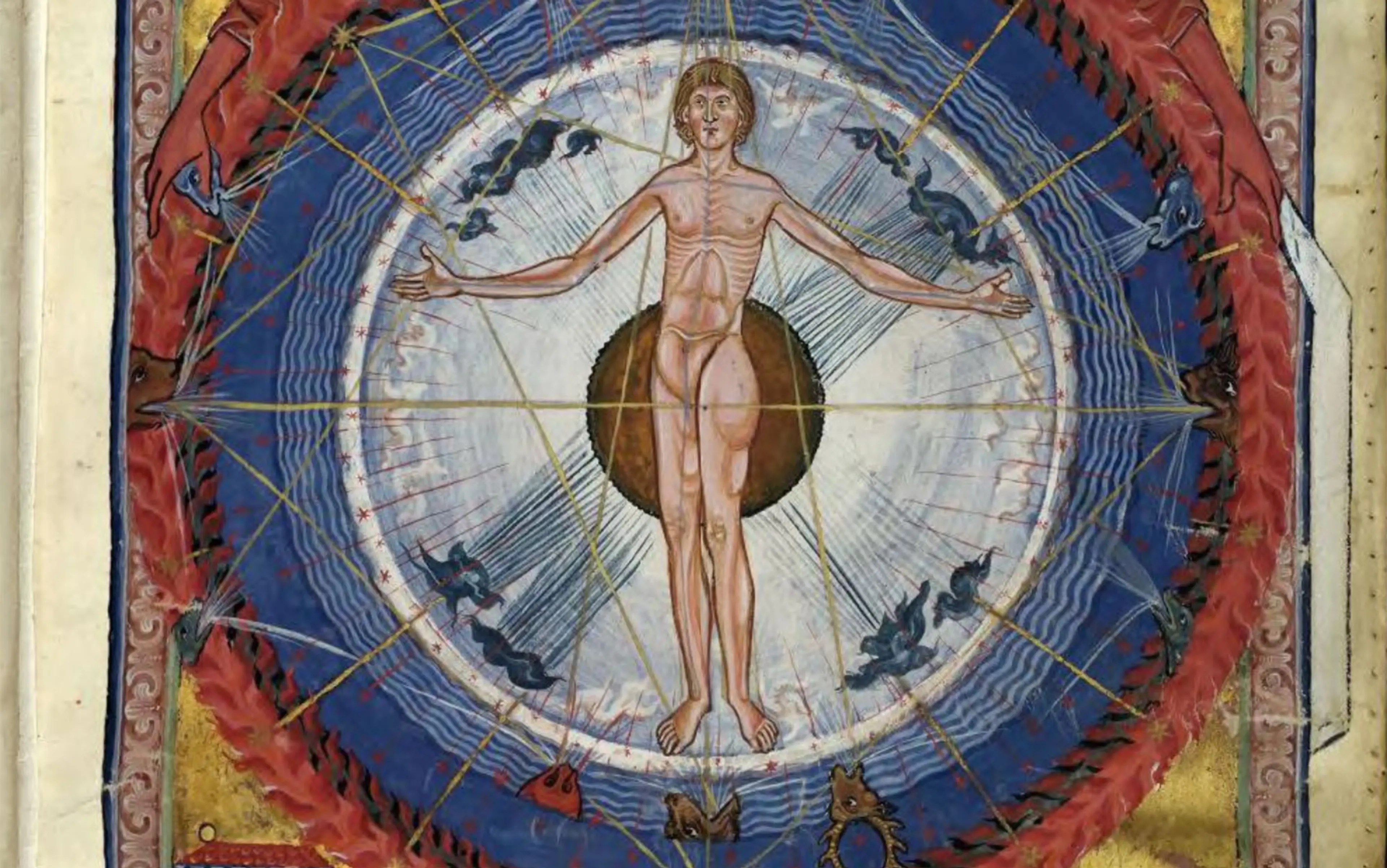
The quote above (in full, below) is the reigning substantive understanding of scientific naturalism that is commonplace today. Indeed, the modern era is often seen as the triumph of science over supernaturalism. But, as Peter Harrison explains, what really happened is far more interesting…
By any measure, the scientific revolution of the 17th century was a significant milestone in the emergence of our modern secular age. This remarkable historical moment is often understood as science finally liberating itself from the strictures of medieval religion, striking out on a new path that eschewed theological explanations and focused its attentions solely on a disenchanted, natural world. But this version of events is, at best, half true.
Medieval science, broadly speaking, had followed Aristotle in seeking explanations in terms of the inherent causal properties of natural things. God was certainly involved, at least to the extent that he had originally invested things with their natural properties and was said to ‘concur’ with their usual operations. Yet the natural world had its own agency. Beginning in the 17th century, the French philosopher and scientist René Descartes and his fellow intellectual revolutionaries dispensed with the idea of internal powers and virtues. They divested natural objects of inherent causal powers and attributed all motion and change in the universe directly to natural laws.
But, for all their transformative influence, key agents in the scientific revolution such as Descartes, Johannes Kepler, Robert Boyle and Isaac Newton are not our modern and secular forebears. They did not share our contemporary understandings of the natural or our idea of ‘laws of nature’ that we imagine underpins that naturalism…
[Harrison traces the history of the often contentious, but ultimately momentous rise of naturalism, then considers the historical acounts of that ascension– and what they gloss over or miss altogether. He then turns to whay that matters…]
… the contrived histories of naturalism that purport to show its victory over supernaturalism were fabricated in the 19th century and are simply not consistent with the historical evidence. They are also tainted by a cultural condescension that, in the past at least, descended into outright racism. Few, if any, would today endorse the chauvinism that attends these older, triumphalist accounts of the history of naturalism. Yet, it is worth reflecting upon the extent to which elements of cultural condescension necessarily colour scholarly endeavours that are premised on the imagined ‘neutral’ grounds of naturalism. Careful consideration of the contingent historical circumstances that gave rise to present analytic categories that enjoy significant standing and authority would suggest that there is nothing especially neutral or objective about them. Any clear-eyed crosscultural comparison – one that refrains from assessing worldviews in terms of how they measure up to the standard of the modern West – will reinforce this. We might go so far as to adopt a form of ‘reverse anthropology’, where we think how our own conceptions of the world might look if we adopted the frameworks of others. This might entail dispensing with the idea of the supernatural, and attempting to think outside the box of our recently inherited natural/supernatural distinction.
History [that is, the “actual” history that Harrison recounts] suggests that our regnant modern naturalism is deeply indebted to monotheism, and that its adherents may need to abandon the comforting idea that their naturalistic commitments are licensed by the success of science. As for the idea of the supernatural, ironically this turns out to be far more important for the identity of those who wish to deny its reality than it had ever been for traditional religious believers…
Fascinating and provocative: “The birth of naturalism,” from @uqpharri in @aeonmag.
* “There is only one world, the natural world, exhibiting patterns we call the ‘laws of nature’, and which is discoverable by the methods of science and empirical investigation. There is no separate realm of the supernatural, spiritual, or divine; nor is there any cosmic teleology or transcendent purpose inherent in the nature of the universe or in human life.” – Sean Carroll, The Big Picture
###
As we rethink reality, we might recall that it was on this date in 1588 that Tycho Brahe first outlined his “Tychonic system” concept of the structure of the solar system. The Tychonic system was a hybrid, sharing both the basic idea of the geocentric system of Ptolemy, and the heliocentric idea of Nicholas Copernicus. Published in his De mundi aethorei recentioribus phaenomenis, Tycho’s proposal, retaining Aristotelian physics, kept the the Sun and Moon revolving about Earth in the center of the universe and, at a great distance, the shell of the fixed stars was centered on the Earth. But like Copernicus, he agreed that Mercury, Venus, Mars, Jupiter, and Saturn revolved about the Sun. Thus he could explain the motions of the heavens without “crystal spheres” carrying the planets through complex Ptolemaic epicycles.

On this same date, in 1633, Galileo Galilei arrived in Rome to face trial before the Inquisition. His crime was professing the belief that the earth revolves around the sun– based on observations that he’d made further to Copernicus and Tycho.

“The moon is a friend for the lonesome to talk to”*…

… and, as Bartosz Ciechanowski explains in a stunningly-illustrated essay, so much more. The moon affects our tides, our light, and even the Earth’s rotation– it’s no wonder that our constant companion has so haunted human culture…
… The Moon may be just an unassuming neighbor in the sky, but its presence affects our lives in many subtle ways. When it reflects sunlight off its scarred surface to guide the way in the darkness of night, or as it breathes life into oceans by rhythmically raising tides, or when it cloaks the Sun in a rare and awe-inspiring total solar eclipse, the Moon reminds us of the celestial world right outside of the safe confines of our planet.
Traveling through the cold and empty space by Earth’s side, the Moon is always just there. It may be barren and dull, but, undeterred by its own lifelessness, it never leaves us completely alone.
Perhaps the next time you catch a glimpse of the Moon’s shiny surface beaming in the night sky, you’ll see it a little differently – not as a mundane fixture of the heavens, but as a fellow companion that gently affects our own existence…
Absolutely fascinating– and beautiful: “Moon,” from @bciechanowski.bsky.social. Via @TheBrowser.
This is (R)D‘s second visit with Ciechanowski, who earlier helped us understand “Sound”; for more of his extraordinary work, visit his archive.
More on the moon and here.
* Carl Sandburg
###
As we raise our eyes, we might send celestial birthday greetings to William Wilson Morgan; he was born on this date in 1906. As astronomer and astrophysicist, he was professor and astronomy director for the University of Chicago’s Yerkes Observatory in Wisconsin and managing editor of Astrophysical Journal. He was a leader in stellar and galaxy classification and helped prove the existence of spiral arms in our galaxy.

“Listening to both sides of a story will convince you that there is more to a story than both sides”*…
Regular readers will have deduced that I am something of a techno-optimist. While I worry that human misapplication (exploitation) of new technologies could create new dangers and/or further concentrate wealth and power in too few hands, I believe that emerging tech could– should– help humanity deal with many of its gravest challenges, certainly including climate change. At the same time, I am disposed to thinking about large issues/problems systemically.
Rianne Riemens shares neither of my enthusiasms; she sounds a critical note on techno-optimism, systems thinking– and more specifically, on the application of the latter to the former…
Today, American tech actors express optimistic ideas about how to fix the Earth and halt climate change. Such “green” initiatives have in common that they capture the world in systems and propose large systemic, and mostly technological, solutions. Because of their reliance on techno-fixes, representatives of Silicon Valley express an ideology of ecomodernism, which believes that human progress can be “decoupled” from environmental decline. In this article, I show how “whole-systems thinking” has become a key discursive element in today’s ecomodernist discourses. This discourse has developed from the 1960s onwards – inspired by cybernetic, ecological and computational theories – within the tech culture of California. This paper discusses three key periods in this development, highlighting key publications: the Whole Earth Catalog of the 1960s, the Limits to Growth report in 1972 and the cyberspace manifestoes of the mid 1990s. These periods are key to understand how techno-fixes became a popular answer to the climate crisis, eventually leading to a vision of the world as an ecosystem that can be easily controlled and manipulated, and of technological innovation as harmless and beneficial. I argue that “whole-systems” thinking offers a naive and misleading narrative about the development of the climate crisis, that offers a hopeful yet unrealistic perspective for a future threatened by climate change, built on a misconception of Earth as a datafied planet.
In “The Techno-Optimist Manifesto” (Citation2023) venture capitalist Marc Andreessen argues why we should all be techno-optimists, especially if we are worried about the future impact of the climate crisis. According to Andreessen, promoting unlimited technological progress is the only option: “there is no inherent conflict between the techno-capital machine and the natural environment”. If we generate unlimited clean energy, we can improve the natural environment, whereas a “technologically stagnant society ruins it” (Andreessen, Citation2023). This is possible, he writes, because technologies enable processes of dematerialization and will eventually lead to material abundance. And, “We believe the market economy is a discovery machine, a form of intelligence—an exploratory, evolutionary, adaptive system” (Andreessen, Citation2023). The manifesto thus conceptualizes technology as immaterial and the capitalist economy as an evolutionary system: it presents techno-fixes as a harmless form of environmental action, and economic growth as an inevitable process that political powers should not interfere with.
The “Techno-Optimist Manifesto” is an example of a form of techno-optimism that places full trust in the potential of capitalist tech companies to help humanity “innovate” its way out of a climate crisis. Andreessen (Citation2023) cites historical figures including Buckminster Fuller, Stewart Brand, Douglas Engelbart and Kevin Kelly as the inspiration for his manifesto, showing that the work of these figures and their communities is being remixed and reappropriated into the future visions of contemporary techno-optimists. In this article, I analyse how the belief in the environmental potential of techno-fixes is engrained in the ideology and history of “Silicon Valley” and is discursively constructed through a language of “whole-systems thinking”. I use the concept of whole-systems thinking as a lens to study how simplified notions taken from whole-systems theory and cybernetics played and still play a key role in techno-environmental discourse in the post-war era in the United States. I zoom in on three key events that help explain the origins and evolution of popular whole-systems thinking: the Whole Earth Catalog community led by Stewart Brand in the 1960s, the Limits to Growth report by the Club of Rome in the 1970s and the cyberlibertarian community in the 1990s. I will show how a new language emerged that used simplified notions of systems-thinking to promote the idea that technology would help understand, manage and save a planet in peril.
Through a discourse analysis of primary sources and literature review I present a critical reading of these events in the light of today’s techno-optimistic environmental discourse. My corpus exists of a number of primary sources, including the aforementioned “Techno-Optimist Manifesto” (2023), Limits to Growth report (Meadows et al., Citation1972), editions of the Whole Earth Catalog and CoEvolution Quarterly, Barlow’s Declaration of the Independence of Cyberspace (1996), texts by Kevin Kelly (Citation1998) and Stewart Brand (Citation2009) and An Ecomodernist Manifesto (Asafu-Adjaye et al., Citation2015). I have discursively analysed these sources for their discussion of systems thinking as well as environmental concerns. By analysing how whole-systems thinking became a popular way of addressing environmental issues, I aim to provide a “post-war genealogy” (Pedwell Citation2022) of the term and critique today’s promises about how tech can save the climate. As Johnston (Citation2020) has argued, tracing the development of a cultural perception of trust in techno-fixes reveals a complex and multi-sided history. I claim that the environmental dimension of techno-optimistic discourses requires a critical reconsideration of the ideological underpinnings of Silicon Valley, described as the “Californian Ideology” by Barbrook and Cameron (Citation1996). I will demonstrate how ecomodernism, including its belief that human progress can be “decoupled” from environmental decline, allows us to better understand, and critique, the environmental ideology of Silicon Valley.
I will first expand on contemporary ecomodernism and present my thesis that “decoupling” nature from culture has come to underlie whole-systems thinking in contemporary techno-optimistic discourse. In the following three sections, I highlight a few historical moments to demonstrate the development of the cultural perception of techno-fixes, specifically as a means of managing the environment. I show how whole-systems thinking became popularized by the Whole Earth community, got incorporated in environmental debates through the Limits to Growth report and is reflected in cyberutopian dreams about immaterial societies. Building on my necessarily brief history, I argue that techno-fixes can be strategically presented as ideal solutions if the world and environment are imagined as simple systems and technology as immaterial and harmless. Finally, I return to contemporary US tech culture and argue that it is shaped by, and co-shapes, the ideology of ecomodernism in which nature and culture are decoupled. I conclude that this worldview expresses itself today in corporate visions, resulting in a false hope about how to innovate our way out of the climate crisis…
Eminently worth reading in full (if in the end, as for me, less as a wholesale rejection of techno-optimism and systems thinking than as a cautionary counterweight): “Fixing the earth: whole-systems thinking in Silicon Valley’s environmental ideology,” from @WeAreTandF.
(image above: source)
###
As we tangle with tech, we might pause to remember a man who bridged our understanding of the systems of the world from one paradigm to another: Sir Arthur Stanley Eddington, OM, FRS; he died in this date in 1944. An astrophysicist, mathematician, and philosopher of science known for his work on the motion, distribution, evolution and structure of stars, Eddington is probably best remembered for his relationship to Einstein: he was, via a series of widely-published articles, the primary “explainer” of Einstein’s Theory of General Relativity to the English-speaking world; and he was, in 1919, the leader of the experimental team that used observations of a solar eclipse to confirm the theory.

You must be logged in to post a comment.