Posts Tagged ‘literature’
“… preferring their own ease and sloth before the general improvement of their country”*…

Dónal Gill, a college professor grappling with AI, looks to Jonathan Swift for guidance. Three hundred years ago, the satirist warned of a world in which reading and writing are replaced by the flashy simulation of human knowledge…
I have spent a significant portion of my life studying the Irish satirist Jonathan Swift — and in particular, studying Gulliver’s Travels, which turns 300 this year. While working on my Ph.D. dissertation, I was primarily interested in what Swift had to say about the politics of travel. Now, as a college professor teaching Canadian politics and battling to keep generative artificial intelligence out of my classrooms, I’m thinking a lot about what Swift had to say about technology. In his day, as in ours, a dominant narrative portrayed scientific development as both benevolent and inevitable. Swift’s skepticism about that narrative exposes some of our own most deeply held assumptions about the meaning of progress.
Born in Dublin in 1667, Swift is frequently described as the greatest satirist in the English language. This reputation is tied to the biting wit and unruly imagination found across his prose, poetry and political writings. In “A Modest Proposal” (1729), he notoriously suggests that the Irish poor should eat their own children for subsistence. Swift was born into the Anglo-Irish Protestant elite, and the text satires both the callousness of his class and a then-ascendant approach to morality and politics that held that all aspects of life could be cooked down to a pure numerical value. That this approach ended up predominating in the boardroom and halls of government is one reason why the brisk and shocking “Modest Proposal” still speaks to readers today.
Gulliver’s Travels is a much lengthier work. Over the course of Gulliver’s four voyages to fantastical lands, Swift gives the reader wild and varied depictions of political corruption and human hubris. Gulliver’s third voyage takes him to the flying island of Laputa, which rules tyrannically over several territories situated below. On his visit to one of these territories, Gulliver tours the “Academy of Lagado,” where scientific experimentation and deciphering the patterns of mathematics and music are valued above all else. The scientists he meets are profoundly unconcerned with whether their experiments have any useful outcome.
At the time Swift was writing, the experimental scientific method as we know it today — data collection and the development of hypotheses from empirical evidence — was becoming prominent, thanks to the work of Sir Isaac Newton and the Royal Society. Critics and readers have often viewed Gulliver’s third voyage as a moment when Swift chose the wrong subject to satire. The achievements of Newton and the Royal Society are, after all, still celebrated today. But I think Swift knew exactly what he was doing. Far from merely raising a reactionary fist in the air at the new science, Swift identified an attitude that is still around today — and one that has created many of the greatest challenges now facing educators.
Centuries before the internet infiltrated almost every aspect of daily life, Swift described how scientific and technological advances could lead to chronic distraction by producing an obsession with what could be rather than what is. At the heart of Swift’s diagnosis is the idea of speculation, or as Gulliver describes it, “speculative learning.” Gulliver sees a society totally consumed by impractical and abstract scientific interrogation. This plays out in bizarre and frequently doomed projects and experiments: Gulliver incredulously witnesses people attempting to extract sunbeams from cucumbers and turn excrement back into edible food.
Not all the scientific projects in the territories of Laputa fail to achieve their purpose. Gulliver is shown a large wooden contraption that allows “the most ignorant person … [to] write books in philosophy, poetry, politics, laws, mathematics, and theology, without the least assistance from genius or study.” [See the illustration above.] Swift, who was deeply learned, was envisaging a nightmare world in which reading and writing — the essential foundation of wit and wisdom — are replaced by a flashy simulation of human knowledge. Since the advent of ChatGPT, this scenario has become all too familiar. The device Gulliver encounters is massive, requiring 40 individuals to rotate iron handles attached to multiple words, which are then assembled into sentence fragments and called out to a scribe. Reading Swift’s description, I think both of the autocomplete nature of modern large language models and of the underclass of precarious workers whose labor is necessary for the seemingly lean, seemingly all-digital process of generative AI to work.
There are also many Laputans who are given over to a strange life of the mind, “so taken up with intense speculations, that they neither can speak, nor attend to the discourses of others, without being roused by some external taction upon the organs of speech and hearing.” Servants called flappers are required to shake rattles in their ears to keep them from falling or bumping into things. A quick rattle might also be used to rouse them from the somnambulant abyss of speculative abstraction, if conversation is necessary. Again, sounds rather familiar. Sure, people today wandering the streets head down in the infinite distractions of their phones are hardly absorbed in the life of the mind — but they are still absent from the things and the people around them. And isn’t the addiction to scrolling predicated on speculation of sorts? What will come next? What will I find if I look at just one more post?
Modern technology, and AI in particular, has created another Laputa: a society characterized by rampant speculation, blind faith in technology manipulated by cynical charlatans, and the casual disregard of old-fashioned virtues like truth, beauty, imagination and knowledge acquired the hard way. In many cases, the presence of AI in the classroom is a solution in search of a problem — just like the ludicrous, pointless innovations by the Laputan scientists. Swift’s sharp diagnosis of Laputa’s ills is motivating me to push back against the encroachment of AI into the work of education — and to instill in my students the belief that they, rather than the forces of technology, can determine the future…
Do read on for more: “Jonathan Swift v. AI,” from @donalgill.bsky.social in @thedialmag.bsky.social.
* Jonathan Swift, Gulliver’s Travels, Part III (“A Voyage to Laputa, Balnibarbi, Luggnagg, Glubbdubdrib and Japan”)
###
As we shape our tools, we might recall that it was on this date in 1870 that a patent was granted to Daniel C. Stillson for the modern adjustible pipe wrench (an adaptation of/improvement to the monkey wrench) that he had invented the prior year.

“When the going gets weird, the weird turn pro”*…

Philip K. Dick, whose work appeared from the 1950s into the early 1980s, is one of those too-rare writers whose deep questions–and the mind-bending ideas they spawned– are at least as relevant today as then. Jared Shurin offers a path in…
Philip K. Dick is a persistent, iconic cultural presence. His work has given us Blade Runner, Minority Report, The Man in the High Castle, A Scanner Darkly and a pair of Total Recall movies (one of which is an undisputed cinematic classic, the other of which has Colin Farrell). Like all adaptations, these all have a strained (and occasionally distant) relationship with the source material. But however bastardised they are, they demonstrate the greatest strength of PKD’s work: the big idea.
Science fiction’s history is filled with big ideas. But Philip K. Dick had an exceptional, if not unmatched, ability to think about the biggest ideas of them all. What if we are not who we think we are? What are memories if they are not our own? What if reality itself were not, in any sense, real? His work is unbothered with how we make fusion energy or break light speed or maintain life on the moon. The ‘how’ and the ‘what’ are often taken for granted; traditional science fiction platforms used as launch pads for deeper, more provocative expeditions into perception, interpretation, and the nature of truth itself.
Big Ideas are great for inspiring Big Movies, even if something gets lost in translation along the way. Why have Arnie wrestle with existential angst when he can pull a giant metal booger out of his brain instead? With that ease in mind, it is hardly a surprise that Dick thrives in adaptation while his fiction, I’m sorry to say, remains (relatively, at least) unappreciated.
This is not entirely Hollywood’s fault. Dick is inspirational. He’s exciting! He is challenging and surprising, always finding ways to push ideas forward; often beyond the point of exhaustion. His books can twist like a child’s tangled Slinky, and be—frankly—just as infuriating to unwind. In short, and I say this in full transparency: PKD’s works can be hard to read. Especially if one goes in expecting the film.
They are, however, well worth reading. Below, you’ll find a few suggestions on where to start, and why. I’m a believer in not plunging into the deep end, which, with Dick, can be outright abyssal. Instead, there’s merit in starting with some of the slightly more straightforward (for him) works, which riff off recognisable tropes and scenarios, but in a uniquely Dickian way. (I’m sure there are many brilliant readers out there that read VALIS when they were ten and think I’m a big weenie. I look forward to hearing from you in the comments.)…
There follows a path into the extraordinary works of PKD.
A reader’s guide: “Jump in the Deep End With Philip K. Dick,” from @reactorsff.bsky.social.
FWIW, your correspondent, while agreeing that VALIS (and The Divine Invasion) are titles to hold until one is acclimated, would include Time Out of Joint (1959) as one of the novels with which to start… but then, that’s the point of lists like this :)
* Hunter S. Thompson
###
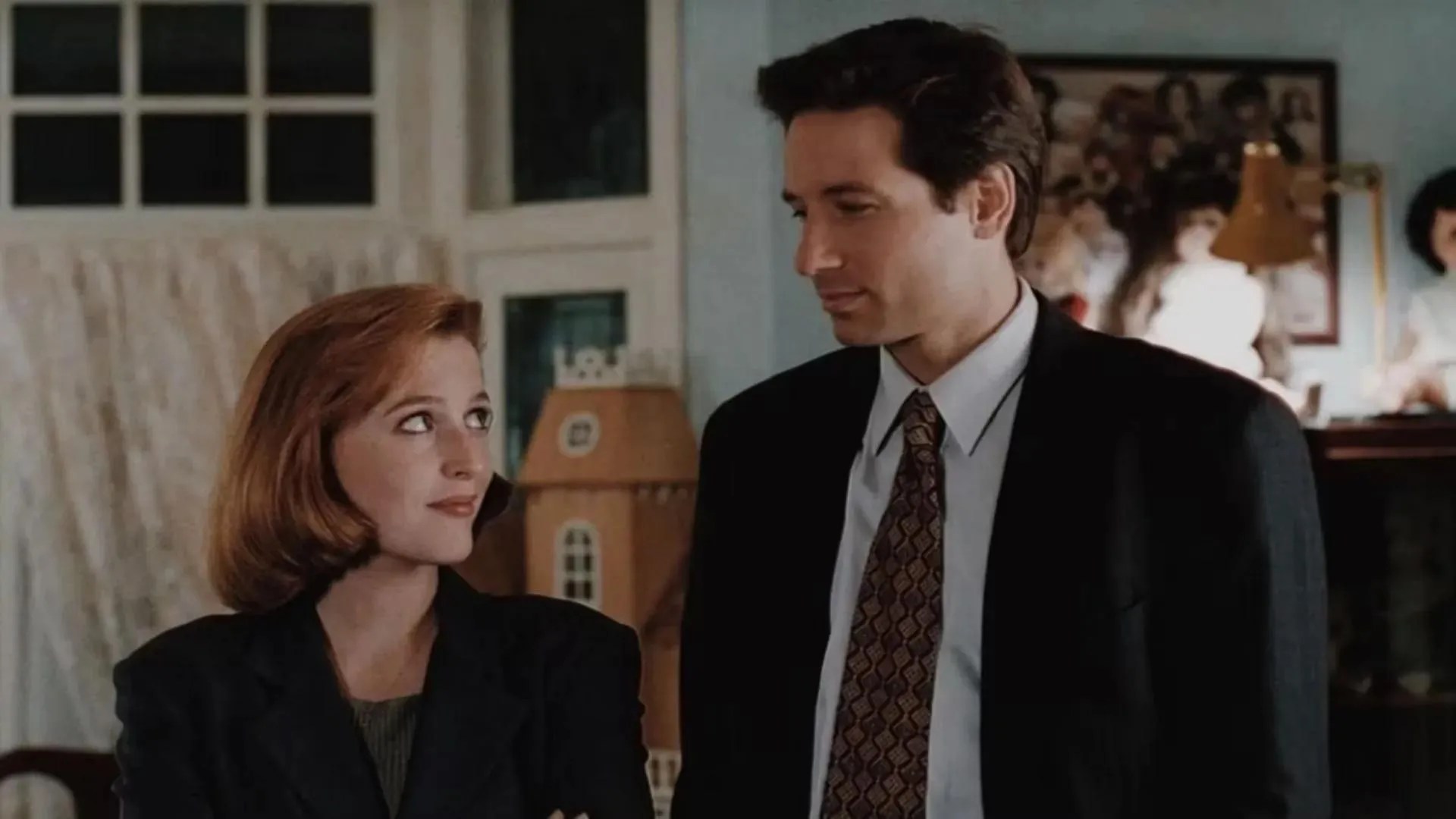
As we wrestle with reality, we might recall that it was on this date in 1993 (on the anniversary of the introduction of the first “TV dinner” about 40 years earlier) that the The X-Files, created by Chris Carter, premiered on Fox. The series– which followed FBI agents Fox Mulder (David Duchovny) and Dana Scully (Gillian Anderson) as they investigated unsolved cases involving paranormal phenomena, government conspiracies, and extraterrestrial life– spawned two feature films, multiple spin-offs, a revival series, and a dedicated fanbase known as “X-Philes.” The show’s tagline, “The Truth Is Out There,” has, of course, become an enduring phrase in popular culture.
“All the world’s a stage / And all the men and women merely players”*…

The melancholy Jaques is surely right, at the metaphorical level at which Shakespeare operated. But others have been moved to treat that wisdom much more literally. Mathilde Montpetit offers a fascinating example…
“This is an age of formulations”, the actress Genevieve Stebbins [see here] declared in 1886. Auguste Comte had formulated positivism in science, Henry Thomas Buckle had done the same for history, and Herbert Spencer for culture. Even visual art had had its fundamental theories set out, in John Ruskin’s five-volume Modern Painters (1843–60). “It is as though the world”, she reflected, “growing weary of productive activity, sought to pause and reärrange before plunging into further depths; to rescue from the void and formless mass of collected material a system whose symmetry and beauty should embody all that is worth saving”. And why wouldn’t the dramatic arts deserve — indeed, need — the same treatment? But who would be able to do it?
Such a man did exist, but he had died in 1871, leaving his findings unpublished. Luckily, some of his apostles still lived. Stebbins breathlessly narrates her journey to deepest darkest Nanterre to find the Abbé Delaumosne. “What I can I do for you, my child?” he asks. In the Cathedral of Sainte Geneviève and Saint Maurice, he bestows upon her the holy teachings: the French singer and orator François Delsarte’s system of dramatic expression.
Stebbins had first learned about the Delsarte System from Steele MacKaye [see here], an American playwright and actor who had met Delsarte in Paris and “like a John the Baptist, came back to America to prepare the New World for [His] coming”. In 1876, Stebbins had retired from the stage to devote herself entirely to a Delsartean training at MacKaye’s hands: by 1880, she was teaching it herself. The Delsarte System of Dramatic Expression, first published in 1885, was both a philosophical synthesis and a practical guide, providing both intellectual background and exercises for the cultivation of dramatic genius.
Written in the voice of an ongoing set of lessons, taking place over the course of a year, Stebbins was chatty and encouraging: “Very well; you really are making remarkable progress. I wish all my pupils were as intelligent”.
Delsarte was a strict Trinitarian, in part inspired by the work of the seventeenth-century theologian Emanuel Swedenborg (and, it seems, Charles Sanders Peirce [see here]). For him, everything came in threes, especially movement: “All motion is expansive which is objective, which has relation to the exterior world. So Delsarte has named motion from yourself as a centre, excentric. Again we fold in, contract, concentrate our motion in subjective states of mind. So motion to a centre Delsarte has named concentric. Motion between these two extremes, being well balanced, he has aptly termed normal”. These three types of movement could be combined with the three essences (mental, moral, vital) and multiplied into a “ninefold accord”, within which most movements could be graphed [as above].
Every possible element of a gesture or expression was deconstructed and fit into this rubric, with specific exercises for the “Fingers, Hand, Fore arm, Entire arm, Head, Torso, Foot, Lower leg, Entire leg, Entire body, Eyelids, Lower jaw . . .” Stebbins provided helpful charts, like one that shows the “Simple Combinations of Upper Lid and Brow”. On the next page, she clarified that since both the brow and the lid each have nine possibilities each, there are in fact eighty-one possible combinations (she gave eighteen). The Delsarte System presented here, Nancy Lee Chalfa Ruyter has shown, was full of Stebbins’ own innovations. She had developed the “energizing” techniques to go along with the relaxation ones, and created a whole set of exercises that are still used today in many acting classes…
… What this system was meant to be, Stebbins repeatedly emphasized, was a training system, a form of “aesthetic gymnastics”. So:
When before the public in the pulpit, on the platform, or the stage, forget all rules, or rather make no effort to recall them. Your motto there should be heart-work, not head-work.
“Then why study art’s rules and formulæ?” I hear you ask.
Because much of your practice will cling to you, without conscious thought; because nature rarely showers all her gifts on one head. Inspiration may be yours without bodily power to express; or you may be virtuosos without “the still small voice within.”
More on — and many more illustrations from — this 19th century manual on systemizing the way in which life is art and art is life: “Genevieve Stebbins’ Delsarte System of Dramatic Expression,” from @mathildegm.bsky.social in @publicdomainrev.bsky.social.
* Shakespeare, As You Like It Act II, Scene VII
###
As we rehearse, we might recall that it was on this date in 1927 that Wings premiered at the Criterion Theater, in New York City. A “romantic action-war picture,” it featured Army Air Corps aviators in battle (and in love). While most features at the time were shot on lots or studio-controlled locations with limited casts and budgets, Wings was shot on location at Kelly Field in San Antonio over 8 months; hundreds of extras (including some 300 pilots were involved in the filming, including pilots and planes of the Army Air Corps) on a (then massive) budget of $2 million. The investment paid off: While Wings was recognized for the expressive emoting of its (silent) cast, it was acclaimed for its realistic action sequences and technical prowess, and became the yardstick against which future war– but especially aviation– films were measured. It won the first Best Picture in the inaugural Academy Award ceremony (in 1929), and remains the only fully-silent film to do so. (A “sound” version of Wings was ultimately produced, but has no audible dialogue, only a synchronized musical score with sound effects.)

“It is good to have an end to journey toward; but it is the journey that matters in the end”*…

C. J. Moran (peter-guillam123 on Github) maps the classics…
The short version: PlotLines plays classic books as journeys, on maps of their own era… PlotLines takes out-of-copyright classics and draws their characters’ journeys on a period map. Pick a book, press play, and the whole cast moves at once – or follow one person and let the map travel with them. Hover any stop and you get the place as the text itself names it, with the line that puts them there.
It began with Dracula, because Stoker wrote what is probably the best travel itinerary in Victorian fiction – a clerk crossing Europe by train, a ghost ship rounding Gibraltar with her captain lashed to the wheel, a three-pronged chase up a Romanian river at the end.
There are forty-three books now, and they are no longer all novels, or all set in Europe. A walk at Hardy’s pace across Wessex; a single London day of near-misses; a raft the length of the Mississippi; a stolen dog’s road from a Californian orchard to the Klondike ice; a two-town comedy running between Tokyo and Shikoku; a 120-chapter Chinese epic that needs five threads moving at once before it makes any sense at all; and a family driven out of a Southern town that is never once named. The shelf has turned out wider than I expected when I started, and more will follow…
Each book opens with a choice: watch the story or explore its places. A shelf of journeys: “PlotLines.”
See also: “Reading Maps“– more “journeys from fiction drawn on the real world”
* Ursula K. Le Guin, The Left Hand of Darkness
###
As we trace steps (and think about the ways in which travel has changed), we might recall that it was on this date in 1891 that The Hotel Hauffe in Leipzig, Germany became the first establishment to honor an American Express Travelers Cheque. Travelers cheques were first issued in 1772 by the London Credit Exchange Company for use in 90 European cities; and in 1874, Thomas Cook was issuing “circular notes” that operated in the manner of travelers cheques. But until the late 19th century, well-off travelers relied mostly on letters of credit… and less wealthy travelers risked carrying cash. American Express’ was the first system of significant scale and global scope, and offered cheques in relatively small denominations, making them available to many more travelers.

““The strangenesses are multiplying… though the world before they began was already a strange place, so often it’s difficult to know if an event falls into the category of the old, ordinary strangenesses or the new, extraordinary variety.”*…

In a review of five recent books, Robert Baskin considers the genre of “weird fiction”…
On Tuesday, April 29, 2003, the British science fiction and fantasy writer M. John Harrison [accomplished author, Booker judge, and long-list nominee this year] asked a question on Third Alternative magazine’s messageboard: “The New Weird. Who does it? What is it? Is it even anything?” This incited a taxonomic fury, as writers, fans, and amateur scholars attempted to define this new subgenre. Harrison eventually offered his own definition; the New Weird, like stories published in the namesake early twentieth-century pulp magazine Weird Tales, is a mix of “horror, sf, and fantasy,” with an emphasis on the horror…
[Baskin usess the books in question to review the genre’s history (Poe, Lovecraft, Edith Wharton [!]) and its current state (Miéville, VanderMeer, et al.); he concludes…]
… So why read this shit? Why reissue it?
Weird fiction is a literature of crisis. The main narrative move of every important Weird fiction story is the Weird intrusion, the appearance of the new and wrong object or sensation or practice that does not belong. These intrusions challenge and endanger the protagonist’s sense of metaphysical stability. In the King in Yellow, the Weird intruder is the titular play—the madness of the text refuses to remain on the page. China Miéville argues that this awareness of crisis makes Weird Fiction uniquely open to interpretation: a “leeway for readings against the ideological grain is part of what makes Weird Fiction such an ongoingly fascinating field.” The Weird is not just a literature of fear and repulsion; it also always includes wonder and attraction. “The Shadow Over Innsmouth” – Lovecraft’s contribution to the Weird Mount Rushmore – depicts the state’s extermination of a group of racially ambiguous New Englanders who made the mistake of breeding with fishy foreigners. Despite this, the story ends in sublime ambiguity [spoiler for a nearly century-old story to follow]. The protagonist, who has spent the rest of the story in hateful terror of the Innsmouth locals, discovers that he is one of them, and in my favorite passage in all of Lovecraft, decides to go to the sea with his cousin and embrace The Weird: “We shall swim out to that brooding reef in the sea and dive down through black abysses to Cyclopean and many-columned Y’hanthlei, and in that layer of the Deep Ones we shall dwell amidst wonder and glory for ever.” What was once feared is now cause for exultation. The move between terror and wonder recurs throughout the Weird corpus—if you’re attuned to its Weird frequencies…
A literature for our times: “‘We Shall Dwell Amidst Wonder and Glory For Ever’: On Weird Fiction,” from @clereviewbooks.bsky.social.
* Salman Rushdie, Two Years Eight Months and Twenty-Eight Nights
###
As we engage extremity, we might recall that i was on this date in 1946 that Santa Claus Land, the world’s first themed amusement park, opened in Santa Claus, Indiana…
In 1941, Louis J. Koch visited the town of Santa Claus in Indiana. He found it sad that some children would visit this town eager to meet Santa only to find that he was not there. This fueled his desire to create a Santa Claus Land park where kids could see Santa any time of the year. Due to World War II, construction didn’t begin until August 1945.
The park opened on this day in 1946 with free admission, a toy shop, toy displays, a restaurant, a few rides and of course the jolly old elf himself. Later, a deer farm was added.
In 1955, a new section, Pleasureland (now known as Rudolph’s Reindeer Ranch) was added. As the park grew, the focus of the park grew as well focusing on families rather than just children.
By 1984, the park added a Halloween and a Fourth of July section to the park and changed its name to Holiday World. In 1993, the Koch family added the Splashin’ Safari Water Park. In 2006, during the park’s 60th anniversary, Holiday World added a Thanksgiving section.
– source

You must be logged in to post a comment.