Posts Tagged ‘TV Dinner’
“When the going gets weird, the weird turn pro”*…

Philip K. Dick, whose work appeared from the 1950s into the early 1980s, is one of those too-rare writers whose deep questions–and the mind-bending ideas they spawned– are at least as relevant today as then. Jared Shurin offers a path in…
Philip K. Dick is a persistent, iconic cultural presence. His work has given us Blade Runner, Minority Report, The Man in the High Castle, A Scanner Darkly and a pair of Total Recall movies (one of which is an undisputed cinematic classic, the other of which has Colin Farrell). Like all adaptations, these all have a strained (and occasionally distant) relationship with the source material. But however bastardised they are, they demonstrate the greatest strength of PKD’s work: the big idea.
Science fiction’s history is filled with big ideas. But Philip K. Dick had an exceptional, if not unmatched, ability to think about the biggest ideas of them all. What if we are not who we think we are? What are memories if they are not our own? What if reality itself were not, in any sense, real? His work is unbothered with how we make fusion energy or break light speed or maintain life on the moon. The ‘how’ and the ‘what’ are often taken for granted; traditional science fiction platforms used as launch pads for deeper, more provocative expeditions into perception, interpretation, and the nature of truth itself.
Big Ideas are great for inspiring Big Movies, even if something gets lost in translation along the way. Why have Arnie wrestle with existential angst when he can pull a giant metal booger out of his brain instead? With that ease in mind, it is hardly a surprise that Dick thrives in adaptation while his fiction, I’m sorry to say, remains (relatively, at least) unappreciated.
This is not entirely Hollywood’s fault. Dick is inspirational. He’s exciting! He is challenging and surprising, always finding ways to push ideas forward; often beyond the point of exhaustion. His books can twist like a child’s tangled Slinky, and be—frankly—just as infuriating to unwind. In short, and I say this in full transparency: PKD’s works can be hard to read. Especially if one goes in expecting the film.
They are, however, well worth reading. Below, you’ll find a few suggestions on where to start, and why. I’m a believer in not plunging into the deep end, which, with Dick, can be outright abyssal. Instead, there’s merit in starting with some of the slightly more straightforward (for him) works, which riff off recognisable tropes and scenarios, but in a uniquely Dickian way. (I’m sure there are many brilliant readers out there that read VALIS when they were ten and think I’m a big weenie. I look forward to hearing from you in the comments.)…
There follows a path into the extraordinary works of PKD.
A reader’s guide: “Jump in the Deep End With Philip K. Dick,” from @reactorsff.bsky.social.
FWIW, your correspondent, while agreeing that VALIS (and The Divine Invasion) are titles to hold until one is acclimated, would include Time Out of Joint (1959) as one of the novels with which to start… but then, that’s the point of lists like this :)
* Hunter S. Thompson
###
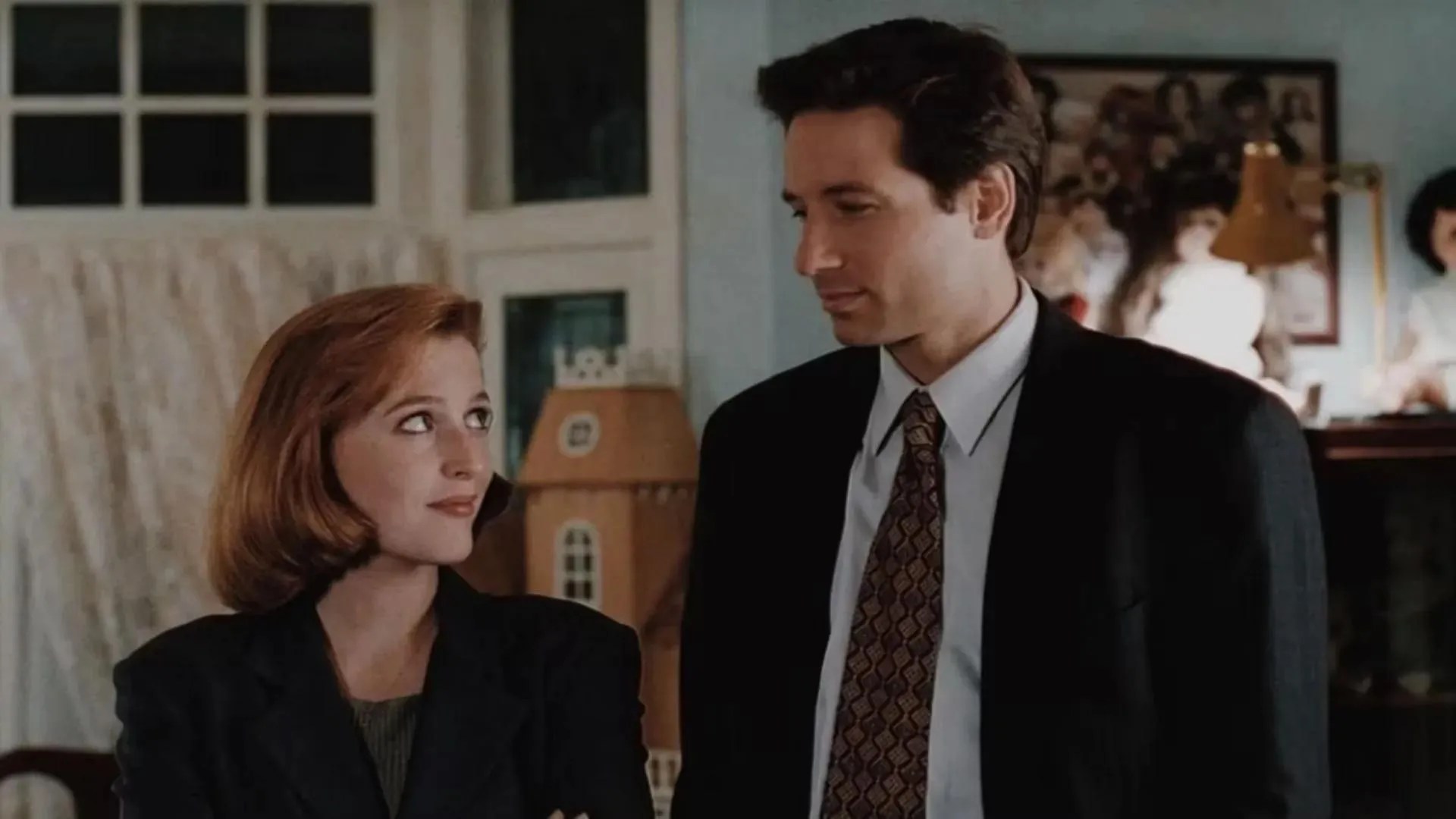
As we wrestle with reality, we might recall that it was on this date in 1993 (on the anniversary of the introduction of the first “TV dinner” about 40 years earlier) that the The X-Files, created by Chris Carter, premiered on Fox. The series– which followed FBI agents Fox Mulder (David Duchovny) and Dana Scully (Gillian Anderson) as they investigated unsolved cases involving paranormal phenomena, government conspiracies, and extraterrestrial life– spawned two feature films, multiple spin-offs, a revival series, and a dedicated fanbase known as “X-Philes.” The show’s tagline, “The Truth Is Out There,” has, of course, become an enduring phrase in popular culture.
“A Genuine ‘TV’ Brand Dinner”*…

In 1925, the Brooklyn-born entrepreneur Clarence Birdseye invented a machine for freezing packaged fish that would revolutionize the storage and preparation of food. [see here.] Maxson Food Systems of Long Island used Birdseye’s technology, the double-belt freezer, to sell the first complete frozen dinners to airlines in 1945, but plans to offer those meals in supermarkets were canceled after the death of the company’s founder, William L. Maxson. Ultimately, it was the Swanson company that transformed how Americans ate dinner (and lunch)—and it all came about, the story goes, because of Thanksgiving turkey.
According to the most widely accepted account, a Swanson salesman named Gerry Thomas conceived the company’s frozen dinners in late 1953 when he saw that the company had 260 tons of frozen turkey left over after Thanksgiving, sitting in ten refrigerated railroad cars. (The train’s refrigeration worked only when the cars were moving, so Swanson had the trains travel back and forth between its Nebraska headquarters and the East Coast “until panicked executives could figure out what to do,” according to Adweek.) Thomas had the idea to add other holiday staples such as cornbread stuffing and sweet potatoes, and to serve them alongside the bird in frozen, partitioned aluminum trays designed to be heated in the oven. Betty Cronin, Swanson’s bacteriologist, helped the meals succeed with her research into how to heat the meat and vegetables at the same time while killing food-borne germs.
Whereas Maxson had called its frozen airline meals “Strato-Plates,” Swanson introduced America to its “TV dinner” (Thomas claims to have invented the name) at a time when the concept was guaranteed to be lucrative: As millions of white women entered the workforce in the early 1950s, Mom was no longer always at home to cook elaborate meals—but now the question of what to eat for dinner had a prepared answer. Some men wrote angry letters to the Swanson company complaining about the loss of home-cooked meals. For many families, though, TV dinners were just the ticket. Pop them in the oven, and 25 minutes later, you could have a full supper while enjoying the new national pastime: television.
In 1950, only 9 percent of U.S. households had television sets—but by 1955, the number had risen to more than 64 percent, and by 1960, to more than 87 percent. Swanson took full advantage of this trend, with TV advertisements that depicted elegant, modern women serving these novel meals to their families, or enjoying one themselves. “The best fried chicken I know comes with a TV dinner,” Barbra Streisand told the New Yorker in 1962…
Thanks to the pandemic, Thanksgiving’s most unexpected legacy is heating up again: “A Brief History of the TV Dinner.”
* The Swanson “promise” on every package
###
As we peel back the foil, we might send clearly-outlined birthday greetings to Irma S. Rombauer; she was born on this date in 1877. An author of cookbooks, she is best remembered for The Joy of Cooking, one of the most widely-published and used cookbooks in the U.S. Originally unable to find a publisher, she privately printed an edition in 1931. But in 1935 a commercial edition (the first of nine) was released by Bobbs-Merrill.
Written in a plain but witty style, including basic techniques and simple dishes, not just the complext recipes that were the staples of most cookbooks of the time, it found a broad and loyal audience among the American middle class. Indeed, Julia Child credits The Joy of Cooking with teaching her the basic techniques of the kitchen, and (along with Gourmet Magazine) teaching her to cook.

Up against the wall…
From Dark Roasted Blend, a lovely collection of the murals, trompe l’oeil, and other varieties of wall painting that brighten cityscapes around the world…


Many, many more at “Extreme Murals and Painted Buildings.”
As we put away the whitewash, we might recall that it was on this date in 1954 that Swanson and Sons sold the first “TV Dinner.” The original repast consisted of a Thanksgiving meal of turkey, cornbread dressing, frozen peas and sweet potatoes packaged in a tray like those used at the time for airline meals, with each item in its own compartment. The aluminum tray could, of course, be heated directly in the oven without any extra dishes; and one could eat the meal directly from the same tray– which fit perfectly the “TV tables” in vogue at the time. The original TV Dinner was priced at 98 cents; Swanson sold more than 10 million units in the first year of production.
 “It’s good to be full!” (source)
You must be logged in to post a comment.