Posts Tagged ‘Gregorian Calendar’
“February is the uncertain month, neither black nor white, but all shades between by turns. Nothing is sure.”*…

Yeah, but why is it shorter than all of the other months? Timothy Taylor has the story…
I understand why the calendar adds an extra day to February every four years. The revolution of the earth around the sun is approximately 365 and one-quarter days. Every four years, that adds up to one additional day, plus some extra minutes. The modest rounding error in this calculation is offset by steps like dropping the extra day of leap year for years ending in “00.”
But my question is why February has only 28 days in other years. After all, January has 31 days and March has 31 days. If those two months each donated a day to February, then all three months could be 30 days long, three years out of four, and February could be 31 days in leap years. Every other month is either 30 or 31 days. Why does February only get 28 days?…
… The answer to such questions leads to a digression back into the history of calendars. In this case, Jonathan Hogeback writing at the Britannica website tells me, it seems to settle on the Roman king Numa Pompilius back around 700 BCE, before the start of the Roman Empire. The ancient Roman calendar of that time had a flaw: it didn’t have nearly enough days. As Hogeback writes:
The Gregorian calendar’s oldest ancestor, the first Roman calendar, had a glaring difference in structure from its later variants: it consisted of 10 months rather than 12. In order to fully sync the calendar with the lunar year, the Roman king Numa Pompilius added January and February to the original 10 months. The previous calendar had had 6 months of 30 days and 4 months of 31, for a total of 304 days. However, Numa wanted to avoid having even numbers in his calendar, as Roman superstition at the time held that even numbers were unlucky. He subtracted a day from each of the 30-day months to make them 29. The lunar year consists of 355 days (354.367 to be exact, but calling it 354 would have made the whole year unlucky!), which meant that he now had 56 days left to work with. In the end, at least 1 month out of the 12 needed to contain an even number of days. This is because of simple mathematical fact: the sum of any even amount (12 months) of odd numbers will always equal an even number—and he wanted the total to be odd. So Numa chose February, a month that would be host to Roman rituals honoring the dead, as the unlucky month to consist of 28 days.
This discussion does explain why February would be singled out, since it was the month of rituals honoring the dead. In Numa’s calendar, the 355-day year would be made up of 11 months that had the lucky odd numbers of 29 or 31 days, plus unlucky February.
The discussion also explains why months that start with the prefix “Oct-” or eight, “Nov” or nine, and “Dec-” or ten, are actually months 10, 11, and 12 in the calendar. Those names were originally part of a 10-month calendar year.
But questions remains unanswered: Why did the Romans of that time view odd numbers as lucky, compared with unlucky even numbers? I suppose that explaining any superstition is hard, but I’ve never seen a great explanation. A Dartmouth course on “Geometry in Art and Architecture” describes Pythagorean feelings about odd and even numbers. For those of you keeping score at home, Pythagoras lived about two centuries after Numa Pompilius. The Dartmouth course material summarizes aspects of “Pythagorean Number Symbolism”:
Odd numbers were considered masculine; even numbers feminine because they are weaker than the odd. When divided they have, unlike the odd, nothing in the center. Further, the odds are the master, because odd + even always give odd. And two evens can never produce an odd, while two odds produce an even. Since the birth of a son was considered more fortunate than birth of a daughter, odd numbers became associated with good luck…
[Taylor recounts the recurrence of this theme, from Virgil to Shakespeare…]
… While I acknowledge this history of a belief in odd numbers, as a person born on an even day of an even month in an even year, I’m not predisposed to accept it. But it’s interesting that modern photographers have a guideline for composing photographs called the “rule of odds.” Rick Ohnsman at the Digital Photography School, for example, describes it this way:
This is where the rule of odds comes into play, a deceptively simple yet powerful tool in your photographic arsenal. It’s all about arranging your subjects in odd numbers to craft compositions that are naturally more pleasing to the eye. Unlike more static guidelines, the rule of odds offers a blend of structure and organic flow, making your images both aesthetically pleasing and impressively compelling.
The revised calendar of Numa Pompilius couldn’t last. With only 355 days, it didn’t reflect the actual period of the earth revolving around the sun, and thus led to further revisions which are a story in themselves.
But when you think about it, the question of February having 28 days all goes back to Numa Pompilius and the superstitions about odd numbers. The modern calendar has 365 days in a typical year. You might think that the obvious way to divide this up would be to start off with 12 months of 30 days, and then add five days. Indeed, the ancient Egyptians had a calendar of this type, with five “epagomenal” or “outside the calendar days added each year.
The preference over the last two millennia, at least since the time of Julius Caesar, is to have 12 months, with a few of them being a day longer. But even so, why not in a typical year have five months of 31 days, and the rest with 30? The “problem,” I think, is that most months would then have unlucky totals of an even number of days. By holding February to 28 days rather than 30, you can redistribute two days from February and have 31 days in January and March. Thus, you can have only four months with an even total of 30 days every year (“Thirty days hath September, April, June, and November …”), and seven months always with the luckier odd total of 31 days. In leap years, when February has 29 days, then eight months have an odd number of days. I think this makes February 29 a lucky day?…
“Why Does February (Usually) Have 28 Days?” from @TimothyTTaylor.
###
As we muse on the marking of months, we might recall that it was on this date in 1692 that a doctor in Salem, Massachusetts (generally believed to have been William Griggs), was unable to find a physical explanation for the ailments (fits, pins-and-needles) of three young girls. As other young women in Salem began to evince the same symptoms, the local preacher declared them “bewitched”… and the stage was set for The Salem Witch Trials.

“Zero is powerful because it is infinity’s twin. They are equal and opposite, yin and yang.”*…
… and like infinity, zero can be a cognitive challenge. Yasemin Saplakoglu explains…
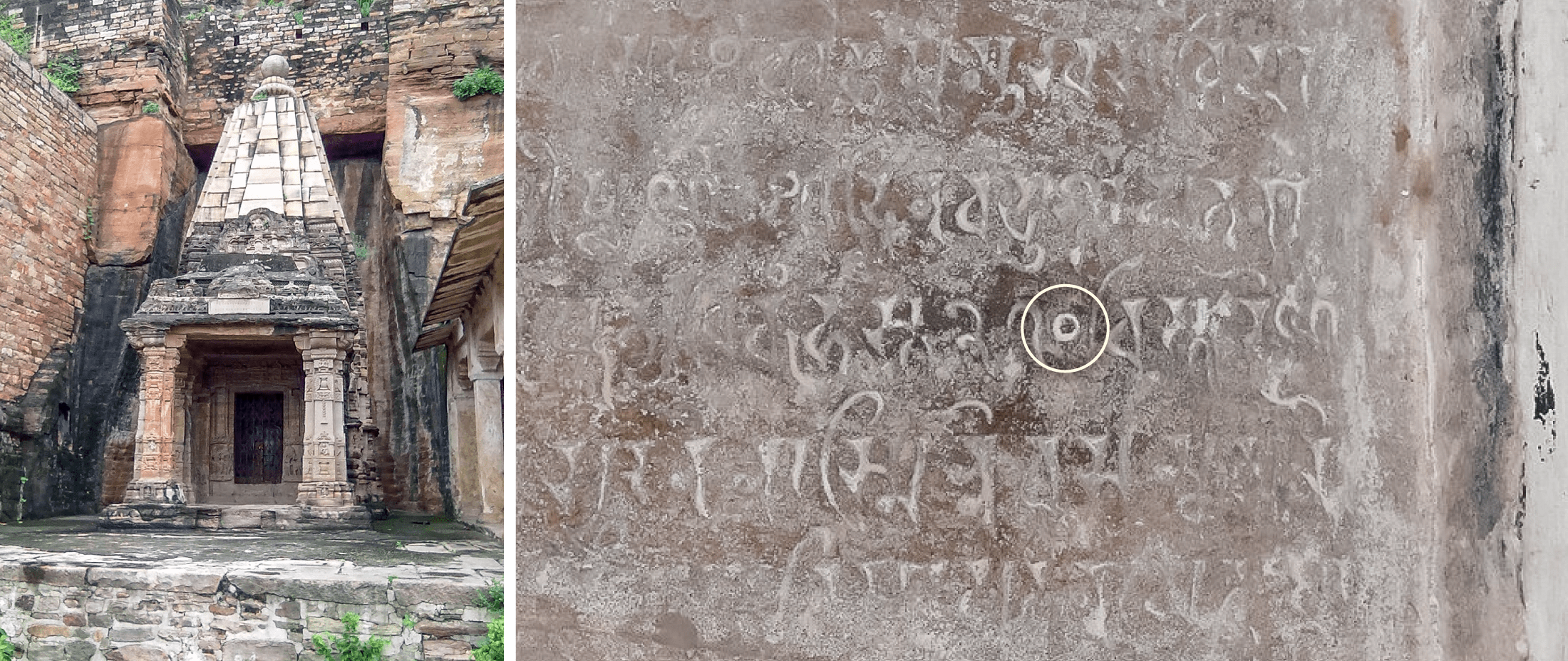
Around 2,500 years ago, Babylonian traders in Mesopotamia impressed two slanted wedges into clay tablets. The shapes represented a placeholder digit, squeezed between others, to distinguish numbers such as 50, 505 and 5,005. An elementary version of the concept of zero was born.
Hundreds of years later, in seventh-century India, zero took on a new identity. No longer a placeholder, the digit acquired a value and found its place on the number line, before 1. Its invention went on to spark historic advances in science and technology. From zero sprang the laws of the universe, number theory and modern mathematics.
“Zero is, by many mathematicians, definitely considered one of the greatest — or maybe the greatest — achievement of mankind,” said the neuroscientist Andreas Nieder, who studies animal and human intelligence at the University of Tübingen in Germany. “It took an eternity until mathematicians finally invented zero as a number.”
Perhaps that’s no surprise given that the concept can be difficult for the brain to grasp. It takes children longer to understand and use zero than other numbers, and it takes adults longer to read it than other small numbers. That’s because to understand zero, our mind must create something out of nothing. It must recognize absence as a mathematical object.
“It’s like an extra level of abstraction away from the world around you,” said Benjy Barnett, who is completing graduate work on consciousness at University College London. Nonzero numbers map onto countable objects in the environment: three chairs, each with four legs, at one table. With zero, he said, “we have to go one step further and say, ‘OK, there wasn’t anything there. Therefore, there must be zero of them.’”
In recent years, research started to uncover how the human brain represents numbers, but no one examined how it handles zero. Now two independent studies, led by Nieder and Barnett, respectively, have shown that the brain codes for zero much as it does for other numbers, on a mental number line. But, one of the studies found, zero also holds a special status in the brain…
Read on to find out the ways in which new studies are uncovering how the mind creates something out of nothing: “How the Human Brain Contends With the Strangeness of Zero,” from @QuantaMagazine.
Pair with Percival Everett’s provocative (and gloriously entertaining) Dr. No.
* Charles Seife, Zero: The Biography of a Dangerous Idea
Scheduling note: your correspondent is sailing again into uncommonly busy waters. So, with apologies for the hiatus, (R)D will resume on Friday the 25th…
###
As we noodle on noodling on nothing, we might send carefully-calculated birthday greetings to Erasmus Reinhold; he was born on this date in 1511. A professor of Higher Mathematics (at the University of Wittenberg, where he was ultimately Rector), Reinhold worked at a time when “mathematics” included applied mathematics, especially astronomy– to which he made many contributions and of which he was considered the most influential pedagogue of his generation.
Reinhold’s Prutenicae Tabulae (1551, 1562, 1571, and 1585) or Prussian Tables were astronomical tables that helped to disseminate calculation methods of Copernicus throughout the Empire. That said, Reinhold (like other astronomers before Kepler and Galileo) translated Copernicus’ mathematical methods back into a geocentric system, rejecting heliocentric cosmology on physical and theological grounds. Both Reinhold’s Prutenic Tables and Copernicus’ studies were the foundation for the Calendar Reform by Pope Gregory XIII in 1582… and both made copious use of zeros.

“The mind is its own place, and in itself can make a heaven of hell, a hell of heaven”*…
… and now, as Cengiz Yar demonstrates in the always-illuminating newsletter Rest of World, technology is here to help…
Technology has transformed how we spend, study, live, eat — even how we sleep. And for the 6.75 billion people around the world who consider themselves religious, technology is also changing their faith. How people worship, pray, and commune with the divine is transforming from Seoul to Lagos.
Earlier this year, Rest of World set out to document the myriad of ways that religious believers are using new technologies in their daily practices. This illustrated storybook represents a broad spectrum of themes and trends playing out across a number of religions and countries that include Hindu temples made by 3D printers to priests that dance on TikTok. They speak to the unraveling tensions of our time as people turn to technology to simplify their lives, search for answers, or find platform-born fame.
These short stories offer insight into trends that range from the unique and unexpected to the artificial and financial. Just as influence, power, and need are shaping the world, they are also moving ancient faiths. This push and pull between old and new, between the ancient and modern, is now happening at lightning speed.
22 arresting examples of ancient traditions meeting modern technology: “Digital Divinity,” from @CengizYar in @restofworld. (Work supported by @HLuceFdn.)
* John Milton, Paradise Lost
###
As we ponder piety, we might recall that this was the date in 1582 that a new “technology” obliterated 10 days from the lives of Catholics in the Holy Roman Empire: Italy, Spain, Portugal, Poland (and the miscellaneous states in the HRE) introduced the Gregorian calendar. While this was “October 5” in the rest of the world, those countries, adopting Pope Gregory XIII’s innovation, skipped ten days– so that there, the date shifted from October 4 to October 15. With the shift, the calendar was aligned with the equinoxes (and the lunar cycles used to establish the celebration of Easter). Britain and its colonies resisted this Popish change and used the Julian calendar for another century and a half, until September 2, 1752.

“The intelligence of the universe is social”*…

Recently, (Roughly) Daily looked at AI and our (that’s to say, humans’) possible relationships to it. In a consideration of Jame Bridle‘s new book, Ways of Being, Doug Bierend widens the iris, considering our relationship not only to intelligences we might create but also to those with which we already co-habit…
It’s lonely at the top, but it doesn’t have to be. We humans tend to see ourselves as the anointed objects of evolution, our intelligence representing the leading edge of unlikely order cultivated amid an entropic universe. While there is no way to determine any purpose or intention behind the processes that produced us, let alone where they will or should lead, that hasn’t stopped some from making assertions.
For example, consider the school of thought called longtermism, explored by Phil Torres in this essay for Aeon. Longtermism — a worldview held, as Torres notes, by some highly influential people including Elon Musk, Peter Thiel, tech entrepreneur Jaan Tallinn, and Jason Matheny, President Biden’s deputy assistant for technology and national security — essentially sees the prime directive of Homo sapiens as one of maximizing the “potential” of our species. That potential — often defined along such utilitarian lines as maximizing the population, distribution, longevity, and comfort that future humans could achieve over the coming millennia — is what longtermers say should drive the decisions we make today. Its most extreme version represents a kind of interstellar manifest destiny, human exceptionalism on the vastest possible scale. The stars are mere substrate for the extension and preservation of our species’ putatively unique gifts. Some fondly imagine our distant descendants cast throughout the universe in womb-like symbiosis with machines, ensconced in virtual environments enjoying perpetual states of bliss —The Matrix as utopia.
Longtermist philosophy also overlaps with the “transhumanist” line of thought, articulated by figures such as philosopher Nick Bostrom, who describes human nature as incomplete, “a half-baked beginning that we can learn to remold in desirable ways.” Here, humanity as currently or historically constituted isn’t an end so much as a means of realizing some far greater fate. Transhumanism espouses the possibility of slipping the surly bonds of our limited brains and bodies to become “more than human,” in a sense reminiscent of fictional android builder Eldon Tyrell in Blade Runner: “Commerce is our goal,” Tyrell boasts. “‘More human than human’ is our motto.” Rather than celebrating and deepening our role within the world that produced us, these outlooks seek to exaggerate and consummate a centuries-long process of separation historically enabled by the paired forces of technology and capital.
But this is not the only possible conception of the more than human. In their excellent new book Ways of Being, James Bridle also invokes the “more than human,” not as an effort to exceed our own limitations through various forms of enhancement but as a mega-category that collects within it essentially everything, from microbes and plants to water and stone, even machines. It is a grouping so vast and diverse as to be indefinable, which is part of Bridle’s point: The category disappears, and the interactions within it are what matters. More-than-human, in this usage, dismisses human exceptionalism in favor of recognizing the ecological nature of our existence, the co-construction of our lives, futures, and minds with the world itself.
From this point of view, human intelligence is just one form of a more universal phenomenon, an emergent “flowering” found all throughout the evolutionary tree. It is among the tangled bramble of all life that our intelligence becomes intelligible, a gestalt rather than a particular trait. As Bridle writes, “intelligence is not something which exists, but something one does. It is active, interpersonal and generative, and it manifests when we think and act.” In Bridle’s telling, mind and meaning alike exist by way of relationship with everything else in the world, living or not. Accepting this, it makes little sense to elevate human agency and priorities above all others. If our minds are exceptional, it is still only in terms of their relationship to everything else that acts within the world. That is, our minds, like our bodies, aren’t just ours; they are contingent on everything else, which would suggest that the path forward should involve moving with the wider world rather than attempting to escape or surpass it.
This way of thinking borrows heavily from Indigenous concepts and cosmologies. It decenters human perspective and priorities, instead setting them within an infinite concatenation of agents engaged in the collective project of existence. No one viewpoint is more favored than another, not even of the biological over the mineral or mechanical. It is an invitation to engage with the “more-than-human” world not as though it consisted of objects but rather fellow subjects. This would cut against the impulse to enclose and conquer nature, which has been reified by our very study of it….
Technology often presupposes human domination, but it could instead reflect our ecological dependence: “Entangled Intelligence,” from @DougBierend in @_reallifemag (via @inevernu and @sentiers). Eminently worth reading in full.
* Marcus Aurelius, The Meditations
###
As we welcome fellow travelers, we might recall that this date in 1752 was the final day of use of the Julian calendar in Great Britain, Ireland, and the British colonies, including those on the East coast of America. Eleven days were skipped to sync to the Gregorian calendar, which was designed to realign the calendar with equinoxes. Hence the following day was September 14. (Most of Europe had shifted, by Papal decree, to the Gregorian calendar in the 16th century; Russia and China made the move in the 20th century.)

“a publisher’s emblem or imprint, especially one on the title page or spine of a book”*…

Knowing a book (or its publisher anyway) by its cover (art)…
Colophons started out as short statements providing a book’s publication info—details like where and who and when. Those statements often included little emblems, logos, which are now also referred to as colophons (from the Greek kolophōn, meaning “summit, final touch”), and they slowly made their way to the spines of books. Like tattoos or mascots, many of these logos depict animals, often fish (or dolphins): FSG, Anchor Doubleday, Aldine Press, and Houghton Mifflin Harcourt. Birds are another well-represented category: Penguin, Bantam, Norton, and Europa Editions, to name a few. So if you’re going to be judging a book by its cover (you’re probably kidding yourself if you think you don’t) then you better start factoring in the colophon as well.
These symbols are often taken for granted because most readers are, understandably, less familiar with publishers than writers or booksellers are, but they have a totemic quality to them that’s worthy of consideration, functioning not just as trademarks but as little windows into the personalities of the publishing houses and the people who run them. The following list is a very unofficial ranking of some of the more interesting colophons, the ones that take risks or have more of an emphasis on design, something unique about them, that offer subtle clues as to what awaits us inside…
“An Unofficial Ranking of Publishing Colophons“: Dylan Brown (@dylanwalsdorf) on the fishes, kangaroos, and borzois that adorn our books.
[With thanks to MK]
* “Colophon” as defined by Oxford Languages
###
As we linger over logos, we might recall that in Britain on this date in 1752 absolutely nothing happened. There was no “September 3” (nor September 4-13) in Britain that year, as 1752 was the year that Britain converted from the Julian to the Gregorian calendar, which required an adjustment of 11 days. Thus, that year British calendars went from Wednesday, September 2 directly to Thursday, September 14.
Most historians believe that persistent stories of riots in England at the time, demanding “give us our eleven days,” are an urban legend, fueled in part by an over-enthusiastic take on Hogarth’s 1755 painting “An Election Entertainment”:

You must be logged in to post a comment.