Posts Tagged ‘geology’
“I want to make a long journey”*…
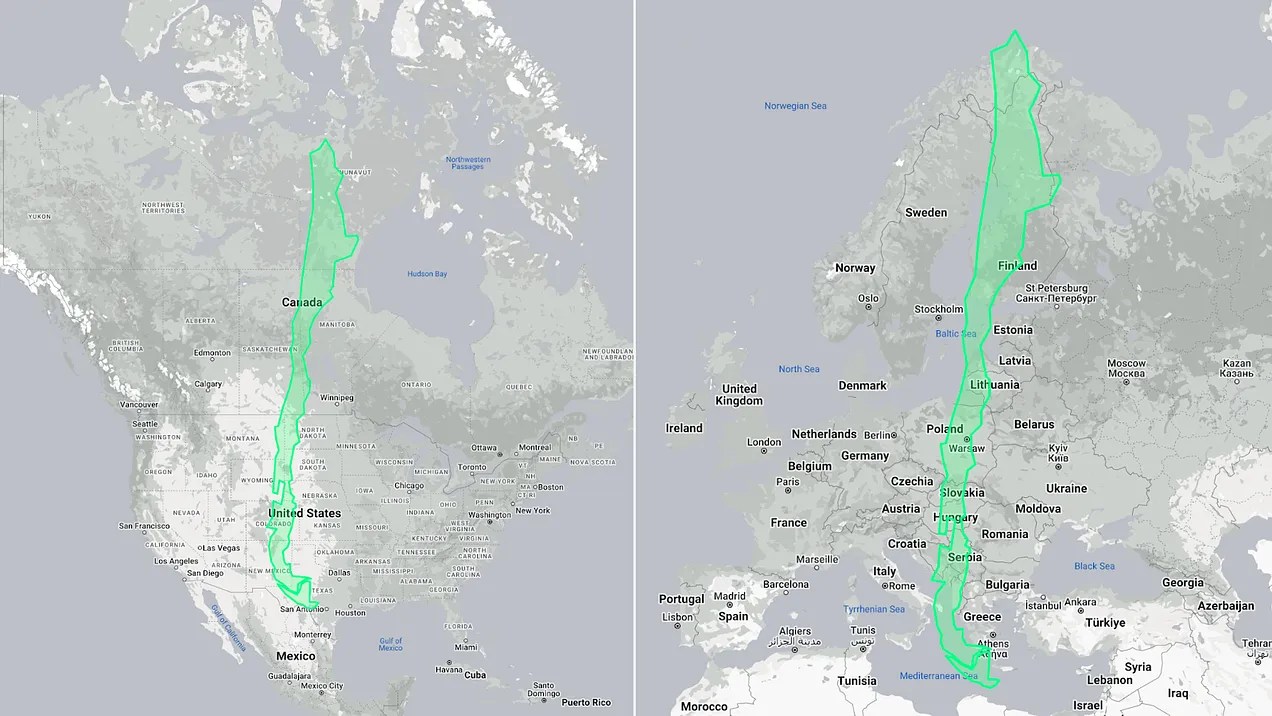
Thomas Pueyo on how geography shaped the longest (and proportionately thinnest) country in the world…
Chile is as long as the [vertical dimensions of]US and Canada combined.
Chile is as long as all of Europe!Chile is so long, it’s curved.

How long is it?
Why not longer?
Why is no other country as thin?
How does that make Chileans incomprehensible?
These questions (and more) answered: “Why Is Chile So Long?” from @tomaspueyo
* (Chilean poet) Pablo Neruda
###
As we stretch, we might recall that it was on this date in 1730 that the Valparaíso earthquake occurred. (As Pueyo explains, Chile’s unique geography and geology have frequently seismic implications.)
The quake had an estimated magnitude of 9.1–9.3 and triggered a major tsunami with an estimated magnitude of Mt 8.75, that inundated the lower parts of Valparaíso and caused severe damage from La Serena to Chillan; the tsunami affected more than 620 mi of Chile’s coastline.
While damage was widespread, only a few deaths were recorded due to the earthquake, reportedly because a strong foreshock had prompted people to leave their homes. Similarly, the subsequent tsunami: inhabitants ran to higher ground after seeing the water recede, so that only a few were killed.

“Adopt the pace of nature. Her secret is patience.”*…

Further, in a way, to last Tuesday’s post, Vincent Ialenti explains how, as the treadmill of life speeds up, sublime outdoor spaces help us tap into timescales that are longer, slower, planetary…
Our experience of time is changing. For the philosopher Byung-Chul Han, the early 21st century has left us ‘whizzing without a direction’. Our world is shaped by the restless, disorienting rhythms of near-term deliverables, social media impression counts, technological obsolescence, shallow electoral cycles, rapid news cycles, frenzied culture wars, sudden stock market shifts, gig economy hustles, and occupational burnout. Though it all seems exhausting and unmanageable, the whizzing isn’t slowing: digital platforms now bombard us, minute by minute, with fragments of information that fail to cohere into meaningful narratives, and algorithms that hijack our neurochemical reward systems.
As the treadmill of post-industrial society speeds up, some of us have become so addicted to the stimulation that we struggle to imagine another way to live: psychological research shows that most people would rather receive electric shocks than sit quietly alone with their own thoughts. In his book The Scent of Time (2017), Han borrows a concept from Marcel Proust – une époche de hâte – to describe our overstimulated moment. The ‘age of haste’ has arrived. And its problems are pervasive.
When time whizzes by, individual moments blur together and we stop contemplating how each fits into broader arcs of history. We forget, Han laments, to engage in slower-moving forms of cognition such as wonder, curiosity and introspection. We forget how to reflect and be still. But what can we really do about the age of haste? For many of us, a slower, more contemplative life often feels unattainable. You may feel trapped by the directionless whizzing of the 21st century – trapped on an accelerating treadmill. Can you forge a new relationship with time?
Perhaps your first impulse is to find ways of escaping the age of haste. This is a mistake. We cannot simply break free by ‘exiting’ the world we inhabit. Confronting time requires more engagement with the wider world. This world, however, is not the one defined by near-term deliverables and neurochemically disrupting algorithms. It is the one that reveals itself when you glimpse the Milky Way on a cloudless night. It is the world that becomes clear when you gaze upon a mountain.
Encountering spectacular natural environments can cause a radical shift in how we think about ourselves and the world. According to the psychologist Dacher Keltner, feelings of awe, especially those inspired by natural scenery, can make us feel more collaborative, less egoistic, more altruistic, and more open to social connection. Over the past two decades, Keltner tested this idea through a series of experiments that examined how a person’s attitudes and behaviours change after experiencing awe-inspiring places or things. He found that natural splendour seems to put us in a headspace that lets us reflect on our short lives as ephemeral organisms dwelling on a fragile planet floating in a vast cosmos. This way of thinking can be transformative, but its power is not a recent discovery. Greco-Roman Stoic philosophers, for instance, encouraged retreats into the countryside to proactively ponder life. Venturing into breathtaking outdoor spaces seems to help us step back, slow down and, most importantly, think in the long term. I call this style of thinking ‘longstorming’ because encounters with sublime geophysical and ecological environments can invite the mind to brainstorm about our long-term futures and pasts…
…
Fortunately, you do not need to visit charismatic ecosystems, like redwood forests, to begin longstorming. Walking down any city street or a country road, you can attune to how the rocks beneath your feet have multimillion- or multibillion-year geological histories. You can attune to how the air you breathe is altered by decades of carbon emissions. You can attune to the evolutionary histories of the chirping birds or even the cells in your body. Contemplating the passage of time is, at some level, available to anyone willing and able to longstorm – to begin wondering about the longer timelines of the universe. When you return to your smartphone afterwards, you might even look differently at the device itself: less attuned to the newsfeeds and pings, and more attuned to the ancient geological histories of the elements and minerals that make it up. After all, many of the metals found in smartphones, such as gold and copper, were formed billions of years ago among distant stars.
That said, certain geophysical features (like mountain vistas or idyllic countryside), certain activities (like hiking or backpacking), and certain mental states (like awe or calm) tend to draw out more enriching temporal experiences than others. This has an unfortunate implication: opportunities to have life-transforming brushes with the deep time of our planet and cosmos are not evenly distributed across society. Not everyone is capable of leisurely neighbourhood walks, let alone treks up to mountaintop vistas. Not everyone has the resources to make such a trip, let alone the time. If we want all of society to resist the age of haste, we first need to reform its entrenched structures of poverty – temporal or otherwise.
In the age of haste, longstorming should be a necessity, not a luxury. Without a deeper attunement to planetary time, the therapies of the 21st century will deliver healing that soothes us only in the moment. The age of haste requires healing of a different kind: longer, slower, planetary…
On the essential role of nature in our lives: “Do you find the 21st century overstimulating? Try ‘longstorming’,” from @vincent_ialenti in @aeonmag. Eminently worth reading in full.
(Image above: source)
* Ralph Waldo Emerson
###
As we reground, we might send tectonic birthday slowly-accumulating birthday greetings to Émile Haug; he was born on this date in 1861. A geologist and paleontologist, he is known for his contributions to the theory of geosynclines (trenches that accumulate thousands of metres of sediment and later become crumpled and uplifted into mountain chains). From the position of the Alp he theorized that geosynclines form between stable continental platforms. He showed that geosynclinal subsidence accompanies marine regressions on the continental platform and that geosynclinal uplift accompanies marine transgressions on the continental platform. His Traité de géologie (1907-11), rapidly became an indispensable reference work. He also produced important works on the fundamentals of paleontology, stratigraphy, and tectonics.

“Some say the world will end in fire, some say in ice.”*…

Ethan Siegel reminds us that the world– the living world– almost did end in ice…
… one event came closer than any other to bringing an end to life on Earth: a catastrophe known as either the Great Oxidation Event or the Great Oxygenation Event. Oxygen, one of the hallmark characteristics of our living Earth, was a tremendous destructive force when it first arrived in any sort of meaningful abundance some ~2 billion years after Earth first took shape. The slow alteration of our atmosphere by the gradual addition of oxygen proved to be fatal to the most common types of organism that were present on Earth at the time. For several hundred million years, the Earth entered a horrific ice age which froze the entire surface: known today as a Snowball Earth scenario. This disaster almost ended life on Earth entirely. Here’s the story of our planet’s near-death, culminating in life’s ultimate survival story…
For roughly 300 million years, the Earth was frozen: “What was it like when oxygen killed almost all life on Earth?” from @StartsWithABang in @bigthink. Eminently worth reading in full.
* Robert Frost, “Fire and Ice“
###
As we contemplate change, we might send chilly birthday greetings to Raoul Pictet; he was born on this date in 1846. Remembered as a pioneer in cryogenics, Pictet was a Swiss chemist who spent much of his career trying to produce very low temperatures (in order to produce ice for refrigeration)– which led him to the creation of liquid oxygen in 1877 (for which he’s credited as co-discoverer, as French scientist Louis-Paul Cailletet, working completely separately, also produced liquid oxygen that year).

“The redwood is one of the few conifers that sprout from the stump and roots, and it declares itself willing to begin immediately to repair the damage of the lumberman and also that of the forest-burner”*…

Nature plans ahead: how redwoods survive fire…
When lightning ignited fires around California’s Big Basin Redwoods State Park north of Santa Cruz in August 2020, the blaze spread quickly. Redwoods naturally resist burning, but this time flames shot through the canopies of 100-meter-tall trees, incinerating the needles. “It was shocking,” says Drew Peltier, a tree ecophysiologist at Northern Arizona University. “It really seemed like most of the trees were going to die.”
Yet many of them lived. In a paper published [in late November] in Nature Plants, Peltier and his colleagues help explain why: The charred survivors, despite being defoliated, mobilized long-held energy reserves—sugars that had been made from sunlight decades earlier—and poured them into buds that had been lying dormant under the bark for centuries.
“This is one of those papers that challenges our previous knowledge on tree growth,” says Adrian Rocha, an ecosystem ecologist at the University of Notre Dame. “It is amazing to learn that carbon taken up decades ago can be used to sustain its growth into the future.” The findings suggest redwoods have the tools to cope with catastrophic fires driven by climate change, Rocha says. Still, it’s unclear whether the trees could withstand the regular infernos that might occur under a warmer climate regime.
…
It’s not just the energy reserves that are old. The sprouts were emerging from buds that began forming centuries ago. Redwoods and other tree species create budlike tissue that remains under the bark. Scientists can trace the paths of these buds, like a worm burrowing outward. In samples taken from a large redwood that had fallen after the fire, Peltier and colleagues found that many of the buds, some of which had sprouted, extended back as much as 1000 years. “That was really surprising for me,” Peltier says. “As far as I know, these are the oldest ones that have been documented.”
Although the redwoods have sprouted new growth, Peltier and other forest experts wonder how the trees will cope with far less energy from photosynthesis, given that it will be years before they grow as many needles as they had before the fire. “They’re alive, but I would be a little concerned for them in the future.”
Another question is how the redwoods would cope if a second catastrophic fire strikes soon. Have they used up their emergency reserves? “The fact that the reserves used are so old indicates that they took a long time to build up,” says Susan Trumbore, a radiocarbon expert at the Max Planck Institute for Biogeochemistry. “Redwoods are majestic organisms. One cannot help rooting for those resprouts to keep them alive in decades to come.”…
After a devastating conflagration, trees regrow using energy stored long ago: “Ancient redwoods recover from fire by sprouting 1000-year-old buds,” from @ScienceMagazine.
* John Muir
###
As we learn from nature, we might spare a thought for Louis Agassiz; he died on this date in 1873. A biologist and geologist, he was an important early scholar of Earth’s natural history. After studying with Georges Cuvier and Alexander von Humboldt in Paris, Agassiz was appointed professor of natural history at the University of Neuchâtel. He emigrated to the United States in 1847 after visiting Harvard University and went on to become professor of zoology and geology at Harvard, to head its Lawrence Scientific School, and to found its Museum of Comparative Zoology.
Agassiz is known for observational data gathering and analysis. He made institutional and scientific contributions to zoology, geology, and related areas, including multivolume research books running to thousands of pages. He founded the field of glaciology.
His second wife, Elizabeth Cabot Agassiz (née Cary) collaborated with him on much of his work and went on to found Radcliffe College.


“Dust to dust”*…
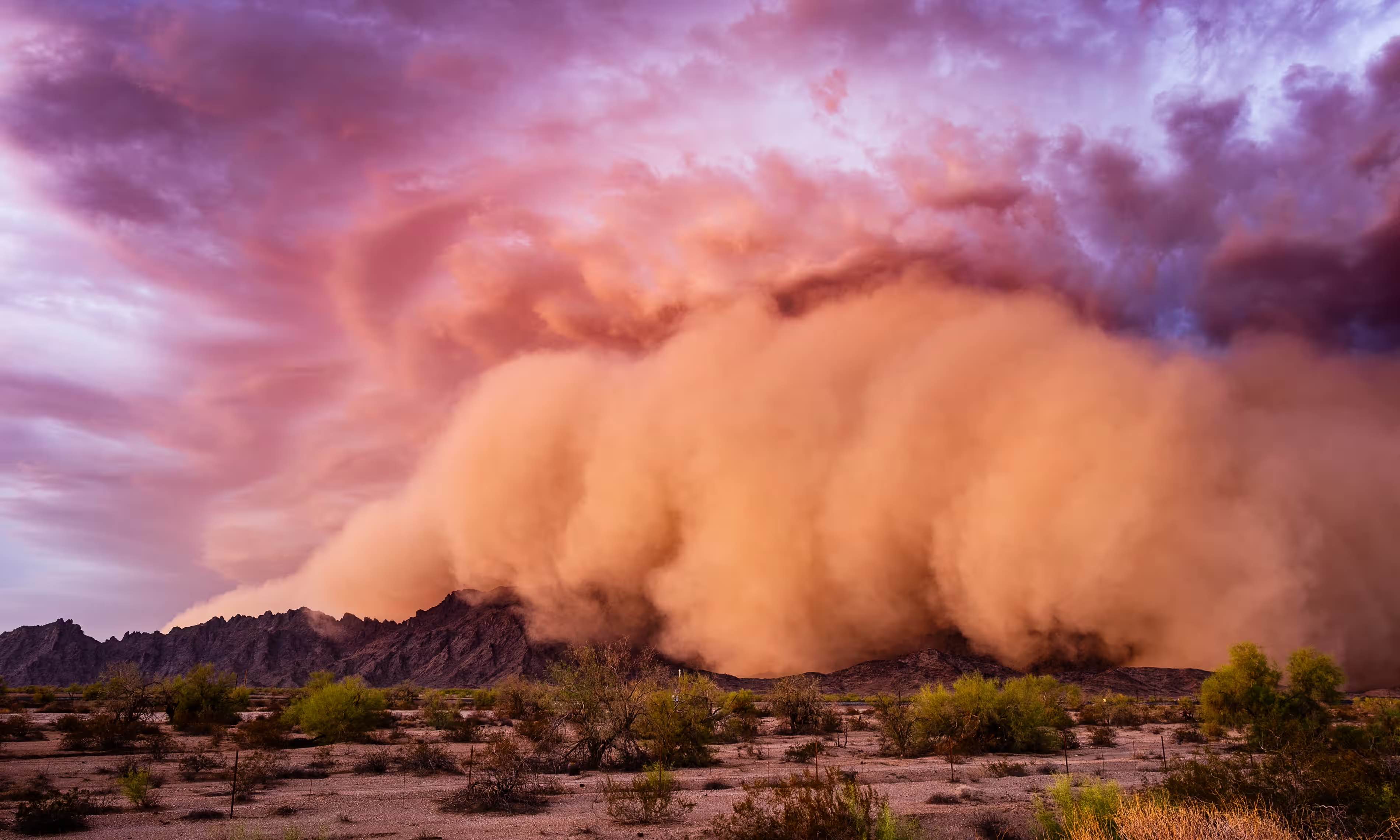
Back in 2016, we visited Jay Owens and his fascinating newsletter on dust… which went silent a couple of years later. Those of us who missed it, and were worried about its author were relieved to learn that he’d pulled back in order to turn his thinking into a book. That book is now here: Dust: The Modern World in a Trillion Particles, and The Guardian is here with an excerpt…
… Nobody normally thinks about dust, what it might be doing or where it should go: it is so tiny, so totally, absolutely, mundane, that it slips beneath the limits of vision. But if we pay attention, we can see the world within it.
Before we go any further, I should define my terms. What do I mean by dust? I want to say everything: almost everything can become dust, given time. The orange haze in the sky over Europe in the spring, the pale fur that accumulates on my writing desk and the black grime I wipe from my face in the evening after a day traversing the city. Dust gains its identity not from a singular material origin, but instead through its form (tiny solid particles), its mode of transport (airborne) and, perhaps, a certain loss of context, an inherent formlessness. If we knew precisely what it was made of, we might not call it dust, but instead dander or cement or pollen. “Tiny flying particles,” though, might suffice as a practical starting definition…
…
Dust is simultaneously a symbol of time, decay and death – and also the residue of life. Its meaning is never black or white, but grey and somewhat fuzzy. Living with dust – as we must – is a slow lesson in embracing contradiction: to clean, but not identify with cleanliness; to respect the material need for hygiene while distrusting it profoundly as a social metaphor…
A fascinating sample of a fascinating book: “Empire of dust: what the tiniest specks reveal about the world,” from @hautepop in @guardian.
Pair with: “Nothing is built on stone; all is built on sand” and “In every grain of sand there is the story of the earth.”
* from the burial service in the Book of Common Prayer
###
As we examine the elemental, we might send exploratory birthday greetings to Friedrich Wilhelm Heinrich Alexander von Humboldt; he was born on this date in 1769. The younger brother of the Prussian minister, philosopher, and linguist Wilhelm von Humboldt, Alexander was a geographer, geologist, archaeologist, naturalist, explorer, and champion of Romantic philosophy. Among many other contributions to human knowledge, his quantitative work on botanical geography laid the foundation for the field of biogeography; he surveyed and collected geological, zoological, botanical, and ethnographic specimens, including over 60,000 rare or new tropical plants.
As a geologist, Humboldt made pioneering observations of geological stratigraphy, structure (he named the Jurassic System), and geomorphology; and he understood the connections between volcanism and earthquakes. His advocacy of long-term systematic geophysical measurement laid the foundation for modern geomagnetic and meteorological monitoring.
For more, see: The Invention of Nature: Alexander Von Humboldt’s New World.

You must be logged in to post a comment.