Posts Tagged ‘food preservation’
“Invention, my dear friends, is 93% perspiration, 6% electricity, 4% evaporation, and 2% butterscotch ripple”*…
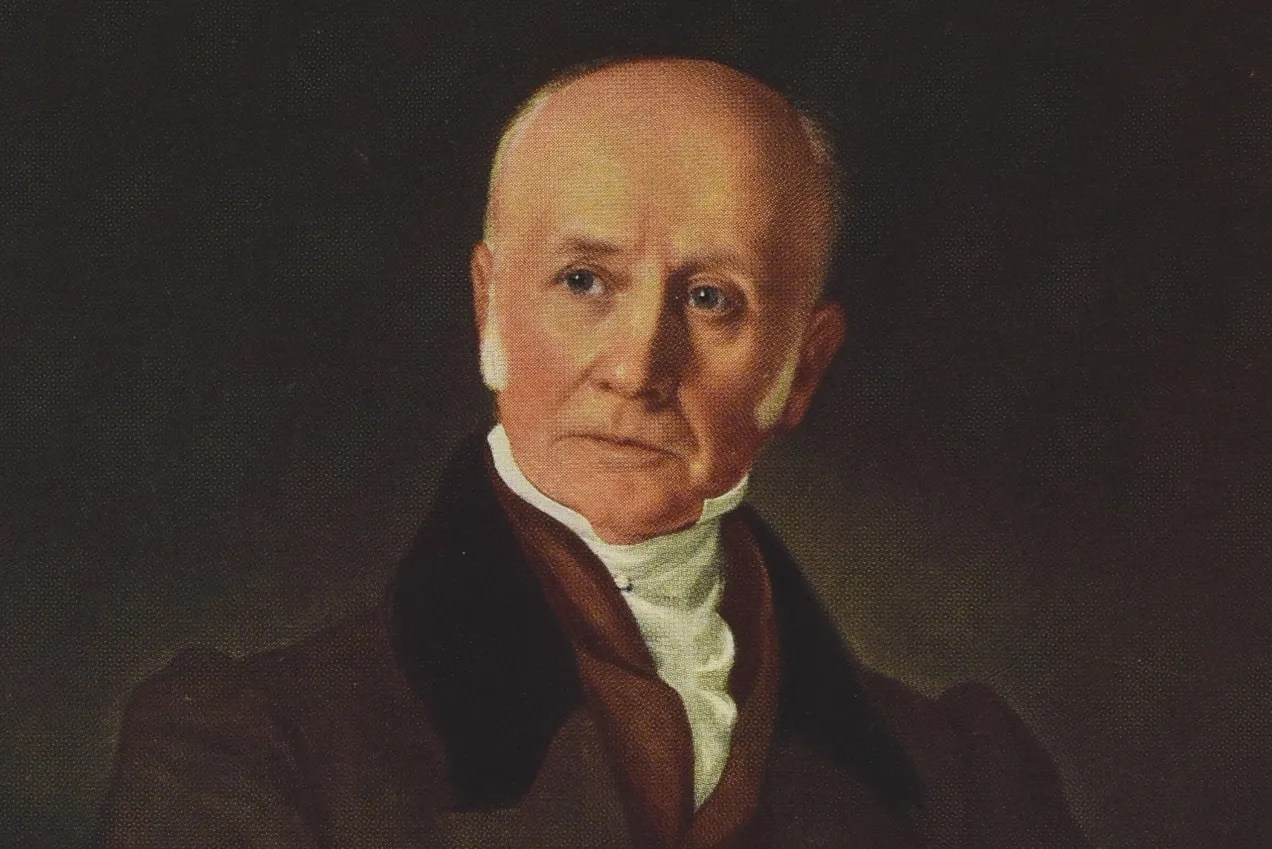
Jason Toon on a man whose applied creativity birthed not one, but two major industries…
Global canned food sales are now more than $210 billion annually. The average American eats about 200 pounds of canned food every year. Meanwhile the worldwide paper industry has seen steep falls in the production of newsprint, printing paper, and writing paper since 2010, but the rise in paper and cardboard packaging has more than made up for it. The paper industry is bigger than ever, with revenue of $485 billion in 2025.
For better or worse, our world would simply not look the same today without these two industries. And one person was the key figure in starting both of them. Bryan Donkin can legitimately claim to be the “father” of the canned-food industry and the paper industry as we know them. So who was he, besides one of the very few guys named Bryan in the 18th century?
Born in northeastern England in 1768, Bryan Donkin went into the same business as his father: real estate. But it didn’t speak to him. So in 1792, at the rather ripe age of 24, he became an apprentice to John Hall at Dartford Iron Works to pursue his true calling as an engineer.
At the time, all paper was made by hand, more or less the same way it had been done since the Middle Ages. Cotton and linen rags were soaked in water and beaten into a pulp. A shallow, rectangular mold with a screen bottom would be dipped into the liquid slurry and shaken. A thin layer of the macerated fibers would settle on the screen; when dry, you’d have yourself a single sheet of paper.
Donkin started his post-apprenticeship career making these molds. But around 1801, he got connected to the Fourdrinier brothers, who produced stationery in London. They’d made a deal with a French inventor, Louis-Nicolas Robert, to bring a new paper-making machine to Britain. At the time, between the post-revolutionary turmoil in France and England’s more advanced industrial base, the latter seemed to hold more lucrative prospects for the new invention.
Unlike the laborious single-sheet, mold-based method, this new “Fourdrinier machine” used a cylinder to continuously produce rolls of paper. A mechanism called the “shake” agitated the conveyor belt at a high speed, to spread the wet pulp fibers in an even layer. Unfortunately, this rapid movement put a lot of strain on the mostly wooden machine. One of Donkin’s improvements was to use metal parts instead, for improved stability and precision.
Another refinement of his was adjusting the rollers that squeezed the water out of the paper, to maximize contact between them and the paper, to dry the paper more quickly and thoroughly. This and other improvements turned the Fourdrinier machine from an interesting prototype to a viable technical advancement.
It quickly became the industry standard, and remains so over 200 years later. The publishing boom of the late 19th and early 20th century wouldn’t have been possible without it. Those big machines you see today producing rolls of paper are most likely Fourdrinier machines. Donkin also made some key advancements in printing technology, so the Pulitzers and Murdochs of the world owe him double gratitude.
His fortune secured, now the head of a company bearing his name that still exists (these days they make gas valves), Donkin’s restless mind turned to another puzzle: the preservation of food. Like too many technological quests, this one was spurred by military needs. Best frenemies England and France were both spreading their empires around the planet, frequently clashing, and looking for ways to keep their troops fed. In such wide-ranging conflicts as the Seven Years’ War (1756-1763), far more sailors died of malnutrition than in combat.
It seems yet another French inventor had visions of pounds sterling dancing in his eyes. Philippe de Girard had come up with a method of preserving food by putting in inside a sealed tin container, then boiling the container in water to sterilize it. Or maybe he swiped the method from another French inventor, Nicolas Appert [see here]. Or maybe they were in cahoots. What we do know is that in 1810, de Girard went to London and engaged a merchant named Peter Durand to be his frontman for getting a British patent, which de Girard would not have been eligible for since Britain and France were at war.
Durand was duly awarded the patent in his name. Ever since, he’s been often called the inventor of the tin can, despite having nothing to do with inventing it, and doing nothing with it except selling the patent for £1,000 in 1812. The buyer? Bryan Donkin’s old apprenticeship master, John Hall.
Now on equal terms as budding titans of industry, Hall put up the money and Donkin provided the brains along with a third partner, John Gamble, to bring tin canning to an industrial scale. Again, it took a couple of years, but Donkin and Gamble steadily refined the process. One of their major innovations was to use iron coated in a thin layer of tin, combining the strength of the former with the non-reactive properties of the latter for an imperturbable can that could survive the longest, roughest ocean voyages.
For the second time, a French invention plus Donkin’s enhancements equaled le jackpot. After getting the likes of Queen Charlotte and the Duke of Wellington hooked with some free samples of canned beef, the firm of Donkin, Hall and Gamble received an order for 156 pounds of canned food from the Admiralty in 1813. That grew to 2,939 pounds the following year, increasing annually to 9,000 pounds by 1821.
Having bested the canning challenge, Donkin again wandered off in search of other worlds to conquer: helping Charles Babbage with the “difference engine” that would eventually become the computer, consulting on bridge and canal projects, inventing the first metal pen and a screw-cutting machine, being a founding member of both the Institution of Civil Engineers and the Royal Astronomical Society.
He died in 1855, an esteemed eminence in Victorian scientific and engineering circles. Today Bryan Donkin’s impact is out of all proportion to his memory. On a visit to his grave in London, the BBC found, [there was] no mention of his achievements. Cemetery staff didn’t know who he was.
I can sense the question from some quarters of the audience: are Bryan Donkin’s achievements worth celebrating? Not only did canned food help enable imperial conquest and war, it also led eventually to the mass industrialization of food production, with its attendant crises of public health and monocultural farming, and our psychological distance from our food supply. And one look at any municipal dump will show you how much paper and cardboard waste still goes into landfill, even in a supposedly “paperless world”.
Those points are well taken. But it’s easier to dismiss these advancements when you live in a world that’s always known them. Over the last century or two, large-scale paper production enabled the rise of mass literacy, from only 10% of the world’s population being literate in 1820 to 90% today.
And it’s not just British seamen who eat better because of canned food. A 2011-2013 National Institutes of Health study found that people who eat six or more canned items a week “consume more nutrient-dense food groups such as fruits, vegetables, dairy products, and protein-rich foods, and also have higher intakes of 17 essential nutrients” including potassium, calcium, and fiber. Canned food has helped overcome the tyrannies of distance and time to get more nutrition to more people.
From the perspective of people in 1810, both food canning and mass paper production were immense steps forward. We can’t lay our subsequent inability to maintain some equilibrium at their feet. It’s true that Bryan Donkin didn’t invent the machines he perfected. Both industries probably would have happened, in some form, eventually, without him. But in being the first to perfect them for large-scale use, and granting all the downsides they’ve brought along with them, he hastened the coming of a less hungry, more educated world. Not bad for a guy named Bryan…
How one genius fathered both the canning and paper industries: “The Lives of Bryan,” from @jasontoon.bsky.social.
* Willy Wonka (in Roald Dahl’s Charlie and the Chocolate Factory)
###
As we devise, we might send carefully-calculated birthday greetings to Dan Bricklin; he was born on this date in 1951. An engineer, he was the co-creator, with Bob Frankston, of VisiCalc, the first spreadsheet program. Known as “the father of the Spreadsheet,” he was awarded the Grace Murray Hopper Award in 1981 for VisiCalc and was one of six people spotlighted when “the Computer” was named “Machine of the Year” by Time magazine in 1982.
Neither Bricklin nor Frankston reaped huge financial profits from their spreadsheet program, though it sold over a half-million copies by 1983. At the time, copyright protection was not generally sought for software; their company was subsequently acquired by Lotus 1-2-3, which became the new spreadsheet standard (until, of course, Excel).

“In the last analysis, a pickle is a cucumber with experience”*…

In an excerpt from their book, The Pickled City: The Story of New York Pickles, Paul van Ravestein and Monique Mulder explore the evolution of fermentation across the ages…
Pickling vegetables began in Mesopotamia around 2400 BCE, where brining cucumbers addressed the challenge of preserving food in a hot climate. Brine, a mixture of water and salt, proved effective at inhibiting spoilage while enhancing the flavor of food. This innovation quickly spread to neighboring civilizations, embedding itself in the culinary practices of ancient Egypt, Greece, and Rome.
Cleopatra, one of Egypt’s most iconic figures, believed that pickles contributed to her legendary beauty. This association between pickles and vitality reflected a broader cultural fascination with preserved foods. Julius Caesar ensured that his soldiers carried pickles on their campaigns, claiming that the preserved vegetables fortified their strength and stamina. This notion of pickles as both nourishment and tonic was echoed by Greek philosophers like Aristotle, who praised their medicinal properties.
The culinary sophistication of ancient Rome brought pickling into sharper focus. The Roman cookbook attributed to the Roman merchant and epicure Apicius, De Re Coquinaria, included numerous references to preserved vegetables, particularly olives and cucumbers. Apicius wrote of the importance of balance in brining, using spices like dill, mustard seed, and coriander seed to create complex flavors that complemented meals. The ability to elevate simple ingredients through preservation became a hallmark of Roman gastronomy, showcasing pickling as both art and science.
The spread of pickling innovations along trade routes like the Silk Road and the Spice Route highlights its significance in cultural exchange. Roman traders, for example, likely encountered Asian pickling techniques through the Silk Road’s bustling networks of goods and ideas. Spices such as cinnamon, peppercorns, and cumin—integral to pickling recipes—traveled vast distances, linking the culinary practices of the Mediterranean, India, and China.
In Asia, pickling developed independently but with striking parallels. Chinese records from the Zhou Dynasty (1046-256 BCE) mention fermented vegetables, including pickled radishes and cabbages, which were essential for sustenance during harsh winters. Similarly, Indian achar evolved as a culinary treasure, incorporating local spices like turmeric, fenugreek, and mustard to enhance preservation and flavor. Japanese pickling methods, such as nukazuke (fermentation in rice bran), emphasized minimalism and balance, reflecting the cultural values of harmony and simplicity.
The maritime trade routes of Southeast Asia and the Indian Ocean allowed pickling traditions to travel across vast regions, influencing cuisines from the Malay Archipelago to the Arabian Peninsula. The Indian Ocean trade ensured that spices like cloves and nutmeg became integral to pickling recipes worldwide, enriching their flavor profiles and preserving their cultural legacies.
Pickling’s role extended beyond culinary practices, becoming intertwined with religious and cultural rituals. In Jewish tradition, the Talmud makes numerous references to pickled vegetables, particularly turnips, which symbolize abundance and endurance. Pickled foods often accompanied bread during blessings, emphasizing their role as both sustenance and spiritual connection.
Their transformation through pickling—turning a simple, earthy root into a tangy, vibrant dish—was often seen as a metaphor for renewal and the endurance of the Jewish people through adversity. During the springtime Jewish holiday of Purim, which commemorates the triumph of the Jewish people over oppression in ancient Persia, the giving of food gifts (mishloach manot) occasionally included pickled vegetables, reflecting the value of sharing preserved foods that sustained communities through lean times. And colorful Yiddish sayings like er drayt sich arum vie a forts in roosl (he wanders around like a fart in a pickle barrel) highlight the humorous associations with pickling, eating, and bodily functions.
Hindu culture imbued pickles with sacred meaning. The balance of flavors in achar—salty, sour, sweet, and spicy—was seen as a reflection of life’s harmony. Pickles were often prepared as offerings during religious festivals, symbolizing prosperity and the nurturing of the human spirit.
Christian monastic traditions adopted pickling during the Middle Ages as a way to sustain communities through long fasting periods. Pickled fish and vegetables became essential components of monastic diets, reflecting the intersection of faith, practicality, and culinary ingenuity.
In Islamic cultures, pickles played a central role in Ramadan feasts, their tangy flavors providing refreshment after a day of fasting. Preserved lemons, a staple in Moroccan cuisine, became symbolic of hospitality and were often served to honored guests. Ancient Chinese rituals also celebrated the cultural significance of pickling, with fermented vegetables used in ancestor worship as symbols of continuity and filial piety.
Trade routes such as the Silk Road and those across the Sahara were pivotal in spreading pickling techniques and ingredients across diverse cultures. These routes facilitated the exchange of goods like salt and vinegar, essential to pickling, along with the culinary knowledge that transformed them into staples of global cuisine…
Read on for medieval and early modern innovations, pickling evolution in the Eighteenth and Nineteenth Centuries, industrialization and the modern culinary renaissance, and pickles in pop culture: “A Brief and Essential History of the Most Important Food Ever Invented: The Pickle,” from @lithub.com.web.brid.gy.
###
As we break out the brine, we might spare a thought for a man who put fermentation to a different kind of use, André Tchelistcheff; he died on this date in 1994. An oenologist, he was a pivotal figure in the revitalization of the California wine industry following Prohibition (1919-33) and used his (French) training in viticulture and wine-making to define the style of California’s best wines, especially Cabernet Sauvignon, and to pioneer such techniques as the cold fermentation (now widely used in producing white and rose wines) and the use of American oak barrels for aging. He also developed frost-prevention techniques and helped curb vine disease in Napa Valley. In addition to managing Beaulieu Vineyards in Napa for 35 years, Tchelistcheff operated a private wine laboratory in St. Helena for 15 years. He also assembled a fabled library of wine literature.

“The most remarkable thing about my mother is that for thirty years she served the family nothing but leftovers. The original meal has never been found.”*…
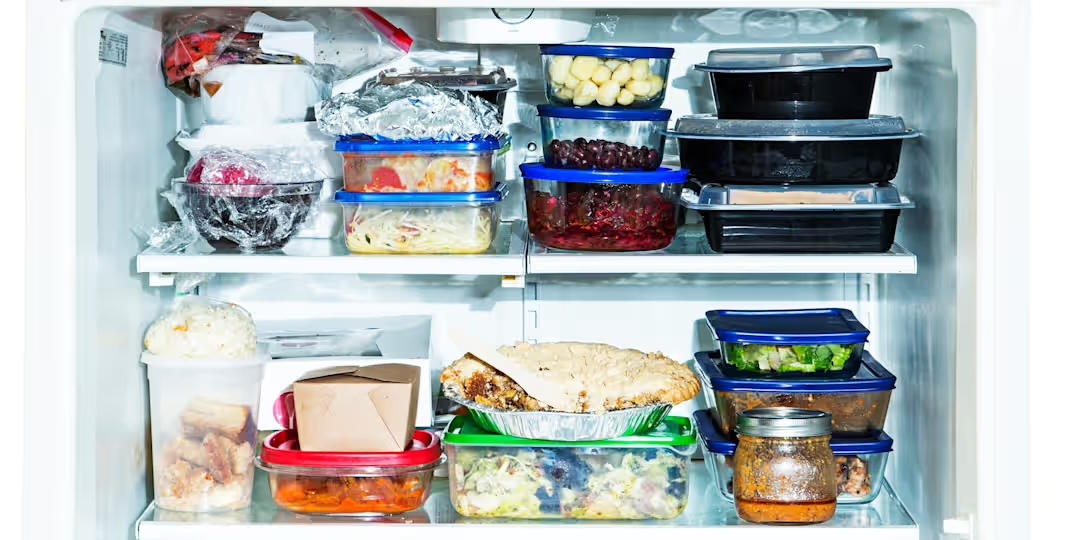
News you can use…
I kept throwing away food because I couldn’t remember when I bought it. Thursday’s chicken from Monday? No idea if it was still safe. DoesItLast gives a clear answer based on FDA/USDA guidelines, so you can decide with information instead of guessing…
E.g…


Instant answers for safe food storage: “How long does food last?“
See also: “The Curious History of Leftovers” (source of the image above)
* Calvin Trillin
###
As we burp the container, we might spare a thought for a man who made a monumental contribution to food preservation and storage: John Landis Mason; he died on this date in 1902. A tinsmith, he patented the metal screw-on lids for fruit jars that have come to be known as Mason jars (many of which were printed with the line “Mason’s Patent Nov 30th 1858”).
That same year he invented the screw top salt shaker.

“You don’t win friends with salad”*…

The best meal I had all pandemic cost $1.14 and took about 90 seconds to make. It was a Margherita pizza inhaled in the car on a desolate day in late April. I know the precise cost because my husband is the chef who made it: 61 cents for a few slices of fresh buffalo mozzarella, 24 cents for the San Marzano tomatoes and salt, a quarter for enough basil leaves to supply the rest of the menu’s needs for free, and just 11 cents for the dough, made from a mix of top-shelf imported Italian flours. In normal times, his restaurant sold a Margherita for $20, but he could get away with selling it for $10 and still reach 10% food cost.
We are a nation in the throes of an unprecedented eight-month pizza binge that shows no signs of abating. Multiple pizzerias in Los Angeles reported a 250% rise in sales on Election Day, and on Thursday, Papa John’s reported quarterly same-store sales growth of 23.8%. For months now, the underlying forces for the sustained pizza craze have been as hotly debated within the restaurant industry as the election results have been parsed by professional pollsters. Stress eating is a major cause; quarantine-induced failure of imagination and the return of three major-league sports within weeks of one another over the summer certainly didn’t hurt.
But the actual reason that doesn’t get nearly enough notice is that pizza is one of the few genres of food that is actually more profitable than — and almost as addictive as — booze. Fries and fried chicken — not wings, but tenders and drumsticks — are the only other foods that come close. If that reminds you at all of the suggestions that await you on Grubhub and Uber Eats, well, that’s what’s left of the menu when restaurants lose their alcohol sales and are forced to fork over a third of their gross revenues to delivery app commissions. There are not a lot of foods where taste collides so perfectly with profit: Pizza stands alone…
But times are nothing if not desperate, and the financial case for making a pivot to pizza is anything but ambiguous. Tens of thousands of independent restaurants have closed permanently since March, but independent pizzerias listed on the delivery app Slice have seen sales grow 60%. The chain Marco’s Pizza, which just opened its 1,000th location, in Kissimmee, Florida, has seen sales surge roughly 50% every week since mid-April, according to the consumer data analytics firm Sense360. The pandemic has even breathed new life into the forgotten Pizza Hut chain, which reported a 9% rise in U.S. same-store sales last quarter despite the July bankruptcy of its debt-saddled biggest franchisee, NPC International — which said in a filing that its Pizza Hut division’s 2020 earnings (before interest, taxes, depreciation, and amortization) had exceeded its internal forecasts by a factor of eight. And mediocre pizza behemoth Domino’s, which was starting from a much higher base after reporting 38 consecutive quarters of same-store sales growth, reported a 16% uptick in same-store sales in its second quarter.
The losing side of this stark new restaurant reality is a virtually endless list, but the unequivocal biggest loser has been the so-called $15 salad genre embodied by the fast-food cum tech unicorn Sweetgreen, which recently announced it would be laying off 20% of its corporate staff in its second round of post-outbreak job cuts. Hard numbers on this mostly privately held category, which includes Chopt Creative Salads, Just Salad, Fresh & Co, and True Food Kitchen — all of which have at one point been hailed as the “next Sweetgreen” — were easier to come by in more prosperous times, but the few out there are ugly. Sweetgreen sales fell about 60% during the eight weeks after the first shutdowns, according to Sense360, and the one publicly traded chain in the salad business, Toronto’s Freshii, reported a 51.4% plunge in its second-quarter sales…
Learn how pizza won the pandemic—and Sweetgreen got left behind: “The Death of the $15 Salad.”
* Homer Simpson
###
As we savor a slice, we might send well-preserved birthday greetings to the man who was ultimately responsible for that getting that especially- delicious tomato sauce to your pizzeria: Nicolas Appert; he was born on this date in 1749. A confectioner and inventor, he is known as “the father of canning.”
In 1795, Napoleon, who famously understood that an army travels on its stomach, had offered a prize of 12,000 francs for a method of preserving food and transporting it to its armies. Appert, who worked 14 years to perfect a method of storing food in sterilized glass containers, won the award in 1810.
Interestingly, that same year (1810), Appert’s friend and agent, Peter Durand, took the invention to the other side. He switched the medium from glass to metal and presented it to Napoleon’s enemies, the British– scoring a patent (No. 3372) from King George for the preservation of food in metal (and glass and pottery) containers… the tin can.

The nose knows?…

Researchers at the Weizmann Institute of Science have discovered “olfactory white,” the nasal equivalent of white noise, Live Science reports:
Almost any given smell in the real world comes from a mixture of compounds. Humans are good at telling these mixtures apart (it’s hard to mix up the smell of coffee with the smell of roses, for example), but we’re bad at picking individual components out of those mixtures…
Mixing multiple wavelegths that span the human visual range equally makes white light; mixing multiple frequencies that span the range of human hearing equally makes the whooshing hum of white noise. Neurobiologist Noam Sobel from the Weizmann Institute of Science in Israel and his colleagues wanted to find out whether a similar phenomenon happens with smelling…
Spoiler alert: it does. Find out how– and learn more about the most mysterious of our senses at Live Science. (And download the paper from the journal Proceedings of the National Academy of Sciences.)
###
As we reach for our hankies, we might recall that it was on this date in 1858 that Philadelphia tinsmith John Landis Mason received the patent for Mason Jars. With it’s threaded mouth, metal lid, rubber gasket ring– and the hermetic seal that they can form– the Mason Jar quickly became a staple for food preservation (usually, and ironically, called “canning”). While they are still used to that end, they have more lately flourished as collectables.

A Mason Jar in use
You must be logged in to post a comment.